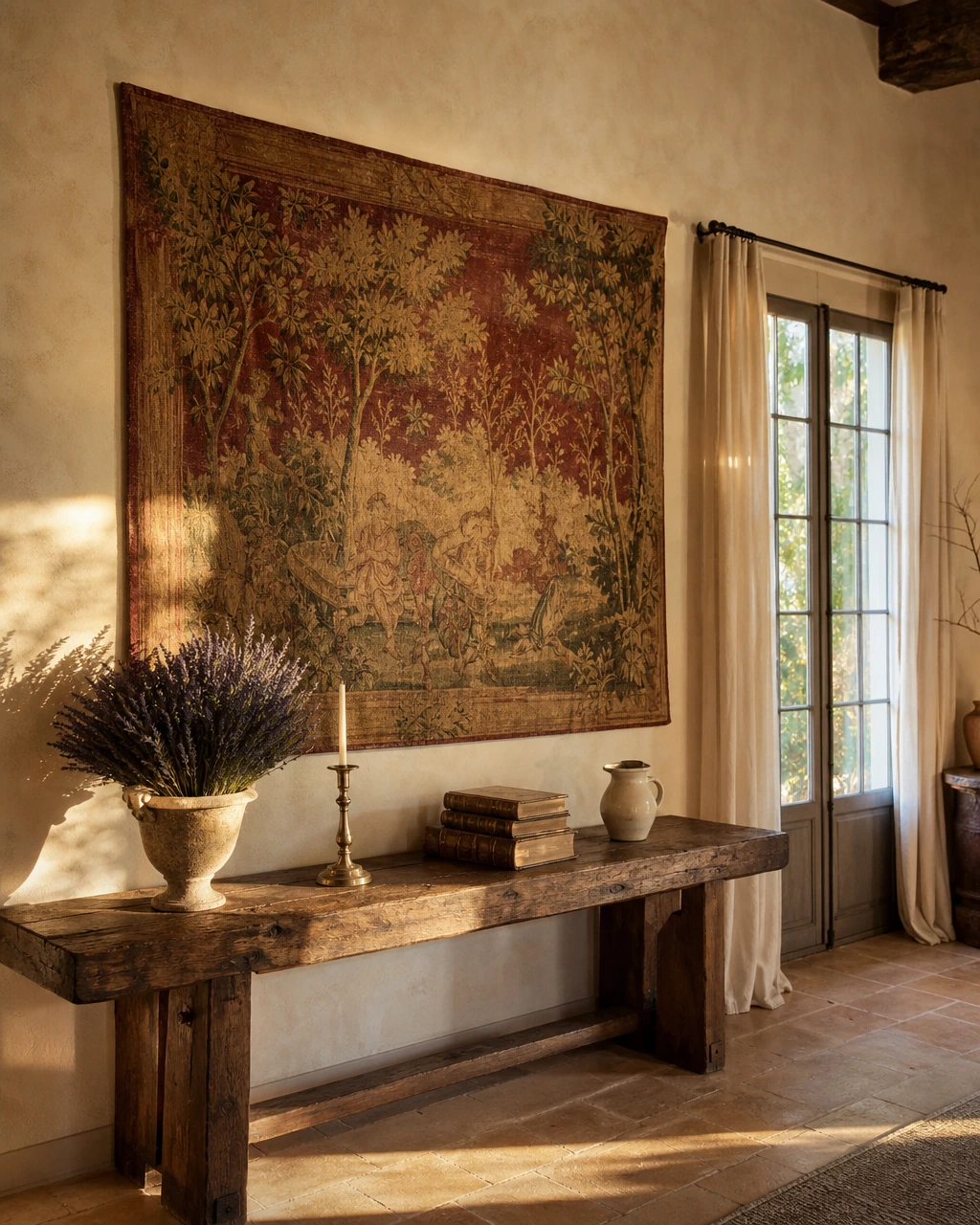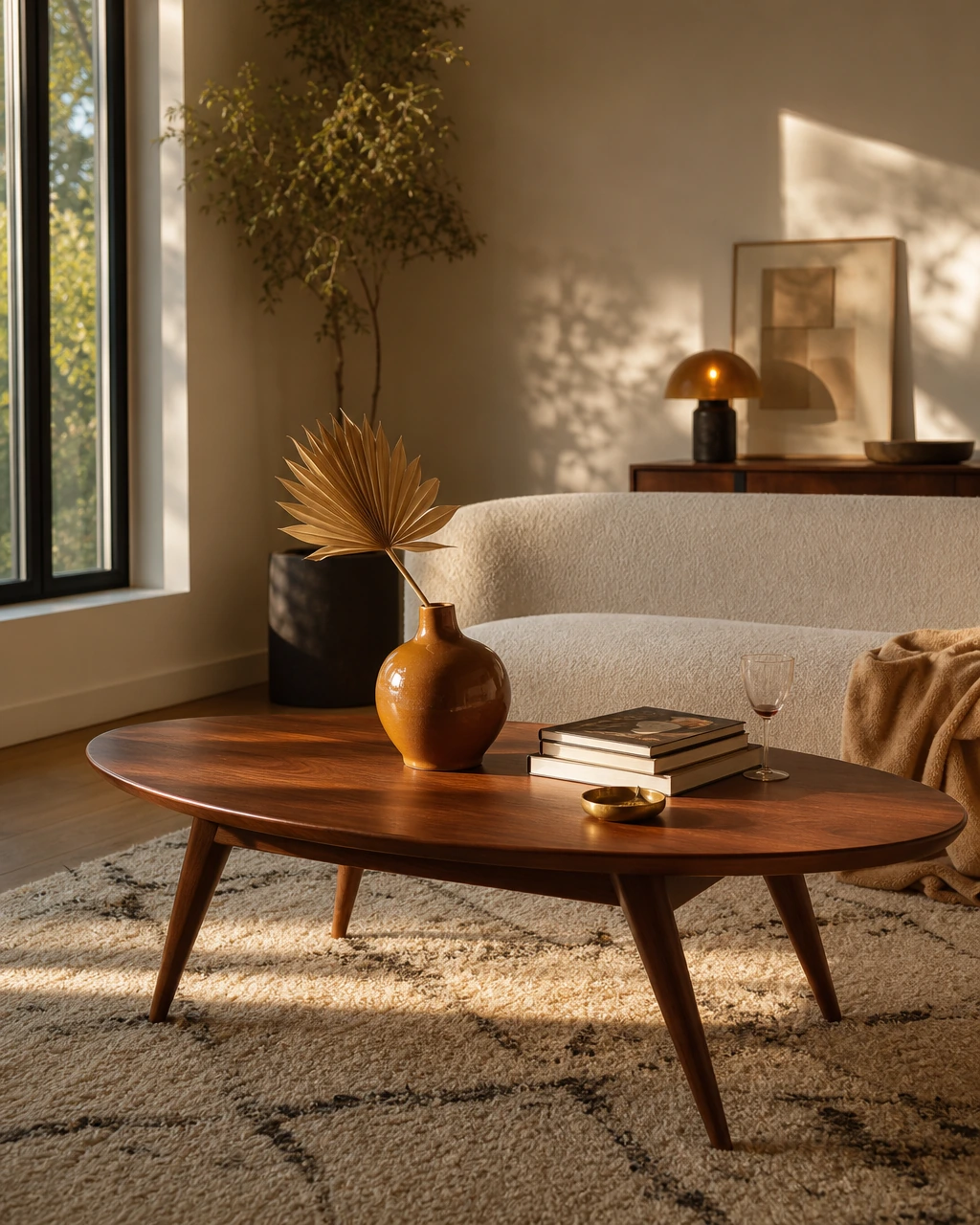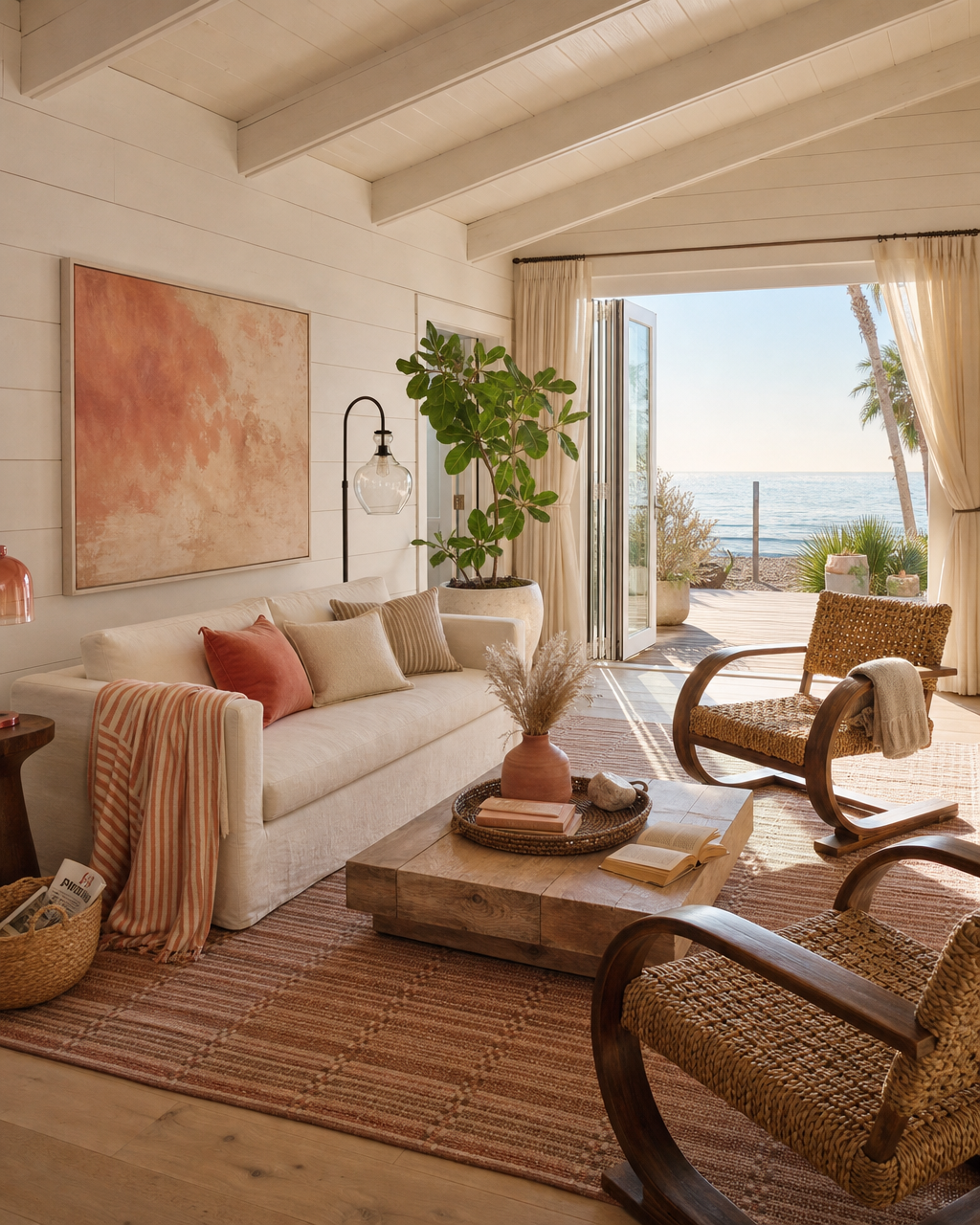
You signed a lease in Silver Lake six months ago and the cafe down the block feels more like home than your apartment does. The lighting is warm. The shelves look collected. Someone always ends up in that worn leather chair near the window and stays there for hours.
You've saved this exact vibe to Pinterest maybe fifteen times. But back home, your living room still looks like a holding pattern. The sofa works, but the rest feels like it's waiting for a decision you can't make.
The good news: you can translate that cafe feeling into a room you live in. First Chair helps you take inspiration photos and turn them into shoppable living room concepts using furniture you can buy, not fantasy renders or generic mood boards.
Key Takeaways
- Cafe-inspired rooms are everywhere right now because people want homes that feel softer, warmer, and less showroom-perfect.
- Photo quality is crucial when using room design software. Shoot straight-on with natural light.
- The key cafe elements that translate to living rooms: mismatched seating with 1-2 variation points, layered lighting at varying heights, and open shelving with gathered objects
- Lighting temperature matters more than most people realize. Aim for 2700-3000K bulbs for that cozy cafe glow
- Maintain 30-36 inches of walkway clearance and 18 inches between your sofa and coffee table to keep the room functional
Capture Your Cafe's Vibe
Snapping a photo of your favorite cafe is only the first step. The real work is identifying which elements create that feeling, because it's rarely just one thing.
Interior designer Catherine Shuman describes the cafe aesthetic as "inviting, layered, warm, and curated", noting it's everything people want in a place that brings them comfort. That's the target. But a cafe has different constraints than your living room. Commercial foot traffic, health codes, and the need for quick table turnover shape design decisions that don't apply at home.
When you look at your cafe photo, break it down into:
- Color palette: Note the dominant tones. Warm earthy shades, soft greens, dusty pinks, and cream whites tend to show up repeatedly in cafe spaces
- Texture layers: This can be leather, linen, raw wood, brass hardware, and ceramic. Cafes often mix four or five textures in a single corner
- Lighting style: Not overhead floods. It’s usually a mix of pendant lights, wall sconces, and table lamps at different heights.
- Furniture arrangement: Consider conversation groupings, not just furniture pushed against walls. Think how they will fit your space.
- Personal objects: Do you have books, ceramics, plants, or arts that feels collected rather than catalog-ordered?
Photo capture tips for best results:
- Shoot straight-on at chest height, not from a corner or at an angle
- Use natural daylight with all lights on and blinds open
- Remove clutter before photographing
- Capture from a doorway or corner for a wider view
- Keep images at 1536x1024px or smaller
The goal isn't to recreate the cafe exactly. It's to extract the design language and apply it to a space where you live.
Translate Cafe Chic Into Your Contemporary Space
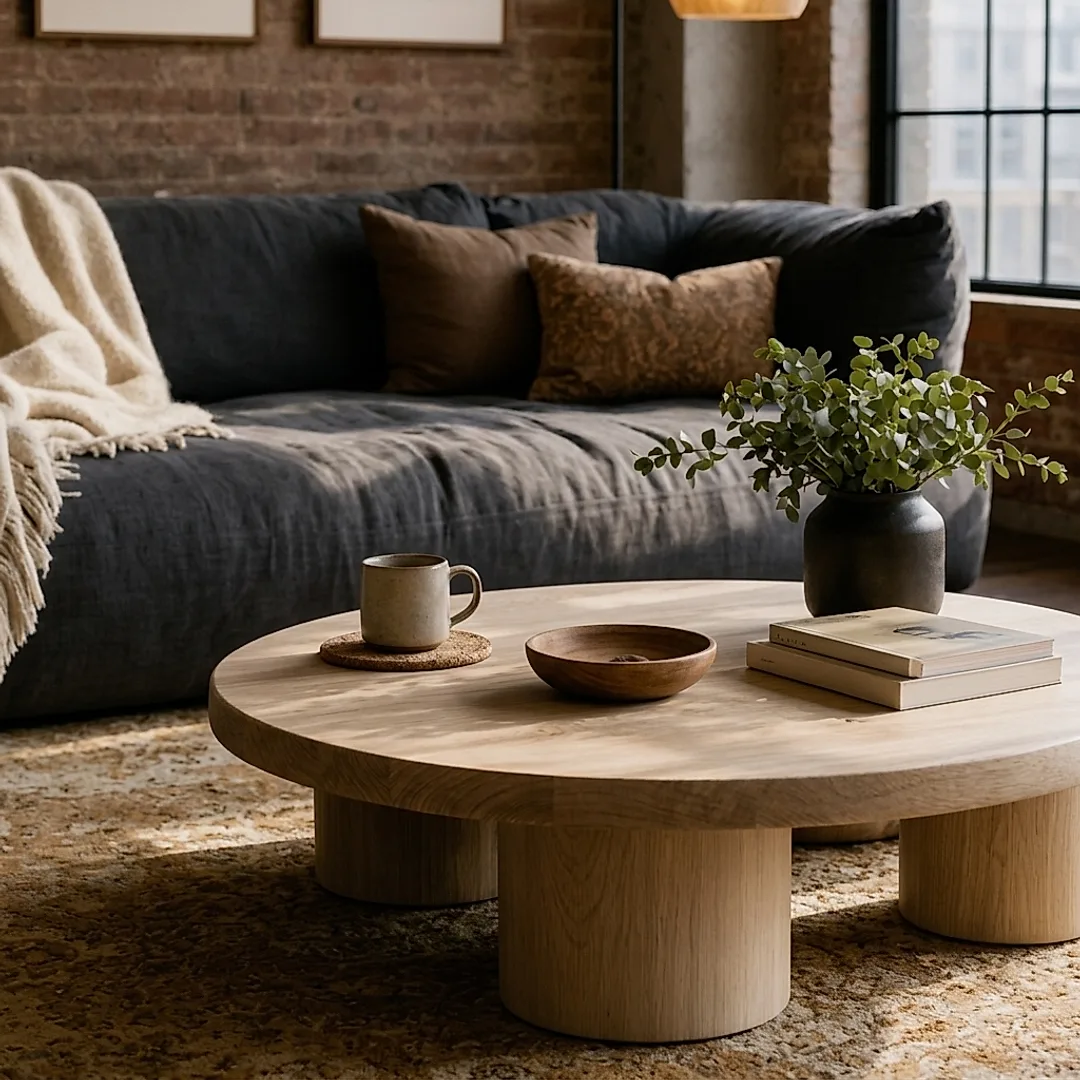
Modern cafe aesthetics often blend industrial elements with warmer residential touches. Exposed brick, metal fixtures, and concrete floors get softened by velvet seating, warm wood tables, and abundant greenery. This tension between raw and refined is what gives cafe spaces their character.
For your living room, lean into that contrast:
Industrial touches that work at home:
- Black metal frame shelving from CB2 or West Elm
- Exposed Edison bulbs or aged brass fixtures from Rejuvenation
- Concrete-look planters or side tables
Warmth to balance the industrial:
- Deep-seat sofas in performance velvet or bouclé from Article or Crate & Barrel
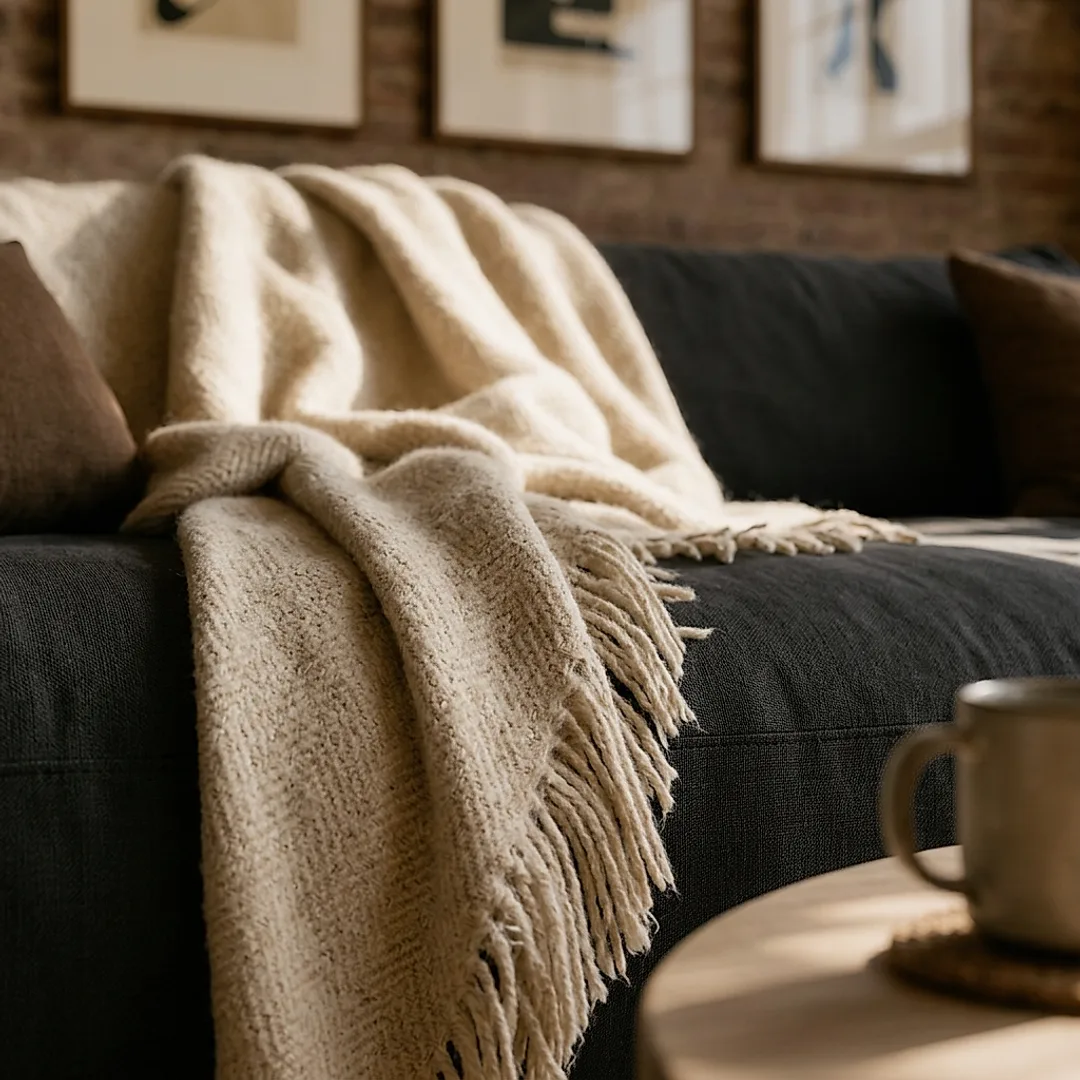
- Layered textiles including wool throws and linen pillows
- Warm wood furniture in walnut or oak tones
Skip the fully matched furniture set. One sofa, one accent chair in a different material, and a mix of side tables feels more cafe than catalog. That tension between pieces gives a room the "gathered over time" feel that makes cafes feel authentic.
Maximize Small Spaces With Cafe-Inspired Layouts
Small apartments benefit from cafe design principles because cafes are masters at making compact spaces feel welcoming and not cramped.
Here are space-saving moves that maintain that cafe character:
- Banquette seating: A small bench along one wall creates a cozy nook without eating floor space. Pottery Barn and West Elm both make apartment-scale versions
- Visible-leg furniture: Pieces that show floor beneath them make rooms feel larger than skirted or boxy silhouettes
- Vertical storage: Open shelving mounted high keeps surfaces clear while displaying collected objects
- Mirror placement: Position mirrors to bounce light and create depth, just like cafes do with their storefront windows
The key dimensional rules for small spaces: maintain 30-36 inches of walkway clearance between furniture pieces, and keep 18 inches between your sofa and coffee table. They're the measurements that make a room feel breathable.
Simple Ways to Decorate Your Living Room, Cafe-Style
You don't need a major furniture overhaul to shift your living room toward cafe territory. Often, the details matter more than the anchor pieces.
High-impact, low-effort changes:
- Swap your overhead bulbs: Switch from 4000K daylight bulbs to 2700-3000K warm bulbs. This single change transforms harsh light into ambient glow
- Add a low-wattage lamp at varying heights: One table lamp and one floor lamp beat a single bright source
- Display books horizontally: Stack them on coffee tables and shelves, spines visible. Cafes do this constantly
- Incorporate live plants: Even one large potted plant in a textured basket shifts the energy
- Use trays to corral objects: Candles, ceramics, and small objects look intentional when grouped on a tray
What to skip:
- Matching picture frame sets. Cafes mix frame styles, sizes, and even lean art against walls
- Mass-market "coffee bar" signage. The irony reads as try-hard rather than authentic
- Fake plants. Real ones breathe life into a space. If maintenance is an issue, stick to pothos or snake plants
Anthropologie Home and Lulu & Georgia both excel at the kind of textured accessories that give a room the collected-but-curated feel of a well-designed cafe.
Curate Your Cafe Vision Online
Twenty saved rooms is inspiration. Two hundred is avoidance.
Pinterest becomes a problem when it stays a graveyard of saved images. The platform is excellent for capturing aesthetic direction but not great at translating that direction into a finished room.
The issue lies between the saved image and the actual sofa you need to buy for your actual living room with its weird corner.
Making Pinterest useful:
- Create a single board for your living room project, not multiple boards across moods
- Limit yourself to 20-30 images maximum. More than that creates noise
- Look for patterns. If warm wood appears in 80% of your saves, that's a signal
- Screenshot specific pieces you love, not just full rooms
- Note dimensions and scale. That perfect sectional might not fit your 12-foot wall
The real move is taking your curated Pinterest board and connecting it to purchasable furniture. First Chair helps you upload cafe photos or Pinterest saves and get back shoppable room concepts using pieces from retailers like West Elm, CB2, and Crate & Barrel, rather than fantasy renders you can't buy.
Living Room Design With a TV
Cafes don't have TVs. Your living room probably does. The challenge is making that black rectangle feel less dominant in a warm, cafe-style space.
Strategies that work:
- Gallery wall surrounding the TV: Hang art around the mounted screen so it becomes part of a larger composition rather than the focal point
- Dark accent wall: Paint the TV wall in a deep, warm tone so the screen recedes when off
- Low media console with open shelving: West Elm and Crate & Barrel make pieces that store equipment while displaying books and objects on upper shelves
- Frame TV option: Samsung's Frame TV displays art when not in use. It's the premium solution but genuinely effective
- Strategic plant placement: A tall fiddle leaf or monstera beside the console draws the eye naturally
What to avoid:
- Hiding the TV behind cabinet doors. The mechanism usually looks more awkward than the TV itself
- Mounting above a fireplace if you have one. The viewing angle is never comfortable
- Creating a "tech corner" that isolates all electronics. Integration beats segregation
Interior Design Ideas for Your Living Room
Professional-feeling spaces share one quality: every piece looks considered. Not expensive. Considered.
The cafe approach to interior design emphasizes creating spaces that feel "lived-in" with tables embedded in daily life and textiles that adjust sound and warmth. That's different from the showroom approach, where everything matches and nothing looks touched.
Elevation moves:
- Vary furniture heights: A low coffee table, medium side table, and tall floor lamp create visual rhythm
- Mix old and new: One vintage piece, even from a consignment shop, grounds a room full of new furniture
- Float furniture: Pull your sofa 8-12 inches off the wall if the room allows. It immediately looks more designed
- Edit ruthlessly: Better to have five intentional objects than fifteen competing for attention
Brands like Interior Define let you customize fabric and dimensions on sofas and sectionals, giving you the collected look without the thrift-store scavenger hunt.
Discover Shoppable Pieces for Your Cafe Look
Once you've identified the aesthetic, the execution challenge begins. Finding specific pieces that match your vision across multiple retailers is where most people stall.
Key categories for the cafe-inspired living room:
- Seating: One primary sofa in a warm neutral, one accent chair in complementary fabric. The Article Sven in Charme Tan leather paired with a Lulu & Georgia bouclé accent chair gets you the worn-leather-plus-soft-texture combo cafes nail.
- Lighting: Mix pendant, floor, and table lamps. Rejuvenation and Visual Comfort for elevated fixtures, West Elm for accessible price points
- Textiles: Linen curtains, wool throws, varied pillow textures. Crate & Barrel and Pottery Barn have solid textile programs
- Storage and display: Open shelving in warm wood or black metal. CB2 leans modern, West Elm warmer
- Greenery: Real plants in textured pots. Terrain and local nurseries beat big-box options
- Art and objects: Mix framed prints, ceramics, and books. 1stDibs and Chairish for unique finds
The multi-retailer approach is key. No single store carries everything for a cohesive room, but pulling from five or six retailers with overlapping aesthetics creates the layered, collected quality that defines great cafe spaces.
What NOT to Buy for Your Cafe-Inspired Living Room
Knowing what to avoid is just as important as knowing what to buy. These pieces kill the cafe vibe faster than anything else:
Matchy-matchy furniture sets
The three-piece sofa-loveseat-chair combo from the same collection screams showroom, not collected-over-time. Cafes never look like they ordered everything from one catalog.
Oversized sectionals
Unless your room is huge, a massive sectional dominates the space and prevents the layered, conversation-grouping feel that makes cafes work. Go for a sofa plus separate seating instead.
Harsh overhead lighting only
That single ceiling fixture with bright white bulbs? It's the opposite of cafe ambiance. You need multiple light sources at different heights.
Trendy statement pieces
That viral cloud couch or the Instagram-famous bubble chandelier will date your room fast. Cafes lean timeless, not trendy.
Fake plants
They don't breathe life into a space. Real plants, even low-maintenance ones, make the difference.
Coffee-themed wall art
Signs that say "But First, Coffee" or generic espresso prints feel forced. Real cafes don't announce themselves. Let the atmosphere do the talking.
Cheap mass-market "industrial" pieces
Flimsy metal furniture that mimics industrial style without the weight and quality falls flat. If you're going industrial, make sure pieces have substance.
Overly coordinated throw pillow sets
Those six-pillow sets where everything matches perfectly? Skip them. Mix textures, patterns, and even sizes for a more natural, layered look.
Why First Chair Works for Cafe-to-Living-Room Transformations
You have the cafe photo. You have the Pinterest board. You even know the vibe words: warm, layered, collected-but-curated. What you don't have is a clear path to the furniture that creates that room.
First Chair solves this specific problem. You upload your cafe photo or inspiration images, describe the aesthetic direction in plain language, and get back curated room concepts using real, purchasable furniture from retailers like West Elm, CB2, Crate & Barrel, Pottery Barn, and Lulu & Georgia.
The key difference from other options: every piece shown is real and buyable. No fantasy renders. No furniture that looks perfect but doesn't exist. No endless scrolling to find something close to what was generated.
First Chair pulls across multiple retailers to find pieces that work together cohesively, not just pieces from a single catalog. That multi-brand curation is what creates the collected, cafe-like quality in a room. Plus, insider pricing on most pieces means you're not paying full retail to pull the room together.
If your living room has been stuck in inspiration-limbo, waiting for a decision that never lands, First Chair turns the cafe in your head into a room you can come home to.
Frequently Asked Questions
How can I identify the key design elements from my favorite cafe?
Look beyond the overall vibe and break down specific elements: color palette (warm earths, soft greens, dusty pinks), texture variety (leather, linen, wood, brass, ceramic), lighting style (layered pendants and sconces at varying heights, not overhead floods), furniture arrangement (conversation groupings pulled away from walls), and collected objects (books, ceramics, plants that look gathered over time). Take close-up photos of specific corners or details, not just wide shots. The details often carry more transferable information than the full room.
What furniture best translates a cafe's cozy atmosphere into a living room?
Deep-seat sofas in performance velvet or bouclé create the sink-in comfort cafes achieved with worn leather chairs. Mix one primary sofa with an accent chair in a different material, like pairing a fabric sofa with a leather armchair from Article or West Elm. Add small round side tables rather than one large coffee table, warm wood open shelving, and layered lighting at multiple heights. Skip matched furniture sets. The slightly mismatched, collected-over-time quality is what makes cafes feel authentic.
Can a cafe's industrial feel work in a small living room?
Yes, but balance is essential. Industrial elements like black metal shelving, exposed bulb fixtures, and concrete-look planters work in small spaces when softened by warm textiles and visible-leg furniture that shows floor. The key is maintaining 30-36 inches of walkway clearance and choosing pieces with visual lightness. A heavy industrial console will overwhelm a small room, but a slim metal-frame shelf won't. CB2's metal and glass pieces work particularly well for adding industrial character without visual bulk.
What are budget-friendly ways to achieve a cafe-inspired living room?
Start with lighting. Swapping harsh overhead bulbs for 2700-3000K warm bulbs and adding one low-wattage table lamp costs under $50 and dramatically shifts ambiance. Layer textiles: wool throws and varied pillow textures from H&M Home or a Crate & Barrel sale add warmth. Display books horizontally on surfaces. Add one substantial plant in a textured basket. Use trays to group candles and small objects. These moves create cafe character without replacing major furniture pieces.
How do I ensure my cafe-themed living room doesn't feel too commercial?
Scale and personal objects make the difference. Cafes use commercial-grade furniture built for high traffic, but your living room should feel softer. Choose residential-scaled pieces with deeper seats and more give. Add personal objects: family photos in mismatched frames, books you've read, ceramics collected from trips. Avoid anything that reads as "signage" or themed decor. The goal is the feeling of a cafe, not the literal recreation of one.