You're furnishing your first adult apartment with your first adult money. The Brooklyn lease is signed. The keys are finally on the counter. There’s a deep-seat sectional sitting in six browser tabs, a Lulu & Georgia rug screenshot buried somewhere in your camera roll, and a CB2 floor lamp you’ve almost purchased three separate times.
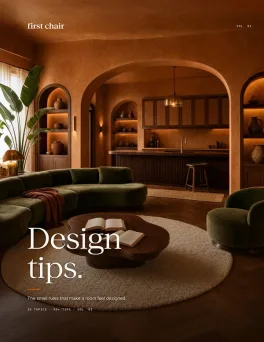
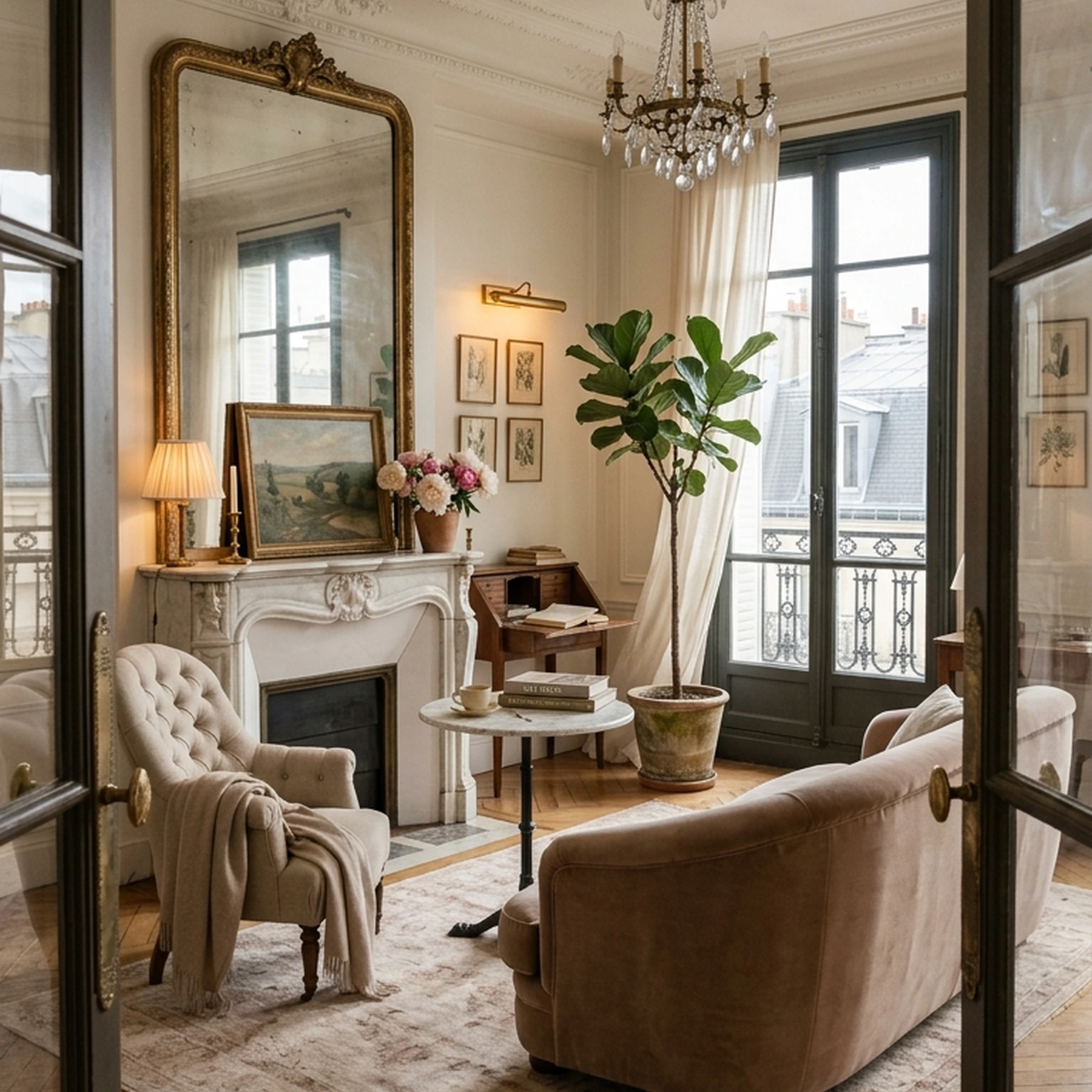
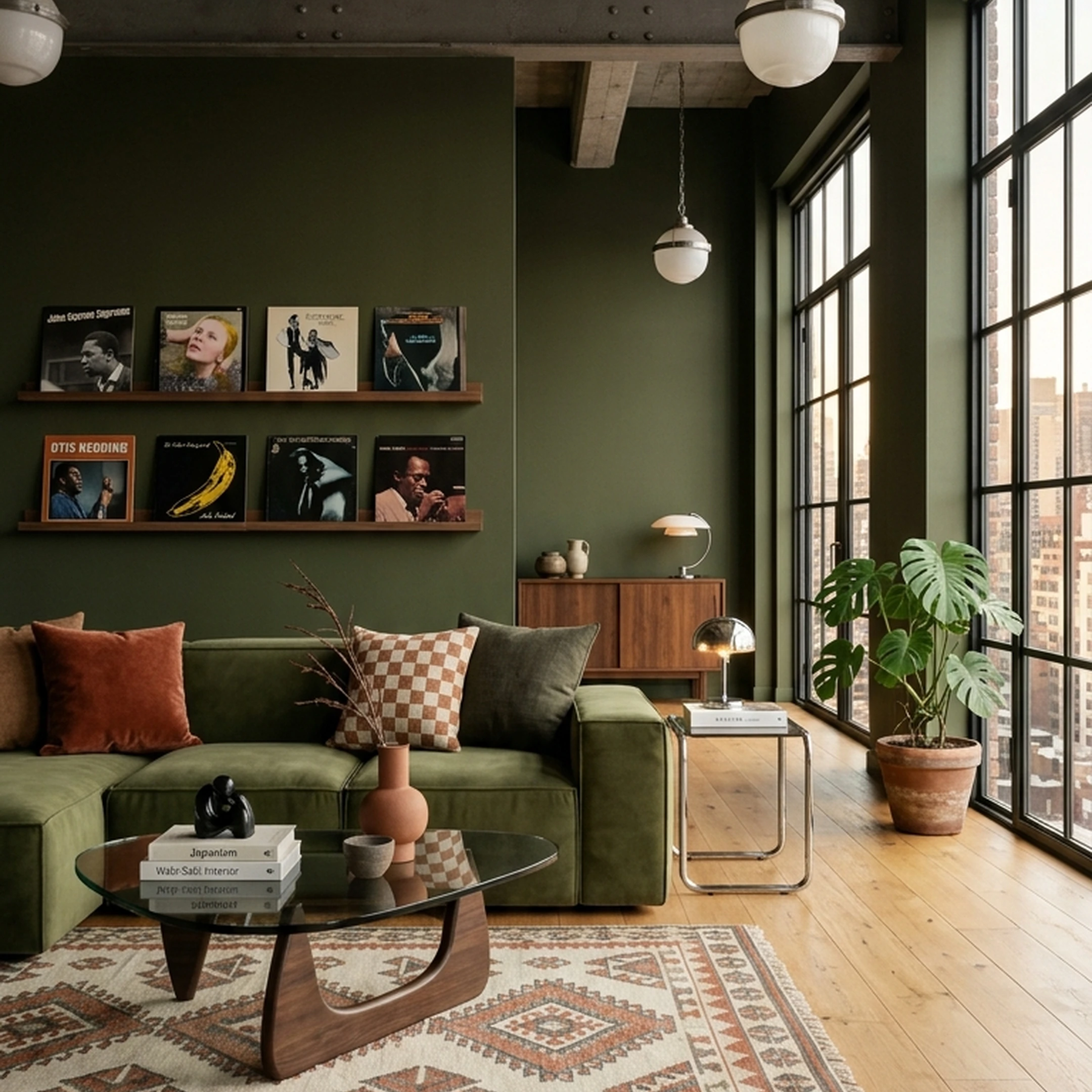
Most people furnishing their first adult apartment don’t want a perfectly staged showroom. They want a room that feels collected. Warm woods instead of cold gray everything. A sofa that doesn’t look shrink-wrapped. Lighting that makes the room feel finished at night.
Traditional interior designers can absolutely help with that. But between hourly consultations, sourcing fees, revision rounds, and procurement markups, the process can get expensive quickly. The global interior design market reached roughly $137 billion in 2024 because people genuinely want professional guidance. What many people don’t want is the friction that comes with getting it.
First Chair removes that friction: just upload your inspiration, describe your aesthetic, and get a cohesive room concept with real, purchasable pieces from brands like West Elm, CB2, and Crate & Barrel. It’s fast, easy, and more actionable.
Key Takeaways
- Online design services make professional design direction far more accessible than traditional full-service interior design, especially for first apartments and first homes.
- Free DIY tools can help with floor plans, but they still leave you doing the hard part: making the room actually feel pulled together.
- Retailer design services work best if you already know you want one store’s look. Less helpful if your room lives somewhere between CB2, vintage finds, and that one Lulu & Georgia lamp you can’t stop thinking about.
- First Chair turns saved inspiration into real, shoppable room concepts using real pieces from multiple retailers, with insider pricing built in.
Why Consider Alternatives to a Traditional Interior Designer

Traditional interior designers still make sense for major renovations, custom builds, and projects involving contractors, permits, or architectural changes. If you’re reworking a kitchen layout or managing a full-home remodel, you probably do need that level of oversight.
But most people furnishing a living room, bedroom, or first apartment don't need a six-figure project manager.
Many designers charge hourly or work on retainers. Others earn through procurement fees and furniture markups. On an $8,000 furnishing budget, that can mean a meaningful chunk of the budget disappears before the room even starts coming together.
That’s why alternatives have exploded. People want faster decisions, clearer guidance, and rooms they can actually buy without turning furnishing a one-bedroom apartment into a six-month project.
1. First Chair: Best for Turning Inspiration Into Buyable Rooms
Most people do not need more inspiration. They already have the Pinterest board, the saved Instagram posts, and 14 tabs open comparing sofas that all somehow feel slightly wrong.
First Chair is built for people who already have taste. Upload a photo of a boutique hotel lobby, a cafe interior, or a living room you cannot stop thinking about. Describe the direction in real language like “Scandinavian with walnut warmth” or “mid-century but softer and less rigid.” First Chair translates that into complete room concepts using real furniture from West Elm, CB2, Crate & Barrel, Pottery Barn, Lulu & Georgia, and brands most people would never find on their own.
That room is actually buyable. Not a fantasy render. Not a vague moodboard. Not “similar styles you may like.” Real pieces. Real layouts. Real sourcing.
What Sets It Apart
- Real furniture only: No fantasy renders or furniture that doesn't exist. Every recommendation connects to an actual product you can buy.
- Multi-retailer sourcing: First Chair pulls from multiple brands rather than pushing inventory from a single catalog.
- Insider pricing: Member savings show up at checkout on most pieces.
- Style interpretation: The nuanced aesthetic matching understands "rustic with refined silhouettes" or "minimalism with weight and lived-in materials."
Why First Chair
Most alternatives solve one piece of the process. Pinterest helps with inspiration. Retailer design services help you shop one catalog. DIY room planners help with layout.
First Chair is one of the few tools that actually bridges inspiration and execution before expensive mistakes happen.
For people furnishing a first apartment, upgrading from starter furniture, or finally making a space feel pulled together, it’s the clearest path from “I know what I like” to “Yes, this is the room.”
2. Free DIY Tools: For Floor Planning on a Zero Budget
Free tools like Planner 5D and Homestyler are useful for one specific job: figuring out whether the furniture physically fits before you buy it.
They’re strong at geometry. Weak at design judgment.
If you’re moving into a Chicago walk-up and trying to answer practical questions like “Does the sectional block the radiator?” or “Can I pull dining chairs out without hitting the kitchen island?” these tools help. You can build a room layout, test dimensions, and see how traffic flow works before committing to anything expensive.
What They Offer
- 2D and 3D room visualization
- Drag-and-drop furniture placement
- Basic material and color customization
- Exportable room mockups
- Floor planning without hiring a designer
The Tradeoffs
That’s where DIY tools tend to stall out. They can confirm a sofa fits physically. They can’t tell you whether the sofa works with the warm oak tones in your dining chairs, the aged brass floor lamp, and the performance velvet accent chair you already own. Skip free floor-planning software if what you actually need is direction.
How it differs from First Chair: You build everything manually with generic furniture catalogs instead of pulling off a full design with real, shoppable pieces.
3. Havenly: Budget Entry Point for Professional Help
Unless you’re patient enough to enjoy weeks of back-and-forth communication, Havenly can start to feel more like managing a project than decorating a room.
The service works best for people who want ongoing human reassurance throughout the process. You take a style quiz, get paired with a designer, and collaborate through moodboards, messaging, and product recommendations over time.
For someone furnishing their first apartment and feeling completely stuck, that structure can help. Having another person validate decisions removes some of the pressure.
What You Get
- Style quiz and designer matching
- Moodboards and curated furniture selections
- Shopping lists with retailer links
- Ongoing messaging and revisions
The Tradeoffs
Every decision requires another round of communication. Feedback, revisions, waiting, more feedback. If you already know you like warm woods, deep-seat sofas, aged brass lighting, and softer silhouettes, explaining that repeatedly through email can feel draining instead of helpful. Skip This If You want results fast or prefer self-service tools over explaining your taste to a stranger over email.
How it differs from First Chair: White-glove designer collaboration versus instant, shoppable room concepts.
4. Spacejoy: For Fast Turnaround
Skip this if you want to DIY everything without an interior designer chiming in throughout the process or a separate team handling furniture ordering for you.
Spacejoy sits somewhere between traditional interior design and modern online design services. You work with a designer, receive photorealistic room renderings, and can hand off the actual purchasing process to a concierge team that coordinates orders on your behalf.
What You Get
- 3D photorealistic room renderings
- Video consultations with your designer
- Shopping lists from retailers like CB2, West Elm, and Wayfair
- Concierge ordering service that handles purchases for you
The Tradeoffs
Faster than traditional interior design, but not immediate. And once the concierge layer gets involved, the experience becomes more managed and less hands-on. Some people love outsourcing the logistics. Others want more direct control over timing, retailer decisions, shipping coordination, and purchases.
How it differs from First Chair: Designer-led concepts and concierge ordering versus instant, self-directed room concepts built around your taste.
5. Decorilla: For Kitchen and Bath Design
Not the right fit if you’re simply trying to decorate a living room or finally make your bedroom feel finished. Decorilla makes more sense when the project involves kitchens, bathrooms, or larger renovation decisions where layout and architectural planning matter.
If you’re redesigning a kitchen in a Chicago condo, reworking a bathroom layout, or furnishing an entire home where cabinetry, appliances, lighting plans, and spatial flow all matter together, the added structure helps. Most online design services avoid kitchens and baths entirely because the complexity jumps fast once plumbing, clearances, and materials enter the conversation.
What You Get
- Two designers per project with competing concepts
- High-end 3D photorealistic renderings
- Access to trade pricing across many vendors
- Kitchen and bathroom design support
- Large multi-brand furniture catalog
The Tradeoffs
The process is slower and heavier than most people actually need for furnishing-focused projects. And unless you’re tackling renovation-level decisions, the service can feel oversized for the job.
How it differs from First Chair: Renovation-scale designer collaboration. Not fast, furnishing-focused room concepts built around real, shoppable pieces.
6. IKEA Design Services: For IKEA Loyalists
This only works if you genuinely want an IKEA-forward home. Not “a few IKEA storage pieces mixed into the room.” An actual IKEA ecosystem.
Because once you use IKEA’s planning services, the room naturally starts orbiting around IKEA’s catalog, proportions, finishes, and aesthetic language. That’s either convenient or creatively limiting depending on your taste.
What You Get
- Free kitchen and closet planning
- 3D room visualization
- Direct IKEA checkout integration
- Delivery and assembly coordination
The Tradeoffs
The tradeoff is that everything starts looking very IKEA.
And that’s fine if you love that clean Scandinavian utility aesthetic. But if your taste leans warmer, more layered, or more collected, the limitations show quickly.
How it differs from First Chair: IKEA keeps you inside one design ecosystem. First Chair pulls across retailers and styles so the room feels more collected than catalog-matched.
7. Retailer Design Services: For Brand-Specific Shopping
Like IKEA loyalists, choose this if you’re keen on getting a one-shop look.
Major furniture retailers offer in-store and virtual design services, often bundled with minimum purchase requirements. Pottery Barn's design crew helps with room layouts and product selection. West Elm offers free design consultations. Crate & Barrel provides both in-store and virtual design appointments.
What You Get
- Free or low-cost consultations
- Product expertise within one retailer’s catalog
- Room layouts and visualization tools
- Purchase coordination and delivery scheduling
The Tradeoffs
The room almost always ends up looking like it came from one store.
Same wood tones. Same silhouettes. Same styling language repeated across every piece. The result is cohesive, but not necessarily interesting.
How it differs from First Chair: Retailer design services keep the room inside one brand’s world. First Chair mixes pieces across retailers so the room feels layered instead of catalog-matched.
What NOT to Buy
Before committing to any alternative, avoid these frequently repeated errors:
- Matched furniture sets: A five-piece living room set from a single collection looks catalog-assembled, not personally curated. Mix silhouettes, materials, and eras instead.
- "Small space" branded furniture from mass retailers: The construction often feels short-lived. One properly scaled sofa with visible legs usually works better than multiple undersized pieces fighting for space.
- Rolled-arm sofas in tight rooms: Track arms save 4 to 6 inches per side. In a 12-foot-wide living room, that width matters.
- Furniture without visible legs: Visible legs keep more floor in view, which makes small rooms feel larger. Skirted sofas and platform beds can visually shrink tight spaces.
Why First Chair Stands Out
When you're furnishing a new apartment or finally finishing the living room that's felt temporary for months, the gap between inspiration and execution is the real problem. You have the taste. You have the Pinterest boards. What you don't have is confidence that the sofa, rug, coffee table, and lighting will actually work together when they arrive.
First Chair closes that gap. Upload the cafe interior you've been obsessing over, describe your aesthetic direction, and get a room concept featuring real furniture from West Elm, CB2, Pottery Barn, Lulu & Georgia, and other retailers. Unlike design services tied to single catalogs or tools that generate fantasy rooms with nonexistent furniture, every piece First Chair recommends actually exists and ships to your door.
Frequently Asked Questions
How much do online design services cost compared to traditional interior designers?
Online design services are often substantially more affordable than traditional full-service interior design engagements, which can include consultation fees and procurement margins before furniture purchases.
Can I use multiple design services for different rooms?
Yes. Some people use free IKEA planning for closet systems while engaging a service like First Chair for living room and bedroom design. The key is ensuring visual continuity across spaces if they share sightlines.
Are furniture recommendations from online platforms actually in stock?
This varies significantly. Many room generators show furniture that doesn't exist or went out of stock months ago. First Chair specifically filters for real, in-stock pieces from actual retailers, which prevents the frustration of designing around a sofa you can't actually purchase.
What's the best alternative if I have a very limited budget?
For zero budget, free tools like Planner 5D help with floor planning but offer no style guidance. First Chair offers a balance of style guidance with real furniture recommendations and insider pricing that can reduce your total spend.
Do I need design help, or can I figure it out myself?
If you have strong spatial intuition and don't mind trial and error, free DIY tools can work. If you've been stuck in decision paralysis for months or previously purchased furniture that didn't fit or look right together, professional guidance prevents expensive mistakes. One wrong sofa can cost $1,500 to $3,000 to replace.