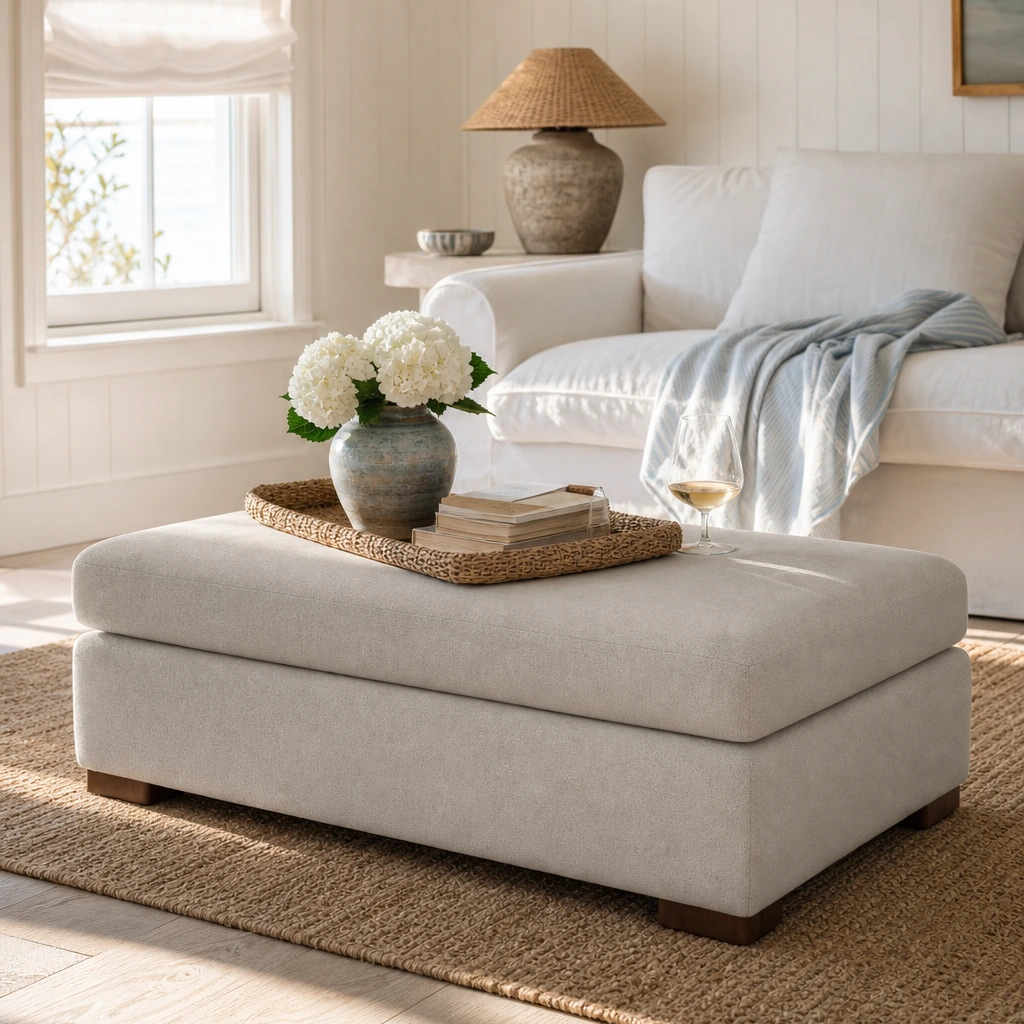
A new city. A new apartment. A fresh start. The only problem is that your space still looks like a collection of temporary decisions instead of somewhere that feels considered, personal, and finished.
The rug looked bigger online. The floor lamp was a rushed purchase after move-in week. There are still 27 tabs open across West Elm, CB2, and Article, but the room somehow feels no closer to done than it did three months ago.
That's where many interior design tools start to feel disconnected from reality. The render looks beautiful, but beautiful isn't the hard part. Finding real pieces that work together, fit your space, and finally make the room feel finished is.
Foyr Neo built its reputation on photorealistic rendering for professional interior designers. But if you're furnishing an actual room, not staging a client presentation, you need something different. Most design software generates beautiful rooms filled with furniture that doesn't exist or can't be purchased. These six alternatives address different needs, from shoppable room concepts to budget-friendly floor planning. This guide breaks down what each one actually does well and who should skip it entirely.
Key Takeaways
- First Chair is the only alternative built for buying, not just designing: While Foyr Neo and similar tools create stunning renders, First Chair generates room concepts using real, purchasable furniture from retailers like West Elm, CB2, and Crate & Barrel
- Professional rendering tools aren't meant for furniture shopping: Foyr Neo excels at client presentations with high-resolution renders, but it won't help you actually furnish your apartment
- Free tiers exist but come with tradeoffs: Homestyler and Planner 5D offer free versions, though catalog freshness and feature limitations matter more than the price tag suggests
- Floor plan tools solve a different problem: RoomSketcher and Planner 5D focus on spatial planning and layout, which helps if you're renovating but not if you're staring at an empty living room wondering what sofa to buy
- The gap between inspiration and execution is the real issue: Most people don't lack design ideas. They lack the ability to translate those ideas into a finished, purchasable room
1. First Chair: Built for Actually Buying Furniture
Skip every other option on this list if what you actually need is a finished, purchasable room. First Chair exists specifically to close the gap between saved inspiration and a space you can live in. Every piece shown is real and available from actual retailers.
What It Does Well
First Chair interprets your aesthetic preferences and generates curated room concepts using furniture you can purchase the same day. Upload a photo of a hotel lobby you loved in Austin or that café in Silver Lake, describe the direction you want, and First Chair returns a cohesive concept with clickable, shoppable pieces.
The difference matters because most design tools generate fantasy rooms. They show you a perfect walnut credenza that doesn't exist or a sofa in a colorway that's been discontinued for three years. First Chair pulls from West Elm, CB2, Crate & Barrel, Pottery Barn, Lulu & Georgia, plus smaller brands you haven't encountered yet.
Key Strengths
- Photo-to-room interpretation: Upload any inspiration image and receive concepts styled in that aesthetic using real furniture
- Multi-retailer sourcing: Not locked to a single catalog. Pieces come from wherever the right piece actually lives
- Insider pricing: Member savings built into checkout on most pieces
- Zero learning curve: No floor plan drawing, no 3D modeling, no render queues. Upload, describe, shop
- Nuanced style matching: Handles layered prompts like "mid-century modern with walnut tones and warm leather" or "minimalism with weight and lived-in materials"
Who Should Use It
Anyone furnishing an actual room who already knows their taste but struggles with execution. First apartment in Chicago. First house with a partner. Post-breakup reset in Miami. The room already exists. The question is what belongs in it.
2. Foyr Neo
Use this if you're a professional designer who bills clients for presentation materials. Skip it if you're furnishing your own space, because Foyr Neo won't help you buy anything.
What It Does Well
Foyr Neo creates photorealistic renders quickly. The software compresses what used to take hours in SketchUp or 3ds Max into a faster workflow. For professional designers billing clients, that speed translates directly to margin.
The platform maintains a catalog of furniture models, including approximations of real brand pieces. But "approximations" is the key word. You're designing with stand-ins, not actual purchasable products.
Key Strengths
- High-resolution rendering: Professional-grade output for client-ready presentations
- Complete design workflow: Floor plans, 3D visualization, and rendered output in one interface
- Large catalog: Thousands of models covering furniture, fixtures, and decor
- Faster iteration: Quicker than traditional 3D software for design revisions
Who Should Use It
Professional interior designers running client-facing businesses who need presentation materials. Design firms billing by the project where render speed affects profitability.
Who Should Skip It
Anyone furnishing their own home. The subscription buys you renders of furniture you can't purchase. If you're trying to actually live in the room, not just present it, Foyr Neo solves the wrong problem.
How it differs from First Chair: Foyr Neo creates beautiful images of rooms. First Chair creates rooms you can actually buy. Different problems, different solutions.
3. Homestyler

Good for browsing if you enjoy the hunt. Skip it if you're already overwhelmed by options, because Homestyler adds more inspiration when execution is the actual problem.
What It Does Well
Homestyler maintains one of the larger furniture catalogs available, with models from real brands. The free tier is genuinely generous. You can create room designs, generate renders, and access the catalog without paying.
The platform has served over 16 million users globally, which speaks to accessibility. Anyone can start designing immediately without technical skills or payment information.
Key Strengths
- Large library: Extensive furniture models to browse
- Generous free tier: Catalog access at no cost
- Brand representation: Real furniture from recognizable manufacturers
- Low barrier: No subscription required to start designing
The Catch
Catalog freshness matters more than catalog size. Many Homestyler models feel dated and not current. You might find a sofa shape you like but struggle to source anything resembling it from current retailers.
The coin and credit system also creates friction. Premium features feel nickel-and-dime rather than seamlessly accessible.
Who Should Use It
DIY enthusiasts who enjoy browsing and don't mind the hunt. Budget-conscious users who want free access to experiment with layouts. People early in the inspiration phase who haven't narrowed their aesthetic.
How it differs from First Chair: Homestyler gives you thousands of models to browse. First Chair gives you a curated concept you can actually purchase. One expands choices, the other narrows them.
4. Planner 5D
Good value for spatial planning on a budget. Skip it if you don't need floor plans, because the furniture shopping experience isn't the point.
What It Does Well
Planner 5D delivers legitimate floor planning and 3D visualization at a reasonable price point. The interface has strong user satisfaction. The mobile apps work well on iOS and Android, making it genuinely portable. You can sketch a floor plan on your phone while standing in an empty apartment.
Key Strengths
- Good price-to-feature ratio: Affordable access to premium features
- Strong mobile experience: Full iOS and Android apps
- Intuitive interface: Strong user satisfaction ratings
- Decent catalog: Thousands of furniture pieces in the library
Who Should Use It
Budget-conscious users who need floor planning specifically. First-time homebuyers trying to figure out if furniture will fit before purchasing. Renters measuring awkward layouts.
How it differs from First Chair: Planner 5D helps you plan where furniture goes. First Chair helps you figure out which furniture to actually buy. Layout versus execution.
5. RoomSketcher
Built for real estate marketing and contractor documentation. Skip it if you're furnishing a home you actually live in.
What It Does Well
RoomSketcher creates professional floor plans quickly. Real estate agents use it for listings. Contractors use it for client approvals. The platform has existed since 2008, which means the floor planning functionality is mature and reliable.
The team collaboration features work well for professionals managing multiple projects. It scales reasonably for small firms.
Key Strengths
- Mature floor planning: Nearly two decades of development
- Real estate specific features: Listing-ready floor plans and 3D tours
- Team collaboration: Multi-user plans for professional workflows
- Construction documentation: Outputs useful for contractor approvals
Who Should Use It
Real estate agents marketing listings. Contractors creating floor plans for client approvals. Architects in early concept phases.
How it differs from First Chair: RoomSketcher documents spaces for professional purposes. First Chair furnishes spaces for people who live in them. Professional documentation versus personal execution.
6. Coohom
Built for furniture brands and retailers showing products in context. Skip it if you're the one doing the shopping.
What It Does Well
Coohom specializes in product visualization for furniture companies. If you manufacture sofas and need to show customers how they look in rendered rooms, Coohom delivers. The platform renders at up to 16K resolution for panoramas.
The enterprise features support furniture retailer workflows specifically, including catalog integration and product configurators.
Key Strengths
- High-resolution rendering: Up to 16K for product photography quality
- Retailer integration: Built for furniture brands showing their own products
- Large model library: Extensive catalog of pieces
- Enterprise collaboration: Team features for furniture companies
Who Should Use It
Furniture manufacturers and retailers creating product visualization. E-commerce teams building room scenes for product pages.
How it differs from First Chair: Coohom helps furniture brands sell to you. First Chair helps you buy furniture intelligently. B2B versus B2C.
The Real Problem These Tools Don't Solve
Foyr Neo, Homestyler, Planner 5D, RoomSketcher, and Coohom all do something well. But none of them close the gap between inspiration and execution for people furnishing actual homes.
You don't need another source of inspiration. You don't need more furniture renders. You don't need a floor plan. You need someone to tell you which pieces to actually buy, where to buy them, and confidence that they'll work together in your specific space.
That gap explains why First Chair exists. Not to generate more options, but to narrow them. Not to show you rooms that can't exist, but to show you rooms built entirely from pieces you can add to cart today.
The difference between visualization software and a shoppable room concept is the difference between dreaming about a space and actually living in it. One leaves you with pretty pictures. The other leaves you with a room that finally feels finished.
Why First Chair Works Differently
First Chair doesn't compete on rendering resolution or catalog size. It competes on a simpler question: can you actually buy what you're looking at?
Every piece in a First Chair concept comes from real retailers. West Elm, CB2, Crate & Barrel, Pottery Barn, Lulu & Georgia, Article, Rejuvenation. The sofa exists. The rug ships. The lighting fixture has a SKU.
Insider pricing shows up at checkout because First Chair built relationships with these retailers rather than just rendering approximations of their products.
The result is a room concept that functions as a shopping list, not a mood board. Upload your inspiration, describe your aesthetic in whatever language makes sense to you, and receive something you can act on immediately.
Frequently Asked Questions
What makes First Chair different from Foyr Neo and other design software?
First Chair generates room concepts using real, purchasable furniture from actual retailers. Foyr Neo and similar tools create photorealistic renders using approximation models that often can't be purchased. If you need client presentations, Foyr Neo works. If you need to actually furnish a room, First Chair solves the right problem.
Is there a free Foyr alternative worth using?
Homestyler and Planner 5D both offer free tiers. Homestyler provides access to an extensive furniture library at no cost. Planner 5D offers basic floor planning free. However, free visualization doesn't help if you can't buy what you're visualizing. First Chair focuses specifically on shoppable outcomes.
Can I use floor plan software to help furnish my apartment?
Floor plan software like Planner 5D and RoomSketcher helps with spatial planning, specifically whether furniture will physically fit in a room. But floor planning doesn't help you decide which sofa to buy or whether pieces work together aesthetically. Different problems require different solutions.
How do I know if the furniture in design software actually exists?
Most design software uses approximation models that represent furniture styles without connecting to real products. First Chair solves this by only showing pieces from actual retailers with current availability. Every sofa, rug, and lighting fixture links directly to a product page where you can purchase it.