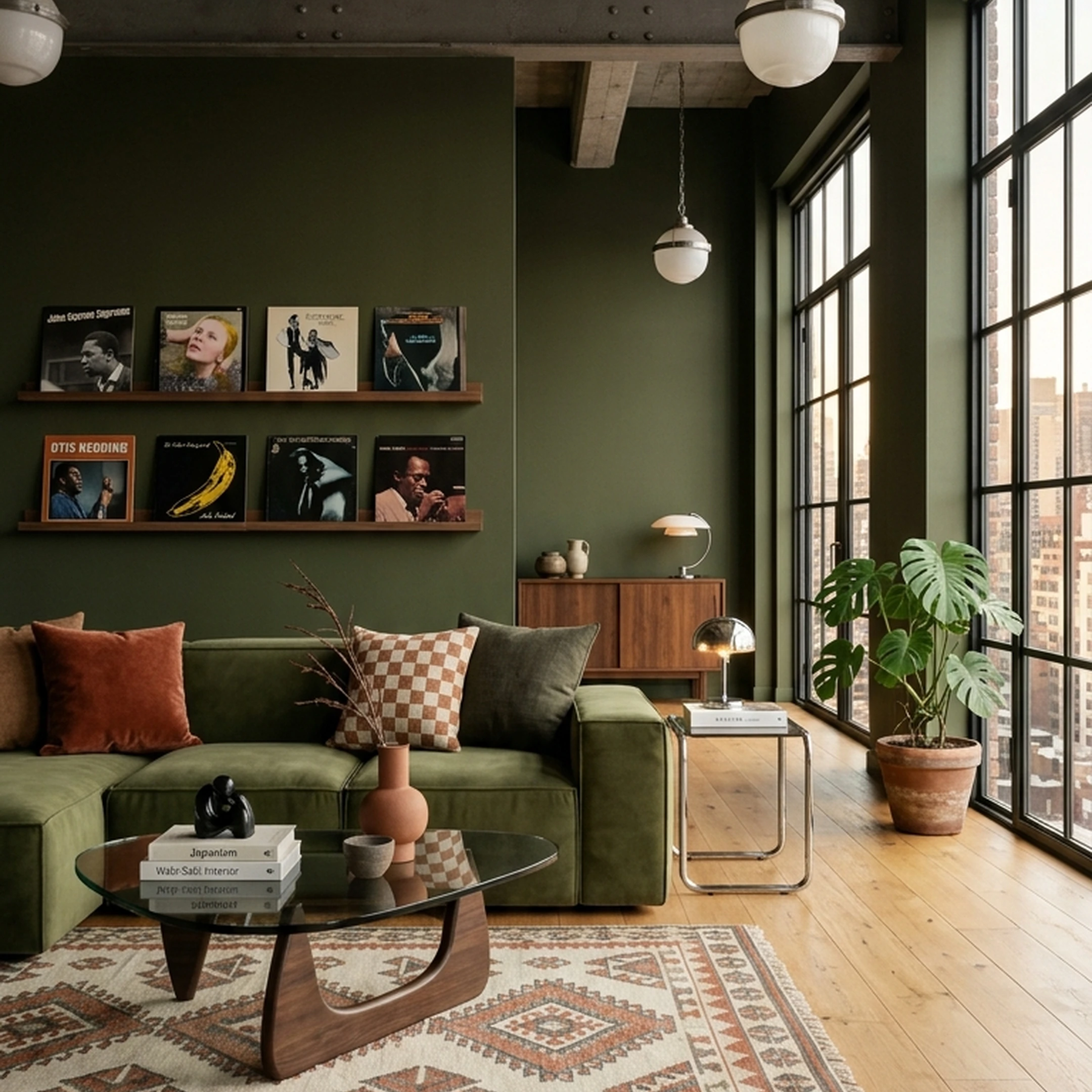
A data-driven look at market growth, consumer behavior, and the trends reshaping how people furnish their homes
You just signed a lease in Brooklyn. The keys are in your hand, but the apartment still feels like someone else's. You’ve been browsing across 47 tabs, across two browsers, a Pinterest board with 200 saved pins, and nothing purchased. The global home decor market is now valued at USD 960.14 billion, yet turning inspiration into a finished room somehow feels harder than ever.
The data below explains why. Consumers are spending more on their homes, researching across more platforms, and taking longer to commit to purchases. First Chair was built for exactly that gap, turning scattered inspiration into cohesive, shoppable rooms using real pieces from brands you’d actually shop.
Key Takeaways
- The market is massive and accelerating. According to projections, global home decor reached USD 960.14 billion in 2024 and is projected to hit USD 1.6 trillion by 2030 at a 9.4% CAGR.
- Asia Pacific dominates, but North America spends big. Asia Pacific holds 45.75% market share, while U.S. consumers spend an average of USD 5,635 on renovations.
- Furniture leads product categories. The furniture segment accounts for 50.7% of market revenue, making sofas, chairs, and tables the foundation of home decor spending.
- Online shopping is standard, but overwhelm is real. While 82% of consumers are willing to shop online for home decor, 42% feel overwhelmed by too many options.
- Sustainability drives purchasing decisions. In Europe, 86% of shoppers consider sustainability pivotal when choosing home decor.
- Mobile commerce is reshaping checkout behavior. In Q3 2024, 63% of orders at Wayfair arrived via mobile devices, signaling a permanent shift in how people buy furniture.
Size and Growth Drivers
1. Global market valued at USD 960.14 billion in 2024
According to projections from Grand View Research, the global home decor market is valued at USD 960.14 billion in 2024 and is projected to grow to USD 1,622.90 billion by 2030. The market's nearly doubling in six years tells you this isn't a passing trend. People are prioritizing their homes like never before, and they're putting real money behind it.
2. Alternative valuations show consistent upward trajectory
Fortune Business Insights places the market at USD 802.26 billion in 2025, and projects it will grow to USD 1,299.88 billion by 2034, with a CAGR of 5.27% over the 2026-2034 period. While methodologies vary across research firms, the directional trend shows people are spending more on their homes, and that spending is accelerating.
3. Market expected to exceed USD 1 trillion by 2032
By 2032, the global home decor market is forecast to reach USD 1,097.5 billion according to some projections. The path from sub-trillion to over a trillion dollars reflects sustained consumer prioritization of home environments across economic cycles. When you invest in your space now, you're part of a massive, sustained movement. This isn't just you caring about your home, it's everyone.
4. Mordor Intelligence projects USD 924.34 billion by 2031
Another perspective from Mordor Intelligence estimates the market will grow from USD 681.05 billion in 2025 to USD 924.34 billion by 2031, representing a 5.21% CAGR. This conservative estimate still reflects meaningful annual growth in consumer spending on home furnishings.
5. Market Research Future forecasts aggressive growth to USD 2.3 trillion
The most bullish projection comes from Market Research Future, which estimates the market could reach USD 2,320.5 billion by 2035 at a 5.8% CAGR. Over the next decade, home decor is becoming one of the biggest consumer categories on the planet. The furniture you choose today is part of something huge.
Where Growth Is Happening
6. Asia Pacific commands 45.75% of the global market
Asia Pacific dominated the home decor market with a 45.75% share in 2025, driven by urbanization, rising residential construction, and growing demand for modern, space-saving furniture. China and India lead regional growth as middle-class populations expand their purchasing power.
7. North America represents USD 273 billion in annual spending
North America accounted for USD 273.09 billion in 2025, representing 34.27% of the worldwide market. This spending is projected to grow to USD 291.5 billion in 2026 alone. This means you have access to more choices, better quality, and more innovation than almost anywhere else. Take advantage of it.
8. North American market share ranges from 34% to 42% depending on methodology
Different research approaches yield North American market share estimates ranging from 36.7% in 2024 to 41.98% in 2025. The variance reflects different product category inclusions, but all estimates position North America as the second-largest regional market.
9. The United States captures 29% of global market share alone
The United States leads within North America, capturing approximately 29% of the market. This concentration reflects high household incomes, frequent renovation cycles, and a cultural emphasis on home improvement.
10. U.S. market projected to reach USD 305 billion by 2032
The home decor market in the U.S. is expected to grow significantly, reaching USD 305.51 billion by 2032. With hundreds of billions being spent, the challenge is finding the right ones. That's exactly what First Chair solves, turning your inspiration into actual furniture you can buy, all in one place.
11. Asia Pacific grew from USD 317 billion to USD 342 billion in one year
Asia Pacific witnessed home decor market growth from USD 317.20 billion in 2023 to USD 342.09 billion in 2024. That translates to better options and competitive pricing for you.
12. China's urbanization will drive continued regional growth
In 2023, 66.2% of China's population resided in cities, with expectations to reach 75-80% by 2035. This massive urbanization wave will drive substantial demand for home decor as hundreds of millions of people furnish urban apartments.
13. Asia Pacific projected to deliver 8.11% CAGR through 2031
The region is projected to deliver an 8.11% CAGR through 2031, steadily closing the spending gap with North America. Brands like West Elm, CB2, and Crate & Barrel are expanding their presence to capture this growth.
Product Categories Driving Market Demand

14. Furniture dominates with 50.7% revenue share
The furniture segment dominated the global home decor market with a 50.7% revenue share in 2024. Sofas, dining tables, beds, and storage pieces represent the largest single investment most consumers make in their homes.
15. Furniture accounts for 38% of global market by alternative measure
Market Research Future estimates furniture accounts for approximately 38% of the global market share in 2025. Furniture is where your money goes, so it's where your decisions matter most. Getting this right changes everything about how your space feels.
16. Floor coverings held 57.79% share in 2026 projections
The floor covering segment is projected to hold a 57.79% share in 2026 due to higher household spending on soft flooring during home renovation and remodeling activities. Rugs and carpets from brands like Lulu & Georgia and Serena & Lily anchor room designs and drive significant spending.
17. Floor coverings represent 35.72% by alternative calculation
Mordor Intelligence places floor coverings at 35.72% of market share in 2025, driven by renovation cycles, builder demand, and relatively high ticket values. A quality area rug from Article or Rejuvenation often costs as much as a side table.
18. Indoor decor accounts for 92.6% of total revenue
The indoor decor category accounted for 92.6% of revenue in 2022, demonstrating the dominance of indoor living spaces in consumer spending. Outdoor decor represents a smaller but growing segment.
19. Candles market projected to reach USD 13.15 billion by 2029
The global candles market is projected to grow from USD 11.92 billion in 2026 to USD 13.15 billion by 2029. Candles and home fragrance from brands like Anthropologie Home have become essential finishing touches for designed spaces.
20. Carpets and rugs market to hit USD 58.5 billion by 2029
The global carpets and rugs market is projected to grow from USD 53.51 billion in 2026 to USD 58.5 billion by 2029. This category often anchors room designs and represents one of the first major purchases when furnishing a new space.
21. Curtains market projected at USD 53.65 billion by 2029
The global curtains market is projected to reach USD 46.58 billion in 2026 and grow to USD 53.65 billion by 2029. Window treatments dramatically impact room atmosphere and represent a category where consumers often need guidance to make confident choices. Getting this right takes seeing it all together, which is exactly what First Chair does.
22. Decorations market set for USD 36.38 billion by 2029
The decorations market worldwide is projected to bring in USD 32.62 billion in 2026 and grow to USD 36.38 billion by 2029 at a 3.7% CAGR. This category includes wall art, vases, and accessories that complete a room's visual story.
Consumer Behavior and Spending Patterns
23. U.S. consumers spend USD 5,635 on home renovations
According to a 2024 report from Opendoor, U.S. consumers spend an average of USD 5,635 on home renovation projects and USD 1,598 specifically on home decor purchases. When you're dropping over five grand on a space, you can't afford to guess. You need to see it work before you commit, which is why First Chair shows you complete rooms with real products.
24. Americans renovate every 3-5 years
U.S. consumers frequently opt to undertake renovation and home decor projects every 3-5 years. This regular cycle creates recurring opportunities for brands and platforms that earn consumer trust.
25. Americans invested USD 420 billion in home renovations in 2020
During 2020 alone, Americans invested a total of USD 420 billion in renovating their homes. The pandemic accelerated home investment as living spaces became work spaces, gyms, and entertainment centers. It needs to work harder, look better, and feel right for everything you do in it.
26. 82% of consumers willing to shop for home decor online
Over 82% of respondents are willing to shop for home decor online. The willingness is there. The confidence to make good decisions while doing so is what often holds people back.
27. 42% of consumers feel overwhelmed by online options
More than 42% of consumers are overwhelmed by the vast array of options available on online portals. This is the Pinterest paralysis that keeps people scrolling instead of purchasing. First Chair addresses this directly by curating real, shoppable pieces that work together, so you see fewer options but better ones.
28. 63% of Wayfair orders arrive via mobile in Q3 2024
In Q3 2024, 63% of orders at Wayfair arrived via mobile devices. Mobile shopping is now the default for most consumers, which means purchase decisions happen quickly, often without the luxury of seeing pieces in person.
29. 65% of Americans want decorated outdoor living spaces
Around 65% of Americans prefer covering their outdoor living spaces with decorative decks and patios, 53% with blended indoor/outdoor products, and 45% with outdoor fireplaces. Outdoor rooms have become extensions of interior design priorities.
Distribution Channels and Retail Dynamics
30. Hypermarkets and supermarkets projected to hold 38.95% share
The hypermarkets and supermarkets segment is projected to exhibit a dominant market share of 38.95% in 2026. Mass retailers continue to capture significant home decor spending despite the rise of specialty and online channels.
31. Retail stores maintain 41.7% share of distribution
The retail store channel remains the largest distribution mode with a 41.7% share, while online channels continue to grow rapidly. But even though you can buy everything online, sometimes you need to see it in person. The key is knowing what you're looking for before you go.
32. Specialty retailers account for 46.35% of market share
Specialty retailers accounted for 46.35% of share in 2025, earning loyalty through expert guidance and curated assortments. Brands like Pottery Barn, West Elm, and Rejuvenation fall into this category.
33. DIY and mass merchandiser channels growing at 7.91% CAGR
DIY and mass merchandiser outlets are forecast to expand at a 7.91% CAGR through 2031 as value-seeking consumers favor one-stop formats. This growth reflects practical shopping behavior for basics and commodities. The sweet spot is finding pieces that look expensive but don't cost a fortune, which is exactly what First Chair's insider pricing delivers.
34. Mass-market offerings make up 61.2% of total market
Mass-market offerings make up 61.2% of the market, showing that consumers continue to prefer affordable, value-based products. Price accessibility remains a primary driver of purchasing decisions.
Price Tiers and Market Segmentation
35. Mass and value offerings command 60.58% market share
Mass and value offerings commanded 60.58% of share in 2025 because scale efficiencies deliver reliable quality at wallet-friendly prices. However, premium pieces from brands like Interior Define, DWR, and Herman Miller often deliver better long-term value.
36. Premium segment growing at 6.93% CAGR
The premium bracket is set to grow at a 6.93% CAGR, as post-pandemic consumers convert living spaces into wellness and productivity hubs. People are investing more in fewer, better pieces. First Chair offers insider pricing on pieces from CB2, Crate & Barrel, and other quality brands, making premium choices more accessible.
Industry Performance and Key Players
37. Williams-Sonoma achieved 21.5% operating margin
Williams-Sonoma achieved a 21.5% operating margin and a 3.1% rise in brand sales in Q4 2024. This performance demonstrates the strength of curated, taste-driven retail in the home category.
38. IKEA U.S. generated USD 1.9 billion in online revenue
IKEA U.S. reported USD 1.9 billion in online revenue against USD 5.5 billion total sales. Even the most established physical retailer now generates over a third of revenue online.
Sustainability Trends Reshaping the Market
39. 86% of European shoppers prioritize sustainability
86% of shoppers in Europe consider sustainability pivotal to their home decor purchasing choices. This overwhelming majority signals a permanent shift in consumer values that brands must address.
40. Eco-friendly home decor segment expanding by 7% annually
The eco-friendly home decor segment is expected to expand by approximately 7% over coming years. Sustainable materials, ethical sourcing, and circular design principles are moving from niche to mainstream. First Chair helps you find pieces that last, from brands committed to quality and sustainability.
41. IKEA targeting 100% recycled polyester by 2030
IKEA aims for 100% recycled polyester in textiles by 2030, while expanding Buy Back and Resell outlets across the United States. Major retailers are making sustainability central to their business models.
42. Second-hand furnishings represent a USD 34 billion channel
Second-hand furnishings already represent a USD 34 billion channel with a 7.7% growth outlook toward 2030. Platforms like 1stDibs and Chairish have made vintage and pre-owned pieces more accessible to design-conscious consumers.
UAE Market
43. UAE home decor market valued at USD 2.21 billion
The UAE home decor market was valued at USD 2.21 billion in 2024 and is projected to reach USD 2.98 billion by 2031 at a 4.38% CAGR. This concentrated market reflects high disposable income and a taste for quality furnishings.
44. UAE e-commerce sales projected to reach USD 8 billion by 2025
UAE e-commerce sales are projected to reach USD 8 billion by 2025, driven by near 100% internet and smartphone access among residents. Digital-first shopping behavior is now standard in the region.
45. UAE online luxury home decor market valued at USD 1.2 billion
The UAE online luxury home decor retail market is valued at around USD 1.2 billion. Premium digital shopping for home furnishings has found a receptive audience in this market.
From Inspiration to Execution
The statistics tell a clear story. The market is enormous and growing. Consumers want to shop online. But over 42% feel overwhelmed by options.
That gap between wanting to furnish a room and actually doing it is where most people get stuck. The Pinterest board grows. The tabs multiply. The room stays unfinished.
First Chair closes that gap. Upload a photo of a space you love, describe the vibe you want, and First Chair generates room concepts using real pieces from West Elm, CB2, Pottery Barn, Lulu & Georgia, and brands you haven't met yet. Every piece is in stock. Every concept is buyable. Insider pricing shows up at checkout.
The market data makes one thing obvious: people are ready to invest in their homes. They just need a way to get from saved inspiration to a room they can actually live in.
Frequently Asked Questions
What is the projected growth rate for the home decor market by 2030?
The global home decor market is projected to grow at a 9.4% CAGR from 2025 to 2030, reaching USD 1,622.90 billion. Other estimates using different methodologies project CAGRs ranging from 5.21% to 5.8%, but all indicate sustained growth through the decade.
Which regions are driving the largest share of the home decor market?
Asia Pacific dominates with 45.75% market share in 2025, followed by North America at approximately 34-42% depending on the measurement approach. The United States alone captures 29% of the market.
Why do consumers struggle with purchasing home decor online despite high willingness?
While 82% of consumers are willing to shop online for home decor, 42% feel overwhelmed by the sheer number of options available. This creates a gap between intention and action that curated shopping experiences like First Chair are designed to solve.
What product categories dominate home decor spending?
Furniture leads with 50.7% of revenue, followed by floor coverings at 35-58% depending on measurement methodology. Indoor decor overall accounts for 92.6% of spending, with outdoor categories representing a smaller but growing segment.
How is sustainability affecting home decor purchasing decisions?
Sustainability has become central to purchasing decisions, with 86% of shoppers in Europe considering it pivotal. The eco-friendly segment is growing at approximately 7% annually, and second-hand furnishings now represent a USD 34 billion channel.