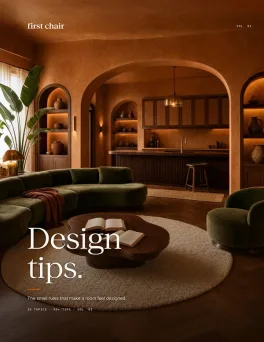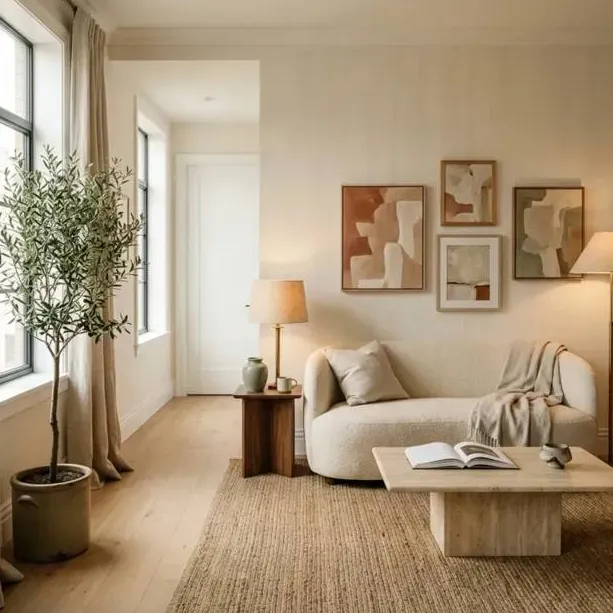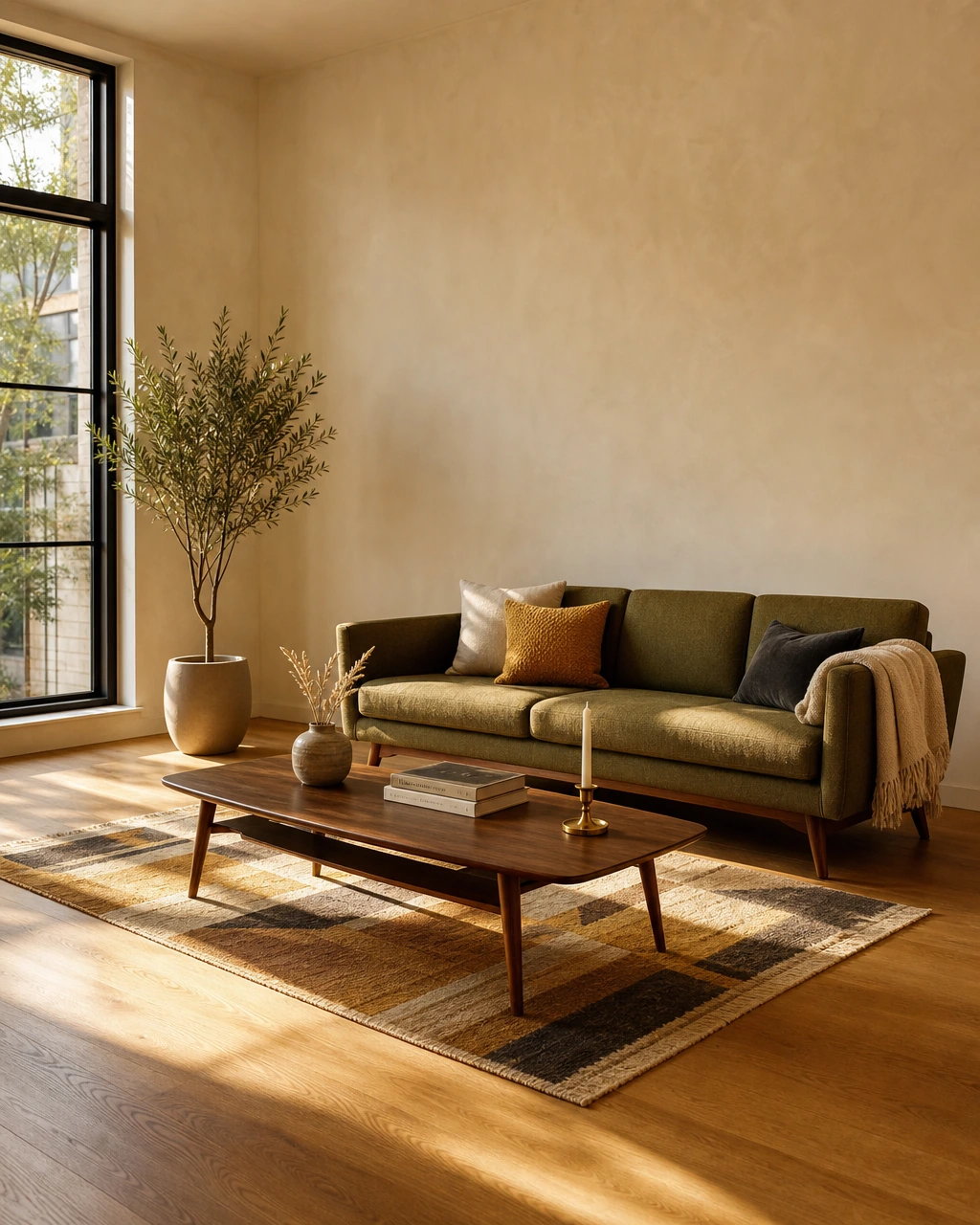
The lease is signed. The Brooklyn apartment has good light, original hardwood floors, and a living room that could actually be something. Six months later, there's a secondhand couch that doesn't quite fit, a rug that seemed right online but reads beige instead of taupe, and 34 saved Pinterest boards that haven't translated into a single cohesive room. This is where most millennials live, not in the apartments themselves, but in the space between knowing what they want and figuring out how to actually get there.
First Chair exists for exactly this moment. The furniture paralysis. The endless scrolling. The gap between the room in your head and the room you're actually sitting in.
What the data shows is that millennials aren't short on taste or willingness to spend. They're stuck in a research loop that rarely ends in a room that feels finished. Understanding the numbers behind millennial home decor spending reveals not just where the money goes, but why so much of it ends up feeling wasted.
Key Takeaways
- Millennials outspend every other generation on home decor by investing $1,771 annually, 23% more than Baby Boomers, despite earning less than Gen X on average
- The research phase is where most purchases stall as half of millennials spend 2-3 weeks researching furniture before buying, often ending with 30 open tabs and nothing in the cart
- Online shopping dominates but physical stores still matter with 47% buying online while 63% still make purchases in stores, suggesting millennials want to see before they commit
- Sustainability drives decisions, not just aesthetics as 62% prefer sustainable brands, reshaping which retailers and products earn their dollars
1. Millennials Spend $1,771 Annually on Home Decor
Millennials invest $1,771 per year on home decor, outspending every other generation including Baby Boomers at $1,359. This represents 23% more spending despite millennials earning less than Gen X on average.
The willingness to spend on decor while renting signals that millennials prioritize immediate quality of life over traditional markers of financial responsibility. The apartment with good light and original hardwood deserves real furniture, not temporary solutions.
2. Millennials Represent 37% of Furniture-Buying Households
Millennials now represent 37% of furniture-buying households in the U.S., making them the single largest demographic driving the home decor market. This market dominance reflects both population size and purchasing behavior.
With 72.3 million people, millennials are the largest living generation. Their spending power is reshaping which products retailers prioritize, which aesthetics trend, and how furniture is marketed and sold.
3. Millennials Spend $770 Per Year on Furniture Specifically
Beyond general home decor, millennials spend $770 annually on furniture specifically. While lower than Gen X's $1,014, this number is growing faster than any other generation's furniture spending.
The gap between Gen X and millennial spending reflects life stage differences more than preference. As millennials age into peak earning years and larger living spaces, their furniture spending continues accelerating.
4. Millennials Invest $6,611 Annually in Remodel Projects
Remodel spending tells a different story. Millennials invest $6,611 per year in renovation projects, 37% more than Baby Boomers spend on similar work. Even renters are investing in removable improvements. Peel-and-stick wallpaper, removable light fixtures, and temporary kitchen upgrades allow personalization without losing security deposits.
5. Millennial Household Income Averages $100,315
The spending picture makes more sense with context. Millennial average household income sits at $100,315, below Gen X's $126,892 but growing rapidly.
This income level supports significant spending on home decor while leaving many millennials feeling stretched. The combination of student debt, high housing costs, and delayed life milestones means home decor spending competes with other financial priorities.
6. Millennial Incomes Grew 27% Between 2019 and 2022
Income growth tells an optimistic story. Millennial incomes grew 27% between 2019 and 2022, the fastest growth rate of any generation.
This rapid income growth is translating directly into increased home decor spending. As millennials earn more, they're investing those gains into their living spaces at higher rates than previous generations did at similar life stages.
7. 45% of Millennials Don't Yet Own Homes
Despite strong earning growth, 45% of millennials still don't own homes. Millennials are investing heavily in spaces they rent, treating apartments as real homes rather than temporary stops. This shift challenges the traditional assumption that renters buy disposable furniture while homeowners invest in quality.
8. 47% of Millennials Buy Furniture Online
The shopping split surprises most retailers. 47% of millennials buy furniture online, making them the most digital-forward generation for home purchases. The confidence to buy a sofa without sitting on it first reflects both trust in return policies and comfort with online reviews as proxies for physical experience.
9. 63% of Millennial Furniture Purchases Still Happen In-Store
Despite strong online adoption, 63% of purchases still happen in physical stores. The reality is hybrid. Browse online, compare prices across retailers, then visit a showroom to sit on the sofa before committing. Physical stores remain important for tactile confirmation, but the research phase happens almost entirely online. Retailers who don't support this hybrid journey lose sales at both ends.
Why First Chair Changes the Research Equation
This is where First Chair changes everything. Instead of bouncing between dozens of retailer sites trying to figure out if pieces work together, First Chair pulls across all of them. One place. Real pieces. Concepts that actually work together.
For millennials stuck in research loops that never convert to purchases, First Chair bridges the gap between inspiration and execution.
10. 75% of Millennials Compare Prices at Multiple Retailers
Price comparison runs deep in millennial shopping behavior. 75% check prices at multiple retailers before making a purchase. That's dozens of tabs, multiple wishlists, and weeks of deliberation for a single piece. The intent is there. The follow-through often isn't. The comparison shopping habit that should lead to confident purchases instead creates paralysis.
11. Half of Millennials Spend 2-3 Weeks Researching Furniture
The research timeline reveals the problem's scale. Half of millennials spend 2-3 weeks researching furniture before making a single purchase. The research phase is where most purchases stall. Not from lack of options but from too many options without clear guidance on what actually works together.
12. 48% of Millennials Aged 25-34 Shop for Decor Exclusively Online
Among younger millennials specifically, 48% aged 25-34 shop for decor exclusively online. This represents the future of furniture retail. Exclusive online shopping requires better curation tools than currently exist. Product discovery works. Room discovery doesn't.
13. 62% of Millennials Prefer Buying From Sustainable Brands
Sustainability drives purchase decisions beyond aesthetics. 62% of millennials prefer buying from sustainable brands, reshaping which retailers and products earn their dollars. Sustainability factors into real purchase decisions, affecting which brands millennials research, which products they buy, and how much they're willing to spend. The preference for sustainable brands has forced traditional retailers to adapt supply chains and marketing. Brands that ignore sustainability simply lose millennial customers.
14. Vintage Decor Popularity Jumped 30% Among Millennials
Aesthetic preferences reveal deeper values. Vintage decor popularity jumped 30% among millennials, reflecting a move away from mass-produced sameness toward pieces with character. The vintage trend pairs naturally with sustainability values. Buying secondhand extends product life and reduces waste. It also creates rooms that feel collected rather than catalog-ordered.
15. 60% of Millennials Use Social Media as a Shopping Tool
Social media fundamentally changed furniture discovery. 60% of millennials use social media as a shopping tool when looking for furniture. But Social media excels at inspiration but fails at execution. Saved rooms use furniture that doesn't exist or costs $40,000. Pieces are shown without scale context. No clear path from "I love this" to "I can buy this."
16. 55% of Buyers Are Influenced by Social Media in Decor Purchases
The influence extends beyond inspiration. 55% of buyers are influenced by social media in actual decor purchases, not just browsing behavior. This means social media drives real spending, not just window shopping. The problem is translating that influence into purchases that create cohesive rooms rather than collections of unrelated pieces.
17. 41% Cite Cost as the Most Intimidating Factor in Renovations
Budget concerns create real barriers. 41% of homeowners cite cost as the most intimidating factor when starting renovation projects.
For renters, the math is even harder. Invest in quality pieces that might not fit the next apartment, or buy disposable furniture that looks tired within a year. The cost calculation includes both immediate purchase price and long-term value.
18. 48% Bought Large Interior Furniture in 2024
Specific purchases reveal priorities. 48% bought large furniture in 2024, up from 44% the previous year. Large furniture represents significant financial and spatial commitments. The increase suggests growing confidence in living situations and willingness to invest in major pieces. Buying a sofa or dining table signals intention to stay, even in rental situations.
How First Chair Helps Maximize Furniture Investments
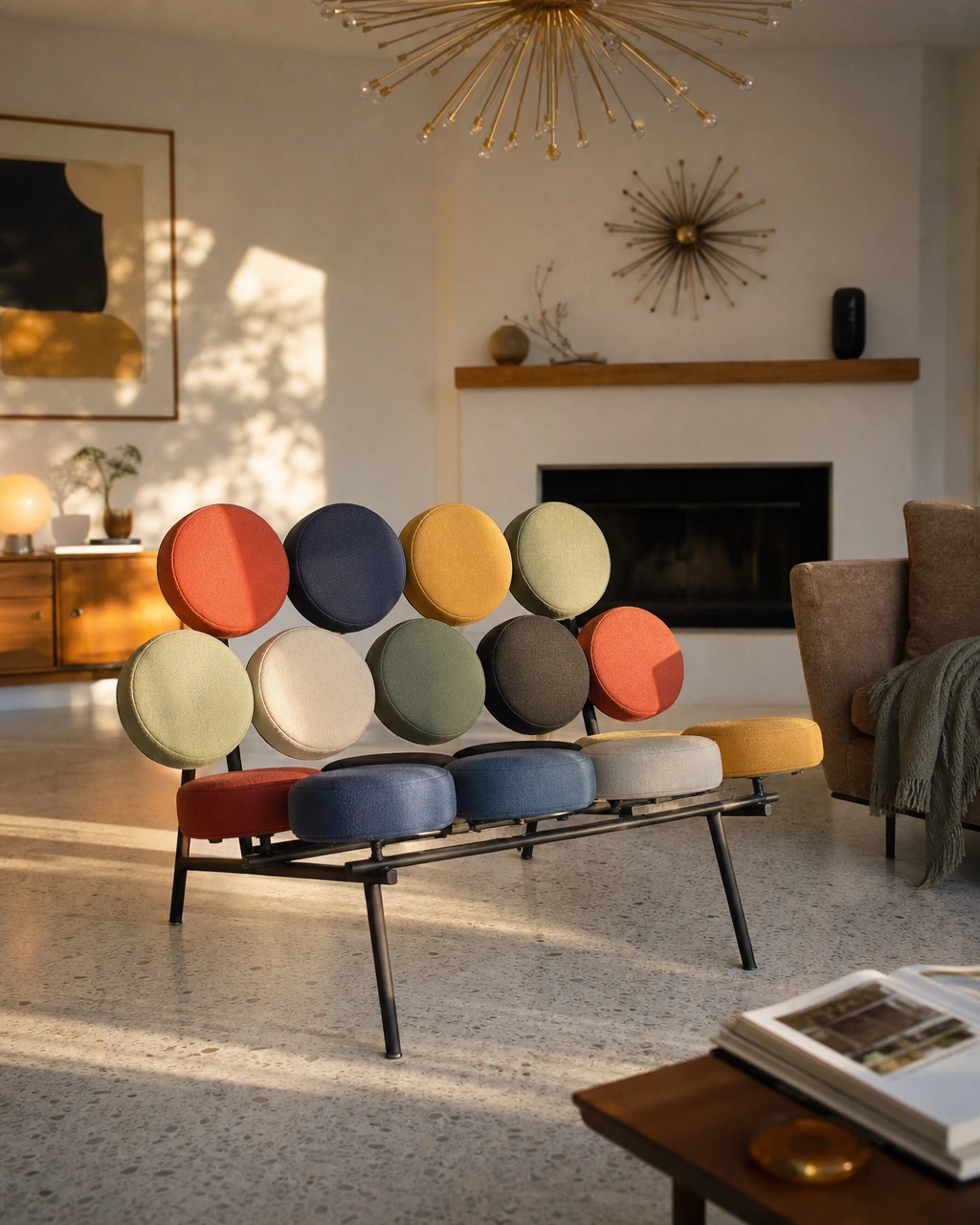
When spending $1,000-$3,000 on a sofa, getting it right matters. First Chair ensures those major purchases work within complete room concepts, not in isolation.
The tool curates pieces that work together across retailers, so the sofa you buy today works with the rug you buy next month and the chair you add six months later. No more expensive mistakes that don't fit the room.
First Chair also offers insider pricing on most pieces, stretching budgets toward quality pieces that last rather than disposable furniture that needs replacing in two years.
19. 64% of Millennials Engage in DIY Home Improvement
Hands-on involvement remains strong. 64% of millennials engage in DIY home improvement, partly for creative expression and partly to stretch budgets.
DIY extends beyond basic assembly into actual improvements. Installing floating shelves, painting accent walls, replacing light fixtures, building custom storage. The willingness to do work themselves reflects both budget consciousness and desire for personalization.
20. Millennial Households Grew 5.7% Between 2019 and 2022
Household formation drives furniture demand. Millennial households grew 5.7% between 2019 and 2022, many of them in cities where square footage comes at a premium. Each new household creates furniture demand. Moving in together, getting married, having children, or simply signing a new lease triggers purchase decisions. The household formation rate directly translates to furniture market growth.
21. 48% of Millennials Have Children Under 18 at Home
Family composition affects priorities. 48% of millennials have children under 18 living in their homes, meaning furniture needs to survive daily life while still looking intentional. Performance fabrics that clean easily become critical alongside aesthetics. Storage solutions that hide toys and supplies take priority. Nursery conversions trigger significant purchases that often cascade into updates throughout the home.
22. The U.S. Home Décor Market Will Reach $215.20 Billion by 2025
Market projections confirm growth. The U.S. home décor market is projected to reach $215.20 billion by 2025 and grow to $263.21 billion by 2030. Millennials are driving that growth with specific aesthetic preferences that mass retailers struggle to serve. The market expansion reflects both millennial spending power and their willingness to invest in living spaces.
23. Furniture Represents 4.5% of Millennial Total Spending
Budget allocation reveals priorities. Furniture and bedding account for just 4.5% of millennials' total spending, compared to 7.3% for Gen X and 10% for Boomers.
This lower percentage reflects both budget constraints from student debt and housing costs, and a shift toward experiences over possessions. The percentage is growing as millennials enter peak earning years and homeownership rates climb.
24. 69% of Millennials Are More Likely to Change Front Door Color
Personal expression extends beyond interiors. 69% of millennials are significantly more likely to change their front door color compared to Baby Boomers. The appetite for personal expression is real and extends from paint colors to furniture choices to complete room aesthetics.
25. 21% of Millennials Value Original Architectural Features
Preservation priorities differ from previous generations. 21% of millennials value original features like exposed brick and wood paneling, compared to just 10% of Boomers. The generation often criticized for destroying industries is actually preserving architectural character that previous generations covered up. Original hardwood floors, exposed brick, vintage tile all factor into millennial housing preferences.
26. Average Households Spend 8% of Disposable Income on Home Decor
Broader spending patterns provide context. The average household spends 8% of disposable income on home decor annually. Home decor ranks as a significant category alongside food, transportation, and entertainment. For millennials specifically, this percentage is growing as incomes rise and living situations stabilize.
27. Millennials and Gen Z Combined Represent 32% of Consumer Spending
Generational economic power is shifting. Millennial combined spending share with Gen Z grew to 32%, an 8-point increase from 2020. This represents massive economic influence concentrated in younger generations with distinct preferences. The spending power affects every consumer category, but home decor shows particularly strong growth.
Why First Chair
The data tells one story: millennials spend more, research longer, and still end up with rooms that feel unfinished. The problem isn't taste. It's the gap between inspiration and execution.
First Chair closes that gap. The tool that exists for the moment when you're stuck between 34 Pinterest boards and no purchases. When you know what you want but can't figure out how to actually get there.
Upload a photo, describe the direction, get back concepts with real pieces from real retailers, all shoppable, all designed to work together. The furniture paralysis ends. The room becomes what it's supposed to be.
Get started and turn the apartment into the room you've been trying to create.
Frequently Asked Questions
How does millennial furniture spending compare to their overall budget allocation?
Furniture and bedding account for just 4.5% of millennials' total spending, compared to 7.3% for Gen X and 10% for Boomers. This reflects both budget constraints from student debt and housing costs, and a shift toward experiences over possessions that defined early millennial adulthood. The percentage is growing as millennials enter peak earning years and homeownership rates climb.
What role do life events play in millennial home decor purchases?
Major life transitions drive the biggest spending spikes. Moving into a new apartment triggers the largest single purchase moments. 60% of millennials plan to renovate, often coinciding with buying a first home, having children, or combining households with a partner. Breakups also trigger significant resets as people reclaim spaces and replace shared furniture.
How has millennial purchasing power changed over recent years?
Millennial combined spending share with Gen Z grew to 32%, an 8-point increase from 2020. Individual millennial incomes rose 27% between 2019 and 2022, the fastest growth of any generation. The generation that delayed traditional milestones is now catching up, entering homeownership and family formation years with accumulated savings and clearer aesthetic preferences.
Do millennials prefer buying complete furniture sets or curated individual pieces?
The data favors curated individual pieces over matched sets. The 30% increase in vintage decor popularity reflects a desire for rooms that feel collected over time rather than ordered in a single delivery. Millennials mix brands, eras, and price points deliberately. A matched five-piece living room set from a single retailer reads as outdated and impersonal to most millennial buyers.
How do children affect millennial home decor priorities?
With 48% having children under 18 at home, durability and cleanability become critical factors alongside aesthetics. Performance fabrics see higher demand from millennial parents. Storage solutions that hide toys and supplies take priority. Nursery conversions trigger significant
89 purchases, often cascading into updates throughout the home as design coherence becomes more visible.