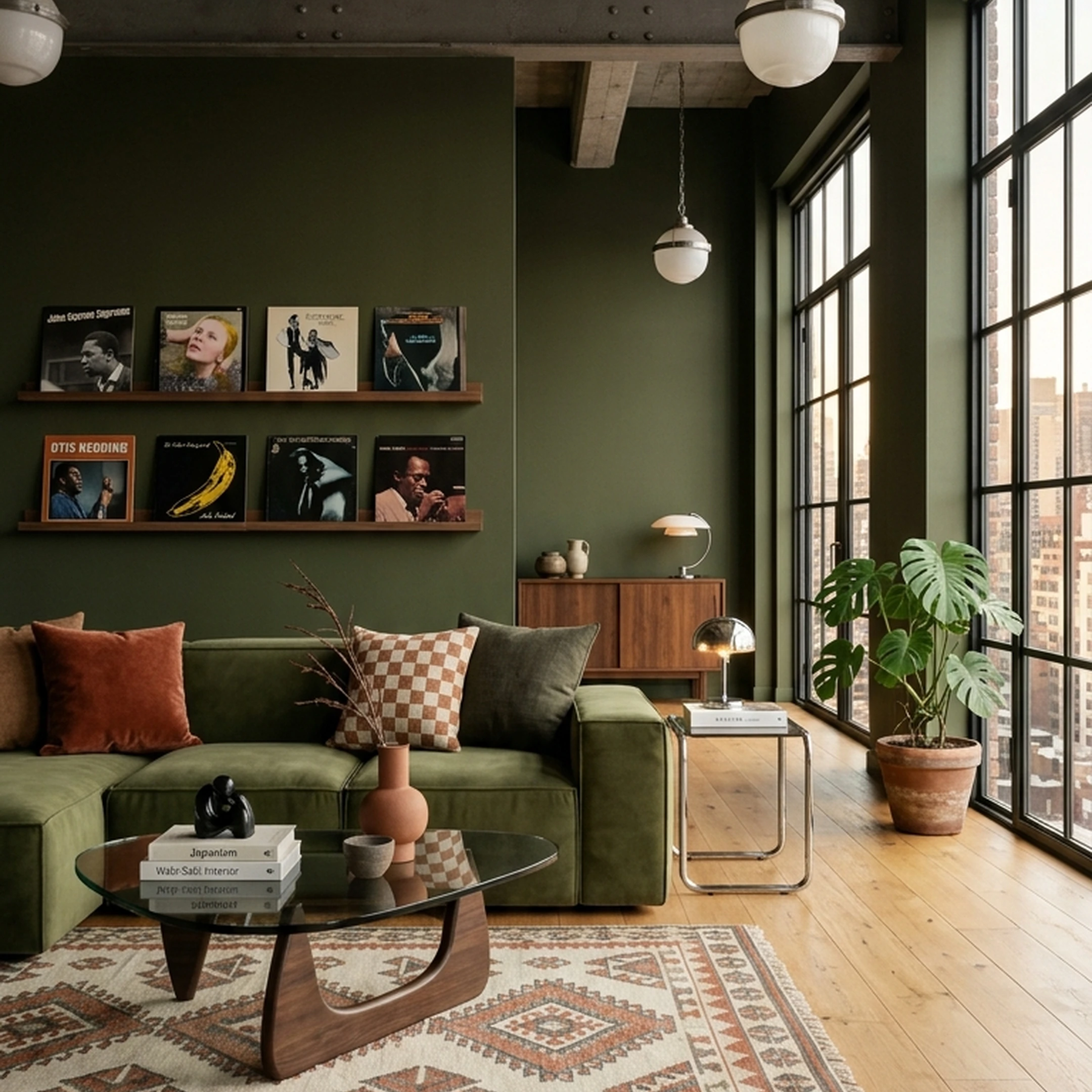
Data-driven insights showing why design-minded homeowners and professionals are embracing AI tools to bridge the gap between inspiration and execution
You closed on a Miami craftsman fixer-upper six months ago. Your Pinterest board has 200-plus saves from anything "Japandi with walnut warmth" to all things "minimalist but cozy." Meanwhile, your actual living room still looks almost exactly the same, apart from the sectional you pushed eight inches closer to the wall.
That gap between inspiration and execution is exactly what a new wave of interior design tools is solving, and the adoption data below suggests the shift is accelerating faster than most people realize. Design-minded homeowners no longer want fantasy renders or endless scrolling. They want real rooms built with real, buyable pieces they can actually commit to.
First Chair represents this new category: cohesive concepts, real furniture pieces from brands like West Elm, CB2, Crate & Barrel, and Lulu & Georgia, and the confidence to finally stop second-guessing every purchase.
Key Takeaways
- Market growth is accelerating rapidly. The AI interior design market grew from $1.09 billion to $1.39 billion in just one year, with a 27.3% compound annual growth rate
- AI is improving design quality, not just speed: 91% of designers say AI tools improve their work, while 89% report working faster and 80% say collaboration has become easier.
- Time savings are immediate. AI-assisted design reduces project turnaround by 20 to 30% compared to traditional planning
- North America leads adoption. The region holds 45.06% market share with the highest AI adoption rates at 51%
- Residential applications dominate. Home furnishing projects account for 40.10% of furnishing tools, reflecting homeowner demand for practical design assistance
Market Size and Growth
1. AI interior design market reached $1.39 billion in 2025
The market grew from $1.09 billion in 2024 to $1.39 billion in 2025. More homeowners are actively looking for help turning saved inspiration into real, shoppable rooms instead of endless Pinterest boards and half-finished plans.
2. Market growing at 27.3% compound annual growth rate
The AI interior design sector maintains a 27.3% CAGR from 2024 to 2025, far faster than most consumer tech categories. People are tired of spending weeks bouncing between Pinterest boards, retailer tabs, and furniture that almost works. First Chair fits directly into that moment by helping users turn saved inspiration into real rooms with pieces they can actually buy.
3. U.S. market projected to reach $2.29 billion by 2032
The American AI interior design market, valued at $0.49 billion in 2024, is expected to grow nearly five-fold by 2032. This projection reflects the unique American appetite for home improvement combined with technology adoption.
4. Interior design software market valued at $5.37 billion in 2024
The broader interior design software category reached $5.37 billion in 2024. This market includes everything from professional CAD software to homeowner-focused visualization tools. This shows how many people are looking for help visualizing what they really like.
5. Global market projected to reach $4.55 billion by 2030
Industry analysts forecast the AI interior design market will hit $4.55 billion by 2030, more than tripling from current levels. This shows demand for tools that help people move from saved inspiration to real furnishing decisions without spending months stuck between Pinterest boards and checkout tabs.
6. Market expected to reach $6.96 billion by 2032
Looking further ahead, projections show the market reaching $6.96 billion by 2032, growing at a 21.51% CAGR.People don’t need more inspiration anymore. They need help deciding what to actually buy. First Chair gives them that.
7. The AI interior design market is projected to grow at a 21.51% CAGR through 2032
The market is expected to maintain a 21.51% compound annual growth rate through 2032 as useful tools are moving past pretty renders and into actual furnishing decisions. People don’t need more inspiration anymore. They already have hundreds of saved rooms across Pinterest, Instagram, and TikTok.
8. 47% of businesses increased design budgets last year
Nearly half of businesses increased creative budgets despite wider AI adoption, suggesting companies still see design as a growth investment. That mindset is spreading into home furnishing too. People are becoming more intentional about how their spaces feel.
9. Minimalist interior design is growing at a 22.52% CAGR
Minimalist aesthetics are becoming one of the fastest-growing style categories as consumers increasingly prioritize clean layouts, functionality, and flexible living spaces. But the version gaining popularity now feels warmer and more layered than the stark all-white minimalism that dominated years ago. People want spaces that feel calm without feeling empty.
Who's Using Visualization Tools

10. AI adoption reached 78% of companies in 2025
As of 2025, 78% of companies have adopted AI technologies, a sharp increase from previous years. Interior design firms are part of that shift, using new tools to speed up visualization, sourcing, and client decision-making. What started inside larger studios is quickly becoming part of the homeowner experience too, especially as people look for easier ways to turn saved inspiration into real, buyable rooms.
11. Cloud-based AI design tools are driving the fastest adoption
Cloud-based AI interior design platforms are growing fastest because they remove the biggest barriers to entry: expensive software, technical training, and high-powered hardware. Homeowners increasingly expect design help to feel instant, accessible, and collaborative instead of specialized.
12. AI Adoption in Practice Already Reached 41%
AI adoption in practice has already reached 41%, even though most consumer-friendly tools only became widely accessible within the last year. The speed of adoption points to a larger shift in how people approach creative and purchasing decisions. In home furnishing, that means less time spent manually piecing together inspiration and more demand for tools that help people confidently move from idea to execution.
13. 77% of Companies Are Using or Exploring AI
77% of companies are either already using AI or actively exploring it, while 83% say it’s now a top business priority. The momentum is showing up across industries, including home design and furnishing. Homeowners are starting to expect design platforms to feature less searching, fewer tabs, and more confidence in what to buy.
14. Professional designers hold 40.10% market share
Professional interior designers led the market in 2024 with approximately 40.10% share of AI tool usage. This professional segment values tools that accelerate client work while maintaining design standards. The homeowner segment is growing rapidly as tools become more accessible.
15. 65% of businesses hire external design support at least quarterly
Most businesses still rely on recurring creative partnerships despite growing AI adoption, reinforcing demand for curated expertise. The same thing shows up at home too. People usually already know the feeling they want. The hard part is deciding between the boucle chair and the linen one, figuring out whether the rug is too small, or finally committing to a sofa after three months of tabs. First Chair helps close that between having taste and actually pulling the room together.
Productivity and Performance
16. 91% of designers say AI tools improve their work
91% of designers say AI improves their work, not just by speeding things up, but by making the creative process feel less exhausting. That same shift is changing how people furnish their homes. First Chair helps turn inspiration into clear design direction, so the energy goes into choosing what feels right for your space instead of endlessly searching for it.
17. 88% of businesses already use AI design tools
88% of businesses report using AI design tools in some capacity. The shift isn’t about replacing creative direction. It’s about speeding up repetitive tasks while keeping taste, judgment, and brand alignment human. That same balance matters in home furnishing too. People want help narrowing choices, not fully automated rooms that feel generic.
18. AI-assisted design reduces turnaround by 20 to 30%
Project completion times drop 20 to 30% when AI handles initial visualization and product matching. This acceleration helps both professionals serving clients and homeowners furnishing their own spaces. The speed comes without sacrificing the thoughtfulness of well-considered design, particularly when tools curate real pieces rather than generating fantasy renders.
19. AI algorithms generate up to 1,000 design variations per hour
Advanced AI systems can generate up to 1,000 variations in under an hour, compared to the handful a human designer might produce in the same timeframe. This capacity for rapid iteration helps narrow down options faster. The key is pairing this generation capability with strong curation, showing the best concepts rather than overwhelming with choices. First Chair's approach prioritizes curation over volume.
20. 39% of businesses rank creativity as the top design trait
Creativity outranks speed, affordability, and technical execution when businesses evaluate designers, reinforcing that original thinking still matters most. That’s especially true in home furnishing, where people want spaces that feel personal, layered, and lived in. First Chair helps people trust those choices instead of overwhelming them with endless concepts.
21. Creativity still matters more than speed or affordability
39% of businesses say creativity is the most important quality they look for in designers, ranking it above speed, affordability, and technical execution. As AI-generated imagery becomes easier to produce, taste and curation are becoming more valuable, not less. The challenge is no longer generating options. It’s knowing which ones are actually worth committing to.
22. Advertising performance is the #1 business impact of design
31% of businesses say design impacts advertising performance most directly, showing how much visual presentation shapes decision-making today. People often know whether they like a room within seconds, long before they can explain why.
Market Segments and User Demographics
23. Real estate developers are the fastest-growing segment
Real estate developers represent the fastest-growing user segment at a 22.32% CAGR. That demand is pushing the category forward quickly, especially around realistic layouts, room concepts, and real-world purchasing decisions. The same shift is making it easier for homeowners to move into empty spaces with a clearer sense of what works and what to buy next.
24. Residential interior design leads applications at 40.12%
Residential projects account for approximately 40.12% of room-planning tools, reflecting the technology's strength in home furnishing contexts. This residential focus aligns with homeowner demand for help turning Pinterest boards into actual living spaces. Commercial applications are growing fastest at 22.56% CAGR. First Chair focuses exclusively on this residential sweet spot.
25. Contemporary design holds 35.14% style preference share
Contemporary design dominated style preferences in 2024 with around 35.14% share, followed by traditional and minimalist approaches. However, minimalist design is growing fastest at 22.52% CAGR. The most useful AI tools interpret hybrid preferences, understanding that "contemporary with Japandi influence" requires specific material and proportion choices.
26. 52% of homeowners prioritize eco-friendly materials
Half of homeowners now prioritize eco-friendly materials and energy-efficient designs in renovation projects. This sustainability focus adds another layer to design decision-making that AI can help navigate. Finding pieces that match aesthetic preferences and environmental values simultaneously would be nearly impossible through manual search.
27. 74% of Gen Z and Millennials already use AI at work
Nearly three-quarters of Gen Z and millennial workers already use AI in their day-to-day work, with 74% of both groups reporting some level of adoption. Most see it as a practical accelerant, helping them save time, improve output, and move through repetitive work faster. That same expectation is showing up at home too.
Where Modern and Tech Interior Design is Growing
28. North America holds 45.06% global market share
North America commands 45.06% of the global market, the largest regional share by a significant margin. This dominance reflects both higher technology adoption rates and stronger home furnishing spending. American homeowners, particularly in design-forward cities, are driving early adoption.
29. 50% of businesses report growing demand for social-first creative
Half of businesses say demand for social media design has increased over the past year, making it the fastest-growing creative category. The shift reflects how much visual inspiration now shapes purchasing behavior. People increasingly discover their taste online first, then look for easier ways to bring those aesthetics into their actual homes.
30. Asia-Pacific expected to show fastest CAGR through 2030
While North America leads current adoption, Asia-Pacific will show the fastest compound annual growth rate through 2030. This growth reflects rapid urbanization and increasing design consciousness in markets like China and India. The region is expected to register a CAGR of over 19.0% during the forecast period.
31. UK workers lead Europe in generative AI adoption at 36%
In early 2026, 36% of UK workers reported using generative AI for work, the highest adoption rate across the European countries studied. The US moved even faster, reaching 43% adoption during the same period, while countries like Italy remained lower at 26%.
How AI Is Changing the Creative Process
32. Only 18% say AI reduced their need for designers
Despite widespread AI adoption, only 18% of businesses say these tools reduced their need for professional designers. Most companies still rely on human taste, judgment, and creative direction.
33. 32% of companies use AI mainly for simple design tasks
One-third of businesses say AI has primarily replaced repetitive production tasks like resizing graphics, removing backgrounds, or generating quick variations rather than strategic creative work. At home, homeowners still want taste, judgment, and a point of view. They just want less friction getting there.
34. 53% expect to increase design spending again
More than half of businesses expect creative spending to increase over the next year as design becomes more central to marketing and brand differentiation. People care more about how their spaces feel, especially as home becomes part office, part retreat, and part social space all at once.
Why First Chair
People are finally getting help with the part that usually stalls out: turning a saved room into a room they can actually buy. But most options stop at visualization, generating pretty renders filled with furniture that doesn't exist or can't be purchased.
First Chair works differently. Every piece shown is real and shoppable across West Elm, CB2, Crate & Barrel, Pottery Barn, Lulu & Georgia, and brands most people haven't discovered yet. No fantasy rooms. No dead-end inspiration.
The room in your head becomes a room you can actually buy, with insider pricing on most pieces. That's the confidence to finally commit.
Frequently Asked Questions
What is the current market size for AI interior design tools?
The AI interior design market reached $1.39 billion in 2025, growing from $1.09 billion the previous year. The market is projected to reach $4.55 billion by 2030, driven by increasing homeowner demand for tools that bridge the gap between saved inspiration and finished rooms. North America holds the largest regional share at approximately 45% of the global market.
What productivity improvements can I expect from AI interior design tools?
Designers using AI report productivity gains up to 60%. Project timelines typically decrease by 20 to 30%, and design studios report average revenue increases of 23% within 12 months of AI implementation. For homeowners, these same efficiency gains translate to faster decision-making and reduced time spent browsing endless options.
Which regions are leading AI interior design adoption?
North America leads global adoption with 45% market share and 51% of businesses using AI tools. Europe follows at 44% adoption, with Asia-Pacific at 39%. However, Asia-Pacific is expected to show the fastest growth rate through 2030, reflecting rapid urbanization and increasing design consciousness in emerging markets.
Can AI tools interpret complex or hybrid design styles?
Advanced AI tools are increasingly capable of interpreting nuanced style language beyond broad categories. Contemporary design currently holds 35% preference share, but minimalist styles are growing fastest. The most effective tools understand hybrid preferences like "Scandinavian with walnut warmth" or "modern industrial with soft textiles," translating these into specific material, proportion, and product recommendations.
How are homeowners actually using AI in interior design?
Most homeowners are using AI to speed up the parts of furnishing that usually drag on for weeks: visualizing layouts, narrowing style direction, and finding pieces that work together. Residential interior design remains one of the largest application areas for AI-powered design tools as more people look for practical help turning inspiration into finished rooms instead of endlessly saving ideas.