You finished renovating your Seattle condo five months ago. The floors are done. The walls are painted. The lighting is exactly right. The furniture is another story.
The dining room still feels empty because every table seems too large, too small, too expensive, or somehow wrong. There are 34 open browser tabs spread across West Elm, CB2, Crate & Barrel, and Article.
That's increasingly common. Furniture purchases involve more research, more comparison shopping, and more second-guessing than almost any other consumer category. The result is rooms that stay unfinished far longer than planned.
First Chair exists to help people move from "almost bought it" to "finally done." To help you turn saved inspiration into cohesive, buyable room concepts that actually work in your space.
Key Takeaways
- Furniture shopping takes far longer than most people expect. A single sofa purchase often takes 14 to 21 days, with shoppers making 4 to 6 comparison visits before committing.
- The real problem isn't a lack of options. It's too many options. Between endless retailer catalogs, reviews, dimensions, fabrics, and styles, furniture shoppers face decision fatigue that keeps rooms unfinished for months.
- Most furniture journeys begin online, but confidence is still missing. While 63% of shoppers start online, only 43% complete purchases there, showing how difficult it is to move from inspiration to commitment.
- Research dominates the process. Consumers rely heavily on reviews, specifications, customer photos, and comparison shopping before making a final decision, often stretching the timeline far longer than they want.
- Returns are common because buying furniture is hard. Online furniture return rates average 18% to 25%, and many shoppers go through multiple purchases before finding the right piece for their space.
- People want guidance, but not from salespeople. Shoppers need help narrowing choices, yet only a small percentage rely on retail sales associate recommendations, creating a gap between inspiration and confident action.
- The biggest challenge is turning inspiration into a finished room. Inspiration lives on Pinterest, Instagram, and saved tabs, while products, pricing, and decision-making are scattered across dozens of retailers.
- First Chair exists to compress the research phase. Instead of spending weeks comparing pieces across multiple sites, shoppers can move from saved inspiration to cohesive, buyable room concepts built from real furniture across trusted brands.
1. Average Sofa Selection Takes 14-21 Days
Most shoppers spend 14-21 days selecting a sofa after starting their search. It's because the sheer volume of choices creates decision paralysis rather than clarity. Every retailer offers dozens of configurations, fabrics, and dimensions. Without a clear framework for narrowing options, the research phase has no natural endpoint. You can always find one more sofa to consider, one more review to read, one more room photo to save.
2. Shoppers Are 80-90% Through Their Journey When They Visit Stores
By the time consumers arrive at physical showrooms, they're already 80-90% through their purchase journey. Shoppers have already researched styles, compared prices, read reviews, and narrowed their mental shortlist before they ever touch a fabric sample.
3. 63% Begin Their Furniture Journey Online
63% of consumers start their furniture shopping journey through digital channels. People search Pinterest for inspiration, browse Instagram for room layouts, and scroll retailer websites to understand what's available. The internet provides infinite possibilities, which is both its strength and its weakness.
4. Only 43% Complete Purchases Online
While 63% begin shopping online, only 43% complete purchases through digital channels. That 20-percentage-point gap represents uncertainty. Shoppers who start online often need to see, touch, or validate their choice in person before committing. Major furniture purchases carry too much risk to rely solely on photos and descriptions.
5. A Single Couch Purchase Involves 4,000 Variables
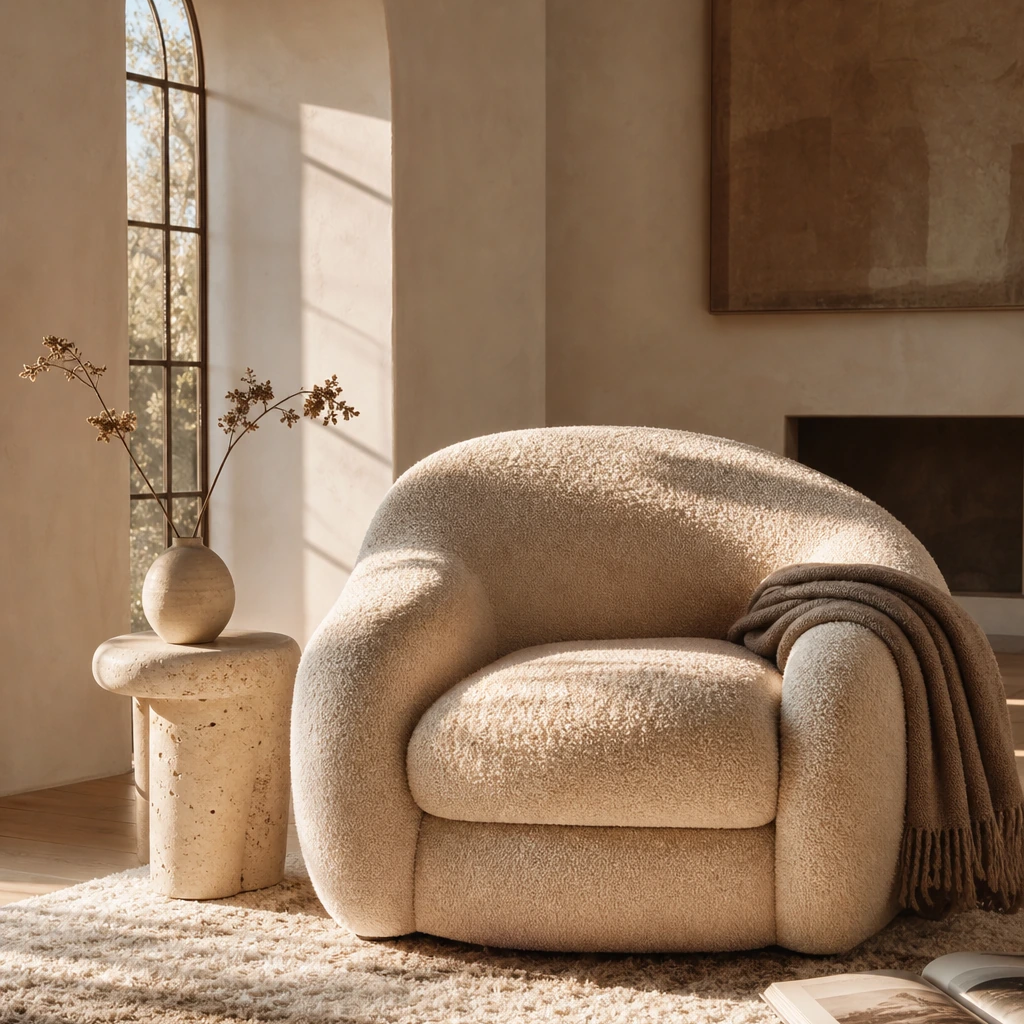
Buying a couch means evaluating approximately 4,000 variables across dimensions, materials, colors, and configurations. Consider what goes into one sofa: length, depth, height, arm style, leg finish, cushion fill, back style, fabric type, fabric color, seating firmness, and configuration options. Multiply those choices across hundreds of available models, and you start to understand why decision fatigue sets in.
6. 47% Want to Spend Less Time Shopping for Furniture
47% of shoppers say it's important not to spend much time on furniture shopping. Nearly half of consumers actively want this process to be faster. The problem isn't a lack of options but rather too many of them without clear guidance. People know what they want their space to feel like. They just can't efficiently translate that vision into specific purchases.
7. Shoppers Make 4-6 Comparison Visits Before Buying
Before making a furniture purchase, consumers average 4 to 6 site visits across different retailers. These comparison visits happen mostly online. Shoppers check West Elm, then CB2, then Article, then back to West Elm to reconsider the first option. They're trying to answer the same question across multiple sites: which piece is right for my space?
8. Boomers Are Twice as Likely to Purchase Immediately
Boomers are twice as likely as Millennials to just make the purchase without extensive research, at 22% versus 11%. This isn't because older shoppers are less discerning. They've simply bought furniture before and know what they want. First-time apartment dwellers and new homeowners don't have that reference point yet. They're learning furniture shopping while doing furniture shopping.
9. 62% Say Information Is Very Important
62% of consumers say information is very important before making a final furniture decision. People read product descriptions, study dimension specs, scroll through customer photos, and analyze reviews. Information provides confidence, or at least the feeling of it.
10. 57% Rely on Their Own Experience
When replacing furniture, 57% of consumers rely on their own experiences rather than outside sources. People trust what they've learned from living with furniture more than they trust marketing messages or sales pitches. This makes sense. If your last couch was too deep and you constantly felt like you were falling backward, you'll prioritize seat depth in your next purchase.
First Chair: From Inspiration to Execution
The statistics paint a clear picture: furniture shopping takes too long because the process is fragmented. Inspiration lives in one place. Products live in dozens of places. Guidance is expensive or missing entirely.
First Chair pulls it together. You bring the vision. First Chair interprets it, pulls cohesive concepts from across retailers, and shows you rooms you can actually buy. Not rendered fantasy spaces. Real pieces from West Elm, CB2, Crate & Barrel, Pottery Barn, Lulu & Georgia, Article, and brands you haven't met yet, all working together.
11. 54% Will Go Out of Their Way for Lower Prices
54% of consumers will go out of their way to buy furniture at a lower price. More than half of shoppers are willing to extend their search, wait for sales, or choose a less convenient retailer if it means saving money. This price sensitivity explains why furniture shopping timelines stretch. People don't just want the right piece. They want the right piece at the right price.
12. Only 10% Follow Retail Sales Associate Recommendations
Just 10% of consumers follow recommendations from retail sales associates when replacing furniture. People don't trust furniture salespeople. This lack of trust creates a gap. Shoppers need guidance but won't accept it from the most readily available source. They're left gathering information on their own, which extends the research phase indefinitely.
13. 20% of Millennials Return Furniture Before Finding the Right Piece
20% of Millennials returned furniture before purchasing the one they ultimately kept. Shoppers goes through a full purchase, delivery, living with the piece, initiating a return, and restarting the search before landing on their final choice. This pattern reveals how difficult it is to make confident decisions from photos and descriptions alone.
14. Online Furniture Return Rates Average 18-25%
Return rates for online furniture purchases average between 18% and 25%. Nearly one in four to one in five furniture pieces ordered online gets sent back. Some returns stem from damage during shipping. Others happen because the piece doesn't work in the space, the color looks different in person, or the scale is wrong.
15. 72% Prefer Digital Channels for Discovery
72% of consumers prefer digital channels for furniture discovery and price comparison. Nearly three-quarters of shoppers turn to online tools when they're in research mode. Digital channels offer convenience, breadth of selection, and the ability to compare options side by side without driving across town.
16. Mobile Browsing Accounts for 58% of Traffic
Mobile browsing accounts for 58% of total online furniture traffic. People scroll Instagram for inspiration during their commute, browse retailer apps while waiting in line, and save Pinterest boards from their couch.
17. Furniture E-Commerce Represents 33% of Transactions
In the United States, furniture e-commerce now accounts for approximately 33% of total furniture transactions. This represents massive growth from a decade ago when online furniture buying was rare. The trend continues upward as return policies improve and augmented reality tools help shoppers visualize pieces in their spaces.
18. 71% Purchase at Least One Piece Online Annually
More than 71% of U.S. consumers purchase at least one furniture piece online each year. Even if people don't furnish their entire home online, most buy something digitally. This might be a side table, a lamp, or accent chairs. The barrier to online furniture shopping has dropped significantly.
19. Customer Reviews Influence 67% of Purchase Decisions
Customer reviews influence 67% of furniture purchase decisions. Two-thirds of shoppers read reviews before buying. They're looking for validation that the piece works as advertised, that the quality matches the price, and that other buyers had positive experiences.
20. High-Resolution Imagery Increases Conversions by 33%
High-resolution imagery increases furniture e-commerce conversion rates by 33%. Better photos directly translate to more purchases. When shoppers can zoom in on fabric texture, see how light reflects off a finish, and examine construction details, they gain confidence. Poor photography creates doubt.
First Chair: Smart Curation, Faster Decisions
The data shows that shoppers want speed, but the current process makes that impossible. You're stuck choosing between infinite options or expensive designer guidance.
First Chair handles the synthesis work that creates all this fatigue. Upload your inspiration, describe your aesthetic direction, and get back cohesive room concepts with pieces from West Elm, CB2, Crate & Barrel, Lulu & Georgia, and brands you haven't discovered yet. No renders of furniture that doesn't exist. No single-retailer limitations. Real pieces that actually work together.
21. Same-City Delivery Influences 46% of Purchases
Same-city delivery availability influences 46% of furniture purchase decisions. Fast, local delivery reduces the anxiety of committing to a large purchase. If something goes wrong, returns and exchanges feel more manageable. This preference drives why many furniture retailers maintain local warehouses and partner with regional delivery services rather than relying solely on national shipping.
22. Flexible Return Windows Affect 52% of Buyer Trust
Flexible return windows affect 52% of buyer trust in furniture purchases. Generous return windows signal confidence from the brand and reduce risk for the buyer. A 30-day return policy is standard. Some brands offer 60 or even 90 days.
Without a good return policy, online furniture shopping feels too risky. With one, buyers feel protected enough to commit.
23. 28% Cite Inability to Evaluate Furniture Physically
28% of hesitant buyers cite the inability to evaluate furniture tactilely as their main concern. About one in four potential online buyers hesitates because they can't touch the fabric, test the cushions, or see the finish in person. No photo fully captures how a bouclé fabric feels or whether a cushion has the right amount of give.
24. Delivery Lead Time Tolerance Averages 7-14 Days
Delivery lead time tolerance averages 7 to 14 days for large furniture pieces.
Most shoppers are willing to wait one to two weeks for furniture delivery. Beyond that window, patience wears thin. This timeline expectation shapes inventory strategies. Retailers who can deliver within this window capture more sales. Made-to-order furniture with 6-8 week lead times faces a significant disadvantage unless the customization clearly justifies the wait.
25. Product Damage Affects 31% of Return Cases
Product damage during transit affects approximately 31% of return cases.
Nearly one in three furniture returns stems from shipping damage. Furniture is large, heavy, and vulnerable during transport. Corners get dinged, upholstery gets torn, wood gets scratched.
26. Virtual Visualization Tools Are Used by 41% of Shoppers
Virtual visualization tools are used by 41% of furniture shoppers. About two in five consumers try augmented reality features or room planning tools when shopping for furniture online. These tools promise to show how a piece looks in your actual space using your phone's camera.
The challenge is that most visualization tools show you how a single piece looks in a generic room. They don't solve the harder problem of building a cohesive space where everything works together.
27. Return Policies Impact 41% of Buyer Confidence
Return policies impact 41% of buyer confidence in online furniture purchases. Two in five shoppers evaluate return terms before committing to a purchase. Clear, generous return policies reduce perceived risk. Complicated or restrictive policies create doubt.
28. Average Order Size Includes 2-3 Pieces
Average order size includes 2 to 3 pieces per transaction in online furniture shopping. Most people don't furnish an entire room in one order. They buy a sofa and a coffee table, or a bed and nightstands. This pattern shows that furniture shopping happens in stages rather than all at once. If you can help someone understand how all the pieces work together upfront, they're more likely to complete the room rather than stopping after piece one or two.
29. Sofas, Beds, and Storage Represent 48% of Online Volume
Sofas, beds, and storage units account for 48% of online furniture purchase volume. They're the anchor pieces that define a room. Once you have the right sofa, bed, or storage system, the supporting pieces become easier to select.
This concentration explains why retailers focus product development and marketing on these categories. Win the sofa sale, and the accent chair sale often follows.
30. Urban Households Account for 64% of Online Purchases
Urban households account for 64% of online furniture purchases. Urban dwellers often lack cars, making trips to suburban furniture warehouses inconvenient. They're also more comfortable with e-commerce in general.
This urban concentration means furniture retailers need to excel at online experiences and local delivery to capture the majority of the market.
First Chair: Where Inspiration Meets Execution
Furniture shopping takes too long, involves too many variables, and ends in returns too often. The current process fragments inspiration, products, and guidance across multiple platforms.
First Chair collapses those three workflows into one. Upload your room photo or inspiration image, describe the direction you want, and get back curated concepts with real pieces you can actually purchase. No rendering fantasy furniture that doesn't exist. No single-retailer limitations. Pieces from across West Elm, CB2, Crate & Barrel, Lulu & Georgia, and more, all working together.
The difference between three weeks of indecision and confident execution? Having someone with great taste who already knows what works.
Get started and turn your inspiration into a room you can live in.
Frequently Asked Questions
How long does the average person spend deciding on furniture compared to other major purchases?
Furniture decisions typically take 14 to 21 days for a single piece like a sofa, which is longer than most consumer electronics or appliance purchases. The difference is the combination of high cost, long ownership period, and aesthetic uncertainty. You're not just evaluating function. You're predicting how you'll feel about a piece for years. This emotional component, combined with the 4,000 variables involved in a couch purchase alone, creates a research loop that other product categories don't have.
Does online furniture shopping actually make decisions faster or slower?
Both. Online shopping accelerates the discovery phase, with 63% of consumers starting their journey digitally and 72% preferring digital channels for price comparison. But it can slow execution by presenting infinite choices without synthesis. The most efficient online furniture shopping narrows options rather than expanding them, which is why curated concepts outperform endless catalogs.
Are there specific times of year when people buy furniture more quickly?
Yes. Purchases accelerate around life transitions: lease signings (August to September for many markets), home closings, and post-holiday refreshes (January to February). Seasonal sales like Memorial Day and Labor Day also compress timelines because the promotional deadline creates urgency. Outside these windows, the 4 to 6 comparison visits that precede most purchases can stretch indefinitely without an external forcing function.
What role does AI play in reducing furniture buying decision time?
AI is most useful when it synthesizes rather than generates. The problem with most AI room tools is they create beautiful renders of furniture that doesn't exist or can't be purchased. The value comes from AI that understands your aesthetic preferences, interprets nuanced style directions, and matches you with real, buyable pieces across multiple retailers. That synthesis work, connecting inspiration to execution, is what actually compresses the timeline.
What's the biggest mistake people make that extends their furniture buying timeline?
Trying to find the perfect piece instead of building a cohesive room. People spend weeks searching for an ideal sofa when the real question is how all the pieces work together. A good sofa in a poorly coordinated room still feels wrong. A slightly imperfect sofa surrounded by well-chosen complementary pieces feels intentional. Shifting focus from individual pieces to overall room cohesion changes the decision framework and typically speeds up the entire process.