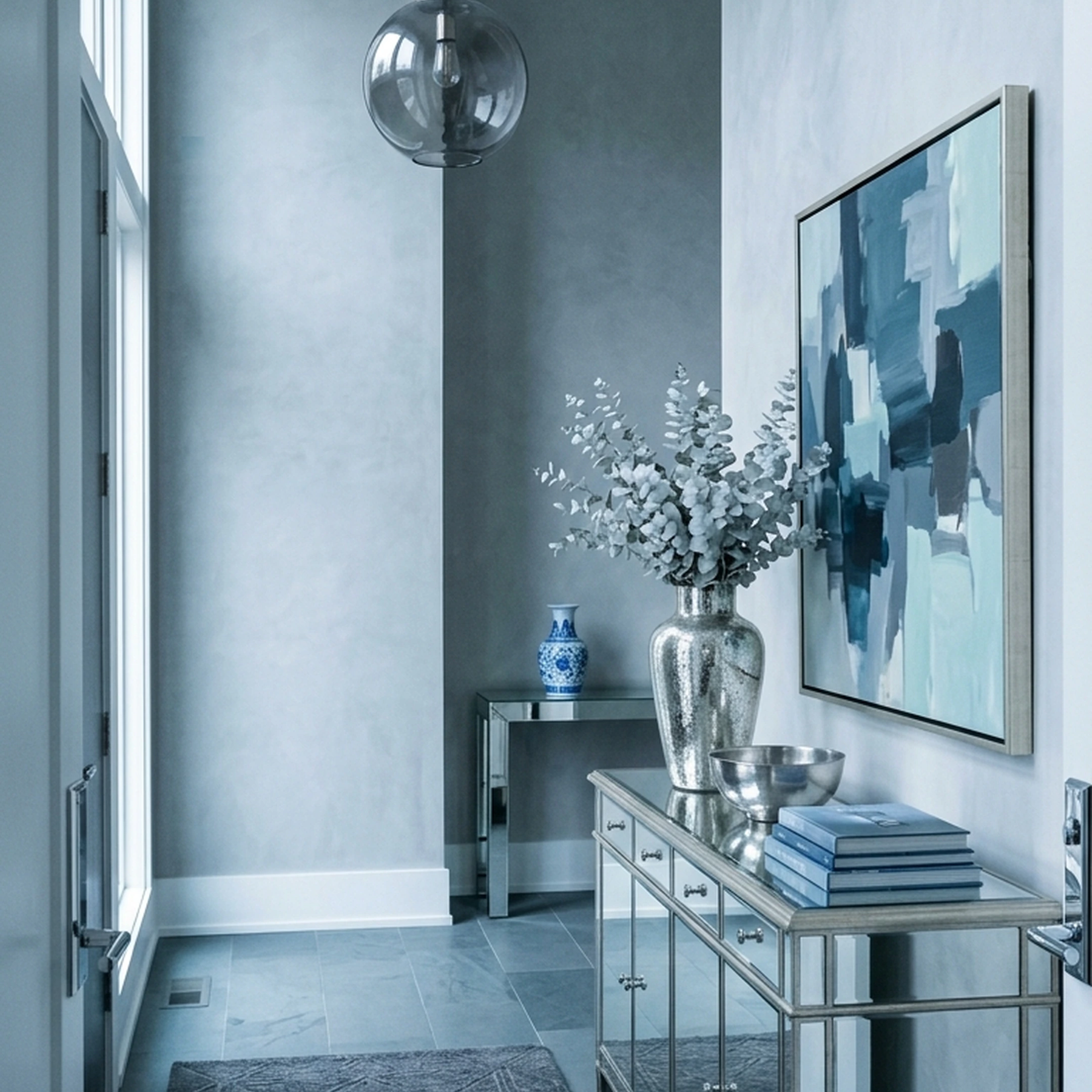

If you've spent any time on design Instagram or Pinterest in the last decade, you've seen it: pale plaster walls, a low-slung sculptural sofa, a kitchen with no visible handles and seemingly no appliances at all. Kim Kardashian's Hidden Hills mansion has become one of the most referenced interiors in contemporary design, not because it's flashy, but because it's the opposite. It's the rare celebrity home that made restraint look aspirational.
The question most homeowners land on isn't "how do I copy it exactly?" It's "what is actually transferable here?" The answer is more than you'd expect. The principles behind Kim's aesthetic, neutral palettes layered with texture, integrated storage, sculptural furniture, and light used as a material, are design fundamentals that work at a range of budgets and scales. You don't need a $60 million compound in Hidden Hills to apply them.
This guide breaks down the core design ideas behind Kardashian's homes, what makes them work architecturally, and how to bring those principles into a real renovation or refresh without the fantasy budget. You'll learn how to approach the neutral palette correctly, why integrated storage is the structural backbone of this aesthetic, how lighting functions as architecture rather than decoration, and where most homeowners go wrong when attempting to recreate this look.
Key Takeaways
- Kim Kardashian and Kanye West purchased the Hidden Hills mansion in 2014 for $19.75 million and spent over $20 million on renovations, with the property appraised at $60 million in 2019.
- Architectural Digest describes the interior as "hyperminimalist decor" that has "achieved an iconic status" in contemporary design coverage.
- The defining principle is not minimalism for its own sake. It is minimalism as a vehicle for material quality: plaster, stone, raw wood, and bouclé doing the work that color and decoration usually do.
- Neutral palettes only succeed when texture is varied. Without it, rooms feel clinical rather than calm.
- Custom millwork and integrated storage are the single most impactful upgrades for achieving this aesthetic in a real home.
- Lighting in this style is architectural, not decorative. Fixtures are chosen to highlight surfaces, not compete with them.
- Architectural Digest estimates Kim Kardashian's total real estate portfolio is worth well over $100 million, but the design principles behind it are not budget-dependent.
- The interior was designed with Belgian designer Axel Vervoordt, whose wabi-sabi influenced approach, combining simplicity, natural materials, and the beauty of imperfection, is central to the home's character.
What Minimalist Luxury Actually Means
Minimalist luxury is a design approach that combines the "less is more" philosophy of minimalism with high-end materials and finishes, emphasizing spatial clarity, premium textures, and discreet craftsmanship rather than overt ornamentation.
This is not a style defined by what it includes. It's defined by what it removes and what it leaves behind. When Kim Kardashian stated that she and Kanye West wanted to create a "minimalist space with less noise" when designing their home, that phrase captures the intent precisely. The goal was a reduction of visual stimulation, achieved through a near-total commitment to a neutral, monochromatic color scheme across walls, floors, cabinetry, and textiles.
Architectural Digest describes the residence, designed with Axel Vervoordt, as "a futurist Belgian monastery" with "minimalist, monochromatic rooms and corridors" that feel almost otherworldly. That description is useful because it signals something important: this is not a cold or sterile space. It has a spiritual quality, a sense of deliberate calm that comes from every surface, every material choice, and every piece of furniture being selected with the same underlying intention.
Contemporary luxury residential design has been moving in this direction broadly. The shift is away from heavy ornamentation and toward what design commentary describes as "premium materials, curated open spaces, and thoughtful functionality," replacing over-the-top opulence with restrained, high-quality finishes. Large windows, minimal color palettes, exposed concrete, and natural woods create what practitioners call a timeless, organic feel. Kim's home is the most widely publicized example of this shift, but it reflects a broader movement in how affluent homeowners think about what luxury actually looks like.
Why This Aesthetic Has Staying Power in 2026
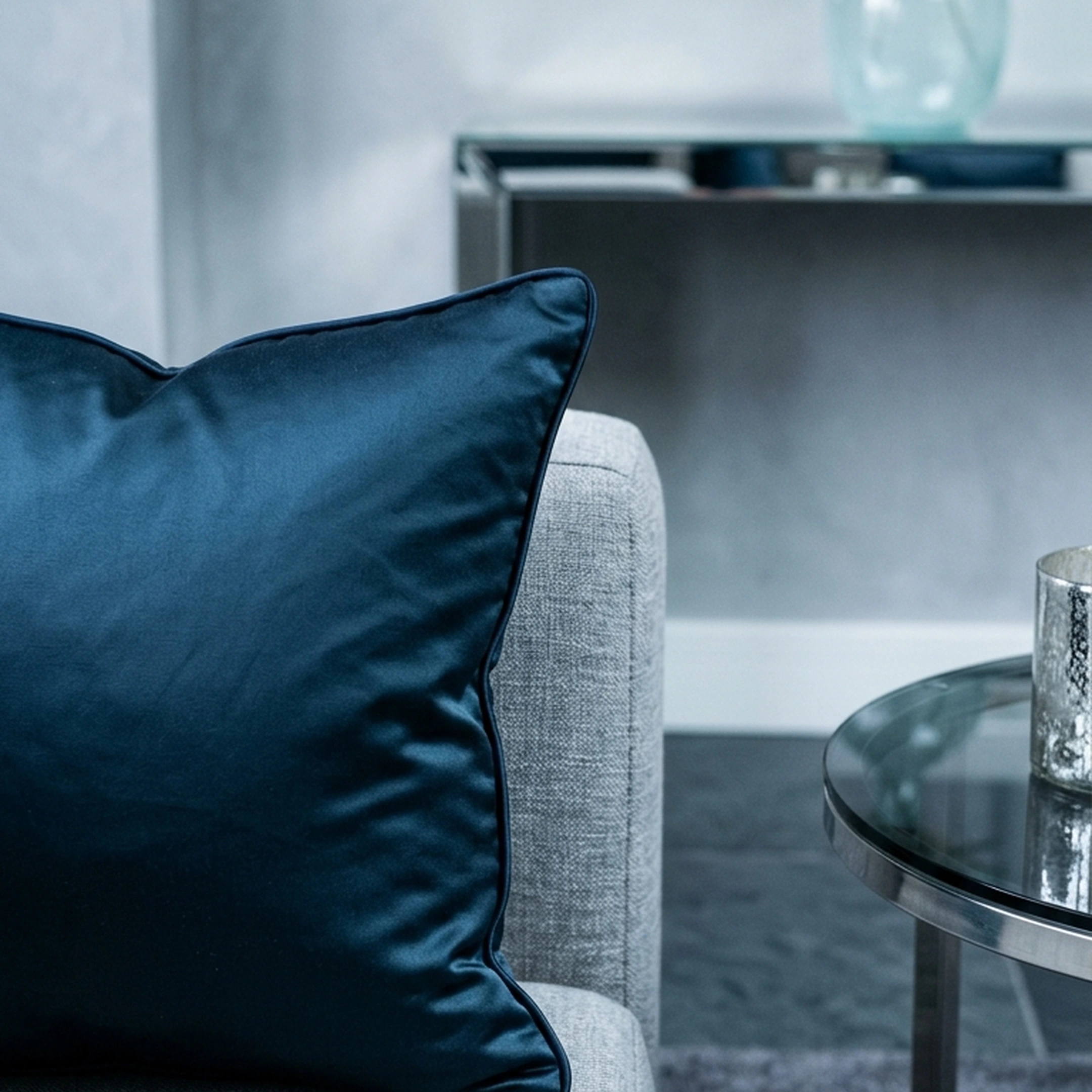
Celebrity influence on residential design is not new, but the Kardashian effect on interior aesthetics has been unusually durable. The reason is that the aesthetic itself is built to last.
Architizer's analysis of the Kardashian homes notes that their televised and social media presence has normalized open-concept layouts, oversized kitchen islands, walk-in closets, and spa-like bathrooms as aspirational standards for middle- and upper-income households. What started as a celebrity reference point has become a design vernacular that shows up in new construction, high-end renovations, and even mid-market apartment design.
The aesthetic's durability comes from its reliance on evergreen materials and forms rather than trend-driven choices. Stone, plaster, raw wood, and neutral upholstery do not date the way that bold colors or ornate detailing do. Design commentators note that Kim's style has remained notably consistent since she moved into Hidden Hills, reinforcing the idea of evergreen minimalist luxury that does not depend on what's currently fashionable.
For homeowners making renovation decisions in 2026, this matters practically. Investing in integrated storage, premium flooring, and architectural lighting is not chasing a trend. It is building toward a design language that has demonstrated staying power across more than a decade of shifting aesthetics.
Minimalist Luxury: Kim's Neutral Color Palette and Clean Lines
The color story in Kim's home runs through whites, creams, pale taupes, and warm grays. Nothing competes. The walls, the floors, and the upholstery all speak the same tonal language. What prevents this from reading as sterile is the variation in texture: rough linen against smooth plaster, matte stone against warm wood grain.
Design analysis of the home frequently references wabi-sabi minimalism, a hybrid aesthetic that values simplicity, natural materials, and the beauty of imperfection. In practice, this means surfaces are not perfectly polished. They have subtle irregularities that add warmth within a sparse environment. The term "brutalist refinement" also appears in commentary on the home: monolithic forms and plaster surfaces refined through minimalist detailing and luxury finishes, creating a softened version of Brutalism's weight and seriousness.
How to Build This Palette in a Real Home
The most common mistake homeowners make when attempting this palette is painting everything white and stopping there. The palette is the starting point, not the finish line. Here is what actually needs to happen:
- Choose a base tone and commit to it across walls, trim, and ceiling (warm white, pale greige, or soft taupe)
- Layer in three to four different textures: a linen sofa, a jute rug, a stone surface, a matte plaster wall finish
- Avoid mixing warm and cool neutrals in the same room; pick a temperature and stay in it
- Limit pattern entirely, or use it only in organic, tone-on-tone forms
- Treat the floor as a primary material choice, not a background element
The result should feel like a room where everything belongs together, not a room where everything matches. Those are different things.
Texture as the Primary Design Tool
In a room without color contrast, texture carries the visual weight. The materials doing this work in Kim's home include raw linen, matte plaster, honed stone, unfinished wood, and bouclé upholstery. Each of these materials catches light differently, which creates the layered, dimensional quality that makes the space feel rich rather than empty.
For homeowners working toward this aesthetic, the practical implication is that material selection matters more than furniture selection. A well-chosen plaster finish on a single wall does more for the overall atmosphere than a carefully selected sofa. Start with the surfaces, then build the furniture layer on top.
Custom Millwork and Built-In Storage Solutions
Custom millwork refers to made-to-order woodwork and built-in cabinetry tailored to a specific space, used to conceal storage, integrate appliances, and maintain seamless visual lines throughout a room.
Kim's kitchen is the clearest example of this principle in action. There are no visible handles. Appliances disappear behind flush cabinet fronts. Countertops extend uninterrupted. The effect is a room that reads as a single architectural surface rather than a collection of furniture and equipment. Design analysis of the home consistently identifies hidden storage as the structural backbone of the minimalist aesthetic.
You cannot achieve visual calm in a room where everyday objects are visible. The solution is not to own fewer things. It is to design storage that makes things disappear.
Where Built-Ins Have the Most Impact
For affluent homeowners, built-ins are one of the highest-return investments in this style. The areas where they matter most:
RoomBuilt-In ApplicationVisual ImpactKitchenHandle-less cabinetry, concealed appliancesUninterrupted surface planesLiving roomFloor-to-ceiling shelving with closed lower cabinetsEliminates visual clutter at eye levelHallwayFull-wall integrated storageRemoves the need for freestanding furnitureBedroomBuilt-in wardrobe with flush doorsReplaces freestanding furniture entirelyHome officeDesk integrated into millworkRemoves the "office furniture" look
Prioritizing When Budget Is a Constraint
Not every room needs a full custom millwork treatment. If you are working with a renovation budget rather than a ground-up build, prioritize the kitchen and the primary living space. These are the rooms that set the tone for the entire home. A single well-executed built-in bookcase with closed lower storage in a living room does more for the aesthetic than a dozen smaller purchases.
The sequencing matters too. Millwork decisions need to happen before flooring and after framing. Trying to retrofit integrated storage into a finished room is significantly more expensive and less effective than planning it from the start of a renovation.
Statement Lighting Fixtures: Recreating High-End Chandelier Designs
In Kim Kardashian's home, lighting is described as bespoke and often understated, integrated to highlight walls and textures rather than act as ornate focal points. This is the opposite of how most people approach lighting, which is to treat fixtures as decorative objects first and light sources second.
Contemporary luxury architecture treats lighting as a layer of the architecture itself. The goal is to make surfaces glow, not to make fixtures visible. Design commentary on contemporary luxury homes notes that smart lighting systems are integrated to preserve visual calm and minimal lines, with controls that remain invisible while managing the entire atmosphere of a space.
The Architectural Lighting Approach
In practice, architectural lighting means:
- Recessed lighting positioned to wash walls with even, warm light
- Cove lighting that illuminates ceilings indirectly
- Under-cabinet lighting in kitchens that eliminates shadows on work surfaces
- Accent lighting aimed at specific textures: a plaster wall, a stone fireplace surround, a piece of art
- Dimmers on every circuit, with warm color temperatures (2700K to 3000K)
The absence of visible cord management is part of the effect. Every wire, every junction box, every switch plate should be considered as part of the design rather than an afterthought.
When a Statement Fixture Belongs
There are moments in this aesthetic where a single sculptural fixture is appropriate: above a dining table, in an entry hall, or in a primary bathroom. The rule is one fixture per room, chosen for its form rather than its decorative complexity. Think organic shapes, matte finishes, and materials that echo the rest of the room (aged brass, raw ceramic, hand-blown glass in a neutral tone).
Brands like Rejuvenation, Visual Comfort, and Apparatus Studio offer fixtures at various price points that fit this aesthetic. The key is restraint: one considered piece, not a collection of competing ones.
Premium Flooring Materials: Marble, Concrete, and Luxury Finishes
The floors in Kim's home are as much a design decision as the furniture. Large-format stone, polished concrete, and warm wood planks all appear across her properties, chosen for their material honesty and their ability to anchor a neutral palette without adding color. The Architectural Digest coverage of the Hidden Hills home highlights the extensive use of stone surfaces throughout, reinforcing the idea that the floor is not a background element. It is a primary material choice that sets the tone for everything above it.
Choosing the Right Material for Each Room
Each flooring material carries a different emotional register:
- Large-format marble or limestone: Formal, cool, and luminous. Works best in entry halls, kitchens, and bathrooms where the surface can be seen in full.
- Polished or honed concrete: Industrial warmth. Reads as grounded and serious. Works well in open-plan living areas and connects interior to exterior in homes with sliding glass doors.
- Wide-plank white oak or walnut: The warmest option. Adds organic texture and softens the overall palette. Works in bedrooms and living rooms where comfort is the priority.
Practical Considerations Before Committing
Large-format stone and concrete are not forgiving of subfloor imperfections. Before specifying either, a structural assessment of the subfloor is essential. Radiant heating under stone or concrete is worth the additional investment in colder climates, as both materials feel cold underfoot without it. Wide-plank wood requires acclimatization time and a stable humidity environment to prevent warping.
The finish matters as much as the material. Honed stone reads warmer and more matte than polished stone. Brushed concrete has more texture and grip than burnished concrete. These distinctions affect both the aesthetic and the practical performance of the floor over time.
Open Concept Living Spaces and Modern Kitchen Design
Open-concept living is a layout where kitchen, dining, and living areas flow into one another with minimal walls or partitions, supporting social interaction and a sense of spaciousness.
The Kardashian aesthetic has normalized open-concept layouts and oversized kitchen islands as aspirational standards for upper-income households. The open plan is now so widely adopted that the differentiator is not whether you have one, but how well it is executed.
What Makes an Open Plan Feel Luxurious Rather Than Generic
The difference between a well-executed open plan and a builder-grade open plan comes down to three things:
- Ceiling height: Low ceilings in an open plan feel cramped. The spatial generosity of Kim's home comes partly from volume. If a renovation allows for it, raising ceiling height in the main living area is one of the most impactful structural changes possible.
- Sightlines: In a well-designed open plan, every position in the room has a clear, unobstructed view to the exterior. Windows and sliding glass doors should be positioned to frame views, not just admit light.
- Zone definition without walls: Rugs, furniture groupings, and lighting define zones within an open plan without breaking the visual flow. A large area rug under a seating group, a pendant above a dining table, and a kitchen island that reads as a separate element all create structure without enclosure.
The Kitchen Island as Architectural Anchor
In Kim's kitchen, the island is not a piece of furniture. It is an architectural element: a monolithic stone surface that anchors the room and provides a visual counterweight to the cabinetry. For homeowners renovating a kitchen, specifying the island in a contrasting material (a darker stone against white cabinetry, or a warm wood against pale stone) creates the kind of considered tension that makes a room feel designed rather than assembled.
Art Curation and Gallery Wall Styling
Art in Kim Kardashian's home is not decorative in the conventional sense. It is architectural. Pieces are chosen to reinforce the neutral palette and the gallery-like atmosphere of the rooms, often maintaining similar tones to the surrounding surfaces. Coverage of her home identifies art as a primary outlet for expression within a neutral scheme, rooted in texture and restraint rather than color or narrative.
Principles for Curating Art in a Minimalist Interior
Scale matters more than quantity. One large-scale piece anchors a wall more effectively than a gallery arrangement of smaller works. In a minimalist interior, a single painting or sculpture at the right scale reads as intentional. Multiple smaller pieces read as decoration.
The medium functions as texture. Sculpture, textile art, and works on paper all introduce texture to a wall in ways that a framed print cannot. In a room where texture is doing the work of color, the medium of the artwork is as important as the image itself.
Placement needs breathing room. Art in a minimalist interior needs space around it. Hanging a piece too close to furniture or too near a corner reduces its impact. The wall around the work is part of the composition.
For homeowners working with platforms like Chairish or 1stDibs, original works and vintage pieces are accessible at a range of price points and tend to have the organic, collected quality that distinguishes a curated interior from a furnished one.
Tools and Solutions for Recreating This Aesthetic
The following categories represent the primary solution landscape for homeowners pursuing a minimalist luxury interior. These are the areas where investment decisions have the most architectural impact.
High-End Architectural and Interior Design Firms
These firms translate minimalist luxury concepts into built work, handling the integration of open plans, custom millwork, and material-driven design.
- Axel Vervoordt (Antwerp): The Belgian designer and art dealer responsible for the overall interior concept of Kim's Hidden Hills home. Architectural Digest describes his approach as giving the house its "futurist monastery" quality. His firm handles residential projects globally and is the primary reference point for wabi-sabi influenced luxury interiors.
- Studio KO: Collaborated on Kardashian-West projects and is known for sculptural, material-centric architecture. Referenced in Architectural Digest's coverage of the home.
- Boutique luxury residential firms: In most markets, high-net-worth homeowners hire specialist firms with a portfolio in contemporary residential architecture to execute similar minimal, high-end designs. The key selection criterion is a demonstrated ability to work with natural materials and integrated storage, not just surface aesthetics.
Premium Materials and Finishes Suppliers
These vendors provide the stone, concrete, plaster, and woods used to achieve Kardashian-like surfaces.
- High-end stone yards and fabricators: For marble counters, flooring, and vanities similar to those in Kim's kitchen and bathrooms. The coverage of her home highlights extensive use of stone surfaces throughout.
- Specialty plaster and limewash finish providers: Plastered and limewashed walls have become a defining element of this aesthetic and require specialist application to achieve the right depth and texture.
- Custom millwork shops: Handle-less, flush-front cabinetry requires fabricators capable of precision joinery and concealed hardware installation. This is not a standard cabinet shop product.
Smart Home and Lighting Control Systems
Minimalist luxury design relies on integrated lighting and environment controls that remain visually unobtrusive. The technology should be invisible; the effect should not be.
- Integrated lighting control platforms: Major smart home platforms handle lighting, HVAC, and security through a single interface. Contemporary luxury architecture treats these systems as seamlessly integrated rather than visible gadget showcases.
- Architectural lighting manufacturers: High-end fixture manufacturers that provide recessed, linear, and custom forms, used to highlight walls and textures rather than act as decorative clutter. Brands like Lutron (for control systems) and Flos (for architectural fixtures) operate at the level this aesthetic requires.
Luxury Furniture and Decor
Sculptural, low-slung furniture and curated art are central to the Kardashian aesthetic. The furniture in Kim's home is described as bespoke Belgian pieces curated by Axel Vervoordt, with low profiles and organic shapes.
- High-end contemporary furniture brands: Curved sofas, bouclé upholstery, and sculptural tables in warm neutrals. Brands like RH, CB2, and Lulu and Georgia offer pieces that approach this aesthetic at accessible price points. Interior Define allows for custom upholstery in specific fabrics and dimensions.
- Vintage and antique dealers: Chairish and 1stDibs provide access to the kind of collected, organic pieces that give this aesthetic its warmth. A single vintage piece in an otherwise contemporary room creates the layered quality that distinguishes a designed interior from a furnished one.
- First Chair: For homeowners trying to build a cohesive version of this aesthetic without a designer on retainer, First Chair curates across West Elm, CB2, Crate and Barrel, Lulu and Georgia, and other retailers to find pieces that work together as a room rather than as individual purchases. You can upload a photo of an interior you love, describe the aesthetic direction in layered terms ("Minimalist but warm," "Brutalist but livable"), and receive a cohesive room concept built from real, in-stock furniture. The platform is particularly useful for stopping the furniture options spiral that makes this aesthetic so difficult to execute without professional guidance.
Best Practices for Recreating This Aesthetic
1. Use a Restrained Neutral Palette, but Vary Texture and Form
Texture is crucial in a room without color contrast. Rough linen, raw wood, matte plaster, and bouclé fabrics add depth and prevent neutrals from feeling flat. This is the most widely documented principle in analysis of Kim's home and the one most consistently missed by homeowners attempting to recreate it.
2. Invest in Custom Millwork and Integrated Storage First
The visual calm of this aesthetic depends on everyday objects being out of sight. Custom, handle-less cabinetry and concealed appliances are the structural foundation of the look. For affluent homeowners, built-ins in the kitchen and primary living space are the highest-return investments in this style.
3. Prioritize Light and Spatial Clarity Over Decoration
Contemporary luxury architecture emphasizes large windows, open floor plans, and abundant natural light instead of heavy ornamentation. Plan window placement, circulation paths, and sightlines early in a renovation. These decisions are much harder and more expensive to change later.
4. Select Sculptural, Evergreen Furniture Rather Than Many Small Pieces
A few substantial, timeless pieces are more effective than filling a room with many small items. Kim's rooms are anchored by low-slung, oversized, sculptural furniture with low profiles and organic shapes. Choosing pieces with this quality means the room ages well rather than dating quickly.
5. Use Lighting to Highlight Surfaces, Not Compete with Them
Layered lighting (ambient, task, accent) with architectural fixtures (recessed, linear, cove) supports the minimalist look. The goal is to make surfaces glow, not to make fixtures visible. Every circuit should have a dimmer.
6. Zone Public and Private Spaces Differently
Public areas should be extremely neutral and cohesive. Private spaces, including children's rooms and personal studies, can incorporate more color and personality. This zoning approach allows homeowners to maintain a luxurious aesthetic where guests visit while still supporting personal expression elsewhere.
7. Curate Art That Reinforces the Palette and Architecture
Use larger-scale pieces to anchor walls. Align artwork tones with the neutral palette to maintain cohesion. Treat the medium of the artwork (sculpture, textile, paper) as a texture choice, not just an image choice.
8. Design for Evergreen Rather Than Trend
Focus on enduring materials (stone, wood, plaster), classic forms, and subtle detailing. The Kardashian aesthetic has remained consistent for over a decade precisely because it does not rely on what's currently fashionable.
Common Mistakes When Recreating This Aesthetic
Confusing Minimalism with Emptiness
The Kardashian aesthetic is sparse but rich in material and texture. Removing furniture and decor without providing quality surfaces leaves rooms that feel unfinished rather than luxurious. The material has to carry the room. If the surfaces are not interesting, the absence of objects reads as neglect rather than restraint.
Using Neutrals Without Texture
Without varied textures, neutral palettes feel clinical. Painting everything white but neglecting materials like natural wood, stone, or textured fabrics misses the layered warmth that makes this aesthetic feel warm rather than cold. The fix is to treat every surface as a material decision, not just a color decision.
Overdecorating with Small Accessories
Kardashian interiors deliberately avoid visible clutter. Storage is integrated, and surfaces are largely free of small objects. Adding too many decorative accessories, especially in open-concept spaces, undermines the effect immediately. The rule is simple: if it does not have a clear reason to be visible, it should be stored.
Inconsistent Design Language Between Rooms
While color and intensity can vary between public and private zones, there should still be repetition of shapes, materials, and tonal range throughout the home. A minimalist living room connected to a heavily decorated kitchen reads as two different homes, not one considered one. The fix is to establish a material palette that travels through the entire home, even if it varies in intensity.
Prioritizing Surface Aesthetics Over Functional Planning
Form follows function in contemporary luxury design. Spatial clarity and practical layouts are as important as premium finishes. A beautiful room that does not work for how you actually live will not stay beautiful for long. Storage planning, circulation paths, and sightlines need to be resolved before material selections are made.
Selecting Furniture at the Wrong Scale
Low-slung, oversized furniture reads as intentional in a room with high ceilings and generous proportions. The same furniture in a room with standard 8-foot ceilings can feel heavy and overwhelming. Scale decisions need to be made in the context of the actual room dimensions, not based on how a piece looks in an editorial photograph.
How to Start Applying These Principles
The gap between admiring this aesthetic and actually executing a version of it in your own home is where most people get stuck. The principles are clear enough. The execution is where it falls apart: the wrong sofa scale, a rug that fights the floor, lighting that competes with the walls, a neutral palette that reads as beige rather than warm and considered.
For homeowners working toward a minimalist luxury interior, the sequencing matters as much as the individual decisions. Start with the surfaces (walls, floors, and millwork), then move to the furniture layer, then to lighting, and finally to art and accessories. Each layer should reinforce the one beneath it.
The furniture buying guide on First Chair walks through how to sequence these decisions so each piece reinforces the next, rather than each purchase being made in isolation. For homeowners furnishing a small city apartment or working through a full renovation, the platform helps translate a specific aesthetic reference into a cohesive, buyable set of pieces that work together in a real room.
Frequently Asked Questions
What design style is Kim Kardashian's house?
Kim Kardashian's home is most accurately described as minimalist luxury, with specific influences from wabi-sabi minimalism and brutalist refinement. The interior was designed with Belgian designer Axel Vervoordt and is characterized by monochromatic neutral palettes, sculptural furniture, integrated storage, and premium natural materials including stone, plaster, and raw wood. Architectural Digest has described it as "hyperminimalist decor" that has "achieved an iconic status" in contemporary design.
How much did Kim Kardashian spend on her Hidden Hills home?
Kim Kardashian and Kanye West purchased the Hidden Hills mansion in 2014 for $19.75 million and spent over $20 million on renovations. The property was appraised at $60 million in 2019. Following their divorce, Kim paid Kanye $23 million for his share of the estate plus $3 million for custom furnishings, totaling $26 million.
Can I recreate Kim Kardashian's interior design on a normal budget?
The specific materials and custom millwork in Kim's home are not budget-accessible, but the underlying principles are. A neutral palette layered with varied textures, integrated storage, a few sculptural furniture pieces, and architectural lighting can be applied at a range of price points. The key is sequencing decisions correctly and prioritizing the elements with the most visual impact: the sofa, the rug, the lighting, and the storage.
What is the most important element of Kim Kardashian's interior design?
Integrated storage is arguably the most structurally important element. The visual calm of her home depends on everyday objects being out of sight. Custom millwork with concealed appliances, handle-less cabinetry, and built-in shelving with closed lower sections are what make the neutral palette read as intentional rather than empty. Without effective storage, the minimalist aesthetic collapses quickly.
Who designed Kim Kardashian's Hidden Hills home?
The interior concept was developed with Axel Vervoordt, a Belgian designer and art dealer known for his wabi-sabi influenced aesthetic and his work with natural materials, antiques, and sculptural furniture. Studio KO also collaborated on the project. Vervoordt's influence is visible throughout the home in the organic forms, matte surfaces, and gallery-like curation of objects and art.
What flooring does Kim Kardashian have in her house?
Kim's home features large-format stone and warm wood flooring across different areas of the property. The Architectural Digest coverage of the home highlights extensive use of stone surfaces throughout. In practice, this translates to honed limestone or marble in formal areas, polished or honed concrete in open-plan living spaces, and wide-plank wood in bedrooms and more intimate rooms.
How do I start decorating in a minimalist luxury style without hiring a designer?
Start with the surfaces before the furniture. Choose a single neutral base tone and commit to it across walls, trim, and ceiling. Then layer in three to four different textures through materials rather than color. Prioritize integrated storage in the kitchen and main living space. Add furniture in a low-profile, sculptural style, choosing a few substantial pieces rather than many smaller ones. Platforms like First Chair can help translate a specific aesthetic reference into a cohesive set of real, purchasable pieces that work together as a room.
Conclusion
Kim Kardashian's home has become a reference point in contemporary design not because it's expensive, but because it demonstrates something most people intuitively understand and struggle to execute: that restraint, when done with the right materials and the right intention, is more powerful than abundance.
The principles behind the aesthetic are transferable. A neutral palette layered with texture. Integrated storage that keeps everyday life out of sight. Furniture chosen for form and scale rather than trend. Lighting that highlights surfaces rather than competing with them. Art that reinforces the architecture rather than decorating it. None of these require a $60 million budget. They require sequenced decision-making and the confidence to commit.
The hardest part is usually not knowing what to do. It's translating that knowledge into a cohesive set of real purchases that work together in an actual room. That's exactly the gap First Chair is built to close. Upload the inspiration, describe the aesthetic direction, and get a room concept built from real, in-stock furniture that can actually be purchased. No more 27 tabs open. No more almost-right pieces that don't quite work together. Just the room you've been trying to build.
