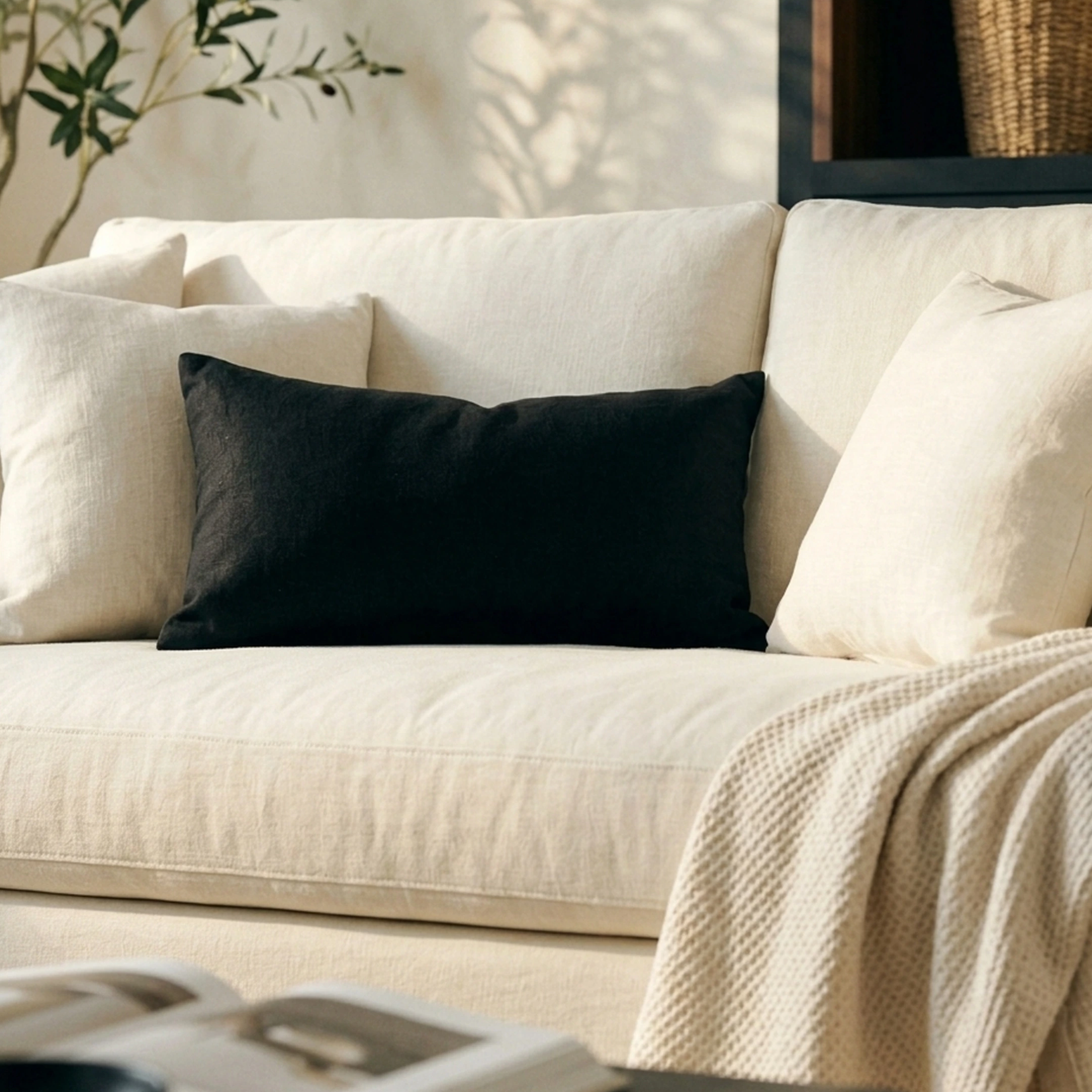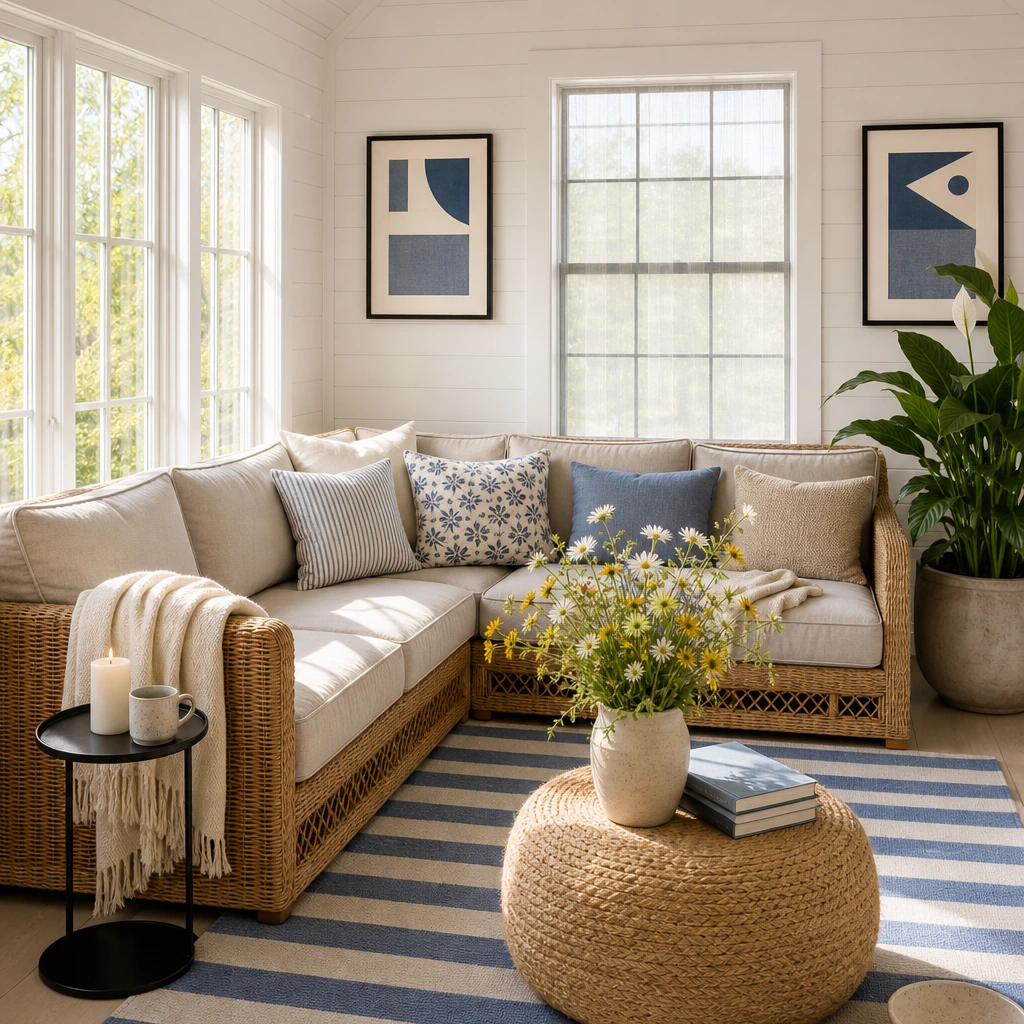

You signed a lease in Brooklyn three months ago. The apartment has great light, original hardwood floors, and a living room that could actually fit a real sofa. Your Pinterest board has 847 pins. Your browser has 34 open furniture tabs. Your living room still has the same IKEA coffee table from your last place, and every time you sit on it, you wonder why choosing a single sofa feels harder than choosing the apartment itself.
First Chair exists for this moment: when you know what you like but can't seem to make it real.
The problem isn't your taste. It's inspiration and execution, and it's costing you more than just time.
Key Takeaways
- 80% of furniture shoppers feel relief, not joy, when a purchase is finally complete, signaling the process has become an ordeal
- Decisiveness comes from knowing what you want before browsing, not from limiting your options after the fact
- Six proven steps reduce overwhelm: understand your needs, set a budget, know your style, measure your space, focus on one room, and research systematically
- Visualization helps only when it shows real, buyable furniture. Renders of pieces that don't exist leave you with a mood board, not a room.
- Style discovery quizzes can help shoppers clarify their design preferences before they start browsing
- The root cause of furniture paralysis isn't too many choices: it's shopping before you've clarified what you actually need
Breaking Free from Pinterest Paralysis

From Saved Boards to Shoppable Rooms
Pinterest boards are where good intentions go to collect dust. You save a Crate & Barrel sectional at 11pm, a vintage brass lamp from 1stDibs the next morning, a Lulu & Georgia rug during lunch. By Friday, you have 200 saved pieces and zero idea how they'd look together in your actual apartment.
This is what the industry calls "inspiration overload," and it affects nearly everyone. Research from the Home Furnishings Association shows that half of all furniture buyers begin their journey on social platforms like Instagram, Pinterest, and TikTok. The inspiration phase can stretch for weeks or months before anyone feels ready to buy.
Most people jump from inspiration directly to browsing, skipping the part where they figure out what they actually need.
The Confidence Gap in Home Furnishing
The gap between saving inspiration and furnishing a room isn't about access to furniture. It's about confidence.
That editing function is what most people lack. Without it, the sheer volume of options becomes paralyzing. Benjamin Moore alone offers over 3500 paint colors. Platforms like Chairish and 1stDibs add thousands of vintage and used pieces to the mix. The options are infinite, which sounds like freedom but often feels like a trap.
From Endless Tabs to Intentional Choices
Why Traditional Browsing Leads to Burnout
The way most people shop for furniture is broken. Open a tab for West Elm. Open another for CB2. Add Article, Pottery Barn, and maybe a few more. Before long, you're comparing a $1,200 sofa against a $2,800 sofa against a $600 sofa, and you can't remember which one had the depth you needed or which fabric was performance velvet versus regular.
This is decision fatigue in action. Research shows that approximately 80% of furniture shoppers feel relief rather than joy when purchases are complete. That statistic is striking. Furnishing a home should feel like a milestone, not an ordeal.
Contributing factors include:
- Too many options across too many retailers
- Limited space concerns creating fear of mistakes
- Lack of confidence in design decisions
- Time constraints making research feel impossible
- Money anxiety around high-ticket purchases
The Power of Curated Recommendations
The antidote to endless tabs isn't fewer options. It's better filtering. The most effective approach combines self-knowledge with curated guidance. A good style quiz should narrow the field, not widen it. Think CB2 over Pottery Barn? Warm walnut over bleached oak? Bouclé or performance linen? Those distinctions matter more than generic preset labels.
When you know your style DNA, whether it's 20% contemporary, 10% coastal, or something more specific like "Scandinavian but warmer," the filtering happens before you browse. Most furniture sites mistake volume for usefulness. Showing you 4,000 sofas isn't personalization. It's outsourcing the work back to you.
How to Discover Furniture That Matches Your Aesthetic
Beyond Broad Style Categories
"Mid-century modern" covers everything from a $500 Target side table to a $15,000 Herman Miller lounge chair. The label is almost useless as a shopping filter because it includes too much. The same goes for "farmhouse," "contemporary," and "transitional."
Preset styles are useful for retailers, not for real people. Nobody actually wants "mid-century modern." They want mid-century without the stiffness, or minimalism that still feels warm at 8pm.
Real style is more nuanced than that. It sounds like:
- Scandinavian with walnut and oak warmth, deeper seats, softer textiles
- Mid-century modern with walnut tones, warm leather, rounded arms
- Rustic with refined silhouettes, raw wood, leather, linen in clean lines
- Brutalist with deep leather and wool against the concrete
- Minimalism with weight, fewer pieces, lived-in materials, calm tones
These layered descriptions are harder to search for on traditional retail sites, but they're how most people actually think about their taste. You know the difference between a room that feels cold and minimal versus one that feels calm and edited. That distinction matters.
Translating Vague Ideas into Concrete Furniture
The translation problem is real. You can feel what you want, but articulating it in a way that produces useful search results is hard. "Warm modern" doesn't return helpful results on most furniture sites.
The work happens before you open a browser. Ask yourself:
- What materials feel right? (warm woods, aged brass, performance velvet, bouclé)
- What silhouettes appeal to you? (rounded edges, clean lines, visible legs, deep seats)
- What's the mood? (calm, collected, energetic, cozy)
- What's the practical reality? (pet-friendly fabric, kid-proof surfaces, apartment-scale dimensions)
When you can answer these questions, you've done the filtering that makes shopping manageable.
Making Confident Decisions and Avoiding Costly Mistakes
The High Cost of Indecision
Indecision has real costs. Time. But also money. The wrong sofa doesn't just waste $1,500. It sits in your living room making you feel bad every time you look at it. Or it gets returned, adding shipping costs, delays, and additional stress to an already frustrating process.
Then there's the opportunity cost. Every month you spend paralyzed is a month you're not enjoying the space you're paying for. That matters more in expensive rental markets where you're spending $2,500 a month on an apartment that still feels temporary.
Building Your Home with Intentions
Here's how you can simplify furniture decisions:
- Understand your needs first.
How do you actually use the room? Do you host dinner parties or eat on the couch? Do you work from home? - Set a realistic budget.
Many designers recommend setting a furnishing budget based on the size of the space, the number of rooms being furnished, and how long you plan to stay in the home. - Know your style before browsing.
Take a quiz. Make a mood board. Do the internal work before opening tabs. - Measure your space accurately.
Know doorway widths, ceiling heights, and the exact dimensions of where furniture will sit. A sofa that's 4 inches too deep will ruin a small living room. - Focus on one room at a time.
Bedroom first, then living room, then dining. Phased approaches reduce overwhelm and prevent overspending. - Research systematically.
Compare 3-5 concepts within your parameters instead of endlessly browsing.
Why Real Furniture Matters
Room design visualizers have exploded in popularity. They promise to show you what your space could look like, generating photorealistic images in seconds. But the furniture in those renders often doesn't exist.
You fall in love with a sofa in an AI-generated image, then spend hours trying to find it. The search fails because the sofa was invented by an algorithm. It's a composite of design elements that looks plausible but isn't actually for sale anywhere.
This is the gap between fantasy spaces and practical execution. Visualization matters, but only if it leads to a room you can actually buy. A cohesive concept built from West Elm, CB2, Rejuvenation, and Article pieces can go from screen to living room in weeks.

Accessing Designer-Level Guidance Without the Designer Price Tag
Traditional interior design services solve the overwhelm problem, but they're expensive. Full-service design starts at several thousand dollars per room and can climb much higher. That's out of reach for most people furnishing their first apartment or first home.
You don't need someone to tell you what to like. You need help translating what you already like into decisions you can act on. That's a different service, and it's increasingly available without the designer price tag.
What to Look For
- Multi-retailer sourcing. Recommendations should pull from multiple brands, not push inventory from a single catalog
- Style interpretation. The service should understand nuanced prompts like "organic modern, not cold"
- Practical constraints. Budget, dimensions, and lifestyle should factor into recommendations
- Real, buyable pieces. Every recommendation should link to something you can actually purchase
What NOT to Buy (At Least Not Yet)
Before you start filling your cart, here's what to skip until you have your foundational pieces in place:
Trendy Accent Pieces
That viral fluted vase or checkerboard rug might look perfect on Instagram, but trend-driven pieces date quickly. Wait until your core furniture is sorted before adding statement accessories.
Bedroom Furniture Sets
Matching bedroom sets often look generic and prevent you from developing a more personal aesthetic. Buy the bed you love, then build around it with pieces that have more character.
Overly Specific Storage Solutions
Modular closet systems and specialty organizers make sense once you've lived in your space and understand your actual storage needs. Buy them too early and you're guessing.
Cheap Versions of Statement Pieces
A $200 knockoff of a $2,000 designer chair will disappoint you more than not having the chair at all. It's better to save up or find a quality alternative in a different style.
Everything at Once
Resist the urge to furnish every room immediately. Living with a space helps you understand what you actually need versus what you thought you needed when browsing online.
Focus your budget on the pieces you use daily: the sofa you'll sit in every night, the mattress you'll notice every morning, the dining table that doubles as your WFH setup. An Article Sven, a CB2 sectional with real depth, a Saatva mattress. Anchor pieces first.
Why First Chair Makes Furnishing Feel Possible
You have the cafe photo. You have the Pinterest board. You know the words: warm, layered, collected-but-curated. What you don’t have is the room.
That’s the part First Chair handles. Upload the cafe photo, describe the direction in plain language, and we come back with a real concept, actual pieces from West Elm, CB2, Crate & Barrel, Pottery Barn, and Lulu & Georgia, with insider pricing already in. The cafe in your head, turned into a room you can come home to.
Frequently Asked Questions
What is Pinterest paralysis and how do I overcome it?
Pinterest paralysis happens when you save hundreds of inspiration images but can't translate them into actual purchases. The fix isn't deleting your boards. It's doing the self-discovery work before browsing: clarifying your budget, measuring your space, and articulating your style in specific terms. Decisiveness comes from knowing what you want before you start looking, not from limiting options after the fact.
How can I make sure furniture pieces will look good together?
Start with a cohesive concept before shopping piece by piece. Identify your palette (warm woods vs. cool tones, matte vs. shine), your silhouettes (rounded vs. angular), and your textures (bouclé, velvet, linen). Platforms that generate room concepts from real furniture help visualize how pieces work together before you buy. Shopping across multiple retailers for the right piece beats shopping at one store for matching sets.
Is it possible to get personalized design guidance without hiring an expensive interior designer?
Yes. The middle ground between full-service design and pure DIY is growing fast. Style quizzes, room design tools, and curated multi-retailer platforms all provide guidance without the traditional price tag. The key is finding services that interpret your style rather than impose their own.
Why do many AI design tools show furniture that doesn't exist?
Most AI image generators create composite furniture by combining design elements that look plausible but aren't real products. This creates beautiful renders that lead nowhere. The solution is using First Chair that build concepts from real, in-stock furniture, where every piece shown links to something you can actually purchase.
What's the best way to approach furniture shopping if I feel overwhelmed?
Start with one room. Set a clear budget. Measure everything. Identify your style before opening any shopping tabs. Compare a curated set of 3-5 concepts instead of browsing infinitely. The six-step framework reduces overwhelm: understand needs, set budget, know style, measure space, focus on one room, research systematically.