
Walk into Ariana Grande's Beverly Hills mansion through any of the editorial coverage from Architectural Digest or Vogue, and the first thing that registers is not the size of the rooms. It is the quiet. Not the kind of quiet that comes from an empty space or a showroom floor, but the kind that comes from a room where every piece was chosen with a reason. If you have been saving interiors like hers for months and still cannot figure out why your own living room feels slightly off, the problem is not your taste. The problem is the translation layer between the aesthetic you love and the actual decisions that build it.
Grande's homes have shifted significantly over the years. The maximalist glam of her earlier spaces has given way to something more considered: a Japandi-influenced aesthetic built on neutral palettes, natural materials, clean-lined furniture with rounded silhouettes, and deliberate negative space. This is a design direction that is both highly aspirational and genuinely achievable, because it is built on restraint rather than budget. The most expensive thing in a Japandi room is often the discipline to stop adding.
This guide breaks down the specific design moves behind Grande's homes, what they are actually called, why they work, and how to recreate them with real furniture and accessible choices. You will not need a celebrity renovation budget. You will need a clearer understanding of the principles, a more disciplined approach to the palette, and a few anchor pieces chosen with more intention than speed.
What you will learn in this guide:
- The design vocabulary behind Grande's current aesthetic and why it works
- How to build her signature color palette in your own space
- Where to invest and where to save in a high-low mix
- Lighting strategies that have the highest impact for the lowest cost
- Bathroom and bedroom upgrades that do not require structural renovation
- The most common mistakes that undermine this aesthetic and how to fix them
Key Takeaways
- Ariana Grande's current home aesthetic is Japandi: a hybrid of Japanese minimalism and Scandinavian warmth built on neutral palettes, natural materials, and deliberate negative space. Homes and Gardens describes her Los Angeles home as a clear expression of this style.
- 88% of renovating homeowners use online sources for design inspiration, including celebrity interiors, making this one of the most searched aesthetic categories in residential design.
- Neutral palettes dominate real renovation decisions. 46% of renovating homeowners chose white cabinets in Houzz's 2024 Kitchen Trends Study, aligning directly with the palette Grande uses across her homes.
- The most impactful rooms in her Beverly Hills home rely on layered lighting, a single statement piece per space, and a high-low material mix rather than all-luxury purchasing.
- Over 70% of designers anticipate continued growth in spa-inspired primary bathrooms, the exact direction Grande's bathroom aesthetic represents and one of the most achievable celebrity-inspired looks for homeowners.
- You do not need to renovate to recreate this look. Lighting, textiles, a few anchor pieces, and a disciplined color palette do most of the work.
- Biophilic elements like sculptural indoor plants and natural wood finishes are central to the Japandi look and available at accessible price points through most major home retailers.
What Ariana Grande's Home Design Actually Is (and Why It Works)
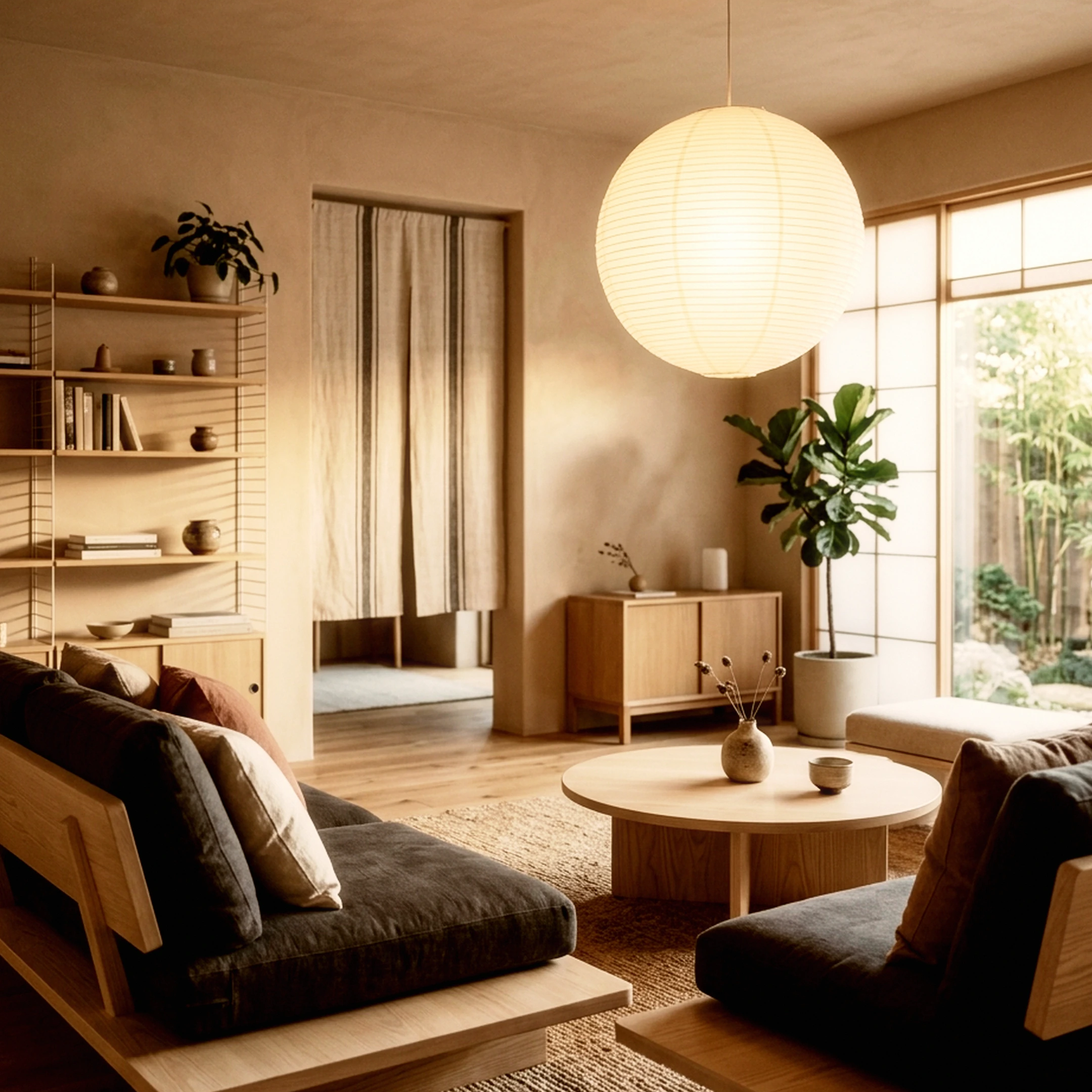
Japandi is a hybrid interior design style that combines Japanese minimalism, characterized by clean lines, subdued color, and deliberate negative space, with Scandinavian warmth, which prioritizes cozy textures, functional comfort, and natural materials. The result is a space that feels calm without feeling cold, and considered without feeling sterile.
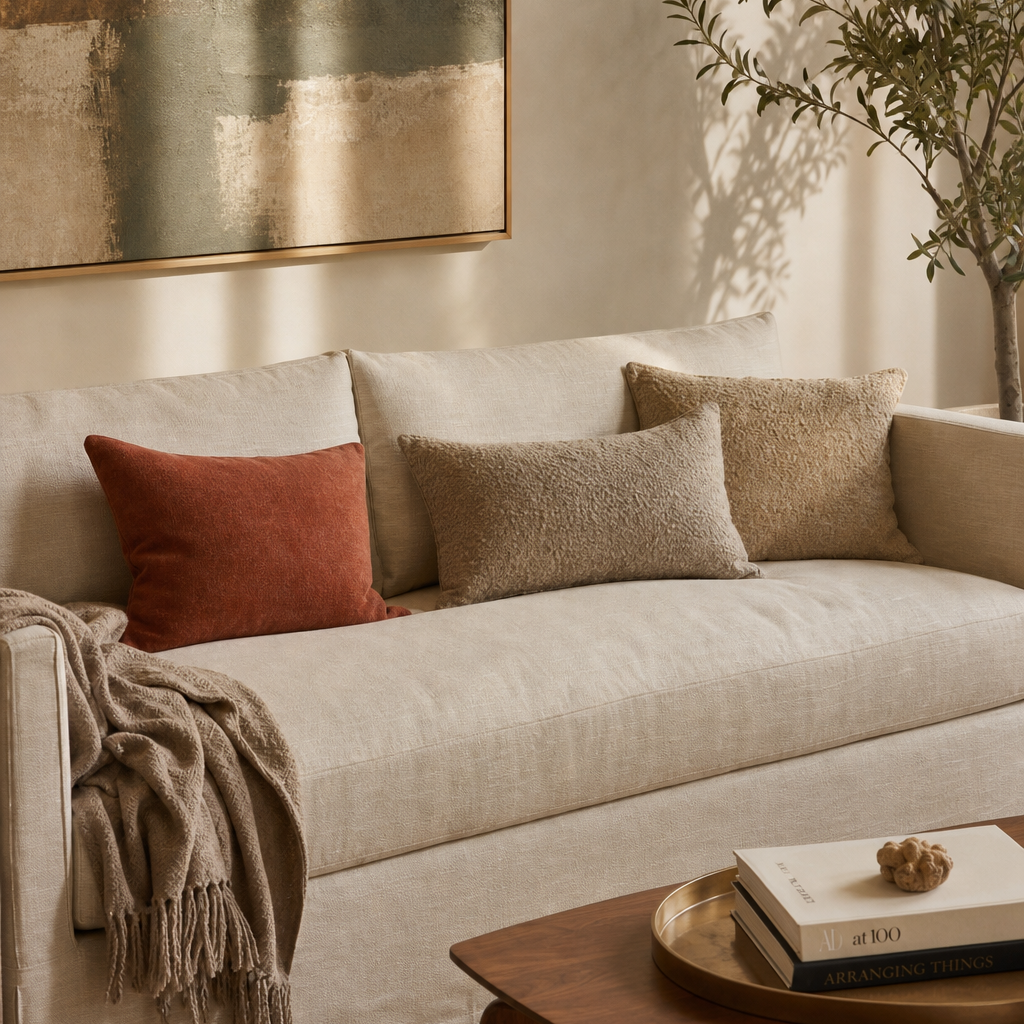
Homes and Gardens describes her Los Angeles home as a clear expression of this style: off-whites, beiges, warm browns, and soft greys as the base, with muted terracotta and sea-green as accent tones. Small, sculptural plants. Natural stone and wood surfaces. Furniture with rounded silhouettes rather than sharp, angular edges.
This is not a difficult aesthetic to understand. It is, however, easy to execute poorly. The most common mistake is treating minimalism as emptiness rather than as restraint. A Japandi room is not a room with nothing in it. It is a room where every piece earns its place.
The Palette That Makes It Work
The color system in Grande's homes follows a simple rule: neutrals as the foundation, warmth as the modifier, and one or two muted accent tones as the punctuation. Off-white walls, warm wood floors or furniture legs, linen or boucle upholstery in cream or oat, and then a single terracotta pillow or a sage green ceramic vase to break the monotony.
This palette is not trendy. It is durable. Rooms built on this foundation age well and photograph well, which is part of why designers keep returning to it. The 46% of renovating homeowners who chose white cabinets in Houzz's 2024 Kitchen Trends Study are making the same foundational choice, whether they know it or not.
Why Negative Space Is a Design Tool, Not an Absence
One of the most misunderstood elements of the Japandi aesthetic is negative space. In Grande's rooms, there are visible stretches of wall, open floor space around furniture, and surfaces that are not fully decorated. This is intentional. Negative space gives the eye somewhere to rest and makes the pieces that are present feel more significant.
If your room currently feels cluttered or visually noisy, the fix is usually subtraction rather than addition. Removing two or three pieces often does more than buying something new.
Why This Design Direction Matters Now
The broader market context behind Grande's aesthetic is worth understanding, because it explains why this look has staying power rather than being another trend cycle.
Annual U.S. spending on home improvement and repairs reached approximately $567 billion in 2022, up from $328 billion in 2019, driven by higher home equity and more time spent at home. This growth has pushed demand for premium finishes and design-forward decor that emulate high-end interiors, even among mid-market homeowners who are not doing full renovations.
The shift toward calm, spa-like spaces is not purely aesthetic. The National Kitchen and Bath Association's Design Trends 2024 report found that designers see sustained growth in minimal, clean-lined styles with organic materials and light neutrals, as homeowners seek spaces that feel restorative rather than stimulating. This is the design direction Grande's homes represent, and it is moving from aspirational to mainstream.
Celebrity influence on residential design decisions is measurable. 88% of renovating homeowners rely on online sources for design inspiration, including celebrity homes shared through editorial coverage and social platforms. Pinterest's annual trend forecasts consistently highlight celebrity-linked aesthetics like quiet luxury and old money style, showing how curated celebrity interiors drive mass-market searches for similar looks.
Biophilic design, the practice of integrating natural elements like plants, natural light, and organic materials into interiors, has moved from a niche preference to a documented design priority. The American Society of Interior Designers noted increased client interest in nature-inspired interiors as a long-term trend, and it is central to the Japandi aesthetic Grande's homes exemplify.
Smart lighting adoption has made the layered lighting approach used in celebrity homes far more accessible. 47% of U.S. households used LED bulbs as their primary light source in 2020, up from just 4% in 2015, which means dimmable, mood-setting lighting is now a realistic option for most homeowners rather than a luxury feature.
Ariana Grande's Signature Color Palettes and How to Use Them at Home
Grande's color approach is one of the most directly transferable elements of her design. It does not require expensive materials or professional help. It requires discipline.
The base palette across her homes runs from warm white to soft oat to light greige, with wood tones providing the warmth that keeps the rooms from feeling clinical. Accent colors appear in small doses: a terracotta throw, a dusty sage plant pot, a muted blue-green cushion. Nothing competes for attention. Everything supports the overall tone.
Building Your Own Version of This Palette
Start with your largest surface: the walls. Warm white or off-white is the most forgiving choice and the one that reads most consistently across lighting conditions. Avoid bright, cool whites, which tend to feel harsh in natural light and flatten the warmth of wood and linen tones.
From there, choose your wood tone. Lighter woods like ash or white oak keep the space feeling airy. Darker woods like walnut add weight and grounding. Grande's homes tend toward lighter woods with occasional walnut accents, which creates contrast without heaviness.
Finally, choose one accent color and use it in three places: a textile, a ceramic or decorative object, and one larger piece like a rug or a chair. Three repetitions of the same tone create cohesion without making the choice feel forced.
What to Avoid in This Palette
- Skip anything with a cool grey undertone if the room already feels cold. Cool greys and bright whites together create a clinical feel that works in commercial spaces but reads as sterile in a home.
- Avoid jewel tones as accent colors unless you are deliberately moving toward a more glam direction.
- Do not mix more than two wood tones in a single room unless you have a strong reason for each one.
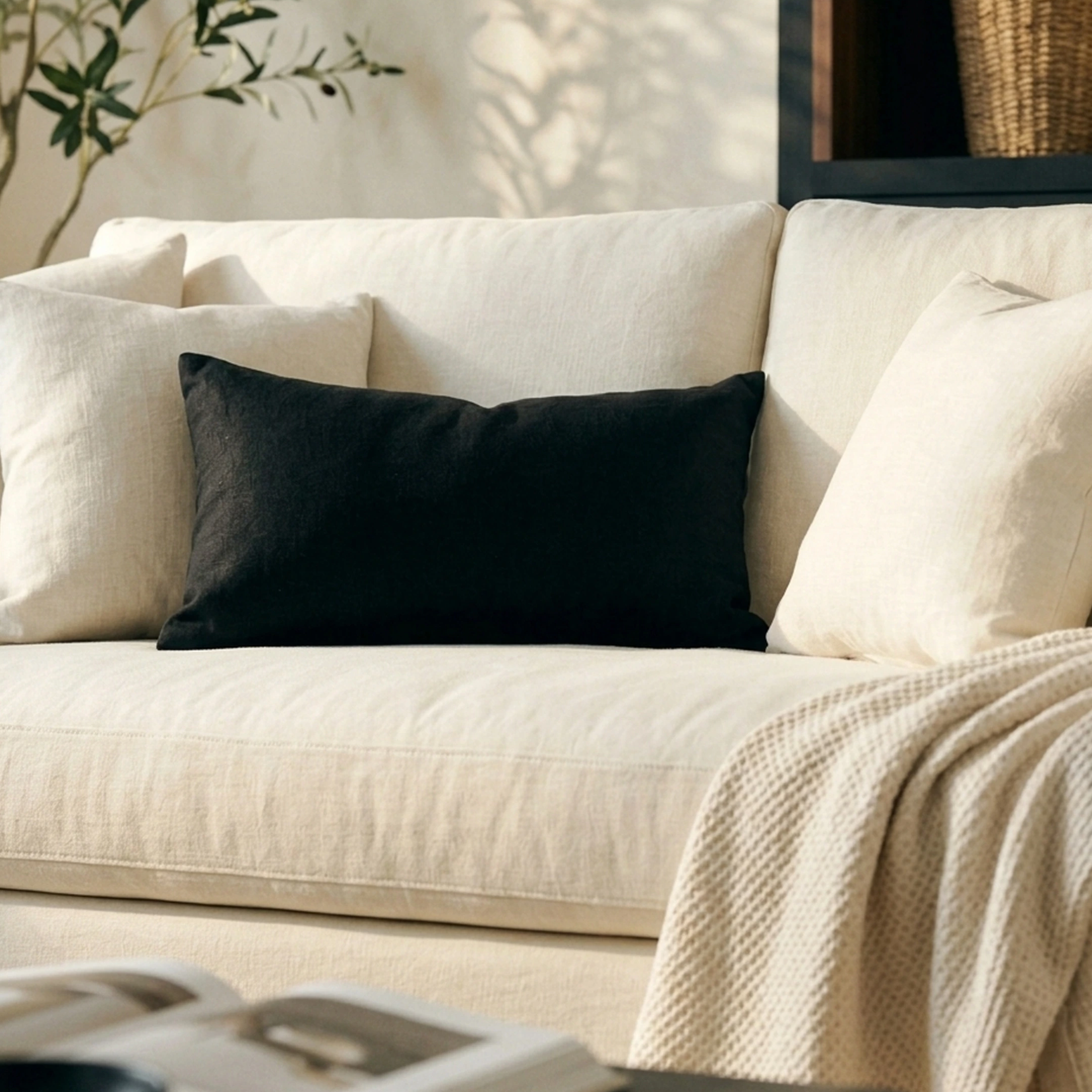
- Resist the urge to add pattern. In a neutral palette, texture carries the visual interest that pattern would otherwise provide. Boucle upholstery next to smooth plaster walls. A jute rug under a linen sofa. A matte ceramic vase on a polished wood shelf.
Luxury Minimalism: Recreating High-End Simplicity Without a Renovation Budget
Luxury minimalism is a design approach that pairs pared-back forms and limited palettes with high-quality materials, subtle textures, and statement pieces rather than decorative clutter. The key word is quality, not quantity. A single well-made sofa in a good fabric does more for a room than four mismatched pieces that each cost less.
Architectural Digest's coverage of Grande's homes through the years shows this principle in action. The rooms are not empty. They are edited. Each space has an anchor piece, supporting furniture that does not compete with it, and accessories that add texture rather than visual noise.
The High-Low Mix That Actually Works
The most practical strategy for recreating this look is the high-low mix: invest in two or three pieces that will carry the room visually, and fill in around them with more accessible options. The pieces worth spending on are the sofa, the primary lighting fixture, and the rug. These three items define the room's character more than anything else.
For the remaining pieces, accessible retailers like CB2, West Elm, and Article offer silhouettes and materials that read as considered without the price points of fully custom or designer furniture. The goal is not to fake luxury. It is to make deliberate choices at every price point so the room feels intentional rather than assembled by accident.
The table below outlines where to invest and where to save in a Japandi-inspired room:
Room ElementWorth Investing InAccessible AlternativeSofaLinen or boucle, clean-lined silhouetteArticle, West Elm track-arm stylesRugNatural fiber, wool, or juteLulu and Georgia, Crate and BarrelPrimary lightingSculptural pendant or chandelierCB2, Rejuvenation, Anthropologie HomeCoffee tableSolid wood or stone topWest Elm mid-century stylesAccent chairCurved, upholstered statement pieceInterior Define, CB2TextilesQuality linen or cotton throwsH&M Home, Zara HomeDecorative objectsOne or two meaningful ceramicsLocal markets, Etsy
First Chair's modern furniture guide curates pieces across these retailers so you can see how they work together before committing to a purchase. Every piece shown is real and in stock, which matters when you are trying to build a cohesive room rather than a mood board.
Texture as the Substitute for Color
In a neutral palette, texture carries the visual interest that color would otherwise provide. This is not a decorating trick. It is a structural principle of the Japandi aesthetic. Contrasting textures create depth without introducing competing colors, which is exactly how Grande's rooms maintain visual richness while staying calm.
Practical texture pairings that work in this palette:
- Boucle upholstery against smooth plaster or painted walls
- Jute or sisal rug under a linen sofa
- Matte ceramic vase on a polished wood shelf
- Linen throw over a leather or velvet accent chair
- Raw wood tray on a stone or lacquered coffee table
Modern Glam Bedroom Design Inspired by Celebrity Homes
Modern glam is a style that blends contemporary clean lines with glamorous touches including velvet upholstery, metallic finishes, crystal or sculptural lighting, and layered soft textures. It is not maximalist. It is selective.
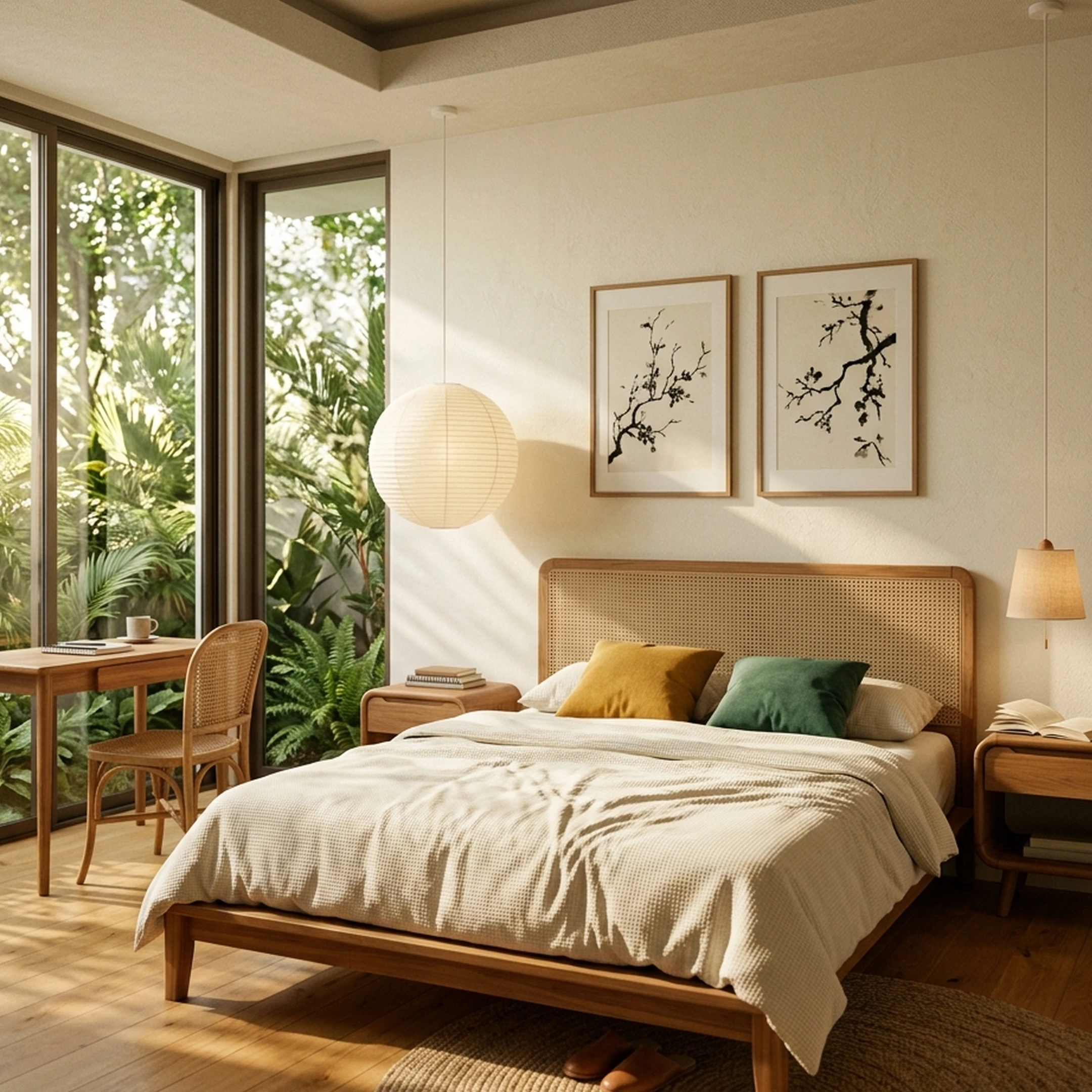
Grande's bedroom aesthetic leans slightly warmer and more layered than her living spaces. This is where the glam element enters. Vogue's coverage of her Beverly Hills mansion shows bedrooms that use a soft, warm base with one or two elevated details: an oversized headboard, a sculptural bedside lamp, layered bedding in tonal neutrals. The room reads as luxurious because of the quality of those specific choices, not because every surface is decorated.
The Bedroom Anchor: The Headboard
In a celebrity-inspired bedroom, the headboard is the statement piece. An upholstered headboard in a warm neutral, boucle, or velvet immediately elevates the room and gives it a focal point that does not require anything else to be expensive. Choose a scale that fills the wall behind the bed. Undersized headboards are one of the most common mistakes in bedroom design and one of the easiest to fix.
Layered Bedding Without the Clutter
Grande's bedrooms use layered bedding in tonal neutrals: a fitted sheet, a duvet in cream or oat, a folded throw at the foot of the bed, and two or three pillows in complementary textures. The layers create visual richness without introducing pattern or color conflict. This is a styling approach, not a purchasing one. You can achieve it with pieces you already own by editing down to a single color family.
Lighting in the Bedroom
Overhead lighting in a bedroom should almost never be the primary light source. Use table lamps on both sides of the bed, ideally with warm-toned bulbs and dimmable fixtures. A sculptural lamp, even an accessible one from CB2 or Anthropologie Home, reads as a considered choice and adds the glam element without requiring a chandelier.
The three-layer approach for a bedroom:
- Ambient: ceiling fixture on a dimmer, used only when needed for tasks
- Mood: table lamps on both bedside tables with warm-toned LED bulbs
- Accent: a floor lamp in a reading corner or LED strip behind a headboard panel
Lighting Design Ideas from High-End Celebrity Residences
Layered lighting is the single most impactful change most homeowners can make to a room. It is also the most consistently underused. Layered lighting uses multiple types of light: ambient (general overhead), task (functional and directed), and accent (decorative and mood-setting). Celebrity homes use all three in every major room, which is why they photograph so well and feel so different from standard residential spaces.
Dimmable LED fixtures are now widely accessible and are the foundation of the mood-lighting approach used in high-end residential design. 47% of U.S. households used LED bulbs as their primary light source in 2020, up from just 4% in 2015, which means the technology required to recreate this approach is already in most homes or available at most hardware stores.
How to Layer Lighting in a Living Room
Start with your ambient source: a ceiling fixture or recessed lighting on a dimmer. Add a floor lamp in one corner to create warmth and fill shadows. Add a table lamp on a console or side table for a third light source at a lower level. Consider LED strip lighting under a shelf or behind a TV unit as an accent layer.
The goal is to be able to turn off the overhead light entirely and still have a well-lit, warm room. If your space only works with the overhead light on, it is under-lit.
Statement Lighting as a Design Anchor
In Grande's homes, lighting fixtures function as sculpture. An oversized pendant over a dining table, a sculptural floor lamp in a reading corner, a cluster of pendants at varying heights over a kitchen island. These choices cost less than a sofa but have an outsized effect on how a room reads.
Retailers like Rejuvenation, CB2, and Anthropologie Home carry statement lighting at accessible price points. The shape matters more than the material. Look for organic forms, warm metals like aged brass or brushed bronze, and fixtures that feel considered rather than generic.
Mid-Century Modern Kitchen Lighting
Homes and Gardens notes that Grande's kitchen leans mid-century modern, a style that pairs well with the Japandi living spaces because both prioritize clean lines and warm materials. In a kitchen, this translates to pendant lighting over the island in a warm metal finish, under-cabinet lighting for task work, and a statement fixture over the dining area if the kitchen opens to a dining zone.
Smart Storage Solutions from Celebrity Interior Design
One reason celebrity homes feel calm is that storage is invisible. Clutter is the fastest way to undermine a Japandi or luxury minimalist aesthetic, and the solution is not buying more storage containers. It is designing storage into the room so that everyday objects have a place that is not visible from the main sightlines.
Open-concept layouts, which 85% of buyers prefer in at least a partially open kitchen-dining-family room configuration, require more disciplined storage because there are fewer walls and doors to hide things behind. The visual openness that makes these layouts feel spacious also means that clutter reads from further away and affects more of the room.
Built-In Versus Freestanding Storage
Built-in shelving and cabinetry read as more intentional than freestanding furniture and tend to make rooms feel larger. If built-ins are not in the budget, choose freestanding pieces with closed storage rather than open shelving. Open shelving requires constant curation to look good and is harder to maintain in everyday living.
For renters or those not ready to commit to built-ins, a credenza or sideboard with closed doors does most of the same work. Choose one in a warm wood tone that matches or complements your other furniture, and keep the top surface edited to two or three objects maximum.
The Decor-to-Storage Ratio
A useful rule for Japandi-inspired rooms: for every decorative object on a surface, there should be at least as much empty space. This is not a strict formula, but it is a useful check. If a shelf or surface feels busy, remove half the objects and see how the room changes. Most rooms improve immediately.
Surfaces that benefit most from this edit:
- Coffee tables: one tray, one object, one plant or book stack
- Console tables: one lamp, one decorative object, one plant
- Open shelving: books grouped by color or size, two or three objects, visible negative space
- Bathroom counters: only what is used daily, everything else in a drawer or cabinet
Creating a Spa-Like Bathroom Inspired by Celebrity Design
Spa-inspired primary bathrooms feature freestanding tubs, large showers, and luxury finishes, and over 70% of designers anticipate continued growth in this direction. This is the design category where celebrity bathrooms have been moving for years, and it is one of the most achievable celebrity-inspired looks for homeowners because the changes are often material and accessory-based rather than structural.
Grande's bathroom aesthetic follows the same principles as her living spaces: neutral stone or tile, warm wood accents, minimal accessories, and layered lighting. The spa feeling comes from restraint and material quality, not from square footage.
Achievable Spa Bathroom Upgrades
You do not need to gut a bathroom to move it in this direction. The following changes have the highest visual impact for the investment:
- Replace the mirror with a larger, frameless or warm-framed version. Undersized mirrors are one of the most common bathroom mistakes.
- Add a teak or bamboo bath mat or stool. Natural wood in a bathroom immediately reads as elevated.
- Swap plastic dispensers for ceramic or glass containers in a single color family.
- Add a small plant. A pothos, a fern, or a small olive tree in a simple ceramic pot adds the biophilic element that makes spa bathrooms feel alive.
- Install a dimmer on the overhead light if possible, and add a candle or two for evening use.
- Replace chrome towel bars with aged brass or matte black hardware. This is a low-cost change with a significant visual effect.
Tile and Surface Choices for a Spa Feel
Large-format tiles in warm white, soft grey, or travertine tones read as more luxurious than small mosaic tiles and are easier to keep clean. If you are renovating, choose tiles that run floor to ceiling in the shower rather than stopping at shoulder height. The continuous surface makes the space feel larger and more intentional.
For countertops, honed stone or a stone-look porcelain in a warm white or soft beige is the most versatile choice. Avoid high-gloss surfaces in bathrooms, which show water spots and fingerprints and undermine the calm, matte quality of the spa aesthetic.
Tools and Solutions for Recreating This Look
The following categories represent the practical toolkit for building a Japandi or celebrity-inspired interior. These are not endorsements; they are representative options documented in design media and industry sources.
Visual Inspiration and Design Platforms
Getting the reference right before you buy anything is the most important step. Platforms and publications that cover Grande's homes in detail include:
- Architectural Digest and Vogue: Editorial coverage with high-resolution imagery and room breakdowns, useful for understanding the actual proportions and material choices in her spaces
- Homes and Gardens: Has published detailed analysis of her Japandi aesthetic with specific palette and material recommendations
- Pinterest: Central to how most homeowners build mood boards, and useful for collecting references before narrowing to a palette
Furniture and Decor Retailers (Attainable Luxury)
The high-low mix works best when you know which retailers operate at which tier. A practical breakdown:
- West Elm and CB2: Mid-tier with strong Japandi-compatible silhouettes, particularly in sofas, accent chairs, and lighting
- Crate and Barrel and Pottery Barn: Slightly more traditional but strong in rugs, textiles, and dining furniture
- Lulu and Georgia: Strong for rugs and occasional furniture with an elevated aesthetic
- Article: Direct-to-consumer with clean-lined sofas and sectionals at accessible price points
- H&M Home and Zara Home: Trend-forward textiles and accessories suitable for the Japandi palette at low price points
Interior Design and Room Planning Services
- E-design platforms: Services like Havenly offer remote design packages and curated shopping lists for celebrity-inspired looks
- First Chair: Designed specifically for the gap between inspiration and execution. You upload a photo of a room you love, describe the aesthetic direction, and receive curated room concepts built from real, in-stock furniture across multiple retailers including West Elm, CB2, Crate and Barrel, Pottery Barn, and Lulu and Georgia. The platform narrows the field rather than expanding it, which is the right approach for a Japandi aesthetic where restraint is the point. Insider pricing is available on selected pieces, and every recommendation is something you can actually buy. If you have been overwhelmed by furniture options, this is the tool built for that specific problem.
Lighting Solutions
- Rejuvenation: Statement pendants and sconces in warm metals, well-suited to the Japandi aesthetic
- CB2 and Anthropologie Home: Sculptural lighting at accessible price points
- Philips Hue: Smart, dimmable LED bulbs that support the layered lighting approach central to celebrity-style interiors
- Lutron: Dimmers and smart lighting controls widely used in both residential and luxury applications
Plants and Biophilic Elements
Small, sculptural plants are central to the Japandi look. The most effective choices for this aesthetic:
- Olive trees (small indoor varieties)
- Ficus varieties with clean, sculptural forms
- Citrus trees in simple ceramic pots
- Pothos and ferns for bathrooms
The Sill and Bloomscape provide curated, interior-ready plants and pots suitable for the minimalist aesthetic. Local nurseries and big-box garden centers like Home Depot and Lowe's carry most of these varieties at lower price points.
Rental-Friendly and DIY Solutions
- Peel-and-stick wallpaper (Tempaper, Chasing Paper): Widely cited as a way to mimic custom wall treatments without permanent construction
- Peel-and-stick tiles and contact paper: Used to imitate marble or stone surfaces for a spa look on a budget
- Etsy: Useful for custom pillows, artwork, and ceramics that add the "curated over time" quality that distinguishes a considered room from a store-bought one
Best Practices for Recreating Ariana Grande's Aesthetic
1. Start with a Calm Neutral Base, Then Layer Subtle Accents
Off-whites, beiges, warm browns, greys, and blacks form the primary palette for Japandi-inspired interiors, with color added through muted terracotta or sea greens. This mirrors Grande's current home and makes it easier to swap accessories seasonally without the room feeling like it needs a full reset.
2. Invest in One Statement Piece Per Major Room
Anchoring rooms with a single standout item, a velvet sofa, sculptural chandelier, or oversized art, then keeping other elements simple delivers the "celebrity" focal point without requiring everything to be expensive. This is the principle that separates rooms that feel designed from rooms that feel decorated.
3. Use Layered Lighting and Dimmers for a High-End Feel
Combine ambient, task, and accent lighting in every major room. Install dimmers on overhead fixtures. Use warm-toned LED bulbs throughout. This single change does more for a room's atmosphere than most furniture purchases.
4. Edit Surfaces to Two or Three Objects Maximum
The Japandi aesthetic depends on restraint. Every surface in Grande's homes has visible negative space. Apply this rule to coffee tables, consoles, shelves, and bathroom counters. When in doubt, remove rather than add.
5. Choose Natural Materials Over Synthetic Alternatives
Wood, stone, linen, jute, and ceramic read as more elevated than their synthetic equivalents, even at accessible price points. A jute rug from Crate and Barrel reads as more intentional than a polypropylene rug at twice the price.
6. Use Plants as Sculpture, Not as Decoration
In the Japandi aesthetic, plants are chosen for their form as much as their foliage. A single olive tree in a simple ceramic pot does more for a room than a collection of small plants on a shelf. Choose one or two plants with strong silhouettes and give them space.
7. Match Hardware Across the Room
Aged brass, brushed bronze, or matte black hardware used consistently across a room, on cabinet pulls, light fixtures, towel bars, and decorative objects, creates cohesion without requiring expensive furniture. Mixing metals is one of the fastest ways to undermine an otherwise considered space.
8. Build the Room Around the Rug, Not the Other Way Around
In most living rooms, the rug should be large enough that all major furniture legs sit on it. An undersized rug is one of the most common mistakes in residential design and one of the most visually disruptive. Size up before you buy.
Common Mistakes That Undermine This Aesthetic
Mistake 1: Treating Minimalism as Emptiness
The consequence is a room that feels cold and unfinished rather than calm and considered. The fix is understanding that Japandi minimalism is about restraint, not absence. Every piece should be chosen, not just fewer pieces.
Mistake 2: Buying a Matching Furniture Set
Matched sets make rooms look staged rather than lived in. The consequence is a space that reads as a showroom floor. The fix is choosing pieces from different sources that share a material language (warm wood, neutral upholstery, organic forms) rather than a matching finish.
Mistake 3: Using Cool Grey as the Neutral Base
Cool greys and bright whites together create a clinical feel. The consequence is a room that feels like a commercial space rather than a home. The fix is choosing warm whites, off-whites, and greiges as the base, and testing paint samples in natural light before committing.
Mistake 4: Undersizing the Rug
An undersized rug makes a room feel smaller and disconnects the furniture grouping. The consequence is visual fragmentation. The fix is sizing up: in a living room, the rug should be large enough for all major furniture legs to sit on it.
Mistake 5: Relying Only on Overhead Lighting
A room lit only by an overhead fixture feels flat and institutional. The consequence is that even well-chosen furniture reads as less elevated than it is. The fix is adding at least two additional light sources at lower levels and putting the overhead fixture on a dimmer.
Mistake 6: Over-Accessorizing Surfaces
Too many objects on a surface cancel each other out visually. The consequence is a room that feels cluttered regardless of how good the individual pieces are. The fix is editing to two or three objects per surface and leaving visible negative space.
Mistake 7: Mixing Too Many Wood Tones
More than two wood tones in a single room creates visual noise. The consequence is a space that feels assembled rather than designed. The fix is choosing a primary wood tone and a secondary accent tone, and being deliberate about where each appears.
Mistake 8: Buying Furniture Before Establishing the Palette
Choosing furniture before committing to a color palette leads to mismatched purchases that are expensive to correct. The consequence is a room that never quite coheres. The fix is painting a wall or ordering fabric samples before any major furniture purchase, and building the room outward from the palette rather than trying to fit the palette around existing pieces.
If you are starting from scratch or refreshing a space that has never quite come together, the furniture buying guide at First Chair covers how to identify anchor pieces that carry a room without overspending on every item. The tools for decorating a new apartment guide covers the practical starting points for anyone furnishing a space for the first time.
Frequently Asked Questions
What design style is Ariana Grande's home?
Ariana Grande's current home aesthetic is best described as Japandi: a blend of Japanese minimalism and Scandinavian warmth. It is characterized by neutral palettes in off-whites, beiges, and warm browns, natural materials like wood and stone, clean-lined furniture with rounded silhouettes, and small sculptural plants. The style prioritizes calm and restraint over decoration.
How can I recreate Ariana Grande's home aesthetic on a budget?
The most impactful changes are lighting, textiles, and a disciplined color palette, none of which require major renovation. Start by painting walls a warm white or off-white, add dimmable lighting with warm-toned bulbs, invest in one quality anchor piece like a linen sofa or a statement pendant, and edit surfaces down to two or three objects each. Retailers like West Elm, CB2, Article, and H&M Home carry pieces that fit this aesthetic at accessible price points.
What color palette does Ariana Grande use in her home?
Her homes use a base of off-whites, beiges, warm browns, and soft greys, with muted accent tones like terracotta, sea green, and dusty blue appearing in small doses through textiles and decorative objects. The palette avoids cool greys and bright whites, which tend to feel clinical, and relies on warm wood tones to add depth and grounding.
What is the difference between Japandi and Scandinavian design?
Scandinavian design emphasizes functional comfort, cozy textures, and a slightly warmer, more casual feel. Japandi takes the Scandinavian warmth and layers in Japanese minimalism: more deliberate negative space, a stronger emphasis on natural materials, and a quieter, more restrained approach to decoration. Japandi rooms tend to feel more edited and intentional than purely Scandinavian spaces.
How do I make my bathroom feel more like a celebrity spa bathroom?
The highest-impact changes are replacing an undersized mirror with a larger one, adding natural wood elements like a teak bath mat or stool, swapping plastic dispensers for ceramic or glass containers, installing a dimmer on overhead lighting, and adding one small plant. These changes do not require structural renovation and can be done incrementally. Large-format tiles in warm neutrals and honed stone countertops are the most impactful choices if you are doing a full update.
What furniture pieces are worth investing in for a Japandi-inspired room?
The three pieces that define a room's character most are the sofa, the primary lighting fixture, and the rug. These are worth spending more on because they are the pieces that carry the room visually and are the hardest to replace without a full reset. Everything else, accent chairs, side tables, textiles, decorative objects, can be sourced at more accessible price points without undermining the overall aesthetic.
Conclusion: From Inspiration to a Room You Can Actually Live In
The gap between saving Ariana Grande's Beverly Hills living room on Pinterest and actually building something like it in your own apartment is where most people get stuck. The inspiration is clear. The execution is not. What this guide has laid out is the translation layer between the two: the specific principles, the palette logic, the investment priorities, and the mistakes that most commonly derail an otherwise good instinct.
The aesthetic is achievable. It does not require a celebrity budget or a full renovation. It requires a clearer understanding of the principles, a more disciplined approach to the palette, and a few anchor pieces chosen with more intention than speed. Start with the walls, the lighting, and the rug. Edit the surfaces. Add one plant with a strong silhouette. The room will start to feel different before you have spent much at all.
If you want help moving from a saved inspiration photo to a room built from real, purchasable pieces, First Chair is built for exactly that moment. Upload a photo of a room you love, describe the aesthetic direction, and receive curated room concepts with real furniture across multiple retailers. No fake renders. No furniture that does not exist. Just the pieces that actually work for your space, your palette, and your budget.