
Walk through the living room of a well-designed Mediterranean estate and something registers immediately, before you can name a single piece of furniture. The room feels warm. It feels considered. It feels like someone made decisions rather than just filling space. That feeling is not a function of budget. It is a function of logic.
Kevin Hart's Calabasas residence, a 9,500-square-foot Spanish Mediterranean villa set on a gated 26-acre property, is a useful design case study precisely because its best ideas have nothing to do with scale. The arched doorways, the warm earth palette, the resort-like indoor-outdoor flow: none of those require a celebrity budget. They require a clear point of view and the willingness to commit to it.
Most homeowners get stuck not because they lack taste but because they cannot bridge the gap between the room they can picture and the room they can actually build. The principles behind Hart's home close that gap. This guide breaks each one down and translates it into practical moves for real apartments, first homes, and mid-budget renovations.
What you will learn in this guide:
- The specific architectural and palette decisions behind Hart's Mediterranean aesthetic, and how to recreate them without structural changes
- How open floor plan logic works in smaller spaces, using zone anchoring instead of square footage
- Which color and finish choices deliver the highest perceived-value return per dollar
- How lighting layering transforms a room more than any single furniture purchase
- Which smart home upgrades have the most visible impact at entry-level price points
- How to apply resort-style outdoor design principles to any size yard or balcony
- Which kitchen and bathroom changes shift perceived quality without a full renovation
Key Takeaways
- Kevin Hart's Calabasas home follows a Spanish Mediterranean architectural language: warm stucco tones, arched forms, and layered indoor-outdoor living. All three translate directly to smaller homes without structural renovation.
- The most reproducible idea from high-end celebrity homes is not the size. It is the layout logic: clear zones, a cohesive palette, and deliberate material choices that work together rather than compete.
- Open floor plans fail in smaller homes when the entire space is treated as one undifferentiated room. The fix is zone anchoring with rugs, lighting, and furniture groupings, not walls.
- Warm earth tones (terracotta, sand, warm white, aged wood) are among the most forgiving palettes available because they read as elevated across a wide range of furniture finishes and material combinations.
- Smart lighting control delivers the highest visible impact per dollar for most homeowners, ahead of any other technology upgrade.
- Outdoor living spaces return strong resale value, and the design principles behind resort-style yards apply at any scale, from a 26-acre estate to a 200-square-foot urban balcony.
- Cohesion matters more than individual pieces. A room with five considered pieces in a unified palette will consistently outperform a room with fifteen mismatched ones.
The Mediterranean Design Language: What It Actually Means for Your Home
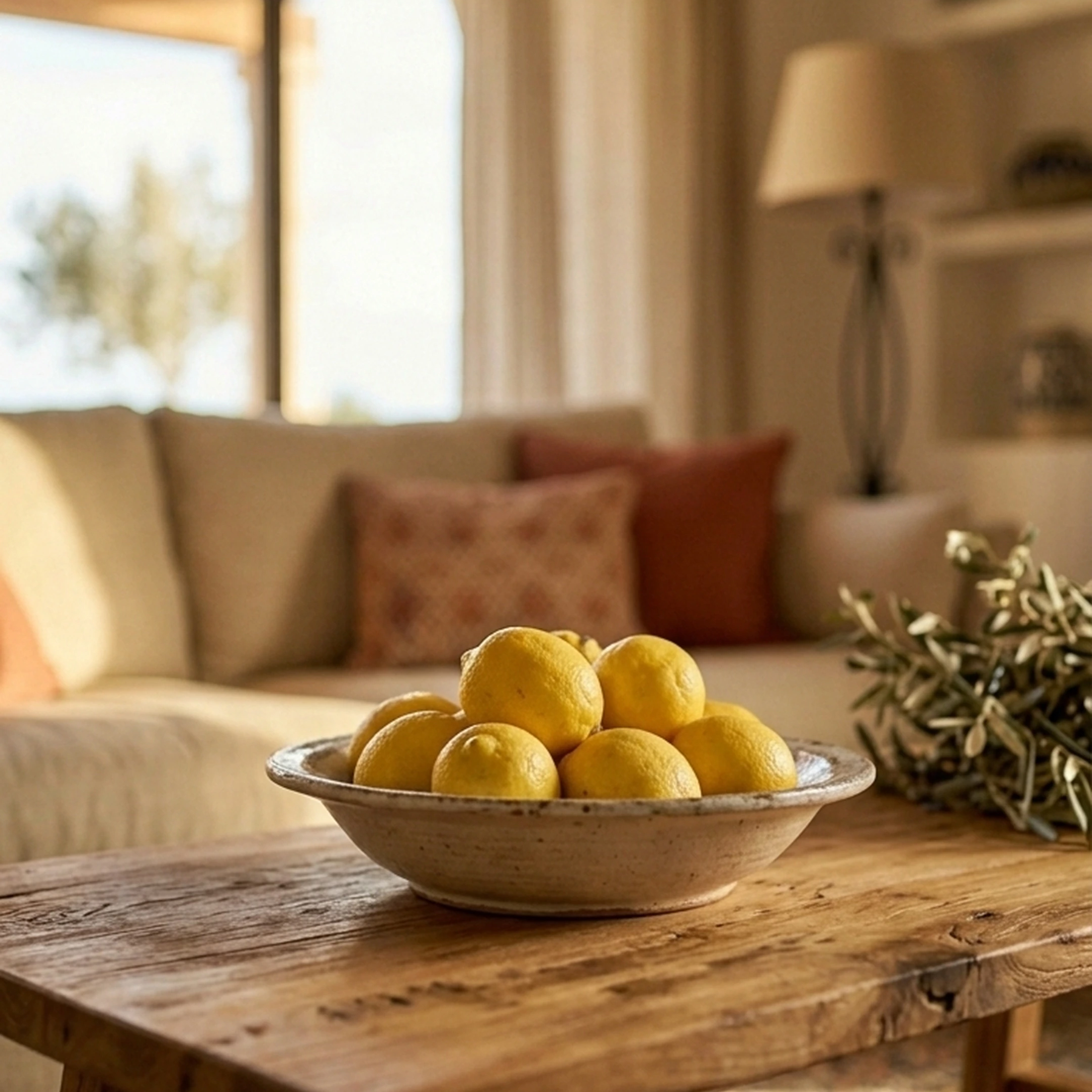
Spanish Mediterranean design is a residential architectural style rooted in Southern European and North African building traditions, characterized by warm stucco or plaster exteriors, arched openings, clay tile roofing, and a strong structural relationship between interior and exterior living spaces.
Hart's Calabasas estate is described across multiple home tour sources as a textbook application of this style at luxury scale. The reason it translates well to mid-budget homes is that its defining elements are architectural details and palette choices, not expensive materials. You do not need imported Moroccan tile throughout your entire home. You need a few well-placed references that signal the same warmth and intentionality.
Arched Doorways and Openings
Arched forms are one of the most recognizable features of Mediterranean architecture, and one of the most accessible to recreate. A single arched doorway between a hallway and a living room changes the entire character of a space. For renters or homeowners who cannot alter structural openings, arched mirrors, arched headboards, and arched shelving units create the same visual language without touching a wall.
The key is placement. One strong arched element per room is enough. Two or three reads as a theme. More than that reads as a set.
Warm Stucco Tones and Earth Palettes
The exterior and interior palette of Hart's home leans into warm whites, sandy neutrals, and terracotta accents. This is not a coincidence. Warm earth tones are among the most cohesive palettes available to homeowners because they work across wood tones, stone, linen, and ceramic without clashing. If your current space feels cold or disconnected, the fastest fix is usually shifting from cool grays and stark whites toward warmer, slightly more saturated neutrals.
Clay, Stone, and Natural Material Layering
Mediterranean interiors layer natural materials: terracotta tile, rough-hewn stone, aged wood, and woven textiles. The key word is "layer." No single material carries the room. The warmth comes from the combination.
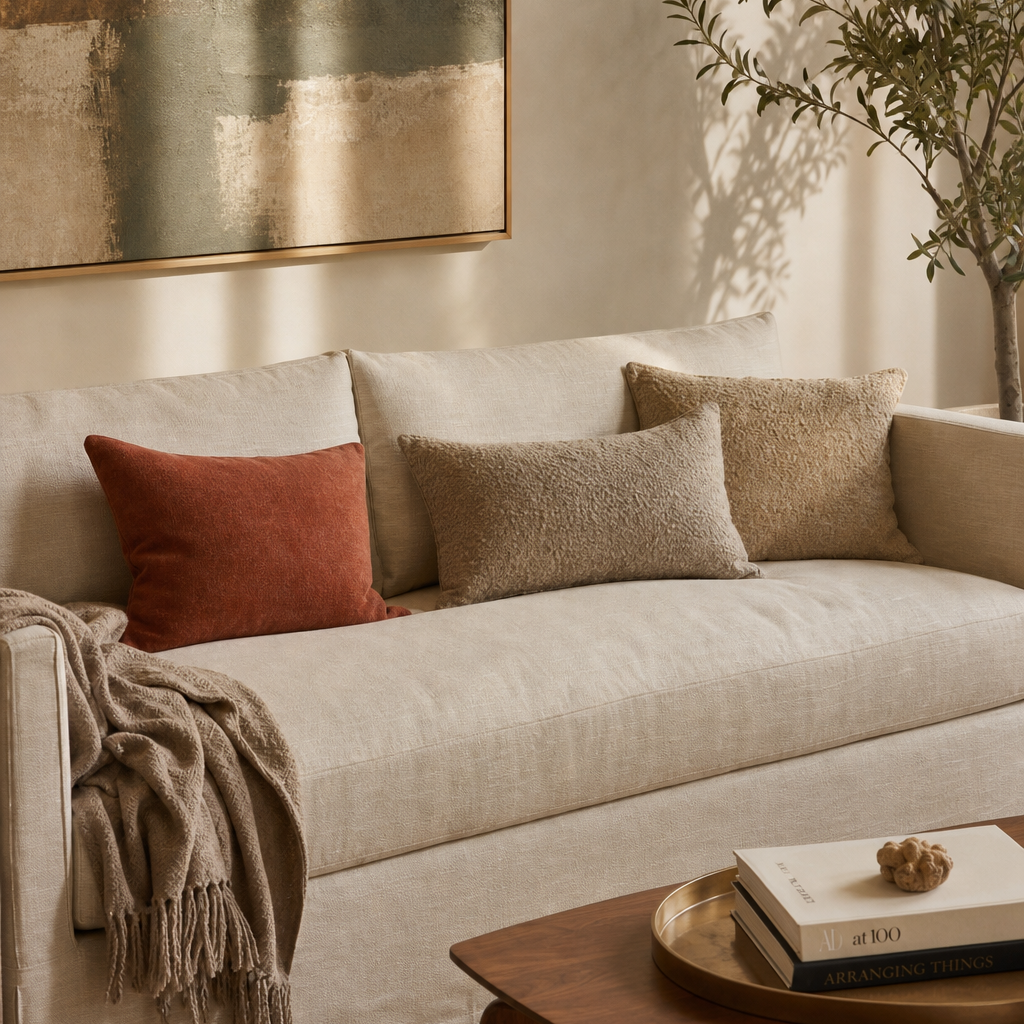
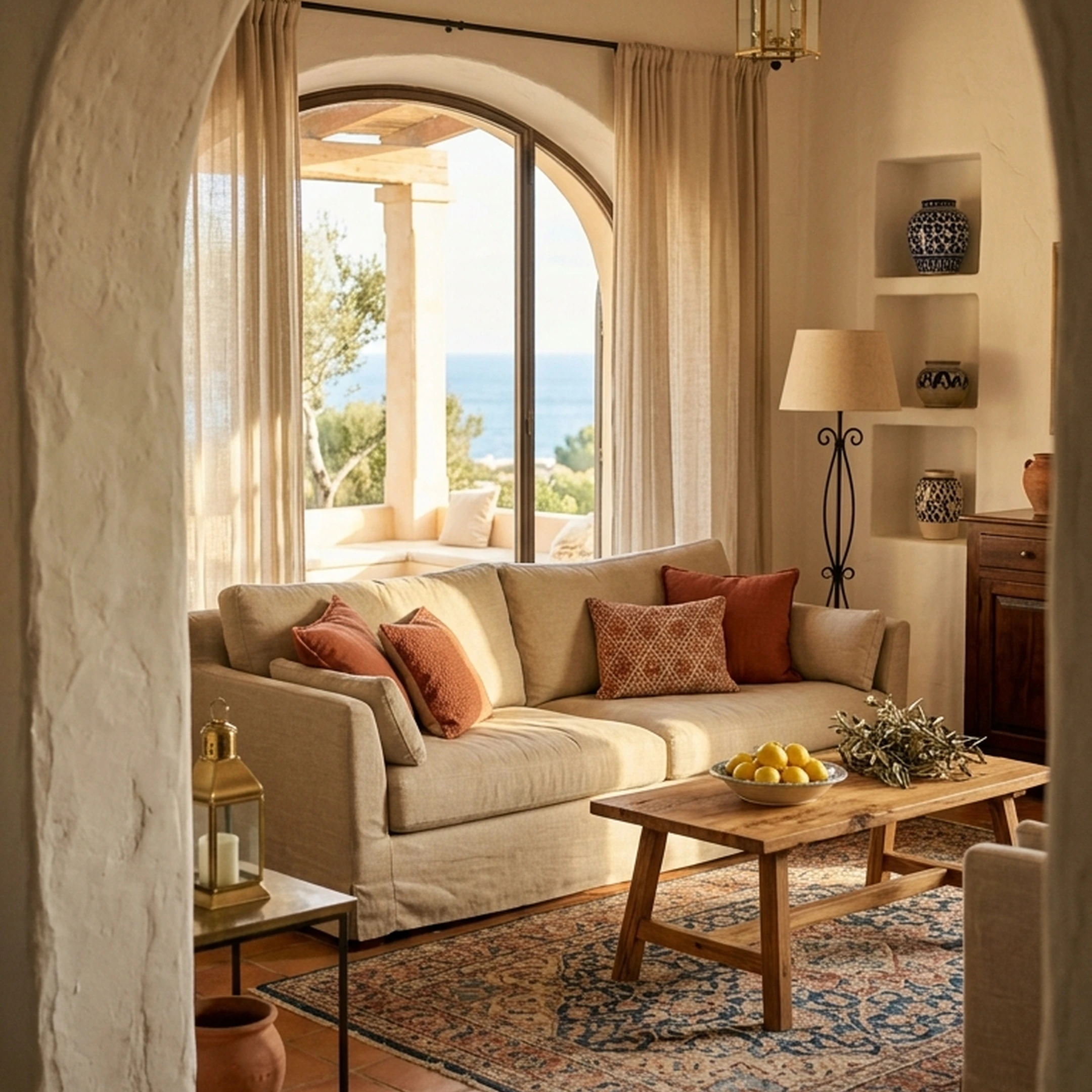
In practical terms, this means pairing a warm wood coffee table with a textured linen sofa, a ceramic lamp base, and a jute or wool rug. Each piece adds a different texture, and the room reads as considered rather than assembled. The table below shows how this layering logic maps to specific product categories:
Material LayerRoom ApplicationBudget Entry PointWarm woodCoffee table, shelving, framesArticle, CB2, West ElmWoven textileRug, throw, cushion coversLulu and Georgia, Crate and BarrelCeramic or clayLamp base, vase, bowlAnthropologie Home, CB2Natural stone or stone-lookTray, coaster, side table topRejuvenation, RHLinen or cottonSofa upholstery, curtains, beddingPottery Barn, Interior Define
Why Mediterranean Design Principles Work at Any Budget
The enduring appeal of Mediterranean-style interiors is not accidental. The style is built around a set of principles that happen to be budget-neutral: warmth over coolness, natural materials over synthetic ones, and indoor-outdoor continuity over compartmentalized rooms.
Coverage of Hart's Calabasas compound consistently emphasizes the resort-like quality of the space, a feeling that comes from layout logic and material choices rather than from any single expensive purchase. The same sources note that the home functions as both a private retreat and an entertaining space, which is exactly the dual-purpose logic that smaller homes need to solve for.
What makes this style particularly useful as a reference point is that its warmth is achievable through restraint. A room does not need more pieces. It needs fewer, better-chosen ones that share a material language.
Open Floor Plan Design Principles That Work at Any Scale
An open floor plan is a residential layout in which two or more living functions (typically kitchen, dining, and living) share a continuous space without dividing walls, relying instead on furniture arrangement, lighting, and material choices to define distinct zones.
Hart's residence is described across coverage sources as having expansive entertaining spaces with a resort-like flow between rooms. The underlying principle is not square footage. It is zone clarity: each area of the home has a clear purpose, a clear anchor, and a clear visual boundary, even without walls separating them.
Open floor plans fail in smaller homes when homeowners treat the entire space as one undifferentiated room. The fix is not adding walls. It is adding anchors.
Zone Anchoring with Rugs and Lighting
A well-sized rug defines a seating zone more effectively than a wall. In an open-plan living and dining space, two distinct rugs (one under the sofa grouping and one under the dining table) create two readable rooms within the same footprint. Pendant lighting above the dining table reinforces the separation further. The result is a space that feels intentional and organized without feeling closed off.
Rug sizing is where most homeowners make their first mistake. A rug that is too small floats in the middle of the room rather than anchoring it. In a standard living room, the front legs of every sofa and chair should sit on the rug. That is the minimum. Ideally, all four legs of every piece are on the rug.
Furniture Arrangement as Architecture
In large celebrity homes, furniture is arranged to create conversation areas, traffic flow, and visual rhythm. The same logic applies in a 700-square-foot apartment. Floating furniture away from walls, creating a clear path through the room, and grouping pieces around a central anchor (a coffee table, a fireplace, a rug) all signal the same spatial intelligence that makes high-end interiors feel considered.
The most common mistake in small apartments is pushing all furniture against the walls. This creates a perimeter of pieces with an empty void in the center, which reads as unfinished rather than spacious.
Separating Public and Private Zones
One of the consistent features of well-designed homes at any price point is a clear separation between spaces meant for entertaining and spaces meant for rest. In Hart's compound, this is achieved through physical distance and landscaping. In a smaller home, it is achieved through lighting temperature (warmer and dimmer in bedrooms), material choices (softer textiles in private spaces), and furniture scale (lower, more relaxed pieces in rest areas).
The table below summarizes how open-plan principles translate across different home sizes:
Design PrincipleLarge Home ApplicationSmall Home ApplicationZone anchoringSeparate wings or roomsDistinct rugs per zoneLighting hierarchyArchitectural lighting per roomPendant over dining, floor lamp in livingTraffic flowHallways and corridorsFurniture arrangement with clear pathsPublic/private separationPhysical distance between spacesLighting temperature and material shiftsVisual cohesionConsistent palette across roomsRepeated accent color or material
Color Palettes and Finishes: The Decisions That Signal Quality
The color palette of a luxury home is rarely about expensive paint. It is about restraint, warmth, and the relationship between tones. Hart's Mediterranean villa relies on a palette that reads as warm, grounded, and cohesive: sandy neutrals, warm whites, aged wood tones, and terracotta accents.
This palette is reproducible at any budget. The principles behind it are what matter.
The Three-Tone Rule
High-end interiors almost always operate within a three-tone palette: a dominant neutral (walls, large upholstery), a secondary tone (rugs, cabinetry, larger accent pieces), and an accent (throw pillows, ceramics, art). When a room feels chaotic or unfinished, it is usually because there are too many competing tones rather than too few. Editing down to three creates immediate cohesion.
This is one of the most actionable changes available to homeowners because it costs nothing. It requires removing pieces rather than buying them.
Warm Whites Over Cool Whites
One of the most common mistakes in home renovation is choosing a cool, stark white for walls and trim. Cool whites read as clinical in natural light and blue-toned under artificial light. Warm whites (Benjamin Moore White Dove, Sherwin-Williams Alabaster) read as elevated and livable across lighting conditions.
In a Mediterranean-inspired space, warm white walls with natural wood trim and terracotta or sage accents will consistently outperform a cool gray and white combination. The difference is not subtle once you see it.
Finish Consistency Across Hardware and Fixtures
Luxury interiors maintain finish consistency across hardware, fixtures, and metal accents. Mixing brushed brass, chrome, and matte black in the same room creates visual noise that registers as unfinished even when the individual pieces are high quality.
Choosing one metal finish and carrying it through cabinet hardware, light fixtures, faucets, and decorative accessories is one of the highest-impact, lowest-cost changes available to homeowners. Aged brass or unlacquered brass reads as warm and considered in Mediterranean-adjacent spaces. It is also one of the few finish choices that improves with age rather than showing wear.
Lighting Design for Modern Homes: The Layer That Changes Everything
Lighting is the single most underinvested element in most residential interiors, and the one that most separates a designed room from an assembled one. In high-end homes, lighting operates in layers: ambient (overall illumination), task (functional work light), and accent (highlighting architecture or art).
Most homeowners rely entirely on overhead ambient lighting, which flattens a room and eliminates shadow and depth. The fix is layering, and it costs less than most furniture purchases.
Ambient, Task, and Accent Layering
A well-lit living room has at least three light sources operating simultaneously: a ceiling fixture or recessed lighting for ambient fill, a floor lamp or table lamp for warm task light, and an accent source (a picture light, shelf lighting, or a backlit object) for depth.
Turning off the overhead light and using only lamps immediately makes most rooms feel warmer and more intentional. This is a free change that works in any space.
Warm Color Temperature as a Non-Negotiable
Luxury residential lighting almost universally uses warm color temperatures in the 2700K to 3000K range. Cool white bulbs (4000K and above) are appropriate for kitchens and bathrooms but read as institutional in living and dining spaces.
Switching bulbs to 2700K is a change that costs under $30 and makes a room feel significantly more considered. It is the single highest-return lighting change available before any fixture purchase.
Statement Fixtures as Architectural Anchors
In Mediterranean-style interiors, a statement light fixture (a wrought iron chandelier, a rattan pendant, or an aged brass lantern) functions as an architectural element rather than a utility. In a smaller home, one strong fixture in the dining area or entryway signals the design intention of the entire space.
West Elm, Rejuvenation, and Lulu and Georgia all carry fixtures in this register at accessible price points. The fixture does not need to be expensive. It needs to be deliberate.
Smart Home Technology Integration: What Actually Moves the Needle
High-end celebrity homes are typically built with integrated smart home systems covering lighting, climate, security, and audio. The technology itself is not the point. The point is control, convenience, and the ability to set the right atmosphere for any moment.
For homeowners working with existing construction, the most impactful smart home investments are the ones with the highest visible return per dollar spent.
Smart Lighting Control: The First Priority
Automated lighting (through smart bulbs, smart switches, or a system like Lutron Caseta) delivers the most immediate lifestyle impact of any smart home upgrade. The ability to dim lights, set scenes, and adjust color temperature from a phone or voice command changes how a room feels across different times of day.
This is the single smart home upgrade most worth prioritizing before any other. A basic Lutron Caseta starter kit covers a living room for under $200 and integrates with most major voice assistants.
Automated Window Treatments
Motorized shades are a feature of virtually every high-end residential build. At the luxury level, they are integrated into whole-home systems. At the accessible level, battery-operated motorized shades (from brands like Lutron Serena or IKEA Fyrtur) deliver the same visual result at a fraction of the cost.
In a Mediterranean-style home, linen or woven shades in warm neutrals also contribute to the overall palette. The functional and aesthetic benefits align, which makes this a particularly efficient upgrade.
Distributed Audio
Distributed audio, the ability to play music throughout a home without visible speakers, is a standard feature in celebrity residences. For homeowners, a single well-placed Sonos speaker in a living room or kitchen delivers the same ambient effect without the infrastructure cost. The goal is not the technology. It is the atmosphere the technology creates.
Outdoor Living Spaces: The Resort-Style Principle at Any Scale
Hart's Calabasas property is described as having a luxury resort-like feel with expansive outdoor spaces that function as extensions of the interior. The design principle behind this is indoor-outdoor continuity: the materials, palette, and furniture logic of the interior extend into the outdoor space rather than treating the yard as a separate, disconnected area.
This principle applies at any scale, from a 26-acre estate to a 200-square-foot urban balcony.
Material Continuity Between Indoor and Outdoor
The most effective outdoor spaces use materials that echo the interior: similar stone or tile, matching or complementary wood tones, and a consistent color palette. If the interior uses warm wood and warm neutrals, the outdoor furniture should follow the same logic rather than defaulting to generic black metal patio sets.
Teak, eucalyptus, or powder-coated aluminum in warm tones all carry the Mediterranean palette outdoors. The material does not need to be identical. It needs to be in conversation with the interior.
Defined Outdoor Zones
Resort-style outdoor spaces create distinct zones: a dining area, a lounge area, and often a transition zone (a covered porch or pergola) that bridges interior and exterior. Even in a small backyard or patio, defining two distinct zones with furniture groupings and lighting creates the same sense of intentionality.
Warm-toned string lighting or a single outdoor pendant fixture extends the space into the evening and signals that the outdoor area was designed rather than furnished.
Landscaping as Architecture
In Mediterranean-style properties, landscaping is structural rather than decorative. Hedges define boundaries, trees create shade and privacy, and planting beds frame pathways. For homeowners, even a few large planters with architectural plants (olive trees, agave, rosemary, or tall ornamental grasses) create the same visual effect as a fully landscaped yard.
The key is scale. One large planter with a single architectural plant reads as considered. Six small pots with different plants reads as a collection.
Kitchen and Bathroom Renovation Inspiration from Luxury Builds
The kitchens and bathrooms in high-end celebrity homes share a consistent set of design decisions: warm cabinetry tones, natural stone or stone-look surfaces, integrated appliances, and hardware that reads as considered rather than default.
Most of these decisions are available at mid-budget price points. The key is knowing which choices have the highest visual impact per dollar spent.
Cabinet Color and Hardware: The Fastest Perceived-Value Change
White or off-white cabinetry with warm brass or unlacquered brass hardware is one of the most consistently elevated kitchen combinations available. It reads as custom without requiring custom pricing.
Swapping out builder-grade chrome hardware for aged brass or matte black is a change that costs $200 to $400 for a standard kitchen and transforms the perceived quality of the entire space. It is the single highest-return kitchen upgrade that does not require a contractor.
Stone and Stone-Look Surfaces
Natural stone countertops (marble, quartzite, travertine) are a signature of luxury kitchen and bathroom design. For homeowners working within a tighter budget, high-quality quartz surfaces that replicate the veining and warmth of natural stone deliver the same visual result at lower cost and with better durability.
The key is choosing a warm-toned option rather than a cool gray. A warm white or cream quartz with subtle veining reads as elevated. A flat cool gray reads as builder-grade regardless of the actual price point.
Shower and Bath as Focal Points
In high-end bathrooms, the shower or freestanding tub functions as an architectural focal point rather than a utility. Large-format tile (24x48 or larger) in a warm stone tone, a frameless glass enclosure, and a rain shower head are the three changes that most effectively elevate a standard bathroom toward a luxury register.
None of these require a full gut renovation. A tile overlay, a frameless glass panel replacement, and a shower head swap can be completed in a long weekend.
How First Chair Helps You Execute the Room, Not Just Imagine It
The challenge with celebrity home inspiration is not finding it. It is translating it. A 9,500-square-foot Mediterranean villa gives you a feeling and a palette, but it does not tell you which sofa works in your 14-by-18-foot living room, which rug scale anchors the space correctly, or which lighting combination creates the warmth you saw in the home tour.
That is the gap First Chair is built to close. You can upload a photo of Hart's living room, a hotel lobby you loved, or a Pinterest save that captures the Mediterranean warmth you are after, and the platform translates that reference into a curated room concept built from real, purchasable furniture and decor.
Every recommendation pulls from actual brands across multiple retailers, including West Elm, CB2, Crate and Barrel, Lulu and Georgia, and Rejuvenation, so the room you build is one you can actually buy. The platform curates across retailers rather than pushing inventory from a single catalog, which matters when the right warm-wood coffee table might come from Article and the right arched mirror might come from Anthropologie Home.
For homeowners working through a kitchen or bathroom renovation, the furniture buying guide covers the decision framework for high-impact purchases. For those furnishing a new apartment or first home, the small apartment furniture guide addresses scale and proportion directly.
Tools and Solutions for Recreating a Luxury Aesthetic
The following categories cover the primary tools and platforms homeowners use to plan, visualize, and execute Mediterranean-inspired interiors. Each category serves a distinct function in the design process.
Inspiration and Visualization Platforms
These tools help homeowners collect references and visualize how design elements work together before purchasing.
- First Chair pulls inspiration images (including celebrity home photos) and translates them into curated room concepts built from real, purchasable furniture across multiple retailers. The platform is designed for homeowners who already have taste but need help with execution. Insider pricing is available on most pieces.
- Pinterest remains the dominant reference-collection tool but does not bridge to purchase or help with cohesion decisions.
- Houzz offers a large image library and some product discovery, though it is primarily retailer-linked rather than taste-curated.
Multi-Retailer Furniture Discovery
Finding the right piece often means looking across multiple catalogs rather than committing to a single retailer's aesthetic.
- West Elm carries warm-modern and Mediterranean-adjacent pieces with strong textile and lighting options.
- CB2 skews slightly more contemporary but has strong ceramic, lighting, and accent furniture options.
- Lulu and Georgia is particularly strong for rugs, lighting, and decorative accessories in the warm-neutral register.
- Article offers well-priced sofas and case goods with clean silhouettes that work in Mediterranean-inspired rooms.
Smart Lighting Systems
Smart lighting control is the highest-return smart home upgrade for most homeowners.
- Lutron Caseta is the most widely recommended retrofit smart lighting system for existing homes, with strong integration across voice assistants and app control.
- Philips Hue offers more granular color temperature control and is well-suited for homeowners who want to fine-tune ambiance across different rooms.
- IKEA Tradfri provides a lower-cost entry point with basic dimming and scene control.
Automated Window Treatments
Motorized shades deliver a luxury-feel upgrade at a range of price points.
- Lutron Serena is the premium retrofit option with strong integration into smart home systems.
- IKEA Fyrtur provides battery-operated motorized shades at an accessible price point with basic app control.
- The Shade Store offers custom motorized shades in a wide range of fabrics, including linen and woven options suited to Mediterranean interiors.
Paint and Finish Selection
Warm white and earth-tone paint choices are foundational to the Mediterranean palette.
- Benjamin Moore (White Dove, Pale Oak, Camouflage) offers some of the most reliable warm neutrals in the residential market.
- Sherwin-Williams (Alabaster, Accessible Beige, Antique White) provides strong warm white and sandy neutral options with wide contractor availability.
- Farrow and Ball carries a premium range of warm, complex neutrals (Elephant's Breath, Joa's White, Dimity) for homeowners willing to invest in paint quality.
Outdoor Living and Landscaping
Resort-style outdoor spaces require furniture and plant choices that extend the interior palette.
- Serena and Lily carries outdoor furniture in warm, coastal-adjacent tones that translate well to Mediterranean exteriors.
- RH Outdoor offers high-end teak and aluminum outdoor furniture with a strong resort aesthetic.
- Local nurseries remain the best source for architectural plants (olive trees, agave, rosemary) at reasonable prices, with the added benefit of climate-appropriate selection.
Best Practices for Recreating a Luxury Mediterranean Aesthetic
- Commit to a three-tone palette before purchasing anything. Identify your dominant neutral, secondary tone, and accent color. Every purchase decision should be evaluated against this palette. If a piece does not fit, it does not belong in the room regardless of how much you like it in isolation.
- Start with the rug, not the sofa. The rug anchors the room and determines the scale of every other piece. Getting the rug right first makes every subsequent decision easier. Getting it wrong means every subsequent piece will feel slightly off.
- Replace bulbs before buying new fixtures. Switching to 2700K warm white bulbs costs under $30 and changes the entire atmosphere of a room. Do this before spending money on new lighting fixtures. If the room still feels cold after the bulb change, then address the fixtures.
- Choose one metal finish and carry it through the entire room. Cabinet hardware, light fixtures, curtain rods, and decorative accessories should all share the same finish. Aged brass is the most versatile choice for Mediterranean-inspired spaces.
- Float furniture away from walls. Pushing furniture against walls makes a room feel smaller, not larger. Floating pieces toward the center of the room and anchoring them with a rug creates the spatial confidence that characterizes well-designed interiors.
- Invest in one statement piece per room rather than spreading the budget across many average ones. A room with one strong sofa and simple supporting pieces will outperform a room where the budget was divided equally across everything.
- Treat outdoor spaces as rooms, not yards. Define zones, choose a consistent material palette, add lighting for evening use, and include at least one architectural plant. The outdoor space should feel like a continuation of the interior, not a separate category.
- Edit before you add. Most rooms that feel unfinished are actually overcrowded. Remove pieces that do not fit the palette or the purpose of the room before adding anything new. Restraint is the design decision that most separates considered interiors from assembled ones.
Common Mistakes When Recreating Luxury Design Principles
Choosing Cool Whites Instead of Warm Whites
The consequence: walls read as clinical under natural light and blue-toned under artificial light, which undermines every warm material choice in the room. The fix: repaint with a warm white (Benjamin Moore White Dove, Sherwin-Williams Alabaster) before making any other changes. Warm walls make warm furniture choices look intentional.
Buying a Rug That Is Too Small
The consequence: the rug floats in the middle of the room rather than anchoring the furniture, which makes the seating area look unresolved. The fix: size up. In a standard living room, the front legs of every major seating piece should sit on the rug at minimum. Ideally, all four legs of every piece are on the rug.
Mixing Metal Finishes Without a Clear Hierarchy
The consequence: the room reads as unfinished regardless of the quality of individual pieces. The fix: choose one primary metal finish and apply it consistently across hardware, fixtures, and accessories. A second finish can appear as an accent (one or two pieces maximum) but should not compete with the primary.
Relying Entirely on Overhead Lighting
The consequence: the room is evenly lit with no shadow, depth, or warmth, which makes even expensive furniture look flat. The fix: add a floor lamp and at least one table lamp. Turn off the overhead light in the evening and use only the lamps. The difference is immediate.
Treating the Outdoor Space as an Afterthought
The consequence: a beautifully designed interior that ends abruptly at the back door, which undermines the indoor-outdoor continuity that makes Mediterranean-style homes feel resort-like. The fix: extend the interior palette outdoors with consistent material choices, defined zones, and at least one architectural plant.
Buying Matching Furniture Sets
The consequence: the room looks staged rather than lived in, which is the opposite of the collected, layered quality that characterizes well-designed Mediterranean interiors. The fix: mix pieces from different sources that share a material language rather than a matching tag. A sofa from one retailer, a coffee table from another, and a rug from a third will almost always look more considered than a matched set.
Skipping the Hardware Upgrade in Kitchens and Bathrooms
The consequence: builder-grade chrome hardware undermines every other design choice in the room, including expensive countertops and cabinetry. The fix: replace hardware before any other kitchen or bathroom upgrade. It is the lowest-cost, highest-return change available in either space.
Over-Accessorizing
The consequence: the room reads as cluttered rather than layered, which eliminates the sense of calm that makes well-designed spaces feel expensive. The fix: apply the rule of three. Group accessories in odd numbers, vary the height within each grouping, and leave negative space between groupings. Restraint is a design decision.
Frequently Asked Questions
What architectural style is Kevin Hart's Calabasas house?
Kevin Hart's primary Calabasas residence is a Spanish Mediterranean-style villa, approximately 9,500 square feet, set on a gated 26-acre property. The style is characterized by warm stucco exteriors, arched openings, clay tile roofing, and a strong indoor-outdoor relationship. These architectural elements are among the most reproducible in residential design across a range of budgets.
How can I get a Mediterranean look in a small apartment?
Focus on palette and material rather than architecture. Warm whites or sandy neutrals on walls, natural wood furniture with rounded or arched silhouettes, layered textures (linen, jute, ceramic), and warm-toned lighting (2700K bulbs) create a Mediterranean feel without structural changes. A single arched mirror or arched headboard adds the architectural reference point the style needs without requiring any renovation work.
What color palette does Kevin Hart's home use?
Based on available home tour coverage, the home follows a warm Mediterranean palette: sandy neutrals, warm whites, terracotta accents, and aged wood tones. This palette is highly adaptable because it works across a wide range of furniture finishes and material combinations without clashing, making it one of the most forgiving choices for homeowners who are mixing pieces from multiple sources.
What smart home features are worth investing in first?
Smart lighting control delivers the highest visible impact per dollar for most homeowners. A system like Lutron Caseta or smart bulbs with dimming capability changes how a room feels across different times of day and use cases. Automated window treatments are the second-highest-impact upgrade, particularly in rooms where light control affects both ambiance and privacy.
How do I create an outdoor living space on a limited budget?
Start with zone definition rather than furniture quantity. Two distinct zones (a dining area and a lounge area) with a consistent material palette create a resort-like feel even in a small space. Architectural plants in large planters (olive trees, agave, tall grasses) add structure without requiring landscaping work. Warm-toned string lighting or a single outdoor pendant fixture extends the space into the evening and signals that the area was designed rather than furnished.
Is it possible to recreate a luxury kitchen look without a full renovation?
Yes. The highest-impact changes in a kitchen are hardware replacement (swapping chrome for aged brass or matte black), lighting upgrades (replacing a builder-grade fixture with a statement pendant), and surface editing (removing countertop clutter and adding a few considered objects such as a ceramic bowl, a wooden cutting board, and a small plant). These changes cost a few hundred dollars and shift the perceived quality of the space significantly.
Conclusion: The Room You Can Actually Build
The best ideas in Kevin Hart's Calabasas estate are not the ones that require 9,500 square feet. They are the ones that require a point of view: a commitment to warmth over coolness, to natural materials over synthetic ones, to zone clarity over undifferentiated space. Those ideas scale down perfectly.
The gap between the room you can picture and the room you can actually build is almost never a budget problem. It is an execution problem. You know the feeling you want. The challenge is translating that feeling into specific decisions about a specific sofa, a specific rug size, a specific paint color, and a specific lighting combination that work together in your actual room.
If you are ready to move from inspiration to a room you can actually buy, start with First Chair. Upload the home tour photo that captures the feeling you are after, describe the aesthetic direction, and the platform will translate it into a curated room concept built from real furniture and decor across West Elm, CB2, Crate and Barrel, Lulu and Georgia, Rejuvenation, and more. Every piece is real, in-stock, and purchasable. The room you have been imagining is closer than you think.