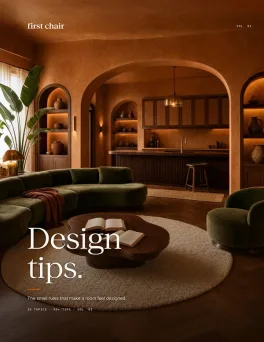
You just relocated to Miami for a new job. The apartment has good light, high ceilings, and a living room that's somehow bigger and emptier than you expected. You've already claimed the sunny corner near the windows for a reading chair. You've saved 200 room photos on Pinterest, opened 34 furniture tabs across West Elm, CB2, and Article, and somehow the room still feels more temporary than personal.
That's the moment tools like Remodel AI promise to solve. Upload a photo, pick a style, and watch your room transform. The renders can be beautiful. The problem is that many of them stop there. The sofa isn't linked. The coffee table doesn't exist. You're left with another room to admire instead of a room you can actually furnish.
This guide covers eight Remodel AI alternatives that take different approaches to the problem. Some focus on visualization. Some help with layouts and renovations. A few help you turn inspiration into real pieces you can buy, place, and live with.
Key Takeaways
- Most AI room tools generate fantasy furniture: They create gorgeous renders, but the sofa in the image isn't real and can't be purchased. First Chair is built around real, buyable pieces from retailers like West Elm, CB2, and Lulu & Georgia.
- Floor planning and room styling are different problems: Planner 5D and RoomSketcher excel at layouts and measurements. First Chair excels at turning saved inspiration into a cohesive, purchasable room.
- Free tiers are great for browsing, not buying: RoomGPT and Homestyler offer generous free access, but neither connects to real products or helps you actually commit to pieces.
- Virtual staging tools serve real estate agents, not renters: Collov AI and Interior AI focus on property marketing, not helping you furnish the apartment you're living in.
1. First Chair: Room Design That Ends in a Purchase
You can skip every other option on this list if your actual goal is a finished room with furniture you can buy today.
First Chair generates curated room concepts using real furniture from real retailers. Upload a photo of your space, describe what you're going for (Japandi with warmer wood tones, mid-century but not too Mad Men), and get back a cohesive room filled with pieces from West Elm, CB2, Crate & Barrel, Pottery Barn, Lulu & Georgia, and brands you haven't discovered yet.
What it does well:
- Shoppable room concepts: Every piece shown is real and purchasable. No hunting for "something like that sofa."
- Inspiration-to-execution workflow: Upload a photo of a cafe, hotel lobby, or friend's living room and get your space styled in that exact direction.
- Multi-retailer sourcing: Not locked to a single catalog. First Chair pulls across brands to find pieces that actually work together.
- Nuanced style interpretation: Tell it "Scandi but warmer" or "rustic with cleaner lines" and it understands.
Who should use it:
The problem isn't finding inspiration. You have plenty. The problem is translating that Pinterest board into a room that feels finished. First Chair handles the hardest part: narrowing infinite choices into a cohesive set of pieces you can actually commit to.
For anyone furnishing a first apartment, moving in with a partner, or starting fresh after a reset, First Chair is available now on iPhone and Android.
2. RoomGPT
If you want quick visual inspiration and have time to hunt for pieces yourself, RoomGPT works. If you want to actually finish the room, it doesn't get you there.
RoomGPT generates redesigned images fast. Upload a photo, pick from style presets, and get a redesigned image in under a minute. The results look polished. The furniture doesn't exist.
What it does well:
- Speed: Quick results with no learning curve
- Free tier access: Limited redesigns at no cost
- Simple interface: No design knowledge required
The tradeoff:
You'll see a beautiful room concept, then spend hours searching for furniture that looks vaguely similar to what the AI generated. The sofa in the render isn't a real product. Neither is the rug or the lamp. You're back to scrolling through retailer sites trying to approximate what you just saw.
How it differs from First Chair: RoomGPT generates images. First Chair generates shoppable rooms.
3. Interior AI
Interior AI is built for professionals who need volume renders for property marketing, not for people furnishing their own homes.
Interior AI offers extensive style presets and higher-quality outputs than free tools. The platform focuses on virtual staging for real estate and produces marketing-grade images. But at the end, you still have fictional furniture.
What it does well:
- Extensive style library: More design directions than many competitors
- Virtual staging capabilities: Useful for empty property photos
- Higher resolution outputs: Marketing-grade image quality
The tradeoff:
You're paying for a tool that generates fictional furniture. The value proposition makes sense for real estate professionals staging empty listings. For someone furnishing their own apartment, there's no path from render to purchase. You get a pretty picture and still need to figure out what actual sofa to buy.
How it differs from First Chair: Interior AI charges for visualization without a shopping path. First Chair connects you to actual furniture that works together.
4. Collov AI
Collov AI is built for selling properties, not living in them.
Collov AI focuses on making empty properties look furnished for listings. It offers virtual staging, photo enhancement, twilight conversion, and 360-degree virtual tours. The platform matches some rendered furniture to real products, but not comprehensively enough to furnish a room.
What it does well:
- Comprehensive property marketing: Staging, sky replacement, lawn enhancement, exterior editing
- 360-degree virtual tours: Interactive walkthroughs for listings
- Partial product matching: Some furniture can be identified and purchased
- Floor plan tools: Basic 2D/3D planning capabilities
The tradeoff:
Collov is built for selling properties, not living in them. The product matching is partial, and the entire workflow assumes you're marketing a space rather than furnishing one. Even when it finds a match, you still need to find the rest of the room yourself.
How it differs from First Chair: Collov serves real estate professionals. First Chair serves the person who just signed the lease and needs to turn that empty unit into a home with real furniture from Article, Rejuvenation, or Interior Define.
5. Homestyler
Homestyler is for people who enjoy the design process itself, not people who want to actually finish furnishing.
Homestyler offers photorealistic rendering and a generous free tier that includes 2D/3D planning and limited renders. The platform includes furniture from real brands for visualization, but it's not connected to purchasing. You'll spend time learning the interface, building floor plans, and arranging furniture. At the end, you have a beautiful render. You still don't have a sofa in your living room.
What it does well:
- Photorealistic output: Marketing-grade visuals
- Large branded catalog: Real furniture for visualization
- Generous free tier: Extensive features without payment
- 360-degree panoramas: Interactive room views
The tradeoff:
Homestyler is a design tool, not a shopping tool. The learning curve is real. You'll invest time building a floor plan and testing arrangements, but the output is still just a render. There's no direct path to purchasing the pieces you've arranged.
How it differs from First Chair: Homestyler is for people who enjoy the design process itself. First Chair is for people who want the process to end with a finished room they can actually live in.
6. Planner 5D
Planner 5D solves a layout problem, not a furnishing problem.
Planner 5D makes it easy to drag and drop furniture and build floor plans. The interface is intuitive, and you can see your space in 3D. But the catalog is generic, not linked to real products, and the focus is spatial planning rather than style curation.
What it does well:
- Drag-and-drop simplicity: No design experience required
- Large model library: Thousands of 3D objects
- Useful for basic planning: Good for testing if furniture fits
The tradeoff:
Planner 5D solves a layout problem, not a furnishing problem. You'll know where the sofa goes. You still won't know which sofa to buy. The models are generic, not connected to retailers, and the focus is spatial planning rather than helping you find actual pieces that work together stylistically.
How it differs from First Chair: Planner 5D helps you figure out if a sectional will fit. First Chair helps you find the right sectional from CB2 or West Elm, styled to match the rest of your room.
7. RoomSketcher
RoomSketcher is a CAD tool for floor plans, not a design tool for interiors.
RoomSketcher produces professional-grade floor plans used by real estate agents, contractors, and architects. The platform uses LiDAR-based room scanning for accurate measurements. The focus is technical accuracy, not interior design or furniture selection.
What it does well:
- Professional floor plans: Industry-standard accuracy and export formats
- AR room scanning: LiDAR-based measurements
- 360-degree views: Interactive virtual tours
The tradeoff:
RoomSketcher is a CAD tool for floor plans, not a design tool for interiors. The furniture library is functional, not curated. If you need to show a contractor where the walls go, it's useful. If you need to figure out what performance velvet sectional works with your existing rug, it won't help.
How it differs from First Chair: RoomSketcher measures the space. First Chair fills it with furniture you can actually buy.
8. DecorMatters
DecorMatters helps with individual pieces, not cohesive rooms.
DecorMatters uses augmented reality to let you see how specific furniture pieces look in your actual space through your phone camera. The platform includes shopping integrations and a community of decorators sharing ideas. But it's built around testing one piece at a time, not curating entire rooms.
What it does well:
- AR furniture visualization: See pieces in your space before buying
- Community features: Browse real rooms and shared designs
- Shopping integration: Some products link to retailers
- Mobile-first design: Built for phone-based browsing
The tradeoff:
DecorMatters helps with individual pieces, not cohesive rooms. You can see if a chair fits in a corner. You can't see how that chair works with a sofa, rug, coffee table, and lighting that all feel intentional together. It's a useful tool for one decision, not for finishing a room.
How it differs from First Chair: DecorMatters helps you place one piece at a time. First Chair curates an entire room concept where every piece works together, all purchasable from one place.
Beyond Renders: Why Shoppable Design Changes Everything
The AI interior design market is growing fast. Most of that growth will come from tools that generate beautiful images of rooms that can't be purchased.
The actual problem isn't visualization. You can already picture what you want. The problem is execution. Translating that mental image into specific pieces from specific retailers, and then actually committing to the purchase.
Most AI room tools treat the image as the output. First Chair treats the finished, furnished room as the output. That's not a feature difference. It's a category difference.
For anyone tired of the same 47 open tabs, the same Pinterest board that never becomes real, and the same bare corner that's been "in progress" for six months, First Chair offers a different approach: rooms you can actually live in.
Frequently Asked Questions
What's the main difference between AI rendering tools and First Chair?
AI rendering tools like RoomGPT and Interior AI generate images of redesigned rooms using fictional furniture. The sofa in the render isn't a real product you can purchase. First Chair generates room concepts using actual furniture from retailers like West Elm, CB2, Crate & Barrel, and Lulu & Georgia. Every piece shown can be purchased directly.
Can First Chair help me find furniture from multiple retailers?
Yes. First Chair isn't locked to a single retailer's catalog. It pulls across multiple brands and retailers to find pieces that work together cohesively. This means you're getting the right piece for your room, not just whatever one store happens to stock.
How does First Chair help users avoid design mistakes?
First Chair curates cohesive room concepts rather than overwhelming you with infinite choices. The recommendations are opinionated, showing pieces that work together visually and spatially. This reduces the risk of buying a coffee table that doesn't fit the scale of your sofa or a rug that clashes with your lighting.
Who should use Planner 5D or RoomSketcher instead of First Chair?
If you need to create technical floor plans for a contractor, architect, or real estate listing, Planner 5D and RoomSketcher are better suited. They focus on spatial planning and measurements. First Chair focuses on styling and furnishing, helping you find the right pieces once you already know the layout.