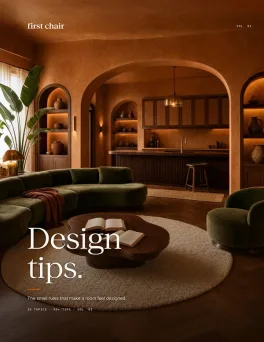
You finally hosted friends at your place in Chicago after talking about it for months. Halfway through the night, someone ended up sitting on a moving box because the "temporary" setup never really became permanent. The living room still has the same mismatched pieces from your last apartment, the lighting is too cold, and the rug looked warmer online than it does against your floors. RoomGPT seemed promising at first, generating gorgeous interiors in seconds. And to its credit, newer features now surface furniture links alongside the renders.
But the gap is still the same one most people run into with AI design tools: the room concept and the actual shopping experience still feel disconnected. The pieces often pull from scattered marketplaces, generic catalogs, or hard-to-verify listings, which leaves you doing the real design work yourself.
The AI interior design market is projected to reach $12.35 billion by 2035, yet most tools still leave you stuck between inspiration and execution. This guide breaks down seven RoomGPT alternatives, starting with the one built around real, purchasable furniture from actual brands and retailers like West Elm, CB2, or Crate & Barrel, with insider pricing built in on most pieces.
Key Takeaways
- Real furniture changes everything: First Chair is where every piece shown is real and buyable, pulling from multiple retailers rather than generating fantasy renders you'll spend weeks trying to replicate
- RoomGPT's core limitation is architectural: The tool generates designs in 15-30 seconds but frequently adds or removes windows, doors, and structural elements, making results unreliable for actual room planning
- Most alternatives solve different problems: Homestyler and Planner 5D excel at floor plans and measurements, Interior AI targets real estate staging, and Spacely AI serves design professionals, but none bridge the gap between inspiration and checkout
- The real cost is time: People spend 10+ hours hunting for similar pieces after using render-only tools, a problem First Chair eliminates entirely through integrated shopping
1. First Chair: For Real, Shoppable Furniture

First Chair takes a fundamentally different approach than RoomGPT and every other tool on this list. Instead of generating pretty pictures of rooms filled with imaginary furniture, it curates actual pieces from real retailers that you can purchase immediately.
What Makes It Different:
- Every piece shown exists, is available, and links directly to purchase
- Pulls from West Elm, CB2, Crate & Barrel, Pottery Barn, Lulu & Georgia, Article, and brands you haven't discovered yet
- Interprets nuanced style language like "mid-century modern with walnut tones and warm leather" or "Scandinavian with deeper seats and softer textiles"
- Insider pricing on most pieces, with member savings showing up at checkout
- No custom backend required, no hunting through 47 tabs to find something close
Best For:
Anyone who actually wants to buy furniture and live in their space instead of endlessly browsing renders. If you're furnishing a new apartment, replacing hand-me-downs, or finally pulling together a room that feels intentional, this is the tool that closes the gap between what you see and what you can get.
The Real Advantage:
RoomGPT and similar tools create what the industry calls the "inspiration gap." You fall in love with a room render, then spend weeks trying to find furniture that looks vaguely similar. First Chair eliminates that gap entirely. Upload a photo of your space or an inspiration image, describe the direction you want, and receive curated room concepts built from pieces you can actually order.
The platform works like having a friend with impeccable taste who also happens to know exactly where to find everything. Instead of showing you 200 sofas, it shows you the three that actually work for your room, your style, and your space.
2. Interior AI: For Professional Virtual Staging
The furniture in these renders is AI-generated, which means you usually can’t buy any of it. If you’re staging a home to sell, that works. If you’re trying to furnish your actual apartment after signing a lease in Chicago or finally make your living room feel pulled together after six months of saving inspiration, you’re still stuck translating a render into real purchases.
What It Does Well:
Interior AI produces high-quality renders fast. Real estate agents and property stagers use it to transform empty listings into furnished spaces for marketing materials. The style variety means you can show the same room as coastal, industrial, or farmhouse in minutes.
Core Features:
- Extensive style library from minimalist to maximalist
- Professional-tier renders suitable for property listings
- VR and 3D walkthrough capabilities at higher tiers
- Batch processing for multiple room transformations
How it differs from First Chair: Interior AI helps market the room. First Chair helps you actually furnish it with real, shoppable pieces from brands like CB2, Crate & Barrel, or West Elm.
3. Homestyler: Comprehensive 2D/3D Planning for Detail-Oriented Users
Homestyler is strong for planning, but planning is only half the job. If you need precise floor plans with actual dimensions, Homestyler delivers. The platform works especially well for renovation planning where room geometry matters. You can test whether a sectional blocks traffic flow, whether dining chairs clear the island, or whether a king bed leaves enough walking space in a narrower Brooklyn bedroom.
What It Does Well:
If you’re renovating a kitchen in Chicago or trying to make a narrow Brooklyn living room function without blocking the walkway, the platform gives you real dimensional control. You can test furniture scale, traffic flow, doorway clearance, and layout spacing before spending money on pieces that may not fit.
The 2D and 3D planning tools are especially useful for people who think visually and want to map everything out in advance. You can experiment with sectional sizes, dining layouts, lighting placement, and room configurations in a way that feels closer to architectural planning than casual moodboarding.
Core Features:
- 2D and 3D floor plan creation with accurate measurements
- AI-powered design suggestions
- Large furniture catalog for browsing and placement
- Photorealistic rendering capabilities
- Export options for professional presentations
How it differs from First Chair: Homestyler helps you map the room. First Chair goes beyond that. First Chair designs and furnish the room for you.
4. Spacely AI: Fast Renders for Professional Design Teams
Spacely AI solves the presentation side of design really well. The problem is that most homeowners are not trying to pitch a concept deck to a client. They’re trying to make their apartment feel finished before another six months disappear into Pinterest saves and unopened tabs.
What It Does Well:
Design professionals appreciate Spacely's speed and render quality. The collaboration features work well for firms with multiple designers working on shared projects, and the ability to show clients multiple design directions in a single meeting is valuable.
Spacely AI is strongest when speed matters. Design firms can generate multiple room directions in a single client meeting instead of spending days waiting on renders. That ability to compare “mid-century but warmer” against something more minimal or hotel-inspired in real time makes presentations feel more dynamic and collaborative.
Core Features:
- Professional-quality renders in 45-60 seconds
- Team collaboration and project management tools
- Floor plan upload support
- Multiple style applications to same space
- Commercial use licensing
How it differs from First Chair: Spacely AI helps designers pitch the room. First Chair helps you actually live in it with real, shoppable pieces that exist beyond the render.
5. Planner 5D: Floor Plans and 3D Design for Home Projects
Planner 5D is practical, but practicality alone rarely makes a room feel finished. The platform helps you avoid buying furniture that physically doesn’t fit. It does not help narrow the aesthetic decisions that usually stall people out in the first place.
You’re still sorting through a broad catalog, still making every design call yourself, and still trying to figure out whether the room feels cohesive once all the pieces are in it.
What It Does Well:
Planner 5D is strongest when you’re trying to answer practical questions before spending money. Will the 90-inch sofa leave enough walking room between the coffee table and media console? Does the bed block the closet swing? Is the dining area still functional once you add counter stools?
The AR features are especially useful for visual people who need to see furniture in context rather than guessing from dimensions on a product page. For apartment moves, remodel planning, or awkward layouts, that spatial clarity saves expensive mistakes.
Core Features:
- Detailed 2D and 3D floor plan creation
- AR visualization for seeing furniture in your actual space
- Large furniture and decor catalog
- Cross-platform availability
- Project sharing and collaboration
How it differs from First Chair: Planner 5D helps you figure out if the room works. First Chair helps you figure out why the room feels good, with curated concepts built from real, shoppable pieces that actually belong together.
6. REimagine Home: Photo Transformation for Real Estate
REimagine Home solves a marketing problem, not a furnishing problem. The staged rooms look polished in listing photos, but the furniture inside them is largely conceptual. Once the keys are handed over, the actual work of furnishing the home still starts from zero.
What It Does Well:
Real estate agents use REimagine Home to make vacant properties more appealing to buyers. The tool generates renders quickly and handles the specific challenges of real estate photography, like dealing with empty rooms or dated finishes.
For real estate teams managing dozens of listings, being able to transform an empty condo into a furnished-looking space in minutes is genuinely useful. It helps buyers emotionally connect to rooms that might otherwise feel cold or hard to picture.
Core Features:
- Quick photo-to-render transformation
- Multiple style applications
- Empty room staging
- Outdated space modernization
- Batch processing for multiple listings
How it differs from First Chair: REimagine Home helps sell the house. First Chair helps you figure out how to actually live in it with real, shoppable furniture you can buy after move-in day.
7. DecorMatters: AR Visualization with Shopping Integration
DecorMatters makes furniture shopping more interactive, but it still feels like shopping. You’re scrolling large partner catalogs, testing isolated pieces, and making dozens of design decisions manually.
That works if you already know exactly what the room needs.
Most people don’t.
What It Does Well:
DecorMatters makes it easy to see how a specific piece might look in your room before buying. The AR functionality works well for single-piece decisions, helping you determine if that accent chair fits the corner or overwhelms it.
The mobile experience also feels approachable and lightweight. You can test pieces quickly without needing floor plans, measurements, or complicated setup. For casual experimentation, it’s fast and visually intuitive.
Core Features:
- AR furniture visualization
- Shopping integration with partner retailers
- Social community features
- Mobile-first design
- Design challenges and inspiration galleries
How it differs from First Chair: DecorMatters helps you shop piece by piece. First Chair helps you pull together a room that feels cohesive from the start, with curated concepts built around your taste instead of endless browsing.
Why First Chair Exists
Most AI interior design tools stop at the same point: the render.
You upload a room photo, generate something beautiful, then immediately fall back into the exact workflow you were trying to escape. Twenty open tabs. Reverse image searches. Furniture that almost matches but not quite. Hours spent trying to recreate a room that was never actually designed to be purchased in the first place.
Instead of generating fantasy interiors filled with fictional furniture, First Chair creates cohesive room concepts using real, shoppable pieces from brands like West Elm, CB2, Crate & Barrel, Pottery Barn, Lulu & Georgia, and Article. Every piece exists. Every piece can actually arrive at your door.
Frequently Asked Questions
What makes First Chair different from RoomGPT and other AI room design tools?
First Chair shows only real furniture from actual retailers like West Elm, or CB2. Every piece in your curated room concept links directly to purchase. RoomGPT and most alternatives generate AI-imagined furniture that looks appealing but can't be bought, leaving you to hunt for similar pieces on your own.
Can free AI interior design apps provide practical results for furnishing a real home?
Free tiers typically offer limited functionality, watermarked renders, or restricted credits. The larger issue is that most tools, regardless of tier, generate fictional furniture. Practical furnishing requires tools that connect to actual products you can buy.
How do AI design tools interpret specific style preferences like "Scandinavian with warm wood tones"?
Most tools offer preset style categories rather than nuanced interpretation. First Chair specifically handles layered style language, understanding requests like "mid-century modern with walnut warmth and rounded silhouettes" or "minimalism with weight and lived-in materials." This specificity helps the recommendations feel personally relevant rather than generically styled.
Why does shoppable furniture matter more than render quality?
A photorealistic render of a room you can't recreate solves an aesthetic problem, not a practical one. People spend significant time trying to find real furniture that resembles AI-generated pieces. Shoppable recommendations eliminate that labor entirely, moving directly from concept to checkout.
Is First Chair suitable for someone furnishing a rental apartment?
First Chair pulls from multiple retailers across different price points, not just aspirational brands. The curated approach means seeing pieces that work for your specific constraints rather than browsing endless catalogs. Insider pricing on most pieces helps stretch budgets further, with member savings applied at checkout.