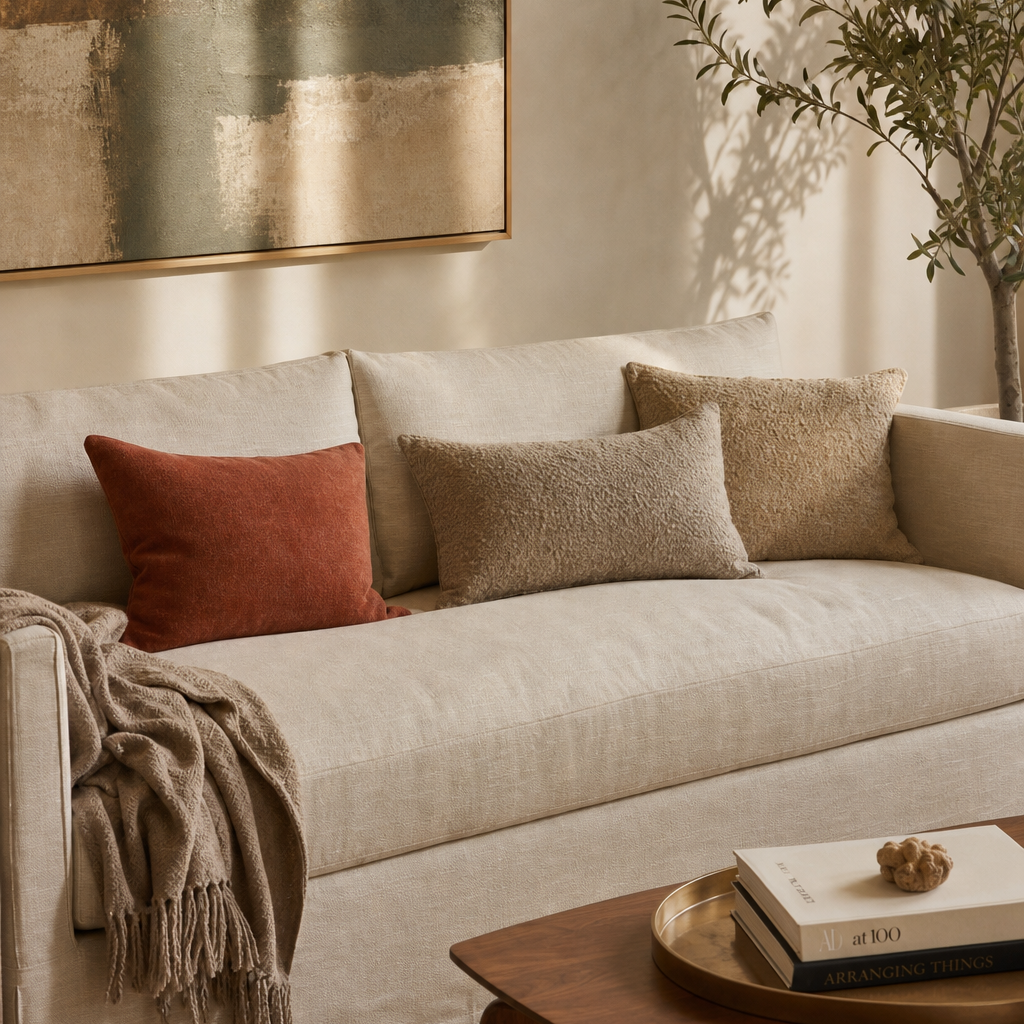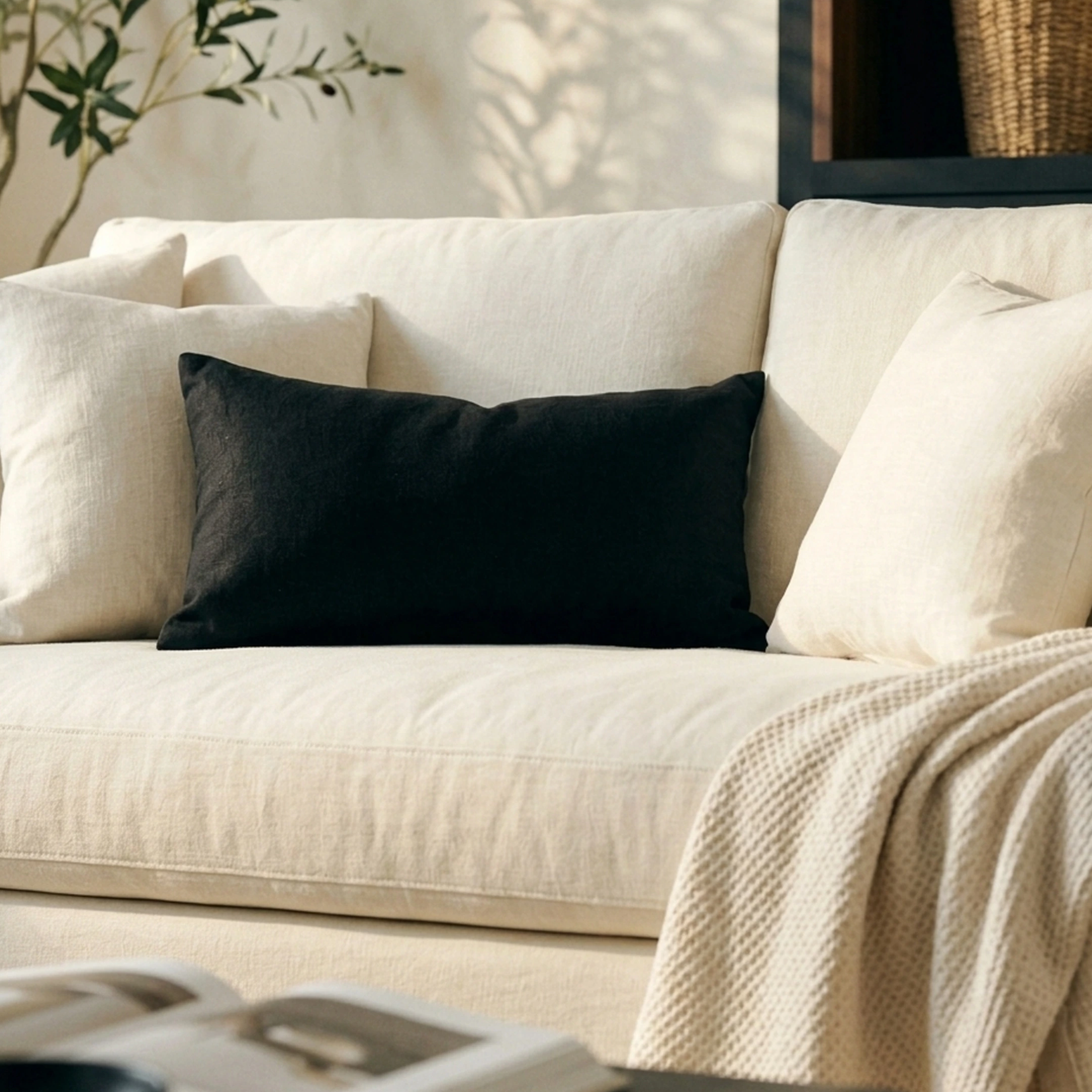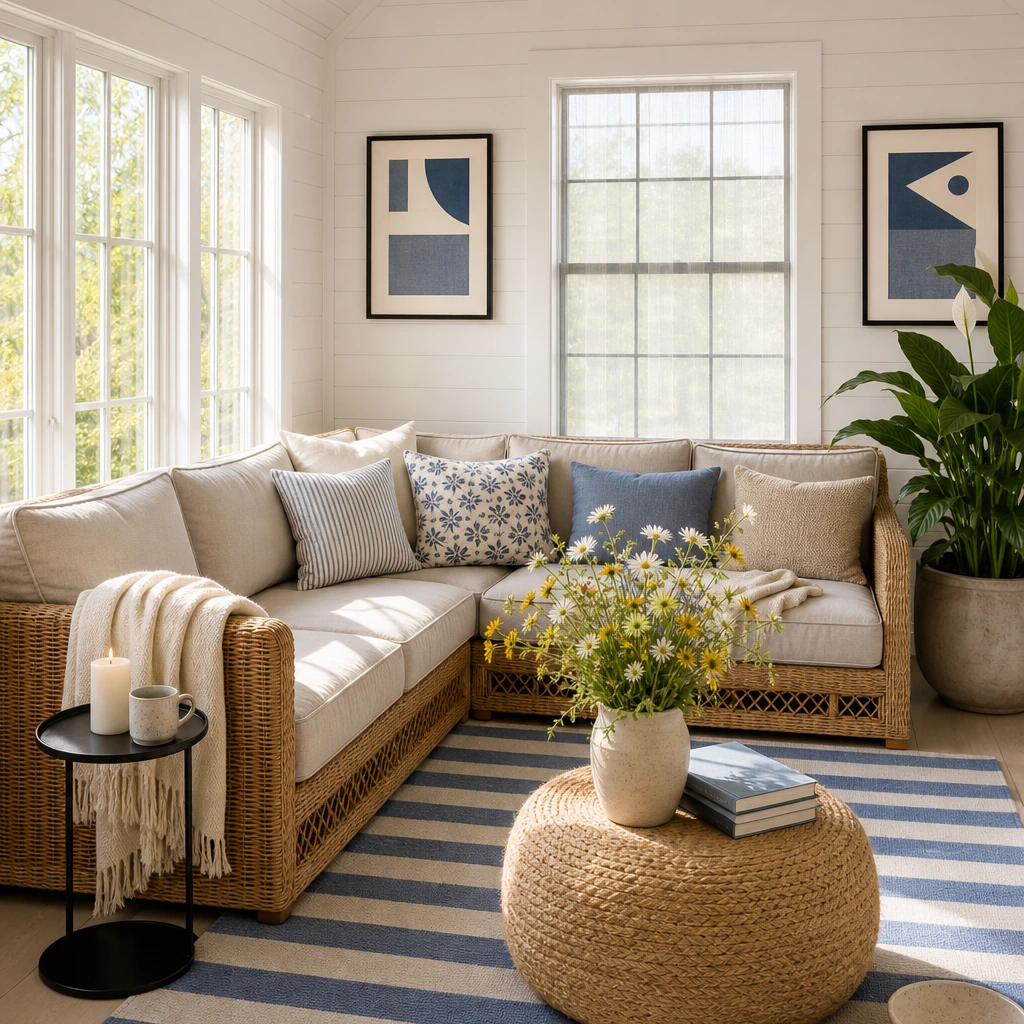

If you've spent the last six months pinning concrete-and-glass estates on Pinterest, saving Architectural Digest features you'll never act on, and wondering why your living room still feels like it's missing something, the answer probably isn't more inspiration. You already have a clear sense of what you want. The gap is knowing which specific moves actually create that feeling, and which ones are just expensive noise.
Beyoncé and Jay-Z's homes are a useful case study precisely because they operate at a scale that makes the underlying design logic visible. A $200 million Malibu estate designed by Pritzker Prize-winning architect Tadao Ando and a six-structure Bel Air compound by Paul McClean aren't just celebrity real estate. They're architectural arguments for a set of principles that apply regardless of budget: restraint over accumulation, material consistency over decorative variety, and the discipline to stop adding things before the room loses its clarity.
The moves that make those spaces feel considered, calm, and expensive aren't locked behind a nine-figure price tag. They're decisions. A dominant material. A neutral base palette. One statement piece per room. Fewer, larger artworks. Consistent indoor-outdoor flow. These principles translate directly into a Brooklyn apartment, a first home in Austin, or a living room in Chicago that has been almost-right for two years but never quite clicked.
This guide breaks down the design DNA of Beyoncé's most documented homes and translates each principle into something you can actually act on.
What you'll learn:
- The specific architectural principles behind the Malibu and Bel Air homes, and how to apply them at any scale
- How to build a neutral base palette that reads as expensive without feeling sterile
- The one-piece rule for statement furniture and why most rooms break it
- Which flooring and surface materials create the material continuity that defines high-end interiors
- How the "Cowboy Carter" aesthetic translates into real, budget-friendly room updates
- Where smart home technology fits into a design-forward home without competing with the aesthetic
- A priority hierarchy for budget allocation when you can't do everything at once
Key Takeaways
- Beyoncé and Jay-Z's Malibu home was purchased for $200 million in 2023, making it the most expensive home ever sold in California. The design principles behind it, dominant material, controlled light, and strong horizontal lines, are fully translatable at any budget.
- The Bel Air estate by Paul McClean uses whites, taupes, and stone as the base palette, with large-scale art and sculptural lighting as the primary decor. This approach resolves rooms that currently feel cluttered or unresolved.
- Quiet luxury is the dominant aesthetic thread across all of Beyoncé's documented interiors: muted palettes, natural materials, and craftsmanship over ornament. It is also the most achievable version of high-end design for homeowners working with real budgets.
- Smart home technology features are now desired by around 70% of buyers across price tiers, according to NAHB research, reflecting how celebrity-home features have become mainstream expectations.
- The "Cowboy Carter" design moment offers a genuinely accessible entry point: leather ottomans, cowhide rugs, warm woods, and desert-toned palettes that can be introduced one piece at a time.
- The most common mistake in luxury-inspired interiors is adding too much. Rooms that read as expensive are almost always the ones that stopped earlier.
- Roughly 75% of new home buyers desire large kitchen islands, per NAHB data, one of many features once exclusive to celebrity properties that have become standard expectations in upper-end residential design.
The Design DNA of Beyoncé's Homes
Modern luxury interior design is a style that emphasizes clean lines, high-quality materials, and restrained palettes, prioritizing comfort and craftsmanship over overt ornament or conspicuous branding. Beyoncé's homes are a strong case study in this approach applied at architectural scale, and the underlying logic is more accessible than the price tags suggest.
The Malibu House: Tadao Ando's Concrete Minimalism
The Malibu property in Paradise Cove was purchased in 2023 for $200 million, setting the record as the most expensive home ever sold in California. Designed by Pritzker Prize-winning architect Tadao Ando, the estate spans an estimated 30,000 to 40,000 square feet across 8 acres, with 8 bedrooms and 11 bathrooms. It was originally listed at $295 million, meaning the buyers negotiated a $95 million reduction.
Ando's signature is monolithic cast-in-place concrete, precise geometry, water courts, and controlled views. The exterior palette is almost entirely monochrome: concrete, glass, and pale stone. The interior reads like a private gallery, calm, continuous, and deliberately uncluttered.
The translatable principles from this property:
- One dominant material. Ando uses concrete. In a home renovation context, this might mean limewash plaster on a single wall, microcement on a bathroom floor, or a continuous stone surface in the kitchen. The effect is cohesion, not monotony.
- Strong horizontal lines. Low-profile sofas, long consoles, and wide-format flooring planks all reinforce the same visual logic Ando uses architecturally.
- Water as a focal point. A narrow reflecting basin, a simple outdoor fountain, or a stone trough planter near an entry can introduce the same grounding quality at a fraction of the cost.
The Bel Air Estate: Paul McClean's Indoor-Outdoor Architecture
Indoor-outdoor living is a design approach that blurs the boundary between interior and exterior spaces through large openings, flush thresholds, consistent flooring, and outdoor rooms that function like interior living areas. The Bel Air compound by Paul McClean is a textbook example: a 30,000-square-foot property composed of six glass-walled structures with extensive terraces, pools, and outdoor living areas, with reported values ranging from $88 million to $120 million.
Large glass sliders, stone and wood cladding, flat roofs, and integrated water features all work together to dissolve the wall between inside and outside. Interior documentation reveals a neutral base of whites, taupes, greige, and stone, with statement staircases, feature walls in stone or wood, large-scale modern art, and sculptural light fixtures as the primary decor moves.
Homeowners can apply this logic without moving walls:
- Align sightlines between adjacent rooms using consistent flooring tones.
- Use one oversized artwork or large-format photograph per major wall rather than a gallery of smaller frames.
- Mirror furniture arrangements on patios and terraces to create visual continuity between inside and outside.
The New Orleans Home and Tiffany Campaign House: Historical Contrast
Beyoncé and Jay-Z's former New Orleans home, a converted Presbyterian church in the Garden District, features stained glass, high ceilings, and period moldings. The Tiffany campaign house used for their joint advertisement is a classic early-20th-century mansion with ornate ceilings, gilded mirrors, and traditional paneling, styled with modern furniture and contemporary art.
Both spaces demonstrate the same principle: an old architectural shell paired with new, simple content creates a richly layered result that neither historic reproduction nor blank-box modernism can achieve alone.
The practical moves are straightforward. Add or restore architectural trim, baseboards, crown molding, or panel molding, and pair it with modern, simple furniture. Introduce one or two antique or vintage pieces, a gilded mirror, a carved chair, a worn leather trunk, into an otherwise contemporary room. The contrast is what makes both elements read more clearly.
Why This Design Moment Matters Now
The shift toward quiet luxury in residential design isn't a passing trend. It reflects a deeper change in how affluent homeowners think about their spaces, and the data supports it.
Knight Frank's global prime residential research found that 69% of ultra-high-net-worth individuals surveyed planned to increase or maintain their allocation to residential property, underscoring continued demand for high-design homes. The same research highlights that HNW buyers increasingly seek properties with strong architectural pedigree, wellness features, outdoor living, and privacy rather than sheer size alone.
NAHB's "What Home Buyers Really Want" research shows that smart home technology features such as security cameras are desired by around 70% of buyers across price tiers, reflecting the mainstreaming of technology once reserved for celebrity properties. The same NAHB data shows that large kitchen islands are desired by roughly 75% of new home buyers, and outdoor living spaces consistently rank among the most important features in upscale builds.
Publications including Architectural Digest and Homes and Gardens document a broader shift from "glitzy" luxury toward quiet luxury: muted palettes, tailored silhouettes, and a focus on craftsmanship rather than overt logos. Beyoncé's homes, particularly the Tiffany campaign house and the Bel Air estate, lean heavily on creamy neutrals, sculptural lighting, and curated art rather than heavy ornament.
The cultural moment around the Cowboy Carter era has added another layer to this conversation, introducing a modern Western and Americana-meets-minimalism sensibility that designers describe as warm leathers, rustic woods, and desert-inspired tones balanced with sleek lines and metallic accents. This aesthetic is particularly accessible because it can be introduced through individual pieces rather than full remodels.
High-End Color Palettes and Paint Finishes That Actually Work
Quiet luxury, as a design approach, is centered on understated, timeless, high-quality choices: neutral colors, natural materials, and subtle detailing rather than conspicuous branding or bold color statements. It is the dominant aesthetic thread across all of Beyoncé's documented interiors, and it is also the most achievable version of high-end design for homeowners working with real budgets.
Building a Neutral Base Palette
The palette logic in the Bel Air and Malibu homes is consistent: whites, creams, greiges, and warm taupes form the envelope, with drama introduced through texture and material rather than color contrast. This approach works because it creates a backdrop that makes furniture, art, and lighting read as intentional rather than competing.
A room where the walls, floors, and ceiling are all within the same tonal family forces the eye toward the pieces you've chosen to feature. The result reads as curated rather than decorated.
Paint and finish options worth considering for this approach:
BrandFinish TypeBest ForFarrow and BallFlat, Estate EmulsionNuanced neutrals with depth; period and contemporary roomsBenjamin Moore AuraMatte, EggshellWide neutral range; consistent color across lighting conditionsPortola PaintsLimewash, Roman ClaySoft plaster-like texture; approximates high-end wall finishesClare PaintMatte, EggshellCurated neutral palette; low-VOC; useful for renters doing accent walls
The key decision is finish, not just color. Flat and matte finishes absorb light and read as more expensive in living spaces. Limewash and Roman clay finishes add texture that approximates the plaster walls in architect-designed homes, which is a significant part of why those spaces feel different from standard residential interiors.
Accent and Contrast Without Losing Cohesion
The mistake most homeowners make is introducing too many accent colors. In the spaces that read as expensive, contrast comes from material and texture, not from a different paint color on the fourth wall.
If you want warmth in a neutral room, introduce it through upholstery, wood tones, and natural fiber rugs rather than a terracotta accent wall. If you want drama, a single dark-painted built-in or a deep-toned ceiling reads as more considered than a feature wall in a contrasting hue. The discipline of staying within a narrow tonal range is what separates rooms that feel designed from rooms that feel decorated.
Statement Furniture and Lighting: The One-Piece Rule
Statement furniture is a single, visually dominant piece, a sculptural sofa, a dramatic dining table, or a unique chair, that serves as a room's focal point in a bold form, material, or color. The rooms in Beyoncé's homes that read most clearly as designed all follow a version of this rule: one piece does the heavy lifting, and everything else supports it.
Choosing Your Statement Piece
The discipline here is harder than it sounds. Most homeowners add a statement piece and then keep adding. The room ends up with three things competing for attention and none of them winning.
A practical framework for applying this rule:
- Identify the one piece in the room that should command the most attention.
- Make that piece the most visually complex, textured, or scaled element in the space.
- Keep everything else quieter in silhouette, color, and material.
For living rooms, this is usually the sofa or a single lounge chair. For dining rooms, it's the table or the light fixture above it. For bedrooms, it's the bed frame or the headboard wall treatment.
Retailers worth considering for statement pieces at various price points include RH (Restoration Hardware) for large-scale sculptural furniture, CB2 for modern silhouettes with more accessible pricing, and Chairish or 1stDibs for vintage and one-of-a-kind pieces that bring the "collected" quality that distinguishes designed rooms from assembled ones.
If you're working through decision fatigue around furniture, the most useful reframe is this: you don't need more options. You need one clearer anchor. The room will resolve itself once the dominant piece is right.
Lighting as Architecture
The light fixtures in Beyoncé's Bel Air home are consistently described as sculptural, large-scale, and treated as primary decor rather than functional afterthoughts. This is one of the highest-leverage moves in any room because lighting affects how every other element reads.
The rules that apply here:
- Scale up. Most homeowners choose fixtures that are too small for the space. A pendant that looks right in the showroom often disappears in a real room.
- Warm the metal. Aged brass, brushed bronze, and warm gold tones soften rooms that already have a lot of cool stone or white surfaces.
- Layer the sources. Ceiling fixtures, floor lamps, table lamps, and architectural lighting (recessed or cove) work together to create depth. A room lit only from above reads as flat.
Flos, Visual Comfort, and Apparatus Studio are the brands most frequently specified in architect-designed homes at the level Beyoncé's properties represent. For homeowners working with more realistic budgets, Visual Comfort has a wide range that spans from accessible to trade-level pricing, and the brand appears regularly in designer projects across all tiers.
Luxury Flooring and Material Selections
The material palette in Tadao Ando's Malibu home, concrete, glass, pale stone, and water, is a study in how a small number of materials used consistently can create a space that feels both monumental and calm. The same logic applies at any scale: the goal is material continuity, not material variety.
Natural Materials That Read as Expensive
The shift in luxury interiors over the past several years has been away from high-gloss finishes and toward materials that have inherent texture and variation: honed stone, wire-brushed wood, aged metal, and natural fiber. These materials look better as they age, which is part of why they read as more considered than their polished counterparts.
A comparison of flooring options commonly used in high-end residential projects:
MaterialVisual EffectMaintenance LevelPrice RangeWide-plank white oakWarm, natural, timelessModerateMid to highHoned limestoneCool, gallery-like, quietHigherHighPolished concreteIndustrial, minimal, continuousLow once sealedMidLarge-format porcelainClean, durable, versatileLowMidNatural stone tileTextured, organic, layeredModerate to highHigh
The single most impactful flooring decision in most homes is plank width. Wider planks, typically 5 inches and above, read as more expensive and more architectural than narrow strips, regardless of the wood species or finish. This is a decision that costs nothing extra in many cases and changes the entire character of a room.
Surfaces and Countertops
NAHB research indicates that engineered stone and quartz countertops are considered desirable or essential by a majority of buyers in mid- to high-price brackets. Brands like Cosentino (Silestone and Dekton) and Caesarstone are widely specified in luxury residential projects for their durability and consistent appearance.
For homeowners who want the look of natural stone without the maintenance, large-format sintered surfaces like Dekton can approximate the visual quality of marble or limestone at lower long-term cost. The key is choosing a surface with enough tonal variation to read as natural rather than manufactured.
The "Cowboy Carter" Aesthetic: Modern Western for Real Rooms
The Cowboy Carter era introduced a design sensibility that sits at the intersection of modern minimalism and American Western: warm leathers, rustic woods, desert-inspired tones, and geometric textiles balanced with sleek lines and metallic accents. Designers quoted in coverage of this trend stress that homeowners can adopt this look through small, budget-friendly changes rather than full remodels.
Starting Small with Western-Inflected Accents
The entry points here are genuinely accessible:
- A cowhide rug in a living room or study introduces texture and warmth without committing to a full palette shift.
- A leather ottoman with brass nailhead trim reads as both Western and contemporary, depending on what surrounds it.
- Warm, rustic woods paired with matte black or aged brass hardware create the desert-toned quality designers describe.
- Cacti and succulents as greenery choices reinforce the aesthetic without requiring high-maintenance plant care.
The discipline is the same as in the more architectural spaces: choose one statement piece that sets the tone, then keep the surrounding elements quieter. A weathered wood dining table or a leather sofa can anchor an entire room's direction without requiring everything else to match.
Geometric Textiles and Pattern
Geometric textiles, particularly those referencing Southwestern or Southern American craft traditions, work well in rooms that are otherwise neutral and minimal. A single patterned throw or a geometric area rug introduces cultural reference without overwhelming the space.
Scale matters here more than pattern choice. A large geometric rug in a neutral room reads as intentional. Three smaller patterned pieces in the same room read as busy. The same principle that governs art placement governs textile placement: fewer, larger, and more deliberate.
For homeowners who want help translating this kind of aesthetic direction into a cohesive, shoppable room, First Chair handles exactly this kind of nuanced style brief, including directions like "Rustic but Elegant" or "Western but minimal," and returns real furniture recommendations that work together rather than a mood board of pieces that don't exist.
Smart Home Technology and Outdoor Living
What was once a celebrity-home exclusive has become a mainstream expectation in upper-end residential design. NAHB research shows that smart home technology features, particularly security cameras and programmable lighting, are desired by around 70% of buyers across price tiers.
Integrating Technology Without Losing the Aesthetic
The design principle in homes like Beyoncé's Bel Air estate is that technology should disappear into the architecture. Recessed fixtures, flush-mounted sensors, motorized shades that sit inside the window frame, and speakers integrated into ceilings all serve the same goal: the room reads as calm and gallery-like because nothing is visually competing with the design.
For homeowners, the practical hierarchy is:
- Start with lighting control. Lutron systems are widely used in design-forward homes and can be retrofitted into existing spaces. Dimming capability alone changes how a room reads at different times of day.
- Add motorized shades. These are one of the highest-impact upgrades in rooms with large windows because they allow precise light control without visible hardware.
- Layer in security and climate control as secondary systems, using flush or recessed hardware wherever possible.
Outdoor Living Spaces That Match Interior Quality
Outdoor living spaces consistently rank among the most important features for luxury home buyers, with covered patios, outdoor kitchens, and fireplaces frequently listed as must-haves in upscale builds. The Bel Air estate's extensive terraces and the Malibu property's water features and grounds are both expressions of this priority.
For homeowners without architectural-scale outdoor spaces, the translatable moves are:
- Use outdoor furniture that matches the quality and material language of the interior. Brown Jordan and Dedon are the brands most commonly specified at the level that reads as continuous with a well-designed interior.
- Introduce a single water feature, even a small one, as a focal point. The sound and visual movement of water changes how an outdoor space feels in a way that plants and furniture alone cannot replicate.
- Consistent flooring between interior and exterior spaces, whether through matching stone, large-format pavers, or tonal alignment, is the single most effective way to create the indoor-outdoor flow that defines homes like the Bel Air estate.
For more on how furniture fits small city apartments and how to apply these principles at a more constrained scale, the same logic holds: fewer pieces, stronger anchors, and material consistency matter more than square footage.
Tools and Solutions for Luxury-Inspired Design
The landscape of tools available to homeowners pursuing this aesthetic spans from full-service architecture firms to accessible digital platforms. Here is how the categories break down.
High-End Architecture and Interior Design Firms
For homeowners pursuing a full-service project, the firms that have shaped the spaces in this guide represent the top of the market.
- McClean Design (Los Angeles): Architecture studio focused on modern luxury homes with strong indoor-outdoor connections; designer of the Bel Air estate.
- Tadao Ando Architect and Associates (Osaka/international): The firm behind the Malibu property; specializes in concrete, light, and water as primary architectural elements.
- Kelly Wearstler Studio (Los Angeles): Widely published in Architectural Digest and Elle Decor; known for bold, layered luxury interiors with strong material and art curation.
Trade-Level Furniture and Decor Retailers
These brands are the most commonly specified in architect-designed homes at the level Beyoncé's properties represent.
- RH (Restoration Hardware): Large-scale, neutral, and sculptural furniture and lighting; specializes in curated, gallery-like showrooms.
- B&B Italia / Minotti: European luxury furniture brands widely specified in architectural homes similar in style to the Bel Air property.
- Design Within Reach: Modern, often mid-century-influenced furniture and lighting that pairs well with gallery-style architecture.
Smart Home and Automation Platforms
Technology integration in design-forward homes requires systems that disappear into the architecture.
- Lutron: High-end lighting control and motorized shading; widely used in design-forward homes and available for retrofit installation.
- Crestron: Enterprise-grade home automation used in luxury residences; integrates AV, lighting, shades, and security.
- Control4: Scalable automation and lighting control systems popular in upper-mid to luxury residential markets.
Paint and Specialty Finishes
The finish category is where homeowners can make the most impact at the lowest relative cost.
- Farrow and Ball: Nuanced, historically informed and contemporary neutral palettes; ideal for quiet-luxury schemes.
- Portola Paints: Limewash and specialty finishes that approximate the soft, plaster-like walls seen in high-end minimal homes.
- Benjamin Moore Aura: Wide range of sophisticated neutrals and deep tones; frequently referenced by designers in US residential projects.
Flooring and Surfaces
Material selection at the floor and counter level sets the tone for everything above it.
- Cosentino (Silestone, Dekton): Engineered stone and sintered surfaces used for countertops, cladding, and flooring in luxury residences.
- Caesarstone: Engineered quartz surfaces favored for durability and consistent appearance.
- Listone Giordano / Havwoods: Premium wood flooring brands frequently specified in architect-designed homes.
Lighting and Statement Fixtures
Lighting is the category where most homeowners underinvest and where the return on investment is highest.
- Flos: Italian modern lighting (pendants, sconces, architectural lighting) that reads contemporary and sculptural.
- Apparatus Studio: Luxury, art-driven fixtures well suited to gallery-style interiors.
- Visual Comfort: Widely used in designer projects for both classic and modern fixtures across price points.
Inspiration-to-Purchase Platforms
For homeowners who know what they want but struggle to execute it, platforms that bridge inspiration and real furniture purchasing solve a specific and common problem.
- First Chair: Designed for homeowners who have the inspiration but not the execution. Upload a photo of a space you love, describe the aesthetic direction, and the platform returns a curated room concept built from real, in-stock furniture across retailers including West Elm, CB2, Crate and Barrel, Pottery Barn, and Lulu and Georgia. Every piece is something you can actually buy. Member pricing is built in on most items. For homeowners who have been circling the same inspiration images for months without committing, this is the tool that moves the process forward. Competitive pricing; see firstchair.app for current access options.
Best Practices for Beyoncé-Inspired Luxury Design
These recommendations are derived from NAHB guidance on buyer preferences and qualitative insights from coverage of Beyoncé's homes and designer commentary.
- Start with architecture and layout, not decor. Prioritize flow, light, and sightlines. Even if you cannot move walls, align furniture to emphasize long views and natural light. The room's bones matter more than any individual piece.
- Commit to a restrained base palette. Use neutrals (white, cream, greige, taupe) as the dominant envelope. Add drama with texture (stone, wood, boucle, linen) rather than color contrast. The Bel Air and Tiffany campaign house interiors both follow this logic precisely.
- Invest in a few statement pieces instead of many small items. Have one standout item per major room. Keep surrounding pieces quiet so the statement reads as intentional rather than accidental.
- Layer textures and materials for depth. Combine smooth and rough surfaces: polished stone with reclaimed wood, boucle upholstery with leather, metals with natural fiber rugs. This echoes the concrete, glass, water, and wood layering in the Malibu property.
- Enhance indoor-outdoor living with what you have. If you lack huge sliding doors, use consistent flooring tones inside and out, mirror furniture arrangements on patios, and amplify greenery near windows to visually extend the interior.
- Integrate smart technology discreetly. Use smart lighting, climate, and security systems that disappear into the architecture (recessed fixtures, flush sensors) rather than visible gadgets. The goal is a room that reads as calm, not as a showroom for technology.
- Curate art thoughtfully. Choose fewer, larger pieces rather than many small frames. Consider local artists or photography. Use consistent framing and spacing for a museum-like feel. One large work on a neutral wall reads as more designed than six smaller pieces arranged in a grid.
- Stop earlier than you think you should. The most common error in luxury-inspired interiors is over-furnishing. The rooms that read as expensive are almost always the ones where someone made the decision to leave space empty.
Common Mistakes to Avoid
Choosing Too Many Accent Colors
The consequence is a room that reads as decorated rather than designed. Every new color competes for attention and dilutes the impact of the pieces you've invested in. Fix: introduce contrast through material and texture, not through additional paint colors.
Scaling Furniture Too Small
Undersized furniture is the most common error in rooms that feel "almost right" but never quite land. A sofa that's too small for the room, a rug that doesn't extend under the furniture, a pendant that disappears in the ceiling height: all of these make the room feel unresolved. Fix: size up consistently and use the rule that rugs should extend at least 6 to 8 inches beyond the furniture they anchor.
Buying Matching Sets
A matched five-piece living room set reads as showroom rather than collected. The rooms in Beyoncé's homes that feel most personal combine pieces from different sources, eras, and materials. Fix: choose pieces that share a tonal or material language without being identical in origin.
Treating Lighting as an Afterthought
Lighting is specified last in most home projects and receives the smallest portion of the budget. The consequence is a room that looks flat in the evening and loses all the warmth that good furniture and textiles should create. Fix: allocate lighting budget early, layer at least three sources per room, and scale fixtures up from your first instinct.
Over-Accessorizing to Fill Space
Empty space is not a problem to solve. In the rooms that read as expensive, negative space is an intentional design decision. The impulse to fill every surface with objects is what separates rooms that feel curated from rooms that feel cluttered. Fix: remove half of what's on any surface and live with it for a week before adding anything back.
Ignoring the Floor-to-Ceiling Relationship
Most homeowners focus on furniture and ignore the relationship between flooring and ceiling. In the Malibu and Bel Air homes, the material continuity from floor to ceiling is a primary design move. Fix: choose flooring and ceiling treatments that share a tonal relationship, and consider how light interacts with both surfaces at different times of day.
Purchasing Before Visualizing the Room as a Whole
Buying individual pieces without seeing how they work together is the most expensive mistake in home furnishing. A sofa that looks right in isolation can be entirely wrong for the room it enters. Fix: use a platform like First Chair to visualize how pieces work together before purchasing, or at minimum, gather physical samples of every material before committing.
Frequently Asked Questions
What design style do Beyoncé's homes follow?
Beyoncé's homes span several architectural styles, but the dominant thread across all of them is quiet luxury: muted palettes, natural materials, restrained ornamentation, and a focus on craftsmanship and scale. The Malibu home by Tadao Ando is a study in concrete minimalism, while the Bel Air estate by Paul McClean emphasizes indoor-outdoor flow and neutral-toned interiors with large-scale art and sculptural lighting.
How do I get the "expensive room" look without a large budget?
The most impactful changes are almost never the most expensive ones. Start with paint finish (flat and matte finishes read as more expensive than eggshell or satin), then address scale (most rooms need larger rugs and bigger light fixtures than homeowners instinctively choose), then invest in one strong anchor piece rather than many smaller ones. The rooms that read as expensive are almost always the ones that contain fewer, better-chosen things.
What is quiet luxury in interior design?
Quiet luxury is a design approach centered on understated, timeless, high-quality pieces: neutral colors, natural materials, and subtle detailing rather than conspicuous branding or bold color statements. In practice, it means choosing honed stone over polished marble, linen over velvet, and one large artwork over a gallery wall of smaller frames. It is the dominant aesthetic in Beyoncé's most documented interiors.
How can I incorporate the "Cowboy Carter" aesthetic into my home?
Start with one or two Western-inflected accents rather than committing to a full palette shift. A cowhide rug, a leather ottoman with brass nailhead trim, or a weathered wood dining table can set the tone for an entire room without requiring everything else to match. Warm, rustic woods paired with matte black or aged brass hardware reinforce the aesthetic, as do cacti and succulents as greenery choices.
What is the most important investment for a luxury-looking room?
Flooring and lighting, in that order. Flooring sets the material tone for the entire room and affects every square foot of visual space. Wide-plank wood, honed stone, and large-format porcelain all read as more architectural than their narrower or smaller counterparts. Lighting determines how every other element reads, and most homeowners underinvest here significantly. A properly scaled, layered lighting scheme changes the character of a room more than almost any furniture purchase.
How do I create indoor-outdoor flow without large sliding doors?
Consistent flooring tones between interior and exterior spaces are the single most effective move. Large-format pavers that match or complement interior flooring, mirrored furniture arrangements on terraces, and greenery placed near windows to visually extend the interior all create the sense of continuity that defines homes like the Bel Air estate. A single water feature, even a small one, adds the sound and visual movement that makes outdoor spaces feel as considered as interior ones.
Conclusion: From Inspiration to a Room You Can Actually Live In
The design principles behind Beyoncé's homes are not secrets. They're decisions: a dominant material, a neutral base palette, one statement piece per room, fewer and larger artworks, and the discipline to stop adding things before the room loses its clarity. These decisions are available to any homeowner regardless of budget. What they require is not money but commitment.
The rooms that read as expensive are almost always the ones where someone made a series of clear, confident choices and then stopped. The rooms that feel unresolved are almost always the ones where someone kept adding, kept second-guessing, and never quite committed to a direction.
If you've been circling the same inspiration images for months and haven't been able to translate them into a room that actually works, the problem isn't your taste. It's the gap between inspiration and execution. That gap is exactly what First Chair is built to close. Upload a photo of a space you love, describe the direction you're after, and the platform returns a curated room concept built from real, in-stock furniture across multiple retailers. Every piece is something you can actually buy. Member pricing is built in.
The room you've been imagining is closer than you think. You just need to commit to the move.