You signed a lease on a new apartment in Austin last spring, spent three evenings rewatching Bridgerton, and woke up the next morning genuinely irritated by your own living room. The beige walls. The track lighting. The sofa that came from a big-box store because it was the right size and the right price and nothing more. You know exactly what you want the room to feel like. You just have no idea how to get there without gutting the place or spending money you do not have.
The Regency aesthetic that defines Bridgerton's visual world is more achievable than it looks. The show's production design is built on a relatively small set of repeating decisions: deep, saturated wall color, curved furniture silhouettes, layered warm lighting, rich fabric, and considered accessories. None of those require structural renovation. Most of them can be addressed through targeted purchases and a few weekends of work.
The timing also happens to be right. Heritage maximalism, defined by layered pattern, rich color, and traditional motifs reimagined for modern homes, is one of the dominant interior trends of 2026. The market is currently stocked with curved sofas, arched mirrors, and jewel-toned velvets in a way it simply was not five years ago. What felt like a niche period reference now has a full retail ecosystem behind it.
This guide covers exactly what to do, room by room and element by element, including:
- Which paint colors and palette directions translate most cleanly from screen to real wall
- Which furniture pieces to prioritize when budget is a constraint
- How to use fabric, wallpaper, and window treatments to carry the period reference without over-theming
- How to layer lighting the way the show does it
- Which architectural details you can add without a contractor
- How to accessorize with restraint so the room feels collected, not staged
Key Takeaways
- The global home decor market is projected to reach USD 258.1 billion in 2026, driven by demand for personalized, identity-driven spaces. Regency-inspired design sits squarely within that growth.
- U.S. consumers are shifting spending toward decor and smaller upgrades rather than large furniture purchases, making targeted refreshes the most practical entry point for Bridgerton-inspired rooms.
- Searches for dark wood surged 187% in the first three quarters of 2025 compared to the same period in 2024, signaling renewed appetite for the rich, warm tones central to Regency style.
- The curve is the single fastest signal of Regency style. Swapping one rectilinear piece for a rounded or scalloped silhouette changes the entire register of a room.
- Deep, saturated wall color paired with simple furniture silhouettes, what designers are calling moody minimalism, is the most achievable version of the Bridgerton palette for modern spaces.
- A curated vignette of three to five considered objects does more for the aesthetic than wholesale theming an entire room.
- Olive green kitchens can fetch approximately $1,600 more at resale compared to other color choices, which makes committing to a period-appropriate color a reasonable financial decision, not just an aesthetic one.
- The rococo revival is measurably underway: the search term "rococo party" rose 140% between September 2022 and August 2024, per Pinterest's 2025 Predicts report.
What Regency Style Actually Means for a Modern Home
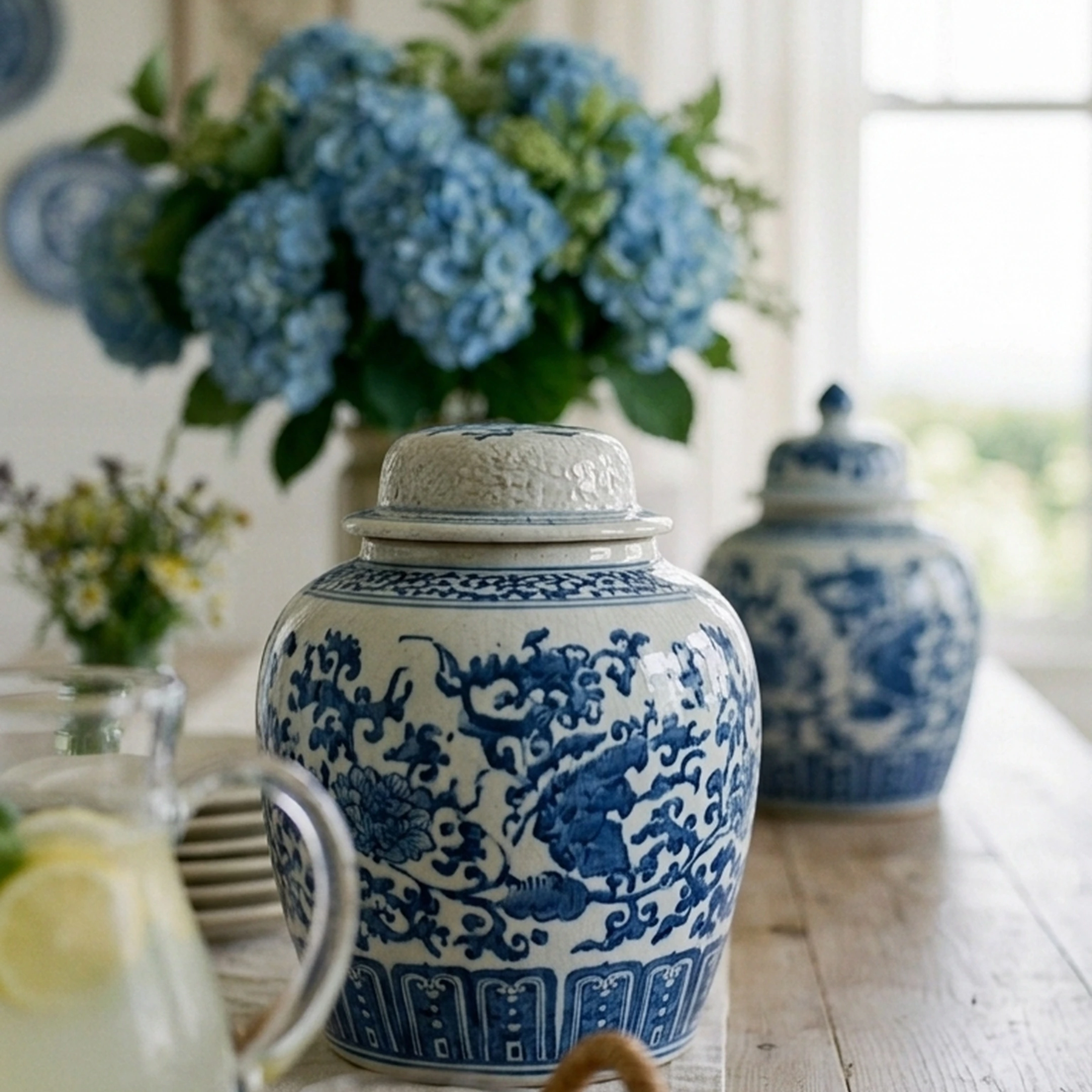
Regency style refers to the British interior aesthetic of approximately 1811 to 1820, characterized by elegant proportions, classical motifs, symmetry, and refined ornament. In practice, it translates to curved furniture silhouettes, gilded accents, rich jewel-toned and botanical palettes, and a sense that every object in the room was chosen with intention rather than convenience.
Bridgerton's production design takes that foundation and amplifies it deliberately. The show layers florals on florals, mixes saturated blues and greens with blush and ivory, and fills every surface with candelabra, framed portraits, and botanical arrangements. It reads as maximalist but never chaotic, because the underlying palette and silhouette language are coherent. Every room has a dominant color, a dominant material, and a dominant shape. The abundance sits on top of that structure.
For a real home, the goal is not replication. It is translation. You are borrowing the emotional register of the show, that feeling of warmth, romance, and considered elegance, and applying it through the elements you can actually control.
The 2026 trend landscape makes this more achievable than it has been in recent memory. Commentary on Regency and Rococo romance in 2026 house decor notes that gilded edges and scrolled details are showing up in rooms that would have rejected them five years ago, but in edited, scaled forms suited to contemporary living. The moment is right, and the retail ecosystem has caught up.
The Three Registers of the Bridgerton Palette
The show operates across three distinct visual registers, and understanding which one you are working in is the most important decision you will make before buying anything.
Most homes work best when they commit to one register as the dominant language and use the others as accents. A living room in Dramatic Jewel with a bedroom in Romantic Soft creates coherence across the home without feeling repetitive.
Why Bridgerton-Inspired Design Is Viable Right Now
The conditions that make Regency-inspired interiors achievable in 2026 are not accidental. Several converging trends in consumer behavior, retail, and design culture have aligned in a way that makes this a practical project rather than a fantasy.
Spending Has Shifted Toward Decor, Not Furniture
Consumer spending patterns have moved in a direction that directly supports the targeted-refresh approach. U.S. consumers are pulling back on large discretionary purchases like furniture and mattresses while spending holds up better on decor, kitchen products, and essential home maintenance. Separately, many homeowners are opting for smaller, more manageable improvements including paint, flooring, and seasonal items to modernize their homes without costly renovations.
This means the Bridgerton approach, which prioritizes paint, fabric, lighting, and accessories over structural changes, is not just aesthetically sound. It is also aligned with how people are actually spending right now.
Heritage Maximalism Is the Defining Trend of 2026
The broader design culture has moved toward exactly the aesthetic territory that Bridgerton occupies. Heritage maximalism, as described by GoodHomes Magazine, involves layered pattern, color, and nostalgia with heritage-driven motifs and traditional shapes reimagined for modern homes. The emphasis is on character, craftsmanship, and comfort rather than clutter.
Nostalgia is also at the forefront of home design trends more broadly, with designers observing a move toward richer hues, diverse textures, and vintage elements from earlier eras, including ornate cabinetry and heritage woods like walnut and mahogany.
Generational Preferences Support a Curated, Not Maximalist, Approach
One important calibration: both Millennials and Gen Z tend to prefer minimalist over maximalist, orderly over cluttered, and relaxation-focused over entertainment-focused spaces when given direct choices. Gen Z specifically uses color with restraint and confidence, favoring warm, layered palettes of earth tones and warmer neutrals with rounded, organic furniture and softer lines.
This matters for execution. The Bridgerton aesthetic works best in modern homes when it is edited rather than replicated wholesale. The goal is a room that feels romantic and considered, not a room that feels like a costume.
Regency Era Color Palettes and Paint Choices That Actually Work
Color is the lowest-cost, highest-impact lever in a Bridgerton-inspired room. A single wall in the right deep mineral green or dusty plum shifts the entire register of a space without requiring a single new piece of furniture.
How to Read the Palette
The most common mistake is choosing a Bridgerton-adjacent color in isolation without considering the trim and accent relationship. Regency rooms work because the contrast between a deep wall and a crisp ivory cornice is doing significant visual work. In a modern home without original molding, you can recreate that contrast by painting trim, door frames, or window surrounds in a lighter tone against a deeper ground.
Benjamin Moore, Sherwin-Williams, and Behr all offer historical and heritage collections that map well onto this palette. Look for:
- Mineral greens in the sage-to-deep-teal range (not yellow-green, not blue-green)
- Dusty roses rather than candy pinks (the undertone should read warm and slightly grey)
- Warm whites with a yellow or pink undertone rather than cool blue-white for trim
- Deep navy or plum for rooms with good natural light
The undertone matters more than the color name. Two colors labeled "sage" can read completely differently depending on whether the undertone pulls warm or cool.
The Financial Case for Committing to Color
Hesitation around deep wall color is understandable, but the data supports committing. An olive green kitchen can fetch approximately $1,600 more at resale compared to other color choices. Color is not just aesthetic. It is also a reasonable investment in the home's perceived value.
One practical rule: if the room already feels cold or receives limited natural light, avoid deep navy or charcoal. Mineral green and deep plum read warmer and hold up better in lower-light conditions. This is where the moody minimalism concept is useful: deep, saturated hues combined with simple silhouettes and restrained hardware let the color do the dramatic work without requiring ornate furniture to match.
Palette by Room
For a small city apartment, the palette sequencing matters as much as the individual color choices. A useful approach:
- Entryway: Botanical Warm (sage, terracotta, warm ochre). Sets the tone without committing a large room.
- Living room: Dramatic Jewel (deep mineral green or navy). Highest impact, most immediately Bridgerton.
- Bedroom: Romantic Soft (blush, ivory, dusty rose). More intimate, more livable for daily use.
- Dining room: Either Dramatic Jewel or Botanical Warm, depending on the living room choice.
Affordable Furniture Pieces That Evoke Bridgerton Style
Furniture is where most Bridgerton-inspired rooms either succeed or collapse. The temptation is to go ornate on every piece. The result usually looks like a stage set rather than a home.
The better approach: choose one or two curved or classically shaped anchor pieces, keep the remaining furniture relatively simple, and let the fabric and finish carry the period reference.
The Curve Is the Signal
Regency furniture is defined by its silhouettes. Camelback sofas, rolled arms, scalloped headboards, bergere-style chairs, and cabriole legs are all period-appropriate shapes that read as romantic and considered without requiring a full period room to support them.
Both Revival House and House Beautiful identify soft geometry, including rounded sofas, arched mirrors, and organic tables, as a major 2026 trend. This means the market is currently well-stocked with pieces that work for Bridgerton-inspired rooms without requiring a specialty antique purchase.
West Elm has shifted noticeably toward curvier silhouettes with bronzed metals and bold textiles that support hybrid Regency looks. CB2 and Crate and Barrel both carry velvet upholstery options in jewel tones that translate directly. For the more ornate pieces, Chairish and 1stDibs are worth checking for vintage finds. Gen Z's sourcing approach of antique stores and secondhand platforms is increasingly the preferred method for period-inspired pieces, both for quality and for the collected, non-showroom feeling it creates.
Furniture Priority Order
If budget is a constraint, prioritize in this order:
- Sofa or primary seating. A curved or rolled-arm sofa in velvet, boucle, or a textured weave is the single highest-impact piece in a Bridgerton-inspired living room. Track-arm sofas work in tighter apartments because they buy back visual space while still reading as considered.
- An accent chair. A bergere, slipper chair, or wingback in a contrasting fabric adds the layered, collected feeling that defines the aesthetic.
- A mirror. An arched or ornately framed mirror is one of the most affordable ways to signal the period. It also makes smaller rooms feel larger and reflects candlelight beautifully.
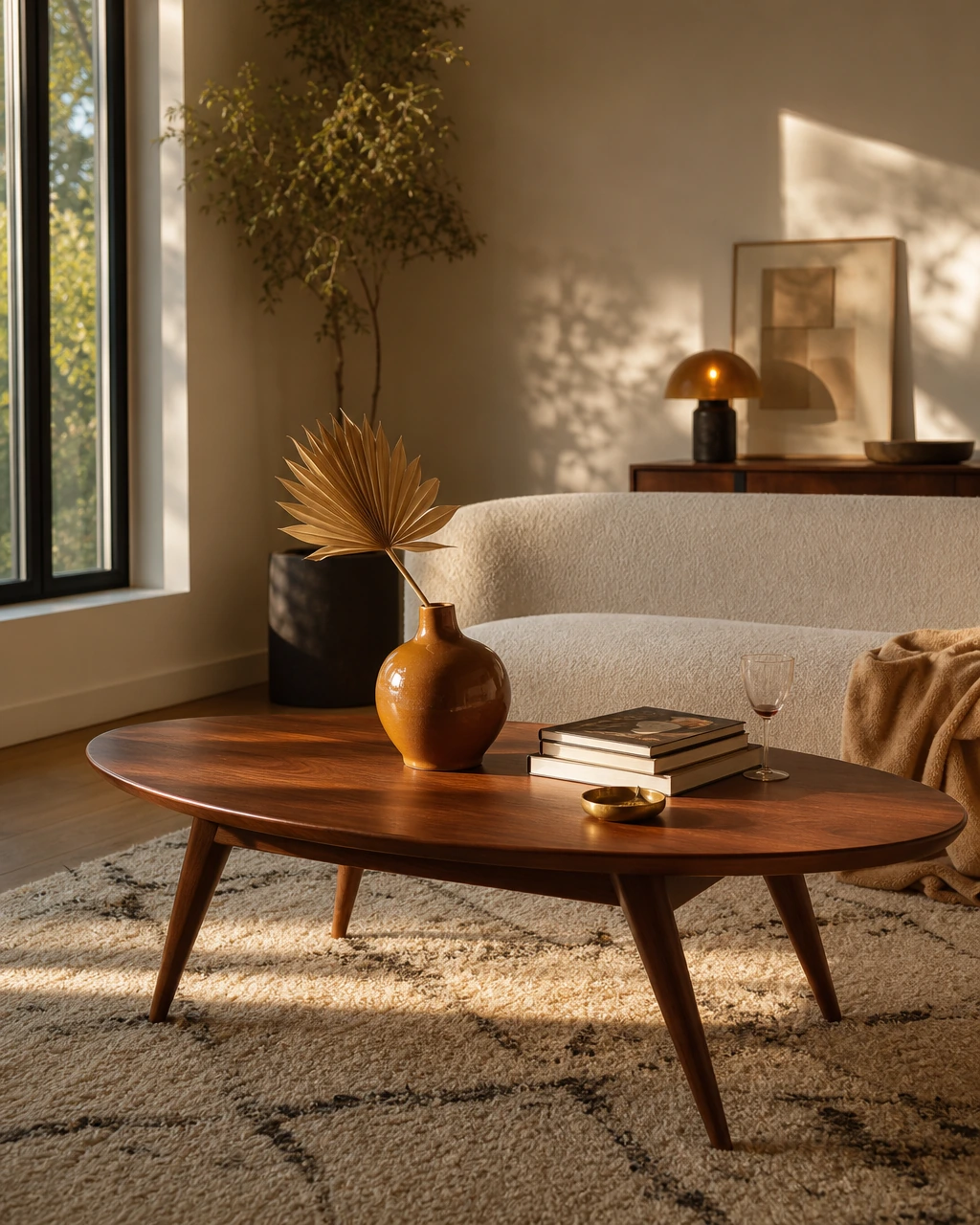
- A coffee table or side table in dark wood. Walnut and mahogany tones are having a significant moment. Searches for dark wood surged 187% in the first three quarters of 2025 compared to the same period in 2024. A single substantial piece in a rich wood tone grounds the room and gives the more romantic elements something to anchor against.
Skip the matched living room set. A sofa, accent chair, and coffee table from three different sources, unified by palette and material, will always read as more considered and more Bridgerton than a five-piece coordinated collection from a single catalog.
Wallpaper and Textile Patterns Inspired by the Show
Fabric and pattern are where Bridgerton's visual world is most immediately recognizable, and also where a modern room can most easily go wrong. The show uses florals, damasks, stripes, and botanical prints in abundance. In a real home, the same density reads as overwhelming rather than romantic.
The Layering Principle
Treat pattern as a layering system rather than a statement. Start with a relatively quiet ground (solid upholstery, a textured neutral rug, painted walls) and introduce pattern through secondary and tertiary elements: cushions, drapery, a single wallpapered wall, a patterned ottoman.
Botanical and floral wallpaper on a single feature wall, particularly behind a bed or on a chimney breast, is the most contained and effective way to introduce the Bridgerton pattern language. Sanderson's archive collections and Rifle Paper Co.'s botanical prints both offer options that read as period-appropriate without being literal reproductions.
For textiles, prioritize in this order:
- Velvet in jewel tones for cushions, accent chairs, and drapery
- Damask or jacquard for throw pillows or a single upholstered piece
- Linen or cotton in botanical prints for lighter layering (cushion covers, bed throws)
- Sheer or semi-sheer drapery in ivory or blush to soften windows without blocking light
Window Treatments as a Period Signal
Full-length draperies in a velvet or heavy linen are one of the most affordable structural changes you can make to a room. They add height, warmth, and an immediate sense of occasion that shorter or minimal window treatments cannot replicate.
A return of fabric-rich window treatments, skirted chairs, and upholstered pieces is forecast for 2026, with designers citing the role of fabric in warmth and nostalgia. Hang curtain rods as close to the ceiling as possible, regardless of where the actual window frame sits. This is a standard designer move that makes ceilings feel taller and windows feel grander. It costs almost nothing and works in every room.
Lighting Fixtures and Candelabra Decor Elements
Lighting is the element most people underinvest in, and it is arguably the most powerful tool for creating a Bridgerton atmosphere. The show's interiors are lit almost entirely by warm, layered, low sources: candelabra, table lamps, firelight. The effect is intimate, flattering, and deeply romantic. A single overhead fixture will undermine every other Bridgerton-inspired element in the room.
The Layered Lighting System
The goal is to eliminate or minimize overhead lighting and replace it with multiple warm sources at different heights. The system works in three levels:
- Ambient base. A chandelier or pendant with warm-toned bulbs (2700K or lower). Brass, aged bronze, or crystal finishes all work. Avoid chrome or brushed nickel, which read as too contemporary and too cold.
- Mid-level. Table lamps on side tables, consoles, and dressers. Ceramic or brass bases with fabric shades in ivory or warm white.
- Low and accent. Candelabra, pillar candles, and taper candles in clusters. These do not need to be lit to be effective as decor objects. A grouping of tapers on a mantel or dining table immediately signals the period.
Warm, layered light is not just aesthetically appropriate. Integrating circadian lighting and warm layered sources is a wellness-driven design priority in 2026, which means the Bridgerton lighting approach is also better for how a space feels to live in day to day.
Statement Chandeliers Without the Statement Price
A statement chandelier does not require a significant investment. Rejuvenation, Anthropologie Home, and CB2 all carry brass and crystal options at accessible price points. For something more ornate, Chairish frequently has vintage crystal chandeliers at a fraction of retail. The key specifications: warm bulbs (ideally Edison-style or globe shapes) and a dimmer switch on every fixture. The dimmer is not optional. It is what makes the difference between a room that feels like a period drama and a room that feels like a hotel lobby.
Architectural Details: Molding, Mantels, and Trim
Most guides tell you to add crown molding and call it a day. The reality is more nuanced, and more achievable, than that.
What You Can Add Without a Contractor
Peel-and-stick or paintable foam molding has improved significantly in quality and is now a credible option for renters and homeowners who want the visual effect of period detailing without structural work. Applied to the upper wall as a picture rail or chair rail, it creates the horizontal banding that defines Regency interiors.
Wainscoting panels, either real or applied with thin MDF strips painted to match, add the lower-wall paneling that appears throughout Bridgerton's interiors. This is a weekend project in most rooms and one of the highest-impact changes you can make to a plain-walled space.
For a broader view of how tools for decorating a new apartment can help you plan these changes before committing, digital visualization tools have made it significantly easier to test arrangements without moving anything physically.
The Mantel as a Room Anchor
If the room has a fireplace, the mantel is the most important surface in a Bridgerton-inspired scheme. If it does not, a decorative mantel shelf mounted to the wall creates the same compositional anchor without requiring a working fireplace.
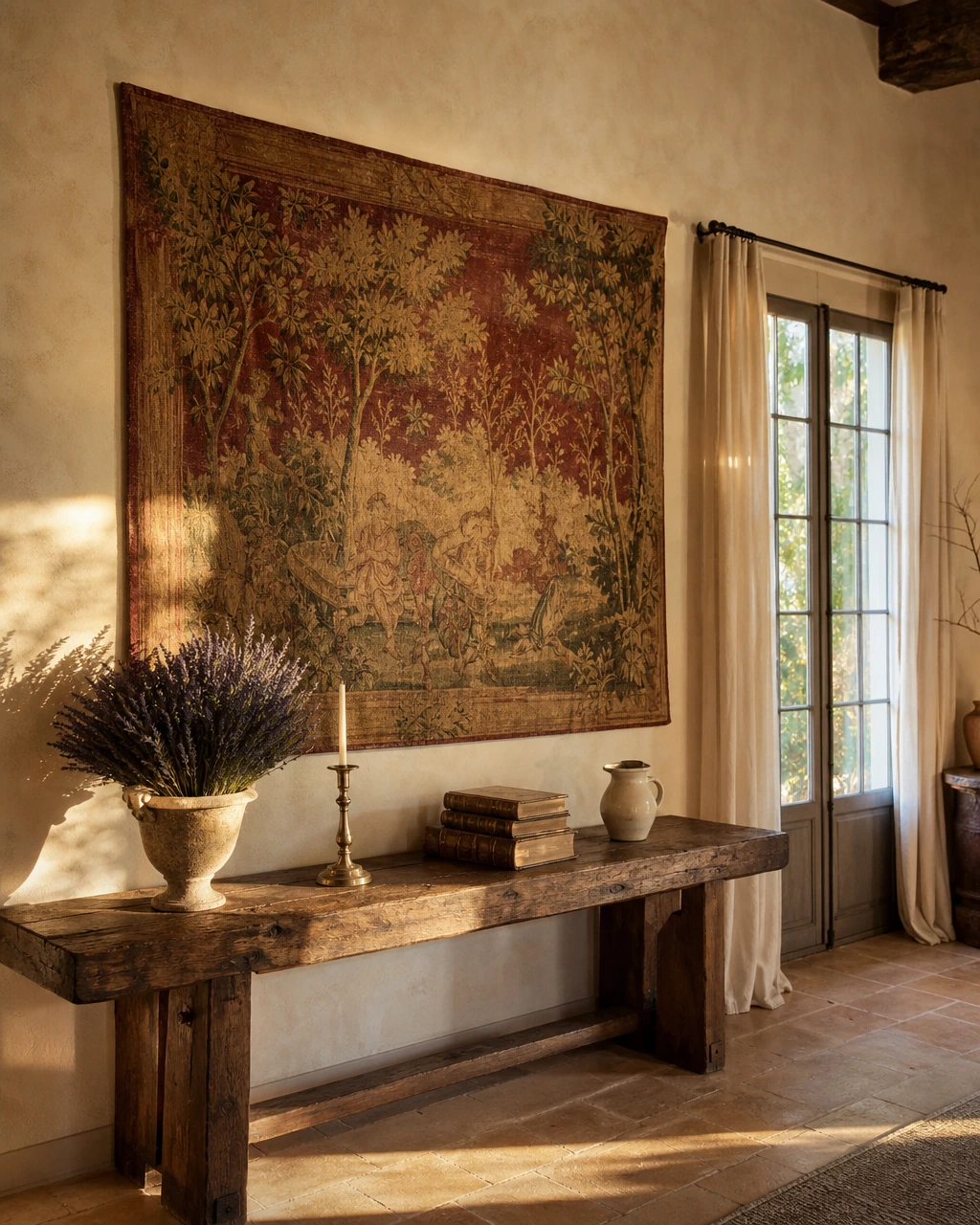
Style the mantel with: a large framed mirror or artwork centered above, a pair of matching candlesticks or candelabra flanking the center, a small collection of objects (a ceramic vase, a small bust, a stack of books), and a trailing botanical element. This is the Bridgerton vignette in its most concentrated form, and it works in a rental apartment as readily as it does in a period townhouse.
Accessorizing with Mirrors, Artwork, and Decorative Objects
Accessories are where the Bridgerton world becomes most personal, and where the risk of over-theming is highest. The show's interiors work because every object feels like it belongs to someone with a specific history and taste. The goal is to create that same sense of accumulated, considered collection rather than a themed installation.
The Edited Vignette Approach
Storytelling decor, where spaces reflect personal narratives through curated mixes of color, sentiment, and objects, is a recognized trend in 2026 home shopping. This is exactly the right framework for Bridgerton-inspired accessorizing. You are not decorating a period room. You are telling a story about someone who loves beautiful, considered things.
Build vignettes rather than filling surfaces. A vignette is a small, composed grouping of three to five objects that work together visually:
- Console: A tall vase with branches or flowers, a framed print, a small decorative object, and a candle.
- Bedside table: A ceramic lamp, a small stack of books, a single bud vase.
- Mantel: Candelabra flanking a central mirror, one ceramic piece, one botanical element.
The restraint is what makes it feel curated rather than cluttered.
Mirror Selection
An arched or ornately framed mirror is the single most versatile Bridgerton-inspired purchase you can make. It works in every room, at every scale, and at almost every price point. Prioritize:
- Arched or sunburst shapes over rectangular
- Aged brass, gold leaf, or dark wood frames over chrome or black metal
- Scale that feels slightly generous for the wall (a mirror that is too small reads as an afterthought)
Artwork
Original art is not required. Framed botanical prints, portrait reproductions, and architectural engravings all read as period-appropriate and are widely available as affordable prints. Group smaller frames in a salon-style arrangement rather than hanging a single piece in isolation. The density of the grouping signals the aesthetic even when the individual pieces are modest.
Room-by-Room Bridgerton Design Transformations
The Regency aesthetic does not need to be applied uniformly across every room. A more selective approach, one or two rooms treated with full commitment and the rest informed by the palette and material language, tends to produce more coherent results.
Living Room: The Drawing Room Effect
The living room is the highest-impact room for Bridgerton-inspired design because it is where the show's most recognizable elements are concentrated.
Priority changes, in order of impact:
- Deep wall color in mineral green, navy, or deep plum
- A curved or rolled-arm sofa in velvet or textured upholstery
- Full-length draperies in a complementary tone
- Layered lighting: chandelier, table lamps, candles
- An arched mirror above the fireplace or console
- A botanical arrangement as a focal point
Bedroom: The Romantic Retreat
The bedroom is where the softer, more intimate side of the Bridgerton palette works best. Blush, ivory, and sage with warm brass accents create the romantic atmosphere without the drama of the deeper jewel tones.
Priority changes:
- A scalloped or upholstered headboard in a soft tone
- Botanical or floral wallpaper on the wall behind the bed
- Layered bedding in linen, velvet, and cotton
- Brass or ceramic table lamps with fabric shades
- A small vanity or dressing table with a framed mirror
Dining Room: The Dinner Party Register
The dining room is where candelabra and dramatic lighting have the most natural home. A statement chandelier, a dark wood table, and upholstered dining chairs in a velvet or woven fabric create the Bridgerton dinner party atmosphere with relatively few pieces.
The rococo revival driven by ornate tablescapes and baroque-inspired decor maps directly onto the dining room. A well-styled table with tapers, layered linens, and a botanical centerpiece does significant work even in an otherwise plain room.
Tools and Solutions for Bridgerton-Inspired Design
Getting the aesthetic right requires more than a list of elements. It requires understanding how those elements work together in the specific proportions and light conditions of your actual space. These are the categories and platforms worth considering.
Paint and Color Visualization
Benjamin Moore, Sherwin-Williams, Behr all offer online color visualizers and historical collections that map well onto Regency palettes. Use their digital tools to test mineral greens, dusty roses, and deep navies against your actual room before committing to a gallon.
Wallpaper and Textile Sourcing
Sanderson offers archive collections with period-appropriate botanical and damask patterns. Rifle Paper Co. produces botanical prints in a range of scales suitable for feature walls and soft furnishings. Spoonflower allows custom fabric and wallpaper orders for more specific pattern needs.
Furniture and Decor Retail
West Elm has shifted toward curvier silhouettes and bronzed metals that support hybrid Regency looks. CB2 and Crate and Barrel carry velvet upholstery in jewel tones that translate directly. Lulu and Georgia and Anthropologie Home both stock ornate mirrors, brass lighting, and decorative objects that fit the aesthetic without requiring antique sourcing.
For vintage and antique pieces, Chairish and 1stDibs are the most reliable sources for period-appropriate furniture, lighting, and decorative objects at a range of price points.
AI-Assisted Design Planning
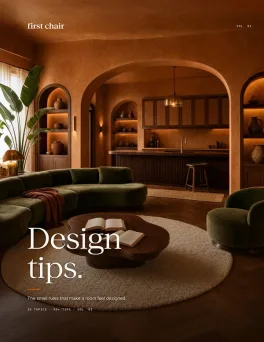
Pulling a Bridgerton-inspired room together requires understanding how specific pieces work in your actual space, not just how they look in a catalog. First Chair allows you to upload a photo of your room or a Bridgerton interior you love, describe the direction you want (something like "Regency but livable" or "romantic but not fussy"), and receive a curated room concept built from real, in-stock pieces across multiple retailers including West Elm, CB2, Crate and Barrel, Pottery Barn, and Lulu and Georgia. Every recommendation is a piece you can actually buy, not a render of furniture that does not exist. For anyone who has spent time with 27 browser tabs open and still feels stuck, it is a more direct path to a finished room.
Design Inspiration and Trend Research
GoodHomes Magazine, Elle Decor, House Beautiful, and The Spruce all provide current trend editorials that help align Bridgerton-inspired choices with what the market is actually producing. Checking these before making major purchases helps avoid pieces that are period-appropriate but currently unavailable or discontinued.
Best Practices for Bridgerton-Inspired Design
1. Layer Heritage Elements Over a Modern, Functional Base
Keep major furniture pieces simple and comfortable, then layer in Regency-style accents (mirrors, trims, fabrics) as heritage maximalist touches. The base needs to be livable. The accents carry the period reference.
2. Use Rich Woods to Ground Romantic Palettes
Introduce one or two substantial wood pieces in walnut or mahogany tones to anchor more whimsical colors and patterns. A dark wood coffee table or sideboard gives the room a sense of permanence that lighter pieces cannot provide.
3. Prioritize Curves in Key Furniture and Mirrors
Swap at least one rectilinear focal piece (sofa, headboard, mirror) for a curved or scalloped silhouette. This is the single fastest way to signal Regency style in a modern room.
4. Commit to Deep Wall Color in One or Two Rooms
Choose one or two rooms for a bold wall color and keep trim, large furniture, and floors relatively quiet. The contrast between a deep wall and crisp ivory trim is doing the same work as the architectural detailing in the show.
5. Hang Curtains at Ceiling Height
Regardless of where the actual window frame sits, hang curtain rods as close to the ceiling as possible. This makes ceilings feel taller and windows feel grander. It costs almost nothing.
6. Build Vignettes, Not Themed Surfaces
Create small, composed groupings of three to five objects rather than filling every surface. The restraint is what makes the room feel collected rather than staged.
7. Invest in the Dimmer Switch
Every lighting fixture in a Bridgerton-inspired room should be on a dimmer. The ability to lower the light level in the evening is what creates the intimate, candlelit atmosphere the show is known for.
8. Source Vintage for the Ornate Pieces
For the most elaborate elements (carved mirrors, crystal chandeliers, ornate side tables), vintage and antique sourcing through Chairish or local dealers will produce better results at lower cost than buying new. The patina also reads as more authentic.
Common Mistakes to Avoid
1. Over-Theming Every Room
Reproducing a literal Bridgerton drawing room with every surface ornate makes a space feel like a stage set rather than a home. Pair streamlined shapes with weathered textures and keep color and scale cohesive. The combination should feel curated, not costumed.
2. Ignoring Scale
A camelback sofa that looks perfect in a high-ceilinged London townhouse can overwhelm a 400-square-foot studio. Always check dimensions against your actual room before purchasing. The silhouette matters, but so does the footprint. For guidance on furniture that fits small city apartments, scale is as important as style.
3. Choosing Cool-Toned Paint
Bridgerton's palette is warm throughout. Cool blues, grey-greens, and blue-whites will undermine the romantic register even if the color itself is period-appropriate. Always check the undertone of a paint color in your actual room's light before committing.
4. Buying a Matched Set
A matched five-piece living room set will always read as showroom rather than collected. The Bridgerton aesthetic depends on the sense that pieces were acquired over time, not purchased in a single transaction. Mix sources, mix periods, and mix materials within a unified palette.
5. Under-Investing in Lighting
A flat flush-mount ceiling fixture will undermine every other Bridgerton-inspired element in the room. Lighting is not the last thing to address. It is one of the first. Budget for at least one statement fixture and multiple warm secondary sources before spending on accessories.
6. Skipping the Trim Contrast
Deep wall color without a contrasting trim reads as heavy rather than dramatic. The ivory or warm white trim is not optional. It is what gives the deep color its elegance.
7. Using Black Metal Fixtures
Black metal reads as contemporary industrial, which is the opposite register from Regency. If the room already feels cold, black metal lighting makes it worse. Warm brass, aged bronze, and antique gold are the correct finish directions.
8. Treating Pattern as a Statement Rather Than a Layer
A single heavily patterned piece in an otherwise plain room will read as a mistake rather than a design choice. Pattern needs to be layered across multiple elements at different scales to read as intentional.
Frequently Asked Questions
What is Bridgerton interior design style?
Bridgerton interior design style is a contemporary interpretation of British Regency aesthetics from approximately 1811 to 1820. It is characterized by curved furniture silhouettes, deep jewel-toned and botanical color palettes, layered warm lighting, rich fabrics like velvet and damask, gilded accents, and a sense of considered, romantic abundance. In modern homes, it is typically achieved through targeted updates to paint, textiles, lighting, and furniture rather than structural renovation.
How do I add Bridgerton style to a rental apartment?
Focus on elements that do not require permanent changes: paint (check your lease), removable wallpaper on a single feature wall, full-length draperies hung from ceiling-height rods, velvet cushions and throws, arched mirrors, layered warm lighting, and styled vignettes on consoles and mantels. These changes can transform the register of a room without touching the architecture.
What colors are most associated with Bridgerton interiors?
The show uses three primary palette directions: Romantic Soft (blush, ivory, dusty rose, soft gold), Dramatic Jewel (deep mineral green, navy, ivory trim, warm brass), and Botanical Warm (sage, terracotta, warm ochre, cream, walnut). Deep mineral green and blush are the most immediately recognizable Bridgerton colors in contemporary design references.
Is Bridgerton style the same as Hollywood Regency?
They are related but distinct. Hollywood Regency is a glamorous, high-contrast interior style with reflective surfaces (mirror, lacquer, polished stone), sculptural furniture, and rich textures like velvet and silk. It shares an emphasis on luxury, symmetry, and drama with historical Regency style, but it is more theatrical and less botanical. Bridgerton's aesthetic draws from historical Regency and leans more romantic and layered than the cleaner, more graphic Hollywood Regency look.
How much does it cost to achieve a Bridgerton-inspired living room?
The range is wide. A meaningful transformation can be achieved for under $2,000 through paint, new cushions and throws, a statement mirror, layered lighting, and styled accessories. A more complete transformation including a new curved sofa and vintage chandelier typically falls in the $5,000 to $10,000 range depending on sourcing. Vintage and antique sourcing through platforms like Chairish can significantly reduce costs on the most ornate pieces.
Does Bridgerton style work in small apartments?
Yes, with calibration. The key adjustments for smaller spaces are: choosing track-arm or smaller-scale curved sofas rather than oversized camelback styles, limiting deep wall color to one accent wall rather than all four walls, using mirrors strategically to expand the sense of space, and keeping the number of decorative objects restrained. The palette and silhouette language of Regency style translates well to smaller rooms when scale is respected.
Conclusion
The Bridgerton aesthetic is not a renovation project. It is a series of considered decisions about color, curve, fabric, and light that, taken together, shift the emotional register of a room from ordinary to romantic. None of those decisions require a contractor, a period property, or a production design budget.
The 2026 design landscape has made this more achievable than it has been in years. Heritage maximalism is a dominant trend. Dark woods are surging. Curved silhouettes are everywhere in retail. The market has caught up to the aesthetic, which means the pieces you need are available, and at a range of price points.
Start with paint. Then lighting. Then one curved anchor piece. Build the vignettes last. The room will come together faster than you expect.
If you want help translating a specific Bridgerton interior you love into a room plan built from real, purchasable pieces, First Chair can take you from inspiration image to shoppable room concept, pulling across West Elm, CB2, Crate and Barrel, Pottery Barn, and Lulu and Georgia so the result feels layered rather than retailer-stamped. Upload the photo. Describe the feeling you want. Get a room you can actually build.