
Picture this: you've just moved into your first real apartment in Chicago, you've been watching Friends reruns for comfort, and you keep pausing on Monica's living room thinking "that's exactly the feeling I want." Then you open seventeen tabs, add three sofas to your cart, close your laptop, and do nothing. The inspiration is there. The execution isn't.
The Friends apartment has been one of the most searched TV interiors for decades, and it's not nostalgia alone driving that. 34% of survey respondents said Friends influenced their interior design choices, making it one of the most impactful shows for home décor inspiration. That's a remarkably high number for a series that ended in 2004. The reason it holds up is that the aesthetic was never really about the purple walls or the oversized coffee table. It was about a room that felt collected, warm, and genuinely lived in. Those are design goals that don't expire.
This guide breaks down what actually made Monica's apartment work, and gives you practical, buyable ways to recreate that energy in your own space without a TV budget, a fictional rent-controlled lease, or a set designer on call.
What you'll learn:
- Which color palette choices translate from screen to real apartment walls
- Which furniture pieces carry the most visual weight and where to find them
- How to scale the Friends layout to a real small apartment without losing the feeling
- Which accessories and lighting choices do the most work for the least money
- How to build the room gradually using the slow decorating approach
- Which DIY projects deliver the most authentic results
Key Takeaways
- 34% of survey respondents said Friends influenced their interior design choices, placing it among the most impactful TV shows for home décor inspiration.
- The Friends apartment aesthetic works because it layers warm colors, vintage-style furniture, and personal accessories. No single statement piece carries the whole room.
- Monica's iconic purple walls translate better in real apartments as muted, dusty tones like terracotta, sage, or artichoke green. green is the fastest-growing home décor color trend in 2026, with searches increasing 1.43% year-over-year.
- Small-apartment design guides recommend maintaining at least 60 to 70 cm of clearance around furniture, which means scaling down the Friends layout rather than copying it directly.
- The "collected over time" feeling of the Friends apartment aligns directly with 2026's slow decorating trend, where curating gradually beats buying everything at once.
- Budget recreations work best when anchored by one or two stronger pieces (a sofa, a rug) and layered with thrifted or vintage accessories.
- Research published in Frontiers in Computational Neuroscience describes how consumers use TV aesthetics as media-inspired self-expression, adapting the look to their own identity rather than copying it literally.
- The global home décor market is projected at USD 258.1 billion in 2026, growing toward USD 502.8 billion by 2036, with online retail accounting for roughly 38% of distribution channels.
What the Friends Apartment Actually Was (and Wasn't)
The Friends apartment is a specific design achievement: a warm, layered, personality-driven living space that felt genuinely inhabited rather than assembled. Monica's apartment combined deep warm wall color, mismatched vintage-style furniture, layered textiles, and personal accessories in a way that communicated a real life being lived there.
The set was designed for television, which means it was deliberately oversized (roughly 1,500 square feet of usable set space), lit for cameras, and styled for visual interest across multiple angles. None of that is achievable or even desirable in a real apartment. What is achievable is the underlying design logic: warm color grounding the space, furniture that looks collected rather than matched, layered lighting, and accessories that feel personal rather than decorative.
Why the Aesthetic Still Works in 2026
The Friends apartment aesthetic didn't age out because it was never really a trend. It was a design sensibility. The layered, warm, collected approach it embodied maps almost exactly onto what Homes and Gardens identifies as the defining shift in 2026 interiors: a move toward warmer, more personality-focused spaces with tactile materials, natural finishes, and meaningful pieces taking precedence over fast-moving trends.
The vintage revival trend documented by Woodgrain for 2026 specifically calls out consumers incorporating vintage and antique furnishings to add character and personal narrative to interiors. That's the Friends apartment in a sentence. The show's set designers were doing slow decorating before anyone called it that.
The Nostalgia Factor
There's a psychological dimension worth understanding here. Research published in the Journal of Consumer Behaviour describes "nostalgic bonding" as a lifelong preference formed through intense exposure to media around age 20. For millennials who watched Friends during its original run, and for Gen Z who discovered it on streaming, the emotional pull toward this aesthetic is real and worth taking seriously as a design direction rather than dismissing as a passing reference.
A study published in Psychology and Marketing found that nostalgia increases preference for socially validated choices, which helps explain why the Friends apartment remains such a persistent reference point. It's not just personal memory. It's a shared cultural touchstone that feels emotionally safe to build toward.
Why This Design Moment Matters Now
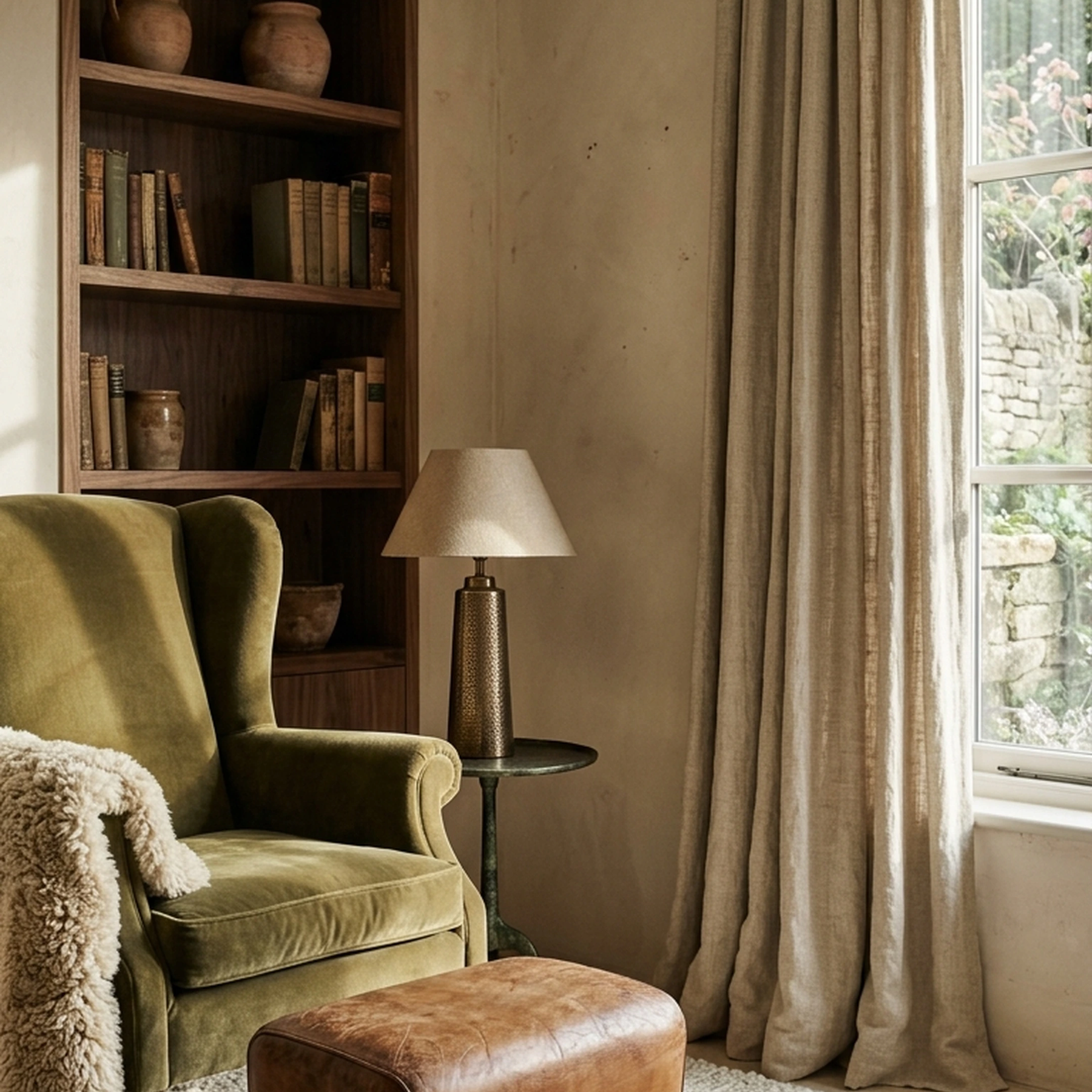
The timing for a Friends-inspired interior is genuinely good, and not just because of nostalgia. Several converging market and cultural trends make this aesthetic both achievable and relevant in 2026.
The global home décor market is valued at USD 258.1 billion in 2026, with online retail accounting for roughly 38% of distribution channels. That means more access to vintage-style and warm-toned furniture than ever before, across more price points, without requiring a trip to a specialty showroom.
Consumer behavior is shifting toward intentionality. Forbes reports that intentional maximalism, slow decorating, vintage and thrift finds, and biophilic elements are central 2026 trends, with consumers seeking "meaningful pieces that convey a story" and turning to antiques and thrifted décor over fast furniture. The Friends apartment aesthetic is essentially a visual brief for all four of those trends simultaneously.
The research on media-inspired home décor is also instructive. A 2025 study published in Frontiers in Computational Neuroscience found that consumers use TV and film aesthetics as media-inspired self-expression, with décor choices tied to identity, emotional motivations, financial accessibility, and creative adaptations to achieve desired looks on a budget. The key word is "adaptations." The goal is never a literal recreation. It's a personal interpretation.
Color Palettes and Paint Ideas from the Friends Apartment
The Friends apartment color palette is one of the most recognizable in television history. Monica's living room featured a deep, saturated purple on the walls, paired with warm wood tones, cream upholstery, and pops of teal and mustard in the accessories.
Understanding what the purple was actually doing is the key to adapting it. It created warmth and depth in a space that was otherwise full of natural wood, soft neutrals, and layered textiles. The color wasn't the point. The feeling was.
How to Adapt the Purple Without Painting Your Walls Eggplant
A direct match to Monica's purple tends to overwhelm most real apartments, particularly those with less natural light or smaller square footage. These approaches capture the same emotional warmth at a more livable intensity:
- Dusty mauve or muted plum on a single accent wall, particularly behind a sofa or media console, gives you the depth without the saturation.
- Terracotta and warm clay tones sit in the same emotional register as the Friends palette: grounded, warm, slightly vintage. Benjamin Moore's "Pale Brick" and Sherwin-Williams' "Cavern Clay" are strong starting points.
- Artichoke green is worth serious consideration here. Google search data identified it as the fastest-growing home décor color trend in 2026, with searches increasing 1.43% year-over-year. It pairs naturally with warm wood tones and cream upholstery, which is essentially the Friends apartment's secondary palette.
- Warm white with colored textiles is the most renter-friendly option. Keep the walls neutral and bring the color in through a deep-toned rug, throw pillows, and curtains.
The Secondary Palette: What Made the Apartment Feel Warm
Beyond the purple, the Friends apartment relied heavily on warm wood tones (the kitchen cabinets, the coffee table, the frames), cream and off-white upholstery, and a mix of teal, mustard, and rust in smaller accessories. This combination is exactly what 2026 design trend reporting describes as the "warmer, layered, personality-focused" direction shaping interiors right now.
The practical takeaway: if you're not ready to commit to a colored wall, start with a warm-toned rug and cream upholstery. Those two elements alone will shift the room's emotional register significantly.
Paint Colors Worth Testing
Furniture Pieces and Where to Buy Friends-Inspired Décor
The furniture in Monica's apartment was never perfectly matched. The sofa was oversized and slightly worn-in. The coffee table was solid wood, low, and clearly had some history. The armchairs were mismatched in a way that felt intentional. That "collected" quality is the hardest thing to replicate when buying everything new at once, and it's the most important thing to aim for.
The Anchor Pieces Worth Spending On
A few pieces carry most of the visual weight in a Friends-style living room. Prioritize these before anything else:
Skip the matching living room set. The Friends apartment worked because nothing was perfectly coordinated. A sofa from one source and a chair from another will always feel more authentic than a five-piece suite from the same catalog.
Budget-Friendly Alternatives to High-End Pieces
The vintage revival trend is genuinely useful here. Consumers are increasingly turning to antiques and thrifted décor over fast furniture for character, sustainability, and uniqueness. For a Friends-inspired room, that's not a compromise. It's the right approach.
Facebook Marketplace and Chairish are the most reliable sources for the kind of worn-in wood coffee tables and mismatched armchairs that make a room feel collected. West Elm and CB2 carry sofas with the right silhouette (slightly oversized, clean but not cold) at a price point that makes sense as an anchor investment. Anthropologie Home and Lulu and Georgia are strong for rugs and textiles that bring in pattern and warmth without requiring a full room overhaul.
For a more guided approach to pulling these pieces into a cohesive room, First Chair lets you upload a photo of the Friends apartment (or any room you love) and receive a curated concept built from real, in-stock furniture across West Elm, CB2, Crate and Barrel, Pottery Barn, and Lulu and Georgia. Every piece shown actually exists and can be purchased. You can also access insider pricing on selected pieces without hunting for promo codes.
Spending Framework by Budget Level
Layout and Space Planning Tips for Small Apartments
The Friends apartment was enormous. The living room alone was roughly 1,500 square feet of set, designed to accommodate multiple camera angles and a studio audience. Your actual apartment is not that.
The good news is that the layout principles behind the Friends living room are sound and scalable. The seating was arranged around a central coffee table, facing inward. The sofa anchored the room. The kitchen was visible but separated by a counter. These are all achievable in a smaller space if you scale the furniture correctly.
Minimum Clearances and Furniture Scaling
Small-apartment design guides consistently recommend maintaining 60 to 70 cm of clearance around furniture for comfortable circulation. In a tight living room, that translates to specific choices:
- A sofa that's 84 to 90 inches wide is likely too large for most urban apartments. Look for options in the 76 to 82 inch range.
- The coffee table should leave at least 18 inches of clearance between its edge and the sofa.
- If you're adding a second seating piece (an armchair or accent chair), position it at an angle rather than directly facing the sofa to keep the room from feeling confrontational.
- Track-arm sofas buy back visual and physical space in tight rooms. They're almost always the better choice over rolled-arm or camelback styles in apartments under 700 square feet.
Visual Zoning in Open-Plan Apartments
Visual zoning is a technique that uses rugs, furniture arrangement, and changes in materials to create distinct functional areas in an open-plan space without closing it off. In the Friends apartment, the kitchen counter did this work. In a studio or open-plan apartment, a large area rug under the seating group achieves the same separation.
The rug should be large enough that at least the front legs of every piece of seating sit on it. A rug that's too small is one of the most common reasons a living room arrangement feels unresolved.
For more guidance on furniture for small apartments, the First Chair blog covers scaling and proportion in detail. For layout planning before you buy anything, tools like Planner 5D and Floorplanner let you test furniture arrangements against your actual room dimensions. This is worth doing before committing to a sofa.
Iconic Accessories and Wall Décor Elements
The accessories in the Friends apartment were doing a lot of work. The oversized clock above the kitchen pass-through. The framed artwork in the hallway. The mismatched throw pillows. The books stacked on the coffee table. None of these were expensive. All of them contributed to the feeling that someone actually lived there.
The Accessories That Defined the Look
A few specific elements are worth recreating:
- An oversized wall clock in a warm metal finish (brass, bronze, or aged iron) placed in a kitchen or dining area immediately reads as a Friends reference without being literal about it.
- Layered throw pillows in a mix of textures (velvet, linen, knit) and warm tones. Mix at least three different textures rather than buying matching sets.
- Books and objects on a coffee table rather than leaving it empty. A stack of design books, a ceramic bowl, and a small plant is the minimum viable coffee table arrangement.
- Gallery walls with mismatched frames in warm wood and aged metal tones. The frames don't need to match. The artwork doesn't need to be expensive. Consistency in tone (warm vs. cool) matters more than consistency in style.
What to Skip
Avoid anything that reads as a direct prop replica. The goal is capturing the feeling of the apartment, not turning your living room into a themed installation. Research published in Frontiers in Computational Neuroscience describes how consumers use TV aesthetics as media-inspired self-expression, adapting the look to their own identity rather than copying it literally. A Central Perk mug on your shelf is a reference. A room full of them is a gift shop.
Accessory Checklist by Room Area
Lighting Solutions to Recreate the Friends Apartment Vibe
The Friends apartment was always warmly lit. There were floor lamps in corners, pendant lighting over the kitchen counter, and very little overhead fluorescent light. This is one of the easiest elements to recreate and one of the most impactful changes you can make in a real apartment.
Layered Lighting: The Practical Approach
Layered lighting means combining at least three light sources at different heights: ambient (overhead or general), task (functional, like a reading lamp), and accent (decorative, like a table lamp or candles). The Friends apartment used all three, which is why it always felt warm and inhabited rather than bright and clinical.
Specific recommendations:
- Replace overhead fixtures with warmer bulbs (2700K to 3000K color temperature) as an immediate, low-cost improvement.
- Add a floor lamp in at least one corner of the living room. Torchiere-style lamps that direct light upward create the warmest ambient effect.
- Use table lamps on side tables or consoles rather than relying on overhead lighting alone.
- Pendant lighting over a kitchen counter or dining table is one of the most direct references to the Friends apartment and one of the most achievable changes in a rental.
For renters who can't hardwire new fixtures, plug-in pendant lights and smart bulbs from Philips Hue or IKEA TRÅDFRI give you control over warmth and intensity without any permanent changes. These are also genuinely useful for replicating the warm, layered quality of the Friends apartment's lighting without any electrician involvement.
Budget-Friendly Alternatives and the Slow Decorating Approach
The most important thing to understand about the Friends apartment is that it didn't look like it was bought all at once. It looked like it had been accumulated over years. That's the actual design goal: a room that feels collected, not assembled.
Slow decorating is a practice where homeowners curate spaces gradually, prioritizing meaningful pieces and long-term cohesion over rapid trend-following or complete instant makeovers. For a Friends-inspired room on a budget, this isn't just a trend. It's the right strategy.
A Practical Spending Framework
Rather than trying to furnish the whole room at once, prioritize in this order:
- The sofa (the room's anchor; worth spending more here)
- The area rug (the second most impactful piece for cohesion)
- Lighting (floor lamp and one table lamp minimum)
- Coffee table (thrift or vintage first; this is where character comes from)
- Accessories and textiles (layer in gradually; these are the easiest to swap)
The nostalgic bonding research published in the Journal of Consumer Behaviour describes lifelong preferences formed through intense exposure to media around age 20. For millennials who grew up watching Friends, the emotional pull toward this aesthetic is worth taking seriously as a long-term design direction, not just a passing reference.
DIY Projects and Upcycling Ideas
Some of the most recognizable elements of the Friends apartment are the easiest to recreate yourself, and the ones that will make the room feel most personal.
High-impact DIY projects worth considering:
- Reupholster a thrifted armchair in a warm velvet or textured fabric. Many upholstery shops will do a simple chair for $150 to $300 in labor if you supply the fabric. The result is a vintage-silhouette chair in exactly the color you want.
- Build a simple gallery wall using frames from thrift stores painted in a consistent finish (all warm wood, or all aged brass). The content matters less than the arrangement: keep frames close together and vary the sizes.
- Add a peel-and-stick tile backsplash in a kitchen or bathroom to reference the vintage tile aesthetic of Monica's kitchen without any permanent changes.
- Sew or buy simple linen curtains in a warm off-white or cream. Floor-length curtains hung close to the ceiling make any room feel taller and more considered.
For more ideas on decorating a new apartment from scratch, the First Chair blog covers practical approaches to building a cohesive room without starting from a blank check.
Tools and Platforms for Recreating the Friends Aesthetic
The right tools make the difference between a room that stays on a mood board and one that actually gets built. These categories cover the full workflow from planning to purchase.
Space Planning and Layout Tools
Getting the layout right before buying anything is the single most important step for small apartments. Planner 5D and Floorplanner let you test furniture arrangements against your actual room dimensions. This is worth doing before committing to a sofa. IKEA's Home Planner is useful specifically for storage and kitchen configurations.
Vintage and Second-Hand Platforms
Facebook Marketplace is the most practical source for the worn-in wood coffee tables and mismatched armchairs that define the Friends aesthetic. Chairish and 1stDibs carry more curated vintage pieces at higher price points, but both are useful for identifying the right silhouettes and then finding lower-cost alternatives elsewhere.
Mid-Range Furniture Retailers
West Elm, CB2, Article, and Interior Define carry sofas and chairs with the right proportions and upholstery options for a Friends-inspired room. Crate and Barrel is strong for solid wood coffee tables and dining pieces. Anthropologie Home and Lulu and Georgia are the best sources for rugs and textiles in warm, vintage-adjacent tones.
AI-Assisted Design and Shopping Platforms
First Chair is built specifically for the gap between inspiration and execution. Upload a photo of the Friends apartment (or any room you love), describe your aesthetic direction, and receive a curated room concept built from real, in-stock furniture across multiple retailers. The platform pulls across West Elm, CB2, Crate and Barrel, Pottery Barn, and Lulu and Georgia, which matters because the right Friends-inspired room rarely comes from a single catalog. Insider pricing is built in on most pieces. Every item shown actually exists and can be purchased. There are no fantasy renders.
Other platforms in this category include Havenly and Decorilla, which offer human designer services at various price points. These can be useful for more comprehensive room projects but typically involve longer timelines and higher minimum investments than a self-directed approach.
Lighting Solutions
Philips Hue and IKEA TRÅDFRI are the most practical smart lighting options for renters. Both allow you to control color temperature and intensity without hardwiring, which makes it possible to replicate the warm, layered lighting of the Friends apartment in any rental.
Paint Brands
Benjamin Moore and Sherwin-Williams both carry color lines that reflect the warm, personality-driven palette of the Friends apartment. Benjamin Moore's "Dried Thyme" (artichoke green), "Pale Plum" (dusty mauve), and "White Dove" (warm white) are all strong starting points. Dulux regularly publishes trend palettes that echo the same warm, layered direction.
Best Practices for Recreating the Friends Apartment Look
These practices apply regardless of budget or apartment size.
- Start with the sofa and rug before anything else. These two pieces set the room's scale, color temperature, and overall feeling. Every other decision flows from them. Getting these right first prevents the most expensive mistakes.
- Buy the coffee table secondhand. New coffee tables designed to look vintage rarely do. A genuinely worn-in solid wood table from an estate sale or Facebook Marketplace will always feel more authentic and typically costs less.
- Mix your seating sources intentionally. The Friends apartment worked because the sofa and armchairs came from different visual eras. Buy your sofa new if you want, but find the armchair somewhere else.
- Layer at least three light sources. Overhead lighting alone kills the warm, inhabited feeling of the Friends apartment. Add a floor lamp and at least one table lamp before you buy any other accessories.
- Hang curtains close to the ceiling, not at the window frame. This is one of the single most impactful changes you can make in a small apartment. It makes ceilings feel higher and rooms feel more considered.
- Keep the coffee table styled, not empty. A bare coffee table reads as unfinished. A stack of books, a ceramic object, and a small plant is the minimum. Add a tray if you want to contain the arrangement.
- Resist the urge to finish the room all at once. The Friends apartment's collected quality came from accumulation over time. Buying everything in a single weekend produces a room that looks like a showroom, not a home.
- Test paint colors in large swatches before committing. The purple on Monica's walls reads very differently under artificial light than in daylight. Paint a 12-by-12-inch swatch and observe it at different times of day before buying a full gallon.
Common Mistakes to Avoid
Buying a Matching Living Room Set
The consequence is a room that looks staged rather than lived in. The Friends apartment worked precisely because nothing was perfectly coordinated. Buy your sofa and armchair from different sources, even if it takes longer.
Choosing a Rug That's Too Small
A rug that only sits under the coffee table (with the sofa legs floating off it) is one of the most common reasons a living room arrangement feels unresolved. The rug should be large enough that at least the front legs of all seating pieces sit on it.
Replicating the Purple Directly
Monica's wall color was calibrated for television cameras and studio lighting. In a real apartment with standard windows and ceiling heights, a direct match tends to feel oppressive. Start with a muted version or a warm adjacent tone (terracotta, artichoke green, dusty mauve) and work from there.
Ignoring Furniture Scale
The Friends set was oversized by design. A sofa that's 90 inches wide in a 300-square-foot living room will block circulation and make the room feel smaller, not cozier. Scale furniture to your actual dimensions and maintain the 60 to 70 cm clearance recommendations.
Over-Referencing the Show Directly
Prop replicas (the Central Perk mug, the "How you doin'" sign) turn a design-inspired room into a themed installation. The goal is the feeling of the apartment, not a recreation of specific set pieces. Keep references subtle and prioritize pieces that feel personal to you.
Leaving Walls Bare
The Friends apartment had artwork, frames, and objects on almost every wall surface. Bare walls are the fastest way to make a room feel unfinished, regardless of how good the furniture is. A simple gallery wall with thrifted frames costs less than $100 and makes an enormous difference.
Relying Only on Overhead Lighting
Overhead lighting alone produces a flat, clinical effect that is the opposite of the Friends apartment's warm, layered quality. Adding a floor lamp is the single highest-impact lighting change you can make for under $150.
Buying Accessories Before Anchor Pieces
It's tempting to start with throw pillows and wall art because they're cheaper and more immediately satisfying. But accessories layered over the wrong sofa or rug will never resolve the room. Get the anchor pieces right first.
Frequently Asked Questions
What color were the walls in the Friends apartment?
Monica's apartment featured a distinctive deep purple on the living room walls, which was a deliberate set design choice to create warmth and visual interest on camera. In a real apartment, a direct match tends to feel overwhelming. Muted versions like dusty mauve, warm plum, or terracotta capture the same emotional warmth without the intensity. Artichoke green is a strong 2026 alternative that pairs naturally with the apartment's warm wood and cream secondary palette.
How do I make my small apartment look like the Friends apartment?
Focus on the feeling rather than the exact layout. Use warm-toned paint or textiles, layer mismatched furniture with a vintage quality, add floor lamps for warm ambient lighting, and anchor the seating group with a large area rug. Scale furniture to your actual room dimensions and maintain at least 60 to 70 cm of clearance around major pieces. The Friends set was roughly 1,500 square feet; your apartment doesn't need to be.
Where can I buy Friends-inspired furniture on a budget?
Facebook Marketplace and Chairish are the best sources for the worn-in wood and mismatched vintage pieces that define the Friends aesthetic. For new furniture with the right silhouette, West Elm, CB2, and Article carry sofas and chairs in the correct proportions. Anthropologie Home and Lulu and Georgia are strong for rugs and textiles in warm, vintage-adjacent tones.
Is the Friends apartment aesthetic still relevant in 2026?
Yes. The layered, warm, collected aesthetic of the Friends apartment aligns closely with several dominant 2026 interior design trends, including intentional maximalism, slow decorating, and vintage revival. 34% of survey respondents said Friends influenced their interior design choices, placing it among the most impactful shows for home décor inspiration. The aesthetic has outlasted the minimalism wave and is well-positioned for the current moment.
Can I recreate the Friends apartment look in a rental?
Yes, and it's actually well-suited to rental constraints. The aesthetic relies on furniture, textiles, lighting, and accessories rather than permanent architectural changes. Plug-in pendant lights, peel-and-stick backsplash tiles, and removable wallpaper can add character without violating lease terms. The apartment design apps guide on First Chair covers renter-friendly tools for planning and visualizing changes before committing.
How do I avoid my Friends-inspired room looking like a themed set?
Avoid direct prop replicas and lean into the underlying design principles instead: warm colors, mismatched vintage furniture, layered textiles, and personal accessories. The goal is a room that feels collected and lived-in, not a recreation of a specific TV set. Mix pieces from different sources and eras, and prioritize items that feel personal to you rather than items that are recognizable references to the show.
How long should it take to furnish a Friends-inspired room?
There's no fixed timeline, and rushing it usually produces the wrong result. The slow decorating approach, where you start with anchor pieces and layer in accessories gradually over months, consistently produces rooms that feel more authentic and more personal than rooms assembled in a single shopping session. Start with the sofa and rug, live with them for a few weeks, and let the rest of the room develop from there.
Conclusion: From Paused Screen to Finished Room
The Friends apartment has stayed in people's design vocabulary for two decades because it represented something genuinely achievable: a warm, layered, personal space that felt like someone actually lived there. Not a showroom. Not a Pinterest board. A home.
The practical path to recreating that feeling doesn't require a TV budget or a set designer. It requires a sofa with the right silhouette, a rug that's large enough, lighting that layers rather than floods, and the patience to build the room gradually rather than all at once. The accessories and the warmth come from accumulation, not from a single shopping trip.
If you have a photo of the Friends apartment saved somewhere (and you probably do), that's already a design brief. The question is how to translate it into pieces that actually exist, work together, and fit your real apartment.
First Chair is built for exactly that translation. Upload your inspiration, describe the feeling you're after, and get a curated room concept built from real, in-stock furniture across multiple retailers. No fantasy renders, no furniture that doesn't exist, and no more seventeen open tabs. Just the room you've been trying to build, finally pulled together.