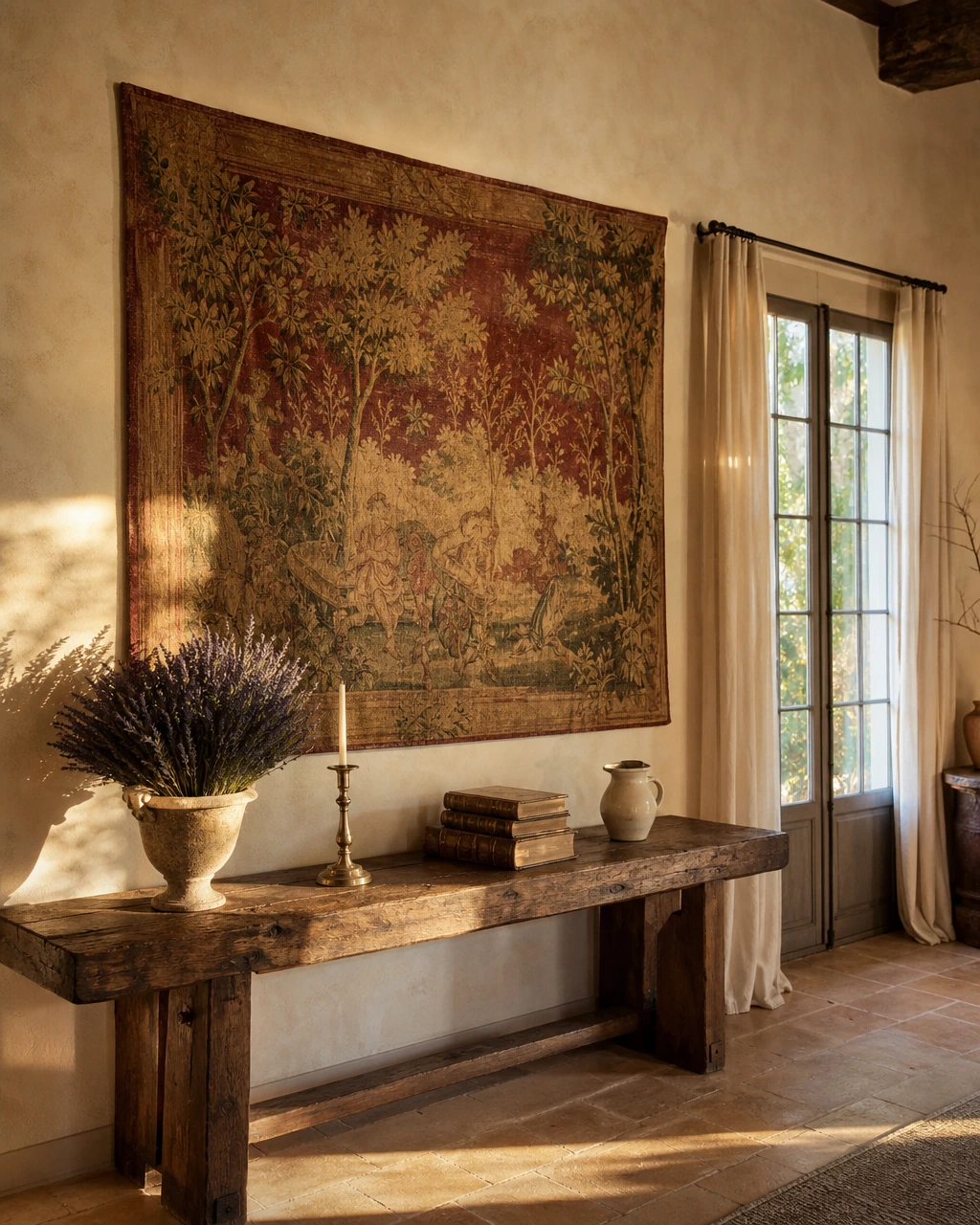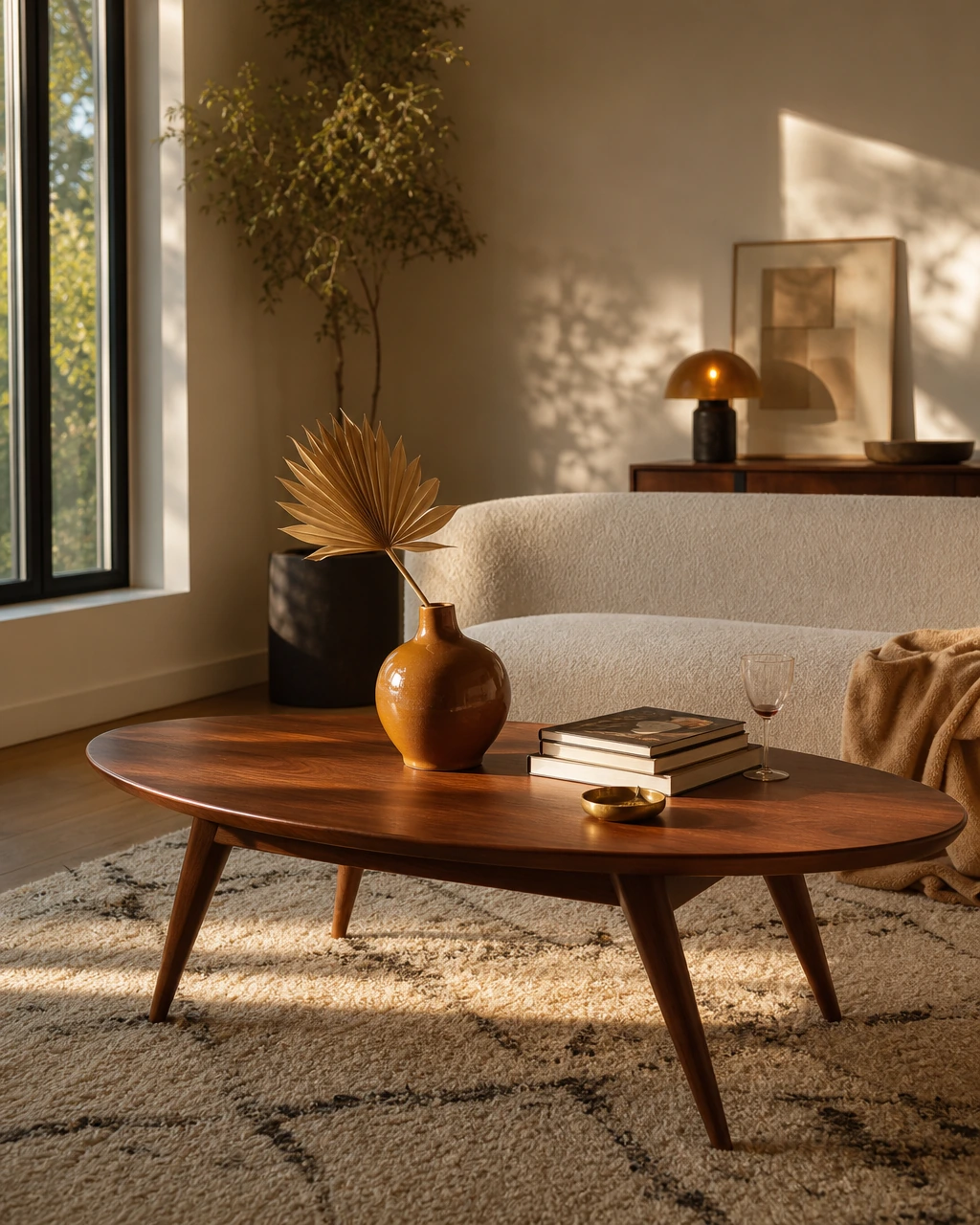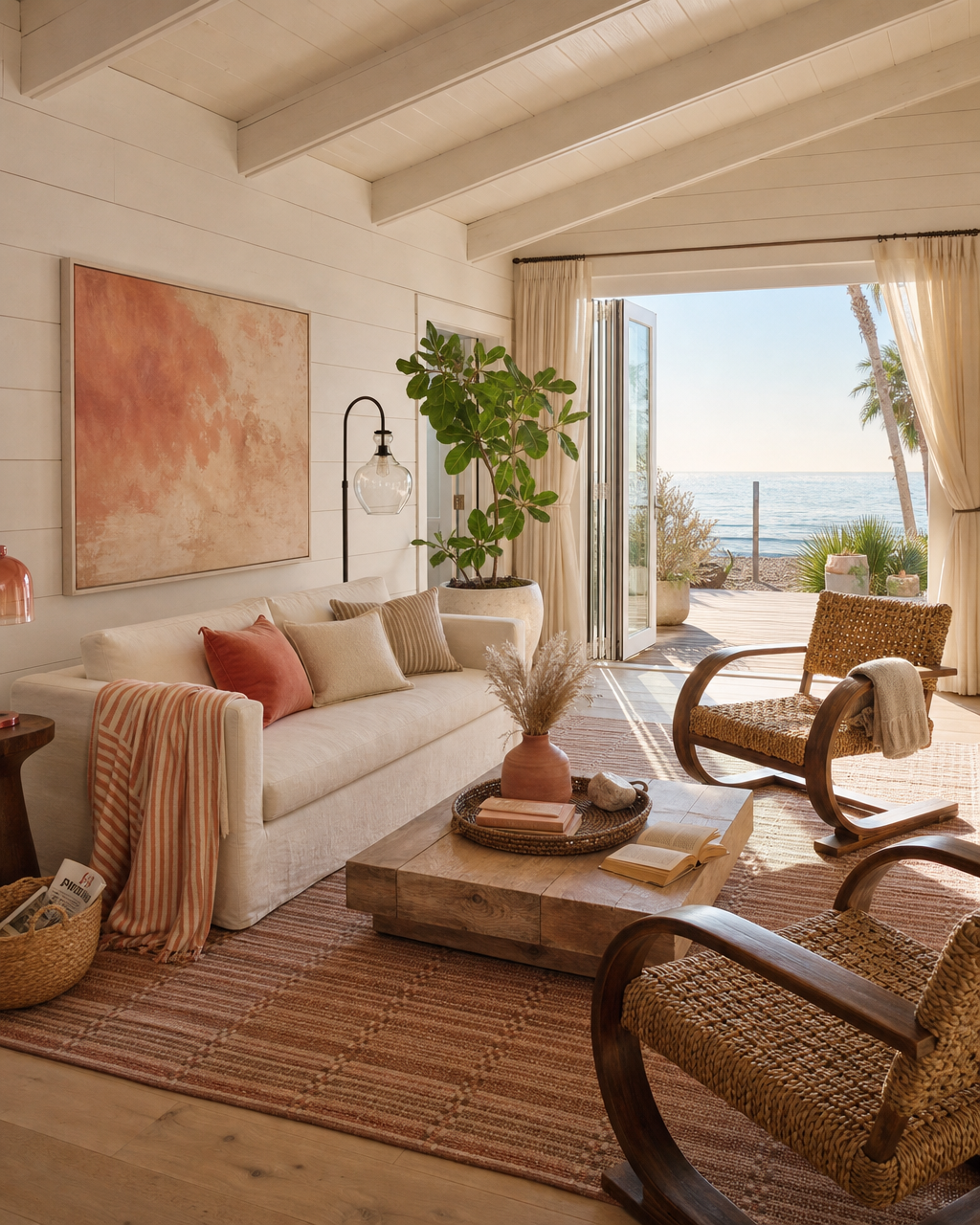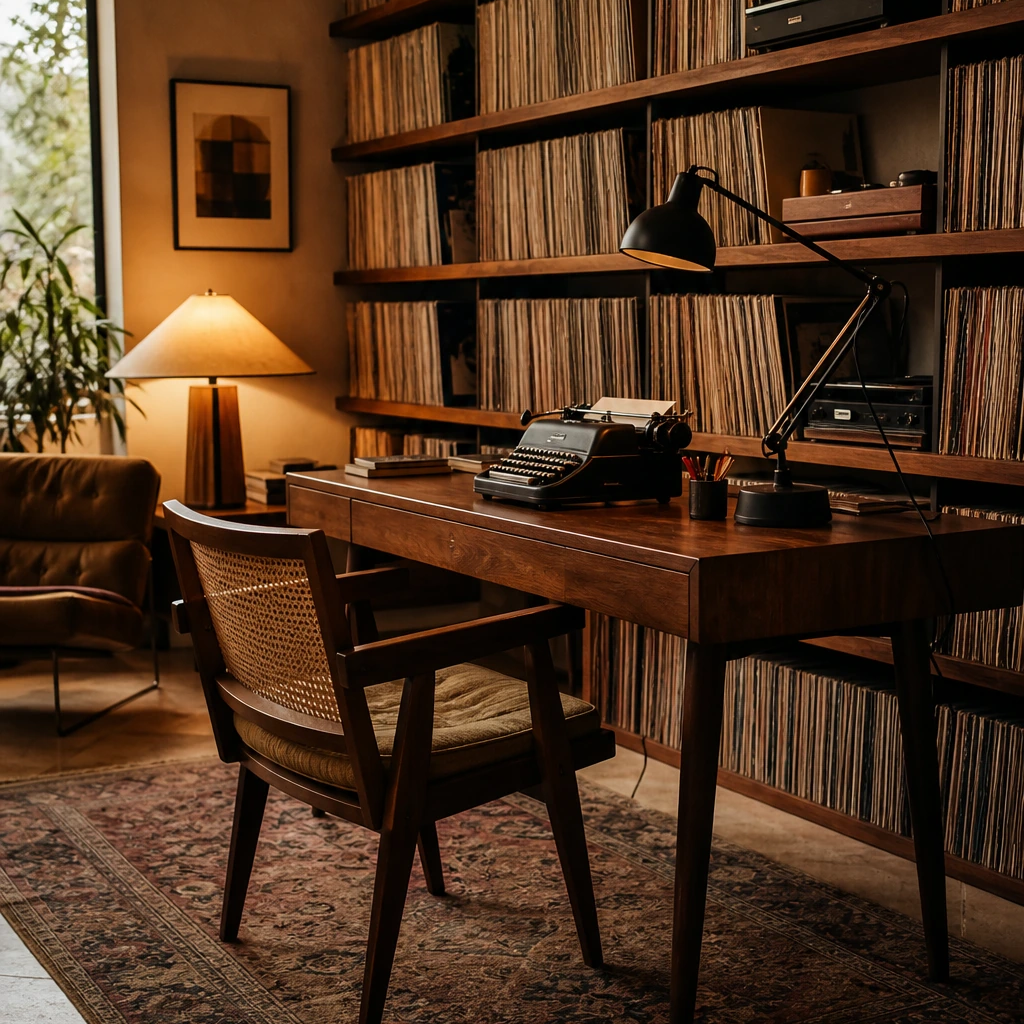
If you live in a Chicago two-flat with original 1970s trim that you've been meaning to paint over, or you just signed a lease in Austin and realized your apartment looks exactly like every other apartment in Austin, this guide is for you. The Stranger Things house, specifically the Byers living room, Hopper's cabin, and Joyce's kitchen, has been quietly functioning as one of the most practical design references on television for the last several years. Warm wood paneling. Layered lamps. Collected furniture that looks like it arrived over decades rather than in a single IKEA run. Deep, saturated wall colors that make a room feel like a place rather than a backdrop.
The timing could not be better. The era of stark white walls and matching furniture sets is closing. Designers interviewed by the New York Times for their 2026 forecast describe a clear shift toward homes that reflect "individual quirks," with colorful trims, layered textiles, and distinctive furniture replacing the copy-and-paste minimalism of the last decade. Mentions of vintage accents in Zillow listings are up 17%, artisan craftsmanship up 21%, and whimsical details up 15%. The Stranger Things house is not a nostalgia project. Right now, it is practically a trend report.
What makes this aesthetic genuinely achievable is that it is built on surface-level moves rather than structural ones. Paint. Lighting. Hardware. A few thrifted pieces layered with one or two newer anchor pieces. A peer-reviewed study in Frontiers in Computer Science identifies "media-inspired home decoration" as a documented consumer trend where people "proactively reproduce or re-imagine TV and film interior aesthetics" in their homes. The research confirms what most Stranger Things fans already know instinctively: the show's interiors are aspirational in a way that feels livable, not theatrical.
This guide covers what you will learn:
- Which 1980s color moves translate to modern rooms without reading as costume
- How to source vintage furniture without spending months hunting
- Why lighting is the highest-leverage change in any room
- How to use wallpaper as a considered accent rather than a commitment
- Which architectural details create the most impact for the least cost
- Room-by-room breakdowns for living rooms, bedrooms, and kitchens
- The highest-leverage budget swaps, ranked by impact
Key Takeaways
- "Media-inspired home decoration" is a documented consumer phenomenon, not a niche hobby, with consumers actively reproducing TV and film aesthetics in residential spaces.
- 27% of homeowners plan to spend under $10,000 on renovations, making surface-level updates like paint, lighting, and hardware the most practical entry points for this aesthetic.
- Vintage accent mentions in home listings are up 17%, artisan craftsmanship up 21%, and whimsical details up 15%, confirming that the Stranger Things aesthetic aligns with 2026's dominant design direction.
- The Stranger Things palette is tobacco brown, dusty olive, warm rust, and faded mustard, not neon and teal. These are livable colors that work in modern rooms.
- Layered lighting from lamps at multiple heights, rather than a single overhead fixture, is the single change that most transforms a room's warmth and intimacy.
- Forbes' 2026 trend analysis frames the return of maximalism as "conscious selection of meaningful items," which is exactly how the Byers living room reads: collected, not cluttered.
- Mixing one or two newer anchor pieces with thrifted or vintage accessories is faster and more convincing than trying to source an entirely vintage room.
- Skip the matching bedroom or living room set. A room assembled from multiple sources reads as personal. A matched set reads as a showroom floor.
What the Stranger Things Aesthetic Actually Is
The Stranger Things house aesthetic is a specific subset of 1980s American residential design: warm, slightly worn, and layered with the accumulated evidence of a life being lived. It is not a maximalist fantasy or a period recreation. It is a particular kind of cozy, character-rich interior built on wood tones, saturated earth colors, layered textiles, and ambient lamp lighting.
Homes and Gardens defines "cozy nostalgia" as an interior look that combines modern comfort with vintage decor, antique furniture, layered patterns, and heritage wallpapers to evoke warmth and personality. That definition maps almost exactly onto what the show's production designers created for the Byers house and Hopper's cabin. The rooms feel inhabited because they are built from pieces that suggest history, not from pieces that suggest a shopping cart.
The practical implication is that this aesthetic is more about editing and layering than about buying specific things. A room that reads as Stranger Things-adjacent has the right color temperature, the right material warmth, and the right sense of accumulation. None of those qualities require a renovation budget.
Why This Aesthetic Is Having a Moment in 2026
Several converging trends make 2026 an unusually good time to pursue this direction.
The color shift is the most visible signal. Veranda's 2026 forecast points to saturated color palettes and richly patterned textiles as defining the year. Designers interviewed by Yahoo for their 2026 trends piece emphasize that "the era of stark white walls is coming to a gradual close," with homeowners shifting toward warmer neutrals and layered palettes. The New York Times quotes Farrow and Ball's color curator describing a move toward "earthy and warm" hues with more colorful trims replacing the default white-on-white formula that dominated the previous decade.
The wood tone shift reinforces this. Houzz's 2026 trend report highlights the resurgence of warm and medium wood tones, specifically walnut, cherry, and hickory, replacing the pale oaks that dominated recent years. Woodgrain's 2026 interior trends report identifies "Modern Heritage" as a defining direction, built around classic moldings, traditional millwork, and historical silhouettes combined with modern colors. Both trends point directly toward the Stranger Things palette.
The broader cultural shift is toward identity-driven interiors. The New York Times reports that many experts see a rising preference for homes that reflect "individual quirks," with colorful trims and distinctive furniture favored over copy-and-paste looks. Forbes' 2026 trend piece adds that maximalism is re-emerging, but as "conscious selection of meaningful items," with "slow decorating" that prioritizes pieces with a story. A Stranger Things-inspired room fits this framing naturally: it is not about theming a space, it is about furnishing it with intention and warmth.
Budget constraints are also shaping the moment. The 2026 Houzz renovation study finds that 27% of homeowners plan to spend under $10,000 on renovations, with the most common spend band falling between $10,000 and $24,999. For that audience, surface-level updates like paint, lighting, wallpaper, and hardware deliver the highest impact per dollar. The Stranger Things aesthetic is almost entirely achievable within that range.
1980s Color Palettes That Work in Modern Homes
The 1980s color palette is not what most people picture. The Stranger Things house is not neon and teal. It is tobacco brown, dusty olive, warm rust, faded mustard, and the kind of deep red that reads almost burgundy in low light. These are livable colors. They are also, as of 2026, exactly what designers are recommending.
Choosing the Right Warm Palette for Your Space
The Byers living room works because the colors are warm but not loud. Think of it as a palette built around one anchor tone with everything else supporting it. The goal is saturation without aggression: colors that feel like they have been in the room for years rather than colors that announce themselves.
A practical starting framework for a Stranger Things-inspired room:
SurfaceColor DirectionExample TonesWallsDeep olive, warm tobacco, or dusty terracottaRookwood Terra Cotta, Antique WhiteTrimSlightly lighter or darker version of wall, or warm creamCreamy, Navajo WhiteCeilingWarm white or very light version of wall colorSwiss Coffee, AlabasterAccentOne saturated moment: rust throw, deep green plant, burgundy shadeRoycroft Copper Red, Mellow Yellow
Sherwin-Williams colors like Rookwood Terra Cotta, Roycroft Copper Red, and Antique White work well as starting points. Benjamin Moore's Newburyport Blue and Mellow Yellow are period-accurate without reading as costume. The key is to stay within the warm half of the color wheel and resist the pull toward cooler grays and blues that dominated the previous decade.
Color Drenching a Single Room
Color drenching is one of the most effective and budget-friendly ways to get the Stranger Things feeling in a rental or starter home. Pick one room, ideally a den, bedroom, or reading corner, and paint the walls, trim, and ceiling the same deep, warm tone. data shows "color drenching" is gaining traction as homeowners move away from the safe beige-and-white formula.
The effect is immersive and cozy in a way that a single painted accent wall never achieves. This works especially well in smaller rooms where the goal is warmth over openness. A deep olive or warm brown den with layered lighting feels like Hopper's cabin. The same room in white feels like a waiting room.
One practical note: color drenching requires painting trim and ceiling in the same tone as the walls, which adds time but not significant cost. The visual payoff is disproportionate to the effort.
Vintage Furniture Sourcing: Thrift Stores vs. Reproduction Pieces
The furniture in the Stranger Things house is not expensive. It is layered, worn, and collected over time. That is both the aesthetic and the practical reality for most people furnishing a home on a real budget. The room's character comes from the accumulation of pieces that feel like they arrived at different times, not from any single statement purchase.
What to Look for at Thrift Stores and Vintage Markets
The best thrift finds for a Stranger Things-inspired room share a few qualities: warm wood tones, upholstered pieces in earthy or muted fabrics, and shapes that read as slightly heavy or substantial rather than sleek. The silhouettes to look for are the opposite of mid-century modern's thin legs and sharp angles.
Specific pieces worth hunting for:
Facebook Marketplace and Chairish are the most reliable online sources for this category. Estate sales and church thrift stores tend to have better quality pieces than chain thrift stores, often at comparable prices. The key is patience: the right lamp or side table shows up eventually, and buying the wrong one to fill a gap is how rooms end up feeling random.
When Reproduction Pieces Make More Sense
Not everything needs to be vintage. Sofas are the clearest example: a 40-year-old sofa may look right but feel wrong, and reupholstering adds cost and time. For anchor pieces like sofas and beds, reproduction or new furniture with vintage silhouettes is often the smarter move.
Article, CB2, and Crate and Barrel all carry pieces with the right proportions for this aesthetic. Look for sofas with rolled arms, warm upholstery in linen or textured fabric, and legs in walnut or dark stain. Pair a newer sofa with thrifted side tables, lamps, and rugs, and the room reads as collected rather than purchased all at once.
This is also where First Chair is genuinely useful. Instead of spending hours across multiple retailer tabs trying to find pieces that work together, you can describe the aesthetic direction, upload a reference image, and get curated recommendations across West Elm, CB2, Crate and Barrel, and Lulu and Georgia in one place, with real, in-stock pieces rather than fantasy renders.
Lighting Design: Recreating the Show's Iconic Lamps and Fixtures
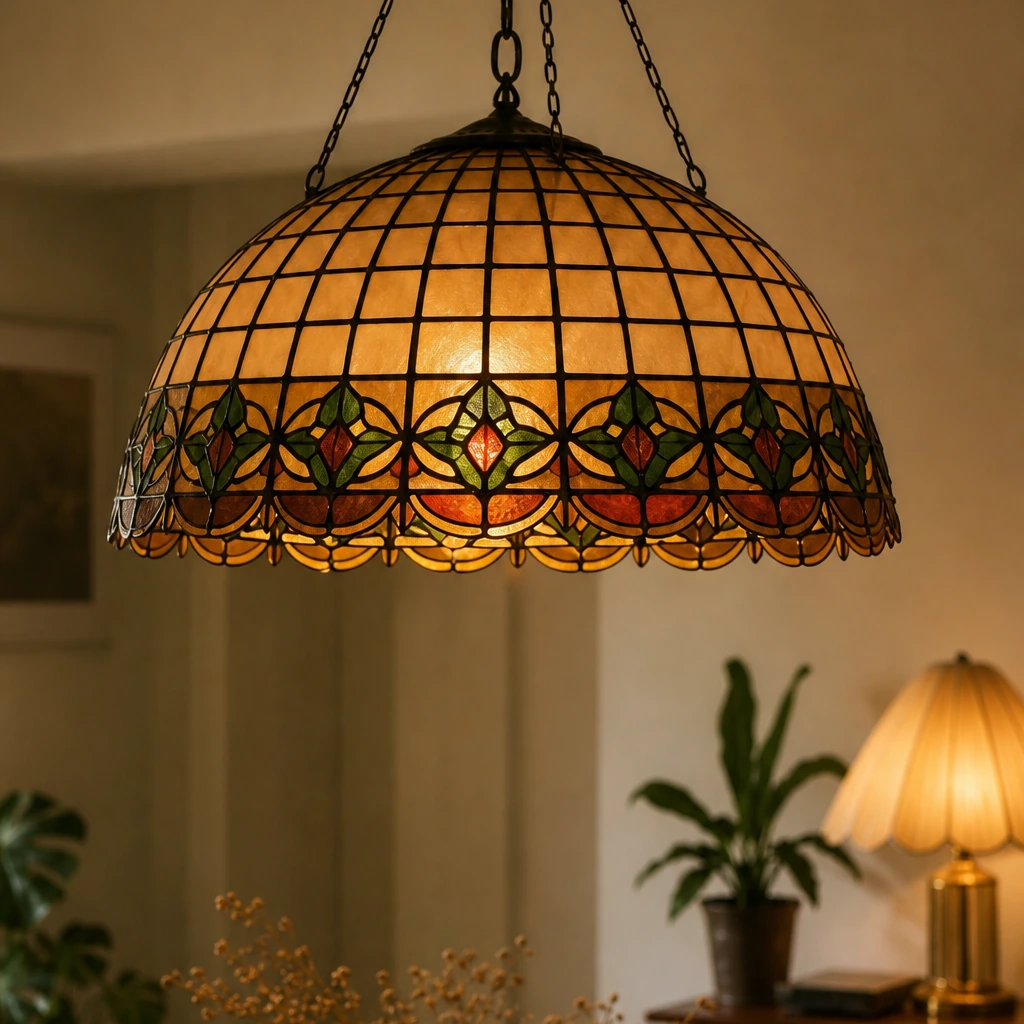
Lighting is the single highest-leverage change you can make in any room, and it is the element most people underinvest in. The Stranger Things house is almost never lit by overhead fixtures. It is lit by lamps: table lamps, floor lamps, the occasional string of lights, and the warm glow of a television. That layered, low-level lighting is what gives the rooms their particular warmth and intimacy.
Designers in Good Housekeeping's nostalgia decor feature recommend mixing vintage pieces with contemporary lighting for balance. The advice is sound: a vintage ceramic lamp base with a modern bulb and a well-chosen shade gives you the visual warmth of the period without the dim, yellow light that actually characterized 1980s homes.
Building a Layered Lighting Plan
A layered lighting plan for a Stranger Things-inspired living room or bedroom uses three levels:
- Ambient: One or two floor lamps with warm-toned bulbs (2700K or lower). These replace the overhead light as the primary source.
- Task: A table lamp on each side table or end table. Ceramic or brass bases with fabric shades work best.
- Accent: String lights, a small lamp in a bookshelf, or a single pendant over a reading chair. These create depth and visual interest.
The overhead light, if you have one, becomes the last resort rather than the default. This single change makes almost any room feel warmer and more intentional. The cost is two or three lamps and a set of warm bulbs, which is a fraction of what a lighting installation would run.
Smart Bulbs for Moody, Colored Lighting
The show uses colored light in subtle ways: the warm amber of a kitchen at night, the slightly cooler blue of a bedroom in the early morning. Smart bulbs from Philips Hue or LIFX let you dial in these tones without rewiring anything, which matters enormously for renters. Set warm amber (2200K) for evenings and slightly cooler white (3000K) for daytime. The difference in room character is significant.
For the iconic string-light wall from the Byers living room, warm white LED string lights on a dimmer switch are the practical version. They read as atmospheric rather than dorm-room when paired with the right wall color and furniture. The key is the dimmer: string lights at full brightness lose the effect immediately.
Wallpaper Trends: Retro Patterns That Work in Contemporary Spaces
Wallpaper is back, not as a commitment to cover every wall in a room, but as a considered move on one wall, in a hallway, or inside a bookcase. Homes and Gardens specifically recommends "authentic reproductions of historic designs" and heritage wallpapers as the foundation of a cozy nostalgic interior. Veranda's 2026 forecast adds hand-painted wallpapers and richly patterned textiles as defining elements of the year's dominant aesthetic.
The Stranger Things house uses wallpaper the way most 1980s homes did: as a background texture rather than a statement. Subtle geometric patterns, small florals, and faded stripes in warm tones are all period-accurate and all available as peel-and-stick options, which matters enormously for renters.
Patterns That Read as 1980s Without Reading as Costume
The goal is suggestion, not recreation. These patterns work in a Stranger Things-adjacent room:
- Small-scale geometric: Diamond or grid patterns in warm tones, ideally with some texture variation
- Faded floral: Loose, slightly muted florals in dusty rose, sage, or warm cream
- Vertical stripe: Narrow stripes in two tones of the same warm color family
- Grasscloth or grasscloth-look: Textured, natural-fiber wallpaper that reads as warm and organic
Avoid large-scale tropical prints, high-contrast black and white patterns, and anything that reads as maximalist in the graphic design sense. The Stranger Things palette is warm and slightly worn, not bold and graphic. The wallpaper should feel like it has been in the room for a while.
Peel-and-Stick Options for Renters
Peel-and-stick wallpaper has improved significantly in quality. For a single accent wall in a bedroom or a hallway, it is a practical and reversible option. Anthropologie Home and Lulu and Georgia both stock options that align with this aesthetic at a reasonable price point, and major home centers carry a range of retro-adjacent patterns.
One practical note: peel-and-stick works best on smooth, painted walls. Textured walls require a different adhesive approach or a traditional wallpaper installation. Test a small section before committing to a full wall.
Architectural Details: Wood Paneling, Trim, and Molding Updates
Wood paneling is the most recognizable architectural element of the Stranger Things house, and it is also the element most people assume is either too expensive or too permanent to recreate. Neither is true.
The resurgence of warm and medium wood tones, documented in Houzz's 2026 report, specifically walnut, cherry, and hickory replacing pale oaks, means wood paneling fits directly into the current design moment. Woodgrain's 2026 trend report identifies "Modern Heritage" as a defining interior direction, built around classic moldings, traditional millwork, and historical silhouettes combined with modern colors.
Affordable Approaches to Wood Paneling
Full tongue-and-groove wood paneling is a renovation project. But several approaches achieve a similar effect at a fraction of the cost and effort:
- Shiplap panels: Pre-primed MDF shiplap panels can be installed over existing drywall with construction adhesive and finish nails. A single accent wall in a living room or bedroom takes a weekend and costs significantly less than full renovation.
- Board and batten: Vertical boards with horizontal battens create a similar warm, textured effect. Paint the whole assembly in a warm tone for a period-accurate look.
- Wainscoting: Lower-wall paneling with a chair rail is a classic 1980s detail that also reads as traditional and elevated. It works especially well in dining rooms and hallways.
- Peel-and-stick wood panels: For renters, peel-and-stick wood-look panels in warm walnut and oak tones are available and work well in lower-traffic areas.
Trim and Molding as a Low-Cost Detail
Crown molding, picture rail, and door casing are details that read as period-accurate and add significant visual weight to a room. They are also relatively inexpensive to add. A room with simple crown molding and painted trim in a warm tone reads as more considered and more intentional than the same room without it.
If you are painting trim, go warmer than you think you need to. A warm cream or a slightly tinted white reads as period-accurate. Bright white trim reads as contemporary and undercuts the effect immediately.
Room-by-Room Makeovers: Living Room, Bedroom, and Kitchen Ideas
The Stranger Things house works as a whole because every room shares the same underlying logic: warm tones, layered lighting, collected furniture, and a sense that the space has been lived in rather than styled. That logic translates room by room without requiring a full renovation. For more guidance on furnishing small spaces or decorating a new apartment from scratch, First Chair's editorial content covers both in practical detail.
Living Room: The Byers Room as a Template
The Byers living room is the most referenced space in the show, and it is also the most achievable. The room does not need to be full. The pieces that are there are doing real work, and there is negative space that makes each piece feel intentional.
Key elements to prioritize:
- A sofa with rolled or track arms in a warm, muted fabric (linen, cotton, or a textured blend)
- A wood coffee table with a darker stain, slightly oversized for the sofa
- Two or three lamps at different heights, all with warm bulbs
- A layered rug situation: a larger neutral rug with a smaller patterned rug on top, or a single large wool rug in a muted geometric
- One wall with a warm, saturated paint color or a subtle wallpaper
- A few larger leafy plants in simple ceramic or terracotta pots
The single most important decision in the living room is the sofa. Skip the matched living room set. A sofa from one source, a coffee table from another, and lamps from a thrift store reads as collected and personal. A five-piece matched set reads as a showroom floor.
Bedroom: Warm, Layered, and Slightly Dim
An 80s-inspired bedroom is built around the bed and the lighting. A wooden headboard in a warm walnut or dark stain, layered bedding in warm tones (rust, olive, cream, dusty blue), and two table lamps on either side with ceramic bases and fabric shades.
The ceiling light, if there is one, should be on a dimmer or replaced with a pendant in a warm metal finish. Brass or aged bronze work well. Brushed nickel and chrome do not. One strong piece of advice: skip the matching bedroom set. A bed frame from one source, nightstands from another, and a dresser from a thrift store or vintage market reads as collected and personal. A matched set reads as a showroom.
Kitchen: Surface Updates That Make the Biggest Difference
The Stranger Things kitchen is not a renovation project. It is a surface project. The elements that make it work are all achievable without touching cabinets or appliances:
- Warm, slightly cluttered open shelving with mismatched ceramics and practical items
- A few plants on the windowsill
- Warm lighting under cabinets or from a pendant over the sink
- Hardware in aged brass or oil-rubbed bronze
- A dish rack, a wooden cutting board, a ceramic crock of utensils
Cabinet hardware is the single highest-leverage kitchen update. Swapping brushed nickel pulls for aged brass or black iron changes the entire feeling of a kitchen for under $100 in most cases. It is also fully reversible, which matters for renters.
Budget-Friendly Decor Swaps and DIY Projects
The return of maximalism, framed by Forbes as "conscious selection of meaningful items" rather than a single shopping trip, is both aesthetically sound and practically useful for anyone working with a real budget. Good Housekeeping's nostalgia decor guidance recommends starting with one nostalgic pattern or piece and layering over time. The Stranger Things house did not happen in a weekend.
The Highest-Leverage Budget Moves
Ranked by impact relative to cost:
- Paint one wall or room in a warm, saturated tone. This is the single most impactful change for the least money. A gallon of paint and an afternoon transforms the character of a room.
- Replace overhead lighting with lamps. Two floor lamps and two table lamps cost less than a single overhead fixture installation and do more for the room's warmth.
- Swap cabinet and door hardware. Aged brass or oil-rubbed bronze pulls and knobs change the feeling of a kitchen or bathroom immediately and cost under $100 for most spaces.
- Add a large wool or wool-look rug. A warm geometric or faded floral rug grounds a room and adds the texture that makes a space feel layered rather than sparse.
- Bring in plants. A few larger leafy plants in terracotta or ceramic pots add life and warmth without any installation.
- Add one piece of vintage or thrifted furniture. A single lamp, side table, or chair from a thrift store or estate sale adds the collected quality that makes a room feel personal rather than assembled.
DIY Projects Worth the Time
These projects have a high visual payoff relative to cost and skill required:
- String light installation: Warm white LED string lights on a dimmer, run along a wall or ceiling perimeter, take an afternoon and cost very little. The dimmer is not optional.
- Open shelving: Floating shelves in a warm wood tone, styled with books, plants, and ceramics, are a weekend project that adds significant visual warmth to a living room or kitchen.
- Painted trim: Repainting trim in a warm cream or a slightly tinted white is a full-day project that changes the character of a room more than most people expect.
Tools and Resources for Executing This Aesthetic
Getting the Stranger Things look requires a few different categories of tools and sources. No single retailer carries everything you need, which is actually part of the point.
Paint and Color Planning
Sherwin-Williams and Benjamin Moore are the two most practical starting points for this palette. Both offer online color visualizers and carry the warm, saturated tones that define the aesthetic. Farrow and Ball is worth referencing for color direction, particularly their deeper earth tones, even if the price point is higher.
Behr and PPG offer color-matching services that can approximate Farrow and Ball tones at a lower price point. For a single accent wall or a color-drenched room, the difference in quality is minimal.
Vintage and Thrift Sourcing
Chairish is the most reliable online source for vintage furniture with the right silhouettes and materials. The search filters allow you to narrow by material, era, and style, which saves significant time.
Facebook Marketplace and local estate sales are the best sources for lamps, side tables, and smaller accessories. Estate sales in older neighborhoods tend to have better quality 1970s and 1980s pieces than chain thrift stores.
1stDibs carries higher-end vintage pieces and is worth browsing for reference even if the price points are above budget.
New Furniture with Vintage Silhouettes
Article, CB2, and Crate and Barrel all carry sofas, chairs, and tables with proportions that work for this aesthetic. Look for rolled arms, warm upholstery, and walnut or dark-stained legs.
West Elm and Pottery Barn carry rugs, textiles, and accessories that align with the warm, layered quality of the Stranger Things palette.
First Chair is the most efficient option for pulling pieces from multiple retailers into a cohesive room concept. You describe the aesthetic direction, upload a reference image, and receive curated recommendations across West Elm, CB2, Crate and Barrel, Pottery Barn, and Lulu and Georgia in one place, with real, in-stock pieces and insider pricing on most items. For anyone who wants to avoid spending weeks in browser tabs trying to make pieces work together, it is the practical alternative to hiring a designer. You can learn more about how the platform approaches decision fatigue in First Chair's editorial content.
Wallpaper and Surface Materials
Anthropologie Home and Lulu and Georgia both stock peel-and-stick and traditional wallpapers in patterns that align with this aesthetic. Rejuvenation carries reproduction hardware and lighting fixtures that are period-accurate without being theatrical.
Major home centers carry a range of peel-and-stick retro-adjacent wallpapers at accessible price points, which is the practical starting point for renters.
Best Practices for Getting the Look Right
These are the moves that separate a room that reads as intentional from one that reads as themed.
- Mix vintage pieces with contemporary elements. A room built entirely from vintage pieces reads as a period set. One or two newer anchor pieces, a sofa, a bed frame, give the room a contemporary foundation that makes the vintage elements feel collected rather than costumed.
- Layer over time rather than buying everything at once. Good Housekeeping's nostalgia decor guidance recommends starting with one pattern or piece and adding over time. A room that arrives all at once looks like it arrived all at once.
- Use color cohesively, not randomly. Pick one warm anchor tone and build the palette around it. A room with three unrelated warm colors reads as chaotic. A room built around one deep olive or tobacco brown reads as considered.
- Invest in lighting before furniture. Two floor lamps and two table lamps transform a room's warmth more than a new sofa. Get the lighting right first, then add furniture into that environment.
- Prioritize texture over pattern. The Stranger Things house has texture everywhere: wood grain, woven rugs, fabric upholstery, ceramic surfaces. Pattern is secondary. A room with strong texture and minimal pattern reads as warm and layered. A room with strong pattern and minimal texture reads as busy.
- Let the room have negative space. The Byers living room is not full. There are clear surfaces, empty corners, and pieces that have room to breathe. Resist the urge to fill every surface.
- Buy hardware last, but do not skip it. Cabinet pulls, door knobs, and lamp hardware are the details that tie a room together. Aged brass or oil-rubbed bronze throughout a space creates cohesion that paint and furniture alone cannot achieve.
- Trust the slow decorating approach. Rooms that feel personal are built over time. A Stranger Things-inspired space that arrives in a weekend shopping trip will look like it arrived in a weekend shopping trip.
Common Mistakes to Avoid
Buying the Matching Set
The single most common mistake in this aesthetic is buying a matched living room or bedroom set. Matched sets read as showroom floors, not lived-in homes. The Stranger Things house works because nothing matches perfectly. Buy pieces from different sources and let them find each other in the room.
Defaulting to Bright White Trim
Bright white trim undercuts warm wall colors immediately. It reads as contemporary and creates a contrast that pulls the room out of the period. Use warm cream or a slightly tinted white. The difference is subtle in the paint chip and significant on the wall.
Overdoing the Themed Elements
String lights are a Stranger Things reference. One set of string lights on a dimmer is atmospheric. Three sets of string lights plus alphabet wall letters plus a Demogorgon poster is a Halloween display. The goal is to evoke the aesthetic, not recreate the set.
Skipping the Dimmer Switch
Lamps without dimmers are lamps at full brightness. Full brightness is not the Stranger Things look. Every lamp in a Stranger Things-inspired room should be on a dimmer or a smart bulb with adjustable brightness. This is a $15 fix that changes everything.
Buying Cheap Rugs
A thin, synthetic rug in a warm pattern still reads as cheap. The rug is one of the most visible surfaces in a room and one of the most tactile. A wool or wool-blend rug in a muted geometric or faded floral is worth the investment. It is also one of the pieces that can come from a thrift store or estate sale at a significant discount.
Ignoring Scale
A coffee table that is too small for the sofa, or a lamp that is too short for the side table, breaks the collected quality of the room. Scale matters more than style. A piece with the right proportions in the wrong material is easier to fix than a piece with the wrong proportions in the right material.
Rushing the Plant Situation
A single small succulent does not read as Stranger Things. The show's interiors have substantial plants: large leafy specimens in ceramic or terracotta pots that occupy real visual space. Pothos, philodendrons, and fiddle leaf figs in pots that are proportional to the plant are the practical version. Buy the plant before you buy the pot, and buy the pot at a thrift store.
Frequently Asked Questions
What colors should I use to get the Stranger Things house look?
The Stranger Things palette is built on warm earth tones rather than the neon colors most people associate with the 1980s. Focus on tobacco brown, dusty olive, warm rust, faded mustard, and deep burgundy. Sherwin-Williams Rookwood Terra Cotta and Benjamin Moore Mellow Yellow are practical starting points. The key is staying within the warm half of the color wheel and avoiding cool grays and blues.
Can I recreate the Stranger Things aesthetic in a rental apartment?
Yes. The most impactful moves are all reversible: peel-and-stick wallpaper, lamps instead of overhead lighting, cabinet hardware swaps (save the originals), and rugs. Paint is the one exception, and many landlords allow it with a return-to-original clause. The aesthetic is almost entirely surface-level, which makes it well-suited to rental spaces.
How much does it cost to get this look?
The range is wide depending on how much you already have. If you are starting from scratch, budget $2,000 to $5,000 for a living room that reads as intentional: a sofa with the right silhouette, two or three lamps, a rug, paint, and a few thrifted accessories. If you are updating an existing room, the highest-leverage moves (paint, hardware, lamps) can be done for under $500.
Where is the best place to find vintage furniture for this aesthetic?
Chairish is the most reliable online source for vintage pieces with the right silhouettes. Facebook Marketplace and local estate sales are the best sources for lamps, side tables, and smaller accessories at lower price points. Estate sales in older neighborhoods tend to have better quality 1970s and 1980s pieces than chain thrift stores.
Is the Stranger Things aesthetic the same as mid-century modern?
No. Mid-century modern is characterized by thin legs, sharp angles, and a cooler, more graphic palette. The Stranger Things aesthetic is warmer, heavier, and more layered. It draws from late 1970s and early 1980s American residential design: rolled-arm sofas, darker wood stains, ceramic lamp bases, and patterned textiles in muted earth tones. The silhouettes are softer and more substantial than mid-century modern.
How do I avoid the room looking like a Halloween display?
The key is restraint with the literal references. String lights are atmospheric when used once on a dimmer. They become a theme park when layered with other explicit Stranger Things references. Focus on the underlying aesthetic qualities: warm colors, layered lighting, collected furniture, and textured surfaces. The room should evoke the feeling of the show, not recreate the set.
Conclusion: From Inspiration to a Room You Can Actually Live In
The Stranger Things house is not a difficult aesthetic to achieve. It is warm woods, saturated earth tones, layered lamp lighting, and furniture that looks like it arrived over time rather than in a single delivery. Those qualities are achievable in a rental apartment, a starter home, or a room that just needs to feel more like itself.
The 2026 design moment is unusually aligned with this direction. Vintage accents are up in home listings. Warm wood tones are replacing pale oaks. Saturated color is replacing default white. The aesthetic you have been saving on Pinterest for years is, right now, exactly what designers are recommending.
The gap between inspiration and execution is where most rooms stall. You know the feeling you want. You have the references. The part that gets complicated is finding the actual pieces, across multiple retailers, that work together in your specific room at your specific budget.
That is exactly what First Chair is built for. Upload a reference image, describe the aesthetic direction, and get curated recommendations across real retailers with real, in-stock pieces. No fantasy renders. No endless tabs. Just the pieces that actually work, pulled together in one place.
The room you have been imagining is closer than you think. You just need to stop scrolling and start committing.