
You have seen the Architectural Digest feature. Maybe you saved it six months ago in Austin or bookmarked it from your apartment in Chicago on a Sunday afternoon when the light was doing something nice and your own living room felt like a waiting room by comparison. The rooms in that spread look effortless. The materials feel expensive without announcing themselves. Everything sits exactly where it should. And then you close the tab and look at your own space and wonder how any of it actually translates.
Here is the honest answer: most of what makes Kendall Jenner's homes work has nothing to do with the budget. It has everything to do with a set of decisions made consistently across every room. Color discipline. Lighting layers. Knowing which one piece deserves the real investment and which pieces should stay quiet. These are principles, not price tags. They apply just as well to a 900-square-foot rental as they do to a hillside compound in Los Angeles.
The broader market is moving in exactly this direction. Warm minimalism, layered neutrals, and collected rather than matched interiors are the leading themes among design-conscious homeowners right now, not because celebrities made them fashionable, but because they are genuinely livable. The aesthetic Kendall's homes demonstrate is not a trend to chase. It is a framework to understand.
This guide breaks down the specific design moves behind her spaces and shows you how to recreate the feeling, not just the look, in a home you can actually live in. You will learn:
- What quiet luxury actually means as a design system, not a mood board category
- How to build a neutral color palette that flows rather than flattens
- Why layered lighting is the highest-return change in most rooms
- How to use statement pieces and art without overspending
- Which kitchen and bathroom upgrades move the needle most
- How to mix natural materials within a tight palette
- Where to find real, shoppable pieces that match this aesthetic
Key Takeaways
- Kendall Jenner's design aesthetic is built on quiet luxury: neutral palettes, natural materials, layered textures, and curated art rather than overt opulence. Her LA home is described by Architectural Digest as "earthy, understated and totally personal."
- U.S. homeowner spending on improvements and repairs reached $481 billion in 2023, up from $328 billion in 2019, with discretionary style upgrades driving much of the growth.
- Lighting is one of the most underused levers in residential design. 68% of U.S. homeowners consider lighting "very important" to how their home feels, yet most rooms still rely on a single overhead source.
- 54% of homeowners incorporated artwork or wall decor as the main focal point during a living room update, per Houzz's 2023 U.S. survey, making art one of the most accessible entry points for a statement investment.
- A cohesive neutral palette built from one white, one to two main neutrals, and one to two accent colors, repeated across rooms through walls, fabrics, and accessories, accounts for most of the "designed" feeling in high-end interiors.
- Floating furniture away from walls, maintaining 60 to 90 centimeters of clear pathway around major pieces, immediately makes a room read as placed rather than stored.
- The most replicable moves from Kendall's homes require no renovation: layered lighting, mixed natural textures, a tight color story, and one genuine statement piece per room.
What Quiet Luxury Actually Means as a Design System
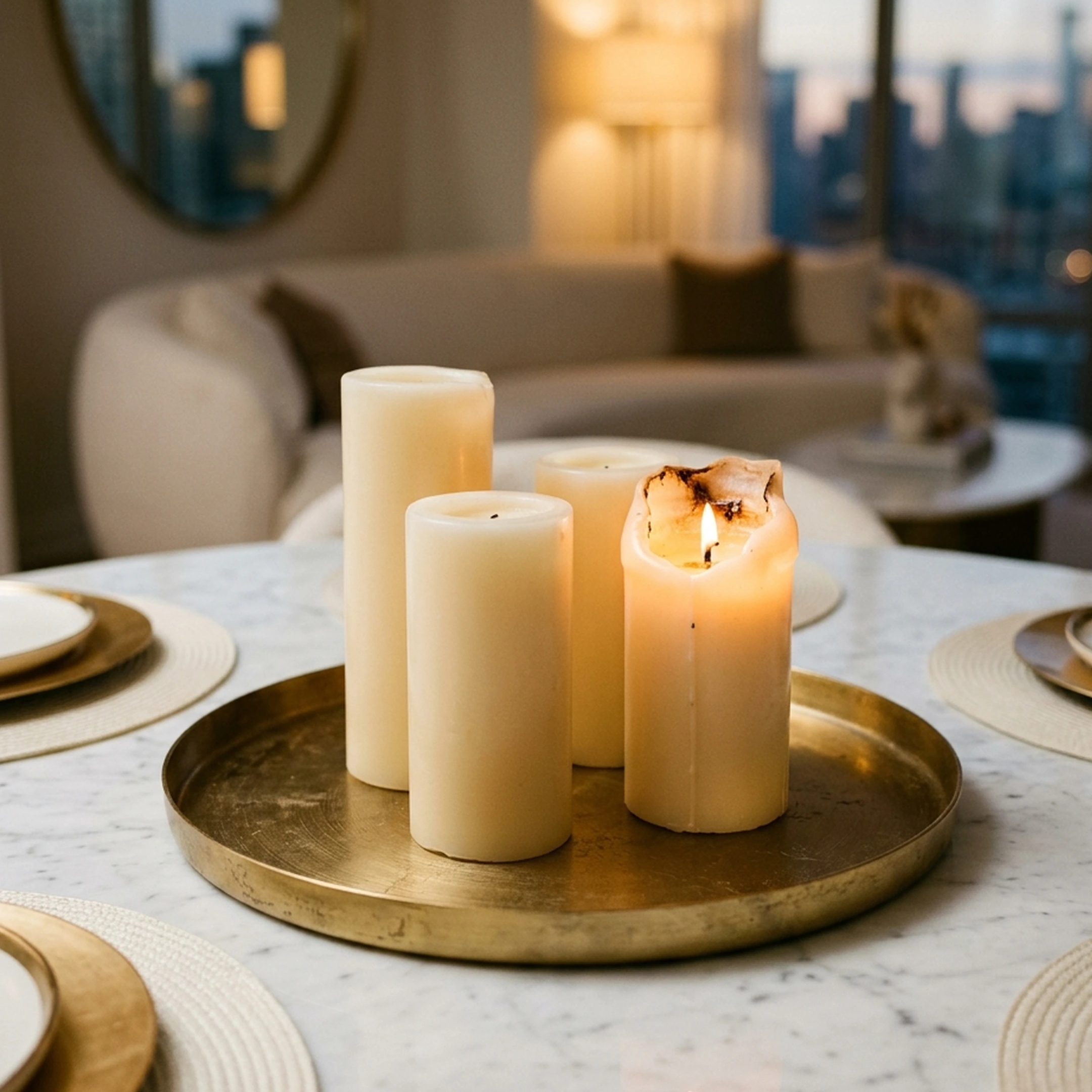
Quiet luxury is a design approach that emphasizes understated, high-quality materials, craftsmanship, and comfort rather than visible logos or overt opulence. It is characterized by muted color palettes, natural textures, and tailored forms that feel considered rather than decorated.
This is different from minimalism, which can read cold and clinical. Quiet luxury is warm. It uses restraint as a tool, not a rule. The rooms feel full because every piece is doing real work, not because there are many pieces.
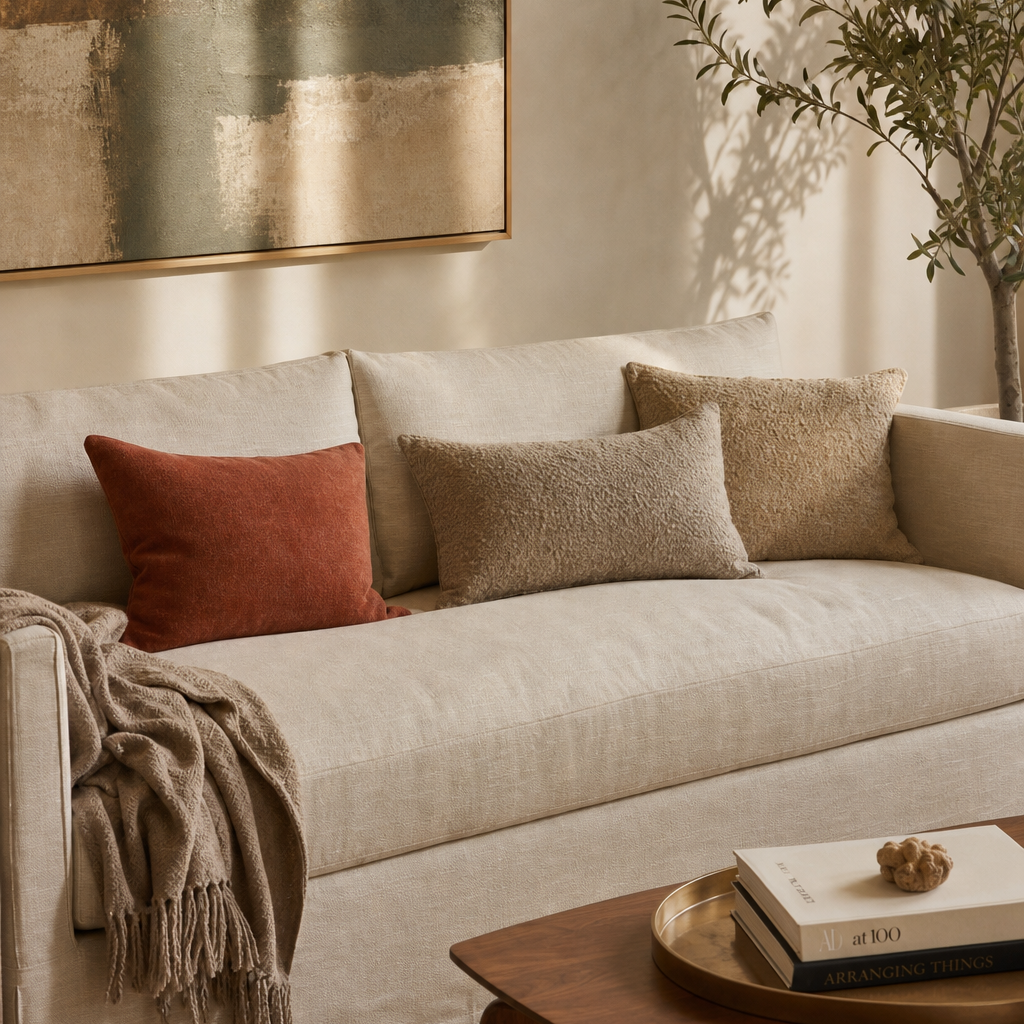
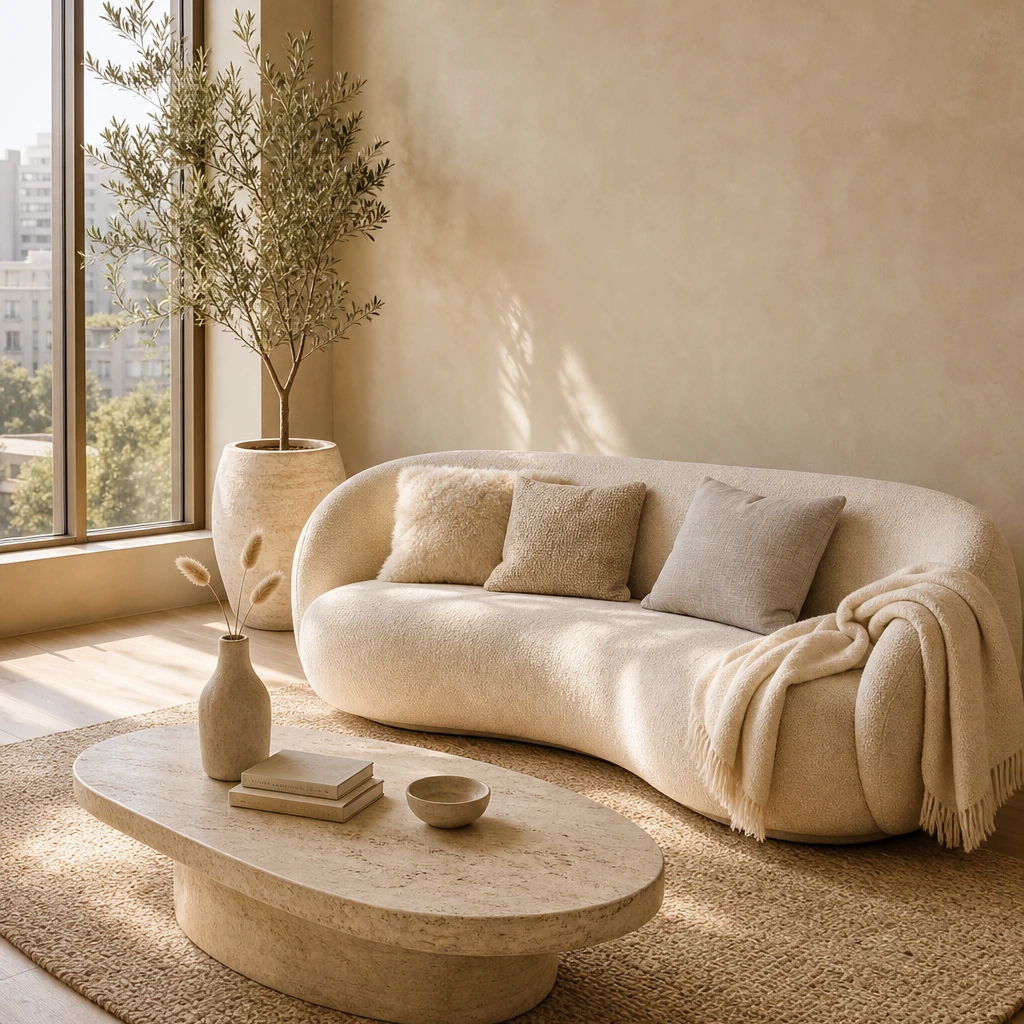
Architectural Digest's feature on Kendall's LA home describes the space as a "peaceful retreat" built around earthy tones, linen upholstery, plaster walls, vintage rugs, and abundant greenery. Nothing shouts. Everything belongs. Her mountain home follows the same logic with warmer, more textural materials suited to the setting.
The Three Decisions Behind the Look
The aesthetic rests on three decisions made consistently across every room:
- Material honesty. Wood, stone, linen, wool, and plaster are used because they look better over time, not despite it. Synthetic materials that mimic these textures tend to flatten the effect.
- Color discipline. One cohesive palette flows from room to room. Kendall's spaces use off-whites, warm wood tones, earthy greens, and terracotta as a consistent thread, then layer art and textiles on top.
- Intentional restraint. Fewer pieces, each chosen carefully. The rooms never feel sparse because the pieces that are there are doing real work.
Why This Aesthetic Is Gaining Ground
This is not a niche trend. Houzz's 2024 U.S. Home Design Predictions identified warm minimalism and personalized, collected interiors as leading emerging themes, with layered neutrals and quality materials replacing overt showiness as the dominant aspiration among higher-income homeowners. Pinterest's 2024 trend data pointed in the same direction, with rising searches for eclectic vintage and curated, personality-driven spaces.
The mainstream market is moving toward exactly what Kendall's homes already demonstrate. Understanding the principles behind the aesthetic is more useful than trying to replicate specific pieces.
Why This Approach Matters Now
The timing is not coincidental. Several converging forces are pushing design-conscious homeowners toward exactly this framework.
Spending has shifted toward discretionary upgrades. Home improvement and repair spending hit $481 billion in 2023, up from $328 billion in 2019, according to the Joint Center for Housing Studies of Harvard University. Higher-income owners and younger households are over-represented among spenders, and the growth is concentrated in discretionary style projects rather than pure maintenance.
The 35-to-54 cohort is leading investment. Homeowners in that age range account for 55% of renovation spending even though they represent only 40% of renovating homeowners, per Houzz's 2023 U.S. Houzz and Home Study. This is the demographic most likely to be pursuing the kind of considered, elevated aesthetic Kendall's homes represent.
Sustainability preferences are reinforcing material choices. In a 2023 NielsenIQ global survey, 78% of consumers said a sustainable lifestyle is important to them, and home products with sustainability claims grew faster than conventional peers. The natural materials central to quiet luxury, FSC-certified wood, low-VOC paints, natural stone, align directly with this preference.
Smart home technology is enabling the lighting layer without renovation. The global smart home market reached an estimated $101 billion in 2023, growing at roughly 8% annually through 2028, with lighting and climate control among the leading segments. Discrete smart dimmers and warm-tone LED systems now make layered lighting achievable in rental apartments without rewiring.
Indoor plants have become a near-universal design element. A 2022 study in Urban Forestry and Urban Greening found that houseplants were present in 74% of surveyed U.S. households, with perceived benefits including stress reduction and improved aesthetics. Kendall's LA home is framed explicitly as a space built around greenery and natural light, which tracks with where mainstream preferences are heading.
Neutral Color Palettes: Building a Cohesive Room-to-Room Story
A neutral color palette is a scheme built primarily from whites, beiges, greys, browns, and other low-saturation hues, sometimes warmed with muted greens or terracotta. It functions as a base that allows art, natural materials, and lighting to become the focal points rather than competing with the walls.
The most common mistake people make with neutral palettes is treating "neutral" as "safe." Kendall's spaces are not safe. They are deliberate. The difference is specificity.
How to Build Your Own Neutral Palette
Professional decorating guidance consistently recommends choosing one white, one to two main neutrals, and one to two accent colors, then repeating them across every room through walls, fabrics, and accessories. This is what creates the sense of flow that makes a home feel designed rather than assembled.
The framework below maps directly to what Kendall's spaces demonstrate:
LayerRoleExample in Kendall's HomePrimary neutralSets the base tone (walls, large upholstery)Off-white plaster walls, linen sofaSecondary neutralAdds warmth and depth (rugs, wood tones)Worn wool rugs, warm oak floorsAccentIntroduces personality (textiles, accessories)Earthy terracotta, muted sageStatementCreates focal point (art, lighting, one key piece)Large-scale artwork, sculptural pendant
Sherwin-Williams' 2024 Colormix forecast identified warm, minimalist neutrals as a leading residential palette, with greige and earth tones increasingly specified in residential projects. Benjamin Moore's Off-White Collection and Sherwin-Williams' greige lines are practical starting points for testing this approach.
The Practical Test Before You Paint
Order peel-and-stick swatches from Benjamin Moore or Sherwin-Williams and live with them for 48 hours across different lighting conditions. A color that reads warm at noon can read grey by evening. This is the single most underused step in residential color selection, and it costs almost nothing.
Skip the matched furniture set. A sofa, loveseat, and armchair from the same collection in the same fabric will always read as a showroom floor rather than a home. The palette should unify the room. The pieces within it should feel collected.
Layered Lighting: The Fastest Way to Change How a Room Feels
Layered lighting is the practice of combining ambient (general), task, and accent lighting to create flexible, comfortable illumination rather than relying on a single overhead source. It is the design move that most dramatically separates rooms that feel considered from rooms that feel unfinished.
Most rooms operate on a single ceiling fixture. Kendall's interiors show this principle applied consistently: table lamps, sconces, dimmable overheads, and candles create a soft, flattering glow that no overhead fixture can replicate on its own.
A Room-by-Room Lighting Plan
For each main room, plan at least three to four light sources at different heights. This is not about adding more fixtures for the sake of it. It is about giving yourself control over the mood of the space at different times of day.
- Ambient layer: A dimmable overhead or flush-mount fixture. Use warm-white bulbs in the 2700-3000K range. Harsh cool-white bulbs are the single fastest way to make a room feel cheap regardless of the furniture in it.
- Task layer: Reading lamps, under-cabinet lighting in kitchens, bedside lamps. These serve function but also add warmth at eye level.
- Accent layer: Sconces, picture lights, a floor lamp in a corner. These create depth and draw the eye to focal points.
Smart dimmers from Lutron Caséta or Philips Hue allow you to create whole-room scenes without rewiring. This is one of the most cost-effective upgrades available for achieving a luxury feel in a standard apartment or house.
What to Avoid
Skip the matching three-piece lighting set from a single retailer. Rooms that use identical fixtures throughout read as showroom displays rather than lived-in spaces. Mix a pendant with a floor lamp and a sconce. The slight variation is what creates the collected feeling Kendall's interiors consistently achieve.
Rejuvenation and Anthropologie Home both carry lighting that works within this framework at mid-market price points. The goal is not to find the most expensive fixture. It is to find pieces that feel like they belong to the same story without being identical.
Statement Pieces and Art Curation: Spending Where It Counts
A statement piece is a single high-impact item, whether furniture, lighting, or art, that becomes the focal point of a room and sets its tone. The rest of the room is built around it rather than competing with it.
Kendall's LA home uses this principle clearly: a monumental kitchen island, a James Turrell light installation, oversized contemporary art. Each room has one thing that earns the most attention. Everything else supports it.
How to Apply This Without a Celebrity Budget
The principle scales. The budget does not need to. The key is deciding, before you buy anything, which piece in each room will be the anchor. Then allocate more of your budget there and less everywhere else.
For living rooms, this is usually the sofa or a large piece of art. For dining rooms, it is the table or a statement pendant. For bedrooms, it is the headboard or a single large artwork above the bed.
54% of homeowners incorporated artwork or wall decor as the main focal point during a living room update, per Houzz's 2023 U.S. survey. Art is often the most accessible way to introduce a statement element because it does not require furniture-scale investment.
Where to Find Accessible Statement Art
The following sources offer pieces that align with the quiet luxury aesthetic across a range of price points:
SourceBest ForPrice RangeSaatchi ArtOriginal and limited-edition works from emerging artistsWide rangeMintedCurated prints with high-quality framing optionsMid-rangeChairishVintage and resale furniture, lighting, and artMid to high1stDibsHigh-end vintage and designer piecesHigh
The goal is not to replicate Kendall's specific art. It is to choose one piece per room that you genuinely love and let it lead the design decisions around it. That is the move that separates a designed room from a decorated one.
Open Floor Plans and Space Planning: Making Any Room Feel Considered
Space planning is the process of arranging rooms, circulation paths, and furniture to support function, comfort, and aesthetics, including clearances, focal points, and sightlines. It is the structural foundation of achieving a designed feel in any size home.
NAHB's research found that 85% of buyers prefer an open layout between kitchen and dining or family room, with 41% describing it as essential or desirable. Kendall's LA home uses open living and dining areas with clear furniture groupings and generous circulation rather than wall-hugging arrangements.
The Clearance Rule Most People Ignore
Furniture placement guidance consistently recommends at least 60 to 90 centimeters (24 to 36 inches) of clear pathway around major pieces. Most people push furniture against walls to "create space," which actually makes rooms feel smaller and less intentional.
Floating furniture away from walls, even by a few inches, immediately makes a room read as more designed. It creates the sense that the furniture was placed rather than stored.
Practical Space Planning Steps
- Sketch the room on paper or use a free space planning tool before moving anything.
- Identify the focal point: a fireplace, a window, a piece of art, or a television.
- Orient the main seating toward that focal point.
- Check clearances around every major piece before committing.
- Avoid blocking natural light sources with tall furniture.
For smaller apartments, this discipline matters even more. The furniture choices for small city apartments that work best are those with track arms, raised legs, and clean silhouettes that preserve visual space rather than consuming it. Scale is the variable most people underestimate when shopping from a product page rather than a room.
Mixing Natural Materials and Textures Within a Tight Palette
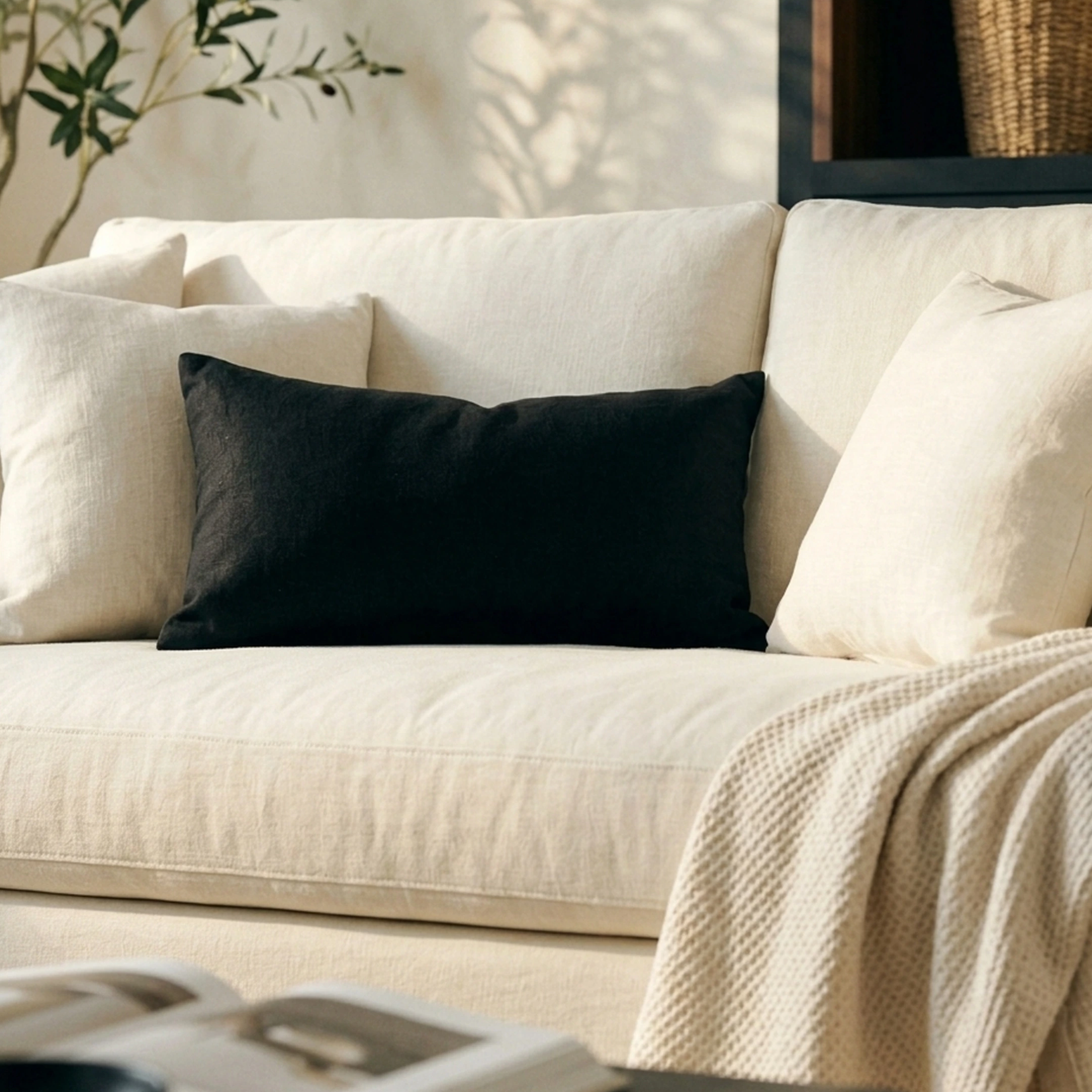
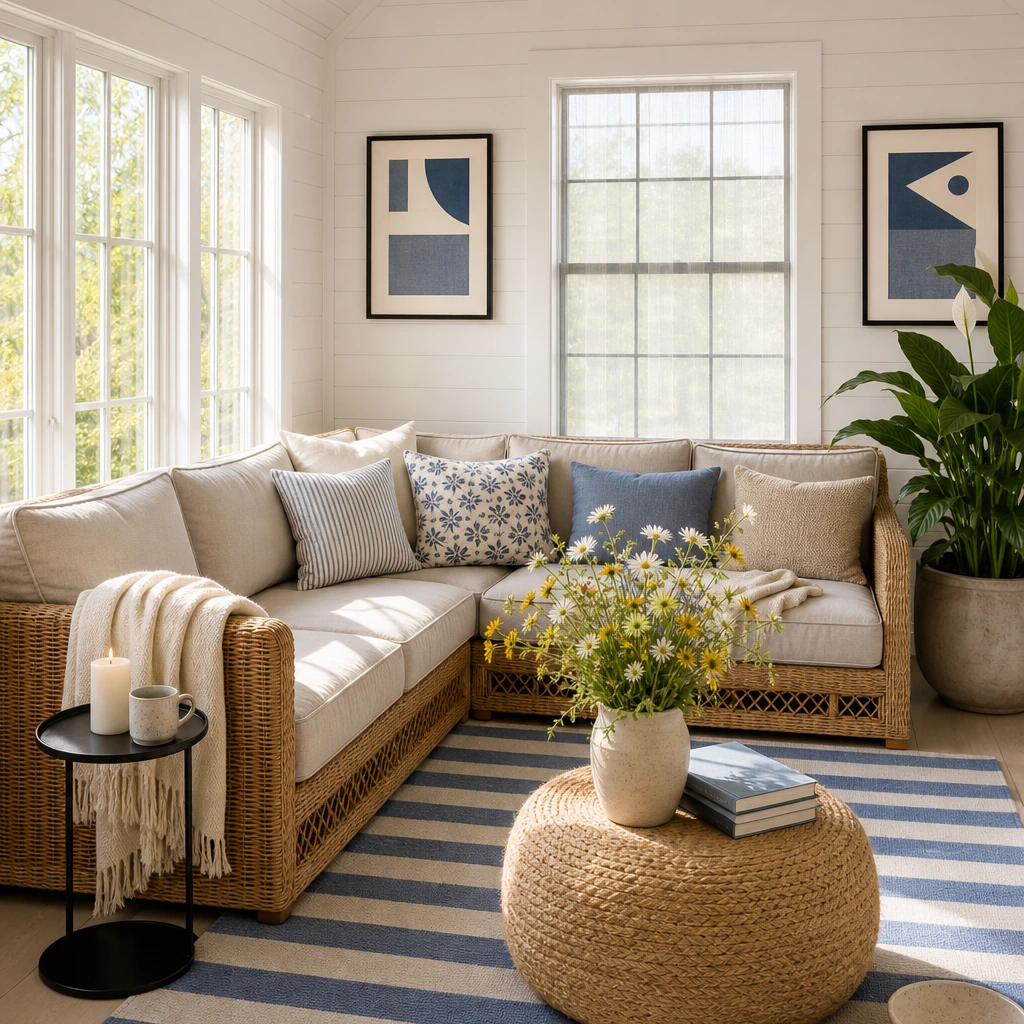
Warm minimalism avoids sterility by layering materials rather than colors. Kendall's homes consistently mix plaster walls, linen upholstery, wool rugs, stone surfaces, warm woods, rattan, and metal accents, all within a neutral color story. The variety of texture is what prevents the rooms from feeling flat.
This is one of the most replicable principles in the entire aesthetic because it does not require expensive renovation. It requires considered shopping.
A Material Mixing Framework
The goal is to include at least four to five distinct material types in any main room:
- Soft textiles: Linen, bouclé, wool, or cotton upholstery and throws
- Hard natural surfaces: Wood (floors, tables, shelving) and stone (countertops, trays, accessories)
- Woven elements: Rattan, jute rugs, wicker baskets
- Metal accents: Aged brass, matte black, or brushed nickel in lighting and hardware
- Living elements: Indoor plants, which appear in 74% of surveyed U.S. households per the 2022 Urban Forestry and Urban Greening study
Houzz's 2023 kitchen trends data found that 41% of renovating homeowners chose wood as their primary cabinet material and 23% used engineered quartz for countertops, reflecting broad demand for durable, natural-look surfaces. Caesarstone and Silestone (by Cosentino) offer engineered quartz options that closely mimic marble and stone at a fraction of the cost of natural stone.
What to Avoid When Mixing Materials
Skip the matched furniture set. A sofa, loveseat, and armchair from the same collection in the same fabric will always read as a showroom floor rather than a home. Choose a sofa you love, then find a chair in a complementary but different material. The contrast is what creates the collected feeling that defines Kendall's aesthetic.
West Elm, CB2, and Crate and Barrel all carry pieces that work within this framework at mid-market price points. The key is buying across categories rather than completing a single collection.
High-End Kitchen and Bathroom Upgrades That Actually Move the Needle
Kitchen and bathroom renovations consistently represent the highest-ticket and most popular discretionary projects among homeowners. Houzz's 2023 U.S. Houzz and Home Study found that 28% of renovating homeowners updated their kitchen, with a median spend of $20,000 for a major renovation, rising to $40,000 for kitchens over 200 square feet. Primary bathroom updates followed at 25% of renovating homeowners, with a median spend of $13,500.
Kendall's homes feature kitchens built around large stone islands, warm wood cabinetry, and considered hardware. The bathrooms use natural stone, warm lighting, and minimal visual clutter. The look is achievable at multiple budget levels if you know where to concentrate the investment.
Where to Spend and Where to Save
Not every kitchen or bathroom upgrade requires a full renovation. The highest-impact, lowest-disruption changes are:
UpgradeImpact LevelApproximate Cost RangeCabinet hardware swapHigh visual impact, low cost$200-$600 for a full kitchenLighting fixture replacementVery high impact$300-$1,500 per fixtureCountertop replacement (engineered quartz)High impact, moderate cost$3,000-$8,000 for average kitchenBacksplash tile updateHigh impact, moderate cost$1,500-$4,000 installedCabinet painting (professional)High impact, low-moderate cost$1,000-$3,000Plumbing fixture replacementModerate impact, low-moderate cost$400-$1,200 per fixture
30% of renovating homeowners used DIY labor for at least part of their projects, particularly for painting and decor, per Houzz's 2023 study. Cabinet painting and hardware replacement are the two upgrades most consistently cited by designers as delivering outsized visual returns relative to cost.
Ann Sacks and Fireclay Tile carry handcrafted tile lines with earthy palettes similar to those in Kendall's kitchens and bathrooms, at price points that work for targeted accent applications like a backsplash or shower niche. These are the details that read as custom without requiring a full renovation budget.
Tools and Solutions for Recreating This Aesthetic
The following categories cover the practical tools and vendors most relevant to executing a quiet luxury aesthetic. These are representative options, not exhaustive endorsements.
Paint and Color Systems
Getting the neutral palette right starts with testing, not committing. The tools that support this:
- Sherwin-Williams: Colormix forecast, visualizer app, and designer-grade neutral collections used extensively in residential projects. Their greige and warm white lines are a practical starting point.
- Benjamin Moore: Off-White Collection and digital sampling tools, including peel-and-stick swatches for real-world testing before committing to a full room.
- BEHR: Consumer-focused color tools and popular greige lines available through hardware retailers, useful for budget-conscious testing.
Lighting and Smart Home
The layered lighting approach does not require rewiring. These systems make it achievable in most spaces:
- Philips Hue (Signify): App-based smart bulbs and fixtures with tunable warm white settings, good for layered, dimmable light without structural changes.
- Lutron Caséta: Smart switches and dimmers that work with existing fixtures, enabling whole-room scenes and discreet controls.
- Legrand and Leviton: Higher-end, design-forward switches and control systems that blend with minimalist interiors without looking like gadgetry.
Furniture and Decor
Mid-market retailers that consistently carry pieces aligned with the quiet luxury aesthetic:
- West Elm and CB2: Modern pieces with natural wood, bouclé, and metal accents. Good for statement lighting and soft minimalism at mid-market price points.
- Crate and Barrel and Pottery Barn: Linen sofas, stone and wood tables, and neutral rugs that map closely to Kendall's aesthetic.
- Lulu and Georgia: Elevated textiles, rugs, and decorative accessories with a collected, layered feel.
Surfaces and Materials
For kitchens and bathrooms where material choice has the most visual impact:
- Caesarstone and Silestone (Cosentino): Engineered quartz countertops that mimic marble and stone with high durability, widely used in mid-to-high-end renovations.
- Ann Sacks and Fireclay Tile: Designer tile lines with handcrafted textures and earthy palettes, suitable for backsplashes, shower niches, and accent applications.
- FSC-certified hardwood vendors: Multiple suppliers offer sustainably sourced wood flooring that aligns with both the aesthetic and the sustainability preferences documented in consumer research.
Art and Vintage Pieces
The collected quality of Kendall's rooms comes partly from mixing original art and vintage finds with newer pieces:
- Saatchi Art: Original and limited-edition works from emerging artists across a wide price range.
- Minted: Curated prints from independent artists with high-quality framing options, useful for gallery walls and single focal pieces.
- Chairish and 1stDibs: Vintage and high-end resale furniture, lighting, and art similar to the mix seen in Kendall's homes.
Closet and Organization Systems
Celebrity-style organization is more about system than budget:
- California Closets: Higher-end custom closet and storage solutions, scalable for smaller spaces.
- The Container Store (Elfa): Modular closet and pantry systems with flexible configurations at mid-range price points.
- IKEA PAX: Highly configurable wardrobe systems that can be customized with doors, lighting, and inserts to mimic custom closets.
Design and Visualization Platforms
Translating inspiration into a shoppable room is where most projects stall. First Chair is built specifically for this gap. Rather than generating fantasy renders filled with furniture that does not exist, it takes your inspiration photos and style direction and builds shoppable room concepts using real, in-stock pieces from actual retailers. You can describe your aesthetic in layered terms like "warm minimalist but collected" or "earthy but refined" and receive recommendations that reflect that nuance rather than defaulting to a generic style category. The platform pulls across West Elm, CB2, Crate and Barrel, Pottery Barn, and Lulu and Georgia, which matters when the right room rarely comes from a single catalog. Insider pricing is available on selected pieces.
Best Practices for Executing a Quiet Luxury Aesthetic
These are the moves that consistently separate rooms that feel designed from rooms that feel assembled.
- Build the palette before you buy anything. Choose one white, one to two main neutrals, and one to two accent colors. Test them in your actual space under your actual lighting before committing to paint or large upholstery. The palette is the foundation. Everything else layers on top.
- Invest in one anchor piece per room, keep the rest quiet. Allocate more budget to one to two focal items per room (sofa, dining table, headboard, main artwork) and choose simpler, comfortable supporting pieces. The contrast between the anchor and the supporting cast is what creates the designed feeling.
- Plan at least three to four light sources per main room. Include ambient, task, and accent layers. Use warm-white bulbs in the 2700-3000K range throughout. Add dimmers or smart bulbs for flexibility. This single change has more impact on how a room feels than almost any furniture decision.
- Float furniture away from walls. Maintain 60 to 90 centimeters of clear pathway around major pieces. Identify the focal point first, then orient seating toward it. Furniture that is placed rather than stored is the visual signature of a designed room.
- Mix at least four to five distinct material types within your neutral palette. Soft textiles, hard natural surfaces, woven elements, metal accents, and living plants. The variety of texture is what prevents neutral rooms from feeling flat or institutional.
- Buy across retailers rather than completing a single collection. The collected quality of Kendall's rooms comes from mixing sources. A sofa from one place, a chair from another, a vintage rug from a third. This is achievable at mid-market price points and produces a far more personal result than any matched set.
- Treat art as a design decision, not a finishing touch. Choose the artwork for a room before you finalize the furniture. Let it set the tone. A single large piece that you genuinely love will do more for a room than a gallery wall assembled from whatever was available.
- Use plants as a structural element, not decoration. Larger plants in considered positions (a fiddle-leaf fig in a corner, a trailing pothos on a shelf) contribute to the warmth and layering of a room in ways that accessories cannot replicate.
Common Mistakes to Avoid
These are the pitfalls that most consistently undermine the quiet luxury aesthetic, even when the individual pieces are right.
- Treating neutral as beige. A flat, single-tone neutral scheme reads as unfinished rather than restrained. The depth in Kendall's rooms comes from layering multiple neutrals with different undertones. Warm off-white walls with a cooler linen sofa and warm wood floors create visual interest within a tight palette. One-note beige does not.
- Buying a matched furniture set. A sofa, loveseat, and armchair from the same collection in the same fabric will always read as a showroom floor. The fix is simple: choose a sofa you love, then find a chair in a complementary but different material. The contrast creates the collected feeling.
- Relying on a single overhead light source. This is the most common and most damaging mistake in residential lighting. A single ceiling fixture, regardless of the fixture itself, flattens a room and eliminates the warmth that layered lighting creates. The consequence is a room that looks like a rental even when the furniture is excellent.
- Pushing all furniture against the walls. This feels intuitive as a way to "open up" a room but consistently produces the opposite effect. Rooms with furniture floated in conversation groupings read as larger and more intentional than rooms with everything pushed to the perimeter.
- Over-accessorizing within a neutral palette. The instinct to add more when a room feels flat usually produces clutter rather than warmth. The fix is to remove pieces rather than add them, then identify the one or two elements that are actually doing work and give them more visual space.
- Choosing art as an afterthought. Selecting artwork after all the furniture is in place, from whatever is available at the right size, produces rooms that feel decorated rather than designed. Art should be chosen early and should inform the surrounding decisions.
- Ignoring scale. A sofa that looks right on a product page can overwhelm a room or disappear in it depending on the actual dimensions. The consequence is an expensive mistake that is difficult to reverse. The fix is to tape out the footprint of any major piece on the floor before purchasing.
- Mixing too many metal finishes. Aged brass, matte black, chrome, and brushed nickel can all work within a quiet luxury palette, but not all at once. Choose one primary metal finish and one secondary. Consistency in hardware and lighting fixtures is one of the details that separates rooms that feel edited from rooms that feel assembled.
Bringing It Together: From Inspiration to a Room You Can Actually Build
The gap between a saved photo and a finished room is where most design projects stall. You have the reference. You understand the principles. But translating a specific aesthetic into specific purchases, in your specific space, at your specific budget, is where the process breaks down.
This is the problem worth solving directly. The tools for decorating a new apartment have improved significantly, and the best ones narrow the field rather than expanding it. For anyone who has been stuck in the research phase, the interior design apps for homeowners worth using are those that move you toward a decision rather than adding more options to consider.
The principles behind Kendall Jenner's homes are not complicated. A cohesive neutral palette. Layered lighting with warm-white sources. Mixed natural textures within a tight color story. One genuine statement piece per room. Furniture placed rather than stored. Art chosen early rather than last.
None of these require a celebrity budget. All of them require decisions made with conviction rather than hedged indefinitely. The room you have been imagining is closer than the research phase makes it feel.
Frequently Asked Questions
What is Kendall Jenner's interior design style?
Kendall Jenner's interior design style is best described as quiet luxury or warm minimalism. Her homes feature neutral color palettes, natural materials including linen, wood, stone, and wool, layered lighting, vintage and curated art, and a collected rather than matched aesthetic. Architectural Digest describes her LA home as "earthy, understated and totally personal."
How do I recreate a celebrity interior design look on a normal budget?
Focus on the principles rather than the specific pieces. A cohesive neutral palette, layered lighting with warm-white bulbs, mixed natural textures, and one genuine statement piece per room account for most of the visual impact in high-end interiors. Hardware swaps, cabinet painting, and considered art placement are among the highest-return upgrades at lower price points. Buying across retailers rather than completing a single collection produces a more personal result at any budget.
What neutral paint colors work best for a Kendall Jenner-inspired home?
Warm off-whites, greige tones, and earthy neutrals in the beige-to-taupe range are the closest match to Kendall's aesthetic. Sherwin-Williams' 2024 Colormix forecast identified warm minimalist neutrals as a leading residential palette. Benjamin Moore's Off-White Collection and Sherwin-Williams' greige lines are practical starting points. Always test peel-and-stick swatches in your specific lighting before committing to a full repaint.
What furniture brands work for a quiet luxury aesthetic at mid-range prices?
West Elm, CB2, Crate and Barrel, and Lulu and Georgia consistently offer pieces that align with the quiet luxury aesthetic at mid-market price points. Article and the upper tiers of IKEA can work as structural pieces when elevated with quality textiles and hardware. Chairish and 1stDibs are worth exploring for vintage and resale pieces that add the collected quality central to Kendall's rooms.
How important is lighting to achieving a luxury interior look?
Lighting is one of the highest-impact variables in how a room feels. The American Lighting Association found that 68% of U.S. homeowners consider lighting "very important" to their home's atmosphere. The most effective change is replacing a single overhead fixture with a layered approach: ambient, task, and accent sources at different heights, all using warm-white bulbs in the 2700-3000K range. Smart dimmers from Lutron Caséta or Philips Hue make this achievable without rewiring.
Can I use an app to help recreate Kendall Jenner's interior design style?
Yes. Platforms like First Chair allow you to upload inspiration photos and describe your aesthetic in nuanced terms, then receive shoppable room concepts built from real, in-stock furniture across multiple retailers. This is more useful than a render tool that generates rooms you cannot actually build, because every recommendation connects directly to something you can purchase.
What is the single highest-return change I can make to a room?
Lighting, consistently. Replacing a single overhead source with three to four layered sources using warm-white bulbs in the 2700-3000K range changes how a room feels more dramatically than almost any furniture decision. It is also one of the most affordable changes relative to its impact, particularly with smart bulb systems that do not require rewiring.