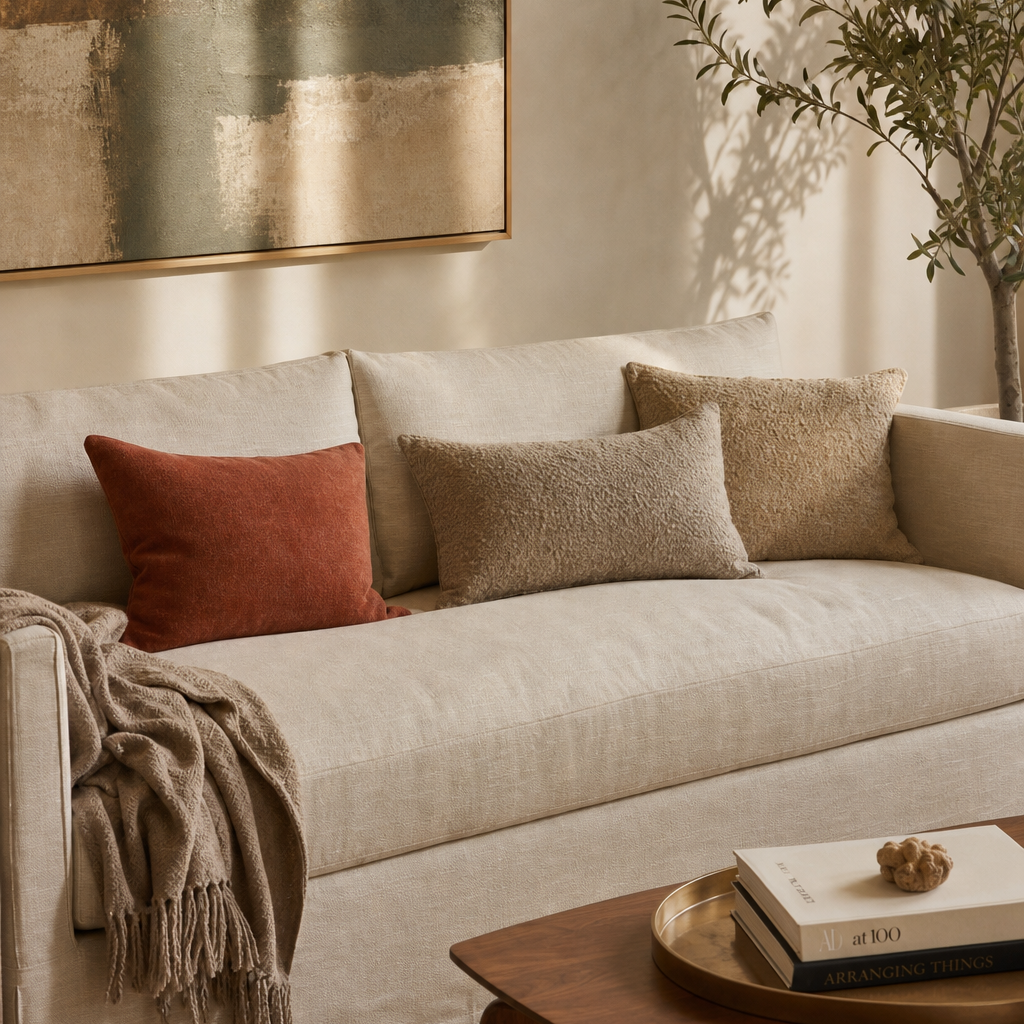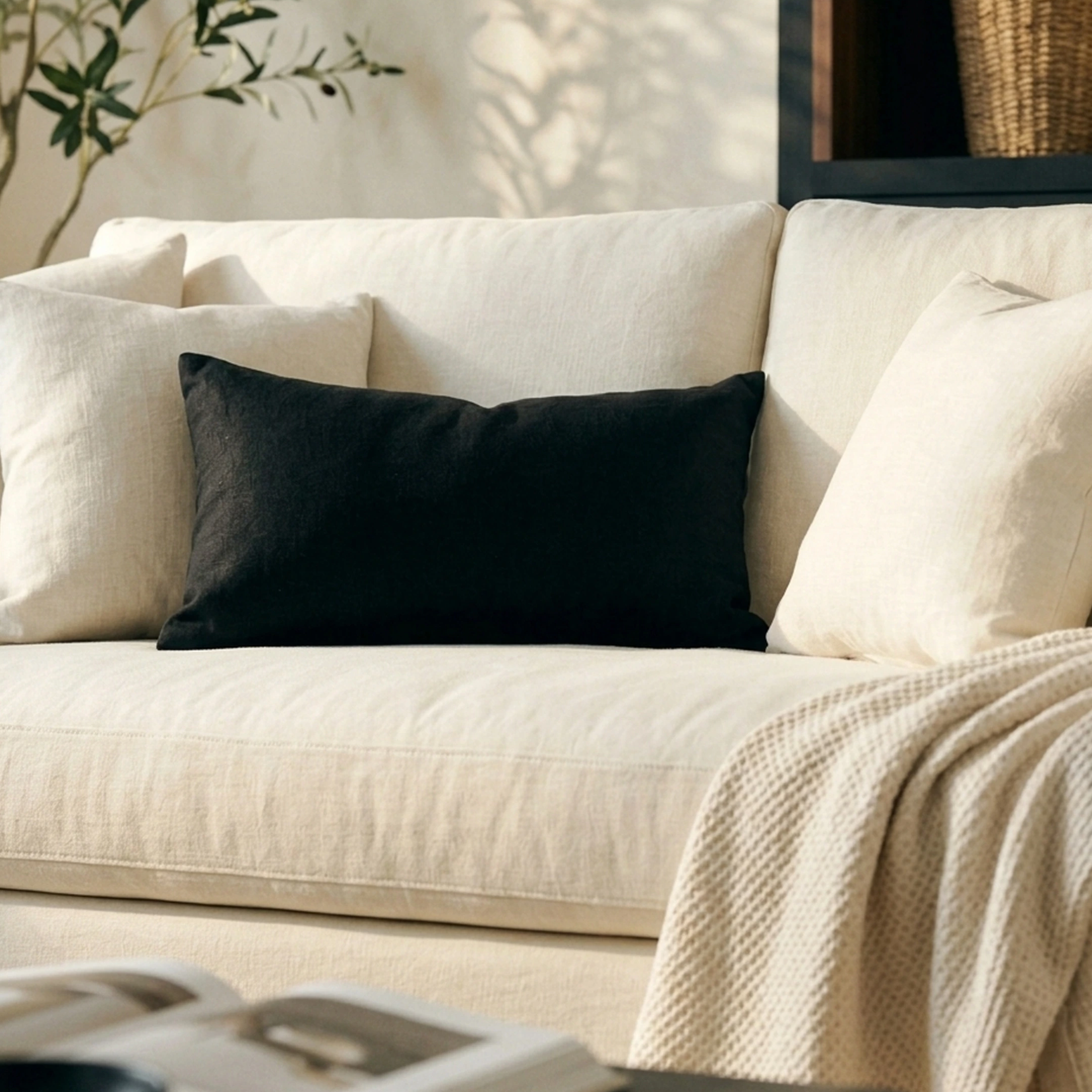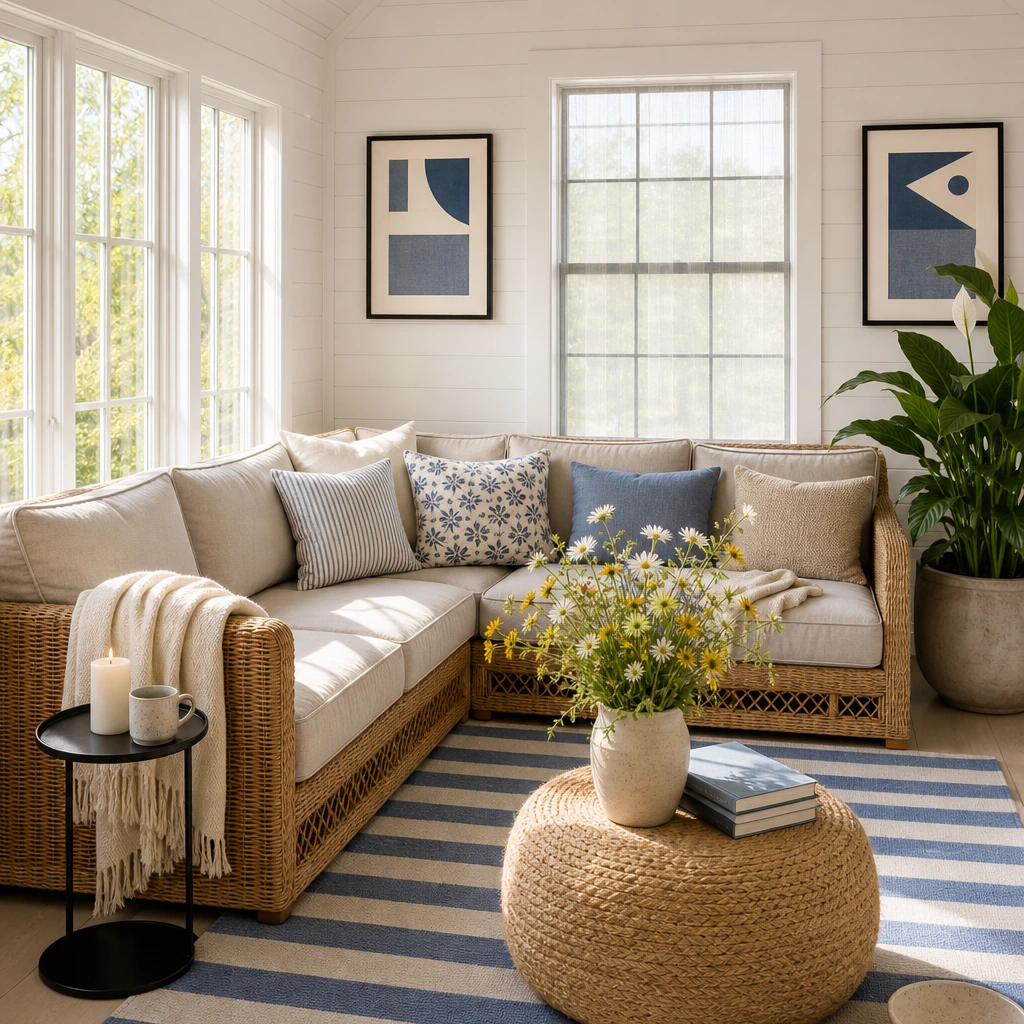
There is a particular kind of home that stops you mid-scroll. Not because it announces its price tag or drowns in marble, but because it feels calm, considered, and completely intentional. Zuckerberg's Palo Alto compound is that kind of home. Built in 1903 and quietly renovated into a warm, tech-integrated retreat, it does not look like a billionaire's house. It looks like someone with very good taste made very deliberate decisions, then stopped.
That restraint is the whole point. And it is also what makes Zuckerberg's design approach more transferable than most celebrity homes. You are not trying to replicate a $110 million compound. You are trying to understand why certain rooms feel pulled together, and how to apply those same principles to a space that costs a fraction of the price. The Palo Alto home, described by Architectural Digest India as a "no-frills abode" with calm, muted interiors, demonstrates something counterintuitive: restraint is harder to execute than opulence, and it ages better.
This guide breaks down the specific design moves visible across Zuckerberg's residences, from the Palo Alto compound to the Miami waterfront estate, and translates each one into something a homeowner can actually act on. The goal is not aesthetic mimicry. It is extracting the underlying principles and applying them with your own proportions, budget, and taste.
What you will learn in this guide:
- What warm minimalism actually means in practice, and why it outperforms stark minimalism in residential spaces
- How to anchor an open floor plan so it feels cohesive rather than undefined
- Why smart home infrastructure planning matters more than the devices you buy
- How to scale resort-style outdoor living to a suburban lot
- Which material choices age well and which date quickly
- The most common mistakes homeowners make when attempting this aesthetic, and how to avoid them
Key Takeaways
- Zuckerberg's Palo Alto home demonstrates that warm minimalism, combining pared-back forms with textural variety, reads as more intentional than stark, all-white minimalism in residential spaces.
- Open layouts connecting kitchen, dining, and living areas are preferred by roughly 79% of buyers, according to the National Association of Home Builders (NAHB) 2024 survey.
- US smart home household penetration is projected to reach 57.2% by 2027, with market revenue hitting $62.4 billion, per Statista's Smart Home outlook.
- Smart home device owners are significantly more willing to purchase a home with connected technology already installed: 81% said they would pay more for such a home, per a Coldwell Banker and CNET survey.
- Layered lighting appeared in nearly 90% of kitchen remodels tracked in Houzz's 2024 US Kitchen Trends Study.
- Outdoor living is not optional at the luxury tier: 87% of buyers rated a patio as essential or desirable in the NAHB 2024 survey.
- Zuckerberg's Palo Alto holdings encompass 11 properties and over 1.8 acres, with a total value exceeding $110 million as of 2025, per property records compiled by The New York Times.
- The single most expensive smart home mistake is buying devices before planning the underlying network infrastructure.
What Warm Minimalism Actually Means
Warm minimalism is a design approach that combines pared-back forms and a limited material palette with enough texture and natural warmth to feel livable rather than clinical. It is the deliberate opposite of the cold, all-white minimalism that dominated residential design in the 2010s, and it is exactly what Homes and Gardens observed in Zuckerberg's living room: neutral tones, soft textures, and minimal decor that creates an inviting atmosphere without visual noise.
This distinction matters because most homeowners who attempt minimalism end up with rooms that feel empty rather than calm. The difference is texture. A room with a warm white on the walls, an oak coffee table, a bouclé sofa, and a wool rug reads as intentional. The same room with a cold gray palette and no textural variation reads as unfinished.
The Palette Strategy: Limit Colors, Multiply Textures
The practical rule is to choose three to four tones and then vary the materials within that range. Zuckerberg's interiors consistently work within warm whites, sand, and soft charcoal, but the surfaces shift between linen, wood, stone, and woven textiles. The room feels rich because of material contrast, not color contrast.
For homeowners sourcing independently or working with a designer, this translates to a clear sequence:
- Anchor the room with one warm neutral on walls and ceiling (a single color throughout reads more expensive than accent walls)
- Choose upholstery in a natural fiber: bouclé, linen, or a textured weave
- Add one warm wood tone in flooring, a coffee table, or shelving
- Use a wool or jute rug to ground the seating area and add acoustic softness
Pieces from West Elm, CB2, and Lulu and Georgia tend to work well in this register because they offer clean silhouettes without the showroom-matched quality of full furniture sets.
Why Matching Sets Work Against You
Skip the five-piece living room bundle. Rooms furnished entirely from a single collection tend to look staged rather than lived in, and they date faster because every piece carries the same design moment. A sofa from one source, a side table from another, and a rug sourced separately will almost always feel more considered than a coordinated set, even if the individual pieces cost less.
This is one of the clearest lessons from Zuckerberg's Palo Alto interiors: the rooms feel personal because they do not look like a catalog page. If you are navigating furniture buying decisions and finding the options overwhelming, the answer is almost always to buy fewer pieces and invest more in each one.
Why This Design Direction Resonates Now
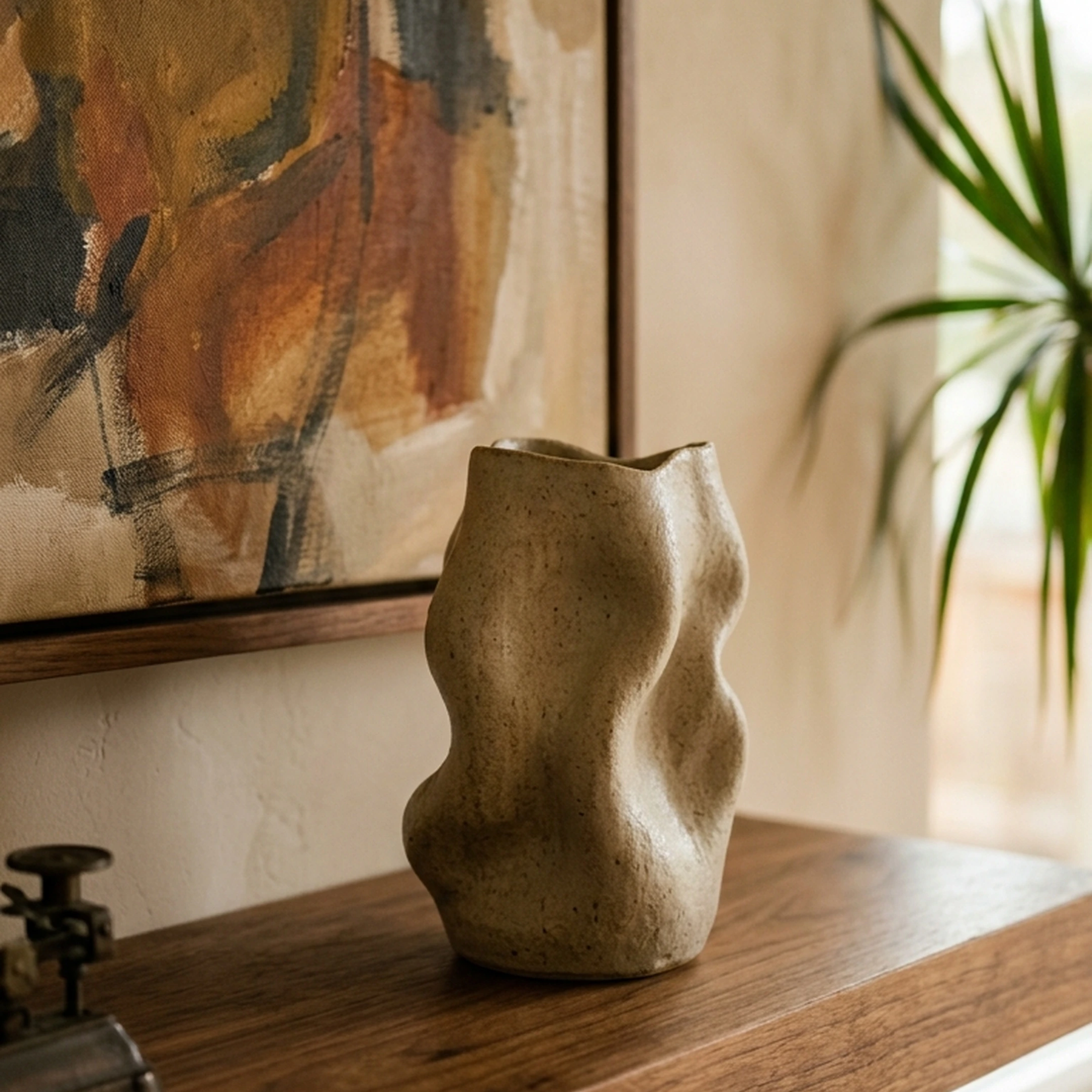
The shift toward warm, understated interiors is not a trend in the cyclical sense. It reflects a durable change in how affluent homeowners think about luxury. McKinsey's analysis of the luxury market documents a clear move toward what the industry calls "quiet luxury": high-quality materials, craftsmanship, and comfort without overt signaling. Zuckerberg's Palo Alto interiors are a precise expression of this direction.
Several converging forces are making this approach more relevant and more achievable for non-billionaire homeowners.
Smart home technology is moving mainstream. Household penetration is projected to grow from 41.3% in 2023 to 57.2% by 2027, with revenue reaching $62.4 billion. The gap between a well-executed smart home and a collection of disconnected gadgets is narrowing as platforms mature, but the design challenge of making technology invisible remains.
Renovation spending has reached a new baseline. The Joint Center for Housing Studies of Harvard University estimates $486 billion in spending on improvements and repairs to owner-occupied homes in 2023, up from $328 billion in 2019. Higher expectations for home functionality and design quality are driving that number, not just inflation.
Open layouts are now a buyer expectation, not a premium feature. NAHB's 2024 survey finds that roughly 79% of buyers prefer open connectivity between kitchen and dining areas, with 70% wanting the same between kitchen and family room. Zuckerberg's California home, as photographed by Architectural Digest India, shows exactly this family-oriented layout where casual dining and living spaces flow together without hard transitions.
Sustainability is becoming a baseline expectation. The US Department of Energy reports that states representing roughly 70% of new residential construction have adopted energy codes at or near the 2021 IECC level. McKinsey's luxury research finds that 60 to 70% of luxury consumers say environmental and social responsibility influence their purchase decisions, including in real estate. High-performance materials and efficient systems are no longer a premium add-on.
Outdoor living has become a core design category. NAHB's 2024 survey found that 87% of buyers rated a patio as essential or desirable. Zuckerberg's Miami estate, reported by Realtor.com as a $170 million acquisition, features a 60-foot checkerboard pool and expansive decks that function as a private resort. The principle scales down; the investment does not have to match the scale.
Open Floor Plans: How to Anchor a Connected Space
An open floor plan is a layout where the kitchen, dining area, and living room share a single continuous space with minimal interior walls. The format has dominated luxury residential design for two decades, and the data confirms it has become a buyer expectation rather than a differentiator.
The challenge is that open plans are harder to furnish well than divided rooms. Without walls to define zones, the space can feel undefined and acoustically harsh. Getting it right requires deliberate anchoring at every level.
The Island as the Room's Structural Hub
In an open plan, the kitchen island does more structural work than any other single element. It defines the boundary between cooking and living zones, provides seating for casual meals, and creates a visual anchor that keeps the space from feeling undefined. Zuckerberg's California home demonstrates this with a family-oriented layout where the kitchen functions as the social center of the connected space.
For a renovation, invest in the island before almost anything else. A large, well-proportioned island with seating on one side and storage on the other will do more for the room's cohesion than any amount of decorative layering on top of a weak layout. Appliance choices matter here too. Brands like Sub-Zero, Wolf, and Miele produce built-in appliances with design-forward aesthetics that integrate cleanly into minimalist kitchens.
Keeping Finishes Cohesive Across Zones
The most common mistake in open-plan spaces is treating each zone as a separate room. If the kitchen has white oak cabinetry and the living room has dark walnut shelving, the space will feel fractured regardless of how good each individual piece is.
The fix is to carry one material or finish thread through the entire space:
Cohesion StrategyHow to Apply ItConsistent flooringRun the same material from entry through kitchen and into livingUnified hardware finishMatch kitchen cabinet pulls to living room built-in hardwareRepeated wood toneEcho the kitchen island in the dining table and a living room side tableSingle wall colorOne warm neutral throughout reads more expensive than accent walls
Cohesion at this level is what separates a room that looks designed from one that looks assembled.
Smart Home Integration: Infrastructure Before Gadgets
Smart home technology refers to networked devices and systems, including lighting, climate control, security, and entertainment, that can be monitored and controlled remotely or automatically. Zuckerberg's homes are consistently described as tech-integrated environments where the technology is present but not visible. That invisibility is the design goal, and it is the part most homeowners get wrong.
Plan the Network Backbone First
CEDIA, the Custom Electronic Design and Installation Association, consistently emphasizes that the most common and costly smart home mistake is purchasing devices before planning the underlying infrastructure. Wi-Fi-only systems work for entry-level setups, but a home with serious automation needs structured cabling: dedicated network runs to each room, a central equipment rack, and pre-wired conduit for future additions.
For a renovation or new build, the correct sequence is:
- Plan the network backbone first (wired ethernet to every room, not just Wi-Fi)
- Identify which systems you want integrated: lighting, HVAC, security, audio, motorized shades
- Choose a control platform that ties them together
- Phase hardware purchases over time, but do not phase the infrastructure
The cabling and conduit cost a fraction of the total project budget and are nearly impossible to add after walls are closed.
Lighting Control as the Highest-Return Smart Investment
Of all the smart home subsystems, lighting control delivers the most visible daily impact. A Coldwell Banker and CNET survey found that 81% of smart home device owners said they would be more willing to buy a home with connected technology already installed, and 66% would pay more for such a home. Lighting control is the system most buyers notice and value.
Photos of Zuckerberg's Palo Alto interiors show abundant natural light supplemented by simple pendants, downlights, and table lamps, with no heavy fixtures competing for attention. The technology serves the room rather than announcing itself.
The Invisible Tech Principle
The design goal in Zuckerberg's homes is technology that serves the room without announcing itself. Speakers recessed into ceilings. Thermostats that blend into walls. Security cameras that read as architectural details rather than surveillance equipment.
This means avoiding the temptation to display technology as a status signal. A large television mounted on a bare wall with visible cables reads as unfinished. The same television on a motorized lift, hidden in a cabinet when not in use, reads as considered. The difference is planning, not budget.
Outdoor Living Spaces: Scaling the Resort Concept
The Miami waterfront estate features a 60-foot checkerboard pool, expansive decks, and direct waterfront access, functioning as a private resort. Most homeowners are not working with a waterfront lot, but the underlying design principles scale down cleanly.
NAHB's 2024 survey found that 87% of buyers rated a patio as essential or desirable. Houzz data consistently shows outdoor living as one of the highest-priority renovation categories for move-up buyers.
The Four Elements of a Functional Outdoor Room
A well-designed outdoor space needs four things to function as a true extension of the interior:
ElementPurposeExample ApproachDefined seating areaCreates a room-like sense of enclosureSectional with weather-resistant upholstery, outdoor area rugShade or shelterExtends usability across seasonsPergola, retractable awning, or large umbrellaLayered lightingEnables evening use and sets atmosphereString lights, path lighting, recessed deck lights on dimmersClimate controlHeating or cooling for shoulder seasonsInfrared heaters, outdoor fans, misting system
The goal is a space that functions as a room, not a yard. Furniture with clean lines and weather-resistant upholstery, a defined rug to anchor the seating area, and lighting on a dimmer will do more for the space than expensive hardscaping without those elements.
Outdoor Kitchen and Dining Integration
At the luxury tier, outdoor kitchens are increasingly standard. A built-in grill, a prep surface, a compact refrigerator, and a covered dining area create a space that genuinely extends the home's entertaining capacity. This does not require a full outdoor kitchen build: a well-positioned grill station with a pergola overhead and a dining table that seats eight will accomplish the same social function at a fraction of the cost.
Layered Lighting: The Detail That Changes Everything
Layered lighting is a design strategy that combines ambient (general), task, and accent lighting sources to achieve both functional and aesthetic goals. It is one of the most consistently underinvested areas in residential design, and one of the highest-impact changes a homeowner can make.
Nearly 90% of kitchen remodels include upgraded lighting, and under-cabinet lighting was added in 70% of projects, per Houzz's 2024 US Kitchen Trends Study. The data reflects what designers have known for decades: lighting is not a finish detail. It is a structural element of how a room feels.
The Three-Layer Approach
The Illuminating Engineering Society (IES) recommends a three-layer approach for residential spaces:
- Ambient lighting: Recessed downlights or a central fixture that provides general illumination across the room
- Task lighting: Under-cabinet strips in kitchens, reading lamps in living areas, pendants over work surfaces
- Accent lighting: Wall washers for art, toe-kick lighting under cabinetry, uplights for plants or architectural features
Every layer should be on a dimmer. The ability to shift from full-brightness task lighting to a low, warm ambient scene is what makes a room feel designed rather than lit.
Statement Fixtures as Architectural Anchors
In Zuckerberg's Palo Alto interiors, lighting fixtures are simple and architectural rather than decorative. A single pendant over a dining table, recessed lights throughout the living area, and table lamps for warmth. The fixtures do not compete with the room; they serve it.
For homeowners, this means resisting the temptation to use a chandelier as a room's focal point unless the room's architecture genuinely supports it. In a warm minimalist space, a large ornate fixture will fight the room rather than complete it. A simple linen shade pendant or a clean brass downlight will do more.
Sustainable Materials and Building Choices
Sustainable building materials are those selected for low environmental impact, including FSC-certified wood, recycled metal, low-VOC paints, and high-performance insulation. The US Green Building Council highlights these as key components of LEED-certified buildings, and McKinsey's luxury research finds that 60 to 70% of luxury consumers say environmental and social responsibility influence their purchase decisions, including in real estate.
Material Choices That Age Well
The materials that appear most consistently in warm minimalist interiors are those that develop character over time rather than dating quickly:
- White oak and walnut for flooring and millwork
- Honed stone (limestone, travertine) for countertops and bathrooms
- Linen and wool for upholstery and textiles
- Aged brass and bronze for hardware and fixtures
- Concrete and plaster for walls and architectural surfaces
A honed limestone countertop will look as good in fifteen years as it does today. A high-gloss white laminate will not. These materials are not cheap, but they hold their quality and visual relevance far longer than trend-driven finishes.
When to Preserve and When to Update
Zuckerberg's main Palo Alto house was built in 1903 and retains its original bones while carrying contemporary interiors. Original trim, windows, and architectural details are worth preserving where possible. They provide the kind of character that new construction cannot replicate, and they create a counterpoint that makes contemporary furniture feel more intentional.
The update strategy is to simplify rather than replace: a single wall color throughout instead of accent walls, black or bronze hardware instead of polished nickel, minimal window treatments that let the original windows read as architectural features.
Home Office and Focus Spaces: Designing for Deep Work
Sixty-three percent of buyers consider a dedicated home office essential or desirable, per NAHB's 2024 design survey. At the luxury tier, this means more than a desk in a spare bedroom. It means a room designed for acoustic performance, reliable connectivity, and the kind of focused environment that supports sustained concentration.
The Four Elements of a Professional Home Office
For homeowners at this level, the home office is increasingly a professional-grade space:
- Sound isolation: Solid-core doors, acoustic panels, or wall insulation that keeps the room quiet
- Wired connectivity: Ethernet rather than Wi-Fi dependence for video calls and large file transfers
- Built-in storage: Keeps the room visually calm and reduces visual noise during video calls
- Calibrated lighting: A window to one side, a soft fill light to the other, no overhead light directly above the camera line
Video conferencing systems from Logitech's Rally line provide camera quality and audio performance that matches a professional environment, which matters when the home office is also a client-facing space.
Connecting Inspiration to Execution
The challenge most homeowners face is not knowing what they want. It is translating that knowledge into a room that actually works. If you have been saving images of calm, tech-integrated home offices for months without committing to a direction, the problem is usually not taste. It is the gap between inspiration and a clear set of decisions.
This is exactly the problem that First Chair is built to solve. Rather than generating fantasy rooms filled with furniture that does not exist, the platform takes your inspiration images and aesthetic direction and returns curated room concepts built from real, in-stock pieces across multiple retailers, including West Elm, CB2, Crate and Barrel, Pottery Barn, and Lulu and Georgia. For homeowners working through apartment design apps or trying to move from a Pinterest board to a finished room, the platform narrows the field to pieces that work together rather than presenting another set of options to scroll through.
Tools and Solutions for This Design Approach
The following categories represent the core systems and platforms used in high-end residential projects similar to Zuckerberg's homes. Vendor examples are illustrative, not exhaustive.
Whole-Home Automation and Control
The backbone of an invisible smart home is a centralized control platform that ties lighting, HVAC, audio, security, and motorized shades under one interface.
- Crestron Residential: Enterprise-grade control used in luxury residences, enabling integrated management of all major subsystems. Standard at the highest tier of residential projects.
- Control4 (Snap One): A widely used residential automation platform for multi-room audio, lighting, climate, and security. More accessible price point than Crestron with strong integrator support.
- Savant: Focused on luxury homes with advanced scene control, tunable lighting, and AV integration. Strong aesthetic sensibility in hardware design.
Smart Lighting Systems
Lighting control is the highest-return smart home investment for daily livability and resale value.
- Lutron HomeWorks and RA3: The standard for whole-home lighting control in high-end residential projects, offering motorized shades, pre-set scenes, and tunable color temperature.
- Ketra (a Lutron company): High-end, tunable white and full-spectrum LED systems used in luxury and gallery-grade interiors. Exceptional color rendering.
- Philips Hue (Signify): Flexible, app-controlled LED lamps and fixtures suitable for phased upgrades. Integrates with most major platforms and can be expanded over time.
Smart Climate and Energy Management
Invisible climate control is a core element of the "ambient tech" approach.
- Ecobee: Smart thermostats with occupancy sensors and remote monitoring, integrated with major platforms.
- Google Nest: Learning thermostats and connected devices optimizing energy use with minimal interface complexity.
- Schneider Electric Wiser: Integrated home energy and load management systems for whole-home efficiency.
Security and Access Control
Security systems at this level should read as architectural details, not surveillance equipment.
- Arlo: Wireless smart cameras and doorbells for residential monitoring with clean hardware design.
- ADT: Professionally monitored security with smart home integration and 24-hour response.
- Ring (Amazon): Video doorbells and security cameras with app access. Strong ecosystem integration.
Kitchen and Appliance Technology
Built-in appliances with design-forward aesthetics are a core element of the minimalist kitchen.
- Sub-Zero, Wolf, and Cove: Luxury refrigeration, cooking, and dishwashing solutions with integrated design aesthetics. The standard reference for high-end residential kitchens.
- Miele: High-end built-in appliances with smart connectivity across ovens, combi-steam units, and dishwashers.
- Bosch Home Connect: Connected appliances controllable via app and voice. Strong value at the upper-mid tier.
Design Visualization and Room Planning
Moving from inspiration to a finished room requires tools that work with real furniture, not fantasy renders.
- Houzz Pro: Client collaboration and product sourcing platform for designers, with strong catalog integration.
- SketchUp: Widely used for conceptual massing and interior modeling at the architectural level.
- First Chair: An AI-assisted interior design and shopping platform that translates inspiration images and aesthetic direction into curated room concepts built from real, in-stock furniture across multiple retailers. Offers insider member pricing and multi-retailer sourcing across West Elm, CB2, Crate and Barrel, Pottery Barn, and Lulu and Georgia. Designed specifically for homeowners who know what they want but need help executing it without the friction of endless tabs and mismatched purchases.
AV and Home Workspace
Professional-grade audio and video systems are increasingly standard in luxury homes.
- Sonos: Wireless multi-room audio systems integrating with most control platforms. Strong design aesthetic in hardware.
- Apple TV and Apple Home: Streaming and smart home control within the Apple ecosystem.
- Logitech Rally: Video conferencing systems for high-quality home offices, providing camera and audio performance that matches a professional environment.
Best Practices for Recreating This Aesthetic
1. Use Warm Minimalism, Not Stark Minimalism
Choose a limited palette of three to four warm tones and vary the materials within that range. Bouclé, oak, wool, and linen create the textural richness that keeps a minimal room from feeling empty. The and Gardens analysis of Zuckerberg's living room identifies exactly this combination as the source of its inviting quality.
2. Invest in the Island Before Everything Else
In an open-plan space, the kitchen island is the structural anchor of the entire zone. A large, well-proportioned island with seating on one side and storage on the other will do more for the room's cohesion than any amount of decorative layering on top of a weak layout.
3. Plan Smart Home Infrastructure Before Buying Devices
Pre-wire walls and ceilings for networking, speakers, and control during any renovation, even if you phase hardware purchases over time. The cabling costs a fraction of the total project budget and is nearly impossible to add after walls are closed.
4. Create a Defined Outdoor Room, Scaled to Your Lot
Even on a smaller suburban lot, aim for a defined seating area with weather-resistant upholstery, layered outdoor lighting on dimmers, and at least one outdoor heating or cooling strategy. The goal is a space that functions as a room, not a yard.
5. Use Layered Lighting with Every Layer on a Dimmer
Combine ambient downlights, task lighting at work surfaces, and accent lighting for art and architecture. Connect every layer to dimmers and pre-set scenes. This single change does more for how a room feels than almost any furniture decision.
6. Carry One Material Thread Through the Entire Open Space
Choose one finish, whether a flooring material, a hardware finish, or a wood tone, and repeat it across kitchen, dining, and living zones. Cohesion at this level is what separates a room that looks designed from one that looks assembled.
7. Preserve Original Architecture Where Possible
Original trim, windows, and architectural details provide the kind of character that new construction cannot replicate. Simplify around them rather than replacing them: a single wall color, minimal window treatments, and contemporary hardware will modernize a historic space without erasing what makes it interesting.
8. Buy Fewer, Better Pieces
A room with five considered pieces will outperform a room with fifteen adequate ones. This is the clearest lesson from Zuckerberg's interiors, and it is the principle that most directly translates to a non-billionaire budget. Restraint is a design decision, not a budget limitation.
Common Mistakes to Avoid
Mistake 1: Literal Replication Instead of Principle Translation
Copying a celebrity home's specific furniture and finishes produces a space that feels inauthentic and dates quickly because it is tied to someone else's moment rather than your own aesthetic. Extract the principles: restraint, material quality, warm neutrals, invisible technology. Apply them to your own space and proportions.
Consequence: The room feels like a costume rather than a home, and it will look dated within a few years as the reference point recedes.
Fix: Identify the two or three design principles at work in the reference space and apply those principles using pieces that reflect your own taste.
Mistake 2: Gadgets Before Infrastructure
Buying smart devices without a network and low-voltage plan is the most expensive smart home mistake. You end up with too many apps, unreliable connectivity, and systems that cannot communicate with each other.
Consequence: Fragmented systems, Wi-Fi dead zones, and limited scalability. The technology becomes a source of friction rather than comfort.
Fix: Plan the network backbone, structured cabling, and control platform before purchasing any devices. Phase hardware over time; do not phase the infrastructure.
Mistake 3: Equating Luxury with Opulence
A room that tries to look expensive through ornate fixtures, heavy drapery, and gold accents will read as the opposite of what Zuckerberg's interiors achieve. McKinsey's luxury research documents a clear shift toward quiet luxury: high-quality materials and craftsmanship without overt signaling.
Consequence: The room reads as trying too hard, which is the precise opposite of the intentional restraint that makes warm minimalism work.
Fix: Invest in material quality rather than decorative complexity. A honed limestone countertop and a well-made bouclé sofa will read as more luxurious than an ornate chandelier over a weak layout.
Mistake 4: Treating Each Zone in an Open Plan as a Separate Room
Mismatched finishes across kitchen, dining, and living zones fracture the visual continuity that makes an open plan feel cohesive.
Consequence: The space feels assembled rather than designed, regardless of the quality of individual pieces.
Fix: Carry one material or finish thread through the entire space. Consistent flooring, unified hardware, or a repeated wood tone will do the work.
Mistake 5: Skipping the Dimmer
Lighting without dimmer control is lighting that only works at one setting. A room that cannot shift from task brightness to a low, warm evening scene will never feel as considered as it could.
Consequence: The room feels either too bright or too dark depending on the time of day, and the lighting cannot adapt to different uses.
Fix: Connect every lighting layer to a dimmer during installation. This is a wiring decision, not a fixture decision, and it costs very little to do correctly from the start.
Mistake 6: Buying a Matching Furniture Set
Full furniture collections from a single retailer produce rooms that look staged rather than lived in. They also date faster because every piece carries the same design moment.
Consequence: The room reads as a catalog page rather than a personal space, and the aesthetic becomes tied to a specific retail moment.
Fix: Source pieces from multiple retailers and mix silhouettes and materials within a consistent palette. If you are working through furniture shopping decisions and finding the options overwhelming, the answer is to narrow the field rather than expand it.
Mistake 7: Neglecting Acoustic Performance in Open Plans
Open floor plans are acoustically harsh without deliberate mitigation. Hard surfaces, high ceilings, and minimal walls create echo and noise that make the space feel less livable than it looks.
Consequence: The room looks calm in photos but feels loud in daily life, which undermines the entire premise of warm minimalism.
Fix: Add acoustic softness through rugs, upholstered furniture, textile window treatments, and acoustic panels integrated into the design. A large wool rug under the seating area is the single highest-impact acoustic intervention in an open plan.
Mistake 8: Underinvesting in Outdoor Lighting
Outdoor spaces without layered lighting are only usable during daylight hours. A patio without evening lighting is a missed opportunity at the most socially active time of day.
Consequence: The outdoor space functions as a yard rather than a room, limiting its utility and its contribution to the home's overall livability.
Fix: Install string lights, path lighting, and recessed deck lights on separate dimmers. Connect them to a timer or smart control so the space activates automatically at dusk.
Frequently Asked Questions
What is warm minimalism in interior design?
Warm minimalism is a design approach that combines pared-back forms and a limited material palette with textural variety and natural warmth to create spaces that feel calm and intentional rather than cold or empty. It differs from stark minimalism by prioritizing materials like oak, bouclé, linen, and wool over all-white surfaces and bare floors. The goal is a room that feels collected and personal rather than clinical.
How much does it cost to add smart home infrastructure to an existing home?
Costs vary significantly based on the scope of integration and the control platform chosen. Pre-wiring a home during a renovation for structured cabling, a central equipment rack, and conduit for future additions typically adds a modest percentage to the overall project cost but is nearly impossible to retrofit affordably after walls are closed. Entry-level smart lighting systems from platforms like Philips Hue are accessible at a few hundred dollars; whole-home Lutron or Crestron installations in luxury residences can run into the tens of thousands. The infrastructure investment is always more cost-effective than the device investment.
What furniture brands work well for a warm minimalist aesthetic?
West Elm, CB2, Crate and Barrel, Lulu and Georgia, and Article offer clean silhouettes and natural materials that work well in warm minimalist spaces. For vintage and one-of-a-kind pieces that add the collected quality that distinguishes a personal space from a catalog page, Chairish and 1stDibs are strong sources. The key is mixing across retailers rather than furnishing from a single collection.
How do you make an open floor plan feel cohesive rather than undefined?
Carry one material or finish thread through the entire space: consistent flooring from entry through kitchen and into living, unified hardware finishes across kitchen and living built-ins, or a repeated wood tone in the island, dining table, and living room side table. Define each zone with a rug, and use the kitchen island as the structural anchor between cooking and living areas. Keeping the wall color consistent throughout the space is the single most cost-effective cohesion strategy.
What outdoor living elements have the highest return on investment?
NAHB's 2024 survey found that 87% of buyers rated a patio as essential or desirable, making outdoor living one of the most broadly valued features at the luxury tier. Within outdoor spaces, covered seating areas, outdoor kitchens, and layered lighting consistently rank as the highest-return investments because they extend the usability of the space across seasons and times of day. A defined seating area with weather-resistant upholstery and lighting on dimmers will deliver more livability per dollar than expensive hardscaping without those elements.
How do you incorporate technology into a home without it looking like a tech showroom?
The goal is technology that serves the room without announcing itself. Speakers recessed into ceilings, thermostats that blend into walls, televisions on motorized lifts or behind cabinet doors, and security cameras with clean hardware design all achieve this. The key is planning during construction or renovation rather than retrofitting devices onto finished surfaces. Visible cables, exposed equipment, and devices mounted on bare walls are the most common failures of this principle.
Conclusion: From Inspiration to a Room You Can Actually Live In
The design principles visible across Zuckerberg's residences are not complicated. They are just hard to execute without a clear framework: warm neutrals over cold ones, texture over color, infrastructure before gadgets, fewer pieces chosen with more care, and outdoor spaces treated as rooms rather than yards. The Palo Alto compound works not because of its price tag but because every decision was deliberate and nothing was added without a reason.
The gap between knowing these principles and executing them is where most homeowners get stuck. Too many tabs, too many options, and no clear signal about which pieces will actually work together in your specific space with your specific proportions and budget.
First Chair is built specifically for that gap. Upload the rooms that stop you mid-scroll, describe your aesthetic direction in layered terms like "warm minimalist but lived in" or "Japandi but with more warmth," and receive curated room concepts built from real, purchasable furniture across multiple retailers. Every recommendation is grounded in pieces that exist and can be bought, with insider member pricing built in. The result is a room you can actually build, not just save.