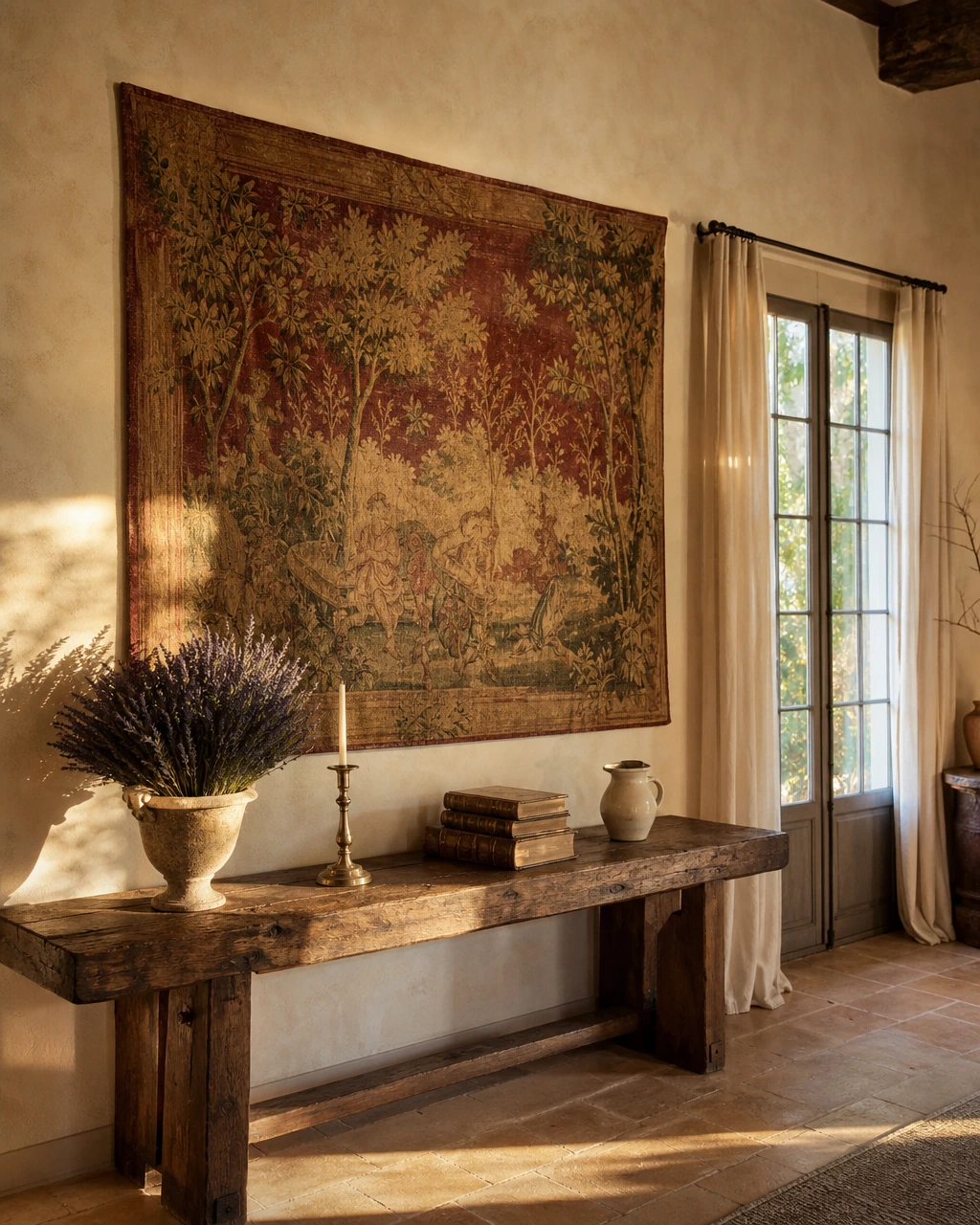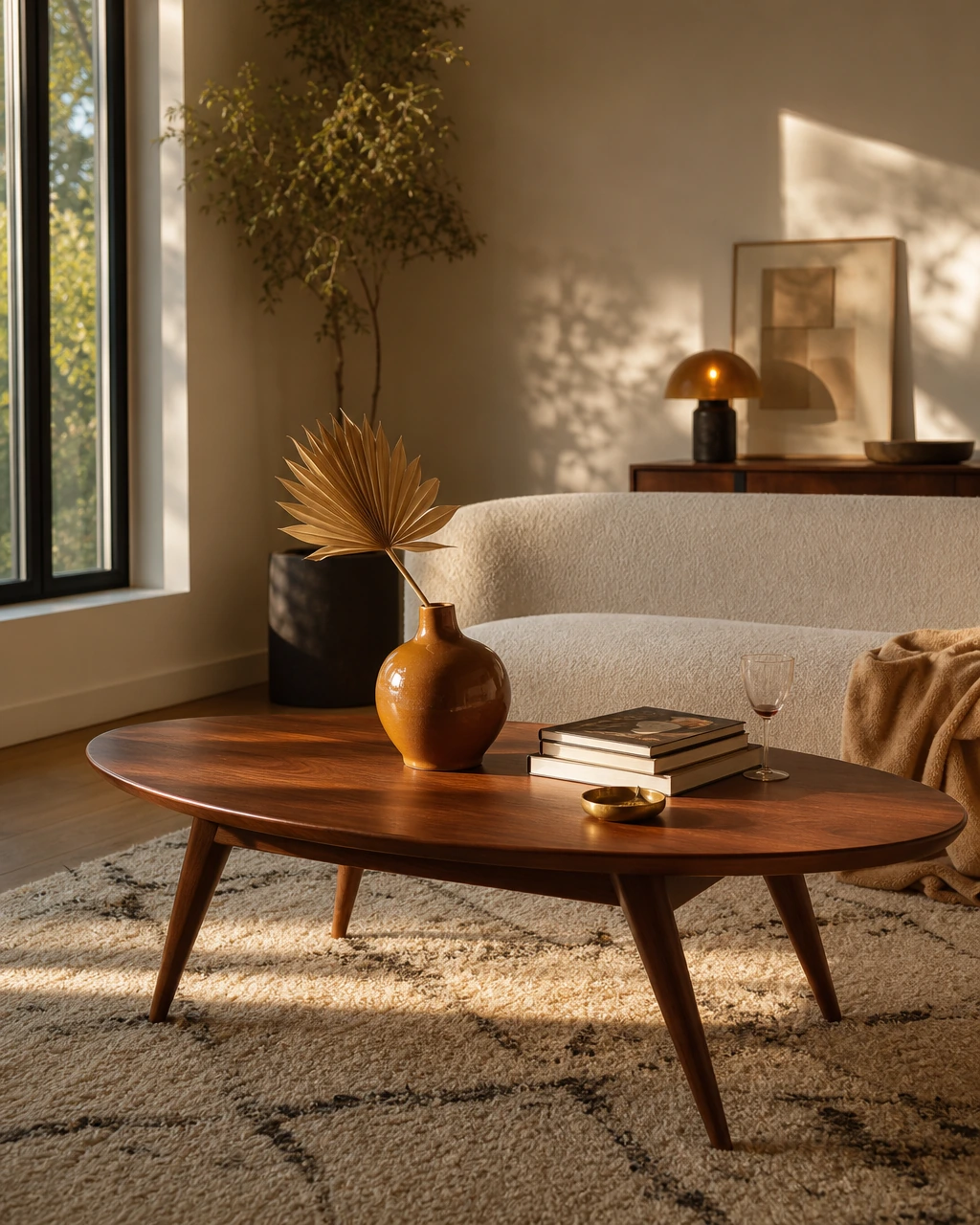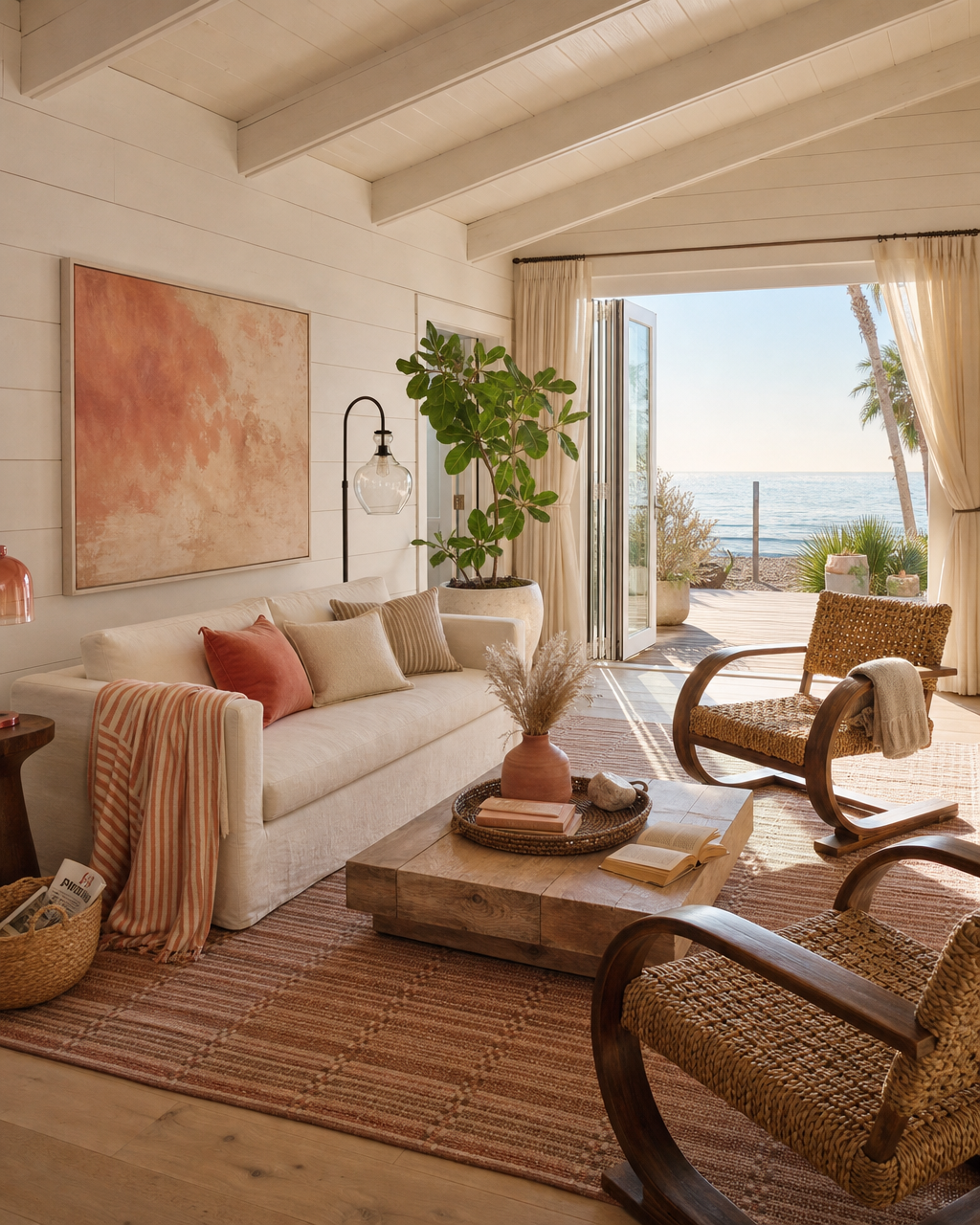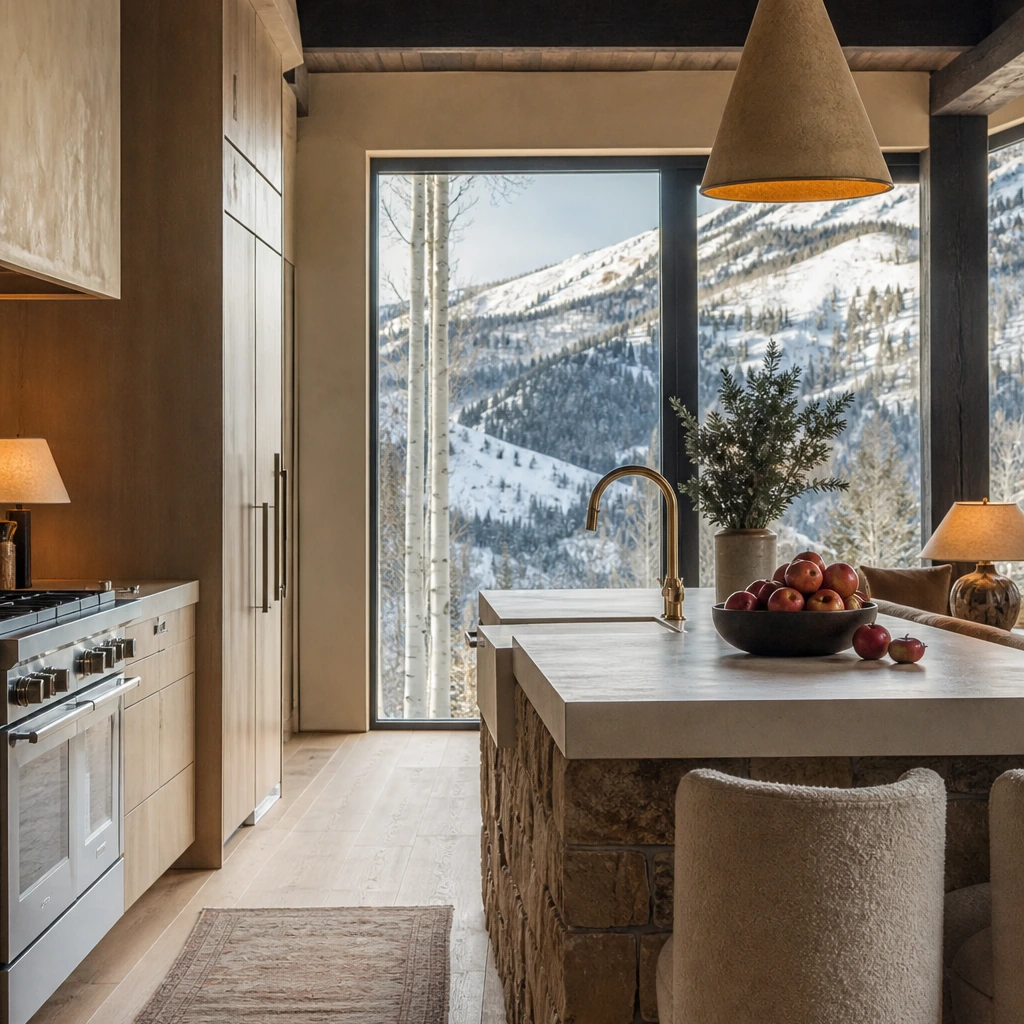
Picture this: you're standing in your living room in Pasadena, or maybe a townhouse in Nashville, holding your phone with seventeen saved images of Oprah's Montecito estate, and the gap between what you're looking at and what you're standing in feels impossible to close. The rooms in those photos are warm, unhurried, and completely at ease with themselves. Yours feels like it's still waiting to become something.
Here's what those photos aren't telling you: the rooms that define Oprah Winfrey's California home are not impressive because of their square footage or their price tags. They work because of the decisions behind them. Restrained color. One strong focal piece per room. Lighting that comes from multiple directions. Objects chosen for meaning rather than trend. These are design principles, not budget lines. And they are entirely reproducible.
Oprah has described her approach to her Montecito estate as finding a decorating style that "spoke to her heart," working with designer Anthony T. Ferrer to move away from formal rooms that looked impressive toward rooms that felt right to live in. That shift, from performance to comfort, is the core of her aesthetic. It also happens to align precisely with where the broader luxury home market has moved. Affluent homeowners increasingly want spaces that feel restorative and personal rather than status-driven. The timing has never been better to build a room that feels like Oprah's without requiring her resources.
This guide breaks down the core design principles from her homes and shows you how to apply each one in a real space, with real furniture, at a realistic budget. You will learn:
- How Oprah's three-color rule eliminates visual chaos in any room
- Why one strong focal piece outperforms a room full of competing ones
- How layered lighting transforms the feel of a space faster than any renovation
- How to build a gallery wall that feels personal rather than Pinterest-assembled
- Which textile decisions carry the most visual weight for the least spend
- How to extend your interior aesthetic into outdoor and entertaining spaces
- How to edit surfaces and storage so rooms feel considered rather than accumulated
Key Takeaways
- Oprah applies a strict three-color rule per room, distributed in a 60-30-10 proportion (60% dominant, 30% secondary, 10% accent). This single discipline eliminates most of the visual chaos that makes rooms feel unresolved.
- Modern luxury has shifted decisively toward comfort, wellness, and personalization. McKinsey research confirms that affluent consumers increasingly value spaces that feel emotionally connected and restorative rather than opulent.
- A complete kitchen renovation yields a Joy Score of 9.8 out of 10 among homeowners, according to the NAR Remodeling Impact Report, reflecting how deeply livability improvements affect satisfaction.
- The most impactful design moves are rarely structural. Layered lighting, edited surfaces, and one strong focal piece per room do more work than most renovations.
- 70% of architecture firms observed increasing demand for outdoor living spaces and covered outdoor rooms among clients, according to the AIA Home Design Trends Survey. Oprah's Montecito estate is built around exactly this indoor-outdoor principle.
- Designers recommend filling shelves only two-thirds full and leaving deliberate empty space. The empty third is not wasted; it is what makes the objects you do display look considered.
- LED lighting uses up to 75% less energy than incandescent alternatives, making it practical to add multiple warm light sources throughout a room without a significant increase in energy costs.
- First Chair helps homeowners move from inspiration images like Oprah's rooms to real, shoppable furniture recommendations across multiple retailers, without the overwhelm of building a cohesive room from scratch.
What Makes Oprah's Design Aesthetic Work

Oprah's interior design aesthetic is a comfort-first approach built on restrained color, natural materials, personal objects, and layered warmth rather than trend-driven statement-making or conspicuous display. It is what the design world now calls "quiet luxury": understated, high-quality, and deeply personal.
The aesthetic did not arrive fully formed. Her California home evolved from formal to comfortable over time, with the shift driven by a single question: what does this room need to feel right to live in, rather than right to photograph? That reorientation is the most useful design lesson her homes offer.
Three principles run through every room in her homes, regardless of the specific furniture or color choices:
- Restraint over accumulation. Fewer pieces, chosen carefully, doing more work.
- Warmth over formality. Natural materials, soft lighting, and comfortable upholstery over stiff showroom arrangements.
- Personal meaning over trend. Objects that tell a story rather than objects that signal a style.
These principles are not expensive to execute. They are disciplined to execute. That distinction is worth holding onto as you work through the rest of this guide.
Why This Aesthetic Matters Now
The broader luxury home market has moved in exactly the direction Oprah's rooms have always pointed. Understanding this shift helps explain why her aesthetic feels so current, and why the principles behind it are worth taking seriously as a design framework.
The Shift from Opulence to Comfort
Affluent consumers are redefining what luxury means in the home. McKinsey research on the luxury market documents a clear shift toward comfort, authenticity, and emotional connection, with home and interior categories benefiting as people invest in spaces that feel personal and restorative rather than status-driven. The same analysis notes that post-pandemic consumers "spend more on the home" and seek products that reflect their values, including wellness, sustainability, and craftsmanship.
Better Homes and Gardens Real Estate describes "the new luxury" as warm, inviting spaces regardless of square footage, emphasizing neutral palettes, thoughtful furniture placement, and layered lighting over ostentatious decor. This framing maps directly onto what Oprah's rooms have always demonstrated.
Home as Sanctuary
The wellness dimension of home design has become a primary driver of renovation decisions. The American Institute of Architects' Home Design Trends Survey found strong demand for outdoor living spaces, indoor-outdoor connections, and home wellness areas, reflecting a shift toward homes as health and productivity environments. Oprah's Montecito estate is built around exactly this principle: she describes it as "a sanctuary of gratitude, nature, and timeless wisdom," with the landscape as central to the design as the interior rooms.
Homeowner Satisfaction and Design Investment
The data on homeowner satisfaction reinforces the case for investing in livability over aesthetics alone. The NAR Remodeling Impact Report shows that 94% of homeowners who undertake a kitchen upgrade report a "greater desire to be at home," and 87% report greater enjoyment of their home after the project. These are not small numbers. They reflect how deeply the quality of a designed space affects daily life.
Staging and design quality also affect buyer perception in the real estate market. In NAR's Profile of Home Staging, 81% of buyers' agents reported that staging made it easier for buyers to visualize the property as a future home, with living rooms, primary bedrooms, and kitchens identified as the most important areas. Neutral palettes and clear focal points were consistently cited as effective staging tools.
Smart Comfort Over Gadget Novelty
Deloitte's Smart Home Consumer research finds that high-income households are significantly more likely to invest in smart lighting, climate control, and home security, prioritizing convenience and ambiance over novelty. For Oprah-inspired spaces, this points toward integrated dimmable lighting and smart shading systems as practical tools for achieving the layered warmth her rooms demonstrate, rather than conspicuous technology.
Color Palettes and Neutral Tones in Luxury Home Design
A neutral palette in luxury interior design is a color scheme built around off-whites, ivories, warm beiges, and soft greys used as a flexible backdrop for art, statement furniture, and personal objects. It functions less as a color choice and more as a design decision about what the room is for.
Oprah's approach to color is unusually specific. She told designer Jeremiah Brent that she limits herself to three colors per room, four at most, distributed in a 60-30-10 proportion: 60% primary, 30% secondary, 10% accent. This is not a casual preference. It is a working rule she applies consistently across her homes.
How to Apply the 60-30-10 Rule
The rule is straightforward to implement once you understand what each tier is doing:
- 60% (dominant): Your wall color and largest upholstered pieces. Warm white, ivory, or soft greige work well here. This is the room's resting state.
- 30% (secondary): Rugs, curtains, and secondary seating. A deeper taupe, warm sage, or soft terracotta. This tier adds depth without competing with the dominant tone.
- 10% (accent): Throw pillows, a single piece of art, a lamp base, or a vase. Deep navy, rust, or aged brass. Used sparingly, this is what gives the eye somewhere to land.
The key is repetition. The accent color should appear in at least two places in the room so it reads as intentional rather than accidental. One rust pillow looks like a mistake. Rust pillows paired with a rust ceramic on the shelf look like a decision.
Neutral Palettes as Gallery Backdrops
Warm neutral walls function as a gallery backdrop, allowing art and statement furnishings to carry the visual personality of the room. When walls recede, the objects in front of them become the story. This is exactly how Oprah's rooms function: the architecture is quiet, and the collected objects, whether a piece of art, a sculptural lamp, or a well-chosen sofa, do the talking.
If your current walls are a strong color that is competing with your furniture, repainting to a warm neutral is one of the highest-return design moves available. It costs relatively little and changes the entire character of a room. Choose a tone with a warm undertone (yellow or red base) rather than a cool one (blue or green base) to achieve the inviting quality that defines Oprah's interiors.
Statement Furniture Pieces That Define a Room
Statement furniture is one or two visually dominant pieces in a room, such as a sculptural sofa, an oversized dining table, or a distinctive lounge chair, that set the tone for the space and give the eye a clear anchor. Everything else in the room exists in relationship to these pieces.
The mistake most people make is trying to make everything interesting. When every piece competes for attention, nothing wins. Oprah's rooms work because they follow a clear hierarchy: one or two pieces carry the room, and everything else supports them.
Choosing Your Focal Piece
Luxury design guidance consistently recommends starting with a single dramatic element per room and building around it. That element might be:
- A large, well-upholstered sofa in a warm neutral with interesting texture
- An oversized dining table in a warm wood with honest grain
- A sculptural chandelier or statement floor lamp that reads as art
- A significant piece of artwork hung at the right height with proper breathing room
The focal piece does not need to be the most expensive thing in the room. It needs to be the most considered. A sofa with a strong silhouette in a quality bouclé or linen fabric will anchor a room more effectively than a collection of mid-range pieces that don't relate to each other.
What to Keep Simple Around It
Once you have your focal piece, the supporting cast should be quieter. This is where many homeowners overspend. A strong sofa does not need an equally strong coffee table, rug, and side chairs all competing at the same volume. Pull back on everything else and let the focal piece breathe.
For rooms where scale is a constraint, the same principle applies: one strong piece in a smaller room reads as intentional. Multiple competing pieces read as crowded. The furniture-for-small-spaces guide covers this in more detail, but the core rule holds across every room size.
RH, Arhaus, and Interior Define all carry upholstery options in the warm neutral and textured fabric range that aligns with Oprah's aesthetic. CB2 and West Elm offer strong silhouettes at more accessible price points. The key is choosing one and committing to it rather than hedging with multiple safer, smaller pieces.
Lighting Design for Warmth and Ambiance
Layered lighting is the combination of ambient, task, and accent lighting used together to create depth, mood, and flexibility in a room. It is one of the most impactful and consistently underused tools in residential design.
Most homes rely on a single overhead light source. This produces flat, even illumination that flattens texture, eliminates shadow, and makes rooms feel institutional rather than warm. Oprah's rooms, like most well-designed luxury interiors, use multiple light sources at different heights to create depth and atmosphere.
The Three Layers of Residential Lighting
The table below outlines how each lighting layer functions and where it appears in a well-designed room:
LayerPurposeExamplesAmbientOverall room brightnessRecessed ceiling lights, flush mounts, chandeliersTaskFunctional illuminationReading lamps, under-cabinet kitchen lighting, desk lampsAccentHighlighting and atmospherePicture lights, uplights, candles, decorative table lamps
The goal is to be able to turn off the overhead light entirely in the evening and still have a fully lit, comfortable room. If you cannot do that currently, you need more accent and task sources.
Practical Lighting Upgrades
LED lighting uses up to 75% less energy than incandescent alternatives and lasts significantly longer, making it practical to add multiple light sources without a meaningful increase in energy costs. For an Oprah-inspired warmth, look for bulbs with a color temperature between 2700K and 3000K. This range produces the warm, amber-adjacent light that makes rooms feel inviting rather than clinical.
Lutron makes excellent residential dimming systems that allow full range from bright daytime light to low evening ambiance. Philips Hue offers a more accessible entry point for smart lighting with similar color temperature control. Pair dimmable fixtures with smart shading to give yourself complete control over the room's mood at any hour.
One specific recommendation worth stating plainly: if a room already feels cold, avoid defaulting to black metal fixtures. Warm brass, aged bronze, and natural wood tones in lighting hardware will soften the space faster than almost any other single change.
Art Curation and Gallery Wall Inspiration
Curated decor is the practice of selecting each object in a room, whether art, books, or accessories, for its meaning or aesthetic value rather than for trend alignment or volume. The result is rooms that feel personally authored rather than assembled from a catalog.
Oprah's homes feature gallery walls of family photographs, meaningful artwork, and objects collected over time. The effect is rooms that feel like they belong to someone specific. That quality is not achievable through shopping alone. It requires editing as much as acquiring.
Building a Gallery Wall That Works
Practical guidance from designers featured on Oprah.com suggests a clear sequence for gallery wall construction:
- Start with your largest piece and position it at eye level (approximately 57 to 60 inches from floor to center).
- Build outward from that anchor, mixing frame sizes and finishes.
- Keep consistent spacing between frames (3 to 4 inches is a reliable standard).
- Mix mediums: photography, painting, and textile work together well.
- Include at least one piece that surprises you, something unexpected that breaks the visual rhythm.
The test for any piece is simple: does it mean something to you, or did you buy it because it matched the sofa? Oprah's rooms feel personal because the objects in them are personal. That is not a budget question.
Where to Source Meaningful Art
You do not need to spend significantly on art to create a gallery wall that feels considered. Saatchi Art offers original works across a wide price range. Chairish and 1stDibs carry vintage photography and prints that bring history and texture to a wall. For handmade ceramics and textile pieces that add dimension, Etsy's better artisan shops are worth exploring.
The mix of old and new matters. Juxtaposing a story-filled antique print with a contemporary photograph creates the layered, collected quality that distinguishes Oprah's rooms from rooms that were simply furnished all at once.
High-End Textiles and Fabric Selection
Textural contrast in interior design is the practice of combining different surface qualities, smooth, nubby, soft, and glossy, to add visual and tactile richness to a room without relying on color variation. It is how rooms feel expensive even when the palette is restrained.
Oprah's rooms are layered with texture: linen curtains, velvet upholstery, woven rugs, and natural wood surfaces. The palette stays quiet, but the room feels rich because the surfaces are doing interesting work.
Textiles That Earn Their Place
A few principles govern which textiles carry the most weight:
- Rugs anchor the room. A rug that is too small makes furniture look like it is floating. Size up. The front legs of all major seating pieces should sit on the rug.
- Curtains should hang at ceiling height. Hanging curtains at window height rather than ceiling height makes rooms feel shorter. Mount the rod as close to the ceiling as possible and let the fabric pool slightly at the floor.
- Upholstery texture matters more than color. A sofa in a warm, textured fabric (bouclé, linen, or a soft performance velvet) reads as more luxurious than the same silhouette in a flat, smooth fabric, even at the same price point.
Mixing Textiles Without Chaos
The rule for mixing textiles mirrors the rule for mixing colors: limit the palette and vary the texture. Two or three fabric types in the same color family will feel cohesive. Four different colors in four different fabrics will feel chaotic.
For a furniture buying guide that covers upholstery selection in more depth, the emphasis on quality texture over quantity of pieces holds across every budget tier. RH, Arhaus, and Interior Define all carry upholstery options in the warm neutral and textured fabric range that aligns with this aesthetic.
Outdoor Living Spaces and Entertaining Areas
Indoor-outdoor connection in residential design is the use of large windows, sliding glass doors, continuous flooring materials, and consistent color palettes to make interior spaces feel visually and functionally linked to terraces, gardens, or courtyards.
Oprah's Montecito estate is built around this principle. Her estate tour shows extensive terraces, gardens, and outdoor seating areas that function as extensions of the interior rooms rather than separate spaces. The landscape is not backdrop; it is part of the design.
The Trends Survey found that 70% of architecture firms observed increasing demand for outdoor living spaces and covered outdoor rooms among clients. Large windows and sliding glass doors were cited by more than 50% of firms as a strong demand driver. This is not a niche preference; it reflects a fundamental shift in how people want to live.
Extending the Interior Aesthetic Outdoors
You do not need a Montecito estate to apply this principle. The goal is continuity: making the transition from inside to outside feel intentional rather than abrupt.
Practical moves that work at any scale:
- Mirror indoor color palettes outdoors. If your interior uses warm neutrals and natural wood, carry those tones into outdoor furniture and planters.
- Use consistent flooring materials at the threshold. Large-format stone or wood-look tile that runs from interior to exterior visually extends the space.
- Treat the outdoor area as a room. A rug, a proper seating arrangement, and a light source (string lights, lanterns, or a wall sconce) make an outdoor space feel finished rather than incidental.
- Add greenery at the transition point. Potted plants at a doorway or along a terrace edge blur the boundary between inside and outside in a way that feels natural rather than designed.
Serena and Lily and Pottery Barn Outdoor both carry furniture in the warm neutral range that bridges interior and exterior aesthetics without the jarring shift that comes from treating the two spaces as entirely separate design problems.
Smart Storage Solutions for Organized Elegance
Organized elegance in interior design is the practice of designing storage to be invisible or beautiful, so that the surfaces and shelves visible in a room reflect only what is intentional and meaningful. It is the discipline that makes curated rooms possible.
Oprah Daily's home advice from designer Nikki Klugh recommends starting with a complete edit: remove everything from shelves and surfaces, then return only what you love. Fill shelves only two-thirds full to give the eye rest and avoid the visual weight of overcrowded surfaces. The empty third is not wasted space. It is what makes the objects you do display look considered.
The Two-Thirds Rule in Practice
The two-thirds rule applies to bookshelves, built-ins, kitchen open shelving, and bathroom surfaces. When styling shelves, designers featured on Oprah.com suggest grouping objects by color or material rather than category. Books interspersed with framed photographs, small bowls, and a single vase read as a curated collection. Books alone, spine-out in a single row, read as storage.
Storage That Disappears
The most elegant storage is the kind you don't see. Built-in cabinetry, furniture with hidden storage (ottomans, beds with drawers, console tables with doors), and consistent basket or box systems in closets all reduce visual noise without reducing function.
For homeowners working through a new apartment setup, storage decisions made early prevent the accumulation problem from developing in the first place. It is significantly easier to design storage into a room from the start than to retrofit it after the room is furnished.
Tools and Platforms for Executing This Aesthetic
The gap between inspiration and a finished room is a practical problem. The tools below help homeowners plan, source, and execute an Oprah-inspired interior without requiring a full design team.
Design Visualization and Planning
Before committing to furniture, understanding how pieces will work together in your specific space saves significant money and frustration.
- SketchUp offers 3D modeling for interior layouts and furniture placement, widely used in residential design for testing arrangements before purchasing.
- Chief Architect is specialized residential design software for floor plans, interiors, and kitchen and bath layouts.
- Autodesk (AutoCAD, Revit) provides professional-grade tools used by architects and interior designers for detailed spatial planning.
Inspiration-to-Purchase Platforms
Moving from saved images to real, buyable rooms is where most homeowners get stuck.
- First Chair is built specifically for this gap. Upload an inspiration image, describe your aesthetic direction (something like "warm neutral, collected, not minimal"), and receive curated room recommendations built from real, in-stock furniture across retailers including West Elm, CB2, Crate and Barrel, Pottery Barn, and Lulu and Georgia. Every piece is real and purchasable. The platform also offers insider pricing on selected pieces, without the promo-code hunt. For homeowners who have been saving inspiration images for months without being able to translate them into a real room, First Chair narrows the field to the pieces that actually work together. You can explore the full interior design app landscape before deciding which approach fits your process.
- Houzz combines inspiration imagery, a product marketplace, and directories of professional designers and contractors for homeowners who want to work with a designer.
- The Expert connects homeowners with high-end interior designers for paid video consultations, useful for specific rooms or decisions that benefit from professional input.
Smart Lighting and Ambiance Systems
Layered lighting is one of the highest-impact changes available, and the right tools make it practical.
- Lutron provides advanced lighting and shading systems enabling dimmable scenes, automated shades, and whole-home ambiance control. It is the standard for residential luxury lighting.
- Philips Hue (Signify) offers a consumer smart lighting ecosystem with flexible color temperature and scene control via apps, at a more accessible entry point.
- Control4 provides full-home automation integrating lighting, audio, climate, and security for homeowners undertaking larger projects.
High-End Furniture and Textiles
Sourcing statement pieces in the warm neutral and textured fabric range that defines Oprah's aesthetic.
- RH (Restoration Hardware) is known for neutral palettes, oversized sofas, and statement lighting that aligns closely with the quiet luxury aesthetic.
- Arhaus focuses on artisan-crafted furniture and sustainable materials with a comfortable, upscale feel.
- Interior Define offers customizable upholstery with strong silhouettes and a wide range of fabric options including bouclé and performance linen.
Art and Decor Curation
Building gallery walls and meaningful surfaces requires sources that go beyond standard furniture retail.
- Saatchi Art offers original artworks across a wide price range, including photography and painting suited to gallery wall construction.
- 1stDibs carries vintage and antique furniture, art, and decor for mixing story-filled pieces with newer ones.
- Chairish is a curated marketplace for vintage and pre-owned furniture and decor, useful for finding the antique pieces that give rooms their collected quality.
Best Practices for Recreating Oprah's Aesthetic
1. Define Your Home Story Before You Shop
Start with what "home" means to you: comfort, nature, family, art. Let that guide major design decisions before you open a single browser tab. Oprah describes finding a style that "spoke to her heart" as the foundation of her design process. Without that clarity, shopping produces rooms that look assembled rather than authored.
2. Apply the Three-Color Rule Consistently
Choose one dominant neutral, one supporting tone, and one accent, then repeat them throughout the main floor. The accent color should appear in at least two places in each room. This single discipline eliminates most of the visual chaos that makes rooms feel unresolved.
3. Invest in One Focal Piece Per Room
Allocate budget to one exceptional sofa, dining table, or chandelier per major room, then keep everything else simple, comfortable, and in harmony with that focal piece. A strong anchor with quiet supporting pieces reads as more luxurious than a room full of equally weighted elements.
4. Add Multiple Light Sources at Different Heights
If you can only turn on the overhead light in the evening, you need more sources. Add floor lamps, table lamps, and accent lighting before investing in any other design change. This single move transforms the feel of most rooms.
5. Edit Surfaces to Two-Thirds Full
Remove everything from shelves and surfaces, then return only what you love. Leave the remaining third empty. The empty space is not absence; it is what makes the objects you keep look intentional.
6. Size Up Your Rug
The front legs of all major seating pieces should sit on the rug. A rug that is too small makes furniture look like it is floating and makes the room feel smaller, not larger. This is one of the most common and most correctable mistakes in residential design.
7. Carry the Interior Palette Outdoors
Mirror your indoor neutral tones and natural materials in outdoor furniture and planters. Treat the outdoor space as a room with a rug, a seating arrangement, and a light source. The continuity between inside and outside is central to the sanctuary quality that defines Oprah's Montecito estate.
8. Choose Texture Over Color in Upholstery
A sofa in bouclé, linen, or performance velvet reads as more luxurious than the same silhouette in a flat, smooth fabric. When the palette is restrained, texture carries the visual richness.
Common Mistakes and How to Fix Them
The table below maps the most common design errors against Oprah's approach and provides a direct fix for each:
Common MistakeConsequenceThe FixToo many colors competing at equal weightVisual chaos; room feels unresolvedApply the 60-30-10 rule; limit accents to one color repeated in two placesEvery piece trying to be interestingNothing reads as focal; room feels busyInvest in one strong anchor per room; simplify everything elseSingle overhead light sourceFlat, institutional feel; textures disappearAdd floor lamps, table lamps, and accent lighting at different heightsOvercrowded shelves and surfacesRooms feel accumulated rather than curatedEdit to two-thirds full; leave deliberate empty spaceTrend-driven decor with no personal connectionRoom feels assembled, not authoredReplace trend pieces with objects that carry personal meaningOutdoor space treated as afterthoughtInterior aesthetic stops at the doorMirror interior palette and materials outside; treat outdoor area as a roomFlat fabric on upholsterySofa reads as mid-range regardless of priceChoose bouclé, linen, or performance velvet over smooth weavesCurtains hung at window heightRoom feels shorter and smallerMount rod at ceiling height; let fabric pool slightly at the floor
Frequently Asked Questions
What is Oprah's interior design style?
Oprah's interior design style is best described as warm, comfortable luxury, built around neutral color palettes, natural materials, layered lighting, and personal objects that carry meaning. She has described her approach as finding a style that "spoke to her heart" rather than following trends. Her homes, particularly her Montecito estate, reflect the broader shift in luxury design toward comfort, wellness, and personalization over opulent display.
How do I recreate a luxury interior on a realistic budget?
Focus on the decisions with the highest visual impact for the lowest cost. Repaint walls to a warm neutral, add multiple light sources at different heights, resize your rug so furniture legs sit on it, and hang curtains at ceiling height rather than window height. These four changes will transform most rooms before you spend anything on new furniture. After that, invest in one strong focal piece per room and keep everything else quiet.
What colors does Oprah use in her home?
Oprah uses a maximum of three colors per room, distributed in a 60-30-10 proportion. Her homes lean toward warm neutrals (ivory, warm white, soft taupe) as the dominant tone, with deeper supporting colors and a single restrained accent. She shared this rule directly with designer Jeremiah Brent, and it is documented in detail by Livingetc.
What is the difference between quiet luxury and traditional luxury in home design?
Quiet luxury in home design emphasizes understated elegance, high-quality materials, and comfort over overt displays of wealth or trend-driven statement pieces. It prioritizes how a room feels to live in over how it photographs. Traditional or opulent luxury often relies on ornate detail, matched sets, and conspicuous materials. Oprah's homes are a clear example of quiet luxury: the rooms are warm and personal rather than formal and impressive.
How important is art to achieving Oprah's aesthetic?
Art and personal objects are central to the aesthetic, but the key is meaning rather than monetary value. Oprah's homes feature gallery walls of family photographs, artwork acquired over time, and objects with personal significance. The goal is rooms that feel authored by someone specific, not assembled from a catalog. You can achieve this with original works from Saatchi Art, vintage prints from Chairish, and handmade ceramics from artisan shops, all at accessible price points.
What furniture brands align with Oprah's design aesthetic?
RH, Arhaus, and Interior Define carry upholstery and furniture in the warm neutral and textured fabric range that aligns most closely with Oprah's aesthetic. CB2 and West Elm offer strong silhouettes at more accessible price points. For art and vintage pieces that add the collected quality her rooms demonstrate, Chairish and 1stDibs are the most useful sources.
Conclusion: From Inspiration to a Room That Finally Feels Right
The rooms in Oprah's homes are not impressive because of what they cost. They are impressive because of the clarity behind them. Three colors, applied with discipline. One strong focal piece, given room to breathe. Lighting that comes from multiple directions. Objects chosen for meaning rather than trend. Surfaces edited to two-thirds full. An outdoor space treated as a room.
None of these are expensive decisions. They are disciplined ones. And discipline, applied consistently across a space, produces the warmth and cohesion that makes a room feel like it belongs to someone.
The gap between admiring those rooms and actually building one is a practical problem, not a taste problem. You already know what you want the room to feel like. The question is execution.
First Chair is built for exactly this moment. Upload an inspiration image from Oprah's estate or any room that captures the feeling you're after, describe your aesthetic direction, and receive curated room recommendations built from real, in-stock furniture across West Elm, CB2, Crate and Barrel, Pottery Barn, Lulu and Georgia, and more. Every piece is real and purchasable. Insider pricing is built in. The field is already narrowed to pieces that work together.
The room you've been saving images of is closer than you think.