
You signed the papers on a suburban ranch house in Denver last spring, moved in your furniture, and stood in the living room thinking: this is fine. Functional. Inoffensive. But it doesn't feel like anything. Then you turned on Yellowstone, watched the Dutton family hold court in that Montana great room with its stone fireplace and warm timber ceiling, and realized that "fine" was exactly the problem.
The Yellowstone house has done something unusual for a television set. It made millions of homeowners genuinely reconsider their interiors, not because the look is aspirational in a fantasy-home way, but because it feels earned. Timber, stone, leather, and layered light working together in a way that reads both rugged and refined. The rooms look like they were built over decades, not assembled from a single catalog.
The practical reality is that most of what makes the Yellowstone aesthetic work has nothing to do with square footage or a Montana zip code. It's about material choices, a restrained palette, and knowing which elements to commit to fully. A documented case study of a real Yellowstone Residence shows 15-foot-tall living rooms and floor-to-ceiling glass walls, but you don't need any of that to get the feeling right. You need a clear direction and a few well-chosen pieces that do serious work.
This guide breaks down the core design elements of the Yellowstone look and shows you how to translate each one into a real home, whether you're working with a suburban ranch house, a city apartment with good bones, or a new build that needs a soul. Here's what you'll learn:
- The four-material recipe that defines the Rich Ranch aesthetic
- How to build a warm neutral palette that holds the room together
- Where reclaimed wood delivers the most visual return
- How to anchor a room with a fireplace or stone feature wall
- Which furniture pieces define the look and which ones undermine it
- How lighting transforms the evening feel of a room
- How to extend the aesthetic outdoors without a full renovation
- A priority sequence for budget-conscious homeowners
Key Takeaways
- The Yellowstone aesthetic is defined by four materials: reclaimed wood, antique stone, steel, and glass. Wood and stone do the heavy lifting; steel and glass provide the modern counterpoint.
- American homeowners spent $485 billion on home improvements in 2023, confirming that selective, high-impact updates are the dominant renovation strategy, not full rebuilds.
- The most cost-effective entry points are paint, lighting, textiles, and one strong focal point. Structural changes are rarely necessary to achieve the look.
- Mixing rustic materials with cleaner contemporary finishes is what separates the Rich Ranch look from a themed Western room. The restraint is the design.
- Scale is the most commonly misunderstood element. Undersized rugs and small lighting fixtures in large rooms immediately undermine the lodge feeling the style depends on.
- A covered porch or pergola is one of the highest-return investments in this aesthetic, adding 1,000 square feet or more of livable outdoor space while reinforcing the indoor-outdoor continuity the look requires.
- The Yellowstone look has staying power because it's a contemporary expression of a much older design instinct: homes that feel connected to the natural world and built to last.
What the Yellowstone House Design Style Actually Is
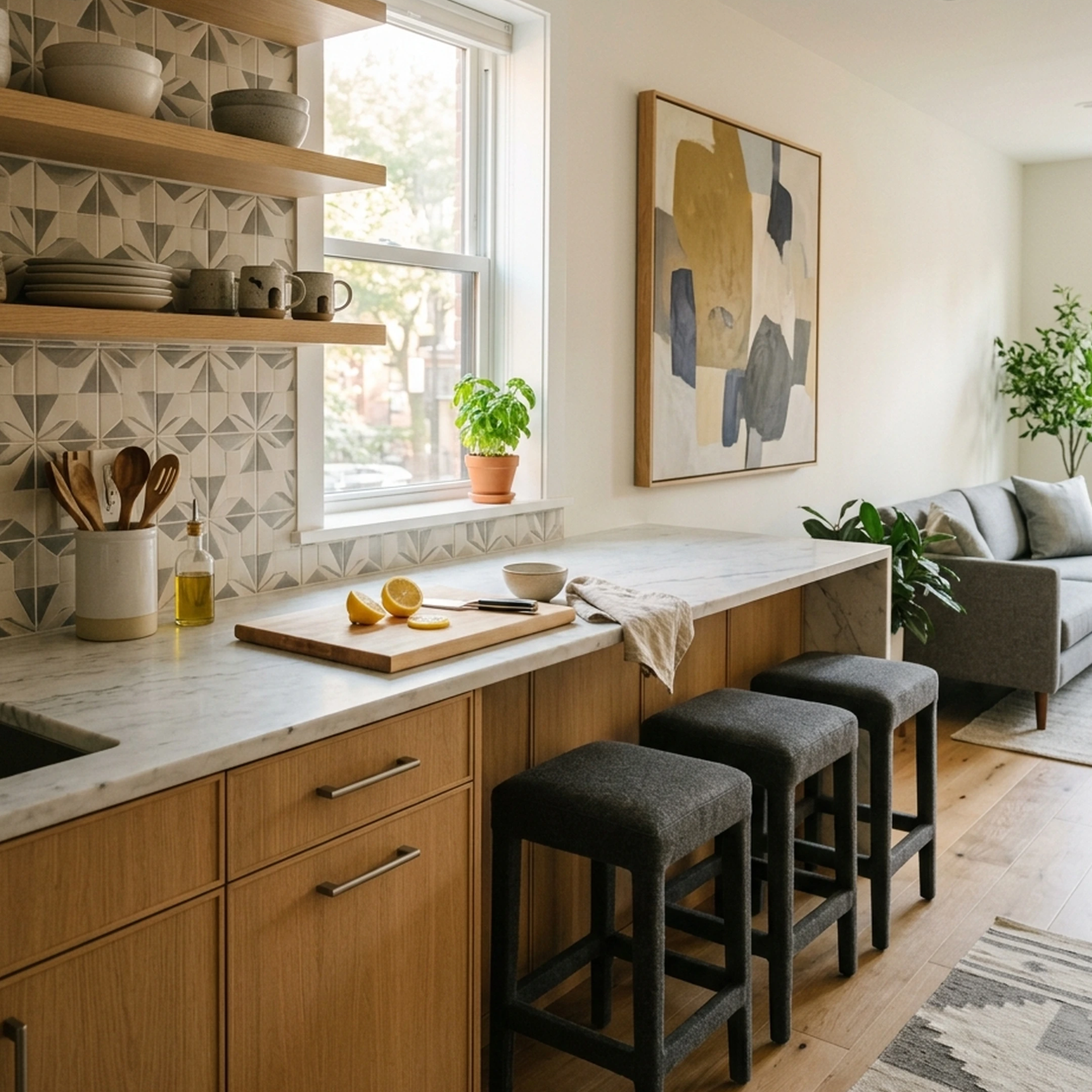
Rustic-modern is a design style that pairs rough, natural materials like reclaimed wood and stone with cleaner contemporary forms such as steel, glass, and streamlined furniture, producing spaces that feel grounded and intentional rather than themed or nostalgic.
The Yellowstone house is a specific, well-executed expression of this style. The show's production designer has described the palette as timber and stone with an "old and new" heritage mix. Coverage of the real Yellowstone ranch confirms this: the interiors feel lived-in and layered, not assembled from a single catalog. That quality of collected authenticity is exactly what makes the look so appealing and exactly what's hardest to fake with shortcuts.
House Beautiful's analysis of the "Rich Ranch" trend identifies the style as using luxe, rustic materials in a sparing way, paired with furnishings that blend old and new. The restraint is the design. A room built around one strong stone fireplace and warm wood floors will look right in ten years. A room covered in antler chandeliers and cowhide everything will not.
The Four-Material Recipe
The Rich Ranch look is built on four materials used in deliberate proportion. Wood and stone carry the visual weight. Steel and glass provide the contemporary counterpoint that keeps the room from reading as a period piece.
For most homeowners, the practical translation looks like this:
- Reclaimed or reclaimed-look wood for flooring, ceiling beams, or a single accent wall
- Stone or stone veneer for a fireplace surround or feature wall
- Warm metal finishes (aged brass, blackened steel) for lighting and hardware
- Glass in larger window treatments or a statement light fixture
You don't need all four in every room. Two or three, used with intention, are enough to establish the language.
Why This Look Has Staying Power
The Yellowstone aesthetic isn't a trend in the way that millennial pink or all-white kitchens were trends. It's a contemporary expression of a much older design instinct: the idea that a home should feel connected to the natural world and built to last. That instinct doesn't expire.
The broader shift in home design toward warm, nature-connected interiors and rustic-modern hybrid styles has been consistent across multiple design cycles. The Yellowstone show accelerated awareness of the look, but the underlying preference was already there. That's part of why the style translates so well across different home types and budgets.
Why the Yellowstone Aesthetic Matters Right Now
The renovation market context matters here. Homeowners are more likely to pursue selective updates than full rebuilds, which makes visual changes like paint, lighting, textiles, rugs, and furniture especially relevant for achieving this style. The scale of that market is significant: the data consistently shows that high-impact targeted updates outperform full renovations in terms of livability return.
Material and finish choices also carry more weight than they used to. The U.S. Environmental Protection Agency reported that construction and demolition debris reached 600 million tons in the U.S. in 2018, which is part of why reclaimed, reused, and longer-life materials have become both an aesthetic preference and a practical one. Choosing reclaimed wood or stone veneer over synthetic alternatives isn't just a design decision; it's increasingly a values-aligned one.
The architecture side of the equation matters too. Architect-led project case studies consistently point to wood, stone, large fireplaces, open great rooms, covered porches, and panoramic glazing as the defining spatial cues for this kind of home. A documented Yellowstone Residence project used cedar slatted ceilings and exposed structural steel to achieve exactly this mix of warmth and industrial restraint, illustrating a repeatable approach that doesn't require custom architecture to approximate.
The Franklin Homes "Yellowstone" floor plan demonstrates that the ranch-style layout can be adapted to 2,400 square feet without losing the essential spatial quality. The look scales down. What doesn't scale down is the commitment to the right materials and proportions.
Warm Neutral Color Palettes: The Foundation of the Look
A warm neutral color palette is the single most accessible entry point into this aesthetic. The Yellowstone interiors rely on a range of browns, muted greens, soft tans, and deep neutrals rather than bright or saturated colors. The effect is calm, grounded, and visually cohesive.
Choosing the Right Paint Colors
The palette works because it mirrors the Montana landscape: the warm tones of dry grass, the grey-green of sage, the deep brown of weathered timber. The goal isn't to decorate a room. It's to create a sense of place.
Practical paint directions that work in this aesthetic:
- Warm whites and off-whites for ceilings and trim (Benjamin Moore's White Dove or Sherwin-Williams' Alabaster)
- Earthy tans and warm greiges for main walls (Sherwin-Williams' Accessible Beige or Benjamin Moore's Pale Oak)
- Muted sage or olive greens for accent walls or cabinetry
- Deep charcoal or soft black used sparingly for grounding (doors, window frames, or a single accent wall)
The key rule: keep the palette warm. Cool greys and stark whites work against this aesthetic. If a color reads blue-grey rather than brown-grey, it's the wrong direction.
Accent Colors That Work
The Yellowstone palette isn't monochromatic. It uses accent colors drawn from the same natural source material: the rust of aged leather, the deep navy of denim, the warm gold of aged brass. These accents appear in textiles, lighting, and accessories rather than on walls.
A simple test: if you can find the color in a Montana landscape photograph, it probably belongs in this palette.
What to Avoid in the Color Scheme
Saturated Western colors (bright turquoise, tomato red, bold yellow) immediately push the room toward themed territory. The same goes for cool-toned neutrals that read as Scandinavian rather than ranch. The Yellowstone palette is warm, earthy, and slightly dusty. It should feel like it has been there for a while.
Reclaimed Wood and Natural Material Finishes
Reclaimed wood is wood salvaged from older buildings or structures and reused as flooring, beams, paneling, or furniture. It's the material most closely associated with the Yellowstone aesthetic because it carries visual history that new wood simply doesn't have.
Where Wood Delivers the Most Visual Return
The most impactful applications, ranked by visual return per dollar:
- Wide-plank flooring in a warm brown or honey tone
- Exposed ceiling beams, either structural or decorative
- A single shiplap or board-and-batten accent wall
- A wood dining table or coffee table with visible grain and character
- Open shelving in a kitchen or living room
Pick the one that fits your space and budget, and commit to it fully rather than spreading the material thin across the room. One well-executed wood element reads as intentional. Three half-executed ones read as unfinished.
Engineered and Reclaimed-Look Alternatives
Genuine reclaimed wood is expensive and requires careful sourcing. Engineered wood flooring from brands like Mohawk or Armstrong Flooring can achieve a very similar visual result at a fraction of the cost. The key is choosing a product with genuine texture variation and a warm, matte finish rather than a high-gloss surface that reads as synthetic.
For wall treatments, shiplap-style panels from most home improvement retailers install quickly and create the same horizontal rhythm as authentic reclaimed boards. The preference for reclaimed and reused materials has grown alongside broader awareness that construction debris represents a significant environmental burden, making these choices both aesthetically and practically sound.
Mixing Wood Tones Without Creating Visual Noise
One of the most common mistakes in this style is mixing too many wood tones without a plan. The result is a room that feels busy rather than layered.
A workable approach: choose one dominant wood tone (usually a warm medium brown) for the largest surfaces like flooring or a dining table, then allow one lighter and one darker tone as accents. Three tones, intentionally chosen, read as collected. Four or more, chosen at random, read as unfinished.
Fireplace and Stone Feature Walls: The Anchor of the Room
A large stone fireplace is the defining spatial element of the Yellowstone interior. The Dutton-style great room centers on exactly this: a substantial stone hearth surrounded by multiple seating areas that orient toward it. The fireplace isn't just a heat source. It's the room's reason for existing.
Stone Veneer as a Budget-Accessible Option
Full masonry fireplaces are expensive and structurally complex. Stone veneer products from brands like Eldorado Stone or Cultured Stone achieve a nearly identical visual result by applying thin stone panels over an existing wall or fireplace surround. The installation is within reach of most renovation budgets and doesn't require structural changes.
The most convincing applications use natural stone profiles (ledgestone, ashlar, or fieldstone patterns) rather than overly uniform or decorative cuts. The goal is a surface that looks like it was built over time, not installed last Tuesday.
What to Do If You Don't Have a Fireplace
If your space doesn't include a fireplace, a floor-to-ceiling stone or stone-veneer accent wall can serve a similar anchoring function. The key is scale: a half-height stone treatment reads as a backsplash. A full-height treatment reads as architecture.
An electric fireplace insert set into a stone surround is another option that has improved significantly in quality and realism. It won't replace the experience of a wood-burning fire, but it creates the visual anchor the room needs without requiring a flue or gas line.
Mantel Styling for the Yellowstone Look
The mantel in a Yellowstone-inspired room should feel curated, not cluttered. A few well-chosen objects: a large piece of art or a framed landscape photograph, one or two natural objects (a piece of driftwood, a ceramic vessel, a stack of books), and a single candle or lantern. The goal is a surface that looks considered, not decorated.
Western-Inspired Furniture and Decor: Getting the Balance Right
Western-inspired furniture and decor in the Yellowstone context means leather, wool, natural fibers, and solid wood construction, not cowboy novelty items. The distinction matters enormously. A room full of antlers, horseshoes, and branded leather looks like a theme restaurant. A room with a deep leather sofa, a jute rug, and a wool throw looks like a home.
The Furniture Pieces That Define the Look
The Yellowstone living room relies on a few key furniture types. This table shows what to look for and what to avoid in each category:
Brands like RH, Pottery Barn, and Lulu and Georgia carry pieces that work well in this direction without requiring custom sourcing.
Textiles That Add Warmth Without Weight
Textiles are where the Yellowstone look becomes livable. Wool throws, linen cushions, plaid or buffalo check patterns, and jute or sisal rugs all contribute to the layered, tactile quality the style depends on. Pendleton blankets are a specific reference point: the brand's wool patterns carry genuine Western heritage and read as authentic rather than decorative.
The rule on textiles: choose natural fibers wherever possible. Synthetic versions of these materials look right in photographs and wrong in person.
What to Skip
Avoid overusing antlers, faux hides, and novelty Western motifs. These elements overshadow the architecture and reduce the room's long-term appeal. One cowhide rug used as an accent is a design choice. Three cowhide items in the same room is a theme.
If you're working through furniture decision fatigue and struggling to narrow down which pieces actually work together, that's exactly the problem First Chair is built to solve. The platform pulls across West Elm, CB2, Crate and Barrel, Pottery Barn, and Lulu and Georgia so the room feels layered rather than retailer-stamped, with every recommendation grounded in real, in-stock pieces you can actually buy.
Open Floor Plans and Living Space Layouts
A great room is a large open central living area that combines seating, dining, and sometimes kitchen functions within a single connected space. It's the spatial format most associated with the Yellowstone house and with ranch architecture more broadly.
Adapting the Great Room Concept to Your Space
Most homes aren't built around a 15-foot-tall open great room. But the principles that make the great room work can be applied at any scale:
- Orient seating toward a focal point, whether that's a fireplace, a large window, or a statement piece of art
- Use rugs to define zones within an open plan rather than relying on walls
- Keep circulation paths clear so the room feels open even when fully furnished
- Choose furniture that faces inward toward the center of the room rather than pushing everything against the walls
The ranch-style layout can be adapted to more modest homes without losing the essential spatial quality. The key is respecting the proportional logic of the style rather than forcing ranch features onto a mismatched layout.
Scale and Proportion: The Most Misunderstood Element
Scale is where most Yellowstone-inspired rooms fall apart. The lodge feeling depends on proportionally generous furniture and fixtures. An undersized rug in a large room, or a small pendant light over a dining table that seats eight, immediately undermines the effect.
A practical guide to scale decisions:
Lighting Fixtures and Ambient Design Elements
Layered ambient lighting is essential to the Yellowstone aesthetic. The interiors rely on warm, soft light sources that create a sense of enclosure and warmth in the evening, not flat overhead illumination.
The Three-Layer Lighting Approach
A well-lit Yellowstone-inspired room uses three types of light working together:
- Ambient light: the base layer, usually from recessed fixtures or a central chandelier, set on a dimmer
- Task light: focused light for reading or work, from floor lamps or table lamps with warm-toned bulbs
- Accent light: candles, lanterns, or small decorative fixtures that add warmth and visual interest at lower heights
No single source should dominate. The room should feel lit from multiple directions and heights, which creates the layered, inviting quality that flat overhead lighting never achieves.
Fixture Styles That Work in This Aesthetic
The Yellowstone look calls for fixtures with warmth and material presence. Specific directions that work well:
- Lantern-style pendants in aged brass or blackened steel
- Spoke or wagon-wheel chandeliers in a restrained, contemporary version (not the ornate novelty version)
- Industrial-style sconces with warm Edison-style bulbs
- Table lamps with ceramic or wood bases and linen shades
Brands like Visual Comfort, Currey and Company, and Hinkley Lighting carry fixtures in these directions at a range of price points.
Bulb Temperature: The Detail Most People Miss
All the right fixtures with the wrong bulbs will still produce a cold, flat room. Use bulbs in the 2700K to 3000K range throughout. This is the warm white range that reads as incandescent and creates the amber quality the Yellowstone interiors depend on. Anything above 3500K reads as cool white and works against the aesthetic.
Outdoor Patio and Landscape Design: Bringing the Ranch Outside
The Yellowstone aesthetic is strongly linked to indoor-outdoor continuity. The covered porch, the view to open land, and the sense that the house belongs to its landscape are all part of what makes the look feel complete.
The Covered Porch as a Design Priority
A covered porch can add 1,000 square feet or more of livable outdoor space. For budget-conscious homeowners, a covered porch or pergola addition is one of the highest-return investments in this aesthetic: it extends the living space, creates a transition zone between inside and outside, and immediately reads as ranch architecture.
If a full porch addition isn't feasible, a pergola over an existing patio achieves a similar effect at lower cost. Materials should match the interior direction: natural wood (cedar or Douglas fir), stone or concrete pavers, and metal hardware in a warm finish.
Outdoor Furniture and Materials
The outdoor furniture in a Yellowstone-inspired space should feel as considered as the interior. Teak or eucalyptus furniture with clean lines, outdoor-rated wool or canvas cushions in earthy tones, and a large natural-fiber outdoor rug create the right quality. Brands like Trex and AZEK offer durable decking materials that hold up in demanding climates while maintaining a natural wood appearance.
Avoid plastic furniture, bright cushion colors, and anything that reads as resort-casual rather than ranch-grounded.
Landscape Direction
The landscape around a Yellowstone-inspired home should feel native and low-maintenance rather than manicured. Native grasses, drought-tolerant shrubs, and natural stone pathways all reinforce the aesthetic. The goal is a landscape that looks like it belongs to the land rather than one imposed on it.
Tools and Solutions for the Yellowstone-Inspired Home
Achieving this look requires the right products in the right categories. Here's a practical breakdown of where to focus your sourcing effort:
First Chair is worth noting specifically for homeowners who struggle with the execution gap: knowing the aesthetic they want but not being able to find pieces that work together across different retailers. The platform sources across West Elm, CB2, Crate and Barrel, Pottery Barn, and Lulu and Georgia, which matters because the right Yellowstone-inspired room rarely comes from a single catalog. Insider pricing is built in on most pieces, without the promo-code hunt.
Best Practices for the Yellowstone-Inspired Home
These are the principles that separate a room that feels authentically ranch-modern from one that feels like a Western theme park:
- Use a restrained palette. Warm neutrals, browns, muted greens, and soft black accents. Avoid saturated Western colors that push the room toward themed territory.
- Mix rustic with refined. Pair reclaimed wood or stone with smoother steel, glass, or simple contemporary furniture. The contrast is what makes the room read as modern rather than nostalgic.
- Prioritize one strong focal point. A fireplace wall, a statement light fixture, or a large rug. Spreading rustic elements everywhere dilutes the impact of each one.
- Choose real or convincingly authentic materials. The Yellowstone look depends heavily on tactile surfaces: wood, leather, wool, linen, and stone. Synthetic versions look right in photographs and wrong in person.
- Layer your lighting. Warm ambient sources at multiple heights so the room feels inviting in the evening, not flat or overly bright. Dimmers on every circuit.
- Respect scale. Oversized furniture and generous fixtures create the lodge feeling. Undersized versions of both immediately undermine it.
- Adapt to your existing architecture. Respect ceiling height, window placement, and room proportions rather than forcing ranch features onto a mismatched layout. The style works in many home types when the proportional logic is honored.
- Extend the look outdoors. A covered porch with durable natural materials is one of the highest-return moves in this aesthetic. Indoor-outdoor continuity is central to what makes the Yellowstone look feel complete.
Common Mistakes and How to Fix Them
These are the pitfalls that most commonly derail a Yellowstone-inspired room:
- Going full theme-park Western. Obvious cowboy decor, novelty antler fixtures, and branded leather make the space feel like a costume rather than a home. Fix: commit to the material language (wood, stone, leather, wool) and skip the motifs.
- Using too many dark finishes in small rooms. The cozy lodge effect requires volume to work. In a small room, dark wood floors, dark walls, and dark furniture flatten the space. Fix: lighten the walls and ceiling, and use dark finishes as accents rather than the dominant tone.
- Mixing too many wood tones without a plan. Visual noise instead of a grounded rustic palette. Fix: choose one dominant tone for the largest surfaces, then allow one lighter and one darker tone as accents. Three intentional tones read as collected.
- Choosing rough materials everywhere. A room where every surface is rough, aged, or distressed feels heavy and dated. Fix: balance rough materials with cleaner finishes. Stone fireplace with smooth plaster walls. Reclaimed wood floor with simple linen upholstery.
- Ignoring scale. Undersized rugs and small lighting fixtures in large rooms immediately undermine the lodge feeling. Fix: size up. The front legs of all seating should sit on the rug. The pendant over the dining table should be roughly half the table width in diameter.
- Overusing antlers, faux hides, and novelty Western motifs. These elements overshadow the architecture and reduce resale appeal. Fix: one cowhide rug as an accent is a design choice. Three cowhide items in the same room is a theme.
- Forcing expensive structural changes. Paint, textiles, lighting, and one feature wall achieve most of the effect at a fraction of the cost of structural renovation. Fix: start with the high-impact, lower-cost moves first (paint, lighting, rug, textiles) before committing to anything structural.
- Skipping comfort in favor of looks. The Yellowstone aesthetic depends on livable, relaxed seating and practical circulation. A room that looks right in photographs but is uncomfortable to sit in has missed the point. Fix: prioritize deep seats, soft upholstery, and clear pathways alongside the visual elements.
Putting It Together: A Priority Sequence for Budget-Conscious Homeowners
If you're working with a real budget and a real timeline, the question isn't "how do I do all of this?" It's "where do I start?" Here's a practical priority sequence based on visual impact per dollar:
The data on home improvement spending confirms what most experienced renovators already know: selective, high-impact updates outperform full renovations in terms of livability return. You don't need to do everything at once. You need to do the right things first.
For help identifying which pieces will actually work together in your specific room, First Chair helps you move from inspiration to a cohesive, buyable room without the endless tabs and second-guessing. Every recommendation is a real, in-stock piece you can actually purchase.
Frequently Asked Questions
What is the Yellowstone house design style called?
The Yellowstone house design style is most accurately described as rustic-modern or "Rich Ranch." It combines natural materials like reclaimed wood, stone, and leather with cleaner contemporary forms such as steel and glass. The result is a look that feels grounded and lived-in rather than themed or nostalgic.
Do I need a large home to achieve the Yellowstone look?
No. The core elements of the aesthetic (warm neutrals, natural materials, a strong focal point, layered lighting) work at any scale. A 2,400-square-foot ranch-style layout can achieve the same spatial quality as a much larger home when the proportional logic is respected. The key is choosing the right scale of furniture and fixtures for your specific room dimensions.
What is the most cost-effective way to get the Yellowstone aesthetic?
Start with paint, lighting, and textiles. A warm neutral paint color, warm-toned lighting on dimmers, and a correctly sized jute or wool rug will transform a room at relatively low cost. One strong anchor piece (a leather sofa or a solid wood dining table) and a stone veneer fireplace treatment will take it further. Structural changes are rarely necessary to achieve the look.
What paint colors work best for a Yellowstone-inspired room?
Warm greiges, earthy tans, and muted sage greens are the most effective choices. Sherwin-Williams' Accessible Beige and Benjamin Moore's Pale Oak work well for main walls. Muted olive or sage works for accent walls or cabinetry. Avoid cool-toned neutrals that read as grey-blue rather than grey-brown; they work against the warmth the aesthetic depends on.
How do I avoid making my home look like a Western theme restaurant?
Commit to the material language (wood, stone, leather, wool, natural fibers) and skip the motifs (antlers, horseshoes, novelty branded leather, excessive cowhide). The Yellowstone look is defined by what it's made of, not by Western iconography. One or two carefully chosen Western references read as intentional. More than that reads as themed.
What size rug should I use in a Yellowstone-inspired living room?
The front legs of all seating pieces should sit on the rug. If they don't, the rug is too small. In most living rooms, this means an 8x10 or 9x12 rug at minimum. Jute, wool, or a natural-fiber blend in a warm tone works best. Synthetic pile rugs look wrong in this aesthetic regardless of size.
Conclusion: From Inspiration to a Room That Actually Feels Like This
The Yellowstone house works because every element in it earns its place. The stone fireplace, the warm timber ceiling, the deep leather seating, the layered light: none of it is decorative in the superficial sense. It all contributes to a room that feels like it was built to last and lived in over time.
That quality is achievable in a real home. It requires a clear material direction, a restrained palette, and the discipline to commit to a few things fully rather than spreading the aesthetic thin across too many elements. It does not require a Montana zip code, a 6,100-square-foot floor plan, or a full renovation budget.
Start with paint and lighting. Add one strong anchor piece. Get the rug size right. Layer in textiles. Then, when you're ready, address the fireplace wall and the ceiling. The room will come together in stages, and each stage will feel like progress rather than a compromise.
If you want help identifying which specific pieces will work together in your room across multiple retailers, start with First Chair. The platform is built for exactly this: turning a clear aesthetic direction into a cohesive, buyable room without the endless tabs, the second-guessing, or the expensive mistakes that come from figuring it out alone.