
If you've spent any time scrolling through architectural coverage of Beverly Hills estates and found yourself pausing on the Bieber properties, you're not alone. The appeal isn't celebrity worship. It's that the design language of those homes, restrained palettes, resort-caliber grounds, floor-to-ceiling glass, and rooms that feel edited rather than decorated, translates directly into principles any homeowner can apply.
Justin Bieber and Hailey Bieber's Beverly Park estate, purchased for $25.8 million in 2020, sits on 2.5 acres with 11,145 square feet of living space, seven bedrooms, ten bathrooms, an infinity pool, and a championship tennis court inside a guard-gated community. Their earlier Beverly Hills home, acquired for $8.5 million in 2019, was a 7,500-square-foot property with six bedrooms and a seven-car garage. The scale is obviously different from most homes. The principles behind the design are not.
This guide breaks down the specific architectural and interior choices that define the Bieber aesthetic and shows you how to translate each one into a real renovation decision, whether you're working with a 900-square-foot apartment in Austin or a 3,500-square-foot home in Scottsdale. You'll learn how to apply the palette logic, the indoor-outdoor approach, the lighting system, the smart-home sequencing, and the outdoor zoning strategy, each grounded in what the properties actually look like, not what a fantasy render would invent.
Key Takeaways
- The Beverly Park estate, purchased for $25.8 million in 2020, is 11,145 square feet on 2.5 acres with an infinity pool and championship tennis court. The scale is exceptional; the design principles are not.
- Contemporary luxury minimalism, the dominant aesthetic across Bieber-associated properties, favors clean lines, restrained palettes, and premium materials over decorative complexity.
- Indoor-outdoor continuity is the single highest-impact design move in the Beverly Park estate. It is achievable at any scale through oversized glass door systems and matched interior/exterior materials.
- Smart-home infrastructure should be installed before surface upgrades. Reopening walls to run cable after a finished renovation costs significantly more than pre-wiring during construction.
- A palette of warm whites, soft grays, natural wood, matte black accents, and stone textures produces the calm, high-end feel consistently described in coverage of the Bieber properties.
- Fewer, better furnishings with sculptural forms outperform matched furniture sets in creating a curated, gallery-like atmosphere.
- Outdoor areas designed as functional zones (dining, lounging, swimming) rather than decorative afterthoughts are central to the resort-style quality of the Beverly Park property.
- Performance upgrades including energy-efficient HVAC and solar-ready planning are built into the Bieber home design language, not added as afterthoughts.
What Is the Bieber Home Aesthetic? Contemporary Luxury Minimalism Defined
Contemporary luxury minimalism is a high-end residential design approach that favors clean architectural lines, restrained material palettes, and premium finishes over decorative complexity, producing spaces that feel expensive through quality and spatial discipline rather than ornamentation.
This is the dominant aesthetic across the Bieber properties. The architectural coverage of the Beverly Park estate consistently describes the home in terms of what it doesn't have: no ornate moldings, no competing patterns, no visual noise. What it does have is material quality, spatial openness, and a sense that every piece was chosen rather than accumulated.
The style sits at the intersection of several overlapping design directions that are currently shaping luxury residential design: the wellness-oriented calm of Japandi, the spatial openness of California modernism, and the material restraint of Scandinavian interiors. None of those labels fully captures it, but understanding the overlap helps when you're trying to translate the look into a real purchasing decision.
The Palette That Does the Work
The color and material palette across Bieber-associated homes runs toward warm whites, soft grays, natural wood tones, matte black accents, and stone surfaces. This combination reads as calm and cohesive without feeling cold or sterile.
For homeowners, the practical translation is:
- Walls: Warm white or greige rather than stark white. Benjamin Moore's White Dove or Sherwin-Williams Accessible Beige are reliable starting points.
- Floors: Wide-plank wood in a medium-warm tone, or large-format stone tile in a soft gray or cream. Porcelanosa, a premium Spanish tile manufacturer, and Caesarstone, a quartz surface brand, both offer residential-grade options at accessible price points.
- Accents: Matte black hardware, fixtures, and frames. Used sparingly, black grounds a room without adding visual weight.
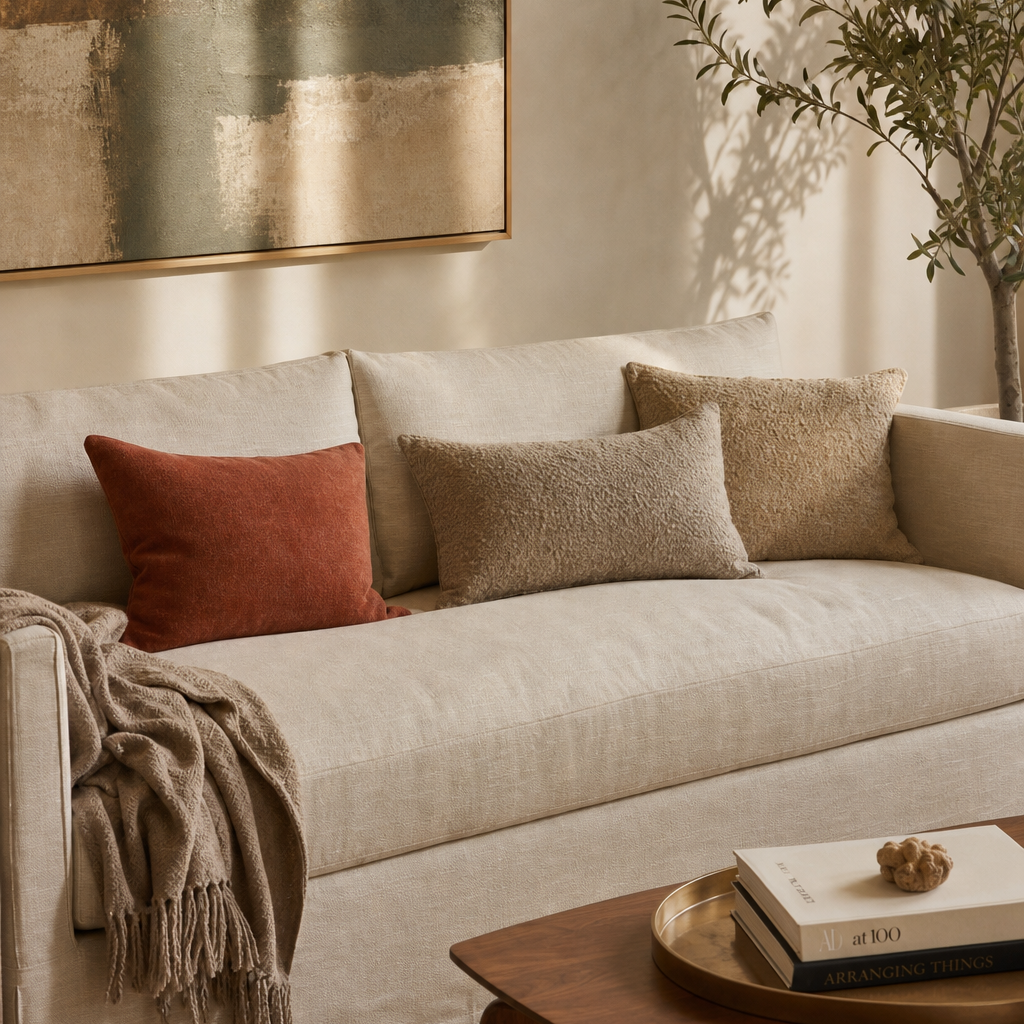
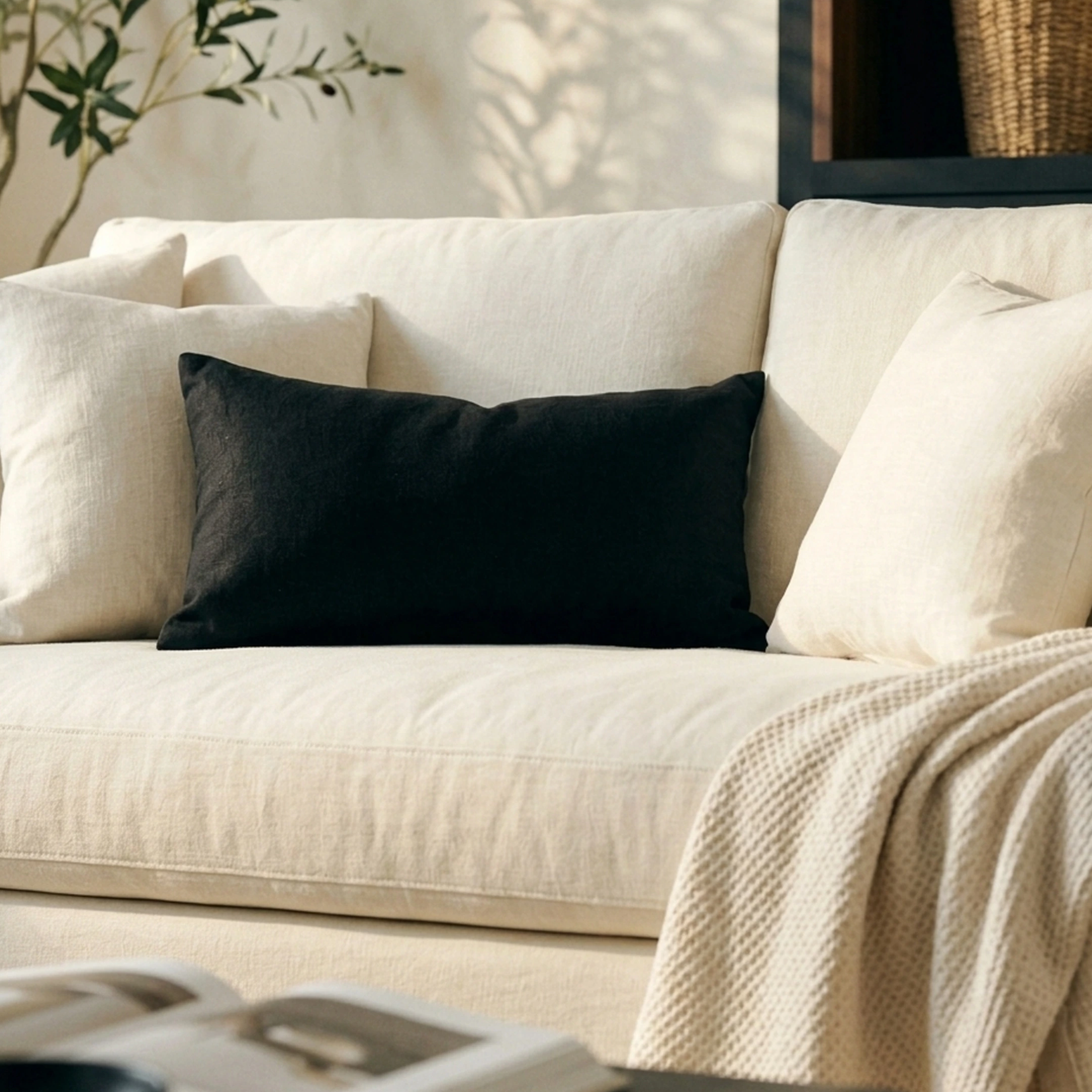
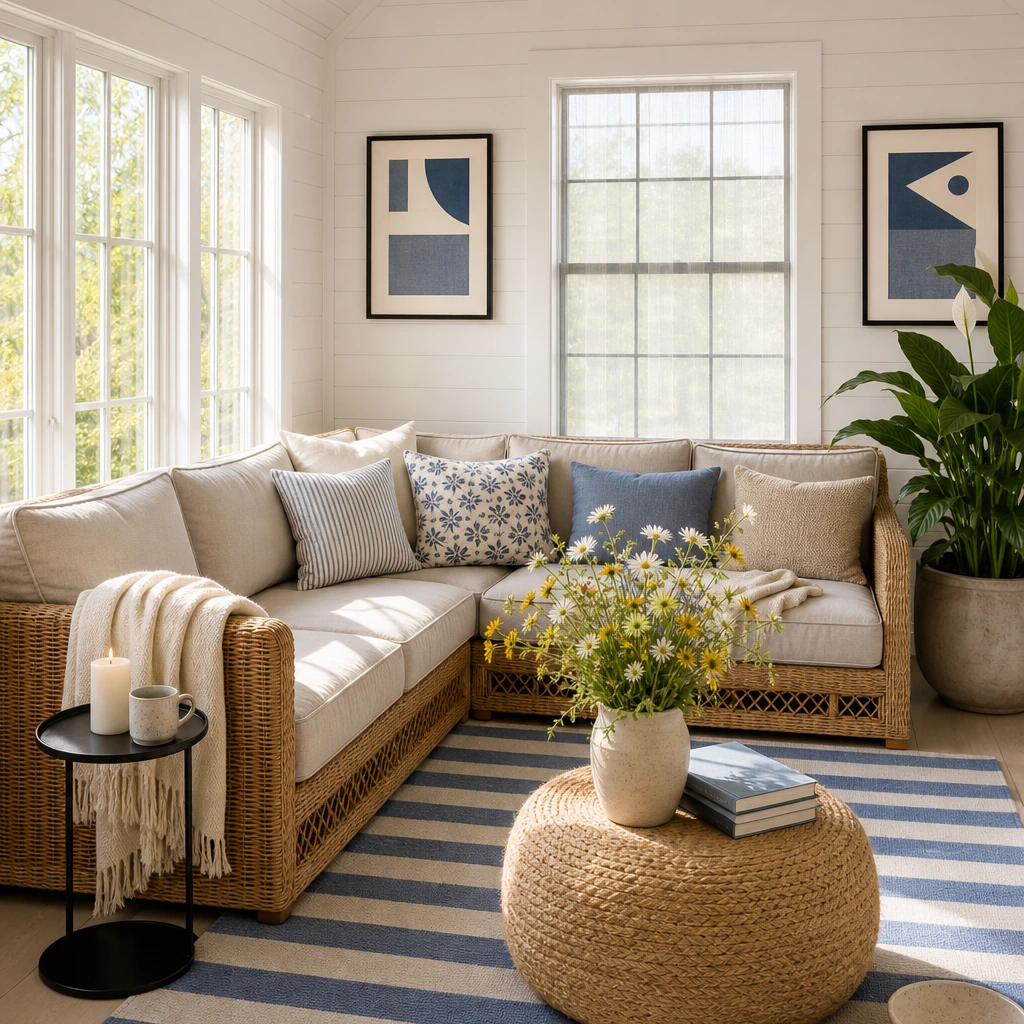
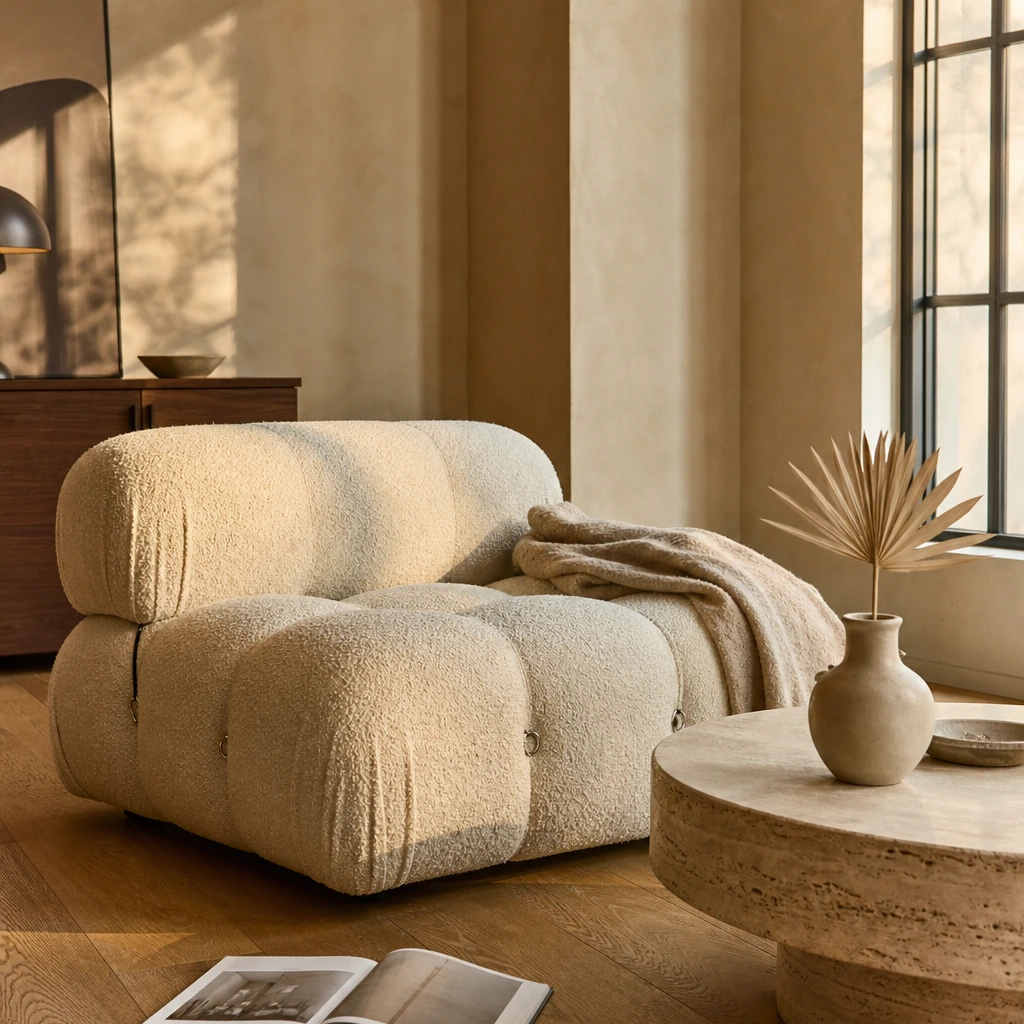
- Textiles: Natural linen, bouclé, and wool in neutral tones. Avoid pattern mixing in the main living areas.
The key discipline is material restraint. Choosing three or four materials and using them consistently across a room, or across an entire floor, produces the cohesion that makes these interiors feel designed rather than assembled.
Furnishings: Fewer Pieces, Better Proportions
The coverage of the Bieber marital home uses the phrase "bespoke furnishings" to describe the interior. In practice, that means pieces selected for sculptural form, material quality, and proportion rather than purchased as a coordinated set.
Skip the matched living room set. Rooms furnished with a sofa, two chairs, and a coffee table from the same collection tend to look staged rather than lived in. Instead, anchor the room with one strong sofa in a durable, high-quality fabric, then layer in chairs and occasional pieces from different sources. West Elm, CB2, and Lulu and Georgia all carry pieces with the right silhouette at a realistic price point. For statement pieces, Chairish and 1stDibs offer vintage and designer options that add the kind of character a new-from-catalog room rarely achieves.
For small apartment furniture choices, the same principle applies at a smaller scale: one strong anchor piece, supporting pieces with visual breathing room, and nothing that fights for attention.
Why This Design Approach Matters in 2026
Luxury residential design is being shaped by three overlapping forces right now: health-and-wellness expectations, smart-home integration, and higher-performance sustainability. Affluent homeowners increasingly expect residences to support privacy, indoor-outdoor living, circadian lighting, media-rich entertainment, and climate-conscious building systems, all while remaining visually minimal and highly customized.
These themes are consistent with what architectural coverage of the Bieber properties describes: expansive glazing, indoor-outdoor flow, resort-style grounds, and technology-enabled comfort. The broader renovation environment also matters. For luxury buyers, the trend is less about raw square footage and more about experience: spatial openness, finish quality, and a curated "hotel-like" atmosphere.
The movement toward indoor-outdoor continuity is particularly strong. Large openings, terraces, seamless flooring transitions, and exterior rooms that function as extensions of the interior are now baseline expectations in high-end residential design, not premium upgrades. The Beverly Park estate and earlier Beverly Hills homes are described as having resort-style grounds, expansive views, and floor-to-ceiling glass that blur boundaries between inside and outside.
Smart-home normalization in the luxury segment has also accelerated. High-end buyers now expect lighting, temperature, security, and media to be integrated into a single control layer. The Bieber marital home coverage explicitly describes smart-home control of lighting, security, temperature, and entertainment as part of the home's design language. Even if a home is not fully automated, today's renovation strategy often starts with infrastructure: structured wiring, reliable whole-home Wi-Fi coverage, and a control ecosystem that can grow over time.
Indoor-Outdoor Living: The Design Move That Defines the Beverly Park Estate
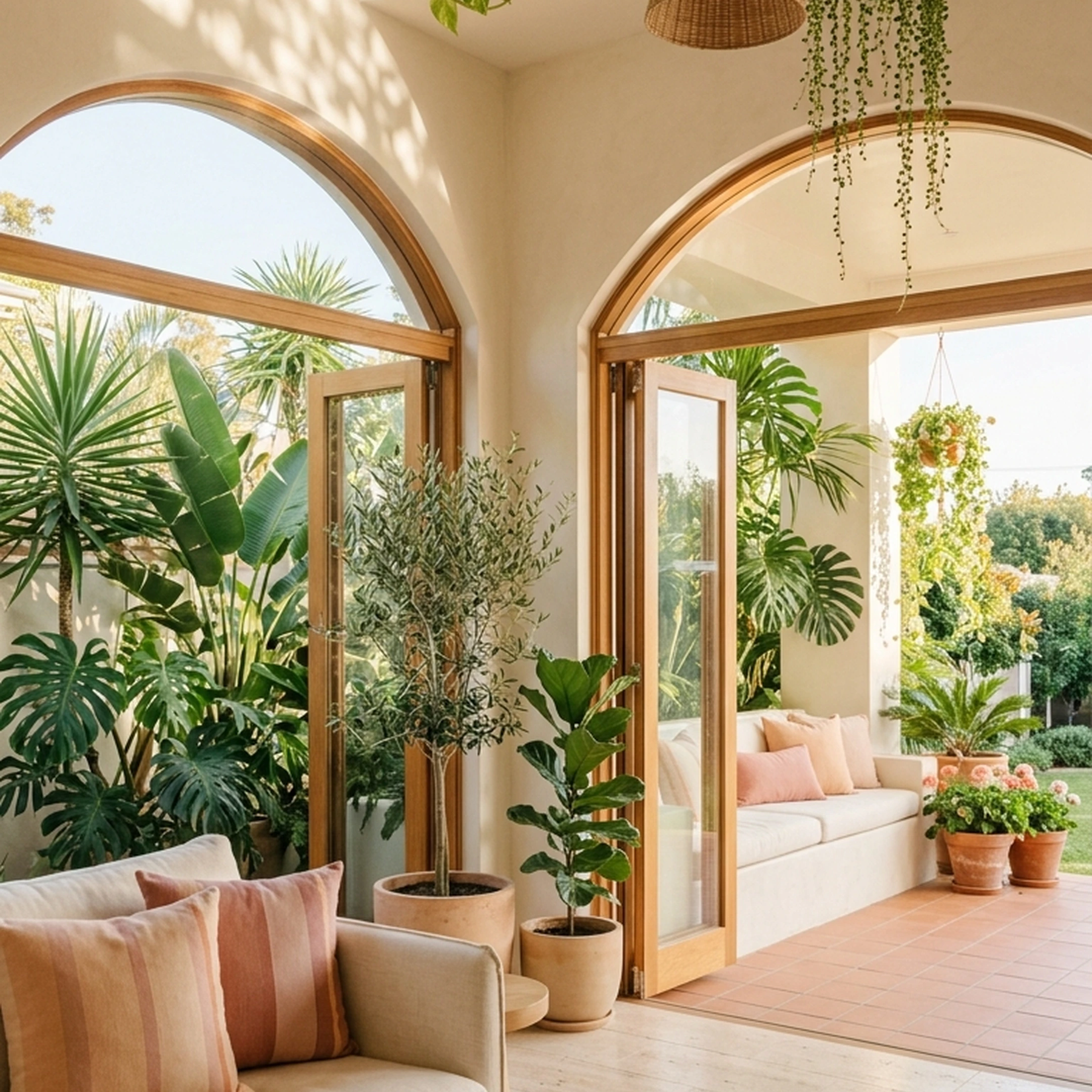
Indoor-outdoor living is a design approach that physically and visually connects interior rooms with terraces, pools, gardens, and outdoor lounges through large glass openings, sliding or folding door systems, and aligned materials across the threshold.
It is the defining spatial quality of the Beverly Park estate and the feature most consistently cited in architectural descriptions of the property. At 2.5 acres with an infinity pool and resort-style grounds, the Beverly Park property has obvious advantages. The principle scales down considerably.
How to Create Indoor-Outdoor Flow Without a Mega-Estate
The most impactful single upgrade for indoor-outdoor continuity is replacing a standard sliding door with an oversized folding or stacking glass door system. NanaWall Systems, Fleetwood Windows and Doors, and LaCantina Doors all manufacture residential systems that open a full wall to the exterior. The visual effect, a living room that flows directly onto a terrace or patio, is the same whether the exterior space is 2.5 acres or a 400-square-foot urban terrace.
Material continuity reinforces the connection. When interior flooring and exterior paving share the same tone, even if the materials differ, the eye reads the spaces as continuous. Large-format porcelain tile works well for this because it is available in both interior and exterior grades in matching colorways.
Layered landscape lighting matters as much as the door system. A terrace that is dark at night reads as a separate, lesser space. Uplighting on plantings, low path lighting, and warm-toned string or pendant lighting over a dining area extend the usable hours and visual continuity of the outdoor zone.
Designing Outdoor Zones as Functional Rooms
The Beverly Park grounds are described with distinct functional areas: pool, tennis court, and entertaining spaces. For most homeowners, the translation is simpler: define at least two outdoor zones, one for dining and one for lounging, and treat each with the same furniture quality and layering you would apply indoors.
Outdoor furniture from brands like Landscape Forms, a commercial and residential outdoor furniture manufacturer, or Belgard hardscaping products can anchor these zones with the kind of permanence that makes them feel intentional rather than temporary. Avoid the common mistake of treating the outdoor area as purely decorative. A beautiful terrace with nowhere comfortable to sit undermines the resort-like quality the Bieber properties project.
Lighting Design for Modern Luxury Interiors
Luxury interiors feel expensive primarily because of lighting quality, not fixture cost. The Beverly Park estate and earlier Bieber properties are described as light-filled and view-oriented, which reflects both the architectural glazing and a deliberate approach to artificial light layering.
The Three-Layer Lighting System
Every room in a well-designed luxury interior operates on three layers:
LayerFunctionCommon FixturesAmbientBase illumination, no harsh shadowsRecessed downlights, cove lightingTaskDirected light for specific activitiesSconces, pendants, under-cabinet stripsAccentHighlights architecture, art, objectsPicture lights, directional spots, uplighting
Most homes are over-lit at the ambient layer and under-lit everywhere else. The result is a flat, office-like quality that no amount of furniture can fix.
Lutron Electronics' Caseta or RadioRA systems allow full dimming control across all three layers from a single app or keypad. Ketra, a tunable lighting brand acquired by Lutron, goes further with white light that shifts color temperature across the day, supporting circadian rhythms and creating the warm evening atmosphere associated with high-end residential design.
Fixture Selection: Warm Metal, Not Cold Chrome
If a room already reads as cool or gray-toned, black metal and chrome fixtures will reinforce that coldness. Aged brass, brushed bronze, and warm-toned unlacquered brass soften a room faster than almost any other single change. Flos, an Italian architectural lighting brand, and Rejuvenation both carry residential fixtures in these finishes at different price points.
The principle is consistent across interior design approaches for homeowners: invest in the infrastructure (dimmers, layered circuits) before spending on statement fixtures. A well-dimmed room with modest fixtures outperforms a poorly lit room with expensive ones.
Smart Home Technology Integration in Luxury Residences
Smart-home integration in luxury residences refers to a coordinated system that allows centralized control of lighting, security, climate, and entertainment through unified interfaces, voice commands, or mobile applications, treated as core infrastructure rather than an optional upgrade.
The Bieber marital home coverage explicitly describes this integration as part of the home's design language. The most important lesson from luxury residential smart-home design is sequencing: infrastructure before surface.
Build the Infrastructure First
Structured wiring, reliable whole-home Wi-Fi coverage, and a central control ecosystem should be installed before any surface renovation. Reopening walls to run cable after a kitchen or bathroom remodel is expensive and disruptive. The investment in a proper network infrastructure, including a managed Wi-Fi system from a brand like Eero Pro or Ubiquiti, and pre-wired conduit for future expansion, costs a fraction of what it costs to retrofit later.
Control4, Crestron, and Savant are the three dominant platforms in the luxury residential segment. All three integrate lighting, climate, security, and entertainment into a single control layer. Control4 tends to offer the best value-to-capability ratio for residential projects that don't require the full commercial-grade infrastructure of Crestron.
Security, Privacy, and Acoustics
Guard-gated communities like Beverly Park provide perimeter security at the community level. For individual homes, the equivalent is a layered approach: smart locks, video doorbells, exterior cameras, and a monitored alarm system. ADT Commercial, Ring Alarm Pro, and Alarm.com all offer residential systems that integrate with broader smart-home platforms.
Privacy and acoustics are often overlooked in celebrity-inspired design conversations. Luxury is as much about controlled retreat as it is about visual glamour. Acoustic insulation in walls and ceilings, solid-core doors, and double-glazed windows all contribute to the sense of calm that defines the Bieber home aesthetic.
Premium Flooring and Wall Finishes for Contemporary Homes
The flooring and wall finish choices in the Bieber properties follow a consistent logic: large scale, natural materials, and tonal restraint. Wide-plank hardwood, large-format stone tile, and smooth plaster walls appear repeatedly in descriptions of the Beverly Hills properties.
The table below compares the main flooring options by material, aesthetic fit, durability, and approximate installed cost:
MaterialAesthetic FitDurabilityApprox. Cost per Sq Ft (installed)Wide-plank white oak hardwoodWarm contemporary, JapandiHigh$12-$22Large-format porcelain tileModern luxury, indoor-outdoorVery high$10-$20Polished concreteIndustrial, brutalist-warmVery high$8-$15Natural stone (limestone, travertine)Resort, Mediterranean modernMedium-high$18-$40+Engineered hardwoodWarm contemporaryHigh$8-$16
Schotten and Hansen, a German hardwood flooring manufacturer, produces some of the finest wide-plank hardwood available for residential projects. For large-format tile, Porcelanosa's residential line covers the full range from entry-level to specification-grade.
Wall Finishes Beyond Paint
Smooth plaster and limewash finishes are increasingly common in luxury residential projects because they add texture and depth without pattern. Portola Paints' Lime Wash line and Bauwerk Colour both offer accessible versions of the European plaster aesthetic. Applied over standard drywall, these finishes produce the kind of tactile warmth that paint alone cannot replicate.
Fluted wood panels, used as an accent wall or integrated into millwork, are another finish that appears in contemporary luxury interiors. Used on a single wall behind a bed or sofa, a fluted oak panel adds architectural interest without the visual complexity of wallpaper or tile.
Outdoor Living Spaces: Pools, Patios, and Landscaping Ideas
The Beverly Park estate's resort-style grounds, including an infinity pool and championship tennis court on 2.5 acres, represent the upper end of what outdoor living can be. The design principles behind those grounds, functional zoning, material quality, and layered planting, apply at any scale.
Pool Design and Water Features
An infinity pool is the signature water feature of the Beverly Park estate. For most homeowners, a standard in-ground pool with a clean rectangular form and a dark plaster finish achieves a similar visual effect at a fraction of the cost. Dark plaster (charcoal or black) makes pool water appear deep blue-green rather than the turquoise of white plaster, which reads as more sophisticated and resort-like.
If a full pool is outside the budget, a smaller plunge pool or a raised spa with an overflow edge can deliver the same visual anchor for an outdoor space. The key is treating the water feature as the centerpiece of the outdoor zone, with hardscaping, seating, and planting organized around it.
Hardscaping and Landscape Zoning
Landscape zoning is the practice of organizing exterior space into distinct functional areas such as dining, lounging, swimming, and circulation. It is what separates a designed outdoor space from a yard with furniture in it.
Belgard and Unilock both manufacture hardscaping systems, including pavers, retaining walls, and outdoor kitchen components, that allow homeowners to define zones with material changes rather than physical barriers. A shift from large-format concrete pavers to a wood deck signals the transition from a circulation path to a lounge area without requiring a wall or fence.
Planting should be layered: tall screening plants at the perimeter for privacy, mid-height structural plants for visual interest, and low ground cover or gravel for texture. Resort-like grounds, as described in coverage of the Beverly Park property, mean abundant planting, clean edges, and no bare soil visible.
Tools and Solutions for Recreating Luxury Residential Design
The categories below cover the main systems and surfaces involved in a Bieber-adjacent luxury renovation. Vendor examples are illustrative; the right choice depends on project scope, local availability, and installer relationships.
Smart Home Control Platforms
Centralized control is the infrastructure layer that makes everything else feel cohesive.
- Control4: Best value-to-capability ratio for residential projects. Integrates lighting, climate, security, and entertainment.
- Crestron: Commercial-grade platform used in ultra-high-end residential and hospitality projects.
- Savant: Strong in the luxury residential segment with an emphasis on user interface quality.
Premium Window and Door Systems
The indoor-outdoor connection depends on the quality of the opening system.
- NanaWall Systems: Folding glass wall systems for full-width exterior openings.
- Fleetwood Windows and Doors: Slim-profile aluminum systems with large glass spans.
- LaCantina Doors: Folding and sliding door systems with residential-grade pricing.
Architectural Lighting and Controls
Lighting quality is the single highest-leverage investment in a luxury interior.
- Lutron Electronics (Caseta, RadioRA): Dimming and control systems for residential projects at multiple price points.
- Ketra (Lutron): Tunable white lighting for circadian-aware residential design.
- Flos: Italian architectural and decorative lighting with a strong residential portfolio.
Flooring and Surface Materials
Material restraint starts with choosing the right surfaces.
- Porcelanosa: Large-format tile in interior and exterior grades with matching colorways.
- Caesarstone: Quartz surfaces for countertops and feature walls.
- Schotten and Hansen: Wide-plank hardwood flooring for high-end residential projects.
Outdoor Living and Hardscaping
Functional outdoor zones require the same material investment as interior rooms.
- Belgard: Paver and hardscaping systems for defined outdoor zones.
- Unilock: Outdoor paving and retaining wall systems.
- Landscape Forms: Commercial and residential outdoor furniture with permanence-grade durability.
Interior Design and Furniture Curation
Translating a celebrity-inspired aesthetic into real, purchasable pieces is where most homeowners get stuck. First Chair is an AI-assisted interior design and shopping platform that helps homeowners move from inspiration images, including photos of specific properties or interiors they admire, to cohesive room concepts built with real furniture from actual retailers. Rather than presenting hundreds of options, the platform narrows the field to pieces that work together within a specific aesthetic direction. It pulls across West Elm, CB2, Crate and Barrel, Pottery Barn, and Lulu and Georgia so the room feels layered instead of retailer-stamped. Insider pricing is available on most pieces. For homeowners who have been overwhelmed by furniture options, the Bieber aesthetic is actually a useful constraint: the design language is specific enough to rule out most of what's available, which makes the decision set manageable.
Best Practices for Recreating Celebrity-Inspired Luxury at Home
These practices are drawn directly from the design logic of the Bieber properties and the broader principles of contemporary luxury minimalism.
- Use a restrained palette. Warm whites, soft grays, natural wood, black accents, and stone textures create the calm, high-end feel consistently described in coverage of the Bieber properties. Choose three or four materials and use them consistently.
- Prioritize large visual openings. Oversized windows, glass doors, and unobstructed sightlines are the architectural foundation of the Bieber aesthetic. If a full door system replacement is outside the budget, start by removing window treatments that block light and views.
- Design for indoor-outdoor continuity. Repeat materials or tones across interior and exterior floors. This single move produces more of the resort-like effect than almost any furniture choice.
- Invest in lighting infrastructure before fixtures. Install dimmer switches on all main living area circuits first. The ability to control light levels is more impactful than the fixtures themselves.
- Choose fewer, better furnishings. Anchor the room with one strong piece, then layer in supporting pieces with visual breathing room. Nothing should fight for attention.
- Add smart-home infrastructure first. Structured wiring, a managed network, and a control ecosystem should precede surface upgrades. Technology should be expandable without reopening walls.
- Treat the outdoors as usable square footage. Create defined seating, dining, and lounging areas. Outdoor zones need furniture, lighting, and defined purpose to deliver the resort-like quality seen in the Beverly Park grounds.
- Build in performance upgrades. Energy-efficient HVAC and solar-ready planning are part of the Bieber home design language. They improve comfort and reduce operating cost without compromising the aesthetic.
Common Mistakes to Avoid
Translating celebrity home inspiration into a real renovation project has predictable failure modes.
Copying scale instead of principles. An 11,000-square-foot home has spatial relationships that don't transfer directly to a 2,000-square-foot house. Extract the palette, the material logic, and the lighting approach. Don't try to replicate the floor plan. The consequence is a room that feels cramped and over-furnished rather than spacious and edited.
Using too many finishes at once. The Bieber aesthetic works through material restraint. Three or four materials used consistently produce cohesion. Eight materials produce chaos. Fix: choose your palette before purchasing anything and hold to it.
Overfilling rooms with oversized furniture. The spacious, gallery-like quality of contemporary luxury interiors depends on negative space. A sectional that fills a room eliminates the breathing room that makes the aesthetic work. Fix: measure twice, and leave more space than feels comfortable on paper.
Treating smart-home features as gadgets. A voice-controlled light bulb is not smart-home integration. Infrastructure, structured wiring, a managed network, and a unified control platform, is what makes a home feel technologically coherent. Fix: invest in the network and control layer before buying connected devices.
Designing outdoor areas as decorative rather than functional. A beautiful terrace with nowhere comfortable to sit is a missed opportunity. Outdoor zones need furniture, lighting, and defined purpose to deliver the resort-like quality seen in the Beverly Park grounds.
Relying on one dramatic feature. A statement chandelier or an accent wall cannot carry a room. The Bieber aesthetic works because architecture, lighting, furnishings, and landscape are coordinated, not because any single element is spectacular. Fix: evaluate the room as a system, not a collection of individual choices.
Ignoring privacy and acoustics. Celebrity-inspired luxury is as much about controlled retreat as it is about glamour. Acoustic insulation, solid-core doors, and double-glazed windows all contribute to the sense of calm that defines these interiors.
Prioritizing trend-driven finishes over durable materials. The Bieber aesthetic has longevity because it is built on materials (stone, wood, glass) rather than trend-specific colors or patterns. Fix: invest in surfaces that will look right in ten years, not just now.
Frequently Asked Questions
What is the design style of Justin Bieber's Beverly Park home?
The Beverly Park estate follows a contemporary luxury minimalist aesthetic: clean architectural lines, restrained palettes of warm whites, natural wood, and stone, floor-to-ceiling glazing, and resort-style grounds. The interior is described as using bespoke furnishings and smart-home integration rather than ornate traditional detailing.
How much did Justin Bieber pay for his Beverly Park estate?
Justin Bieber and Hailey Bieber purchased the Beverly Park estate for $25.8 million in 2020. The property is 11,145 square feet, sits on 2.5 acres, and includes an infinity pool, championship tennis court, home theater, and seven bedrooms.
What color palette is used in Justin Bieber's home?
The Bieber properties consistently use warm whites, soft grays, natural wood tones, matte black accents, and stone surfaces. This palette reads as calm and cohesive without feeling cold or sterile, and it is achievable at any budget level through paint, hardware, and textile choices.
How can I get the indoor-outdoor look without a large property?
The most impactful single upgrade is replacing a standard sliding door with an oversized folding or stacking glass door system from manufacturers like NanaWall, Fleetwood, or LaCantina. Material continuity between interior flooring and exterior paving reinforces the connection. Even a small urban terrace benefits from this approach when the flooring tones are aligned.
What smart home systems are used in luxury homes like the Biebers'?
The luxury residential segment is dominated by Control4, Crestron, and Savant for whole-home control. These platforms integrate lighting, climate, security, and entertainment into a single control layer. The key principle is to install the infrastructure (structured wiring, managed Wi-Fi, control platform) before surface renovations, not after.
What furniture brands work for a Bieber-inspired contemporary minimalist interior?
West Elm, CB2, Crate and Barrel, and Lulu and Georgia all carry pieces with the right silhouette at realistic price points. For statement pieces that add character a new-from-catalog room rarely achieves, Chairish and 1stDibs offer vintage and designer options. The goal is one strong anchor piece per room, with supporting pieces chosen for proportion and material quality rather than brand matching.
Conclusion: From Inspiration to a Room You Can Actually Live In
The Bieber properties are worth studying not because of their price tags but because they demonstrate a set of design principles that hold at any scale. Restrained palettes. Material cohesion. Indoor-outdoor continuity. Lighting infrastructure before fixtures. Outdoor zones designed as functional rooms. Fewer, better pieces chosen for proportion and quality.
None of those principles require a $25.8 million budget. They require a clear aesthetic direction, a disciplined approach to material selection, and the confidence to commit to a room concept rather than accumulating pieces indefinitely.
The hardest part for most homeowners isn't finding inspiration. It's knowing which pieces actually work together in a real floor plan, at a real budget, from retailers that actually have them in stock. That's the gap First Chair is built to close. Upload a photo of the Bieber aesthetic, describe your direction ("warm minimalist, not cold," "resort-like but livable"), and the platform narrows the field to real, purchasable pieces that work together. No fake renders, no fantasy furniture, no 47 tabs.
The room you've been trying to pull together is closer than you think. The next move is committing to the concept.