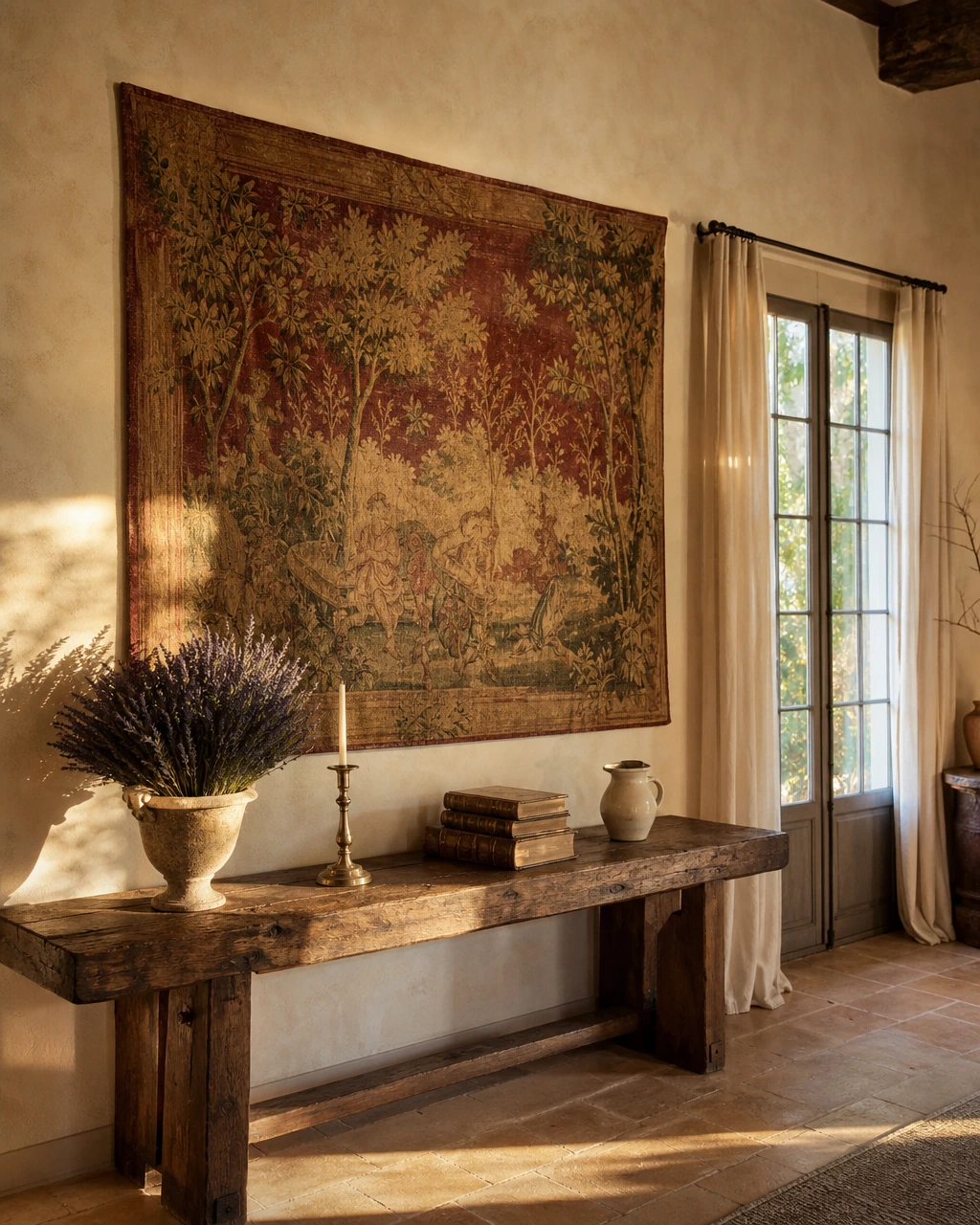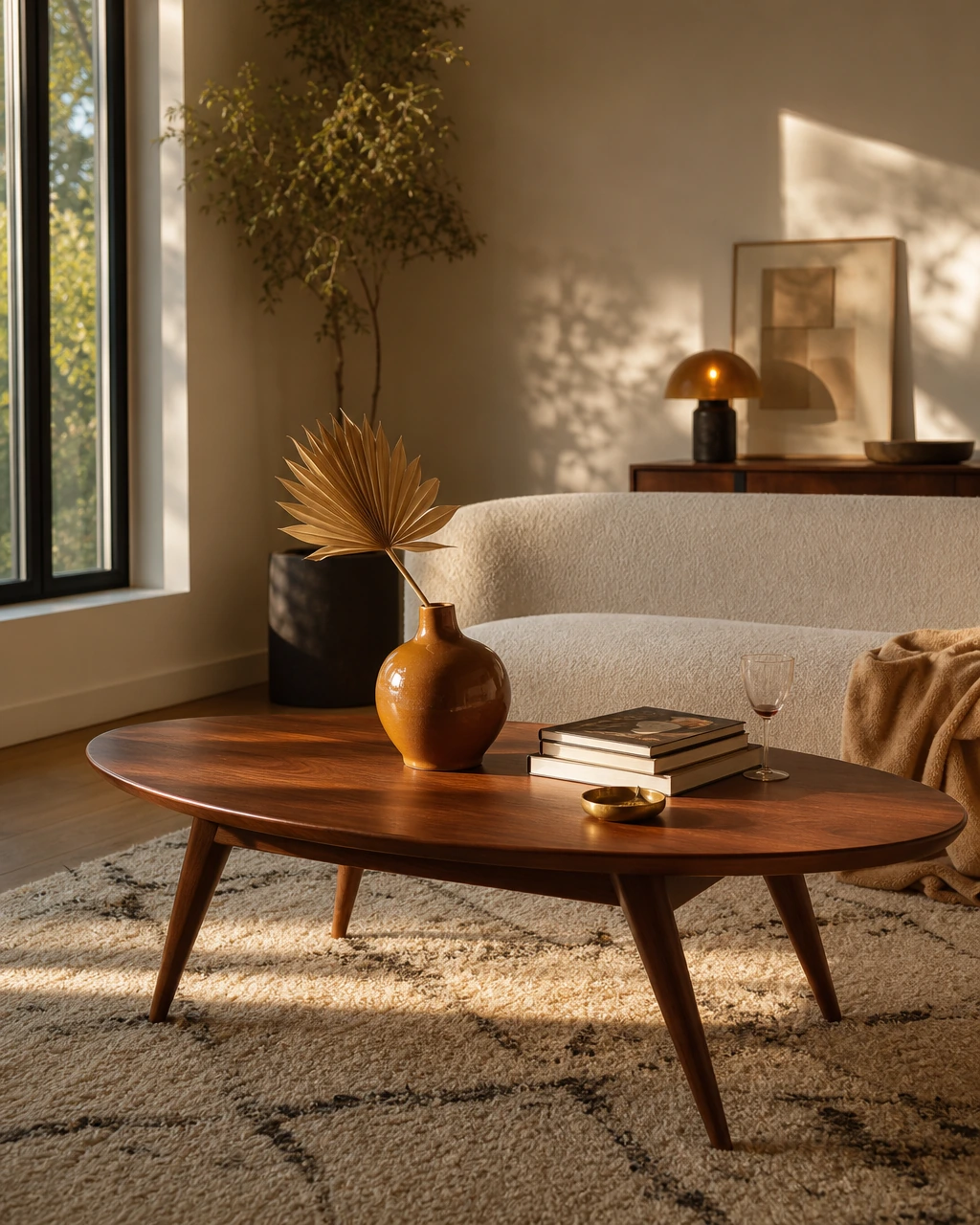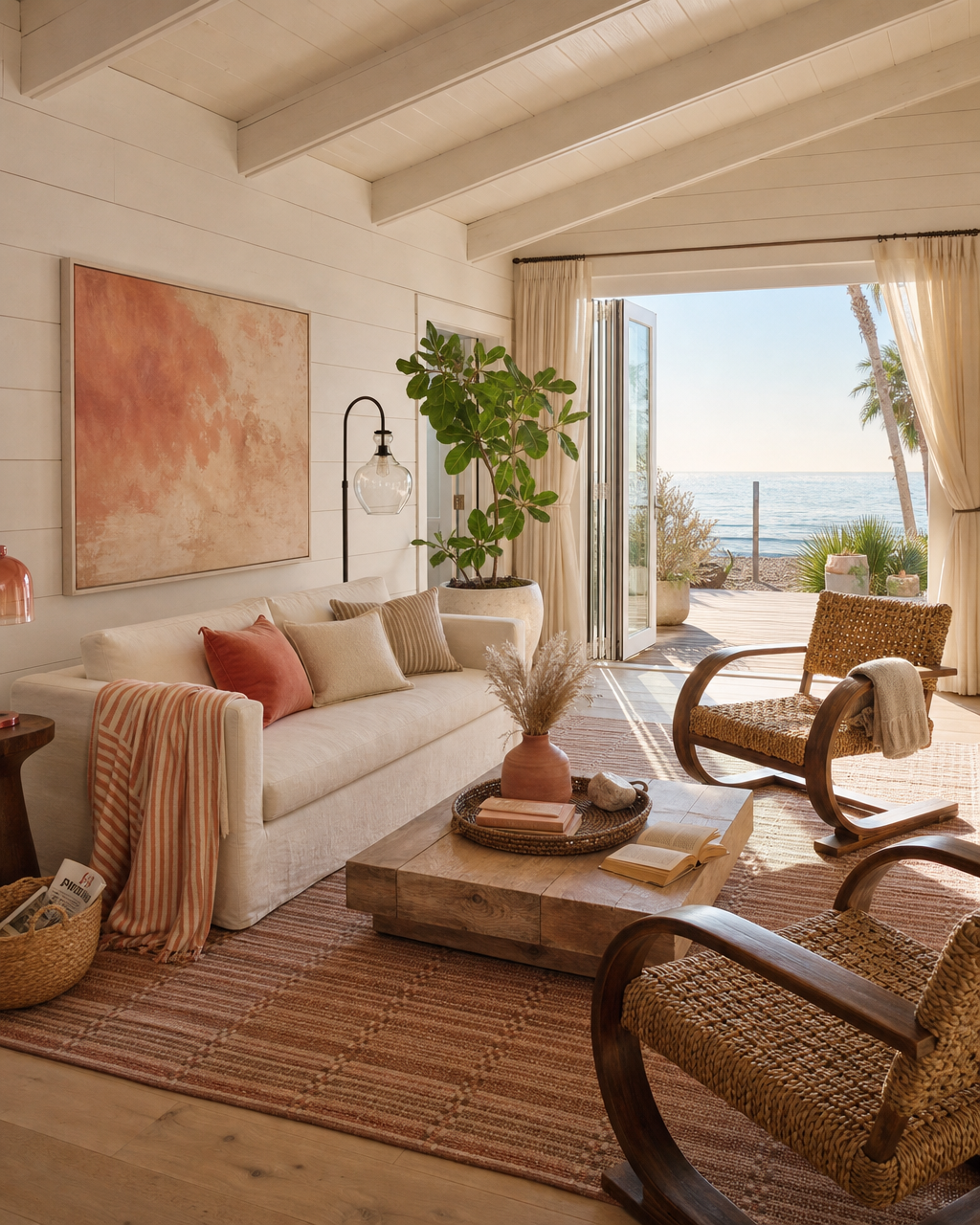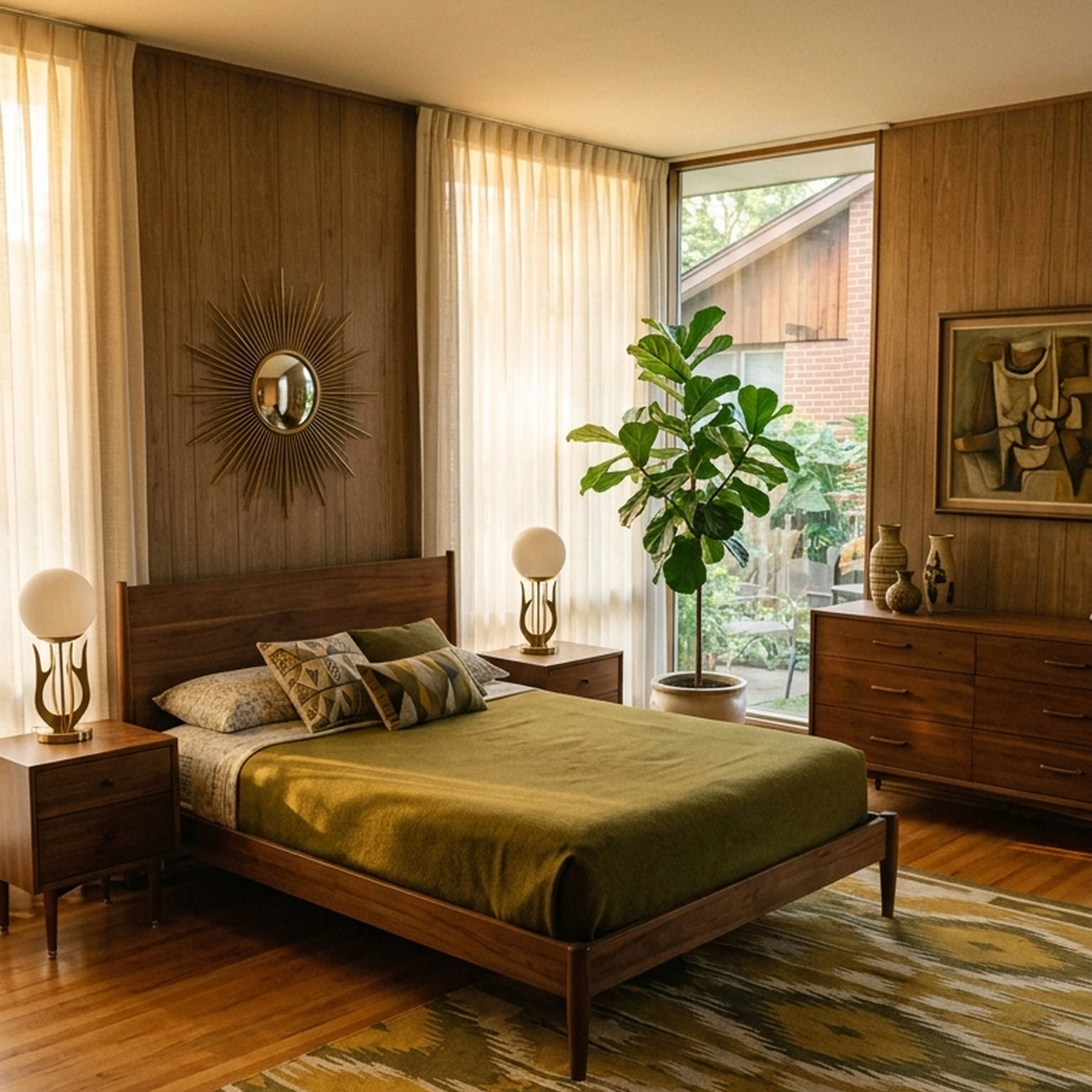

If you've been living in your Los Angeles apartment for three years and your living room still feels like a waiting room, you've probably saved Dakota Johnson's Architectural Digest home tour at least once. Maybe twice. The warmth of it. The way the wood paneling catches light. The sense that every object in the room has been there for years and earned its place. You close the tab, look at your own space, and feel the gap between what you saved and what you're actually sitting in.
The good news: that gap is smaller than it looks. Johnson's Hollywood home is a mid-century modern "tree house" built around warm wood tones, vintage furniture, earthy neutrals, and a lived-in quality that most celebrity interiors actively avoid. The principles behind it are accessible. The execution is where most people get stuck, usually because they're trying to copy the objects rather than understand the logic underneath them.
This guide breaks down exactly what makes her aesthetic work, room by room, and how to apply those principles in your own space without a renovation budget or a Hollywood address. You'll learn how to build the right color palette, source furniture that follows the same material logic, layer lighting for warmth, and avoid the most common mistakes people make when translating celebrity inspiration into real rooms.
What you'll learn:
- The three design principles that make Johnson's home feel the way it does
- How to build an earthy neutral palette using the 60-30-10 rule
- Where to source vintage and modern pieces that follow the same material logic
- How to layer lighting for warmth using 2700K bulbs and multiple sources
- Which biophilic moves translate to any apartment regardless of architecture
- The most common mistakes when recreating celebrity interiors, and how to avoid them
Key Takeaways
- Dakota Johnson's Los Angeles home is a mid-century modern sanctuary built around warm wood paneling, vintage furniture, earthy neutrals, and indoor-outdoor flow. The aesthetic is replicable through material choices, not expensive renovations.
- Brown has become the new luxurious neutral replacing beige and cream for 2025-26, with designers shifting toward caramel and cinnamon tones for interiors that feel sophisticated without feeling cold.
- Designers recommend repeating 3-5 core materials throughout a home (walnut, linen, brass, stone) to create the quiet cohesion visible in Johnson's interiors.
- Layered lighting using ambient, task, and accent sources with warm 2700K bulbs is one of the most cost-effective ways to shift a room's mood toward the quiet-luxury register.
- The most common mistake when recreating celebrity interiors is chasing specific objects rather than underlying proportions, scale, and texture.
- Paint is the highest-leverage budget tool. Deep green on existing cabinets or a warm brown on a single wall can shift a room's character without touching the structure.
- First Chair helps translate inspiration like Johnson's aesthetic into real, shoppable room concepts using furniture that actually exists, sourced across multiple retailers.
What Makes Dakota Johnson's Home Aesthetic Work
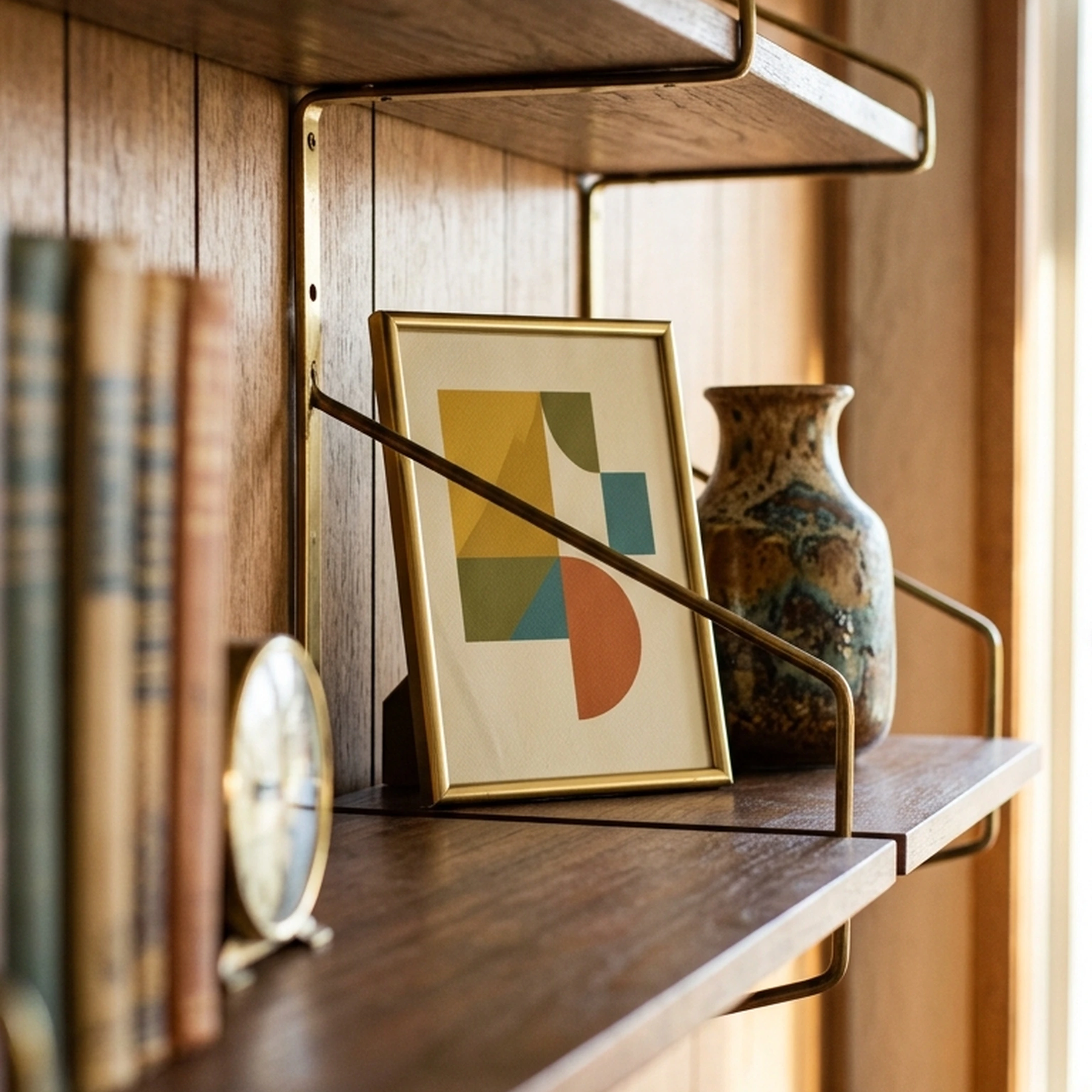
Mid-century modern (MCM) design is a residential style originating roughly between the 1940s and 1960s, characterized by low horizontal furniture, clean lines, organic forms, and honest materials like wood and leather. Johnson's Hollywood home sits squarely in this tradition, but with a warmer, more personal interpretation than the sharper, more austere versions of MCM that dominated the early 2010s.
The space has been described as "quiet luxury meets vintage soul", a phrase that captures the balance well. Nothing in the home is trying to impress. The materials are honest. The furniture has patina. The rooms feel like they've been lived in for years, not assembled for a photo shoot.
Design writer Patricia Rodi frames it as depth over flash: restrained earthy palettes, tactile surfaces, and rooms that leave space for life rather than filling every corner with objects. That's a design philosophy, not a price point.
The Three Principles Behind the Look
Understanding these three principles is more useful than any product list.
Material honesty. Wood is wood. Linen is linen. Nothing is pretending to be something it isn't. Glossy finishes and faux textures work against this aesthetic immediately.
Earned character. The home feels collected over time, not purchased in a single afternoon. Vintage pieces, personal objects, and imperfect surfaces all contribute to this quality.
Restraint over accumulation. Fewer pieces doing more work. Every item earns its place. The rooms breathe.
These principles cost nothing to apply. They require editing, not spending.
Why This Aesthetic Matters Right Now
The timing of interest in Johnson's home is not coincidental. Several converging trends explain why her aesthetic has become a reference point for design-conscious homeowners in 2026.
Brown has become the new luxurious neutral replacing beige and cream, with designers shifting toward caramel and cinnamon tones for interiors that feel sophisticated without feeling cold. This aligns directly with Johnson's caramel-toned living room and warm wood palette.
The broader shift toward "quiet luxury" in residential interiors reflects a consumer preference for organic textures and human-scaled comfort over flashy, feed-friendly maximalism. Johnson's home has become a visual shorthand for this sensibility.
Sustainability is also a factor. Guides on recreating her look consistently emphasize vintage furniture and natural materials like linen and wool, mirroring broader consumer preferences for durable, timeless pieces over fast furniture. Buying vintage basics with good bones, repurposing existing cabinetry with paint, and selecting solid wood pieces that age well are all strategies that align with how design-conscious buyers are thinking about purchases in 2026.
The democratization of design tools has made celebrity-inspired aesthetics more actionable than they've ever been. Digital platforms now allow homeowners to test layouts and color palettes before buying, bridging the gap between aspirational imagery and practical execution.
The Color Palette: Earthy Neutrals Done Right
Quiet luxury is an interior aesthetic that emphasizes understated quality, tactile materials, and craftsmanship rather than overt opulence or trend-driven color. Johnson's home is a textbook example, built around caramel browns, warm taupes, tobacco tones, and muted sage greens.
The 60-30-10 rule structures this well: 60% base tones (warm browns, taupes, natural wood), 30% secondary tones (sage, eucalyptus, muted terracotta), and 10% accent (aged brass, deep olive, dusty pink). This ratio creates depth without visual noise, and it's explicitly recommended for recreating Johnson's earthy schemes.
Room-by-Room Color Direction
The palette translates differently depending on the room. Here's how to apply it practically:
RoomBase ToneSecondaryAccentLiving roomWarm brown or tobacco wallsNatural wood furnitureAged brass hardware, ochre rugKitchenWarm white or cream wallsDeep green or sage cabinetsTerracotta accessoriesBedroomPale taupe or warm whiteWalnut or oak furnitureLinen textiles, muted blushStudy or denCaramel or mid-brownBookshelves in warm woodBrass lamp, olive cushions
The mistake most people make is reaching for stark white as a neutral. White reads as clean and modern, but it works against the warmth that makes Johnson's home feel the way it does. Swap it for a warm off-white or a light caramel and the room shifts immediately.
Paint is the highest-leverage budget tool available. Deep green paint on existing cabinets delivers a high-impact transformation without full replacement, and a warm brown on a single wall can reframe an entire room's character. Start there before buying anything new.
Furniture Selection: Vintage Anchors and Modern Foundations
The furniture in Johnson's home follows a clear logic: one modern anchor piece per room, layered with vintage or antique items that have genuine character. Starting with a strong modern foundation (a well-proportioned sofa, a solid bed frame) and building around it with vintage rugs, rattan chairs, and hand-knotted textiles is the approach that creates the collected quality that makes the space feel personal.
This approach works for two reasons. First, it prevents the room from feeling like a museum. Second, it prevents it from feeling like a showroom. The tension between old and new is what creates the lived-in quality that makes the space feel authentic.
Proportions Matter More Than Brand Names
Before buying anything, measure. Designers recommend keeping 30-36 inches of clearance in main walkways, choosing a coffee table roughly two-thirds the length of the sofa, and maintaining about 18 inches of circulation space around dining tables. These numbers aren't arbitrary. They're the difference between a room that feels comfortable and one that feels cramped regardless of how good the individual pieces are.
For anyone navigating furniture choices in a small city apartment, scale is the first decision, not the last.
Material Categories to Prioritize
Four material categories are essential for this aesthetic: warm wood tones (walnut, oak), cozy textiles (bouclé, velvet), statement lighting (globe lamps, brass fixtures), and greenery. These aren't expensive categories. They're intentional ones.
Piece TypeBest SourcesWhat to Look ForSofaCB2, Article, Interior DefineTrack-arm or low-profile silhouette, linen or bouclé upholsteryCoffee tableChairish, 1stDibs, vintage storesSolid wood, organic edge, honest materialRugLulu and Georgia, ChairishHand-knotted, earthy tones, some age or patinaLightingWest Elm, Rejuvenation, vintage storesGlobe or brass fixtures, warm bulbsSide chairsChairish, thrift storesRattan, walnut, or leather with good bonesTextilesAnthropologie Home, Crate and BarrelLinen, wool, layered throws
The goal is not to match Johnson's exact pieces. It's to match the material logic behind them.
Lighting Design: The Fastest Way to Change a Room's Mood
Layered lighting is the practice of combining ambient, task, and accent light sources to create depth and flexibility in a room. It is one of the most cost-effective changes available to homeowners, and it's consistently underused in residential interiors.
Johnson's home uses this approach throughout: overhead fixtures for ambient light, vintage table lamps for warmth, and hidden LED strips that graze wood paneling to create texture. The effect is a room that feels lit rather than illuminated.
The Practical Lighting Framework
Designers recommend at least two dimmable sources per room and warm 2700K bulbs throughout. Higher Kelvin values read as cooler and more clinical, which works against the warmth the aesthetic requires. Wall sconces placed at 60-66 inches from the floor hit typical eye level and avoid glare.
For a living room on a realistic budget:
- Replace any cool-white overhead bulbs with 2700K equivalents. This costs almost nothing and changes the room's character significantly.
- Add one or two table lamps with warm shades. Globe or linen drum shades work well.
- If there's a wood surface, bookshelf, or architectural detail worth highlighting, a small directional accent light or LED strip adds depth without complexity.
The mistake is relying on a single overhead fixture. One source flattens a room. Three sources layer it.
Lighting scale matters as much in compact spaces as it does in larger ones. For more on designing small apartments effectively, the same layering principle applies regardless of square footage.
Biophilic Design: Bringing the Outdoors In
Biophilic design is the practice of incorporating natural elements (plants, natural light, and organic materials) into interiors to improve well-being and create a sense of connection to the natural world. Johnson's home is a strong example: abundant greenery, warm woods, views onto trees, and materials that feel grown rather than manufactured.
The indoor-outdoor flow in her Los Angeles tree house is partly architectural, achieved through large windows and terraces that aren't replicable in most apartments. But the principle is. Natural light, plants, and organic materials create the same sensory quality at a fraction of the cost.
Practical Biophilic Moves for Any Space
Starting with easy-care plants like snake plants and pothos is the practical entry point. Both tolerate low light and irregular watering. Terracotta or ceramic planters reinforce the earthy material palette. For corners with no natural light, high-quality faux greenery maintains the visual effect without the maintenance.
Beyond plants, the material choices do most of the biophilic work. Wood, linen, stone, and wool all read as natural. Glossy synthetics and chrome work against the effect. When choosing between two pieces at a similar price point, the one made from a natural material will almost always serve this aesthetic better.
The "Curated, Not Staged" Principle
The most difficult element of Johnson's aesthetic to replicate is also the most important: the sense that the home has been lived in, accumulated, and personalized over time rather than assembled for a photograph.
Design practitioners describe this as "curated, not staged." Books, ceramics, art, and personal objects are central to the emotional resonance of Johnson's home. These aren't decorative accessories purchased to fill space. They're things that mean something.
How to Build This Quality Into Your Own Space
Two specific mistakes undermine this quality: forcing fake patina through pre-distressed furniture, and trying to finish the room all at once. Both produce the same result: a space that looks styled rather than lived in.
The practical alternative:
- Build shelves with objects that have personal meaning before buying anything purely decorative.
- Leave gaps. A shelf that isn't full reads as more intentional than one that is.
- Introduce art before accessories. One strong piece of art does more for a room than ten small decorative objects.
- Let the room accumulate over time. The best version of this aesthetic takes months, not a weekend.
Material repetition supports this quality. Repeating 3-5 core materials throughout the home (walnut, linen, brass, stone) creates visual rhythm without monotony. When every room shares the same material logic, the home feels coherent even when the objects are eclectic.
How to Translate Inspiration Into a Shoppable Room
The gap between saving Johnson's home to your phone and actually furnishing your apartment is where most people get stuck. The inspiration is clear. The execution isn't.
This is the problem First Chair is built to solve. Instead of generating fantasy rooms filled with furniture that doesn't exist, the platform takes inspiration images (including celebrity interiors like Johnson's) and translates them into cohesive room concepts using real, in-stock pieces from actual retailers. You can describe the aesthetic in layered terms ("mid-century but warmer," "vintage but not precious") and receive recommendations that reflect that nuance rather than defaulting to a generic style category.
Because First Chair sources across multiple retailers including West Elm, CB2, Crate and Barrel, Pottery Barn, and Lulu and Georgia, the room doesn't end up looking like it came from a single catalog. That retailer-neutral approach is part of what creates the collected quality that makes Johnson's home feel the way it does.
For anyone decorating a new apartment or working through a room that still feels unfinished, the platform narrows the field to pieces that work together rather than presenting endless options that require you to figure out the cohesion yourself.
Tools and Solutions for Recreating This Aesthetic
The following categories represent the practical toolkit for translating Johnson's aesthetic into your own space. These are not exhaustive product recommendations. They're the categories where decisions matter most.
Visualization and Planning Platforms
Testing layouts and color palettes before buying is one of the most underused strategies in residential design. Digital visualization tools allow homeowners to see how furniture proportions and material combinations work together before committing.
- First Chair pulls real, in-stock furniture from multiple retailers and generates cohesive room concepts based on aesthetic direction. You can upload inspiration images and describe your style in nuanced terms, then receive shoppable recommendations that reflect that direction. Member pricing is available on selected pieces.
- Spacejoy offers 3D renders and shoppable product boards, with a specific guide on recreating Johnson's mid-century home on a budget.
- InteriorXDesign publishes detailed breakdowns of celebrity homes with practical tips and product suggestions.
Paint and Color
Paint delivers the highest return on investment of any design decision. The right wall color or cabinet color can shift a room's character more than any furniture purchase.
- Benjamin Moore produces palettes that align closely with Johnson-style deep neutrals. Their 2026 Color of the Year, Silhouette AF-655, reflects the directional shift toward moody, earthy tones.
- Sage and eucalyptus green ranges from major paint brands work well for kitchen cabinetry without requiring full millwork replacement.
- Warm off-whites and light caramels serve as better base neutrals than stark white in this aesthetic.
Furniture and Vintage Sourcing
The right sourcing strategy combines one modern anchor piece per room with vintage layering.
- Chairish and 1stDibs are the most reliable sources for vintage pieces with genuine patina, including wood sideboards, rattan chairs, and hand-knotted rugs.
- CB2, Article, and Interior Define offer modern foundational pieces (sofas, bed frames) in proportions and materials that work well with vintage layering.
- Local thrift stores and estate sales remain the best sources for authentic vintage pieces with good bones at accessible price points.
Lighting
Lighting is the fastest way to shift a room's mood, and it's consistently underinvested in residential interiors.
- West Elm and Rejuvenation offer globe and brass fixtures that align with Johnson's mid-century lighting language.
- Vintage stores are reliable sources for table lamps with warm shades and authentic mid-century silhouettes.
- LED strip lighting for grazing wood surfaces or bookshelves adds depth at minimal cost.
Textiles and Soft Furnishings
Tactile contrast is central to this aesthetic. The goal is layering natural materials rather than matching sets.
- Anthropologie Home and Crate and Barrel carry linen and wool textiles in earthy tones that work well with warm wood and vintage pieces.
- Lulu and Georgia offers rugs in hand-knotted styles with the kind of patina and earthy tones that anchor a Johnson-style living room.
- Bouclé and velvet upholstery in oat, cream, or warm taupe work as sofa and chair options that hold up over time.
Plants and Biophilic Accessories
Greenery is a low-cost, high-impact element of this aesthetic.
- Snake plants, pothos, and fiddle-leaf figs are the most commonly recommended starting points for easy-care indoor greenery.
- Terracotta and ceramic planters reinforce the earthy material palette without adding visual noise.
- High-quality faux greenery from specialty retailers maintains the visual effect in low-light corners.
Best Practices for Recreating This Aesthetic
These are the moves that consistently produce the best results when applying Johnson's design principles to a real space.
- Let architecture and proportions lead. Start with light, flow, and structural proportions before buying any décor. Prioritize sightlines, window treatments, and circulation. Only then layer furniture.
- Build a restrained, earthy palette using the 60-30-10 rule. Sixty percent base tones (warm browns, taupes, natural wood), 30% secondary tones (sage, eucalyptus, muted terracotta), 10% accent (aged brass, deep olive, dusty pink). This ratio creates depth without visual noise.
- Mix vintage and modern intentionally. One modern anchor piece per room (sofa or bed frame) plus layered vintage rugs, sideboards, and chairs. Start with one strong vintage piece per room and build around it.
- Repeat a small set of materials for cohesion. Choose 3-5 core materials (walnut, linen, brass, stone) and stick to them across rooms. This creates the visual rhythm that makes Johnson's home feel coherent.
- Layer light rather than relying on one source. Combine overhead fixtures with lamps, sconces, and hidden LED strips. Use 2700K bulbs throughout and put at least two sources per room on dimmers.
- Curate personal, lived-in elements. Build shelves with items that have personal meaning before buying anything purely decorative. Avoid buying all décor at once just for styling.
- Use paint strategically for budget impact. Focus on high-impact surfaces: cabinets, one accent wall, or built-ins. Deep green on existing cabinets and warm brown on walls deliver the most character per dollar.
- Prioritize scale, clearance, and comfort. Measure before buying. Match proportions to your room size rather than chasing specific celebrity pieces. Thirty to 36 inches of walkway clearance and a coffee table two-thirds the length of the sofa are the two most important numbers to get right.
Common Mistakes When Recreating Celebrity Interiors
Understanding what not to do is as useful as knowing what to do. These are the most consistent errors that appear when people attempt to recreate aesthetics like Johnson's.
Chasing objects instead of principles. The most common mistake is identifying a specific sofa or lamp from a celebrity home and buying the closest available version. What matters is proportion, scale, and texture, not the object itself. A well-proportioned track-arm sofa in warm linen will serve this aesthetic better than an exact replica of Johnson's sofa in the wrong scale for your room.
Prioritizing glossy finishes. Johnson's home depends on tactility: linen, wool, wood, plaster. Glossy finishes and chrome work against the warmth the aesthetic requires. When choosing between matte and glossy at a similar price point, matte almost always serves this look better.
Buying everything at once. The staged, inflexible quality that makes some interiors feel like hotel lobbies comes from furnishing a room in a single purchase cycle. The lived-in quality in Johnson's home comes from accumulation over time. Buy the anchor pieces first. Let the rest develop.
Ignoring scale and clearance. Oversized coffee tables, narrow walkways, and furniture pushed against walls are all common errors when copying celebrity setups without accounting for actual room dimensions. Measure before buying. Match proportions to your room, not to the room in the photograph.
Relying on one light source. A single overhead fixture flattens a room regardless of how good the furniture is. Adding one table lamp and dimming the overhead changes the room's character more than most furniture purchases.
Forcing fake patina. Pre-distressed furniture and overly styled heirloom-look pieces don't age well and read as inauthentic. Let real life mark the space instead of buying distress.
Overloading brand names and ignoring textures. Brand-driven decorating, where logos replace material quality, produces rooms that feel assembled rather than collected. Johnson's look depends on tactility. No amount of brand recognition substitutes for the right texture.
Frequently Asked Questions
What is Dakota Johnson's interior design style?
Dakota Johnson's home is best described as mid-century modern with a quiet-luxury sensibility. The aesthetic combines warm wood tones, vintage furniture, earthy neutrals, and organic textures like linen and wool. The overall effect is a space that feels collected and personal rather than trend-driven or staged.
How do I recreate a mid-century modern look on a budget?
Start with paint. Deep green or sage on existing cabinets and warm brown or tobacco on walls deliver high impact without structural changes. Then focus on one strong vintage anchor piece per room (a sideboard, a coffee table, a rug with patina) and build around it with modern foundational pieces in natural materials. Lighting is the second highest-leverage change: switching to 2700K bulbs and adding a second lamp costs very little and shifts the room's mood significantly.
What colors does Dakota Johnson use in her home?
Johnson's home is built around warm caramel browns, tobacco tones, muted sage greens, and earthy neutrals. Brown has become the new luxurious neutral replacing beige and cream for 2025-26, with designers shifting toward caramel and cinnamon tones. The palette avoids stark white in favor of warmer off-whites and natural wood tones.
What furniture materials work best for a mid-century modern aesthetic?
Walnut and oak for wood tones, linen and bouclé for upholstery, aged brass for hardware and lighting, and natural stone or rattan for accent pieces. Designers recommend repeating 3-5 of these materials throughout the home to create cohesion. Avoid glossy synthetics and chrome, which work against the warmth the aesthetic requires.
How important is lighting for recreating this look?
Lighting is one of the highest-leverage changes you can make. Switching to warm 2700K bulbs costs almost nothing and immediately shifts a room's mood. Adding a second or third light source (a table lamp, a sconce) creates the layered quality that makes Johnson's home feel warm rather than flat. At least two sources per room should be on dimmers.
Can I use a platform to help translate celebrity interior inspiration into real furniture choices?
Yes. Platforms like First Chair allow you to upload inspiration images and describe your aesthetic in nuanced terms, then generate cohesive room concepts using real, in-stock furniture from multiple retailers. This bridges the gap between saving a celebrity interior to your phone and actually knowing which pieces to buy for your specific space and budget. For more on how to approach this process, the guide on stopping furniture option overwhelm covers the decision framework in detail.
Conclusion: From Saved Inspiration to a Room You Can Live In
Dakota Johnson's home works because it follows clear principles: material honesty, earned character, and restraint over accumulation. None of those principles require a celebrity budget. They require editing, patience, and a willingness to prioritize the right things in the right order.
Start with color. Build the palette around warm browns, earthy greens, and natural wood tones using the 60-30-10 rule. Then address lighting: swap to 2700K bulbs, add a second source, and put both on dimmers. Source one strong vintage anchor piece per room and build around it with modern foundational pieces in natural materials. Repeat 3-5 materials across the home for cohesion. Let the room accumulate over time rather than finishing it in a single weekend.
The gap between the room you've been saving and the room you're actually sitting in is smaller than it looks. The problem is usually not taste. It's the absence of a clear framework for making decisions.
If you're ready to move from inspiration to execution, First Chair translates aesthetic direction into real, shoppable room concepts using furniture that actually exists, sourced across West Elm, CB2, Crate and Barrel, Pottery Barn, Lulu and Georgia, and more. Upload the inspiration. Describe the vibe. Get the room.