
If you've spent any time deep in design content online, you've probably landed on images of Drake's Toronto mansion and felt that particular mix of awe and mild despair. The estate, designed by architect Ferris Rafauli, sits on roughly two acres in Toronto's Bridle Path neighborhood. It runs approximately 50,000 square feet, features 44-foot ceilings in the great room, and includes a regulation NBA basketball court with a pyramidal skylight. The master suite alone is approximately 3,200 square feet. By any reasonable measure, it is not a practical reference point for a renovation project.
But here is what actually matters: the design principles behind that house are completely transferable. The reason those interiors feel the way they do has nothing to do with square footage. It has everything to do with material choices, lighting strategy, spatial hierarchy, and the discipline to anchor a room around one strong focal point instead of filling it with competing moments. Those are decisions any homeowner can make, regardless of budget or floor plan.
This guide breaks down the specific design moves that make Drake's home feel the way it does, and translates each one into something you can actually execute in a real renovation. The sections cover architecture and spatial strategy, material selection, lighting design, focal point discipline, smart home planning, and sustainable luxury practices, with a clear distinction throughout between what is specific to a 50,000-square-foot estate and what scales down to a real home.
Key Takeaways
- Drake's Toronto mansion, designed by Ferris Rafauli, uses limestone, bronze, and exotic woods as its core material language, prioritizing permanence over trend-driven finishes. The home is described as a monument to classic forms and opulent materials.
- The great room centers on a single focal point: a custom Bösendorfer grand piano paired with a large chandelier. Competing focal points dilute impact regardless of room size.
- Layered lighting (ambient, task, and accent) is the single most accessible luxury upgrade most homeowners skip entirely.
- The National Association of Home Builders reports that 85% of buyers prefer an open kitchen-to-family-room layout, confirming that flow and connection matter more than room count.
- Smart home systems should be planned at the architectural stage. Retrofitting wiring and control infrastructure after construction costs significantly more than installing it during active renovation.
- Copying scale is the most common mistake. Copying proportion, material quality, and focal point discipline is what actually works.
- Sustainability and luxury are not in conflict. High-performance envelopes, efficient HVAC, and durable natural materials reduce long-term operating costs without compromising aesthetics.
What Ferris Rafauli Actually Built: The Architecture of Drake's Home
Modern luxury home architecture is residential design that combines contemporary spatial forms with premium materials, custom detailing, and integrated technology, typically organized around large, dramatic volumes and a strong sense of arrival. Rafauli's work on Drake's Toronto estate is the clearest current example of this approach at residential scale.
The architectural strategy underlying the home is called programmatic zoning: grouping spaces by function so that public entertaining areas, semi-private family spaces, and private bedrooms each occupy distinct territories with clear transitions between them. The great room, entry, and club-level lounge carry the spectacle. The private quarters are deliberately separated. This separation is what makes the home feel intentional rather than sprawling, and it is a principle that applies at any scale.
Rethinking The Future describes the property as a limestone shrine of accomplishment, noting the extensive use of limestone across facades, floors, and detailing as a deliberate signal of permanence. The material choice is not decorative. It is structural to the home's identity.
How Programmatic Zoning Translates to Real Homes
You do not need 50,000 square feet to apply programmatic zoning. You need a clear decision about which rooms carry the social energy of your home and which ones are protected from it. In practical terms, this means:
- Treating your entry as a designed moment, not a pass-through
- Keeping primary bedrooms physically separated from entertaining areas, even in smaller floor plans
- Using hallways, level changes, or pocket doors to create transitions rather than relying on open-plan flow everywhere
- Identifying one or two rooms that carry the experiential weight of the home and concentrating design investment there
Volume and Ceiling Height
The great room's 44-foot ceilings are not replicable in most homes. The principle behind them is: volume creates drama. In a standard renovation, this translates to removing drop ceilings where possible, exposing structural elements, or using double-height spaces in entries and living rooms to create a sense of arrival. Even a 10-foot ceiling reads differently than a 9-foot one when the room is properly lit and proportioned correctly.
High-End Materials and Finishes: What Drake's Interiors Are Actually Made Of
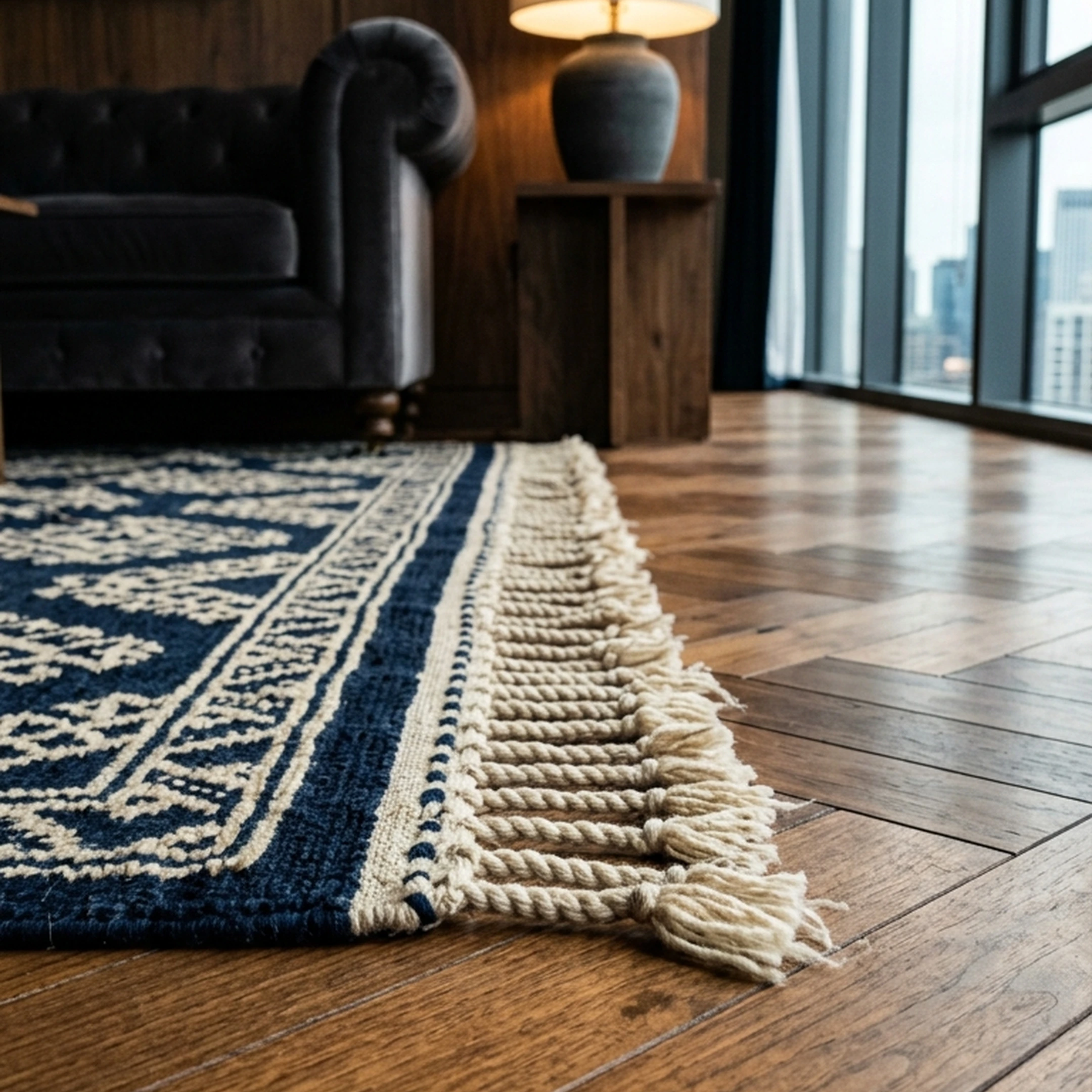
Material authenticity is the defining characteristic of high-end residential design. The interiors of Drake's Toronto estate rely on limestone, bronze, exotic hardwoods, and marble not as decorative accents but as the primary building blocks of every surface. Essential Home's coverage of the manor emphasizes the craftsmanship details, including custom millwork, paneling, and built-ins, as what gives the interiors their sense of weight and permanence.
This is the most transferable lesson in the entire house. You do not need to cover every surface in marble. You need to concentrate your material budget in the places that matter most.
Where to Concentrate Your Material Investment
The highest-impact locations for premium materials in a residential renovation, in order of return:
- Entry floors and walls (the first impression)
- Primary bathroom surfaces (stone counters, tile, fixtures)
- Kitchen countertops and backsplash
- Living room flooring
- Primary bedroom millwork and built-ins
Spreading a limited budget across every room produces nothing memorable. Concentrating it in two or three spaces produces rooms that feel genuinely elevated. This is the same logic behind Rafauli's approach: a few spaces done with complete conviction rather than many spaces done adequately.
Material Choices That Signal Permanence
The following table compares material categories by durability, maintenance requirement, and visual impact, based on standard guidance from luxury residential design practice.
MaterialVisual ImpactMaintenance LevelBest ApplicationNatural limestoneVery highModerate (sealing required)Entry floors, fireplace surroundsHoned marbleVery highHigh (staining risk)Primary bath, low-traffic surfacesEngineered stone (Dekton)HighLowKitchen counters, high-traffic areasSolid hardwoodHighModerateLiving areas, bedroomsBronze or aged brass hardwareHighLowDoors, cabinetry, plumbing fixturesCustom millwork (painted)HighLowBuilt-ins, paneling, cabinetry
The principle from Rafauli's work is consistent: use authentic materials in the places people touch and see most, and use simpler finishes everywhere else.
Custom Millwork as a Luxury Signal
Custom millwork is bespoke woodwork, including paneling, built-ins, cabinetry, and ceiling details, designed and fabricated specifically for a project. Drake's interiors feature extensive custom paneling and cabinetry throughout. In a real renovation, even a single wall of floor-to-ceiling built-ins in a living room or library reads as a significant design investment. It is one of the highest-impact upgrades per square foot available in residential design, and it ages better than almost any other finish category.
For homeowners working through furniture buying decisions alongside renovation planning, the material hierarchy above provides a useful framework for deciding where to spend and where to simplify.
Open Concept Living and Spatial Flow: Designing for How People Actually Move
Open concept living is a floor plan approach where major social spaces, typically the kitchen, dining area, and living or family room, are visually and physically connected without full-height walls. The National Association of Home Builders reports that 85% of home buyers prefer an open kitchen-to-family-room arrangement, making it the dominant preference in new residential construction.
Drake's entertaining spaces are designed around flow. The transition from entry to great room to adjacent spaces is choreographed so that each space reveals itself progressively. This is not accidental. It is a deliberate sequencing of experience that can be applied at any scale.
Designing Flow Without Removing Every Wall
Open plans work best when supported by clear furniture zoning. Without it, an open floor plan becomes a large, undifferentiated room that feels neither intimate nor grand. The practical moves are:
- Use area rugs to define conversation zones within larger open spaces
- Position furniture to create implied walls (a sofa's back facing a dining area creates a soft boundary)
- Use lighting zones to reinforce spatial separation (a pendant over the dining table, recessed lighting in the kitchen, floor lamps in the living area)
- Reserve at least one enclosed room near the entertaining zone for acoustic relief
Balancing Openness with Privacy
One of the most common mistakes in open-plan renovations is removing too much. Some enclosure is necessary for acoustic comfort, visual rest, and functional privacy. The goal is controlled openness: spaces that feel connected when you want them to be and separable when you need them to be.
For homeowners planning renovations, this often means keeping or adding pocket doors between the kitchen and dining area, or between the living room and a home office, rather than committing to fully open layouts that cannot be modified later. The furniture decisions for smaller city apartments follow the same logic: openness works when it is intentional, not when it is simply the absence of walls.
Custom Lighting Design: The Most Underestimated Luxury Upgrade
Layered lighting is the use of ambient, task, and accent lighting together to shape both mood and functionality within a space. Design firms like Drake/Anderson, a New York-based firm known for bold and glamorous residential interiors, consistently cite layered lighting as a foundational practice in every major room they design. Coverage of their work in 1stDibs Introspective confirms this as a non-negotiable element of their approach.
Drake's great room relies on large custom chandeliers paired with controlled ambient and accent lighting to create the nightclub-level ambiance that makes the space feel dramatic without feeling cold. This is replicable at any scale.
The Three-Layer Lighting Framework
Every room should be designed with three distinct lighting layers:
- Ambient lighting: The base layer. Recessed ceiling fixtures, cove lighting, or a central pendant that provides general illumination. This should always be on a dimmer.
- Task lighting: Directed light for specific functions. Under-cabinet lighting in kitchens, reading lamps in living rooms, vanity lighting in bathrooms.
- Accent lighting: Lighting that draws attention to specific objects or surfaces. Picture lights, shelf lighting, uplighting for plants or architectural features.
The absence of any one layer is immediately noticeable, even if the person in the room cannot name what is missing. A room with only overhead ambient lighting feels flat. A room with only accent lighting feels theatrical but uncomfortable. The combination of all three is what creates the sense of a considered, livable space.
Lighting Control Systems Worth the Investment
Lutron, a high-end dimming and shade control manufacturer, produces systems that allow homeowners to program lighting scenes across an entire home. A single "evening" scene can dim the living room to 40%, activate accent lighting in the kitchen, and lower motorized shades simultaneously. This is the residential equivalent of what Drake's home uses for ambiance control, and it is available at a range of price points.
Planning for Lutron-compatible wiring during a renovation costs very little. Retrofitting it afterward costs significantly more. For homeowners working through furniture and lighting decisions together, the lighting plan should come before the furniture plan, not after.
Statement Focal Points: The Design Discipline Drake's Home Gets Right
A statement focal point is a dominant element, whether a chandelier, fireplace, artwork, or architectural feature, that visually organizes a room and establishes its character. Drake's great room centers on a custom Bösendorfer concert grand piano designed in collaboration with Japanese artist Terence Koh, paired with a large chandelier overhead. House Beautiful's tour of the estate confirms this ensemble as the room's organizing principle.
The discipline here is restraint. One strong focal point. Everything else in the room supports it rather than competing with it.
How to Choose and Build Around a Focal Point
The focal point in any room should be the first thing a person sees when they enter. In most living rooms, this is naturally the fireplace or the largest wall. In dining rooms, it is the light fixture above the table. In primary bedrooms, it is the bed wall.
Once the focal point is identified, the design decisions become simpler:
- Furniture arrangement should face or frame the focal point
- The strongest material or color in the room should appear at or near the focal point
- Secondary pieces should be quieter in scale and finish
- Competing elements (a large television on the wall opposite a fireplace, for example) should be resolved rather than left in visual tension
Focal Points in Smaller Spaces
In apartments and smaller homes, a focal point does not need to be architectural. A large-scale piece of art, a statement light fixture, or a single piece of furniture with strong silhouette can serve the same function. The key is that it is chosen deliberately and that the room is arranged around it. This principle holds regardless of square footage, and it is the single most actionable takeaway from studying Drake's interiors.
Smart Home Technology Integration: Planning It Before You Need It
Smart home integration is the coordinated installation of connected devices, including lighting, climate control, security, motorized shading, and entertainment systems, managed through a unified platform or application. Gartner estimates that smart home devices are present in more than half of internet-connected households globally, with security, climate, and entertainment systems leading adoption among affluent buyers.
Drake's home includes dedicated entertainment zones, a recording studio, a nightclub-style lounge, and screening areas, all supported by advanced AV, lighting, and acoustic systems. The residential translation of this is a well-planned media room, distributed audio, and programmable lighting, none of which require celebrity-scale budgets when planned from the start.
The Platforms Worth Knowing
Three platforms dominate the luxury residential automation market:
PlatformPrimary StrengthBest FitControl4Whole-home automation (lighting, AV, climate, security)Large custom homes with complex AV programsCrestron HomeHigh-end AV and lighting integrationLuxury residential and hospitality-grade projectsSavantPremium lighting scenes and entertainment controlHomes prioritizing interface design and simplicity
The choice between them matters less than the decision to choose one and plan for it before construction begins. NAHB research shows that over 30% of builders now include structured wiring and smart thermostats as standard or optional features, reflecting how mainstream this planning has become.
What to Plan for During Renovation
If you are renovating and want smart home capability, the minimum infrastructure to install before walls close includes:
- Structured wiring runs to every room (Cat6 or better)
- Dedicated AV equipment closet or rack space
- Conduit for future speaker and shade wiring
- Lutron-compatible dimmer wiring at every switch location
- Network access points planned for whole-home Wi-Fi coverage
The cost of this infrastructure during active construction is a fraction of what it costs to retrofit later.
Sustainable Luxury Design: High Performance Without Compromising Aesthetics
Sustainable luxury design is the practice of combining premium aesthetics with energy efficiency, durable materials, and reduced environmental impact. Buildings account for roughly 28% of global energy-related CO2 emissions, creating both regulatory pressure and buyer demand for more efficient residential construction. The U.S. Department of Energy reports that energy codes can reduce energy use by up to 40% in new buildings compared with no-code construction.
For affluent homeowners, sustainability is increasingly a differentiator rather than a compromise. NAHB research shows that approximately 80% of home buyers rate energy-efficient windows as essential or desirable, and over 70% rate insulation beyond code minimums as desirable, even in higher price segments.
Where Sustainability and Luxury Overlap
The materials and systems that perform best environmentally are often the same ones that perform best aesthetically. Durable natural stone does not need to be replaced. High-quality hardwood floors last generations. Well-insulated walls reduce sound transmission as well as energy loss. Efficient HVAC systems are quieter and more consistent than older equipment.
The following upgrades deliver both sustainability and luxury outcomes:
- Triple-pane windows in climates with significant heating or cooling loads
- Radiant floor heating in primary bathrooms and kitchens (more comfortable and more efficient than forced air)
- High-efficiency heat pump systems for whole-home climate control
- LED lighting throughout, with warm color temperatures (2700K to 3000K) in living areas
- Locally sourced or reclaimed wood for millwork and flooring
Certifications Worth Considering
For homeowners undertaking significant renovations, LEED for Homes (administered by the U.S. Green Building Council) and PHIUS (Passive House Institute US) standards provide frameworks for high-performance design. These certifications are not required to build a sustainable home, but they provide a structured checklist and third-party verification that can also support resale value.
Tools and Solutions for Luxury-Inspired Home Design
The following categories cover the primary vendor landscape for homeowners pursuing Drake-inspired design at a real-world scale.
Smart Home and Automation Platforms
Three vendors dominate the luxury residential automation market. Control4 covers whole-home automation for lighting, AV, climate, and security, and is widely specified in custom luxury homes. Crestron Home is used in both luxury residential and hospitality projects, with strong AV and lighting integration capabilities. Savant focuses on premium residential control with an emphasis on lighting scenes, entertainment, and interface design.
Architectural and Interior Design Firms
Ferris Rafauli, the architect responsible for Drake's Toronto mansion, specializes in old-world craftsmanship combined with contemporary luxury. Drake/Anderson, a New York-based firm, is known for bold and glamorous interiors with extensive use of color and texture. Both firms' aesthetic principles, including strong focal points, rich materials, and layered lighting, can be borrowed and applied by homeowners working with local designers.
High-End Materials and Surfaces
Antolini is an Italian stone producer offering luxury marbles, onyx, and quartzites used in high-end residential projects. Cosentino (Dekton and Silestone) produces engineered stone surfaces with large formats suitable for dramatic kitchen and bathroom applications. Devon and Devon and Waterworks both offer luxury bathroom fixtures combining classic forms with modern performance.
Custom Lighting and Decorative Fixtures
FLOS produces contemporary architectural and decorative lighting favored in modern luxury projects. Visual Comfort offers designer-driven decorative lighting, including chandeliers and sconces, widely used in premium residences. Lutron provides high-end dimming systems, keypads, and motorized shades, and serves as the backbone for layered lighting and ambiance control in most serious luxury renovations.
Kitchen and Bath Systems
Gaggenau, Miele, and Sub-Zero and Wolf anchor luxury kitchens with professional-level performance and clean lines. Kohler and Dornbracht offer premium plumbing fixtures for spa-like bathrooms. SieMatic and Poggenpohl produce high-end kitchen cabinet systems with integrated lighting and bespoke layouts.
Residential AV and Entertainment Systems
Bang and Olufsen offers high-design audio systems suitable for visible integration into living spaces. Sonos provides scalable multi-room audio used across mainstream and luxury homes. Kaleidescape is a high-end movie server commonly specified in custom home theaters.
Design and Shopping Platforms
First Chair helps homeowners translate luxury design inspiration into real, shoppable rooms using furniture and decor that actually exists. The platform pulls across multiple retailers, including West Elm, CB2, Crate and Barrel, Pottery Barn, and Lulu and Georgia, so a room concept is never limited to what a single catalog carries. For homeowners working with nuanced aesthetic directions like "brutalist but warm" or "modern but collected," First Chair handles layered style descriptions without flattening them into generic categories. Insider pricing is available on selected pieces, which matters when the renovation budget is concentrated in a few high-impact rooms. Users can upload a photo of a space they love, including a hotel lobby, a design magazine spread, or an image of Drake's great room, and receive a shoppable room concept built from furniture that actually exists.
Best Practices for Recreating Luxury Interiors
Invest in Signature Spaces, Not Maximum Square Footage
The great room, master suite, and club-like entertaining spaces carry most of the experiential impact in Drake's home. For real homes, prioritize entry, kitchen, primary bath, and one dramatic living area over adding more rooms. Two spaces done with complete conviction outperform six spaces done adequately.
Use Materials to Create a Sense of Permanence
Rafauli's design relies on limestone, bronze, exotic woods, and marble to signal longevity and craftsmanship. Concentrate your material budget on authentic stone, quality wood floors, and solid hardware in key areas instead of spreading thin upgrades everywhere. The places people touch most should have the best materials.
Create Clear Zoning Between Public and Private Areas
Drake's mansion separates formal entertaining zones from private bedrooms and personal spaces. Use hallways, subtle level changes, and doors to preserve privacy even in open plans. The goal is not maximum openness but controlled openness.
Layer Lighting for Atmosphere and Flexibility
Plan ceiling lighting, wall fixtures, and lamps together, with dimming and programmable scenes. Ambient, task, and accent layers should be present in every major room. A room designed with only one lighting layer will always feel incomplete, regardless of how good the furniture is.
Anchor Rooms with One Strong Focal Point
Choose one major piece, whether a fireplace, artwork, or light fixture, and design around it. Competing focal points dilute impact and create visual tension that no amount of furniture rearrangement can resolve.
Blend Comfort with Glamour Through Texture
Drake's interiors employ plush fabrics, carpets, and upholstery against stone and metal backdrops. Use velvet, wool, and textured weaves in seating, rugs, and drapery to soften hard surfaces. Glamorous rooms that are not comfortable to sit in fail the most basic test of residential design.
Integrate Smart Home Systems Early in Design
Involve AV and electrical designers before finalizing floor plans. The wiring infrastructure for lighting control, distributed audio, and climate automation costs a fraction during active construction compared to retrofitting.
Align Luxury with Efficiency
Choose efficient HVAC, Energy Star appliances, and good insulation while still investing in visible luxury finishes. Durable materials reduce replacement costs. High-performance envelopes reduce operating costs. These decisions compound over time in ways that cheap finishes do not.
Common Mistakes When Recreating Luxury Interiors
Copying Scale Instead of Principles
Drake's 50,000-square-foot home is not a model for most owners. Oversized spaces are expensive to heat, difficult to furnish, and often feel cold rather than grand. The transferable elements are proportion, material quality, and focal point discipline, not square footage.
Fix: Identify the two or three design principles that create the feeling you want, and apply them at the scale you actually have.
Using Dark Finishes Without Adequate Lighting
Dark palettes can read as luxurious or oppressive depending entirely on how they are lit. High-saturation colors and dark surfaces require strong lighting and lighter balancing elements, including ceilings, fabrics, and reflective surfaces, to avoid feeling heavy.
Fix: Plan the lighting before committing to a dark palette. If the lighting budget is limited, choose a lighter palette.
Neglecting Acoustics in Hard-Surface Interiors
Stone floors, large glass surfaces, and high ceilings create echo. This is one of the most consistent complaints in renovations that prioritize visual luxury over livability. A room that sounds bad feels bad, regardless of how it looks.
Fix: Add rugs, upholstered furniture, curtains, and acoustic panels. These address the problem without compromising the aesthetic.
Treating Smart Technology as an Afterthought
Piecemeal technology additions produce visible wires, mismatched applications, and unreliable systems. This is the most common and most avoidable mistake in luxury renovations.
Fix: Plan a cohesive platform and wiring infrastructure before construction begins, not after walls close.
Ignoring Everyday Function in Pursuit of Show-House Aesthetics
Drake's home is both spectacle and functional, with large closets, service areas, and a gym. Impractical layouts, including no storage, uncomfortable furniture, and poor task lighting, make glamorous homes frustrating to live in.
Fix: Ensure seating comfort, adequate storage, and ergonomic kitchen and bath design before adding decorative elements.
Underestimating Maintenance of High-Gloss and Delicate Materials
High-polish stone and exotic woods require care. Staining, scratching, and wear occur when materials are used in the wrong locations.
Fix: Select durable finishes for kitchens, baths, and entry floors. Reserve delicate materials for lower-traffic areas.
Overcrowding with Too Many Statement Pieces
Too many showy elements dilute each other. The discipline of editing, choosing a small number of key pieces and using quieter supporting furniture around them, is what separates rooms that feel curated from rooms that feel busy.
Fix: Identify the one piece in each room that carries the most visual weight, and let everything else support it. For homeowners working through furniture purchase decisions at this level, the editing question is often harder than the selection question.
Frequently Asked Questions
What design firm designed Drake's Toronto mansion?
Drake's Toronto mansion was designed by Ferris Rafauli, an architect and interior designer known for combining old-world craftsmanship with contemporary luxury. Rafauli's work on the estate is characterized by extensive use of limestone, bronze, exotic woods, and custom millwork throughout the property. Architectural Digest describes the home as a monument to classic forms and opulent materials.
How can I recreate a luxury interior look without a large budget?
Concentrate your material investment in two or three high-impact spaces rather than spreading upgrades across every room. The entry, primary bathroom, and main living area typically deliver the highest return on premium materials. Custom millwork, layered lighting, and one strong focal point per room are the most cost-effective ways to create a luxury feel without requiring a complete renovation.
What materials are most associated with high-end residential interiors?
Natural limestone, honed marble, solid hardwood, bronze hardware, and custom millwork are the materials most consistently associated with luxury residential design. The key is using authentic materials in the places people touch and see most, including floors, countertops, hardware, and built-ins, rather than spreading decorative finishes across every surface.
What is programmatic zoning in residential architecture?
Programmatic zoning is the practice of organizing a floor plan so that spaces are grouped by function, with clear transitions between public entertaining areas, semi-private family spaces, and private bedrooms. It is the architectural strategy behind Drake's mansion's sense of intentionality, and it applies at any scale. Even in smaller homes, separating the social energy of entertaining areas from the quiet of private rooms produces a more livable result.
How important is smart home technology in luxury residential design?
Smart home integration is most valuable when planned at the architectural stage rather than added after construction. The infrastructure, including structured wiring, conduit, and control system wiring, costs significantly less during active renovation than during retrofit. For luxury homes with complex lighting programs, distributed audio, and climate control, a unified platform from Control4, Crestron, or Savant is preferable to piecemeal device additions.
What is the biggest mistake homeowners make when trying to recreate celebrity home aesthetics?
Copying scale instead of principles. Drake's 50,000-square-foot estate is not a practical model, but the design principles behind it, including material concentration, focal point discipline, layered lighting, and programmatic zoning, are completely transferable. Homeowners who focus on these principles at the scale they actually have consistently produce better results than those who try to replicate the size or spectacle of a celebrity home.
Conclusion: From Inspiration to a Room You Can Actually Live In
The design principles behind Drake's Toronto estate are not exclusive to 50,000-square-foot properties. Programmatic zoning, material concentration, layered lighting, focal point discipline, and early smart home planning are decisions available to any homeowner undertaking a serious renovation. The gap between a room that feels considered and a room that feels assembled is almost never about square footage. It is about the quality of the decisions made in the places that matter most.
The harder problem is not understanding these principles. It is finding the actual pieces that execute them in a real room, at a real budget, without spending weeks across a dozen furniture sites trying to make disparate pieces work together.
First Chair is built for exactly that problem. Upload a photo of a space you love, describe the aesthetic direction you are working toward, and receive a shoppable room concept built from real, in-stock furniture across multiple retailers. No fake renders. No pieces that do not exist. Just a room you can actually build.