
If you moved into your first real apartment in Los Angeles, Austin, or Chicago this year and spent the first month staring at bare walls wondering why nothing felt right, Emma Chamberlain's home tour probably stopped you mid-scroll. Not because it looks like a magazine spread you could never afford. Because it looks like someone actually lives there. Warm without being cluttered. Minimal without feeling cold. Somehow both considered and completely unprecious.
That combination is harder to pull off than it looks, and it is exactly what makes her aesthetic worth studying rather than just saving to a board you will never act on. The rooms work because of specific, repeatable design decisions: a neutral base that stays quiet, curved furniture that breaks up boxy geometry, layered textures that add depth without color, and a few strong objects that make the space feel personal rather than assembled.
The practical upside is that almost none of it requires a renovation budget or a custom furniture order. The principles behind the look are modular. You can add them one piece at a time, starting with whatever your room needs most right now. Her April 2026 West Elm collaboration confirmed this directly: 130 pieces at mid-range retail pricing, designed to make the aesthetic accessible rather than aspirational-only.
This guide breaks down the specific design moves that make her spaces work, where the common mistakes happen, and how to recreate the look with real, purchasable pieces from brands you already know.
What you will learn:
- The three core principles behind warm minimalism and why they work in standard apartments
- How to choose neutral paint colors that read warm rather than sterile
- Where curved furniture has the highest impact and what to skip
- How layered lighting creates the airy, inhabited quality her rooms have
- How to build texture depth without accumulating clutter
- What makes a statement piece actually work versus just taking up space
- How to avoid the most common mistakes that undermine the aesthetic
Key Takeaways
- Emma Chamberlain's home aesthetic is built on warm minimalism: a neutral base layered with natural materials, curved furniture, and a few strong statement pieces rather than trend-chasing decor.
- The look is explicitly replicable on a budget, framed across multiple editorial sources as a system of swappable components rather than a fixed set of expensive items.
- Her 2026 West Elm collaboration included 130 pieces at mid-range price points, confirming the aesthetic translates directly into accessible retail.
- Lighting is the most underestimated element. Natural light and layered lamps do more for the warm, airy feel than any single furniture purchase.
- Curved furniture, particularly sofas and accent chairs with soft edges, is the fastest way to shift a boxy apartment room toward the organic feel her spaces have.
- A gallery wall or a few well-chosen statement objects make a room feel personally curated rather than catalog-assembled.
- The neutral base only works when it is layered with contrasting textures. Without boucle, wood, woven fiber, or ceramic, the room reads as unfinished rather than restrained.
What Warm Minimalism Actually Means (and Why It Works)
Warm minimalism is a pared-back interior approach that uses an uncluttered neutral base but adds depth through natural materials, soft textures, and carefully chosen objects rather than through color or pattern. It sits between cold minimalism, which can feel like a hotel lobby, and maximalism, which can feel exhausting to live in.
Emma Chamberlain's home is one of the cleaner examples of this approach done well in a residential setting. The rooms use neutral walls, natural light, and a restrained furniture palette as the foundation. Texture, curves, and a handful of statement objects then do the work of making the space feel personal and alive rather than staged.
The reason this aesthetic resonates so broadly is that it is genuinely livable. Nothing looks too precious to touch. The furniture is comfortable. The decor feels collected over time rather than purchased in a single afternoon. That quality, the sense that someone actually chose each piece, is what most people are trying to recreate when they save her interiors.
The Three Core Principles Behind the Look
Every room in her home operates on the same three principles:
- Neutral base, textured layers. Walls and large furniture pieces stay in the cream, warm white, and taupe range. Depth comes from boucle upholstery, woven rugs, linen bedding, and wood surfaces rather than from color contrast.
- Curves over right angles. Sofas, chairs, mirrors, and lighting fixtures favor rounded or soft shapes. This counteracts the hard geometry of standard apartment walls and creates a more organic, relaxed feel.
- A few strong objects instead of many small ones. Each room has one or two pieces that hold visual attention: a sculptural lamp, an oversized vintage mirror, an interesting chair. The rest of the room supports those pieces rather than competing with them.
Why This Translates Well to Smaller Budgets
The modular nature of warm minimalism is what makes it budget-friendly. Because the base is neutral and simple, you are not locked into buying everything at once. A cream sofa from Article works with a West Elm rug, a CB2 lamp, and a vintage chair from Chairish. The pieces do not need to match; they need to share a material language.
Multiple style guides have documented this approach explicitly, identifying affordable alternatives for the specific pieces in her home. The West Elm collaboration made this even more direct, offering washable rugs, bedding, and more at mid-range price points.
Neutral Color Palettes and Paint Choices That Ground the Look
A neutral palette is a color scheme built around whites, creams, warm taupes, and muted earth tones that serves as a visual base for layering texture and accent pieces. In Chamberlain's home, walls and large surfaces stay quiet so that materials and objects can do the work.
Paint is the cheapest and highest-impact change most people can make. The right wall color can make a room feel warmer, larger, and more cohesive almost immediately, and it costs a fraction of any furniture purchase.
Choosing the Right Neutral for Your Space
Not all neutrals read the same way in a room. Cool whites can feel clinical under certain light conditions. Warm whites and off-whites, particularly those with a slight yellow or pink undertone, read as inviting rather than sterile.
The goal is a wall color that disappears into the background and makes the furniture and objects feel intentional. If you are unsure, go warmer than you think you need to. Cool neutrals are one of the most common mistakes in rooms that are trying to feel cozy.
Here are paint directions worth considering for this aesthetic:
Paint BrandColor DirectionWhy It WorksSherwin-WilliamsAccessible Beige, Antique WhiteWarm undertones that read cream in natural lightBenjamin MooreWhite Dove, Pale OakClean but not cold; works with wood and boucleBehrToasty, Almond MilkBudget-friendly with strong warm-neutral performance
Accent Color Without Disrupting the Base
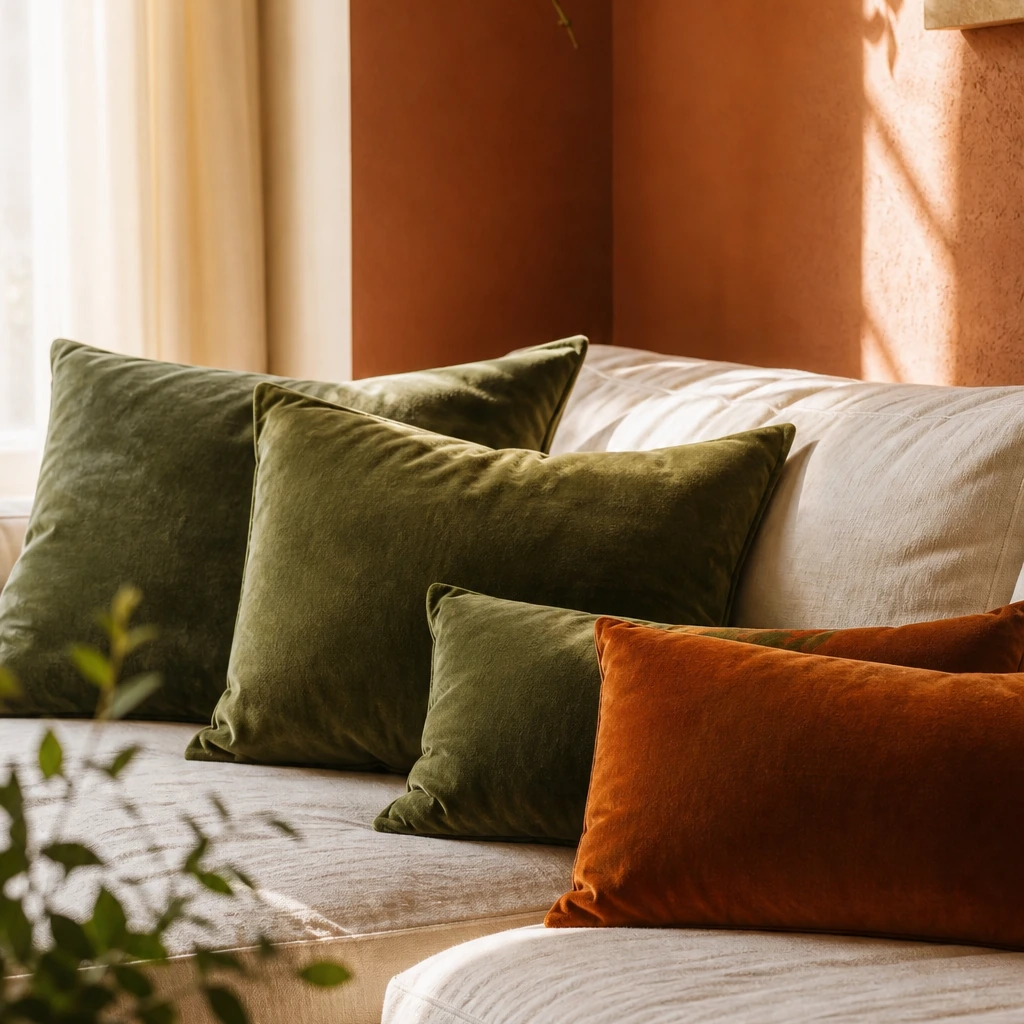
Chamberlain's rooms introduce color sparingly, usually through a single textile, a piece of art, or one accent chair. A dusty sage throw, a terracotta ceramic, or a faded rust-toned rug can add warmth without pulling the eye away from the room's overall calm.
The practical rule: one accent color per room, introduced through something soft or small rather than a large piece of furniture. A sage green sofa is a long-term commitment. A sage green throw pillow is a conversation.
Curved Furniture and Silhouettes for a Softer, More Organic Feel
Curvilinear furniture refers to sofas, chairs, tables, and lighting with rounded or soft-edged shapes rather than the sharp right angles of standard contemporary furniture. It is one of the most distinctive elements of Chamberlain's interior aesthetic and one of the most impactful changes you can make in a standard apartment.
Most apartments are boxes. Rectangular rooms, square windows, straight-edged baseboards. Introducing curved furniture breaks that geometry and makes the space feel more considered and less generic.
Where Curves Have the Highest Impact
Not every piece needs to be curved. The highest-impact places to introduce soft shapes are:
- The sofa. A curved or semi-circular sofa is the single biggest visual statement in a living room. If a full curved sofa is outside budget, a track-arm sofa with rounded cushions achieves a softer effect than a sharp-armed sectional.
- Accent chairs. A rounded barrel chair or a boucle swivel chair introduces the curved language without requiring a full sofa replacement.
- Mirrors. An arched or oval mirror is one of the most affordable ways to add a soft shape to a room. It also reflects light, which supports the airy quality of the look.
- Lighting. Sculptural pendants and table lamps with organic forms, mushroom shapes, globe shades, or irregular ceramic bases, add curves at eye level and above.
Affordable Curved Furniture Options
You do not need to spend RH money to get this effect. West Elm, Article, and CB2 all carry curved sofas and accent chairs in the $600 to $1,800 range that work well within this aesthetic. IKEA's ÄPPLARYD sofa and similar track-arm options are a reasonable starting point for a first apartment where the budget is tighter.
For small city apartments, track-arm sofas are worth prioritizing over deep-seated sectionals regardless of the curve question. They buy back visual and physical space in rooms where every foot matters.
Lighting: The Element Most People Get Wrong
Layered lighting is the practice of using multiple light sources at different heights and intensities rather than relying on a single overhead fixture. It is the most underestimated element in residential interiors and the one that most directly creates the warm, inviting atmosphere associated with Chamberlain's spaces.
A single overhead light, especially a recessed can or a basic flush-mount, flattens a room. It removes shadow, which removes depth. Layered lighting, a floor lamp in one corner, a table lamp on a side table, a pendant over a dining area, creates pools of warm light that make a room feel inhabited rather than illuminated.
Building a Layered Lighting Plan
A practical layered lighting setup for a living room includes three levels:
- Ambient light. A pendant, chandelier, or semi-flush ceiling fixture that provides general illumination. Choose a warm bulb temperature (2700K to 3000K) rather than cool white.
- Task or accent light. A floor lamp positioned near a reading chair or sofa. Arched floor lamps work particularly well in this aesthetic because they introduce a curved form while also directing light downward.
- Decorative light. A table lamp on a console, side table, or shelf. This is where sculptural or interesting lamp bases earn their place. A ceramic or rattan base with a linen shade reads as warm and considered.
Affordable Lighting That Fits the Aesthetic
The editorial coverage of Chamberlain's home consistently highlights natural light as a priority. If your apartment has good windows, keep them unobstructed. Sheer linen curtains let light through while softening the frame of the window.
For artificial lighting, West Elm and CB2 both carry sculptural table lamps and arched floor lamps in the $150 to $400 range. Rejuvenation is worth checking for more architectural options. IKEA's HEKTAR and RANARP pendants are functional starting points that do not undermine the aesthetic.
Avoid black metal fixtures if the room already feels cold. Warm wood, aged brass, and matte ceramic finishes soften the space faster than any other material swap in lighting.
Layered Textures: Building Depth Without Clutter
Layered textures is the design practice of combining multiple tactile surfaces within a single room to create visual and physical depth without relying on strong color or pattern. It is the technique that makes a neutral room feel rich rather than empty.
This is where the Chamberlain aesthetic does its most interesting work. The rooms are not colorful, but they are never flat. The depth comes entirely from material contrast: a smooth plaster wall next to a nubby boucle sofa next to a rough-hewn wood coffee table next to a soft linen throw.
The Texture Hierarchy
A useful way to think about texture layering is to work from large to small:
- Large surfaces (sofa, rug, bed). These set the primary texture of the room. Boucle, bouclé-adjacent weaves, and chunky knits read as warm and soft. A jute or wool rug introduces natural fiber at floor level.
- Medium surfaces (throw pillows, curtains, accent chairs). These add contrast to the primary texture. If the sofa is boucle, a velvet or linen pillow adds a different hand feel without competing visually.
- Small surfaces (throws, ceramics, books, plants). These finish the room. A chunky knit throw draped over a sofa arm, a matte ceramic vase, a stack of design books with interesting spines. These are the details that make a room feel styled rather than furnished.
Where to Source Textures on a Budget
The guide to Chamberlain-inspired decor identifies specific affordable alternatives for the textural pieces in her home. Key sources for budget-friendly texture:
- Rugs: Ruggable for washable options; West Elm for wool and jute at mid-range prices.
- Bedding and throws: The Citizenry for quality natural fiber; H&M Home for budget linen.
- Pillows and cushions: CB2 and Anthropologie Home for interesting textures without custom pricing.
- Ceramics and objects: Target's Studio McGee line and H&M Home both carry matte ceramic pieces that work within this aesthetic.
For rooms that feel overwhelming to furnish, the principle is fewer pieces with more texture rather than more pieces with less. A room with five well-chosen textural elements reads as intentional. A room with fifteen small decorative objects reads as busy.
Statement Pieces and Gallery Walls: Making a Room Feel Personal
A statement piece is a single object, lamp, chair, mirror, or art piece, that becomes the visual focal point of a room and signals that the space was curated rather than assembled. In Chamberlain's home, statement objects appear in every room and do the work of making neutral, textured spaces feel personal rather than generic.
This is the element that most separates a room that looks designed from a room that looks decorated. A strong statement piece gives the eye somewhere to land and gives the room a personality.
Choosing a Statement Piece That Works
The most effective statement pieces share a few qualities:
- They are slightly unexpected. A lamp with an unusual base, a chair in an interesting material, a mirror with an organic or irregular frame.
- They are proportionally significant. A small object on a large wall does not read as a statement. The piece needs to hold its own in the space.
- They feel personal. Vintage finds, inherited objects, and pieces with a story behind them work better as statement pieces than brand-new catalog items because they carry a sense of history.
Chairish and Etsy are the most reliable sources for vintage and one-of-a-kind pieces that function as statements without requiring a custom order. A single interesting vintage lamp or an oversized arched mirror from a resale platform can do more for a room than ten new decorative objects from a big-box retailer.
Gallery Walls Done Right
A gallery wall is a curated arrangement of framed prints, photographs, or mixed media on a wall, used to personalize a room and add visual interest at eye level. Done well, it makes a room feel lived in. Done poorly, it looks like a project that ran out of steam halfway through.
The Vice coverage of Chamberlain's home tour highlights her use of personal photography and mixed-media framing as a way to make the gallery wall feel genuinely personal rather than decoratively assembled.
A few practical rules for gallery walls that work:
- Mix frame sizes but keep a consistent finish (all black, all natural wood, all aged brass).
- Include at least one piece that is not a print: a small mirror, a ceramic wall piece, or a textile panel.
- Lay the arrangement out on the floor before hanging anything.
- Leave more space between frames than feels natural. Crowded gallery walls read as chaotic rather than collected.
Smart Storage and Small-Space Solutions That Keep the Look Clean
The calm, uncluttered quality of Chamberlain's rooms depends heavily on storage that works. Visible clutter undermines every other design decision in a room. The aesthetic requires surfaces that are intentionally styled, not surfaces that are holding overflow from a lack of storage.
For apartment design, the challenge is finding storage that functions well without looking utilitarian. Open shelving, closed cabinetry, and furniture with built-in storage all play a role.
Storage That Fits the Aesthetic
The best storage solutions for this look are either invisible (closed cabinetry, under-bed storage, built-in shelving) or intentionally styled (open shelving where the objects on display are themselves part of the decor).
Open shelving works when the items on the shelf are curated: a few books, a ceramic, a plant, a candle. It fails when it becomes a catch-all for miscellaneous items. If you cannot commit to keeping open shelving styled, closed storage is the better choice.
IKEA's KALLAX and BILLY systems are functional starting points that can be styled to look more considered with the right objects and a coat of paint. Muji's storage boxes and The Container Store's organizational systems handle the invisible storage layer.
For rooms where storage furniture needs to earn its visual place, a rattan or cane-front cabinet, a boucle-upholstered storage ottoman, or a solid wood credenza all function as storage while contributing to the material language of the room.
Tools and Resources for Recreating the Look
The market for accessible warm-minimalist decor has expanded significantly. Below is a practical breakdown of where to source each component of this aesthetic, organized by category.
CategoryWhat It SolvesVendor OptionsFurniture (sofas, chairs, tables)Curved silhouettes, natural materials, mid-range pricingWest Elm, Article, CB2, IKEALightingSculptural pendants, arched floor lamps, warm-toned table lampsWest Elm, CB2, Rejuvenation, IKEARugs and textilesLayered texture at floor level, washable optionsRuggable, West Elm, The CitizenryDecor and objectsCeramics, vases, candles, tabletop stylingH&M Home, CB2, Anthropologie HomeVintage and resaleStatement pieces, one-of-a-kind finds, personal objectsChairish, EtsyPaint and colorWarm neutral bases, muted accent directionsSherwin-Williams, Benjamin Moore, BehrStorage and organizationInvisible clutter management, styled open shelvingIKEA, Muji, The Container StoreDesign guidance and shoppable roomsTranslating inspiration into a cohesive, buyable room planFirst Chair, Architectural Digest, The Everygirl
First Chair is worth calling out specifically in the design guidance category. The platform lets you upload inspiration photos, describe your aesthetic direction (something like "warm minimalist, curves, natural materials"), and receive a cohesive room concept built from real, in-stock pieces across West Elm, CB2, Crate and Barrel, Pottery Barn, and Lulu and Georgia. The distinction from other tools is that every recommendation is grounded in furniture that actually exists and can be purchased, not rendered fantasy rooms. For anyone trying to translate a celebrity home aesthetic into their actual apartment without spending weeks in tabs, that matters. First Chair also offers insider pricing on selected pieces, which is useful when building a room on a disciplined budget.
Best Practices for Recreating This Aesthetic
These are the principles that separate rooms that actually work from rooms that look like they are trying too hard:
- Use a neutral base and introduce color sparingly. One accent color per room, introduced through a textile or small object rather than a large furniture piece. The neutral base only functions as a base if it stays quiet.
- Prioritize natural light. Keep windows unobstructed. Sheer linen curtains let light through while softening the window frame. Mirrors placed opposite windows amplify the effect.
- Mix hard and soft materials. A room with only soft surfaces feels undifferentiated. A room with only hard surfaces feels cold. The combination of wood, stone, boucle, and linen is what creates the balanced, organic quality.
- Include at least one statement object per room. It does not need to be expensive. It needs to be slightly unexpected and proportionally significant. One strong piece does more work than ten small decorative objects.
- Choose curved furniture or soft-edged decor to counterbalance straight walls. This is the fastest single change you can make in a standard rectangular apartment room.
- Build the room gradually. The collected quality that makes Chamberlain's spaces feel personal comes from pieces that were chosen over time, not ordered in a single session. Dupes and thrifted pieces are not compromises; they are part of the method.
- Treat the room as functional for daily life, not as a display. The Elite Daily coverage of her home emphasizes that the spaces feel genuinely usable. A room that looks good in photos but feels precious to live in has missed the point.
- Curate decor around personality and use, not trend compliance. Trend-driven pieces date quickly. Objects that reflect actual interests and habits do not.
Common Mistakes That Undermine the Aesthetic
Flat Neutrals Without Texture
A cream sofa on a cream rug in front of cream walls is not warm minimalism. It is just beige. The neutral base only works when it is layered with contrasting textures. Without boucle, wood, woven fiber, or ceramic, the room reads as unfinished rather than restrained.
Fix: Add at least three distinct material types before deciding the room needs more color. The texture contrast will do more than a new paint color.
Ignoring Scale
An undersized rug under a large sofa is one of the most common mistakes in apartment living rooms. The rug should be large enough that at least the front legs of the sofa sit on it. Undersized rugs make rooms feel smaller and less cohesive.
Fix: Size up one step from what feels right. Rugs almost always look better larger than you expect.
Making the Room Too Precious
If you are afraid to use the room, the design has failed regardless of how it looks in photos. The editorial coverage of Chamberlain's home consistently emphasizes that the spaces feel genuinely livable, not staged.
Fix: Choose furniture and materials you can actually use. Washable rugs, durable upholstery, and surfaces that can hold a coffee cup without anxiety.
Buying Trend Pieces Instead of Strong Pieces
Trend-driven decor dates quickly and rarely contributes to the collected, personal quality that makes warm minimalism work. A room full of this season's trending objects looks assembled, not curated.
Fix: Before buying a decorative object, ask whether you would still want it in five years. If the answer is uncertain, skip it.
All Furniture in the Same Geometry
Choosing all boxy, rectilinear furniture removes the soft, organic feel associated with the look. The curves are not decorative; they are structural to how the aesthetic functions.
Fix: Introduce at least one curved piece per room, even if it is just an arched mirror or a rounded accent table.
Overcrowding With Decor
Too many small objects compete for attention and make the room feel busy rather than layered. The calm quality of Chamberlain's rooms comes partly from what is not there.
Fix: Edit down to the pieces that are genuinely interesting or personal. If an object does not earn its place, remove it.
Ignoring Lighting
A single overhead fixture will flatten any room regardless of how well the furniture and decor are chosen. Layered lighting is not optional in this aesthetic.
Fix: Add at least one floor lamp and one table lamp to a living room before deciding the space needs more furniture.
Frequently Asked Questions
What is Emma Chamberlain's interior design style called?
Her aesthetic is most accurately described as warm minimalism: a pared-back, neutral base layered with natural materials, curved furniture, and carefully chosen statement objects. It avoids the coldness of strict minimalism and the visual noise of maximalism, landing in a space that feels calm, personal, and genuinely livable.
How do I recreate Emma Chamberlain's home aesthetic on a budget?
The aesthetic is modular, which makes it budget-friendly. Start with paint (warm white or cream), add one curved piece (an arched mirror or a rounded accent chair), layer in texture through a jute or wool rug and a boucle throw, and find one statement object through Chairish or Etsy. You do not need to buy everything at once. The look builds gradually.
What furniture brands does Emma Chamberlain use in her home?
Her April 2026 West Elm collaboration included 130 pieces designed to make the aesthetic accessible at mid-range pricing. Beyond West Elm, the look translates well through Article, CB2, Crate and Barrel, and Lulu and Georgia. Vintage and resale platforms like Chairish are also central to the collected, personal quality of her spaces.
What paint colors work best for the Emma Chamberlain aesthetic?
Warm whites and off-whites with slight yellow or pink undertones work best. Sherwin-Williams Accessible Beige and Antique White, Benjamin Moore White Dove and Pale Oak, and Behr Toasty and Almond Milk are all strong directions. Avoid cool whites, which can feel clinical rather than warm under standard apartment lighting conditions.
How do I make a gallery wall look personal rather than assembled?
Mix frame sizes but keep a consistent finish (all black, all natural wood, or all aged brass). Include at least one non-print element such as a small mirror or a ceramic wall piece. Lay the arrangement on the floor before hanging. Leave more space between frames than feels natural. The Vice coverage of Chamberlain's home highlights personal photography and mixed media as the elements that make her gallery walls feel genuine rather than decorative.
What is the most impactful single change I can make to get this look?
Layered lighting. A floor lamp and a table lamp in a living room that currently relies on a single overhead fixture will do more for the warm, inhabited quality of the space than any furniture purchase. It is also one of the most affordable changes relative to its visual impact.
Conclusion: From Saved Inspiration to a Room That Actually Works
Emma Chamberlain's home works because of specific, repeatable decisions: a neutral base that stays quiet, curves that break up boxy geometry, textures that add depth without color, and a few strong objects that make the space feel chosen rather than assembled. None of those decisions require a renovation budget or a custom furniture order. They require knowing which principles to apply and in what order.
The hardest part is not finding inspiration. It is translating that inspiration into a specific, cohesive set of pieces that work together in your actual room, at your actual budget, from retailers you can actually buy from. That gap is where most people get stuck, and where the most expensive mistakes happen.
First Chair is built specifically for that gap. Upload your inspiration, describe your aesthetic direction, and the platform builds a cohesive room concept using real, in-stock pieces from actual retailers. No fake renders. No furniture that does not exist. No tab overload. Just a room you can actually build and live in.