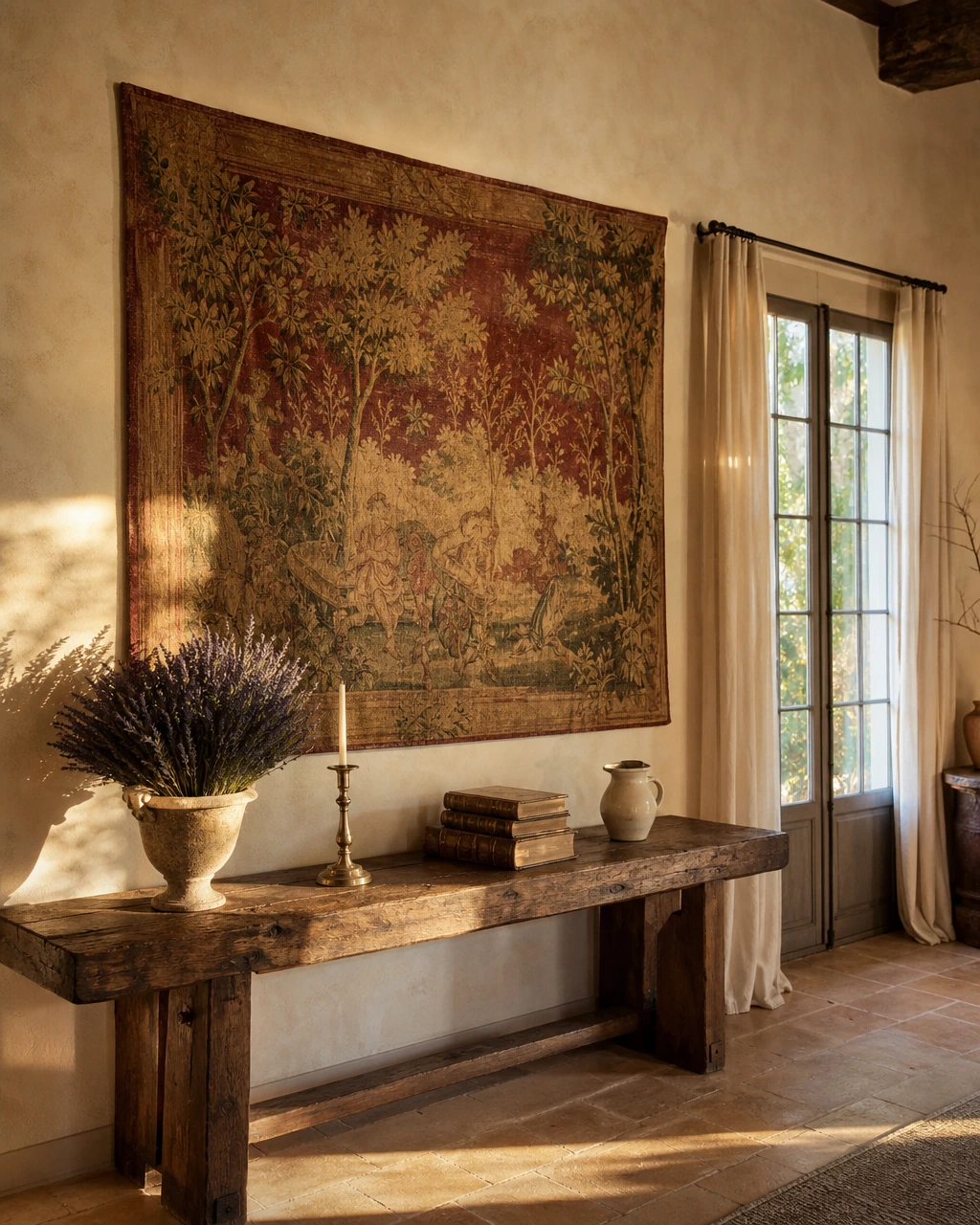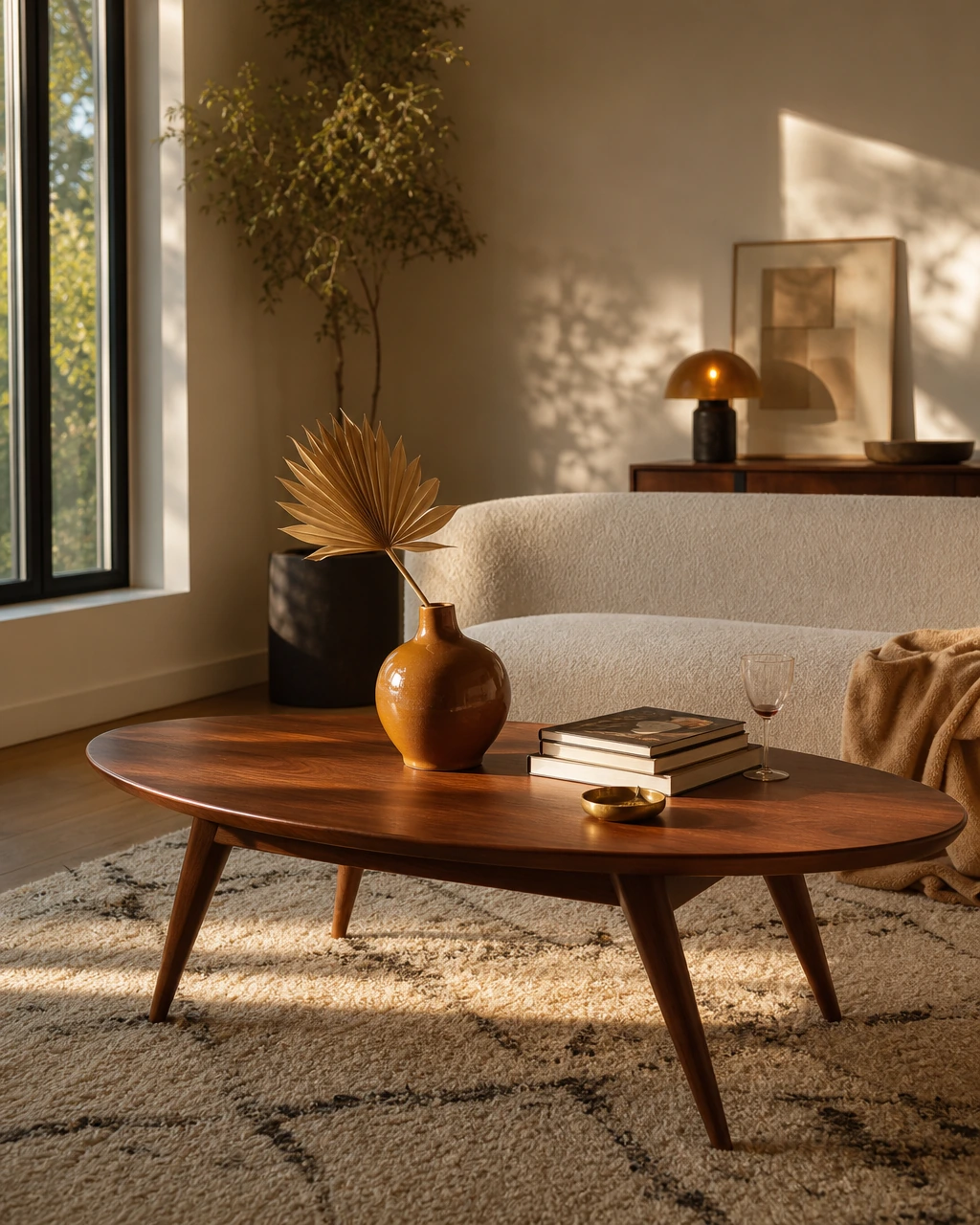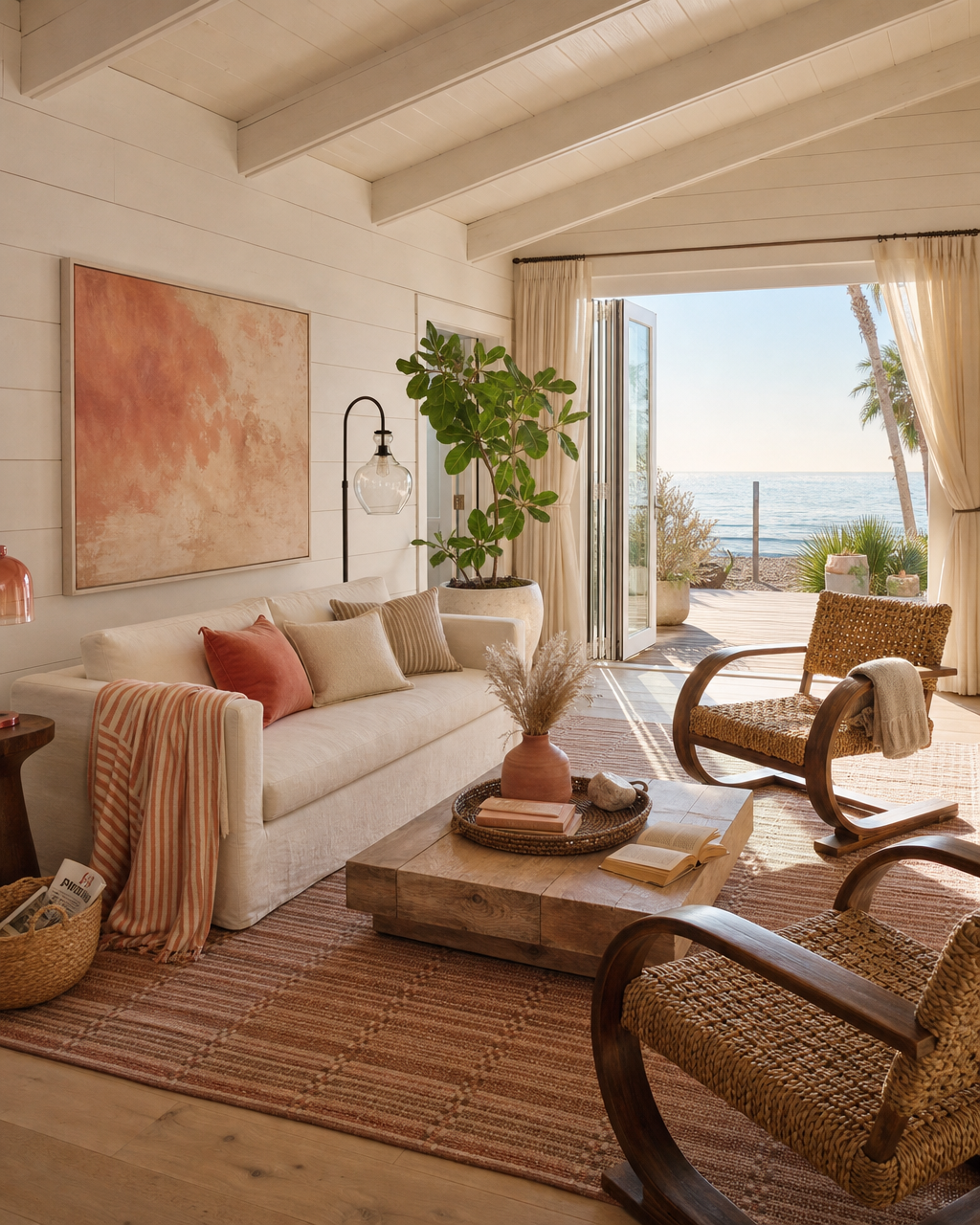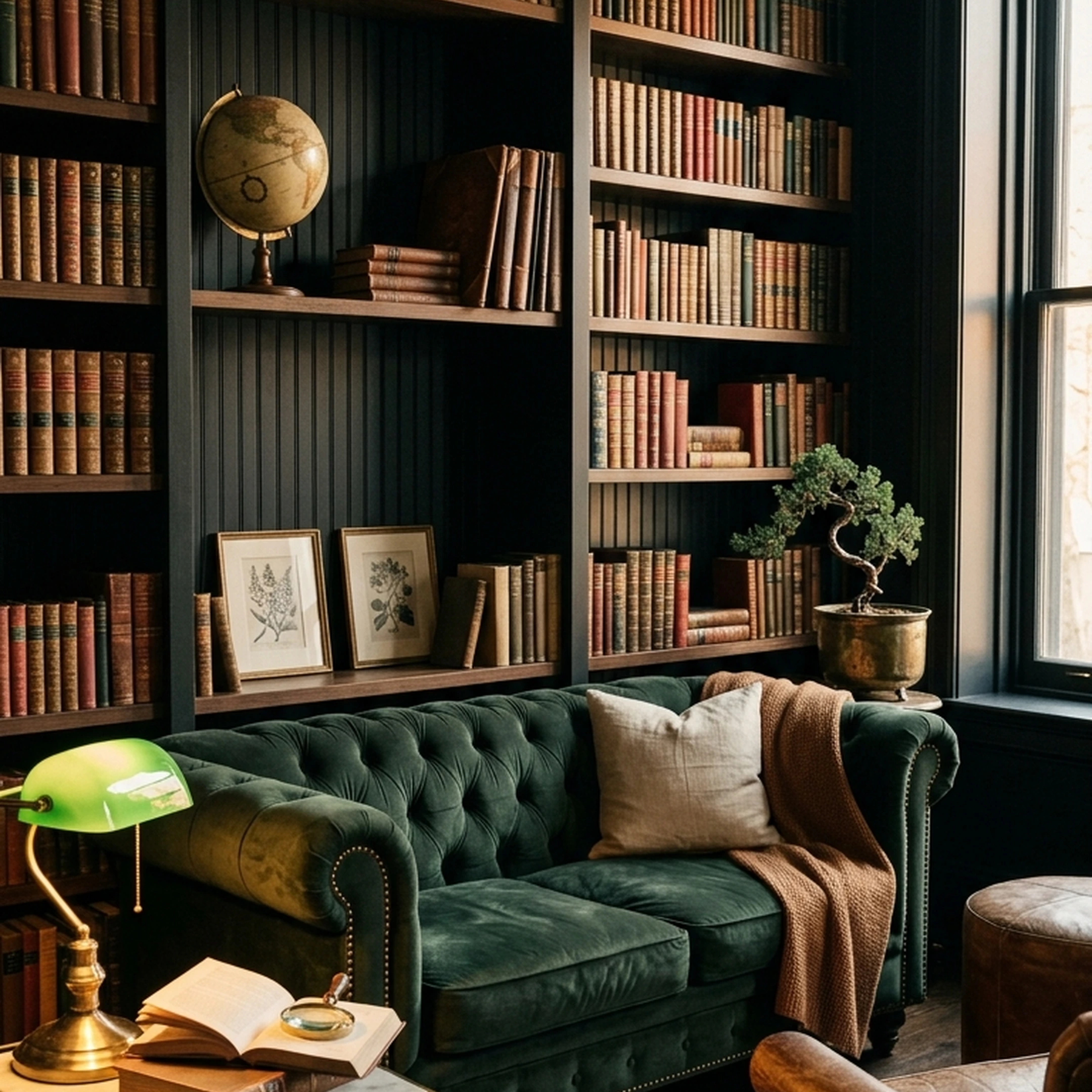
You've seen the tours. Maybe it was the Encino mansion with its open great room and wet bar, or the Puerto Rico property sitting inside the Ritz-Carlton Reserve enclave at Dorado Beach. Either way, something registered. Not the square footage or the price tag, but the feeling: clean, confident, built for living and entertaining at the same time. The neutral palette with those sharp dark accents. The way the inside and outside seem to belong to the same room. The spaces that feel personal without feeling cluttered.
That feeling is not accidental, and it is not exclusive to a $13 million property. The design logic behind Logan Paul's homes follows a set of principles that professional designers use consistently across budgets. Warm neutral base. High-contrast accents. One or two hero pieces per room. Three layers of lighting. Defined zones for specific functions. These are not luxury secrets. They are decisions, and most of them cost less than a single piece of furniture done wrong.
This guide breaks down the specific design moves visible across Logan Paul's documented residences and translates each one into strategies that work in real apartments, starter homes, and rentals. No fantasy renders. No furniture that does not exist. Just the actual principles behind the aesthetic and how to apply them at a budget that makes sense for where you actually live.
What you will learn in this guide:
- The color formula behind the neutral luxury palette and how to recreate it with paint and hardware swaps
- How open-plan layouts work and how to approximate them without structural renovation
- The hero item strategy that makes celebrity interiors feel expensive without being uniformly expensive
- How to build a three-layer lighting system using plug-in fixtures
- Practical approaches to home gym, media room, and outdoor entertaining spaces at real budgets
- Where smart home technology is worth starting and where it is not
- The most common mistakes people make when trying to recreate luxury aesthetics on a budget
Key Takeaways
- Logan Paul's homes use a warm neutral base palette (soft white walls, light beige or warm-toned floors, black or dark bronze accents) that can be recreated almost entirely through paint, hardware swaps, and fixture choices.
- Open-plan layouts are the single most impactful structural move in contemporary luxury homes. 70% of buyers prefer an open layout between kitchen and dining areas, according to NAHB research.
- The global home decor market is projected to reach $1,213 billion by 2030, driven in part by social media influence on design decisions among 18 to 35 year olds (Allied Market Research).
- Smart home integration is no longer a luxury add-on. The smart home market is projected to reach $537 billion by 2030, and entry-level systems start well under $500 (Grand View Research).
- One or two hero pieces per room, supported by simple neutral surrounding furniture, is the actual formula behind the "expensive" look in celebrity interiors.
- Outdoor living spaces can be recreated at any scale. The principles (defined zones, layered lighting, weather-resistant seating) work on a 200-square-foot balcony as effectively as on a one-acre lot.
- 63% of designers report higher demand for multifunctional spaces, according to ASID's 2024 Trends Outlook, which is exactly what Logan Paul's gym, theater, and entertainment areas represent.
- Americans spend approximately 90% of their time indoors (IWBI), making interior design decisions among the highest-impact choices for daily wellbeing.
What Contemporary Luxury Residential Design Actually Means

Contemporary luxury residential design is a style defined by clean rectilinear architecture, high-quality materials, large glazed openings, and strong indoor-outdoor connections, typically combined with neutral palettes and integrated technology. It prioritizes spatial flow and functional flexibility over ornament or historical reference.
That definition matters because it clarifies what you are actually trying to recreate. Logan Paul's homes are not expensive because they are large. They are expensive because every decision reinforces the same design language. The architecture, the palette, the furniture scale, the lighting, and the outdoor spaces all speak the same vocabulary. Coherence is what reads as luxury. Incoherence is what makes a room feel random regardless of how much was spent.
The National Association of Home Builders (NAHB) and the American Society of Interior Designers (ASID) both document consistent demand for the specific features that define this style: open floor plans, outdoor living, flex rooms for wellness and media, and integrated technology. These are not celebrity preferences. They are the dominant direction in how people want to use their homes.
Why This Design Moment Matters Right Now
The context behind celebrity home aesthetics reaching a mainstream audience is worth understanding before getting into the specific moves.
The U.S. residential improvement and repair market reached $481 billion in 2023, up from $328 billion in 2019, according to the Harvard Joint Center for Housing Studies. That growth reflects a fundamental shift in how homeowners think about their spaces: as primary environments for living, working, entertaining, and wellness rather than just shelter.
The millennial and Gen Z cohorts (roughly 18 to 35) show strong interest in personalized interiors and social-media-ready spaces, but are value-conscious and willing to mix high and low brands alongside second-hand pieces. McKinsey research on consumer behavior documents this pattern directly: the "home as sanctuary" orientation that accelerated during the pandemic has not reversed. It has become a baseline expectation.
ASID's 2024 Trends Outlook adds two specific data points that are directly relevant here. 68% of surveyed designers reported increased client interest in wellness-focused design (natural light, air quality, biophilic elements) since 2020. And 63% reported higher demand for multifunctional spaces, meaning rooms that serve as office, guest room, and fitness space rather than single-purpose formal rooms. Logan Paul's gym, theater, and entertainment areas are not celebrity indulgences. They are the leading edge of how design-minded people in the 18 to 35 demographic actually want to live.
The smart home dimension adds another layer. The global smart home market is projected to reach $537 billion by 2030 at a compound annual growth rate of 27.3% from 2022 to 2030, according to Grand View Research. Entry-level access to the same integrated lighting, climate, and AV systems visible in high-end celebrity properties now costs a few hundred dollars rather than tens of thousands.
Logan Paul's Homes: Architecture and Layout Principles
The Properties and Their Design Language
Logan Paul's most documented residences share a consistent architectural vocabulary. His former Encino, Los Angeles mansion covered approximately 8,689 square feet on nearly one acre, with seven bedrooms, 7.5 bathrooms, a home theater, wet bar, wine cellar, and expansive pool and outdoor entertaining areas. His current residence sits within the Dorado Beach East community in Puerto Rico, inside the Ritz-Carlton Reserve enclave, with reported valuations ranging from $13 million to $32.5 million.
Both properties use the same core design language: rectilinear volumes, flat or low-sloped rooflines, large glazed openings, and a strong indoor-outdoor connection. These choices are not arbitrary. They are the defining features of contemporary luxury residential design, and each one translates into a principle you can apply at any scale.
The Open-Plan Great Room
The main living level in both properties combines kitchen, dining, and living into a single seamless great room. This is the most socially functional layout for entertaining, and it is also the most visually impactful change available in a home without moving walls.
NAHB research found that 70% of buyers prefer an open layout between kitchen and dining areas, and 64% prefer the same between kitchen and family room. The preference reflects how people actually use their homes, not just how they want them to look.
Adapting this without renovation comes down to three moves:
- Use consistent flooring throughout the main level to visually unify separate rooms
- Replace heavy furniture partitions with low credenzas or open shelving that define zones without blocking sightlines
- Align the color palette across kitchen, dining, and living so the eye reads the space as one continuous room
For anyone working through a small city apartment, the open-plan principle is especially useful because it makes smaller spaces read as larger. The goal is not to remove walls. It is to remove visual interruptions.
Large Glazing and Indoor-Outdoor Flow
Floor-to-ceiling windows and multi-panel sliding glass doors are a signature feature of both properties. They create the sense that the interior extends outward, and they flood the space with natural light. Americans spend approximately 90% of their time indoors, which makes natural light access one of the highest-impact design decisions in any home.
In a rental or smaller home, the adaptation is about suggesting the same visual logic rather than replicating the architecture:
- Install light-filtering sheers rather than heavy curtains to maximize daylight without sacrificing privacy
- Use large mirrors on walls adjacent to windows to bounce light deeper into the room
- Align interior and exterior furniture orientation so the eye naturally moves from inside to outside, creating the illusion of continuity even through a standard sliding door
Color Palettes and Finishes: The Neutral Luxury Formula
How the Base Palette Works
Contemporary luxury interiors, including both of Logan Paul's primary residences, rely on a specific color logic that is more replicable than it looks. The formula is a warm neutral base with high-contrast accents and one or two material statements per room.
Walls in both properties trend toward soft white or warm off-white. Floors use large-format light beige tile or warm-toned hardwood. Window frames, railings, and fixtures lean toward black or dark bronze. This combination reads as expensive without relying on any single costly element. Pantone's Home and Interiors forecasts consistently highlight warm neutrals and muted earth tones as the dominant direction in high-end residential interiors, which aligns directly with what is visible in Logan Paul's spaces.
The table below shows how each element translates from luxury to accessible versions:
Room ElementLuxury VersionAccessible VersionWallsCustom plaster or high-end paintBenjamin Moore White Dove or Sherwin-Williams Accessible BeigeFloorsLarge-format stone tile or wide-plank hardwoodLuxury vinyl plank in warm oak tonesWindow framesCustom black steelBlack-painted trim or black window filmKitchen islandHoned black marbleQuartz lookalike or laminate with waterfall edgeHardwareAged bronze or matte black customMatte black hardware from CB2 or Rejuvenation
High-Contrast Accents and Material Hierarchy
Dark wood cabinetry against light walls, black metal elements against warm floors, and statement stone with dark veining on kitchen islands or bars. These contrasts are what give the rooms their visual weight. Without them, the neutral base reads as bland rather than refined.
The key is restraint. One or two contrast moments per room is the correct amount. Three or more starts to feel busy rather than considered.
Logan Paul's homes also follow a clear material hierarchy that professional designers use consistently: premium finishes in public-facing spaces, softer and more personal finishes in private spaces.
- Public spaces (living room, kitchen, entry): stone counters, custom cabinetry, designer lighting, hard flooring
- Private spaces (bedrooms, bathrooms): upholstered headboards, layered textiles, warmer lighting, rugs over hard floors
This hierarchy is worth copying directly. It is why the rooms feel considered rather than uniformly expensive, and it means you can concentrate your budget where it has the most visual impact.
Statement Pieces and Personalization: The Hero Item Strategy
Why Celebrity Rooms Feel Personal
One of the most distinctive features of Logan Paul's Encino property was its heavy personalization. Maverick-branded artwork, large-scale prints, custom neon signs, and gaming and media rooms with LED accent lighting and memorabilia. The rooms felt like they belonged to a specific person, not a showroom.
This is a design principle, not just a celebrity quirk. Rooms that feel personal and intentional almost always have a clear point of view expressed through a small number of strong choices. The supporting furniture is simple. The hero items carry the room.
For anyone working through furniture decision fatigue, this is the most useful reframe available. You do not need to find 40 perfect pieces. You need three to five hero items per room, and the rest can be simple and neutral.
Hero Item Candidates by Room
The following breakdown gives a practical starting point for each space:
RoomHero Item OptionsLiving roomOversized sectional in textured fabric, sculptural floor lamp, bold coffee tableDining roomStatement pendant light, dining table with unusual baseBedroomUpholstered headboard in rich fabric, single large piece of art above the bedHome office or gymWall of mirrors, custom shelving, branded or personal artOutdoor spaceFire pit as focal point, large planter with architectural plant, statement outdoor pendant
Personalization Without Custom Fabrication
Logan Paul's neon signs and custom artwork are not out of reach at a reasonable budget. Large-scale art prints can be ordered through Society6 or Minted at sizes that read as gallery-worthy. Custom LED neon signs are available through Etsy vendors for well under $200. Picture ledges from IKEA or CB2 allow for flexible gallery arrangements without permanent wall damage, which matters for renters.
The goal is not to copy Logan Paul's specific aesthetic. It is to apply the same logic: make the room feel like it belongs to someone specific, and let that specificity do the design work.
Lighting Design: The Three-Layer System
Lighting is the most underused design tool in most homes, and it is one of the most visible differences between a room that feels considered and one that feels flat. Logan Paul's properties use recessed ambient lighting, decorative pendants over kitchen islands and dining areas, and accent lighting in theater and gaming rooms. That is a textbook three-layer lighting system.
The Three Layers Defined
Ambient lighting is the base layer: recessed ceiling lights, flush mounts, or overhead fixtures that illuminate the whole room at a general level.
Task lighting is focused light for specific activities: pendants over a kitchen island, a reading lamp beside a chair, under-cabinet lighting in the kitchen.
Accent lighting is decorative and atmospheric: LED strips behind a TV, a picture light over art, a floor lamp in a corner, candles on a dining table.
Most apartments and starter homes have only ambient lighting. Adding task and accent layers transforms the room without any structural work.
Renter-Friendly Lighting Additions
None of the following require an electrician or permanent installation:
- Plug-in wall sconces from Rejuvenation or Anthropologie Home
- LED strip lights behind the TV or under a floating shelf
- A floor lamp with a warm-toned bulb in any corner that currently has no light source
- Pendant lights on plug-in cords over a dining table
For anyone designing a small city apartment, layered lighting is one of the highest-return investments available. It costs less than a new sofa and changes the room more dramatically.
Functional Spaces: Gym, Theater, and Outdoor Entertainment
Home Gym Design on a Real Budget
A dedicated gym room is not required. A gym zone is. The principles are the same regardless of scale.
68% of surveyed designers reported increased client interest in wellness-focused design since 2020, according to ASID's 2024 Trends Outlook. A home fitness space is no longer a luxury amenity. It is a standard expectation in design-minded homes.
A micro-gym setup that works in a spare room or large corner:
- Rubber flooring tiles (available from Rogue or similar fitness retailers) protect floors and define the zone
- A full-length mirror on one wall creates visual depth and serves a functional purpose
- Wall-mounted storage for resistance bands, foam rollers, and accessories keeps the zone organized
- A single adjustable dumbbell set and a doorframe pull-up bar covers most training needs in under 50 square feet
Home Theater Without a Dedicated Room
A true tiered home theater requires a dedicated room and significant investment. The aesthetic and functional experience can be approximated in a living room with a few targeted changes:
- Paint the wall behind the TV in a deep charcoal or navy to reduce glare and create an immersive feel
- Add blackout curtains on any windows in the room
- Use a large TV (75 inches or larger) with a soundbar and subwoofer rather than a full surround system
- Add LED backlighting behind the TV to reduce eye strain and create the accent lighting effect visible in Logan Paul's media room
For anyone planning a media room layout, thinking through furniture placement and viewing distance before purchasing equipment prevents the most common and expensive mistake: a screen that is too large or too small for the room.
Outdoor Living at Any Scale
The outdoor areas at both Logan Paul properties feature pools, covered terraces, and defined dining and lounge zones. 87% of home buyers rate a patio as desirable, according to NAHB research. The design principles that make those spaces work translate directly to a small yard, a rooftop, or a balcony.
Three elements define an outdoor room at any scale:
- Structured seating: Weather-resistant chairs or a sectional arranged around a defined focal point (fire pit, coffee table, or outdoor rug)
- Layered lighting: String lights overhead, solar lanterns at ground level, or a plug-in outdoor floor lamp
- Greenery: Potted plants in varying heights, from a tall olive tree or architectural plant in a large planter down to trailing plants at the edge of a railing
These three elements, even on a 60-square-foot balcony, create the sense of a designed outdoor room rather than a forgotten exterior space.
Smart Home Integration: Where to Start
Entry-level access to the integrated lighting, climate, and AV systems visible in high-end celebrity properties now costs a few hundred dollars rather than tens of thousands. The smart home market is projected to reach $537 billion by 2030 at a 27.3% compound annual growth rate, according to Grand View Research. The technology is mature enough that entry-level products from major platforms are reliable and genuinely useful.
Smart Home Priority Order for New Homeowners
The table below ranks smart home upgrades by impact-to-cost ratio for someone starting from scratch:
PriorityDeviceApproximate CostPrimary Impact1Smart bulbs (Philips Hue or LIFX)$15 to $50 per bulbLighting control, ambience, energy savings2Smart thermostat (Nest or Ecobee)$150 to $250Comfort, energy savings, automation3Smart speaker (Amazon Echo or Google Nest)$50 to $100Voice control hub for all other devices4Smart plug (TP-Link Kasa)$15 to $25Automate any existing lamp or appliance5Video doorbell (Ring or Nest Hello)$100 to $250Security, remote access6Smart lock (Schlage Encode or August)$150 to $300Keyless entry, guest access control
Start with smart bulbs and a smart speaker. These two purchases unlock the most visible change in daily experience and cost less than a single piece of mid-range furniture.
ASID notes increased integration of smart lighting, climate control, and AV systems into the design process itself rather than treating them as afterthoughts. The practical implication: plan for smart home infrastructure before you finalize furniture placement, not after.
Tools and Solutions for Recreating This Aesthetic
Interior Planning and Visualization Tools
Before purchasing furniture, planning the layout digitally prevents the most expensive mistakes. Several tools exist at different levels of complexity:
- SketchUp: 3D modeling tool popular for quick concept development and layout visualization. Useful for testing furniture scale before buying.
- Chief Architect: Residential design software focused on home builders and remodelers. More technical but highly accurate for spatial planning.
- Roomstyler: Browser-based tool for quick 3D visualization and mood boards. Lower learning curve for non-designers.
Note: Planner 5D and Homestyler are also commonly cited in this category. Both are competitor products and are not linked here.
Furniture and Decor Retailers for This Aesthetic
The neutral luxury palette and contemporary silhouettes visible in Logan Paul's homes are well-represented across several retailers:
- CB2: Strong for high-contrast accents, dark metal frames, and contemporary upholstery
- West Elm: Warm woods, textured fabrics, and mid-range pricing with consistent aesthetic coherence
- Rejuvenation: Lighting and hardware with aged bronze and matte black finishes that anchor the contrast moments
- Lulu and Georgia: Rugs and decorative pieces that add warmth without breaking the neutral palette
- Chairish: Second-hand and vintage pieces for hero items at a fraction of new retail pricing
AI-Assisted Design Platforms
The challenge with celebrity home inspiration is not finding the aesthetic. It is translating it into a cohesive, buyable room without spending months in tabs or making expensive mistakes.
First Chair is built specifically for this problem. You can upload a photo of a room you love, whether from a celebrity home tour, a hotel lobby, or a Pinterest save, and receive a curated room concept built from real, in-stock furniture across retailers including West Elm, CB2, Crate and Barrel, Pottery Barn, and Lulu and Georgia. Every recommendation is a piece that actually exists and can be purchased. No fantasy renders. No furniture that disappears when you try to find it.
The platform handles nuanced style directions like "modern luxury but warmer" or "clean lines but not cold" and returns recommendations calibrated to that specific direction rather than a generic style category. For anyone working through the inspiration-to-execution gap that makes celebrity home design feel out of reach, it narrows the field to pieces that work together. Insider pricing is built in on most pieces, without the promo-code hunt.
Other tools in this category (including Havenly, Houzz, and Collov AI) offer varying approaches to design guidance. None are linked here.
Smart Home Platforms
Three major ecosystems dominate the entry-level smart home market:
- Amazon Alexa: Voice assistant ecosystem controlling lights, thermostats, and AV devices. Widest device compatibility.
- Google Home: Hub for integrating Nest thermostats, cameras, and compatible devices. Strong for climate and security.
- Apple HomeKit: Tighter ecosystem but strong privacy controls and seamless integration for Apple device users.
Choose one ecosystem and build within it. Mixing platforms creates friction that defeats the purpose of automation.
Best Practices for Recreating Luxury Aesthetics on a Budget
- Start with paint. The neutral luxury palette is almost entirely achievable through wall color, trim color, and door color. This is the highest-impact, lowest-cost move available in any space.
- Establish the palette before buying furniture. Every piece you purchase should be evaluated against the established palette. Buying furniture before committing to a color direction is the single most common source of mismatched rooms.
- Invest in one hero piece per room before filling in the rest. The hero item sets the standard for everything else. Buying supporting pieces first and then trying to find a hero item that works with them is harder and more expensive.
- Add a third layer of lighting before buying new furniture. Most rooms are transformed more by adding a floor lamp and LED accent strips than by replacing a sofa. Do this first.
- Treat outdoor spaces as rooms, not afterthoughts. Define the zone with a rug or pavers, add a light source, and include at least one architectural plant. These three moves cost under $300 and change the entire character of an outdoor space.
- Plan smart home infrastructure before finalizing furniture placement. Outlet locations, switch placement, and speaker positioning all affect furniture layout. Deciding these after the room is furnished creates compromises.
- Use second-hand and vintage sources for hero items. Chairish and 1stDibs carry pieces with the sculptural quality and material richness that make rooms feel collected rather than assembled. A single vintage piece in a room of new furniture reads as intentional.
- Keep the material count low. Two or three primary materials per room (warm wood, white plaster, black metal, for example) create cohesion. More than four starts to feel busy regardless of the quality of individual pieces.
Common Mistakes When Recreating Celebrity Home Aesthetics
Buying the Palette Wrong
Mistake: Choosing a cool gray or stark white instead of a warm neutral, then wondering why the room feels cold.
Consequence: Every piece of warm-toned furniture fights the wall color. The room never settles.
Fix: Test paint samples in your specific lighting conditions before committing. Warm whites read very differently in north-facing rooms versus south-facing ones.
Matching Instead of Layering
Mistake: Buying a matching furniture set (sofa, loveseat, coffee table, end tables from the same collection).
Consequence: The room looks like a showroom floor, not a home. Matching sets eliminate the "collected over time" quality that makes celebrity interiors feel personal.
Fix: Buy the sofa and the rug from different sources. Let the coffee table be a different material from the sofa legs. Contrast is what creates depth.
Scaling Furniture Wrong
Mistake: Buying furniture that is too small for the room because it looks proportional in a showroom or product photo.
Consequence: The room feels sparse and unfinished even when fully furnished. Small furniture in a large room reads as cheap regardless of price.
Fix: Measure the room and mark furniture dimensions on the floor with tape before purchasing. A sofa that is 20% larger than you think you need is almost always the right call.
Ignoring Lighting Until the End
Mistake: Treating lighting as a final decorative touch rather than a structural design decision.
Consequence: A beautifully furnished room that feels flat and uninviting because it has only overhead ambient light.
Fix: Plan the three lighting layers (ambient, task, accent) before finalizing furniture placement. Outlet and switch locations affect where furniture can go.
Over-Personalizing Too Early
Mistake: Filling the room with personal objects, memorabilia, and decorative accessories before the foundational pieces are right.
Consequence: The room feels cluttered rather than curated. Personal items need a strong neutral foundation to read as intentional rather than accumulated.
Fix: Get the palette, the hero pieces, and the lighting right first. Add personalization last, and edit ruthlessly.
Skipping the Outdoor Zone
Mistake: Treating the outdoor space as storage or leaving it empty.
Consequence: The home feels incomplete, and one of the highest-impact spaces for entertaining and daily living goes unused.
Fix: Apply the three-element outdoor room formula (structured seating, layered lighting, greenery) even in a small space. The investment is low and the return is disproportionate.
Buying Smart Home Devices Without a Platform Strategy
Mistake: Buying smart devices from multiple incompatible ecosystems because individual products look appealing.
Consequence: Devices that do not communicate with each other, requiring multiple apps and defeating the purpose of automation.
Fix: Choose one ecosystem (Alexa, Google Home, or Apple HomeKit) and buy only devices certified for that platform.
Frequently Asked Questions
What design style is Logan Paul's house?
Logan Paul's homes follow a contemporary luxury residential aesthetic characterized by clean rectilinear architecture, neutral palettes with high-contrast accents, large glazed openings, and open-plan entertaining spaces. The style is sometimes described as modern California contemporary, with strong indoor-outdoor connections and a mix of premium materials and personalized statement pieces.
How can I get the Logan Paul house aesthetic on a budget?
The most impactful budget moves are paint (warm white walls with dark trim or window frames), layered lighting (adding task and accent layers to existing ambient lighting), and one or two hero furniture pieces per room supported by simple neutral surrounding pieces. Consistent flooring and a cohesive color palette across rooms do more for the "expensive" look than any single expensive purchase.
What color palette does Logan Paul use in his home?
Both the Encino and Puerto Rico properties use a warm neutral base: soft white or off-white walls, light beige or warm-toned floors, and black or dark bronze accents on frames, railings, and fixtures. High-contrast moments come from dark wood cabinetry, black metal elements, and statement stone with dark veining on kitchen islands and bars.
How do I design a home gym like Logan Paul's without a dedicated room?
Start with rubber flooring tiles to define and protect the zone, add a full-length mirror on one wall, and use wall-mounted storage for accessories. A dedicated room is not required. A defined corner or spare room with these three elements creates a functional and visually intentional gym space at a fraction of the cost of a full build-out.
What smart home technology is worth investing in first?
Smart bulbs and a smart speaker are the highest-impact starting point. They cost under $200 combined, require no installation beyond screwing in a bulb and plugging in a device, and unlock lighting control, automation, and voice-activated management of other smart devices added later. A smart thermostat is the next logical step for comfort and energy savings.
Can I recreate a luxury outdoor entertaining space in a small yard or balcony?
Yes. The three elements that define an outdoor room at any scale are structured seating arranged around a focal point, layered lighting (string lights overhead plus ground-level sources), and greenery in varying heights. These principles work on a 60-square-foot balcony as effectively as on a large terrace, and the total investment can be under $500.
Conclusion: From Inspiration to a Room You Can Actually Live In
The design logic behind Logan Paul's homes is not complicated. Warm neutral base. High-contrast accents. One or two hero pieces per room. Three layers of lighting. Defined functional zones. Strong indoor-outdoor connection. These are decisions, not budgets. And most of them are available at a price point that has nothing to do with a $13 million property.
The harder problem is execution. Knowing the principles and translating them into a cohesive, buyable room are two different things. The gap between a Pinterest board full of contemporary luxury interiors and a finished room that actually feels that way is where most people get stuck: too many tabs, too many options, too much second-guessing, and eventually a room full of pieces that almost work together.
That is exactly the problem First Chair is built to solve. Upload a photo of a room you love, describe the direction you want (modern luxury but warmer, clean lines but not cold, contemporary but personal), and receive a curated room concept built from real, in-stock pieces across West Elm, CB2, Crate and Barrel, Pottery Barn, and Lulu and Georgia. Every piece exists. Every piece can be purchased. And the recommendations are built to work together, not just to look good individually.
The room you have been looking at in those home tours is closer than it looks. Start with the palette. Add the lighting layers. Find one hero piece. The rest follows.