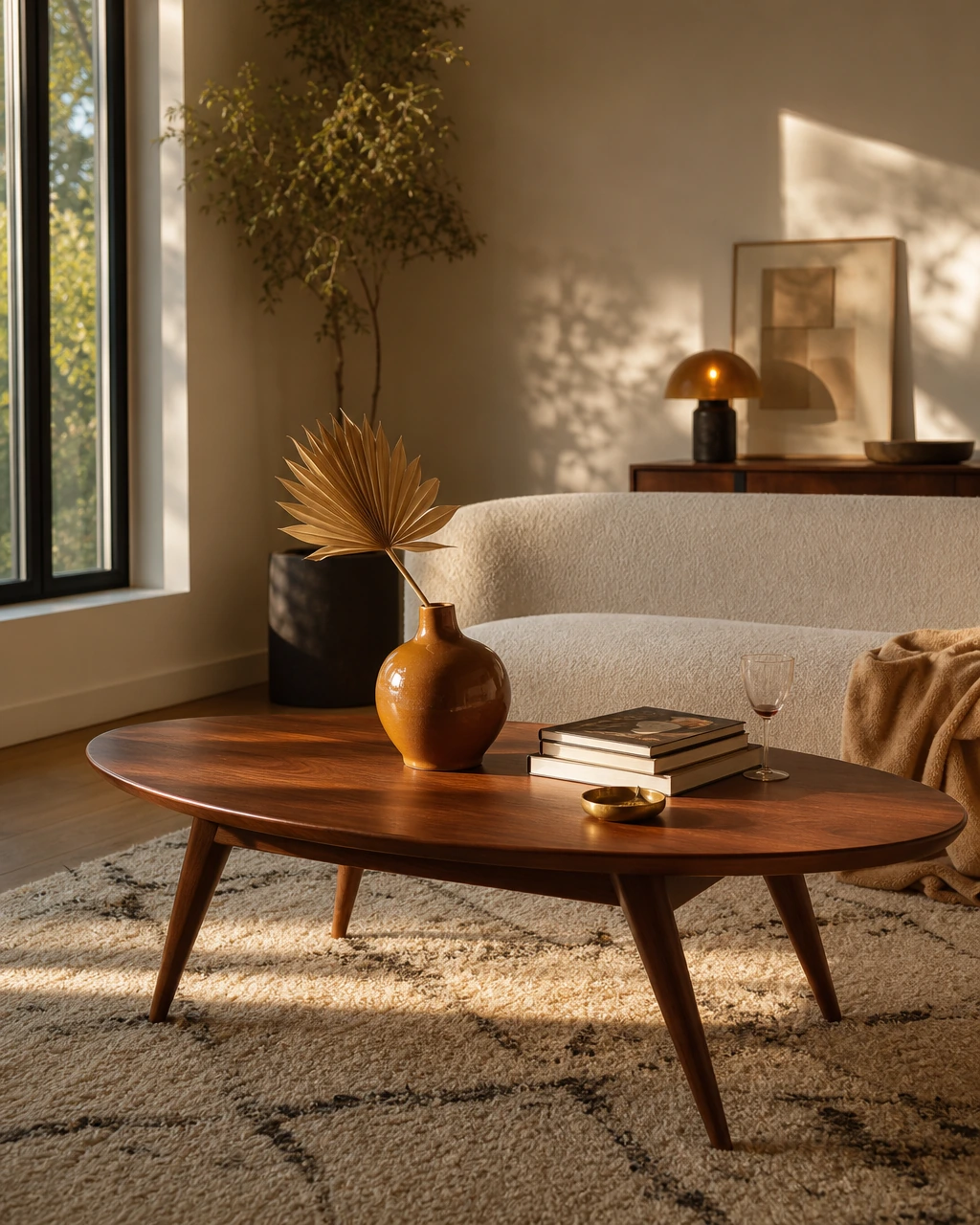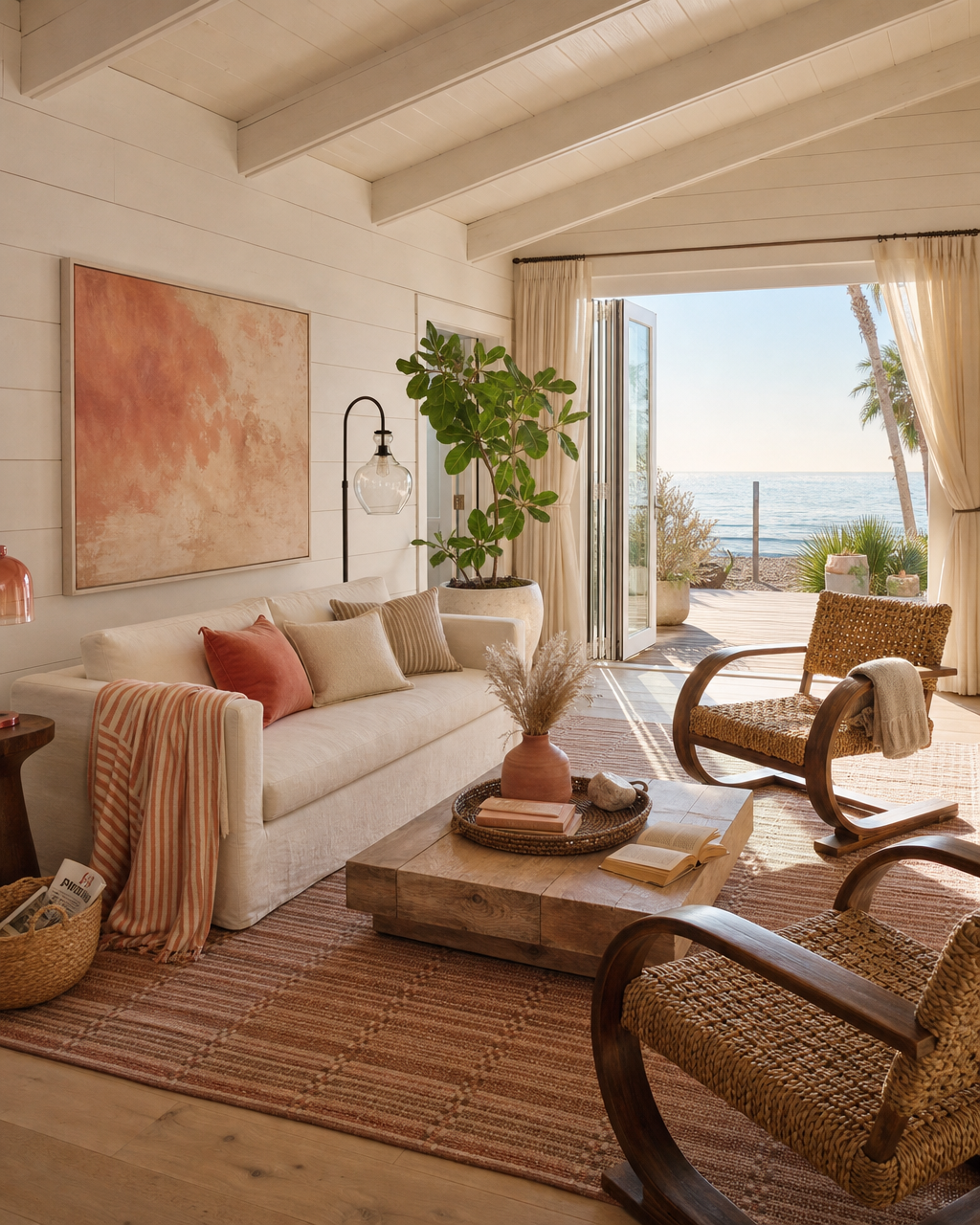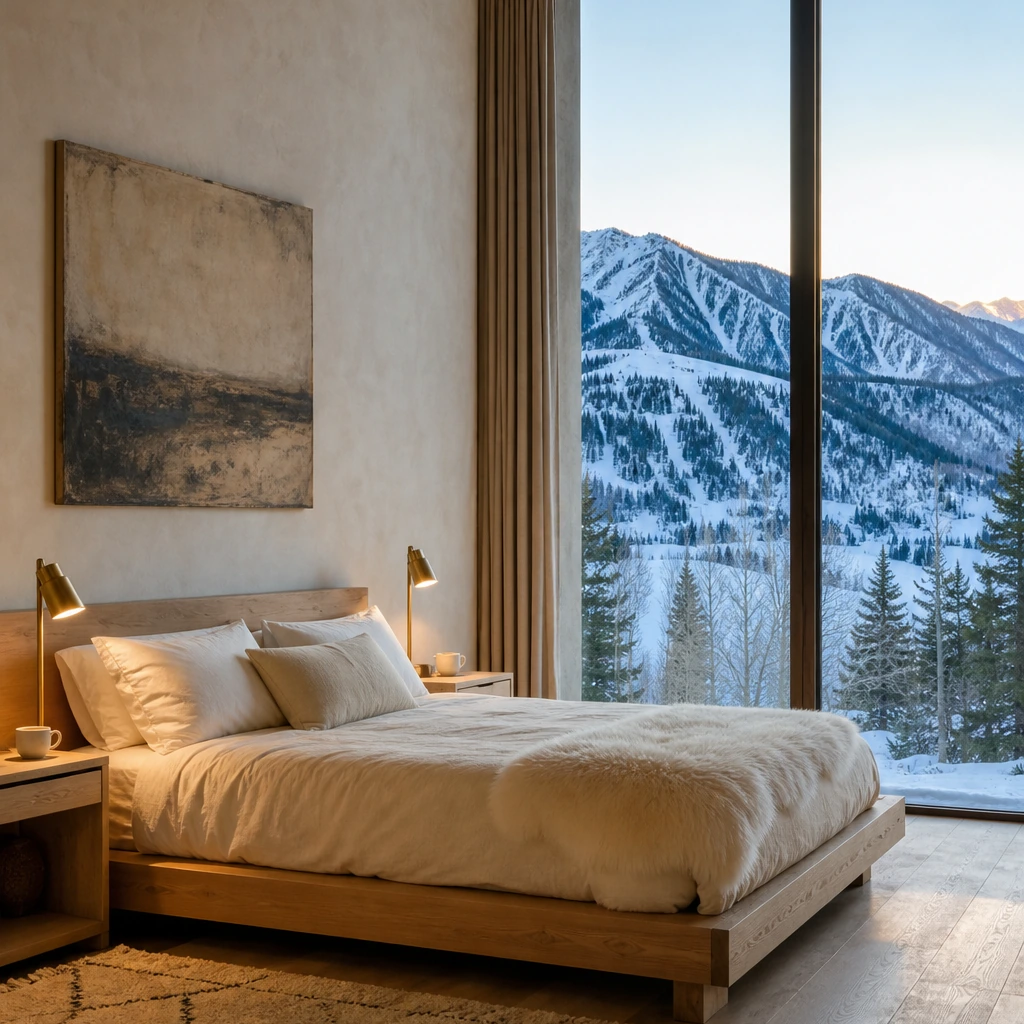

You walked into that suite in Napa, or maybe it was the Kimpton in Chicago, and something clicked. The room felt finished in a way yours never quite does. The bed looked like it had been styled. The light was warm without being dim. The curtains pooled slightly on the floor. Nothing was wrong, exactly, but everything was right, and you spent the rest of the trip trying to figure out what they did that you haven't.
Here is what they did: they made 25 small decisions that reinforce each other. Not one statement piece. Not a renovation. A system of choices about proportion, texture, light, and sequence that, taken together, produce a room that reads as intentional rather than assembled. The frustrating part is that most of those decisions are not expensive. They are just specific, and specificity is exactly what gets lost when you are shopping across six browser tabs and trying to hold a vision in your head.
This guide covers all 25 strategies drawn from current hospitality design research and real furnishing principles. The luxury house interior design market is projected to reach USD 75.2 billion in 2026, driven by homeowners who want hotel-quality results in their own spaces. The gap between what hotels do and what most residential bedrooms achieve is not a budget gap. It is a decisions gap.
By the end of this guide, you will know:
- The layout principle that immediately makes any bedroom read as designed
- How hotels actually build a bed (and why your current approach probably differs)
- The lighting formula used in luxury suites, with specific lux and Kelvin targets
- The color framework that produces calm without producing boring
- Which textile and material upgrades have the highest impact per dollar
- How to address sound, scent, and storage the way hospitality designers do
Key Takeaways
- The luxury house interior design market is projected at USD 75.2 billion in 2026, growing at a 5% CAGR through 2035, reflecting sustained homeowner demand for hotel-quality residential interiors.
- Resimercial design, the fusion of residential warmth with commercial-grade polish, is the dominant hospitality trend for 2026 and the clearest framework for translating hotel aesthetics into a private home.
- Hotels specify cotton percale bedding with thread counts between 300 and 400, not the highest available, because percale in that range delivers the crisp, cool feel associated with luxury suites.
- Layered lighting at 150 to 200 lux ambient, 300 to 500 lux task, and 2700 to 3000K bedside is the technical standard used in luxury hotel room design.
- The 60/30/10 color rule (60% calm neutrals, 30% supportive tones, 10% accent) is the palette framework used across most luxury hotel room design.
- Centering the bed on the longest solid wall with at least 24 inches of clearance on each side is the single layout decision that most immediately makes a room read as composed.
- Blackout curtains mounted ceiling-to-floor, not window-to-sill, are standard in every luxury hotel and one of the most overlooked upgrades in residential master suites.
- Evidence-based wellness design and multi-sensory environments (light, scent, texture, sound) are the defining forces in 2026 luxury hospitality, directly applicable to residential master bedrooms.
The Design Framework Behind Every Great Hotel Room
What Resimercial Design Actually Means
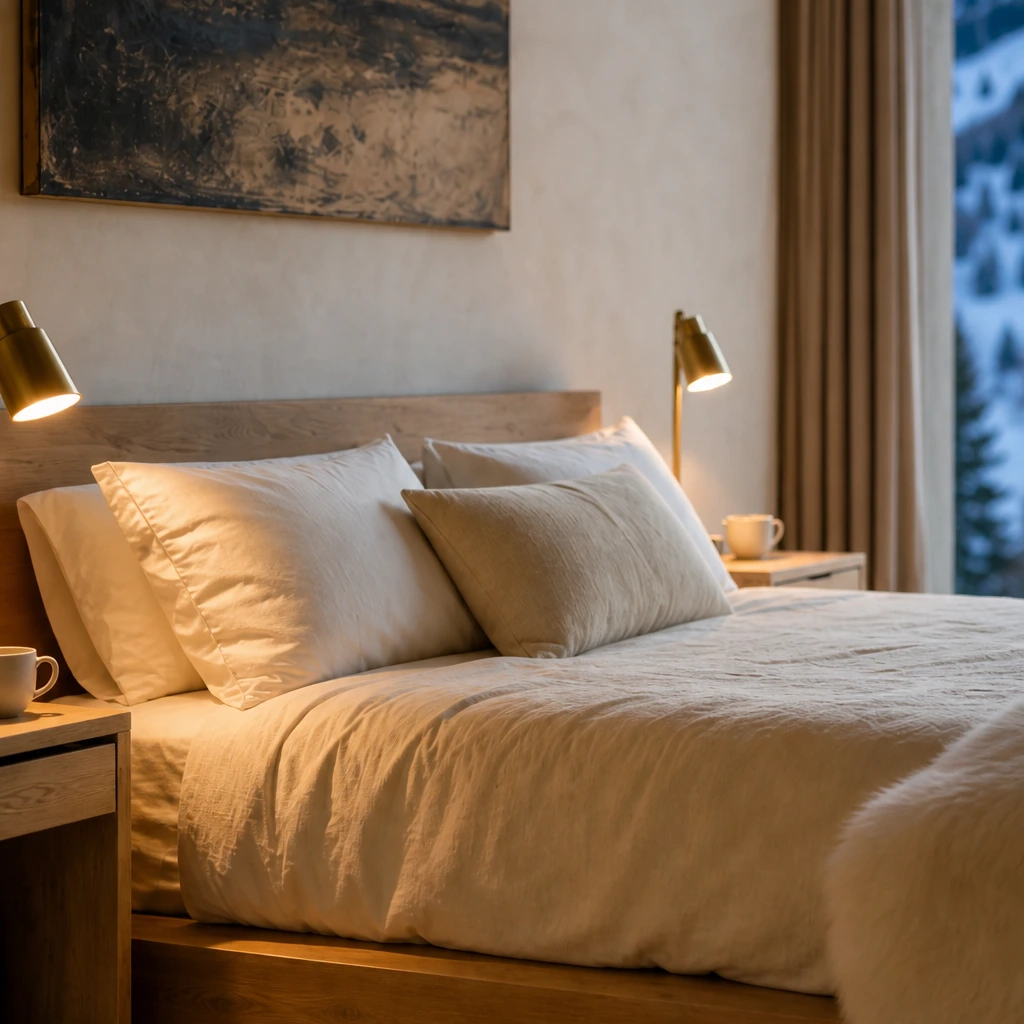
Resimercial design is the practice of combining residential comfort (soft furnishings, human-scale lighting, tactile surfaces) with commercial-grade durability and visual sophistication. The term describes spaces that feel like home but function at hotel standards, and it is the framework that explains why the best hotel rooms feel immediately livable rather than staged.
The shift is meaningful. Luxury hospitality has moved decisively away from cold, impersonal minimalism toward warmer, more intimate interiors where refinement goes hand in hand with authenticity. For a homeowner, this is useful permission: the goal is not a showroom. It is a room that feels considered, warm, and slightly elevated above everyday life.
The practical implication is that hotel-worthy bedrooms are not built around a single statement piece. They are built around a system of decisions that reinforce each other: the weight of the drapes, the warmth of the lighting, the layering of the bed, the scale of the furniture relative to the room. When those decisions align, the room reads as intentional without feeling staged.
Why Most Master Bedrooms Fall Short
Most master bedrooms fail at the system level, not the individual piece level. The sofa is good. The rug is good. The lighting is wrong. The curtains are too short. The bed is centered but the nightstands are mismatched in scale. Each piece was chosen in isolation, which is exactly how furniture shopping tends to work, and the result is a room that feels assembled rather than designed.
Intentional, personalized experiences are now the baseline expectation in luxury hospitality, not a differentiator. Tailored lighting, optimized sleep environments, and curated sensory details are what guests expect from a five-star suite. Bringing that same intentionality to a master bedroom is the actual project, and it starts with understanding which decisions matter most.
Why Hotel-Style Bedroom Design Matters Now
The Market Shift Toward Residential Luxury
Homeowner demand for hotel-quality interiors is not a niche trend. The global luxury house interior design market was USD 71.59 billion in 2025 and is projected to reach USD 75.2 billion in 2026, growing at a 5% CAGR through 2035. The same report identifies bespoke designs, smart home integration, and sustainable materials as the primary demand drivers, all of which align with the hospitality design principles covered in this guide.
A separate market analysis values the luxury house interior design segment at USD 45.67 billion in 2024, with a projected 6.8% CAGR from 2026 to 2033. Two independent projections pointing in the same direction confirm this is a sustained behavioral shift, not a post-pandemic spike.
The Wellness and Sensory Design Convergence
The hospitality industry is converging around what designers call wellness-focused personalization: rooms designed to support sleep, reduce stress, and create environments tuned to emotional connection rather than pure visual spectacle. Evidence-based wellness design and multi-sensory experiences are the core forces shaping luxury hotels in 2026, including sleep optimization, biophilic materials, and environments where every sensory input is considered together.
Design's 2026 Hospitality Design Report frames this as "social wellness," describing spaces designed as holistic wellness ecosystems that balance sensory calm, aesthetic storytelling, and human connection. For a master bedroom, this translates into curated palettes, immersive lighting, natural materials, and the kind of quiet that makes a room feel restorative rather than just attractive.
The Maximalism Correction
One additional trend worth noting: the design world has moved away from the sparse, all-white aesthetic that dominated residential interiors for the better part of a decade. Maximalism and eclecticism are the dominant directions in 2026 hospitality design, with strong demand for vintage and antique furniture, chocolate browns, deep greens, and layered textures. This does not mean clutter. It means rooms with more material richness, more considered layering, and more personality than the minimalist template allowed.
For homeowners, this is useful context. The hotel-worthy bedroom of 2026 is not a white box with a linen headboard. It is a room with warmth, depth, and a point of view.
The 25 Strategies
Furniture and Layout: Getting the Structure Right
The structure of a room (where the furniture sits, how it is proportioned, how it relates to the architecture) determines whether the room reads as designed before a single textile or accessory is introduced. Most residential bedrooms get this wrong first, which is why subsequent purchases never quite fix the feeling.
1. Anchor the room with proper bed placement. Center the headboard against the longest solid wall in the room. Leave at least 24 inches of clearance on each side of the bed for circulation. This is the layout standard used in virtually every well-designed hotel suite, and it is the single change that most immediately makes a room read as composed rather than crowded. If your current layout has the bed pushed toward one wall to accommodate a sitting area or closet, reconsider. The visual symmetry created by equal space on both sides of the bed is worth more than the extra floor space gained by pushing it aside.
2. Invest in the bed frame before anything else. The bed frame is the room's primary visual anchor. A low-profile platform frame in a warm walnut or oak finish, or an upholstered frame in a textured linen or boucle, will do more for the room's overall feeling than any accessory purchase. Skip the matching bedroom set. Hotel rooms rarely use matched furniture suites because the result looks retail rather than residential. Upholstered headboards in neutral tones (warm white, oatmeal, soft charcoal) work in almost every palette and add the acoustic softness that makes a room feel quieter.
3. Add a seating area if the room allows. A chair or small settee in the corner of a master bedroom is one of the clearest signals that the room was designed rather than furnished. It creates a secondary zone that makes the room feel larger and more intentional. For rooms under 250 square feet, a single upholstered chair with a small side table is sufficient. For larger rooms, a loveseat or bench at the foot of the bed creates a more complete suite feeling.
4. Place a bench at the foot of the bed. A bench at the foot of the bed is one of the most recognizable hotel design elements and one of the easiest to replicate. It adds visual weight to the lower portion of the room, provides a surface for folded throws and decorative pillows, and creates a clear visual endpoint for the bed. Upholstered benches in linen, velvet, or boucle work best in neutral palettes. Cane or rattan benches work well in warmer, more organic aesthetics.
5. Use matching nightstands at the same height. Mismatched nightstands are a common styling choice that rarely works as well in practice as it does in inspiration photos. In a hotel suite, nightstands are always matched in height and visual weight because the symmetry frames the bed and creates the composed, balanced look that reads as designed. If you want variety, introduce it through objects on the nightstands (different lamps, different books, different accessories) rather than through the nightstands themselves.
6. Choose nightstands with storage. Hotel nightstands almost always include a drawer or shelf because the room needs to function without visual clutter. A nightstand that holds only a lamp and a glass of water will accumulate books, chargers, and miscellaneous objects within a week. A nightstand with a drawer keeps the surface clear and the room looking composed. For nightstand selection, warm woods (walnut, oak, cane) and aged metal hardware will work in almost any neutral palette.
For guidance on furniture that works in real spaces, the same principles apply regardless of room size: proportion, storage, and visual weight matter more than brand or price point.
Bedding and Textiles: Building the Bed Correctly
The bed is the room's focal point, and most residential beds are built wrong. Not in terms of quality, but in terms of structure. Hotels do not use a single heavy comforter. They build the bed in layers that can be adjusted and that photograph as composed.
7. Build the bed in layers. The standard hotel formula: a quality mattress topper, high-thread-count percale sheets, a duvet insert, a coverlet or quilt folded at the foot, and multiple pillow sizes arranged from largest to smallest. This approach looks visually composed and gives the occupant adjustable warmth. The layering also creates the depth and dimension that makes a hotel bed look styled rather than simply made.
8. Choose percale over sateen for the hotel feel. Percale is a plain-weave cotton with a matte, crisp hand. Sateen is a satin weave with a smoother, more lustrous surface. Most people assume luxury bedding means sateen because it looks more expensive in photographs. Hotels disagree. Hotels typically specify cotton percale with thread counts between 300 and 400, not the highest available, because percale in that range delivers the cool, crisp feel associated with luxury suites. If your current sheets feel soft but slightly warm and heavy, switching to percale will change the experience of the bed immediately.
9. Edit the pillow arrangement. Hotel beds use a specific pillow formula: two or three Euro shams at the back, two standard sleeping pillows in front, and one or two decorative pillows or a lumbar pillow at the front. The arrangement creates depth and visual layering without looking excessive. Keep patterns minimal. Vary texture instead. The most common residential mistake is either too few pillows (the bed looks flat) or too many decorative pillows in competing patterns (the bed looks busy).
10. Add a throw at the foot of the bed. A folded throw at the foot of the bed adds texture, warmth, and the layered quality that distinguishes a designed bed from a made bed. Cashmere, chunky knit, and waffle-weave throws in warm neutrals (camel, ivory, soft terracotta) work across most palettes. The throw should be folded neatly and placed slightly off-center, or draped loosely over one corner of the bed. Either approach reads as intentional rather than decorative.
11. Invest in benchmark bedding brands. Frette is the Italian linen house most closely associated with five-star hotel bedding, supplying properties including the Ritz-Carlton, The Peninsula Paris, and Claridge's. Sferra is used in properties like the Waldorf Astoria and Baccarat Hotel. H by Frette offers the same linens in a consumer-facing line tested to withstand 100 industrial washes. For a more accessible entry point, Brooklinen delivers similar quality at a lower price point and is widely cited in consumer media for hotel-style softness.
Lighting Design: The Most Impactful Upgrade
Lighting is the most impactful and most overlooked element in most master bedrooms. The standard residential approach (one overhead fixture, two bedside lamps) produces flat, harsh light that makes even well-furnished rooms feel institutional. Hotel suites use three layers, and the difference is immediately apparent.
12. Layer lighting across three levels. Ambient lighting provides general illumination. Task lighting serves reading and functional use. Accent lighting creates atmosphere. Ambient light should sit at 150 to 200 lux, task lighting at 300 to 500 lux, and warm bedside lighting at 2700 to 3000K to support relaxation and melatonin production. For a master suite, this means combining recessed downlights on dimmers, bedside sconces or pendants, and accent LED strips behind headboards or under beds.
13. Install dimmers on every circuit. Dimmers are non-negotiable in a hotel-worthy bedroom. The ability to shift from functional brightness to evening warmth without changing fixtures is what makes a room feel responsive to the time of day. Lutron's Caseta Wireless system is the most commonly recommended residential solution because it works with existing wiring and pairs with motorized shades for unified control. Luxury hotels avoid harsh overhead lighting entirely in the evening, relying instead on sconces, pendants, and hidden LED strips to create soft, layered light.
14. Choose warm bulbs for bedside lighting. Bedside lighting should sit between 2700K and 3000K. This range produces warm, amber-toned light that mimics sunset tones and supports the body's natural wind-down process. Cool white bulbs (4000K and above) are appropriate for bathrooms and home offices. In a bedroom, they signal alertness rather than rest. If the room already feels cold (white walls, light floors, minimal textiles), do not default to black metal lighting fixtures. Warm wood bases, aged brass, and ceramic shades will soften the space faster than any paint color.
15. Add accent lighting behind the headboard. LED strip lighting mounted behind an upholstered headboard or along the base of the bed frame creates a soft halo effect that reads immediately as hotel-quality. It adds depth to the room without adding visual clutter. The effect works best with warm white LEDs (2700K) on a dimmer, set low enough to create atmosphere rather than illuminate. This is one of the highest-impact, lowest-cost upgrades available in a master bedroom renovation.
Color and Palette: The Framework That Produces Calm
Color is where most people overthink and most hotels are quietly disciplined. The palette framework used across luxury hotel room design is not complicated, but it requires commitment.
16. Use the 60/30/10 color rule. The 60/30/10 rule distributes color across three tiers: 60% of the room's color comes from calm neutrals (walls, drapes, large textiles), 30% from supportive tones (headboard, casegoods, upholstery), and 10% from accent colors distributed across art, cushions, and accessories. For most master bedrooms, this means keeping walls in warm whites or soft greiges, choosing furniture in slightly deeper tones (warm walnut, aged brass, dusty linen), and reserving bolder choices for a few well-placed objects.
17. Commit to a neutral base palette. Whites, beiges, and soft grays form the foundation for luxury hotel-style bedrooms because they create calm without visual competition. This is not a recommendation for a boring room. It is a recommendation for a room where the textures, materials, and lighting do the work rather than the colors. A warm white wall with a linen headboard, aged brass hardware, and a deep green velvet throw reads as layered and intentional. The same room with a bold accent wall reads as a design decision that will feel dated in three years.
18. Layer texture within the neutral palette. The material richness that characterizes luxury hotel rooms comes from texture variation, not color variation. Linen, velvet, boucle, rattan, aged wood, and stone can all coexist within a narrow color range and produce a room that feels visually complex and deeply comfortable. This is the practical application of the resimercial principle: warmth through material, not through color.
Window Treatments: The Upgrade Most People Get Wrong
Window treatments are where residential bedrooms most visibly diverge from hotel suites, and the fix is simpler than most people expect.
19. Hang curtains from ceiling to floor. Curtains hung at window height rather than ceiling height are one of the most common mistakes in residential bedrooms. They make ceilings feel lower, windows feel smaller, and rooms feel less finished. In every luxury hotel suite, drapes run from ceiling to floor, wall to wall, regardless of window size. The practical rule: mount the rod 4 to 6 inches below the ceiling (or at the ceiling if there is crown molding), and let the fabric break slightly on the floor. The visual effect is immediate.
20. Specify blackout lining for all bedroom drapes. Blackout curtains are standard in every luxury hotel because undisturbed sleep is part of the product. In a residential master bedroom, blackout lining serves the same function. Full-length blackout drapes also improve the room's acoustic quality by absorbing sound, which contributes to the quiet, insulated feeling of a well-designed suite. Velvet and heavy linen drapes in neutral tones (warm white, soft taupe, deep charcoal) provide both blackout performance and the visual weight that makes a room feel finished.
Rugs, Sound, and the Sensory Layer
The sensory quality of a hotel room (the quiet, the warmth underfoot, the subtle scent) is not accidental. It is designed, and most of the elements that produce it are straightforward to replicate.
21. Choose a rug that extends beyond the bed. The most common rug mistake in master bedrooms is choosing a rug that is too small. A rug that sits only under the bed, or that extends just a few inches beyond it, makes the room feel smaller and the furniture feel unanchored. The correct sizing: the rug should extend at least 18 to 24 inches beyond each side of the bed, and ideally far enough that both nightstands sit on it. In a standard master bedroom, this typically means an 8x10 or 9x12 rug. If the room is large, a 10x14 is not excessive.
22. Address sound absorption intentionally. Hotel rooms feel quieter than most residential bedrooms because they are designed with sound absorption in mind: heavy drapes, upholstered headboards, thick rugs, and soft furnishings all reduce echo and ambient noise. Most residential bedrooms, especially in newer construction with hard floors and minimal soft furnishings, have significant echo that makes the room feel less restful. The practical solution: a large area rug, heavy drapes, an upholstered headboard, and at least one upholstered chair or bench. These four elements together will meaningfully reduce the room's acoustic liveliness.
23. Use a signature scent. Every well-designed hotel has a signature scent, and it is one of the most powerful and most overlooked tools in residential design. A consistent scent in the master bedroom signals rest to the brain and makes the room feel more intentional. Reed diffusers in white tea, sandalwood, or vetiver are the most common choices for bedroom use because they are subtle and consistent. A diffuser placed near the entrance to the room will distribute scent evenly without being overwhelming.
24. Introduce biophilic elements. Biophilic design integrates natural elements (plants, natural materials, daylight, views of nature) to support wellbeing. Biophilic features are a key driver of luxury residential design, with increased use of indoor plants and natural light in premium home interiors. For a master bedroom, this means at minimum: one or two plants (a fiddle-leaf fig, a snake plant, or a trailing pothos), natural material textures (linen, jute, rattan, stone), and maximized access to natural light during the day.
Decluttering and the Hotel Edit
25. Edit every surface with intention. Hotel rooms feel calm partly because they contain very little. Every surface is edited. Every object has a reason to be there. Most residential bedrooms accumulate objects over time until the room feels cluttered rather than composed. The hotel standard: nightstand surfaces hold a lamp, a small plant or object, and a book or glass. Dresser tops hold one or two objects maximum. The floor is clear. Charging cables are hidden or managed. This level of editing is not about minimalism. It is about visual calm, and it costs nothing.
Investment Areas: A Comparison by Category
The table below summarizes the 25 strategies by category, estimated impact level, and typical investment range for a master bedroom renovation.
The table makes one thing clear: layout and editing, two of the highest-impact changes, cost nothing. The most expensive category (bed frame and headboard) is also the most durable investment. Lighting upgrades, which most homeowners underestimate, deliver outsized impact relative to cost.
Tools and Solutions for a Hotel-Worthy Master Bedroom
Luxury Bedding and Linens
The benchmark brands in this category supply the properties that define the hotel-quality standard.
- Frette is the Italian linen house most closely associated with five-star hotel bedding, supplying properties including the Ritz-Carlton and Claridge's. H by Frette offers the same linens in a consumer-facing line.
- Sferra is known for long-staple cotton bedding used in properties like the Waldorf Astoria and Baccarat Hotel.
- Matouk is a U.S. family-owned luxury linen maker with a significant presence in top hotel properties.
- Brooklinen is a direct-to-consumer bedding brand widely cited for delivering hotel-style softness and durability at more accessible price points.
Smart Lighting and Dimmer Systems
Layered, dimmable lighting is the technical foundation of the hotel bedroom experience.
- Lutron Caseta Wireless offers in-wall dimmers and switches designed for smooth dimming, and pairs with Serena motorized shades for unified control.
- Philips Hue White Ambiance bulbs support adjustable color temperature and dimming for circadian-friendly bedroom lighting.
- Nanoleaf Essentials A19 bulbs offer high CRI (around 95) for accurate color rendering in textiles and finishes.
Blackout Curtains and Luxury Drapery
Full-length blackout drapes are standard in every luxury hotel and one of the most overlooked residential upgrades.
- Lanting Curtains offers custom-sized velvet 100% blackout curtains for full light-blocking performance with luxury texture.
- Belle Cose Home is a hospitality-focused supplier providing custom blackout and sheer drapery to boutique hotels and luxury resorts, with residential options available.
Design and Room Planning
Pulling 25 decisions together as a system is where most homeowners get stuck. First Chair is built specifically for this problem. Upload photos of hotel rooms or interiors you love, describe the aesthetic direction you want ("warm but minimal," "Japandi but softer," "collected but calm"), and receive curated room concepts built from real, in-stock furniture and decor across West Elm, CB2, Crate and Barrel, Pottery Barn, Lulu and Georgia, and other retailers. Every piece shown is buyable. Nothing is a render. The platform narrows the field to pieces that work together rather than surfacing endless options, which is exactly what the system-level approach to bedroom design requires.
Best Practices for a Hotel-Worthy Master Bedroom
- Start with layout before buying anything. Centering the bed on the longest wall with 24 inches of clearance on each side is the single highest-impact change in most bedrooms, and it costs nothing.
- Treat lighting as infrastructure, not decoration. Install dimmers before buying new fixtures. A dimmed incandescent produces better evening light than an undimmed designer pendant.
- Build the bed in layers, not in sets. A matched bedding set looks retail. Layered percale sheets, a duvet, a coverlet, and a throw in complementary textures look designed.
- Hang curtains at ceiling height, always. The rod goes 4 to 6 inches below the ceiling. The fabric breaks slightly on the floor. This one change makes ceilings feel taller and rooms feel more finished.
- Edit surfaces before adding objects. A nightstand with three objects looks styled. A nightstand with seven objects looks cluttered. Remove before you add.
- Size the rug for the room, not for the bed. The rug should extend at least 18 to 24 inches beyond each side of the bed. Both nightstands should ideally sit on it.
- Choose one signature scent and use it consistently. A reed diffuser in white tea or sandalwood, placed near the room entrance, creates the immediate sensory signal that the room was designed.
- Introduce natural materials at every scale. A linen headboard, a jute rug, a rattan side table, and a pothos in a ceramic pot produce more warmth than any paint color.
Common Mistakes That Prevent the Hotel-Worthy Result
Buying furniture in isolation. The most common and most expensive mistake. Each piece looks good in the store or online. Together, they do not cohere. The fix: decide on the palette, the material direction, and the scale relationships before purchasing any individual piece.
Curtains that stop at the window frame. Curtains hung at window height rather than ceiling height immediately signal an unfinished room. The fix costs only the price of a longer rod and longer panels.
A rug that is too small. A rug that does not extend beyond the bed makes the room feel smaller and the furniture feel unanchored. The fix: size up by one standard dimension.
Overhead lighting only. A single overhead fixture produces flat, institutional light regardless of how good the fixture is. The fix: add bedside sconces or pendants on separate circuits with dimmers.
Cool-toned bulbs in the bedroom. Bulbs above 3000K signal alertness rather than rest. The fix: replace with 2700K warm white bulbs, especially at bedside.
Matching nightstands that are the wrong scale. Nightstands that are too small for the bed frame make the bed look oversized and the room look unbalanced. The nightstand surface should sit at or slightly below mattress height.
Skipping the throw. A bed without a throw looks made, not styled. The throw adds the final layer of texture and visual warmth that distinguishes a designed bed from a functional one.
Ignoring sound. Hard floors, minimal soft furnishings, and bare walls produce echo that makes a room feel less restful. The fix: a large rug, heavy drapes, and an upholstered headboard together absorb enough sound to meaningfully change the room's acoustic quality.
Frequently Asked Questions
What makes a bedroom feel like a hotel room?
A hotel room feels the way it does because every sensory input was considered together: the light is warm and layered, the bed is built in multiple textures, the curtains run ceiling to floor, the surfaces are edited, and the room has a consistent scent. No single element produces the effect. The system of decisions does.
What thread count do hotels actually use for sheets?
Most luxury hotels specify cotton percale with thread counts between 300 and 400. Higher thread counts are not necessarily better because very high thread counts often use thinner, weaker yarns to achieve the number. Percale in the 300 to 400 range delivers the crisp, cool feel most associated with five-star hotel sheets.
How do I layer bedroom lighting like a hotel suite?
Use three layers: ambient lighting for general illumination (150 to 200 lux), task lighting for reading (300 to 500 lux), and accent lighting for atmosphere. All circuits should be on dimmers. Bedside lighting should use warm white bulbs between 2700K and 3000K. Avoid relying on a single overhead fixture for evening use.
What size rug should I use in a master bedroom?
The rug should extend at least 18 to 24 inches beyond each side of the bed, and both nightstands should ideally sit on it. In most standard master bedrooms, this means an 8x10 or 9x12 rug. For larger rooms, a 10x14 is appropriate. A rug that sits only under the bed makes the room feel smaller and the furniture feel unanchored.
How do I make my bedroom curtains look more like a hotel?
Mount the curtain rod 4 to 6 inches below the ceiling (or at the ceiling if there is crown molding), and let the fabric break slightly on the floor. Use blackout lining. Choose panels wide enough to cover the full wall when closed, not just the window. Velvet and heavy linen in neutral tones (warm white, soft taupe, deep charcoal) produce the visual weight and light control associated with luxury hotel suites.
Is resimercial design achievable in a residential master bedroom?
Yes, and it is the most useful framework for this project. Resimercial design means combining residential warmth (soft furnishings, human-scale lighting, tactile surfaces) with commercial-grade visual sophistication. For a master bedroom, this means choosing durable, considered materials (linen, walnut, aged brass, boucle), layering lighting properly, and editing surfaces to the hotel standard. The result is a room that feels both livable and elevated.
Conclusion: From Inspiration to a Finished Room
The gap between a master bedroom that looks fine and one that feels like a hotel suite is almost never about budget. It is about sequence: making the right decisions in the right order, understanding which changes have the most impact, and treating the room as a system rather than a collection of individual purchases.
The 25 strategies in this guide cover every layer of that system, from the layout decision that costs nothing to the bedding investment that changes the experience of the bed immediately. The framework is grounded in how luxury hospitality designers actually approach the problem in 2026: resimercial warmth, layered lighting, considered palettes, and multi-sensory intentionality.
The hardest part is not any single decision. It is making all 25 decisions in a way that coheres. If you have the inspiration but not the execution, First Chair can help you get there. Upload the hotel suite photos you have been saving, describe the direction you want, and receive a curated room concept built from real, in-stock pieces across the retailers that match your taste tier. No fake renders. No endless options. Just the room you have been trying to build, finally pulled together.