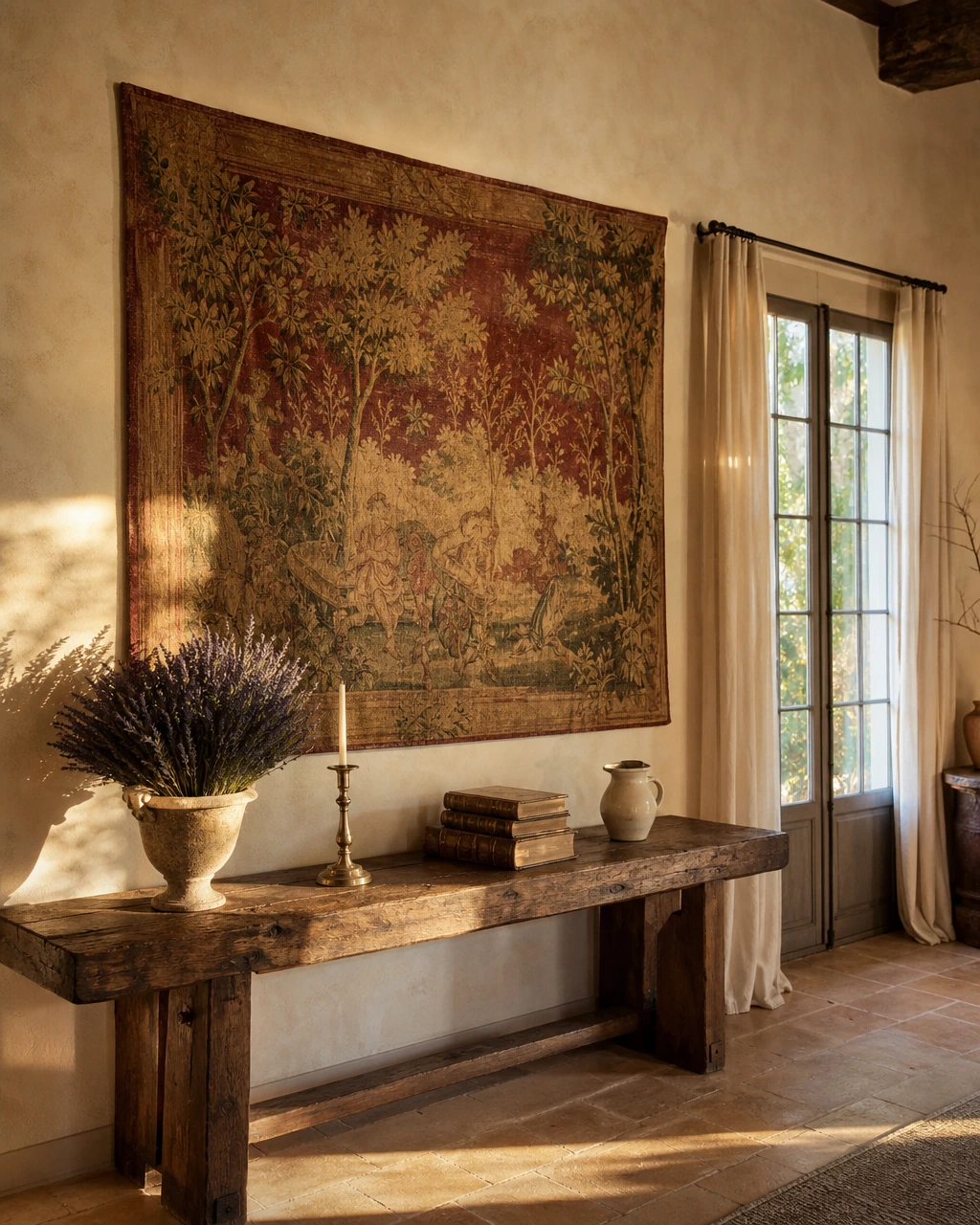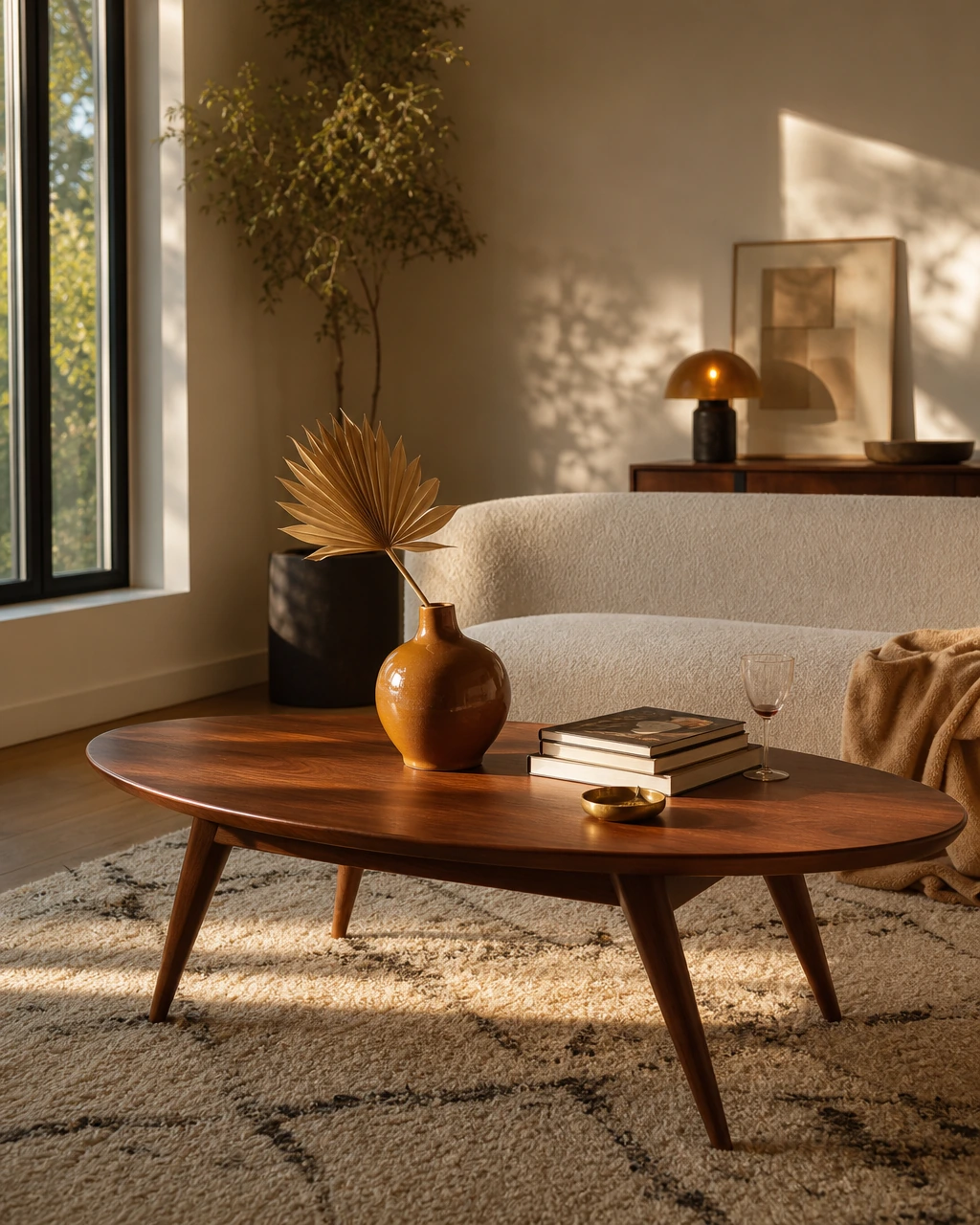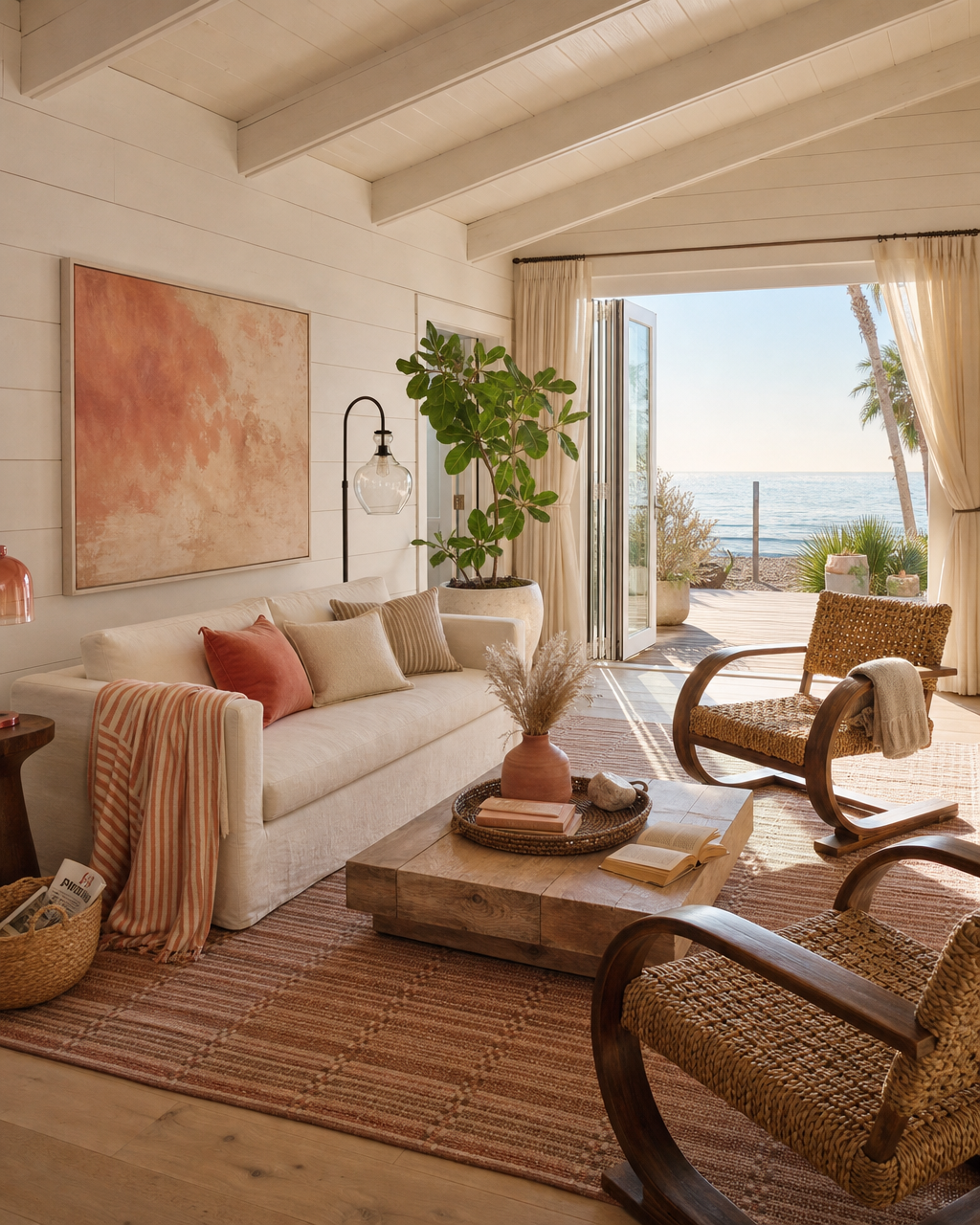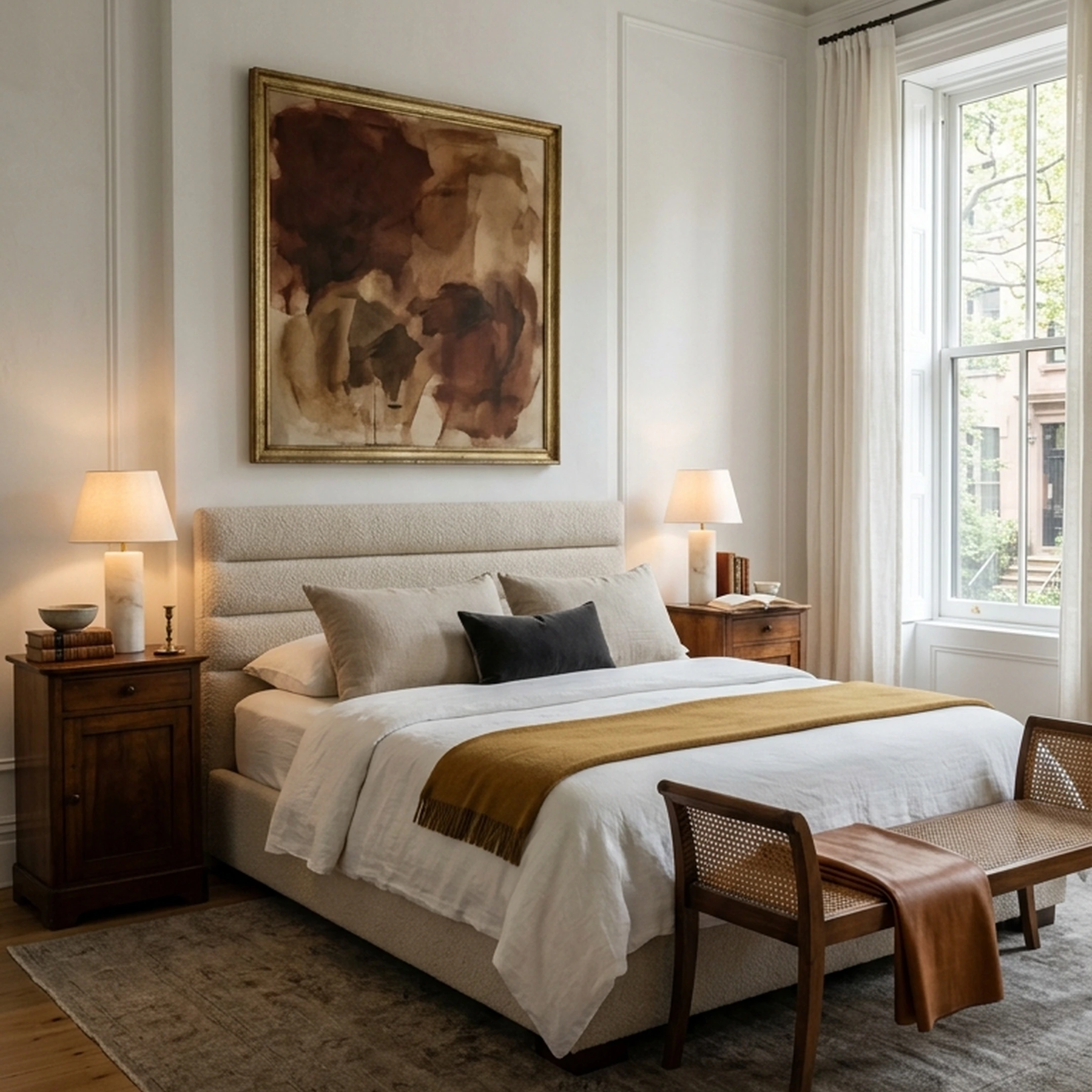

Walk into a well-designed room and something registers before you can name it. The light feels right. The proportions make sense. Nothing is fighting for attention. That is the quality Rihanna's homes consistently deliver, whether you are looking at the neo-Mediterranean Hollywood Hills property with its stucco textures and arched doorways, or the Beverly Hills contemporary farmhouse with its white exterior, black window frames, and warm wood interiors. The price tags are not reproducible. The underlying design logic absolutely is.
Most rooms that fail do not fail because the owner lacks taste. They fail because the execution loses coherence somewhere between inspiration and purchase. A rug that is slightly too small. Lighting that is only ambient. Art that decorates a wall instead of anchoring it. These are fixable problems, and they have nothing to do with budget. They have everything to do with understanding the principles that make a room feel designed rather than assembled.
This guide breaks down the specific design moves visible across Rihanna's properties and translates each one into practical, actionable direction for homeowners working with real rooms and real constraints. The goal is not to replicate a celebrity home. The goal is to understand why those rooms work, and then apply that logic to your own space.
What you will learn in this guide:
- The three design principles that appear consistently across Rihanna's properties
- How to build a warm, cohesive color palette from scratch
- Why lighting is the highest-impact upgrade in any room, and how to layer it on any budget
- The high-low mix strategy for furnishing like a designer without a designer's budget
- How to use art as an anchoring element rather than a decorating afterthought
- The scale and proportion rules that separate designed rooms from assembled ones
- A room-by-room action sequence for putting it all together
Key Takeaways
- Rihanna's homes follow a consistent design logic built on cohesive warm palettes, layered lighting, and curated art. None of those moves require a celebrity budget.
- Home improvement spending in the U.S. reached $497 billion in 2022, up from $328 billion in 2010, reflecting widespread consumer investment in aesthetic upgrades (Harvard Joint Center for Housing Studies).
- Among renovating homeowners, 61% cite improving look and feel as their primary motivation, ahead of resale value or maintenance, per the 2023 Houzz and Home study.
- Statement lighting is the single highest-impact, most budget-accessible upgrade in any room. One well-chosen fixture shifts the perceived quality of an entire space.
- The high-low mix, investing in one or two visible anchor pieces and saving on supporting items, is the core strategy behind attainable luxury design, identified by Bain and Company as the primary behavior of aspirational luxury consumers.
- Correct scale (large rugs, proportional art, appropriately sized fixtures) is what separates a designed room from one that simply has nice individual pieces.
- LED adoption in U.S. homes grew from roughly 4% of bulbs in 2012 to nearly half by 2020 (U.S. Energy Information Administration), making sophisticated layered lighting schemes achievable at normal budgets.
- Natural materials (warm wood, linen, terracotta, wool) age well, layer visually, and are central to the grounded quality that makes celebrity interiors feel timeless rather than trendy.
What "Attainable Luxury Design" Actually Means
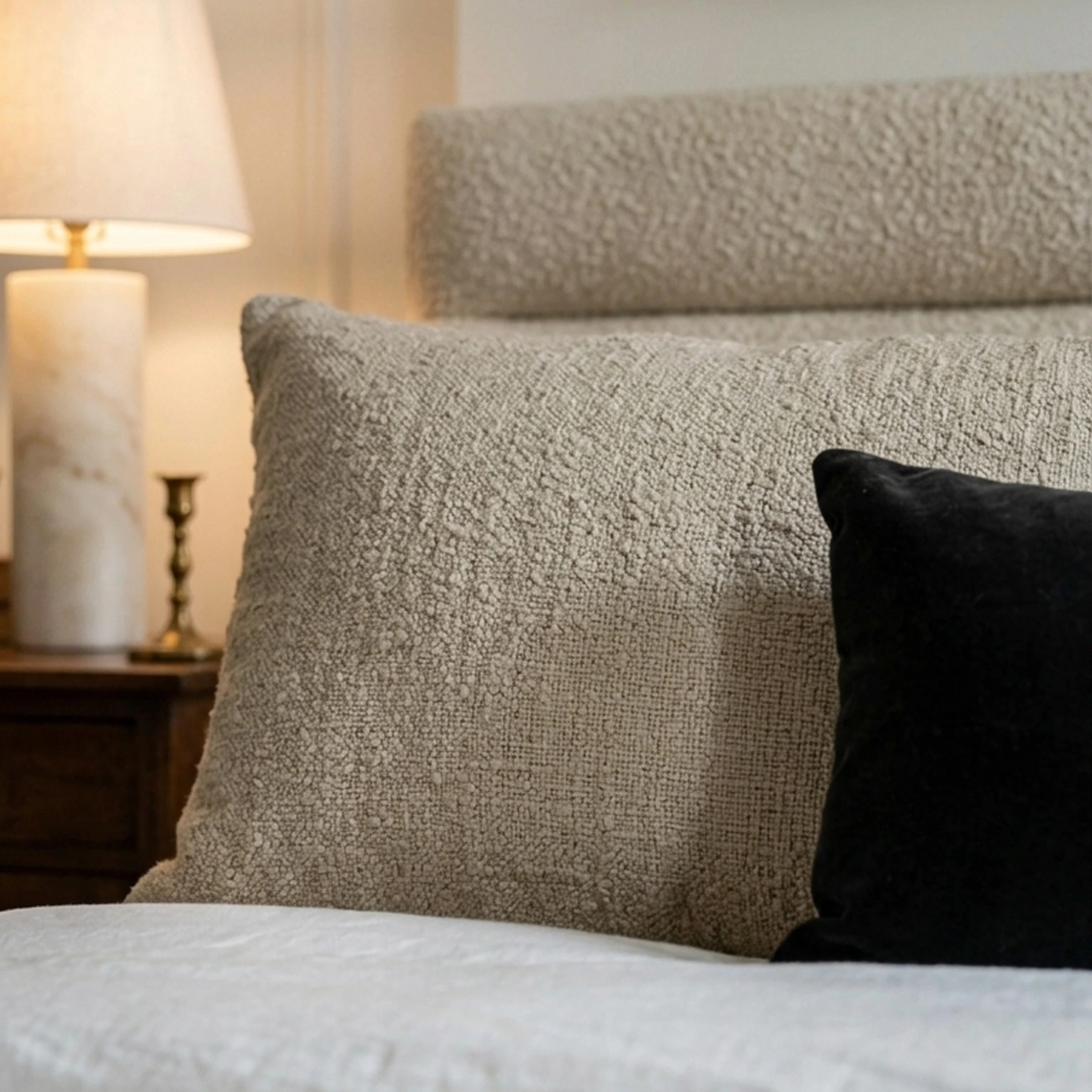
Attainable luxury design is a furnishing approach that borrows the visual logic of high-end interiors (controlled palettes, quality materials, considered proportions, curated art) and implements it through selective investment, smart sourcing, and a clear editing process, rather than full-room luxury builds.
The term is not marketing language. Bain and Company's research on aspirational luxury consumers identifies this as a documented behavior pattern: selective investment in high-impact, visible pieces rather than comprehensive luxury renovations. The perceived quality of a room is driven primarily by its focal elements, not its average spend per item. A $2,000 sofa in a well-proportioned room with layered lighting and a large rug will read as more luxurious than a $6,000 sofa surrounded by poor lighting, a small rug, and no art.
This is the framework that makes Rihanna's design aesthetic reproducible. The specific pieces in her homes are expensive. The principles behind them are not.
Why Celebrity-Inspired Design Is a Legitimate Starting Point
The Scale of Consumer Investment in Home Aesthetics
Aesthetic upgrades have become a primary driver of home spending, not a secondary consideration. Discretionary projects including kitchen and bathroom remodels, flooring, and interior design changes account for over 30% of spending among higher-income owners in recent years, per the Harvard Joint Center for Housing Studies' Improving America's Housing report. That figure reflects a genuine shift in how homeowners prioritize their spaces.
The U.S. interior design industry generated approximately $18.6 billion in revenue in 2023, according to IBISWorld's industry analysis. Employment of interior designers is projected to grow 4% between 2022 and 2032, per the U.S. Bureau of Labor Statistics, reflecting sustained residential demand. These are not niche numbers. They reflect a broad consumer base investing seriously in how their homes look and feel.
How Celebrity Homes Shape Design Preferences
The influence of celebrity interiors on mainstream design preferences is measurable. Pinterest's 2023 trend data shows searches for "luxury living room ideas" grew more than 30% year-over-year, with celebrity home aesthetics among the top aspirational search clusters. Nielsen's 2023 global consumer research found that 49% of respondents say celebrity or influencer endorsements make them more likely to pay attention to featured aesthetics.
Coverage of Rihanna's Hollywood Hills home in Vogue Australia and her Beverly Hills farmhouse in House Digest consistently highlights specific design moves that translate directly to residential application: the palette choices, the lighting strategy, the art placement, the material combinations. These are not aspirational abstractions. They are specific, learnable decisions.
The Gap Between Inspiration and Execution
The problem is not that people lack inspiration. Most design-conscious homeowners have extensive reference libraries of saved images. The problem is execution: translating a saved image into a shoppable, coherent room without losing the quality that made the original compelling. That gap is where most rooms fall apart, and it is exactly what this guide is designed to close.
The Three Design Principles Behind Rihanna's Interiors
Rihanna's homes span multiple architectural styles. Her Hollywood Hills property is neo-Mediterranean, with stucco walls, terracotta roof tiles, arched doorways, and warm earthy tones carried through the interiors. Her Beverly Hills home reads as a contemporary farmhouse: white exterior, black window frames, warm wood tones, and clean-lined furniture with a collected, lived-in quality.
What connects them is not style. It is discipline. Three design principles appear consistently across her properties, regardless of the architectural context.
Principle 1: A Controlled, Warm Palette
Every room in Rihanna's documented interiors uses warm undertones throughout. Creamy whites, warm taupes, natural linen tones, and occasional deep accents in terracotta or forest green. Nothing introduces a cool gray or a stark white that breaks the warmth. The palette is not a single color. It is a consistent undertone applied across every surface and material in the room.
This is the most reproducible of the three principles, and it costs nothing to implement. It requires only a decision made before the first purchase and maintained through every subsequent one.
Principle 2: Art as a Structural Element
Coverage of Rihanna's art-filled Hollywood Hills home consistently describes singular statement pieces and curated groupings, not busy gallery walls. Art in these spaces is placed where it anchors a wall, defines a zone, or creates a focal point the room is organized around. It functions structurally, not decoratively.
The distinction matters. A decorating piece fills empty wall space. An anchoring piece gives the room a visual center of gravity.
Principle 3: Layered Lighting
Multiple light sources per room, with at least one statement fixture that functions as sculpture as much as illumination. This is visible across her properties and is one of the most commonly cited elements in design coverage of her spaces. Layered lighting creates depth, flexibility, and the sense that a room was designed for living in rather than photographed for a catalog.
How to Build Rihanna's Color Palette in Your Own Home
A color palette is the controlled selection of colors used across walls, textiles, furniture, and accessories to create a cohesive mood throughout a space. It is the single most powerful tool for making a room feel designed rather than assembled, and it is entirely free to plan.
Rihanna's interiors lean consistently toward warm neutrals. The specific colors vary by property, but the undertone is constant. Everything reads warm. The practical implication is that palette coherence matters more than any individual color choice.
Building a Warm Neutral Palette: Three Decisions
Start with three decisions and filter every subsequent purchase through them.
DecisionWhat to ChooseExample ReferencesWall colorWarm white or soft greigeSherwin-Williams Accessible Beige, Benjamin Moore White DovePrimary materialWarm wood in medium toneOak, walnut, or similar in matte finishAccent colorOne deeper tone used sparinglyTerracotta, forest green, or warm charcoal
The rule is simple: every purchase passes through this filter. If it introduces a cool undertone or a competing color story, it does not belong in the room. This sounds restrictive. In practice, it is liberating. It eliminates most of the indecision that makes furniture shopping exhausting.
What to Avoid
Skip cool grays, stark whites, and anything that reads as "fast furniture" in its finish. The palette should feel like it evolved over time, not like it was ordered from a single catalog in one afternoon. Benjamin Moore and Sherwin-Williams both offer low-VOC paint lines that achieve rich, warm tones without compromising indoor air quality, a consideration that aligns with the growing wellness real estate market, estimated at $438 billion globally in 2023 by the Global Wellness Institute.
The Undertone Test
Hold any paint chip, fabric swatch, or furniture finish next to a warm white and a cool white. The undertone will become immediately visible. Warm undertones read yellow, peach, or red. Cool undertones read blue, green, or purple. For a Rihanna-inspired palette, warm undertones throughout is the non-negotiable rule.
Statement Lighting: The Highest-Impact Upgrade in Any Room
Statement lighting refers to fixtures designed as visual focal points: sculptural chandeliers, oversized pendants, art-like sconces. In Rihanna's homes, lighting is never an afterthought. It is part of the architecture of the room.
The U.S. Department of Energy and lighting design professionals consistently identify layered, dimmable lighting as one of the most cost-effective ways to elevate perceived quality in a residential space. A single well-chosen pendant over a dining table or a sculptural floor lamp beside a sofa can shift the entire register of a room. This is not subjective. It is a function of how light affects perceived warmth, depth, and scale.
The Layered Lighting Framework
Most rooms that feel flat have only ambient lighting. Adding task and accent layers, even with affordable fixtures, creates depth and the sense that the room was designed rather than lit.
LayerPurposeExample ApplicationAmbientGeneral room illuminationRecessed lights, ceiling fixture, overhead pendantTaskFocused light for specific activitiesReading lamp, under-cabinet lighting, desk lampAccentHighlights architectural features or artPicture light, directional spot, shelf lighting
The goal is at least three light sources per room, on separate switches or dimmers, so the lighting can be adjusted for different times of day and different uses.
Practical Sourcing for Statement Fixtures
You do not need to spend $3,000 on a chandelier to achieve this effect. West Elm, CB2, and Rejuvenation all carry sculptural pendants and floor lamps in the $200 to $600 range that read as considered pieces. Pair one statement fixture with dimmable LED bulbs and you have the foundation of a layered lighting scheme.
LED adoption in U.S. homes grew from roughly 4% of bulbs in 2012 to nearly half by 2020, per the U.S. Energy Information Administration, which means the technology is widely available and affordable. Smart lighting systems like Philips Hue or Lutron dimmers add scene-setting flexibility without requiring an electrician for most installations.
The single most impactful lighting upgrade in any room: add a dimmer to your existing overhead fixture and add one floor lamp or table lamp in a corner that currently has no light source. That change alone shifts the room's quality more than most furniture purchases.
The High-Low Mix: Furnishing Like a Designer on a Real Budget
The high-low mix is a furnishing strategy that pairs a small number of premium, visible pieces with more affordable supporting items. It is the core approach behind attainable luxury design, and it is exactly how most celebrity-inspired rooms become achievable at non-celebrity budgets.
The perceived quality of a room is driven primarily by its focal pieces. A well-chosen sofa in the right scale with the right silhouette anchors a living room regardless of what the side tables cost. A statement bed frame defines a bedroom regardless of what the dresser looks like. The high-low mix works because attention is not distributed equally across a room. It concentrates on the anchor pieces.
Where to Spend and Where to Save
The rooms in Rihanna's Beverly Hills farmhouse and her Hollywood Hills property both demonstrate this logic. The hero pieces carry the visual weight. Supporting pieces are simpler and less expensive.
A practical framework for a living room:
Invest in:
- Sofa (the room's anchor; get the silhouette and scale right)
- One statement lighting fixture
- One piece of art large enough to anchor the primary wall
Save on:
- Coffee table (simple forms in natural wood or metal work well)
- Side tables (IKEA and similar work fine when the form is clean)
- Shelving and storage
- Secondary seating
Mid-range:
- Rug (size matters more than price; a large, simple rug beats a small, expensive one every time)
Furniture Sourcing by Tier
Article and Interior Define offer well-made sofas with clean silhouettes in the $1,200 to $2,500 range. RH and Crate and Barrel carry pieces that read closer to the luxury tier. West Elm and CB2 sit in the mid-range with consistent quality. IKEA works well for shelving, storage, and secondary pieces where the silhouette is simple enough that the price point does not show.
For homeowners struggling with decision fatigue in furniture shopping, the high-low framework is the most useful organizing principle. It eliminates the paralysis of trying to optimize every purchase simultaneously and focuses energy on the decisions that actually move the room.
First Chair is built for exactly this kind of translation work: upload a photo of a space you love, describe the aesthetic direction you want, and receive curated room concepts built from furniture that actually exists and can actually be purchased. The platform pulls across West Elm, CB2, Crate and Barrel, Pottery Barn, and Lulu and Georgia, which matters because the right room rarely comes from a single catalog.
Art as Architecture: Creating Intentional Art Moments
Art in Rihanna's homes is not decorative. It is structural. Coverage of her Hollywood Hills home consistently highlights singular statement pieces and curated groupings. The key word in "art-filled" is not "filled." It is "intentional."
An anchoring piece is large enough to hold the visual weight of the wall it occupies. A decorating piece is too small and ends up looking like it was placed because the wall felt empty. Most rooms have too many decorating pieces and not enough anchoring ones.
Art Placement Rules by Room
Living room: One large piece above the sofa (at least 60% of the sofa's width) or a tight grouping of three pieces with consistent framing. Nothing smaller than 24 inches wide in a standard living room.
Entryway: One strong piece at eye level. This sets the tone for the entire home before anything else registers.
Bedroom: Art above the bed should be proportional to the headboard. If the headboard is a statement piece, keep the art simpler. If the headboard is minimal, the art can carry more weight.
Dining room: One large piece on the wall opposite the primary seating position, or a grouping that reads as a single unit from across the table.
Sourcing Art Without a Gallery Budget
Saatchi Art carries original works across a wide price range, including pieces under $500 that read as considered originals. Society6 and Etsy offer affordable prints from independent artists. The frame matters as much as the print: a simple, well-made frame in natural wood or matte black elevates almost any image.
One strong piece beats five mediocre ones every time. This is the editing principle that separates rooms that feel designed from rooms that feel accumulated.
Scale and Proportion: The Details That Actually Make a Room Feel Designed
Scale is where most rooms go wrong. Not the palette, not the furniture quality, not the art. The scale. A rug that is too small. A pendant that is too delicate for the ceiling height. A sofa that is too short for the wall behind it. These are the things that make a room feel "almost right" without anyone being able to name why.
Architectural Digest's coverage of professional designers consistently identifies correct scale as the primary differentiator between a designed room and one that just has nice pieces. This is not about spending more. It is about measuring before buying and consistently erring toward larger rather than smaller.
Scale Rules Worth Following
Rugs: In a living room, the rug should be large enough for at least the front legs of all seating to rest on it. A 9x12 is the minimum for most standard living rooms. Most people buy 5x8 and wonder why the room feels disconnected.
Art: Err larger. A piece that feels slightly too big in the store will feel right on the wall. A piece that feels right in the store will feel small on the wall.
Lighting: In rooms with standard 8-foot ceilings, a pendant hung too high loses its impact. The bottom of a dining pendant should sit roughly 30 to 36 inches above the table surface. For living room floor lamps, the shade should sit at approximately eye level when seated.
Furniture: Track-arm sofas work better in tighter apartments because they return visual and physical space. Rolled arms read more traditional and take up more room. In a small space, the silhouette of the sofa matters as much as the fabric.
For anyone furnishing a small city apartment, scale decisions are especially consequential. A single oversized piece chosen correctly can make a small room feel larger. Multiple undersized pieces make the same room feel cluttered.
Sustainable Luxury: Natural Materials and Long-Term Design Choices
Rihanna's interiors lean heavily on natural materials: warm wood, stone, linen, wool, terracotta. This is not incidental. Natural materials age well, photograph well, and create the layered texture that keeps neutral rooms from feeling flat. They also align with a documented shift in consumer priorities.
The Global Wellness Institute estimates the wellness real estate market at $438 billion globally in 2023, with consumers increasingly valuing natural materials, daylight, and healthy design. This aligns with the earthy, grounded quality visible in celebrity interiors that have staying power beyond a single design cycle.
Natural Materials Worth Prioritizing
Flooring: Wide-plank oak or walnut in a warm, matte finish. If replacing flooring is not in budget, a large natural fiber rug (jute, sisal, or wool) over existing floors achieves similar warmth.
Textiles: Linen and cotton over polyester. The texture reads differently in person and in photographs. A linen sofa slipcover or linen curtains add warmth that synthetic fabrics cannot replicate.
Accents: Terracotta planters, ceramic vessels, woven baskets. These are inexpensive and add the organic texture that keeps a room from feeling showroom-staged.
Walls: Limewash paint or textured plaster finishes add depth to neutral walls without requiring wallpaper. Benjamin Moore and Sherwin-Williams both offer low-VOC lines that achieve rich, warm tones with healthier indoor air quality.
The broader principle: buy fewer, better pieces. A room furnished with ten considered items will always feel more intentional than one with thirty things that were each individually fine. This is the editing discipline that distinguishes celebrity interiors from rooms that simply have a lot of nice things in them.
Tools and Platforms for Translating Inspiration Into a Finished Room
The gap between a saved inspiration image and a finished room is primarily a sourcing and decision problem, not a taste problem. The right tools reduce that gap significantly.
AI-Assisted Design and Shopping Platforms
These platforms help translate inspiration into shoppable room concepts, reducing the research burden and decision fatigue that derail most design projects.
First Chair is built specifically for this translation problem. Upload a photo of a space you love (a cafe, a hotel lobby, a saved Pinterest image, or a room from Rihanna's Hollywood Hills home), describe the aesthetic direction you want, and receive curated room concepts built from furniture that actually exists and can actually be purchased. The platform pulls across multiple retailers including West Elm, CB2, Crate and Barrel, Pottery Barn, and Lulu and Georgia, with insider pricing on most pieces. Unlike AI render tools that generate visually appealing but non-existent furniture, every recommendation is grounded in real, in-stock pieces. For anyone navigating a new apartment or first home, First Chair is the most direct path from inspiration to a finished room.
Other platforms in this category include Havenly (tiered online design packages) and Decorilla (online design with trade discount access). Both offer remote design services at various price points.
Furniture and Decor Retailers for the High-Low Mix
TierRetailersBest ForInvestment piecesRH, Crate and Barrel, Interior DefineSofas, bed frames, dining tablesMid-rangeWest Elm, CB2, Article, Lulu and GeorgiaAccent chairs, lighting, rugs, textilesBudget-friendlyIKEA, Anthropologie HomeShelving, storage, secondary seating, accessoriesVintage and originalChairish, 1stDibs, EtsyStatement pieces, art, unique accents
Lighting and Smart Home Solutions
Philips Hue and Lutron dimmers are the most accessible entry points for layered lighting with scene-setting flexibility. Both work with standard fixtures and do not require professional installation for most applications. For statement fixtures, Rejuvenation, CB2, and West Elm carry sculptural options in the $200 to $600 range that read as considered pieces.
Art Sourcing Platforms
Saatchi Art offers original works across a wide price range. Society6 and Etsy carry affordable prints from independent artists. For vintage pieces with more character, Chairish and 1stDibs are worth browsing, particularly for the kind of singular, collected-feeling pieces that appear in Rihanna's documented interiors.
Visualization and Planning Tools
SketchUp is widely used for 3D interior visualization and is accessible to non-professionals with some learning curve. For simpler layout planning, consumer-friendly apps allow furniture placement testing before purchase. The value of any visualization tool is catching scale and proportion errors before a sofa is delivered and discovered to be six inches too wide for the wall.
Best Practices for Recreating Celebrity-Inspired Interiors
1. Start With a Palette Decision, Not a Product Decision
The palette is the filter through which every purchase should pass. Identify two or three core colors and two or three core materials before buying anything. Every subsequent decision becomes faster and more confident when measured against a clear standard.
2. Invest in Lighting Before Decor
Layered, dimmable lighting changes the perceived quality of a room more than most furniture upgrades. Add a dimmer to your overhead fixture, add at least one additional light source per room, and choose one statement fixture that functions as a visual anchor. Do this before adding decorative accessories.
3. Use the High-Low Mix Deliberately
Identify the one or two anchor pieces per room that carry the most visual weight, and invest there. Save on supporting pieces where the form is simple enough that the price point does not show. A clear hierarchy of investment prevents the budget from being spread too thin across too many mediocre pieces.
4. Prioritize Scale Over Style
A room with correct proportions and average furniture will feel better than a room with beautiful furniture at the wrong scale. Measure before buying. Use a 9x12 rug as a starting assumption for standard living rooms. Err larger on art. Check pendant heights before installation.
5. Treat Art as an Anchor, Not a Decoration
One large piece above the sofa, one strong piece in the entryway, one considered grouping in the bedroom. These are structural decisions. Resist the impulse to fill wall space with small pieces. Empty wall space is better than wall space filled with art that is too small to anchor anything.
6. Layer Textures in Neutral Rooms
Warm neutral palettes need texture to avoid reading as flat. Aim for at least three different textures per room: a woven rug, a plush textile, smooth metal or glass, and a natural material like wood or ceramic. This is what gives neutral rooms the depth that makes them feel rich rather than empty.
7. Align Interior Choices With Architectural Character
Rihanna's interiors work partly because they are consistent with the architecture of each property. The neo-Mediterranean home uses warm earthy tones and natural materials that echo the stucco and terracotta of the exterior. The contemporary farmhouse uses clean lines and warm woods that match the architectural language of the building. Work with your home's existing character rather than against it.
8. Edit Ruthlessly
The rooms that feel most designed are not the ones with the most things. They are the ones where every item has been considered and everything that does not belong has been removed. Buy fewer pieces. Live with them. Add only what the room genuinely needs.
Common Mistakes to Avoid
Mistake 1: Buying a Rug That Is Too Small
The consequence: the room feels disconnected, like furniture floating on a sea of floor. The fix: in a living room, the rug should accommodate at least the front legs of all seating. A 9x12 is the starting point for most standard rooms. When in doubt, go larger.
Mistake 2: Relying on a Single Light Source
The consequence: the room feels flat, institutional, and undesigned regardless of the furniture quality. The fix: add at least two additional light sources per room, on separate switches. A floor lamp and a table lamp cost less than most throw pillows and do more for the room.
Mistake 3: Treating Art as an Afterthought
The consequence: walls feel empty or cluttered with pieces that are too small to anchor anything. The fix: plan art placement before finalizing furniture arrangement. The art and the furniture should be in conversation with each other, not competing.
Mistake 4: Breaking Palette Consistency for a Single Purchase
The consequence: one piece that introduces a cool undertone or a competing color story can undermine the coherence of an otherwise well-designed room. The fix: hold every purchase against the established palette before buying. If it does not pass the undertone test, it does not belong in the room.
Mistake 5: Buying a Sofa That Is the Wrong Scale
The consequence: a sofa that is too small for the wall behind it makes the room feel undersized. A sofa that is too large for the space makes the room feel cramped. The fix: measure the wall, measure the room, and identify the correct sofa length before shopping. Most sofas range from 72 to 96 inches. Know which range your room requires.
Mistake 6: Purchasing a Matched Set
The consequence: the room looks staged rather than lived in. Matched five-piece living room sets eliminate the layered, collected quality that makes celebrity interiors feel personal. The fix: buy anchor pieces individually, from different sources if necessary, and let the palette create the cohesion.
Mistake 7: Hanging Art Too High
The consequence: art that is hung at ceiling height rather than eye level loses its connection to the room and to the furniture below it. The fix: center art at approximately 57 to 60 inches from the floor, which is standard gallery height and eye level for most adults. When hanging art above furniture, the bottom of the piece should sit 6 to 8 inches above the furniture surface.
Mistake 8: Skipping the Editing Step
The consequence: a room that accumulates pieces over time without ever reaching a finished, cohesive state. The fix: after each addition, step back and ask whether the room needs anything else. The answer is often no. Restraint is a design decision.
A Room-by-Room Action Sequence
Trying to redesign an entire home at once is how inspiration becomes paralysis. Trying to redesign one room with a clear palette, a lighting plan, and two or three anchor pieces is how rooms actually get finished. For anyone navigating a new apartment or first home, the sequence matters as much as the individual choices.
Living Room Priority Sequence
- Establish the palette (wall color, primary material, accent color)
- Choose the sofa (anchor piece; get scale and silhouette right before anything else)
- Add the rug (larger than feels comfortable in the store)
- Install layered lighting (one statement fixture plus at least one additional source)
- Add one piece of art (large enough to anchor the primary wall)
- Layer in textiles and accessories (throw, cushions, plants, ceramics)
Bedroom Priority Sequence
- Invest in the bed frame and headboard (the room's visual anchor)
- Choose bedding in warm, natural tones (linen or cotton; keep it simple)
- Add a rug under the bed (extends at least 18 inches on each side)
- Layer lighting (bedside lamps plus one ambient source)
- Add one piece of art above the bed or a small grouping on an adjacent wall
Entryway Priority Sequence
- One strong piece of art at eye level (this sets the tone for the entire home)
- A console or bench in a warm wood tone
- One light source (a table lamp or wall sconce; avoid relying on overhead only)
- One natural element (a plant, a ceramic vessel, a woven basket)
For more on apps and tools for designing your apartment, the First Chair blog covers the practical landscape in detail.
Frequently Asked Questions
What design style is Rihanna's house?
Rihanna's homes span two primary styles: neo-Mediterranean (her Hollywood Hills property, featuring stucco, arched details, and terracotta) and contemporary farmhouse (her Beverly Hills home, with white exterior, black window frames, and warm wood interiors). Both share a consistent design logic built on warm palettes, layered lighting, curated art, and a high-low mix of materials.
How do I recreate a celebrity home look on a budget?
The most effective approach is the high-low mix: invest in one or two visible anchor pieces (sofa, bed frame, statement lighting fixture) and save on supporting items (side tables, shelving, secondary seating). Correct scale, a cohesive color palette, and layered lighting do more for a room's perceived quality than any single expensive purchase.
What is the most important design element to get right first?
Scale and proportion. A rug that is too small, art that is too small for the wall, or a pendant that is too delicate for the ceiling height will undermine even well-chosen furniture. Measure before buying, and consistently err toward larger rather than smaller for rugs, art, and lighting.
What colors are used in Rihanna's interior design?
Rihanna's interiors consistently use warm neutrals: creamy whites, warm taupes, natural linen tones, and occasional deep accents like terracotta or forest green. The consistent thread is warm undertones throughout. Nothing introduces a cool gray or stark white that breaks the warmth of the overall palette.
Where can I find furniture that matches a celebrity-inspired aesthetic without overspending?
West Elm, CB2, Article, and Interior Define offer well-made pieces with clean silhouettes in the mid-range. RH and Crate and Barrel sit closer to the luxury tier. IKEA works well for shelving and secondary pieces where simplicity of form means the price point does not show. Platforms like First Chair curate across multiple retailers to find pieces that work together in a cohesive room concept.
How do I use art in my home the way celebrity interiors do?
Treat art as an anchoring element, not a decorating one. One large piece above a sofa (at least 60% of the sofa's width) or a tight grouping of three pieces with consistent framing will read as intentional. Avoid small, mismatched pieces scattered across walls. The frame matters as much as the image: a simple, well-made frame in natural wood or matte black elevates almost any print.
Conclusion: From Inspiration to a Room That Actually Works
The design logic behind Rihanna's homes is not complicated. It is disciplined. A warm, controlled palette applied consistently. Art placed to anchor rather than decorate. Lighting layered to create depth and mood. A high-low mix that concentrates investment where it has the most visual impact. Scale and proportion treated as non-negotiable rather than approximate.
None of these principles require a celebrity budget. They require a clear plan, the confidence to commit, and the discipline to edit. Most rooms that feel "almost right" are one or two decisions away from feeling finished. Usually those decisions involve scale, lighting, or palette coherence, not more furniture.
The gap between the room you have saved and the room you actually live in is a sourcing and execution problem, not a taste problem. You already know what you want the room to feel like. The work is translating that feeling into specific, shoppable decisions that hold together in real life.
If you want to see how a specific inspiration image translates into a real, buyable room, First Chair is built for exactly this. Upload a photo of a space you love, describe the aesthetic direction you want, and receive curated room concepts built from furniture that actually exists, sourced across multiple retailers, with insider pricing on most pieces. No fake renders. No endless tabs. Just the pieces that work.