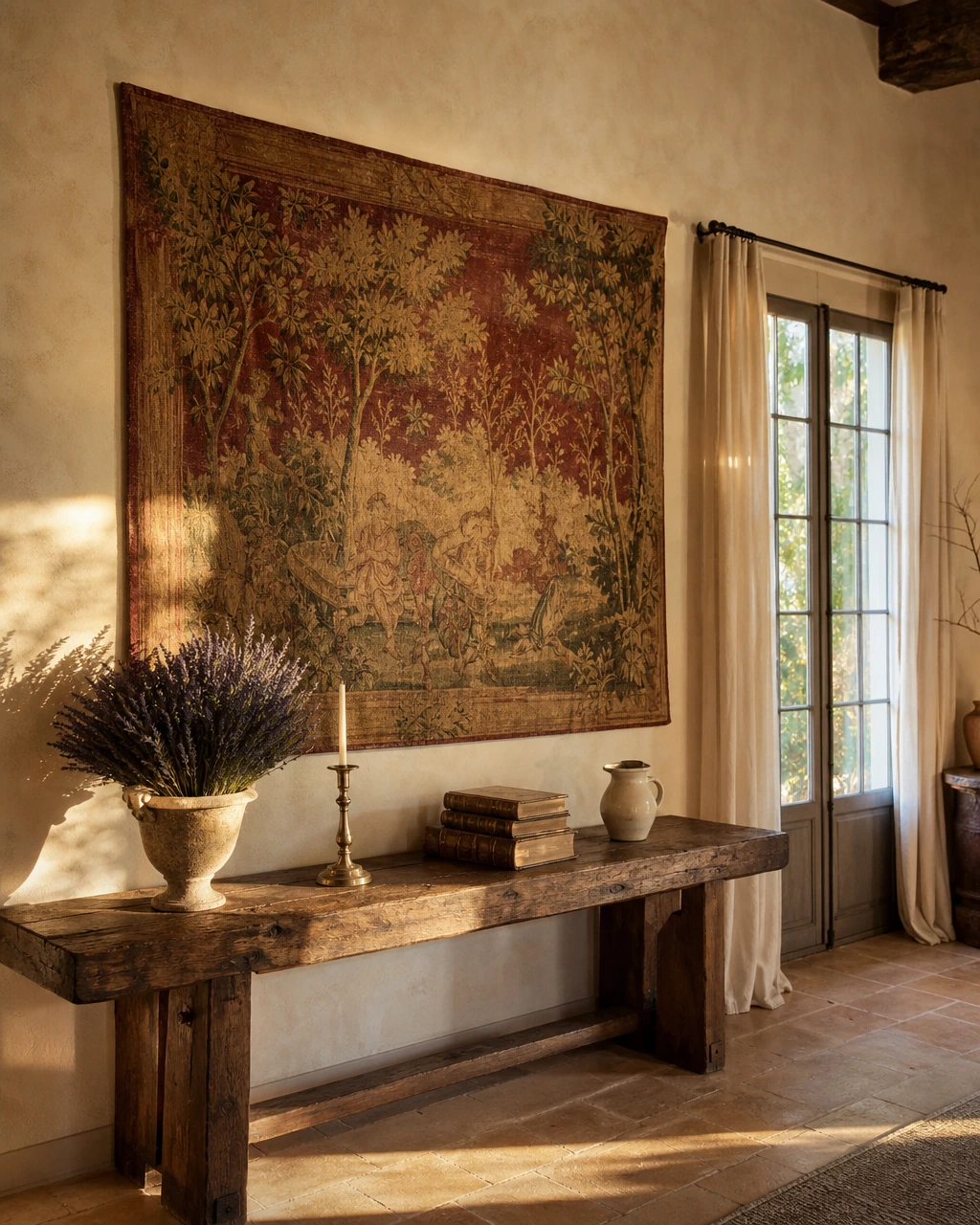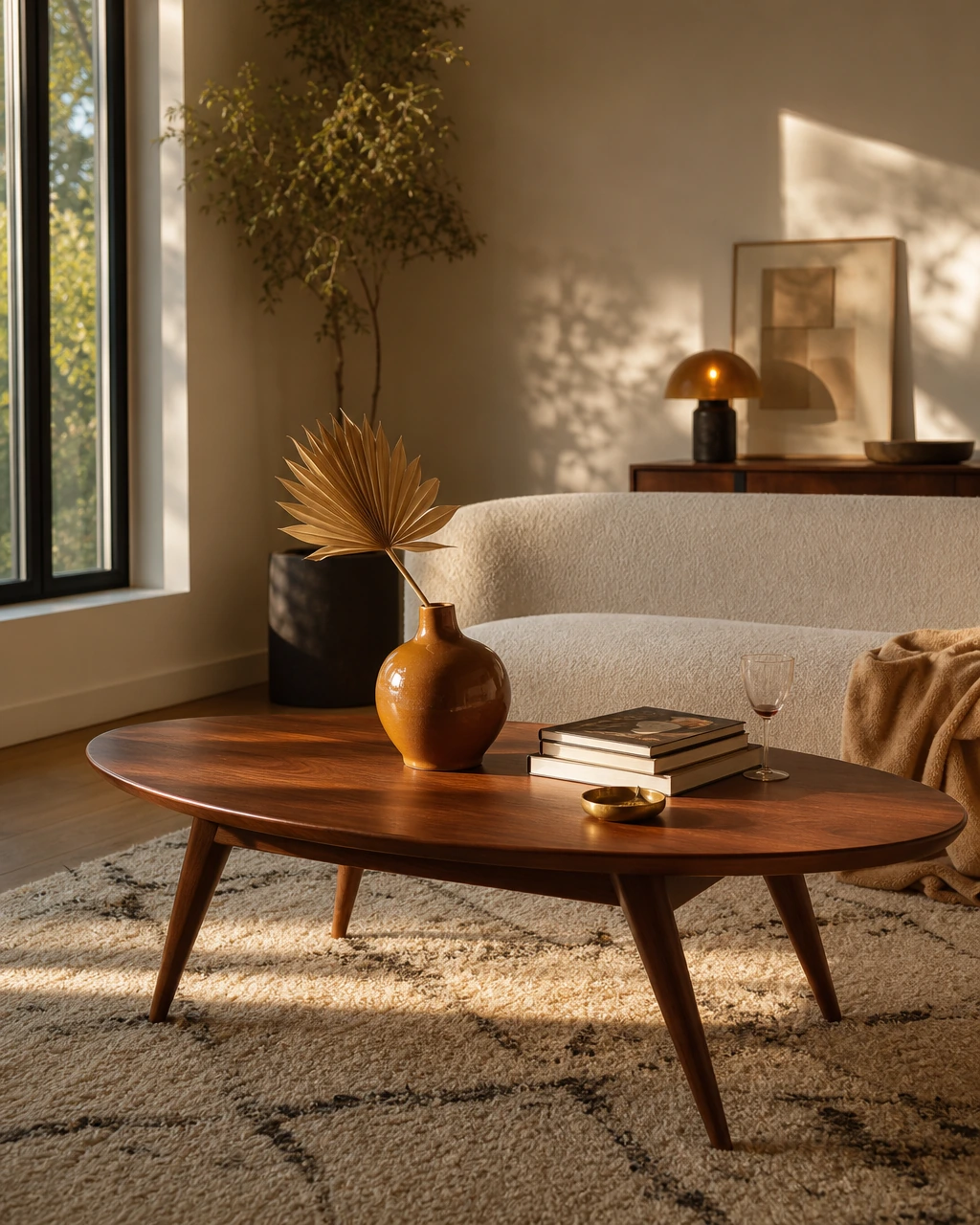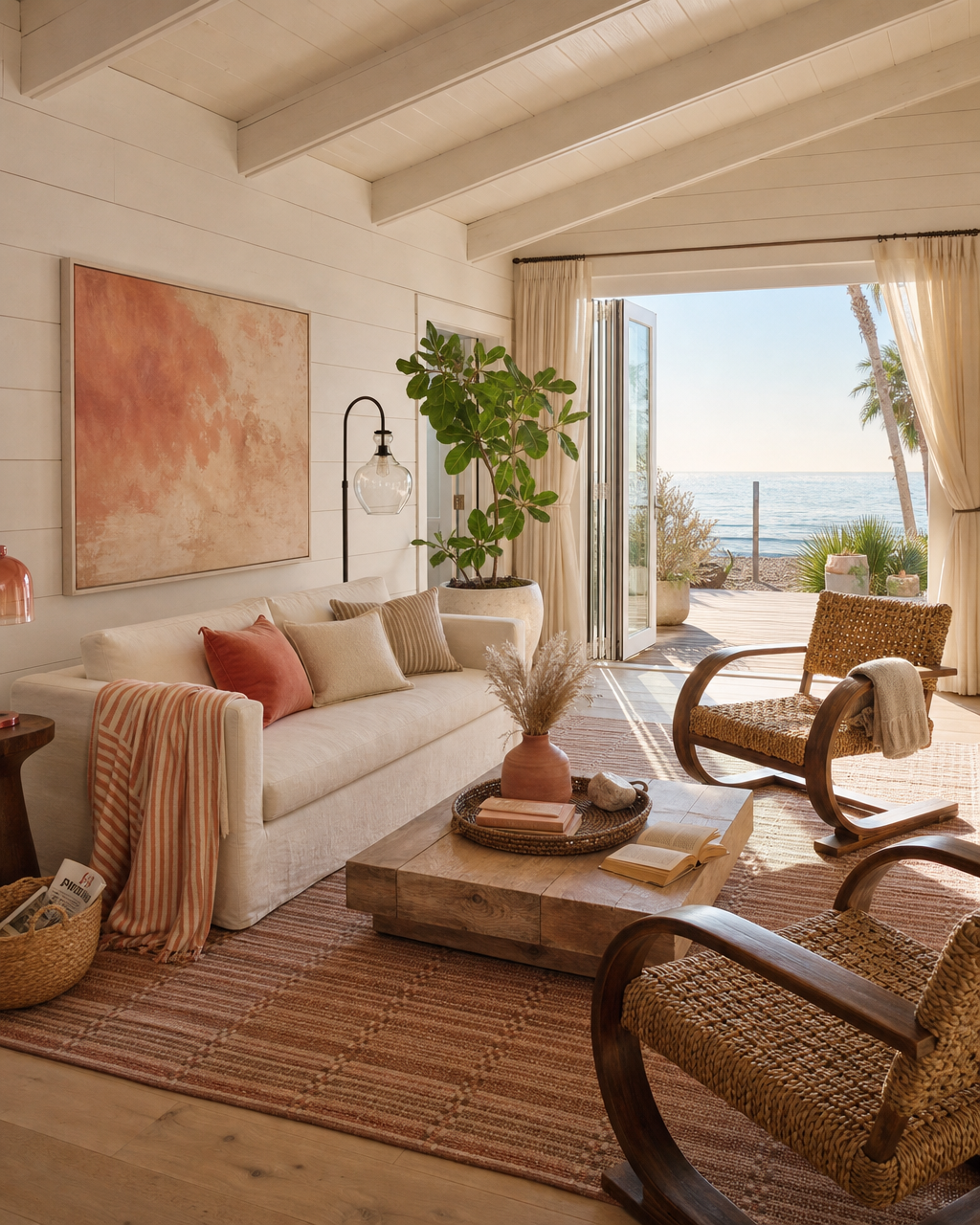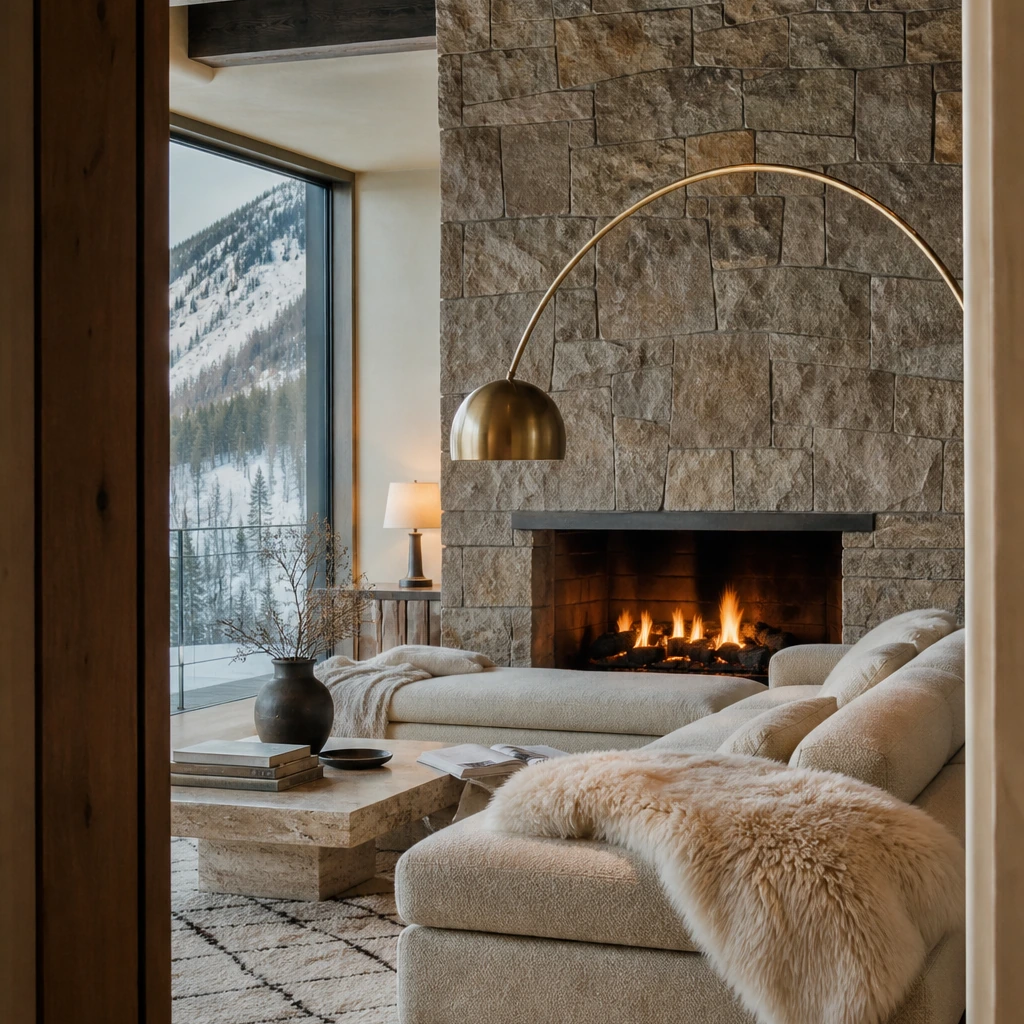

If you've been staring at that Homes and Gardens photo of Sabrina Carpenter's living room since it hit your feed and still haven't figured out how to translate it into your actual apartment in Austin or Silver Lake, you're not imagining the gap. The aesthetic is specific, warm, and deeply considered. It also looks expensive in a way that isn't entirely honest, because most of what makes her spaces work comes down to color logic, layered texture, and a few well-chosen pieces rather than a budget that requires a record deal.
Her home, styled by designer Selina Dockerty, blends romantic Victorian vintage with earthy Scandi softness and Tuscan warmth. The result is a home that feels personal, feminine, and grounded all at once. And almost every element of it is replicable with thoughtful choices at mainstream retail, a few vintage finds, and a clear sense of what you're building toward.
The reason this aesthetic resonates so widely right now is that it sits at the intersection of several converging design trends: warm minimalism, biophilic influences, and heritage-inspired interiors that feel collected rather than assembled. None of those trends require rare pieces or significant budgets. They require proportion, palette, and patience.
This guide breaks down exactly how to recreate the look, room by room, palette by palette, piece by piece. Here's what you'll learn:
- What the three distinct aesthetic pillars of Sabrina's home actually are and how to apply each one to the right space
- The specific color palettes behind each room, including a designer-recommended paint color for the living room
- Which furniture pieces carry the aesthetic and which ones are just supporting players
- How to layer textiles the way her spaces do, without buying everything at once
- Why lighting is the most underused and most affordable tool in this aesthetic
- How to build a gallery wall that feels personal rather than Pinterest-assembled
- How to shop across multiple retailers without losing cohesion
Key Takeaways
- Sabrina Carpenter's home blends three distinct influences: romantic Victorian vintage, earthy Scandi softness, and Tuscan warmth. Applying each pillar to the right room is the first practical step toward cohesion.
- Her living room color scheme is built on browns, creams, and muted greens drawn from nature. Designers recommend Sherwin-Williams "Virtual Taupe" as a direct analog for the wall color.
- The bedroom look relies on a statement tufted headboard, layered pastel textiles, and warm white fairy lights rather than expensive furniture. The investment is in softness, not scale.
- Layered lighting is the single most underused tool in recreating this aesthetic. A chandelier alone does not create Tuscan warmth. You need sconces and table lamps working alongside it, as highlighted in the decor trend coverage tied to her home.
- Gallery walls in this style work because they feel personal, not curated. Mixing your own photos with vintage prints and floral art in consistent frames (gold or cream) is the move.
- The home decor market is growing steadily as younger homeowners invest in spaces that feel expressive and personal. Sabrina's aesthetic resonates because it looks intentional without looking intimidating.
- No single retailer carries everything this aesthetic requires. The Scandi-neutral sofa, the ornate vintage mirror, and the Tuscan-influenced lighting fixture come from different catalogs, which is why multi-retailer sourcing matters.
What Sabrina Carpenter's Interior Style Actually Is
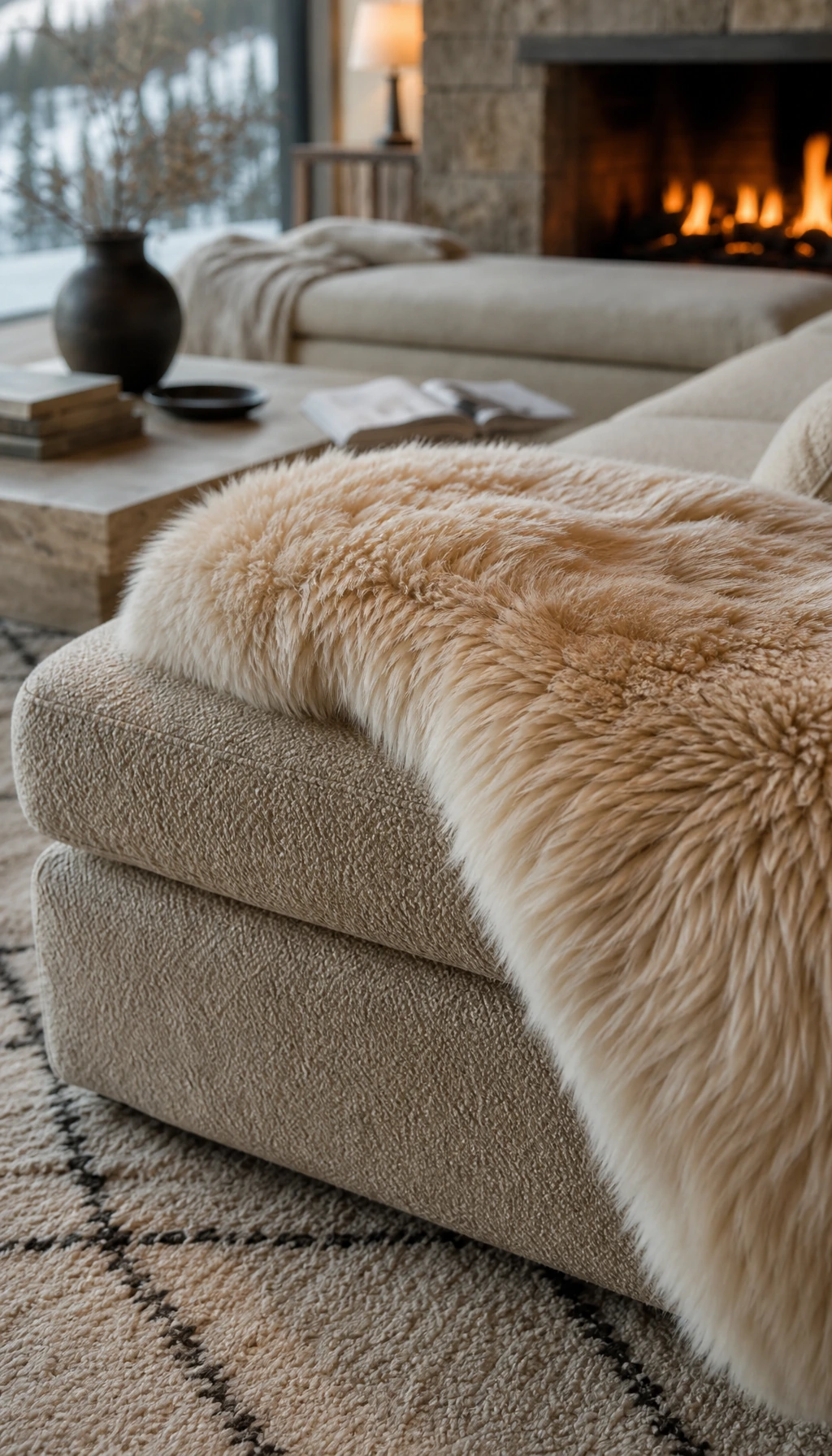
Sabrina Carpenter's home aesthetic is a layered blend of romantic Victorian vintage, Scandi minimalism, and Tuscan revival, unified by warmth, softness, and a strong sense of personal identity. That combination sounds contradictory until you see it in practice. The Victorian elements show up in ornate mirrors, curved headboards, and lace-like fabrics. The Scandi influence keeps the furniture simple and uncluttered. The Tuscan notes come through in natural materials, brass accents, and layered lighting.
People's home feature describes the style as "girly, vintage and Victorian," which is accurate for the bedroom and more intimate spaces. Real Homes characterizes her living room as "Scandi and sweet," meaning clean and neutral but still cozy and lived-in. Homes and Gardens adds a third layer, noting that Sabrina has leaned into the decor trend, with natural stone, warm palettes, brass hardware, and layered lighting doing most of the heavy lifting.
The reason this aesthetic translates well to real apartments and homes is that none of these three influences depend on rare or expensive pieces. They depend on proportion, palette, and texture. Get those right and the room reads the way it's supposed to.
The Three Aesthetic Pillars and Where They Apply
Understanding which pillar applies to which room is the first practical step. Trying to apply all three everywhere produces visual noise. Applying each one to the right space produces cohesion.
PillarKey ElementsWhere It Shows UpRomantic Victorian VintageOrnate mirrors, curved forms, lace fabrics, pastel and jewel tonesBedroom, dressing area, intimate cornersScandi SoftnessNeutral furniture, natural wood, uncluttered layout, wool and juteLiving room, main seating areasTuscan WarmthBrass accents, natural stone, layered lighting, terracotta and creamKitchen, dining, transitional spaces
The bedroom is where the Victorian influence is strongest. The living room is where the Scandi restraint keeps everything grounded. The kitchen and dining areas are where the Tuscan warmth comes through in materials and lighting. Keeping those zones distinct is what makes the overall home feel considered rather than confused.
Why This Aesthetic Resonates Right Now
The timing of Sabrina Carpenter's home becoming a design reference point is not accidental. Her aesthetic sits squarely within broader shifts in how younger homeowners think about their spaces.
Younger Consumers Are Investing in Expressive Spaces
A McKinsey analysis of younger consumer behavior notes a strong preference for "aspirational but accessible" lifestyle influences, including celebrity styling that can be adapted at lower price points. This aligns with Sabrina's interiors: layered textiles, vintage references, and warm colors rather than ultra-rare designer-only pieces. The look is specific enough to feel intentional but accessible enough to actually execute.
The home decor market statistics reflect this shift, with the global market growing steadily as millennials and Gen Z invest in spaces that feel expressive and personal rather than generic or temporary.
Social Media Has Changed How People Discover and Translate Style
An IKEA Life at Home survey found that significant proportions of Gen Z and millennial consumers say social media content, including celebrity homes and influencer apartments, influences how they decorate. Sabrina's British Vogue "Perfect Night In" home feature and People magazine's interior profile are classic examples of aspirational-but-copyable content. The references are visible: colors, textiles, vintage mirrors, gallery walls. All of them can be matched with mainstream retail or thrift finds.
Deloitte's consumer trends research notes that younger consumers frequently translate celebrity aesthetics into budget-friendly analogs using accessible furniture brands, second-hand markets, and DIY approaches. The Sabrina aesthetic is particularly well-suited to this translation because its most distinctive elements (layered textiles, ornate mirrors, warm lighting) are available across a wide range of price points.
Design Trends Are Converging on Her Aesthetic
The contemporary design trends reflected in Sabrina's spaces include soft minimalism, biophilic influences, and heritage-inspired interiors. These align with broader industry directions noted by the American Society of Interior Designers and Houzz toward "warm minimalism" and collected, personal spaces. Her home did not create these trends, but it illustrates them in a way that is immediately legible to a design-conscious audience.
The Color Palettes Behind the Look
Sabrina Carpenter's color choices are the most immediately replicable part of her aesthetic, and they are more restrained than they appear in photos. The drama comes from layering within a narrow palette, not from bold contrasts.
Earthy Living Room Palette
Designers analyzing the space describe her living room palette as built on nature: "shades of greens you see in leaves; browns of woods and earth; creams inspired by sunlit grasses." The earthy living room color scheme is anchored by Sherwin-Williams "Virtual Taupe" as a wall color that grounds the room without reading cold or flat.
The practical formula is straightforward:
- Start with warm brown on the floor (wood or a taupe rug) and cream on the walls.
- Introduce muted sage or olive through pillows, a single accent chair, and plants.
- Keep the sofa neutral. The green should feel like it grew there, not like it was chosen from a trend report.
- Add natural wood in the coffee table and any shelving to reinforce the earthy base.
Romantic Bedroom Palette
The bedroom palette runs softer and more feminine. Pastel pink, lavender, and soft beige work as the primary tones, with gold or brass hardware providing warmth and lace or floral patterns adding detail. Sabrina-inspired bedroom guides suggest blue-striped wallpaper as a way to balance the pink without tipping the room into saccharine territory. The stripe adds crispness and keeps the palette from feeling one-dimensional.
Tuscan Kitchen and Dining Palette
Terracotta, warm beige, and creamy whites form the base. Brass fixtures and handles are non-negotiable in this context. They are what separates a warm neutral kitchen from a Tuscan-influenced one. Stone or stone-look counters and rustic wood pieces complete the picture. This palette works particularly well in spaces that already have natural light, because the warm tones amplify it rather than fight it.
RoomPrimary ColorsAccent ColorsKey MaterialsLiving RoomWarm cream, taupeMuted sage, oliveNatural wood, wool, juteBedroomBlush pink, lavender, soft beigeGold, brassVelvet, satin, laceKitchen/DiningTerracotta, warm beige, creamy whiteBrassStone, rustic wood
Furniture Choices That Make the Aesthetic Work
The furniture in Sabrina's home is mostly neutral and relatively simple. The pieces that stand out do so because of their form, not their price point. A tufted headboard, an ornate mirror, a sculptural lamp base: these are the moments that carry the aesthetic. Everything else supports them.
Statement Headboard as the Bedroom Anchor
A tufted or cloud-like headboard in velvet is the single most impactful furniture investment for recreating the bedroom look. Sabrina-inspired decor guides are consistent on this point: the headboard is the focal point, and the bedding should be simpler by comparison. Soft beige or a muted jewel tone works better than bright white, which reads too clinical against the layered textiles.
CB2 and Interior Define both carry headboards in this silhouette at accessible price points. Chairish is worth checking for vintage tufted options that have more character than new production pieces.
Living Room Furniture Logic
The living room approach is anchor-and-accent. Keep the sofa neutral (cream, warm white, or light taupe) and the coffee table in natural wood. Then allow one piece to carry color: a green accent chair, a rust-colored throw, a sage pillow cluster. This mirrors the earthy palette logic and keeps the room from feeling like a showroom floor.
Track-arm sofas tend to work better in tighter apartments because they give back visual and physical space at the edges. Rolled arms read more Victorian and work well if the room is large enough to carry the extra visual weight. Skip the matched five-piece living room set entirely. The room ends up looking staged rather than lived in.
Small Tables and Floating Shelves
Sabrina-inspired styling guides suggest white side tables for subtle whimsy and pink tables for a more deliberate pop of color. These are low-stakes investments that shift the mood of a corner without requiring a furniture overhaul. A pink side table next to a neutral sofa does more work than most people expect.
Floating shelves follow the same logic. They display candles, books, and personal objects while keeping the room visually light. Bulky storage units work against the aesthetic by adding visual weight that the palette is trying to counteract.
Textiles and Layering: Where the Warmth Actually Comes From
The layered quality of Sabrina's interiors is not accidental and it is not expensive. It is the result of combining soft fabrics with natural textures in a deliberate sequence. Her aesthetic is described as "all about the details," and the details are almost entirely textile-based.
The Bedroom Layering Formula
Start with a simple duvet in a pastel or neutral tone. Then build in this sequence:
- Add two to four throw pillows in complementary pastels and subtle prints (stars, moons, floral embroidery).
- Layer a knit throw at the foot of the bed.
- Add lace-like curtains or sheer panels for softness without visual weight.
- Place a plush rug in a neutral tone to ground the space underfoot.
Velvet and satin are the preferred fabric choices for the duvet and larger pillows. H&M Home and Zara Home both carry options in this range at accessible price points. The goal is softness that reads intentional, not a pile of mismatched cushions.
Mixing Textures for Visual Depth
The living room and transitional spaces benefit from combining soft fabrics with harder natural materials. Velvet curtains against a plaster-finish wall. A wool or jute rug under a wood coffee table. A faux-fur throw on a linen sofa. The contrast between soft and natural is what creates the visual depth that makes these rooms feel considered rather than assembled.
A Sabrina-inspired room decor guide emphasizes combining plush rugs in neutral tones with natural wood and stone accents as the foundation for the layered look. The principle is simple: every soft surface should have a harder natural surface nearby. That contrast is what prevents the room from reading as overly precious or staged.
Lighting Design for Ambiance and Warmth
Lighting is the most underestimated element in recreating Sabrina's aesthetic, and it is also one of the most affordable to get right. The Tuscan-influenced spaces in her home use layered lighting as a design strategy, not just a functional one.
Layered Lighting: The Tuscan Approach
Layered lighting is the practice of combining ambient, task, and accent light sources to create visual depth and flexible mood settings. The decor trend coverage tied to Sabrina's home is explicit: chandeliers, wall sconces, and table lamps need to work together. A single overhead fixture, even a beautiful one, produces flat light that works against the warmth the palette is trying to create.
The practical implementation requires three sources minimum in any room you want to feel Tuscan-warm:
- An overhead fixture for ambient light
- A sconce or two for mid-level warmth
- A table lamp with a sculptural or intricate base for character and close-range glow
Warm white LED bulbs at 2700K to 3000K across all three sources keep the color temperature consistent and prevent the flat, cool quality that undermines the aesthetic.
Fairy Lights as Bedroom Atmosphere
Warm white fairy lights draped along a headboard or around the edges of a room are a recurring element in Sabrina-inspired bedroom styling. Cool white reads too clinical and undermines the romantic palette. The effect is a soft, diffused glow that supplements rather than replaces the main light source. This is a low-cost intervention with a disproportionate impact on how the room feels at night.
Table Lamps with Personality
Sculptural lamp bases add character without requiring a significant investment. The base is what carries the aesthetic; the shade can be simple. Look for ceramic, brass, or hand-thrown forms rather than generic turned wood or plain metal. West Elm and Anthropologie Home both carry options in this range that align with the romantic vintage and Tuscan influences.
Personalized Decor: Gallery Walls, Mirrors, and Accessories
The most personal elements of Sabrina's home are also the most replicable, because they depend on curation rather than budget. A gallery wall built from your own photos, thrifted frames, and inexpensive prints can read as considered and intentional as one assembled by a professional stylist.
Building a Gallery Wall That Feels Personal
Gallery walls in Sabrina's style mix personal photos, inspirational quotes, vintage images, and floral or abstract art. The key to keeping the wall cohesive is frame consistency. Choose one frame color (gold, black, or cream) and stick to it regardless of what's inside the frame. The variation in content creates interest; the consistent frame color creates order.
Inexpensive prints from Society6 or Etsy, combined with your own printed photos and a few thrifted frames from Chairish or a local consignment shop, can produce a wall that looks assembled over time rather than purchased in an afternoon. That collected quality is exactly what the aesthetic requires.
Statement Mirrors
Large ornate mirrors serve two functions in this aesthetic: they elevate the visual register of the room and they make smaller spaces feel larger and more open. Ornate metallic frames work for the romantic Victorian spaces. Rattan or natural wood frames work better in the Scandi-influenced living areas. Both are widely available at Chairish and through vintage marketplaces at prices well below new production equivalents.
Greenery, Scent, and Personal Objects
Potted plants or high-quality faux greens bring the earthy palette to life in a way that no paint color or textile can fully replicate. The muted green accent in the living room reads most naturally when at least part of it is actual plant material. Scented candles in vanilla, rose, or sandalwood complete the sensory layer that makes the space feel inhabited rather than staged.
Floating shelves displaying album covers, books, and personal trinkets are a consistent element across Sabrina-inspired room guides. The objects on the shelf tell a story. That storytelling quality is what separates a finished room from a styled one.
Tools and Solutions for Shopping This Aesthetic
Getting the aesthetic right requires sourcing across multiple categories. No single retailer carries everything this look needs, which is both the challenge and the opportunity.
Furniture and Decor Retailers
The accessible tier for Scandi-neutral and romantic vintage pieces includes several strong options:
- West Elm: Carries the warm wood coffee tables, track-arm sofas, and sculptural lamp bases that anchor the living room and Tuscan-influenced spaces.
- CB2: Strong for tufted headboards and statement pieces with cleaner silhouettes that work in the Scandi-influenced zones.
- Crate and Barrel: Reliable for neutral upholstery and natural material pieces that support the earthy palette.
- Anthropologie Home: The strongest mainstream option for the romantic vintage and Victorian elements, including ornate lamp bases, floral textiles, and decorative accessories.
- Lulu and Georgia: Particularly useful for rugs that bridge the earthy and romantic palettes.
Vintage and Second-Hand Marketplaces
The ornate mirrors, vintage frames, and tufted pieces with genuine character almost always come from the secondary market:
- Chairish: The strongest curated option for antique-style mirrors, vintage tufted headboards, and Tuscan-inspired decorative pieces. The quality filter is higher than general marketplaces.
- Facebook Marketplace: Useful for sourcing vintage wood furniture and frames at lower cost, particularly in urban markets where turnover is high.
- Local consignment shops: The best source for the kind of accumulated, personal objects that make a gallery wall feel collected rather than purchased.
Paint and Finishes
The palette is only as good as the wall color anchoring it:
- Sherwin-Williams: Designers specifically recommend "Virtual Taupe" as the brown wall color for recreating Sabrina's earthy living room. The brand's low-VOC options make it suitable for apartments with ventilation constraints.
- Benjamin Moore: Wide range of cream and pastel options for the bedroom palette, with low-VOC formulations that meet most building requirements.
AI-Assisted Design and Shopping Platforms
Sourcing across multiple retailers without losing cohesion is where most people get stuck. First Chair pulls real, in-stock pieces from West Elm, CB2, Crate and Barrel, Pottery Barn, and Lulu and Georgia so the room feels layered rather than retailer-stamped. Upload a photo of Sabrina's living room or describe the aesthetic in your own words ("earthy Scandi, warm neutrals, muted green accents") and the platform narrows the field to pieces that actually work together in your specific space. For anyone dealing with decision fatigue around furniture options, that narrowing function matters more than the inspiration itself.
Decormatters, Houzz, and Pinterest are useful for mood boarding and visualization, but none of them bridge the gap between saved inspiration and a cohesive, purchasable room the way a multi-retailer sourcing platform does.
Best Practices for Recreating This Aesthetic
These are the principles that separate a room that reads like Sabrina's from one that just has similar furniture:
- Start with the palette, not the pieces. Paint is the highest-impact, lowest-cost intervention available. A warm cream or taupe wall immediately shifts the register of a room. Get the color right before buying anything else.
- Apply each aesthetic pillar to the right zone. Victorian romantic in the bedroom. Scandi softness in the living room. Tuscan warmth in the kitchen and dining areas. Mixing all three in a single room produces visual noise.
- Layer lighting before adding decor. Add a table lamp with a sculptural base and replace overhead bulbs with warm white LEDs before spending money on accessories. The lighting quality affects how every other element reads.
- Build the headboard first, then the bedding. The headboard is the focal point. The bedding should be simpler by comparison. Buying expensive bedding before committing to the headboard is the most common sequencing mistake.
- Keep frame color consistent on the gallery wall. The content can vary widely. The frame color should not. One consistent frame color (gold, black, or cream) is what makes a mixed gallery wall read as curated rather than chaotic.
- Source vintage for the ornate pieces. Ornate mirrors and tufted headboards with genuine character almost always come from the secondary market. New production versions tend to look mass-produced in a way that undermines the collected quality the aesthetic requires.
- Add plants last, not first. Greenery reads most naturally when the palette and furniture are already in place. Adding plants to an unfinished room makes the space feel like a waiting room with good intentions.
- Resist the matched set. A matched five-piece living room set works against every principle of this aesthetic. The room should look like it came together over time, not in a single afternoon.
Common Mistakes to Avoid
Applying All Three Aesthetic Pillars Everywhere
The consequence is visual noise that reads as indecisive rather than layered. The fix is to assign each pillar to a specific zone and treat the transitions between zones as deliberate.
Using Cool White Lighting
Cool white bulbs (above 4000K) undermine the warmth that the entire palette is built around. The consequence is a room that looks correct in photos but feels cold in person. The fix is warm white LEDs at 2700K to 3000K across every fixture.
Buying the Headboard Last
Most people buy bedding first and then realize the headboard they want doesn't work with what they've already purchased. The consequence is a bedroom that looks assembled rather than designed. The fix is to commit to the headboard silhouette and color first, then build the bedding around it.
Treating the Gallery Wall as a One-Day Project
A gallery wall assembled in a single afternoon almost always looks like it was assembled in a single afternoon. The consequence is a wall that reads as styled rather than personal. The fix is to start with a few pieces and add over time, mixing your own photos with vintage finds and inexpensive prints.
Sourcing Everything from One Retailer
No single retailer carries the right combination of Scandi-neutral sofas, ornate vintage mirrors, and Tuscan-influenced lighting. The consequence is a room that looks retailer-stamped rather than layered. The fix is multi-retailer sourcing, which is also where the apps for designing your apartment landscape becomes genuinely useful.
Skipping the Scent Layer
A room that looks right but doesn't smell like anything feels unfinished in a way that's hard to articulate. The consequence is a space that reads as staged rather than inhabited. The fix is scented candles in vanilla, rose, or sandalwood placed on the floating shelves or side tables.
Over-Accessorizing Before the Foundation Is Right
Adding decorative accessories before the palette, lighting, and key furniture pieces are in place produces clutter rather than character. The consequence is a room that looks busy without feeling warm. The fix is to get the foundation right first, then layer in accessories incrementally.
Frequently Asked Questions
What is Sabrina Carpenter's interior design style?
Sabrina Carpenter's home aesthetic blends romantic Victorian vintage, Scandi softness, and Tuscan warmth. The bedroom spaces lean feminine and ornate, with tufted headboards, pastel textiles, and lace-like fabrics. The living areas are more neutral and grounded, built on earthy browns, creams, and muted greens with natural wood and wool textures. The kitchen and dining areas draw on Tuscan influences through brass accents, natural stone, and layered lighting.
What color palette does Sabrina Carpenter use in her home?
Her living room palette is built on warm browns, creams, and muted greens drawn from nature. Her bedroom spaces use softer pastels including blush pink, lavender, and soft beige, with gold or brass accents. Sherwin-Williams "Virtual Taupe" is a designer-recommended analog for the living room wall color. Terracotta, warm beige, and creamy whites anchor the kitchen and dining areas.
How do I recreate Sabrina Carpenter's bedroom aesthetic on a budget?
Start with a tufted velvet headboard as the focal point, then layer pastel bedding with throw pillows in complementary tones and a knit blanket at the foot of the bed. Add warm white fairy lights along the headboard and a sculptural table lamp for ambient glow. H&M Home and Zara Home carry velvet and satin bedding options that align with the look at accessible price points. The headboard is the investment; the rest can be built incrementally.
What lighting does Sabrina Carpenter use in her home?
Her Tuscan-influenced spaces use layered lighting: a chandelier or overhead fixture for ambient light, wall sconces for mid-level warmth, and table lamps with sculptural bases for character and close-range glow. Warm white LED bulbs at 2700K to 3000K across all sources keep the color temperature consistent and prevent the flat, cold quality that undermines the aesthetic. Warm white fairy lights along the headboard add a soft diffused glow in the bedroom.
Where can I find furniture that matches Sabrina Carpenter's style?
West Elm, CB2, Crate and Barrel, and Anthropologie Home carry pieces that align with the Scandi-neutral and romantic vintage elements of her aesthetic. Chairish is the strongest source for vintage ornate mirrors and tufted headboards with genuine character. The Tuscan-influenced lighting pieces (chandeliers, sculptural sconces) are most reliably found at Rejuvenation and Anthropologie Home. No single retailer carries everything this aesthetic requires, which is why multi-retailer sourcing matters.
What makes Sabrina Carpenter's home feel personal rather than staged?
The collected quality comes from mixing personal photos and memorabilia into gallery walls, using vintage and second-hand pieces alongside new furniture, and layering textiles that feel lived-in rather than showroom-fresh. Scented candles, actual plants, and objects with personal meaning are what separate a styled room from a finished one. The aesthetic is intentional but not precious, and that distinction is visible in the final result.
How long does it take to recreate this aesthetic in a real apartment?
The foundation (palette, lighting, key furniture) can be established in four to six weeks with a clear plan. The layered, collected quality that makes the aesthetic feel personal takes longer, because it depends on adding objects over time rather than purchasing everything at once. The gallery wall in particular benefits from being built incrementally over several months.
Conclusion: From Saved Inspiration to a Room You Can Actually Live In
Sabrina Carpenter's home is a useful design reference precisely because it is not built on inaccessible pieces or impossible budgets. It is built on color logic, layered texture, and a clear understanding of which aesthetic influence applies to which space. Get those three things right and the room reads the way it's supposed to, regardless of what you spent.
The sequencing matters: palette first, lighting second, key furniture third, textiles and accessories last. Skipping ahead to the accessories before the foundation is right is the most common reason a room looks like it's trying to be something rather than actually being it.
If you're working across multiple retailers and struggling to keep the room cohesive, First Chair pulls real, in-stock pieces from West Elm, CB2, Crate and Barrel, Pottery Barn, and Lulu and Georgia so the room feels layered rather than retailer-stamped. Upload a photo of Sabrina's living room, describe the aesthetic in your own words, and the platform narrows the field to pieces that actually work together in your specific space. You already know what you want the room to feel like. The problem is execution, and that's exactly what it's built to solve.