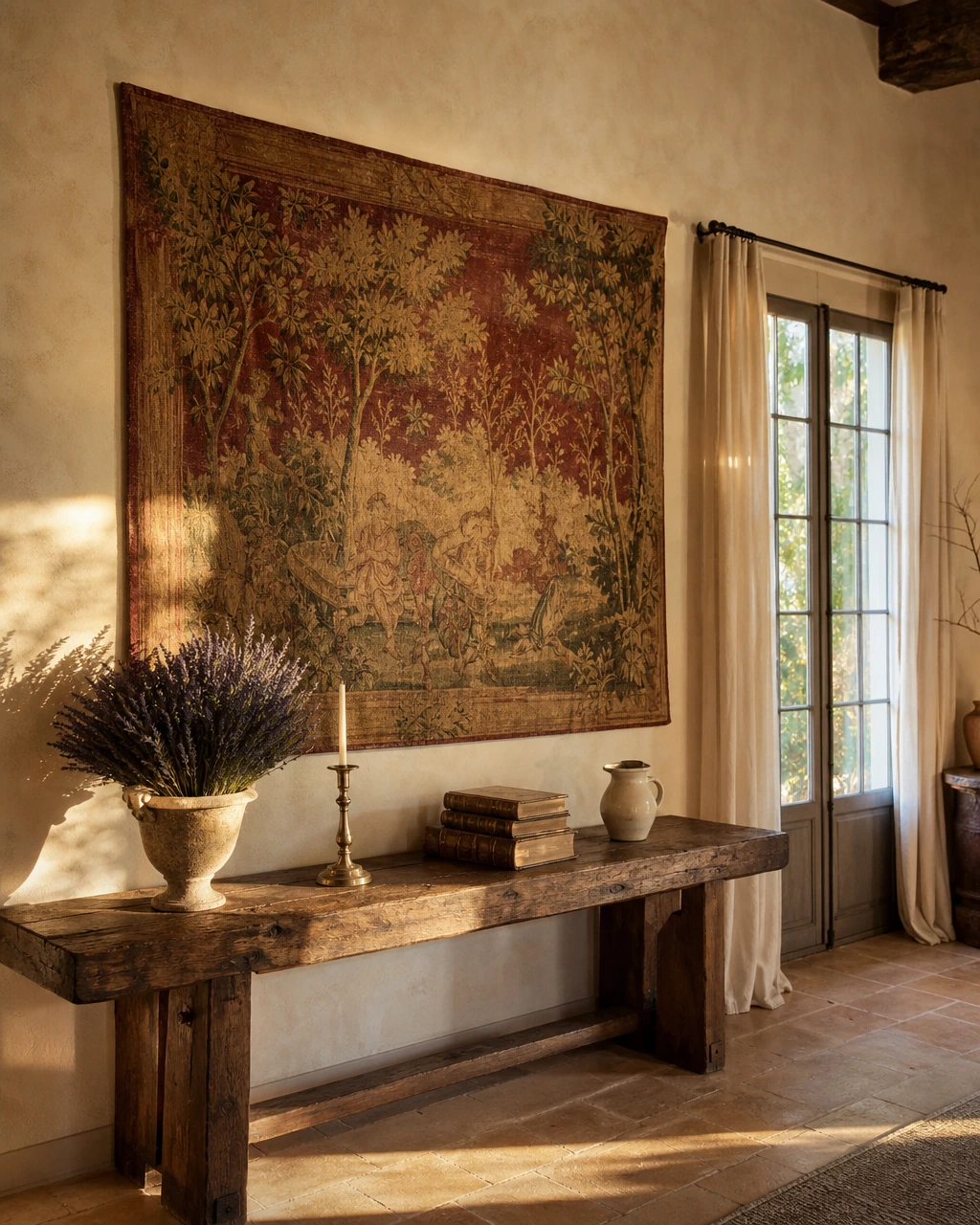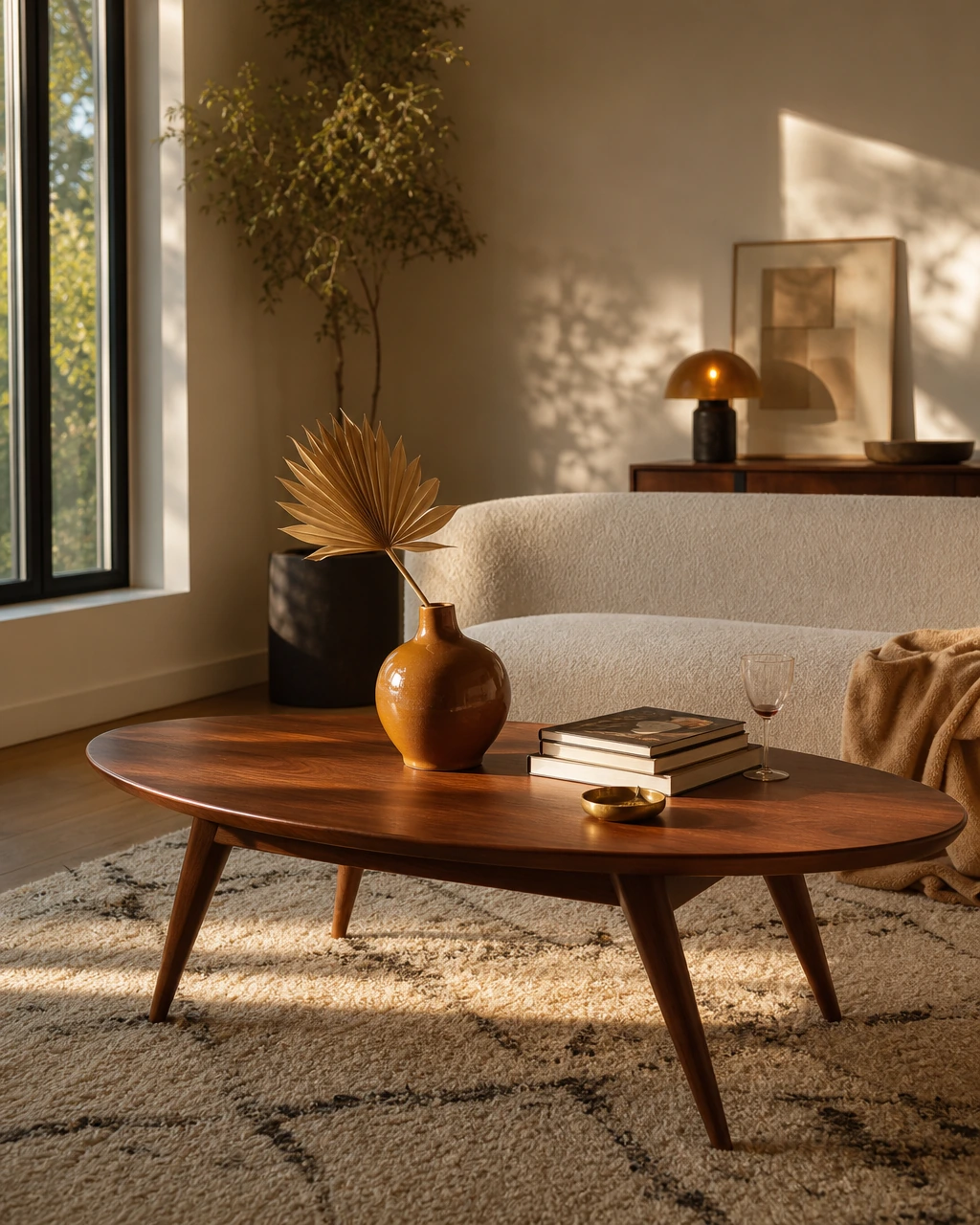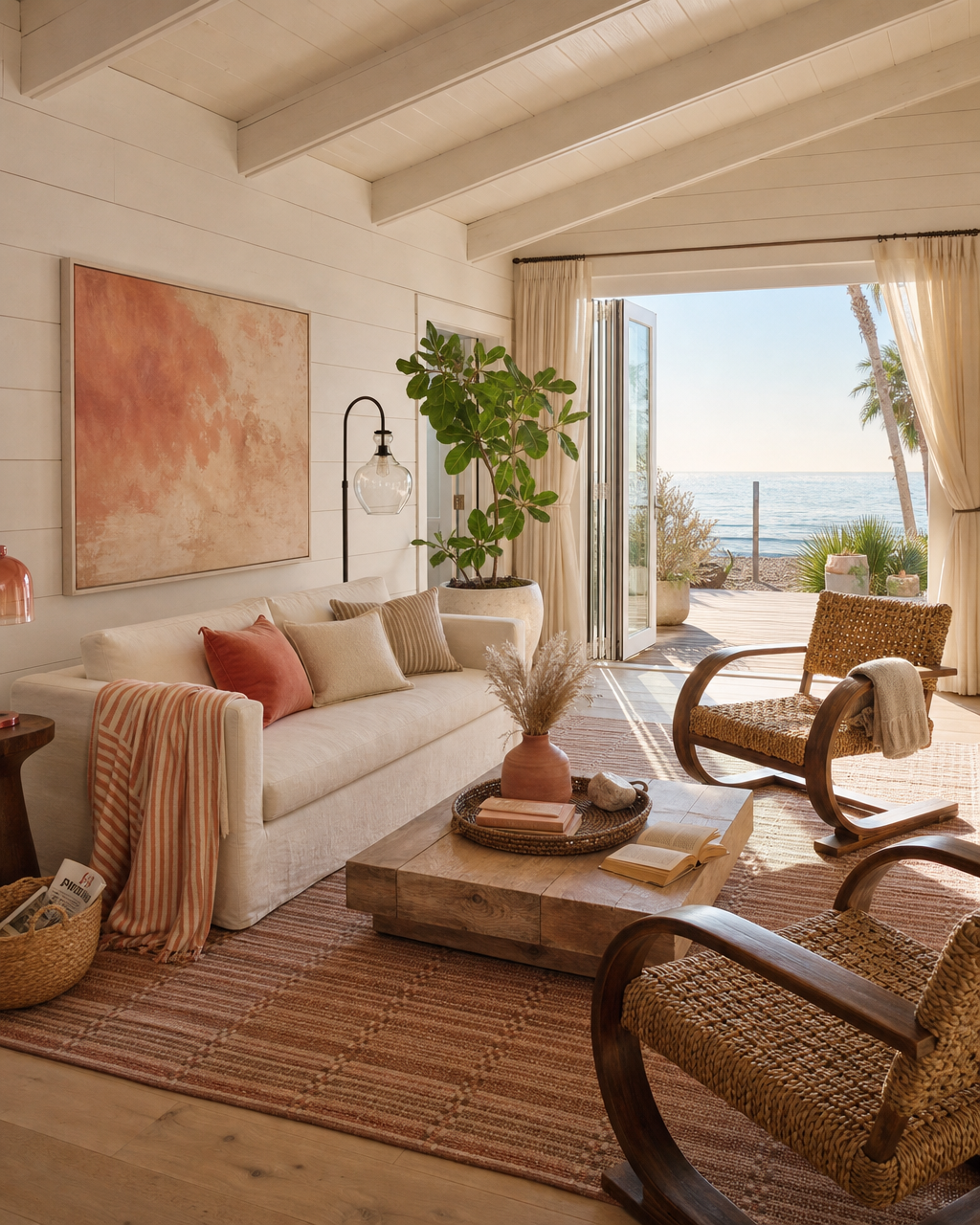
If you've spent any time scrolling through photos of Selena Gomez's Encino mansion mid-apartment search, you already know the specific feeling it produces. Not the "I want that" of a cold, editorial showroom. Something warmer than that. More like: "I want my place to feel the way that place looks." The warm neutrals, the layered textures, the rooms that read as considered without looking assembled. It's the aesthetic you've been trying to name for two years of Pinterest saves and still haven't quite landed.
The honest design reality is that Selena's homes are more accessible to recreate than almost any other celebrity interior. Her Encino, Los Angeles mansion, purchased in 2020 for $4.99 million and spanning approximately 11,500 square feet, is a Tudor-style structure with interiors that lean warm modern rather than maximalist or cold. The design language, earthy neutrals, natural materials, restrained layering, and furniture that looks found rather than matched, doesn't require a renovation budget or a trade-only designer. It requires a framework.
This guide breaks down the specific elements visible across her Los Angeles properties, explains why each one works, and translates them into practical decisions you can make in your own space at your actual budget. Whether you're furnishing a first apartment in Austin, refreshing a living room in Chicago, or finally replacing the starter furniture you've been tolerating for three years in a Brooklyn one-bedroom, the principles here apply directly.
What you'll learn in this guide:
- The color palette Selena's homes use and the exact paint equivalents you can buy today
- How to build a "collected, not matched" room without starting from scratch
- The three-layer lighting system that makes her interiors feel warm and dimensional
- Bedroom and bathroom updates that recreate the aesthetic without renovation
- Outdoor design principles that scale down to a 60-square-foot balcony
- Budget-accessible kitchen updates that shift the entire tone of a space
- How to move from inspiration to actual, buyable pieces without the tab spiral
Key Takeaways
- Selena Gomez's Encino home is a Tudor-style Los Angeles mansion purchased for $4.99 million in 2020, spanning approximately 11,500 square feet.
- The dominant interior aesthetic across her homes is warm modern: earthy neutrals, natural materials, soft upholstery, and layered textures that feel personal rather than staged.
- Her color palette centers on warm whites, soft greiges, camel and tan upholstery tones, muted terracotta accents, and deep walnut wood tones. Every element belongs to the same warmth family.
- The "collected, not matched" furniture approach is the single biggest shift most homeowners can make. Matched sets read as temporary; collected rooms read as intentional.
- Layered lighting (ambient, task, and accent working together) is the most underestimated element in most homes and one of the most budget-accessible to fix.
- Natural materials like solid wood, linen, wool, jute, and ceramic age better than trend-driven alternatives and create rooms that feel more considered over time.
- Every design principle in this guide can be sourced from accessible retailers like West Elm, CB2, Crate and Barrel, Pottery Barn, and Lulu and Georgia without custom or trade-only pieces.
The Design Language of Selena Gomez's Encino Home
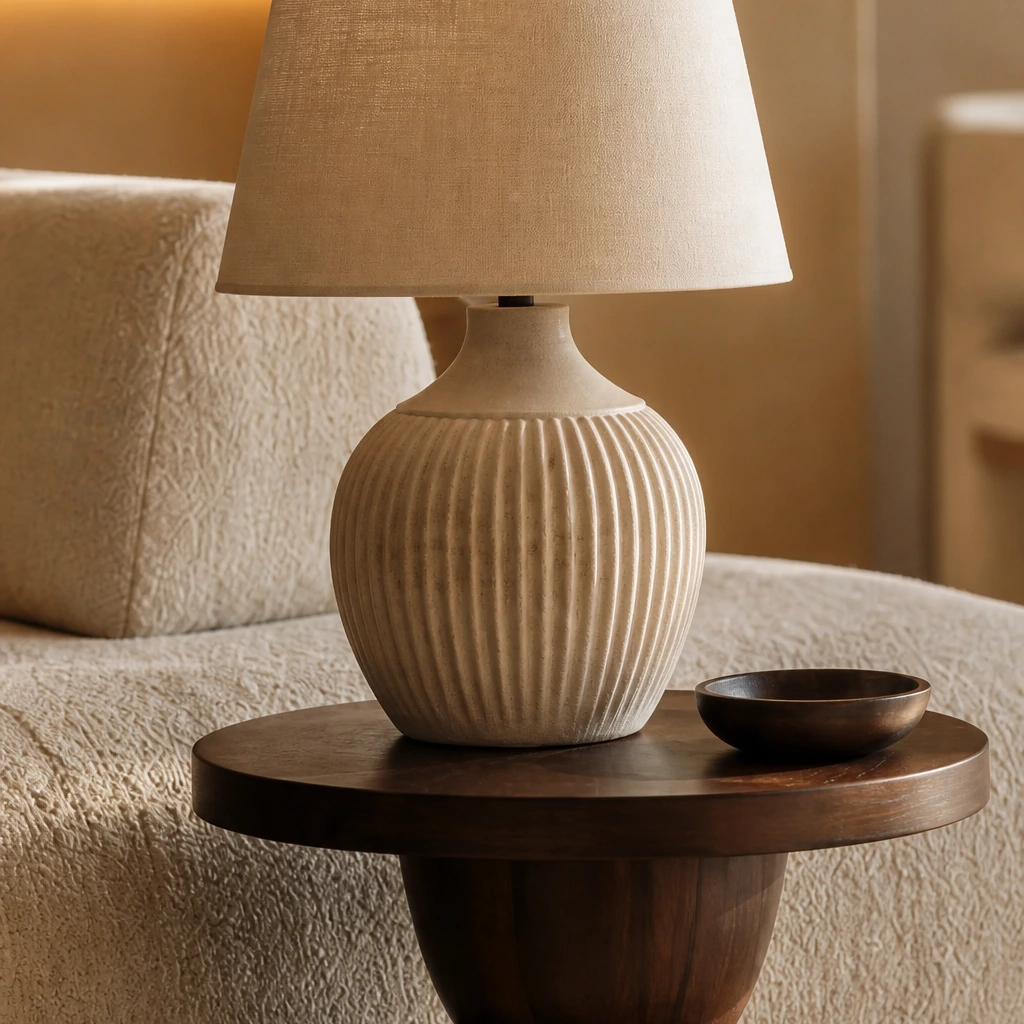
Warm modern design is an interior aesthetic that combines the clean lines and restraint of contemporary spaces with the tactile richness of natural materials, earthy tones, and layered textures. It avoids the sterility of pure minimalism and the visual noise of maximalism, landing in a space that feels elevated, personal, and livable.
Selena Gomez's Encino home sits within a Tudor-style structure: steep rooflines, brick and stucco cladding, arched entryways, and leaded glass windows on the exterior. Inside, the design shifts toward something softer and more personal. Coverage from Elle Decor and House Beautiful documents interiors that feature warm neutral walls, natural wood floors with visible grain, upholstered furniture in cream and camel tones, layered textiles including linen and velvet, and a mix of vintage-feeling and contemporary pieces that avoid the showroom-set look.
The overall effect is a home that feels expensive but not intimidating. Lived-in but not casual. Personal without being cluttered. That combination is exactly what most homeowners are trying to achieve, and exactly where most get stuck.
Why This Aesthetic Works in Any Space
The warm modern direction scales in a way that maximalist or highly architectural aesthetics don't. Warm tones make rooms feel larger and more inviting. Natural materials add depth without clutter. Restrained layering creates cohesion without requiring a full room overhaul.
It works in small apartments for the same reason it works in an 11,500-square-foot mansion: the principles are about proportion and material relationships, not square footage. If you've been describing your ideal space as "cozy but elevated" or "minimal but warm," this is the aesthetic you're reaching for.
The design also ages well. Trend-driven interiors require constant updating. Warm modern rooms built on natural materials and neutral tones absorb new pieces and evolve without looking dated. That's a practical argument as much as an aesthetic one, especially for anyone who wants to stop overwhelming themselves with furniture options and make fewer, better decisions.
Selena Gomez's Color Palette: What It Is and How to Use It
The color palette across Selena's homes is one of the most immediately actionable design elements to borrow. It's not a single color story but a consistent tonal family: warm, muted, and grounded. Every element belongs to the same warmth register, which is what creates cohesion without requiring everything to match.
The dominant tones visible across her interiors include the following:
ToneDescriptionPaint Equivalent (approximate)Warm whiteSlightly creamy, never starkBenjamin Moore White Dove, Sherwin-Williams AlabasterSoft greigeWarm gray with beige undertonesBenjamin Moore Pale Oak, Sherwin-Williams Accessible BeigeCamel and tanWarm mid-tone for upholstery and accentsAppears in sofas, chairs, and throw pillowsDusty terracottaMuted, earthy red-orange used sparinglyAccent walls, ceramics, textilesDeep walnutRich brown in wood tones and furniture legsFloors, coffee tables, shelving
The key to making this palette work is tonal consistency. Every element doesn't need to match, but every element should belong to the same warmth family. A cool gray sofa will fight the palette. A warm taupe sofa will settle into it.
How to Apply This Palette in a Rental
If you can't paint, the palette still works through furniture and textiles. A warm white linen sofa, a jute rug, camel leather accent chairs, and terracotta throw pillows will read as a cohesive color story even against a builder-beige wall. The palette carries through objects.
The one paint change worth negotiating with a landlord: a single warm white on the walls. Sherwin-Williams Alabaster or Benjamin Moore White Dove will transform a room more than almost any furniture purchase. Most landlords will approve a neutral white if you offer to repaint before moving out.
Accent Colors That Work Within This Palette
Selena's interiors use accent colors sparingly and always within the warm family. The accents that appear most consistently include dusty sage green in plants, ceramics, and occasional textiles; muted blush in throw pillows, art, and small upholstered pieces; aged brass and warm gold in hardware, lighting, and decorative objects; and deep chocolate brown in wood tones, leather, and occasional upholstery.
Avoid cool-toned accents like navy, cool gray, or bright white. They break the warmth of the palette immediately. The test is simple: hold the piece up mentally against Sherwin-Williams Alabaster. If it feels like it belongs in the same room, it probably does.
Furniture Selection: The "Collected, Not Matched" Approach
One of the most visible design choices across Selena's homes is that the furniture doesn't match. Not in the way a five-piece living room set matches. The pieces feel like they were found over time, each one chosen for its own merit, and then edited together into a room that works.
This is the single most impactful shift most homeowners can make. Matched sets read as temporary. Collected rooms read as intentional. The difference isn't budget. It's approach.
How to Build a Collected Living Room
The collected approach follows a clear structure that works regardless of room size or budget:
- Anchor with one strong sofa. Choose a silhouette with some character: a track arm, a curved back, or an interesting leg detail. Avoid the generic three-cushion sofa with no distinguishing features. West Elm's Harmony sofa and CB2's Decker sofa are good starting points.
- Add one contrasting chair. Different material, different silhouette, same warmth family. If the sofa is linen, the chair might be leather or boucle. If the sofa is low-profile, the chair might have more height.
- Choose a coffee table that introduces a new material. If the sofa is upholstered, the coffee table should be wood, stone, or metal. Mixing materials creates depth.
- Layer the rug under everything. The rug should be large enough that at least the front legs of every seating piece sit on it. A rug that's too small is the most common mistake in living room design.
- Add one vintage or vintage-feeling piece. A side table from Chairish, an antique lamp, a ceramic object from a local market. This is what makes the room feel collected rather than assembled.
Furniture Pieces That Recreate the Aesthetic
The following pieces from accessible retailers capture the warm modern sensibility visible across Selena's interiors:
PieceRetailerWhy It WorksHarmony sofa in natural linenWest ElmClean track arm, warm upholstery, versatile scaleDecker sofa in ivory boucleCB2Curved silhouette, tactile texture, elevated feelJute area rugCrate and BarrelNatural material, warm tone, grounds the roomWalnut coffee table with shelfWest ElmWarm wood tone, practical, works with most sofasCamel leather accent chairArticleIntroduces contrast material, warm toneAged brass floor lampLulu and GeorgiaWarm metal finish, adds height and a light layer
For more guidance on selecting pieces that work together rather than just individually, the furniture buying guide at First Chair covers the full decision framework, including how to evaluate scale, proportion, and material relationships before purchasing.
Lighting Design: How Selena's Homes Use Light to Create Warmth
Lighting is the most underestimated design element in most homes. In Selena's interiors, the lighting is layered: ambient light from overhead fixtures, task light from table and floor lamps, and accent light from decorative sources. No single source is doing all the work. The result is a room that feels warm and dimensional rather than flat and institutional.
Most apartments and starter homes rely entirely on a single overhead fixture per room. That's the fastest way to make a space feel like a waiting room regardless of how good the furniture is.
The Three-Layer Lighting System
Warm modern interiors use three lighting layers working together:
Ambient lighting provides general illumination. In Selena's homes, this often comes from statement overhead fixtures: chandeliers with warm bulbs, flush mounts with organic shapes, or pendant clusters in natural materials like rattan or aged brass.
Task lighting serves functional purposes: reading, working, cooking. Table lamps on side tables and floor lamps beside seating are the primary task sources in living spaces. The goal is to have at least two task sources per room so the overhead light can stay off or dimmed.
Accent lighting creates depth and drama. This includes picture lights over art, under-cabinet lighting in kitchens, and candles or candleholders used as decorative light sources. Accent lighting is what makes a room feel intentional at night.
Lighting Fixtures That Recreate the Look
If the room already feels cold, avoid black metal lighting. It will make the space feel harder. Warm wood, aged brass, and natural rattan soften a room faster than almost any other single change.
Specific fixture directions that align with the aesthetic include rattan or woven pendant lights from Lulu and Georgia or Anthropologie Home; aged brass table lamps with linen shades from Rejuvenation or West Elm; sculptural ceramic table lamps in warm neutrals from CB2 or Crate and Barrel; and warm-toned Edison bulbs at 2700K color temperature in any existing fixture.
The bulb temperature matters as much as the fixture itself. Swap any cool-white bulbs (4000K or above) for warm-white (2700K) and the room will immediately feel closer to the interiors you've been saving. It's a $15 change that most homeowners overlook entirely.
For planning your lighting layout before buying, the guide to apps for designing apartments covers the most useful visualization tools available in 2026.
Bedroom and Bathroom Design: Quiet Luxury Without the Price Tag
Selena's bedroom interiors, visible in glimpses from her Instagram posts and various home tour coverage, follow the same warm, layered approach as her living spaces. The bedrooms feel like retreats: soft, textural, and calm. The bathrooms lean toward natural stone, warm wood vanities, and organic shapes.
Bedroom Elements to Recreate
The bedroom aesthetic centers on a few key decisions that have outsized impact on how the room feels:
Upholstered headboard. A linen or boucle headboard in a warm neutral is the single piece that most elevates a bedroom. It adds softness, height, and a sense of intention. Interior Define and West Elm both offer accessible options that don't require custom ordering.
Layered bedding. The look is not a matched bedding set. It's a base of high-quality white or warm white sheets, a textured duvet or coverlet in a warm neutral, and two to three throw pillows in varying textures. Add a folded throw at the foot of the bed. The layering is what creates the hotel-but-personal feeling.
Warm wood nightstands. Matching nightstands in warm walnut or oak tones ground the bed and add the natural material layer the room needs. They don't need to be expensive. Solid wood at any price point will outperform veneered particleboard in both look and longevity.
One statement lamp per side. Ceramic or sculptural table lamps with warm shades. Not matching, but tonal siblings. The slight variation between the two is what makes the room feel collected rather than catalog-assembled.
Bathroom Updates That Don't Require Renovation
For renters and homeowners who can't renovate, the most impactful bathroom changes work within what's already there. Swapping builder hardware for aged brass or matte black takes minutes and costs under $100 for most standard fixtures. Adding a wood bath tray or stool introduces organic material contrast against tile and grout. Replacing a standard mirror with a round or arched mirror in a warm frame changes the entire visual register of the room.
Linen or waffle-weave towels in warm white or sand tones replace the visual noise of bright white or patterned sets. A single plant, a pothos or snake plant works in low-light bathrooms, adds the organic layer that makes the space feel considered rather than functional.
Outdoor and Patio Design: Livable Luxury at Any Scale
Selena's Encino property includes outdoor spaces that prioritize comfort and natural beauty over formal landscaping. The approach is relaxed but considered: comfortable seating, natural materials, greenery that feels organic rather than manicured.
Key Outdoor Design Principles
Comfortable seating as the anchor. Outdoor sofas and deep-seat lounge chairs in weather-resistant upholstery create a living-room feeling outside. The furniture should invite you to stay, not just look at. Teak and powder-coated aluminum frames hold up well across climates.
Natural material consistency. Teak, rattan, concrete, and stone all work within the warm modern outdoor palette. Avoid plastic furniture that reads as temporary. The material choices outside should feel as considered as the ones inside.
Greenery in layers. Large potted plants at varying heights, climbing plants on walls or trellises, and ground-level plantings create depth. The goal is lush without being overgrown. A single large fiddle-leaf fig in a terracotta pot does more work than six small plants scattered without intention.
Warm lighting for evenings. String lights, lanterns, and outdoor floor lamps extend the layered lighting approach outside. The outdoor space should feel as considered at night as it does during the day.
For homeowners working with a small patio or balcony, the same principles apply at a smaller scale. One comfortable chair, one side table, one large potted plant, and one string of warm lights will create the feeling even in 60 square feet. Scale down the pieces; keep the principles.
Kitchen Inspiration: Warm Tones and Natural Materials on a Real Budget
Celebrity kitchen renovations often feel out of reach, but the design principles behind warm, high-end kitchens translate directly to more modest budgets. Coverage of Selena's Los Angeles mansion highlights kitchen spaces that favor warm wood cabinetry, stone countertops, and warm metal hardware. The material relationships are what create the feeling, not the renovation scope.
Budget-Accessible Kitchen Updates
The following updates shift a kitchen toward the warm modern aesthetic without requiring cabinet replacement or structural changes:
UpdateApproximate CostImpactSwap hardware to aged brass$50 to $200High: changes the entire tone of the spaceAdd open shelving with warm wood$100 to $400High: introduces natural material and display spaceReplace pendant lights$150 to $600High: sets the warmth and style of the kitchenAdd a butcher block island or cart$200 to $800Medium: introduces warm wood without cabinet replacementPaint lower cabinets in warm neutral$100 to $300 (DIY)High: transforms the space without full replacement
The most impactful single change in most kitchens is the hardware. Aged brass pulls and knobs on existing cabinets will shift the entire feeling of the space for under $200. It's the kitchen equivalent of swapping your light bulbs to 2700K: a small material change with a disproportionate visual effect.
How First Chair Helps You Move from Inspiration to Actual Pieces
The hardest part of recreating a celebrity-inspired interior isn't finding the inspiration. It's translating that inspiration into specific, buyable pieces that work together in your actual space, at your actual budget, from retailers you can actually access.
That gap between the room you've been saving and the room you can actually build is where most homeowners get stuck. You can upload photos of Selena's interiors, or any room that captures the warm modern feeling you're after, and First Chair will generate a curated room concept using real, in-stock furniture from retailers like West Elm, CB2, Crate and Barrel, Pottery Barn, and Lulu and Georgia. Every piece shown actually exists and can be purchased.
The platform pulls across multiple retailers rather than pushing inventory from a single catalog, which matters when the right room rarely comes from one source. A sofa from West Elm, a rug from Crate and Barrel, a lamp from Lulu and Georgia, and a vintage side table from Chairish will create a more collected, intentional room than anything a single retailer can assemble. First Chair also offers insider pricing on most pieces, without the promo-code hunt.
Sustainable and Durable Material Choices
One consistent thread across Selena's interiors is the use of natural, durable materials that age well rather than trend-driven pieces that date quickly. This is also the most sustainable approach to furnishing a home: buy fewer, better pieces that last.
The materials that appear most consistently across her homes, and that hold up best over time, include the following:
- Solid wood (walnut, oak, teak): ages beautifully, is repairable, and never goes out of style
- Natural linen and cotton: breathable, durable, and improves with washing
- Wool and jute rugs: more durable than synthetic alternatives and better for indoor air quality
- Ceramic and stone: timeless, durable, and adds genuine material depth
- Leather: improves with age, easy to clean, and works across multiple aesthetic directions
The sustainability case and the design case align here. Trend-driven fast furniture creates visual noise and ends up in landfills. Natural materials create rooms that feel collected and age into something better. For a broader look at how consumer preferences are shifting toward durability and natural materials, the home decor market statistics guide covers the current data.
Best Practices for Recreating This Aesthetic
1. Commit to one warmth register and hold it. Every piece, from the largest sofa to the smallest ceramic object, should belong to the same warmth family. Cool-toned pieces break the palette immediately, even when they're individually beautiful.
2. Buy the rug last, but size up. Most homeowners buy rugs that are too small. The rug should anchor the entire seating arrangement, with at least the front legs of every piece sitting on it. Measure before you buy.
3. Introduce at least three different materials in every room. A room with only upholstered pieces feels soft but flat. A room with only wood feels hard. The combination of upholstery, wood, and one additional material (stone, ceramic, metal, or natural fiber) creates the depth that makes a room feel considered.
4. Layer your lighting before buying new furniture. Adding a floor lamp and a table lamp to an existing room will often do more for the feeling of the space than replacing any piece of furniture. Fix the lighting first.
5. Add one vintage or vintage-feeling piece per room. It doesn't need to be expensive or genuinely antique. A ceramic lamp from a thrift store, a side table from Chairish, or a piece of art from a local market will break the showroom feeling that even well-chosen new furniture can create.
6. Resist the matching set. Matched living room sets, matched bedroom sets, matched dining sets: all of them read as temporary rather than intentional. Choose each piece for its own merit, then edit for cohesion.
7. Let plants do material work. A large potted plant in a warm ceramic or terracotta pot introduces organic material, color, and height simultaneously. It's one of the most efficient design moves in any room.
8. Prioritize texture over pattern. Selena's interiors use very little pattern. The visual interest comes from texture: linen against velvet, smooth ceramic against rough jute, polished wood against matte upholstery. Pattern can work, but texture is more forgiving and ages better.
Common Mistakes to Avoid
Buying a rug that's too small. The consequence is a room that looks unanchored, like the furniture is floating. The fix: measure the full seating arrangement and buy a rug that extends at least 12 inches beyond each side.
Defaulting to matching sets. The consequence is a room that looks like a furniture showroom floor rather than a home. The fix: buy each piece individually, choosing for silhouette and material rather than set membership.
Using cool-white light bulbs. The consequence is a room that feels clinical regardless of the furniture. The fix: replace every bulb with a warm-white 2700K option. It costs under $20 and changes the entire feeling of the space.
Choosing cool-toned neutrals for walls. Cool grays and blue-whites fight warm furniture tones. The consequence is a palette that feels unresolved. The fix: test Benjamin Moore White Dove or Sherwin-Williams Accessible Beige before committing.
Buying furniture before measuring. The consequence is scale problems that are expensive to fix: a sofa that blocks a doorway, a coffee table that leaves no circulation space, a rug that's three sizes too small. The fix: tape out the footprint of every major piece on the floor before ordering.
Over-accessorizing to compensate for weak anchors. More throw pillows and decorative objects won't fix a room with the wrong sofa or no layered lighting. The consequence is visual noise without cohesion. The fix: get the anchors right first, then layer accessories sparingly.
Ignoring the ceiling. Most homeowners treat the ceiling as a blank surface. A statement pendant light or even a simple warm-toned flush mount changes the entire vertical dimension of a room. The fix: treat the ceiling as a fifth wall and choose its fixture with the same care as the furniture.
Buying trend-driven pieces as anchors. Trendy accent pieces are fine. Trendy sofas are expensive mistakes. The fix: anchor the room with timeless silhouettes in natural materials, then use accessories to reflect current taste.
Frequently Asked Questions
What style is Selena Gomez's home interior?
Selena Gomez's home interiors are best described as warm modern: a design direction that combines clean, restrained silhouettes with natural materials, earthy neutral tones, and layered textures. The aesthetic avoids both cold minimalism and busy maximalism. Her Encino home in particular blends Tudor architectural bones with soft, contemporary interiors that feel personal and livable rather than staged.
How much did Selena Gomez's Encino house cost?
Selena Gomez purchased her Encino home in 2020 for approximately $4.99 million. The property is reported to be approximately 11,500 square feet and sits in a Tudor-style structure in the San Fernando Valley area of Los Angeles.
What color palette does Selena Gomez use in her home?
Her interiors consistently use a warm neutral palette: soft whites with creamy undertones, warm greiges, camel and tan upholstery tones, muted terracotta accents, and deep walnut wood tones. The palette avoids cool grays, bright whites, and high-contrast color combinations. Paint equivalents include Benjamin Moore White Dove, Sherwin-Williams Alabaster, and Benjamin Moore Pale Oak.
Can I recreate Selena Gomez's interior design on a budget?
Yes. The warm modern aesthetic that defines her homes is built on principles, not price points. The most impactful changes are often the least expensive: swapping light bulbs to 2700K warm white, replacing cabinet hardware with aged brass, sizing up a rug, and adding a floor lamp. The furniture buying guide at First Chair covers how to prioritize these decisions within a realistic budget.
What furniture brands match Selena Gomez's home aesthetic?
The warm modern aesthetic visible in her homes translates well to pieces from West Elm, CB2, Crate and Barrel, Lulu and Georgia, Article, and Rejuvenation for new furniture. For the vintage and collected feeling that makes her rooms feel personal rather than assembled, Chairish and 1stDibs offer accessible vintage and vintage-feeling pieces at a range of price points.
What is the "collected, not matched" approach to furniture?
The collected approach means choosing each piece of furniture individually for its own silhouette, material, and character rather than buying a matched set from a single retailer. The result is a room where pieces feel like they were found over time and edited together, which reads as intentional and personal rather than temporary. It's the most visible design principle across Selena's interiors and the most accessible to recreate regardless of budget.
Conclusion: From Inspiration to a Room You Can Actually Live In
The design language of Selena Gomez's homes is more accessible than it looks. Warm neutrals, natural materials, layered lighting, and furniture that feels found rather than matched: none of these require a $5 million budget or a full renovation. They require a framework and the confidence to commit to it.
Start with the palette. Get the lighting right. Choose an anchor sofa with a real silhouette. Add one contrasting chair, one natural material coffee table, and one piece that feels genuinely found. The room will start to feel like the one you've been saving.
If you're ready to move from inspiration to actual, buyable pieces, First Chair can take photos of rooms you love, including Selena's interiors, and generate a curated room concept using real, in-stock furniture from West Elm, CB2, Crate and Barrel, Pottery Barn, and Lulu and Georgia. Every piece shown exists. Every piece can be purchased. The tab spiral stops there.