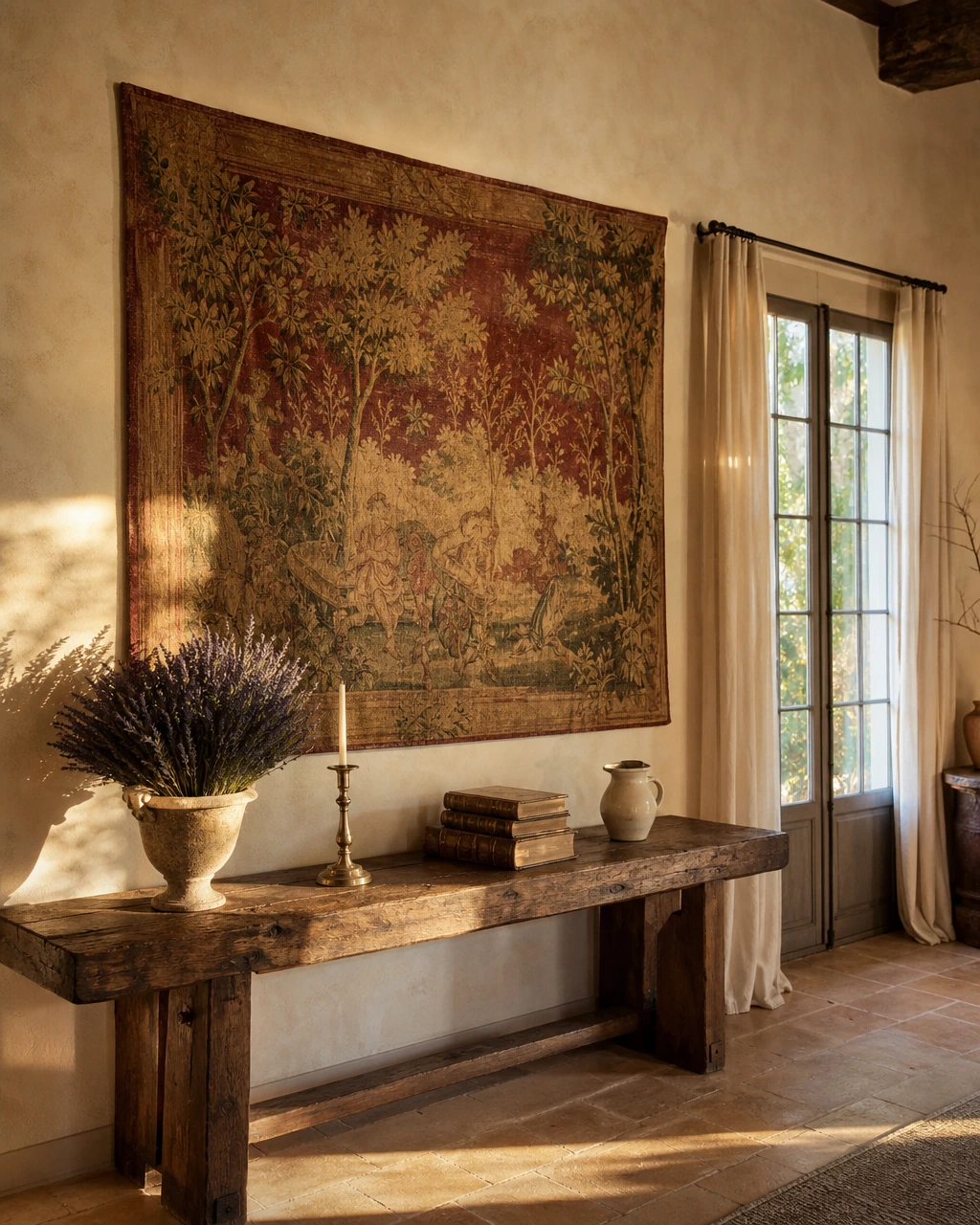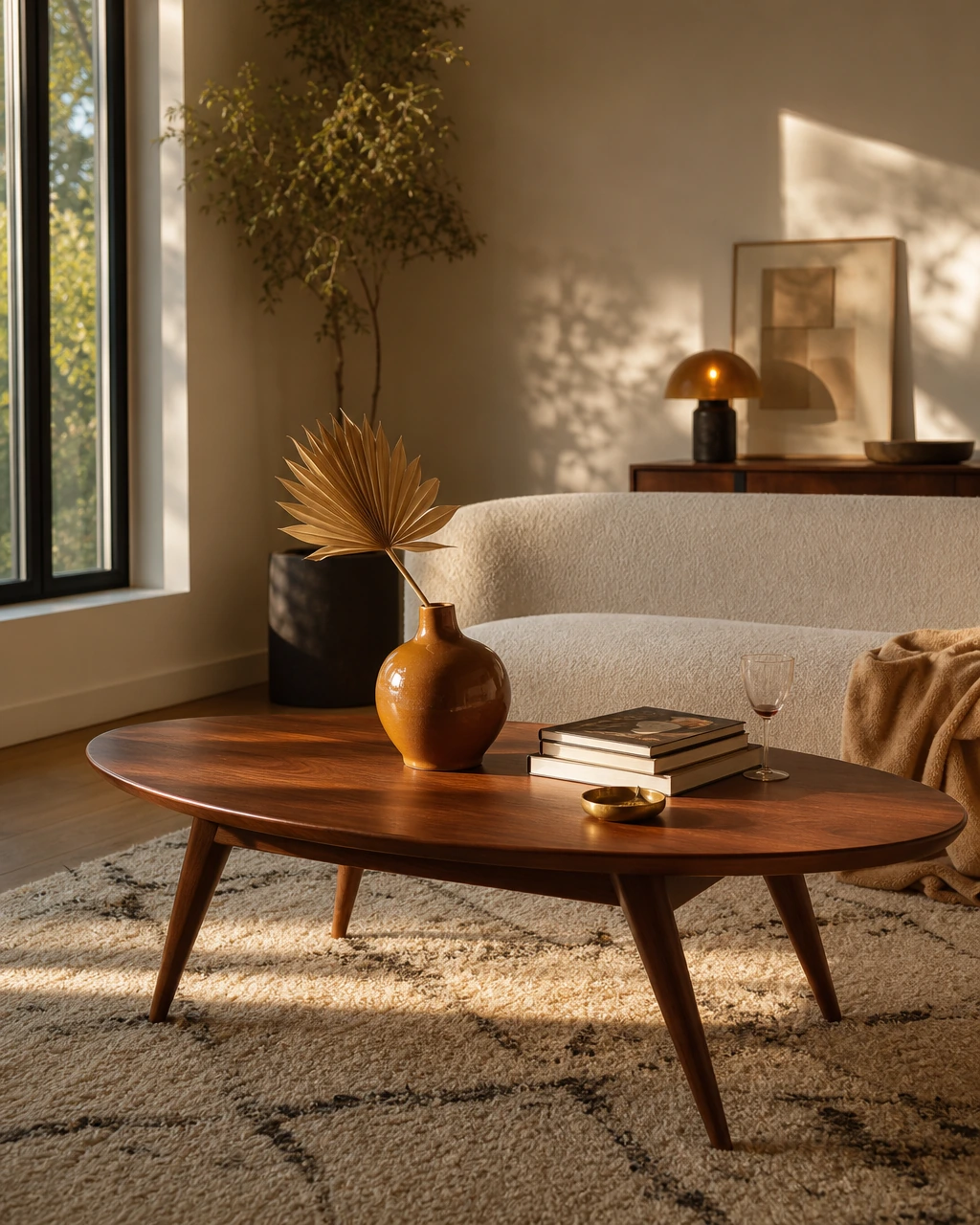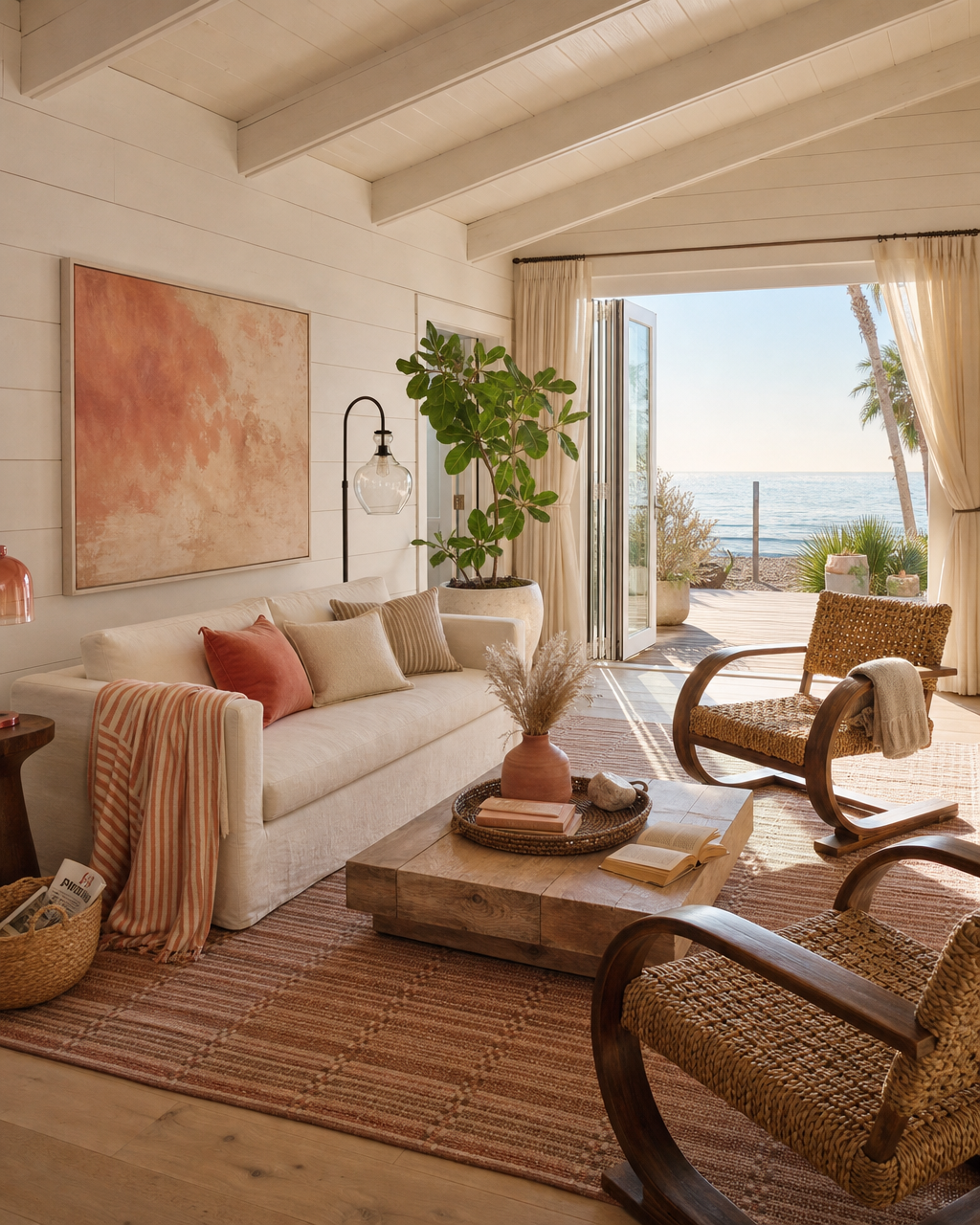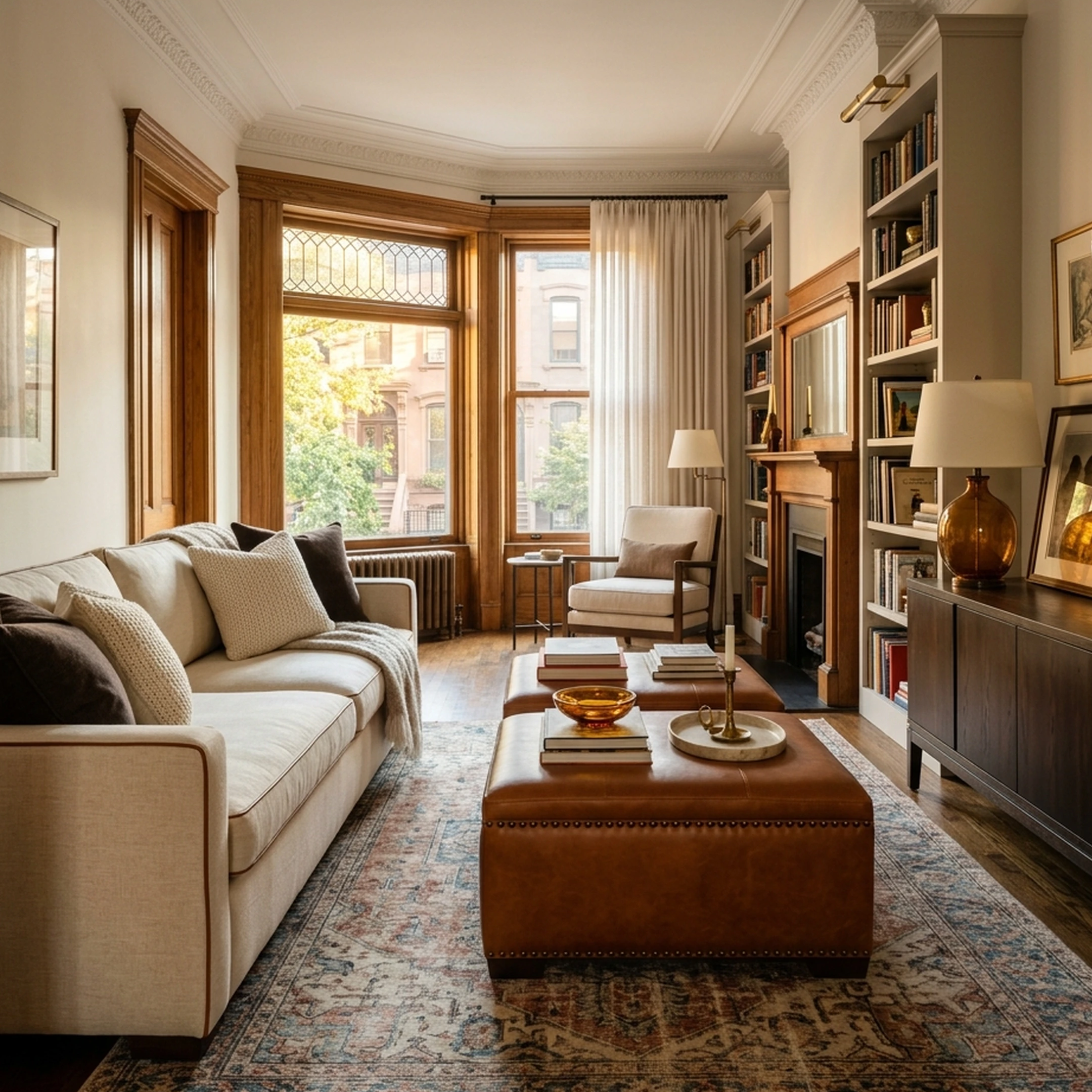

If you have spent any time watching architectural walkthroughs of the Calabasas compound or studying the Cold Canyon residence, you already recognize the feeling those spaces produce. Warm. Unhurried. Expensive without announcing it. The rooms feel like someone made deliberate decisions about every surface, every material, every light source, and then edited out everything that did not belong.
That feeling is not a function of the budget. It is a function of the principles.
The adobe-style architecture of the Calabasas estate, the layered natural materials, the resort-scale indoor-outdoor continuity, the discreet technology integration: none of these are locked behind a $42 million price tag. They are design decisions. And design decisions are reproducible. This guide breaks down the specific moves that define Will Smith's residential aesthetic and shows you exactly how to apply each one in a real home, with real materials, real furniture, and realistic budgets.
What you will learn in this guide:
- The spatial planning principles behind Will Smith's open floor plans and how to apply them in any home
- How to build the natural material palette that defines the Calabasas aesthetic
- Why layered lighting is the single highest-leverage upgrade in any room
- How to integrate smart home technology the way celebrity estates actually do it
- How to connect indoor and outdoor spaces for resort-style continuity
- Which universal design principles align perfectly with the luxury aesthetic
- The most common mistakes homeowners make when attempting this look
Key Takeaways
- The Calabasas estate relies on resort-style design principles that are reproducible: open plans, natural materials, layered lighting, and indoor-outdoor flow.
- Generous circulation paths (36 inches minimum on main routes, 42 inches in hallways) are not just an accessibility principle. They are what makes a room feel expensive.
- Smart home adoption has reached mainstream scale, with Statista estimating over 57 million U.S. households equipped with at least one smart device. Pre-wiring during renovation costs a fraction of retrofitting later.
- Natural materials (warm woods, stone, woven textiles, aged brass) deliver more visual impact per dollar than almost any decorative accessory.
- Every room needs at least three light sources operating at different heights and intensities, all on dimmers. This single change separates hotel-suite quality from rental-apartment quality.
- Universal design principles (wide doorways, curbless showers, lever hardware, layered lighting controls) align almost perfectly with the open, uncluttered aesthetic of high-end residential design.
- The most common mistake when attempting this aesthetic is over-furnishing. Celebrity interiors feel expensive partly because they are edited.
What Actually Makes Will Smith's Homes Work
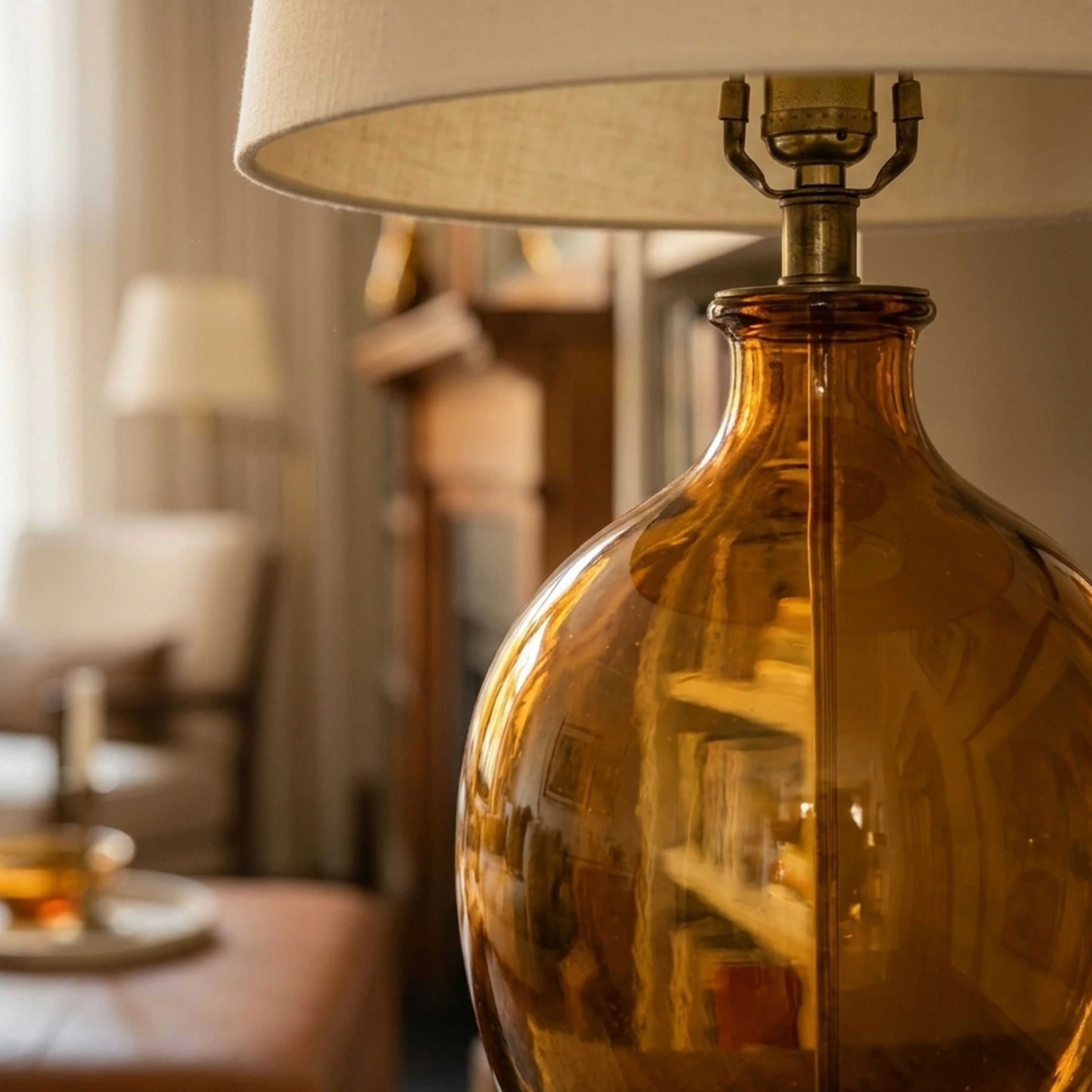
Will Smith's residential aesthetic is a design philosophy that prioritizes feeling over spectacle. These are not homes designed to impress from a distance. They are designed to feel good to live in, which is a meaningfully different brief.
The Calabasas compound uses adobe-influenced architecture with thick walls, arched openings, handcrafted details, and resort-scale grounds that include a home theater, recording studio, meditation spaces, and expansive family lounges. The Cold Canyon residence, documented by California Energy Designs, takes a more contemporary approach but shares the same core vocabulary: natural materials, generous proportions, and a strong relationship between interior and exterior space.
What unites both properties is a consistent set of principles that any homeowner can study and apply. The sections below break each one down.
Spatial Planning: Open Floor Plans and Generous Circulation
Open floor plans are the defining spatial move in both properties. Rooms flow into each other without hard boundaries, which creates a sense of scale that has nothing to do with square footage and everything to do with visual continuity.
How to Create the Open Plan Effect
Removing structural walls is not always feasible, but the visual effect of an open plan can be approximated through furniture placement, consistent flooring across zones, and sightlines that draw the eye across the room rather than stopping at a partition.
Practical steps:
- Use rugs, lighting, and furniture groupings to define zones rather than walls or room dividers
- Keep flooring consistent across adjacent spaces (the same wide-plank hardwood or large-format tile throughout reads as one continuous space)
- Align furniture so the longest sightlines in the room remain unobstructed
- Maintain clear circulation paths of at least 36 inches through main traffic routes, with 42-inch hallways where possible
That last point matters more than most homeowners realize. Generous pathways are not just an accessibility principle. They are what makes a room feel expensive. Cramped circulation is one of the most reliable signals that a space was furnished without a plan.
Adobe Influence and Architectural Character
The Calabasas estate's adobe-style architecture uses thick walls, arched openings, and organic forms to create a sense of permanence and warmth that glass-and-steel modernism rarely achieves. You cannot replicate this in a standard suburban home without a full renovation, but you can borrow the underlying principles.
Arched doorways, curved furniture silhouettes, and rounded architectural details soften a room in the same way. Warm plaster finishes or limewash paint on a single accent wall introduce the organic texture of adobe without the structural commitment. The goal is to move away from the hard, right-angled geometry that makes most interiors feel generic.
Natural Materials and Color Palettes: The Foundation of the Look
The material palette across Will Smith's properties is consistent: warm woods, natural stone, woven textiles, aged metals, and earth-toned upholstery. This is a deliberate strategy for creating spaces that feel grounded, layered, and timeless rather than trend-dependent. The broader shift in high-end residential design toward what practitioners describe as "quiet luxury" places craftsmanship and natural materials at the center, and Smith's homes sit squarely within this direction.
Building a Natural Material Palette
The table below shows the core material categories, what they contribute to the room, and where to source them at different price points.
MaterialDesign FunctionAccessible SourcesWarm oak or walnut woodGrounds the room, adds organic warmthWest Elm, CB2, Crate and BarrelNatural stone (travertine, limestone)Adds permanence and textureLocal tile suppliers, Lulu and GeorgiaWoven textiles (jute, linen, wool)Softens hard surfaces, adds tactile depthPottery Barn, Serena and Lily, Anthropologie HomeAged or unlacquered brassWarm metallic accent that patinas over timeRejuvenation, CB2, Anthropologie HomeMatte ceramic and terracottaEarthy accent in vessels, planters, and tileWest Elm, local ceramicistsLimewash or plaster-effect paintOrganic wall texture without renovationPortola Paints, Romabio
Color Strategy: Layered Neutrals, Not Flat Beige
The color palette in Smith's homes is not simply neutral. It is layered: warm whites, sand tones, deep terracotta accents, and rich wood stains that create depth without visual noise. The walls recede, the materials come forward, and the room feels cohesive rather than decorated.
A practical approach for homeowners:
- Start with a warm white or greige base on walls (Benjamin Moore White Dove or Sherwin-Williams Accessible Beige work well as starting points)
- Layer in a mid-tone through upholstery: linen, oatmeal, or warm taupe
- Add depth through a single darker anchor piece: a walnut coffee table, a deep terracotta throw, or a charcoal area rug
- Introduce warmth through brass or aged bronze hardware and lighting
The mistake most people make is stopping at step two. The room looks fine but feels flat. The depth comes from the contrast between the light base and the darker anchor pieces.
If you are working through a furniture buying decision and feeling the familiar paralysis of too many options, the principle is the same: fewer pieces doing more work, chosen with intention rather than accumulated by default.
Layered Lighting: The Highest-Leverage Upgrade in Any Room
Lighting is where most homes fall furthest short of the celebrity aesthetic, and it is also where the gap is easiest to close. The difference between a room that feels like a hotel suite and one that feels like a rental apartment is almost always lighting.
Accessible design guidelines recommend targeting ambient lighting at 20 to 30 footcandles and task lighting at 30 to 50 footcandles for activities like cooking or reading. The more practical principle for homeowners: every room needs at least three light sources operating at different heights and intensities, all on dimmers.
The Three-Layer Lighting System
Ambient layer: Overhead lighting that fills the room evenly. In Smith-style interiors, this is often a sculptural pendant or a series of recessed fixtures on a dimmer rather than a single ceiling fixture. The goal is soft, diffused light that does not create harsh shadows.
Task layer: Directed light for specific activities. Reading lamps beside sofas, under-cabinet lighting in kitchens, and bedside sconces all belong here. These should be independently controllable from the ambient layer.
Accent layer: Lighting that highlights architecture, art, or objects. Picture lights, LED strip lighting inside shelving, and uplights behind large plants all fall into this category. This layer is what makes a room feel considered rather than simply lit.
Smart lighting systems from Lutron (Caséta or RadioRA) and Philips Hue allow all three layers to be controlled by scene, so a single button press shifts the room from daytime working to evening entertaining. This is exactly the kind of integrated control used in celebrity estates, and it is available at a fraction of the cost of a full Crestron or Control4 installation.
Sculptural Lighting as a Design Statement
One consistent feature of high-end residential interiors is lighting that functions as sculpture. Oversized pendants in natural materials (rattan, linen, hand-blown glass, aged brass) do double duty: they provide light and they anchor the room visually. A single strong pendant over a dining table or a pair of statement floor lamps flanking a sofa can elevate a room more than almost any other single purchase.
Skip the matching lamp sets. The room ends up looking like a furniture showroom. Instead, choose pieces that feel collected: a brass arc floor lamp, a ceramic table lamp, a woven pendant. The variety is what creates the layered, lived-in quality that makes celebrity interiors feel personal rather than staged.
Smart Home Integration: What Celebrity Estates Actually Use
Will Smith's Calabasas estate integrates home theater, recording studio, and residential systems across a large compound. Estates of this scale typically use centralized automation platforms to unify lighting, climate, security, and AV into programmable scenes. The smart home market has reached mainstream scale, with Statista estimating over 57 million U.S. households equipped with at least one smart device. The question for most homeowners is not whether to integrate smart technology but how to do it without creating a system that is fragile, complicated, or visually intrusive.
Choosing the Right Platform for Your Home
The table below compares the main smart home platforms by use case and price tier.
PlatformBest ForPrice TierKey StrengthApple Home / HomeKitApple-ecosystem householdsConsumerPrivacy, reliability, Siri integrationGoogle HomeAndroid and Nest usersConsumerLearning thermostat, broad compatibilityAmazon AlexaVoice-first controlConsumerWidest device compatibilityLutron RadioRA 3Lighting and shading controlProfessionalRock-solid reliability, designer keypadsControl4Whole-home integrationLuxury residentialUnified scenes across all systemsCrestron HomeLarge estates, custom buildsUltra-luxuryDeepest customization, AV distribution
For most homeowners, a combination of Lutron for lighting control and Apple Home or Google Home for climate, security, and entertainment covers 90 percent of the functionality found in celebrity estates at a fraction of the cost.
Pre-Wiring: The Decision That Pays Off Later
The single most important smart home decision happens before the walls close. Pre-wiring for high-speed ethernet, in-wall speaker cable, motorized shade conduit, and EV charging during a renovation costs a small fraction of what it costs to retrofit later. If you are doing any significant renovation, this is the moment to plan the infrastructure even if you are not ready to install the systems yet.
The same principle applies to outdoor spaces. Pre-wiring for landscape lighting, outdoor speakers, and pool automation during a hardscape project is far easier than trenching cable through finished landscaping afterward.
Voice-activated systems also serve a secondary purpose that is easy to overlook: they align with accessible living principles by enabling hands-free control of lighting, climate, and entertainment, which benefits everyone in the household regardless of age or mobility.
Indoor-Outdoor Living: Connecting Interior Spaces to the Landscape
The outdoor spaces at Will Smith's properties are not afterthoughts. The Calabasas estate features resort-style grounds with pools, patios, and landscaped areas that connect directly to interior living spaces through large sliding or folding glass doors. The visual and physical continuity between inside and outside is one of the most distinctive features of the property and one of the most reproducible moves in residential design.
Creating Visual Continuity Between Inside and Outside
The key is alignment: flooring materials that extend from interior to exterior (large-format porcelain tile works well for this), consistent furniture tones across indoor and outdoor zones, and sightlines that draw the eye outward from the main living areas.
Practical steps:
- Replace standard hinged patio doors with wide sliding or folding glass panels where structurally feasible
- Use the same or complementary flooring material on interior and exterior surfaces adjacent to the transition
- Extend the interior lighting scheme outdoors with landscape lighting, wall-mounted fixtures, or string lights that match the interior hardware finish
- Furnish outdoor seating areas with the same level of intention as interior rooms: a proper outdoor sofa, a coffee table, layered textiles, and a rug rated for outdoor use
The outdoor furniture market has improved significantly. Brands like Serena and Lily, RH Outdoor, and Lulu and Georgia now offer pieces that hold up to weather while looking like they belong inside.
Pool and Water Feature Integration
A pool is not a prerequisite for the resort-style aesthetic. Water features of any scale (a small fountain, a reflecting pool, a water wall) introduce the same sensory quality: the sound of moving water, the visual movement, and the cooling effect that makes outdoor spaces feel like destinations rather than yards.
For homes with existing pools, the upgrade that delivers the most visual impact is usually the surround: large-format stone or porcelain coping, consistent deck material, and integrated landscape lighting that makes the pool usable and beautiful after dark.
Home Entertainment and Media Rooms: Bringing the Theater Home
The home theater at the Calabasas estate is one of its most discussed features. A dedicated media room with proper acoustic treatment, a large-format display or projector, and a quality audio system is one of the most achievable luxury upgrades for an affluent homeowner, and one of the most consistently used.
Acoustic Treatment for Media Rooms
Accessible design practice targets NC 25 to 35 for bedrooms and NC 30 to 35 for living and work areas. A dedicated media room benefits from even tighter acoustic control: the goal is to reduce both external noise intrusion and internal reverberation so dialogue is clear and bass is controlled.
Practical acoustic treatment does not require foam panels on every wall. Heavy drapes, upholstered seating, a thick area rug, and acoustic panels integrated into the wall design (fabric-wrapped panels in a complementary color can look intentional rather than technical) address most of the acoustic challenges in a residential media room.
Display and Audio Recommendations
The table below shows the key technology decisions for a residential media room at different investment levels.
ComponentEntry LevelMid-RangeHigh-EndDisplay75-inch QLED TV85-inch OLED (LG, Sony)4K laser projector with AT screenAudio backboneSonos Arc soundbarDenon/Marantz receiver with in-wall speakersFull surround system (Klipsch, KEF)Lighting controlPhilips Hue dimmersLutron Caséta scenesLutron RadioRA integrated with AVAcoustic treatmentHeavy drapes, area rugFabric wall panels, upholstered seatingCustom acoustic panels, floating floor
For rooms over 15 feet deep, a 4K laser projector with an acoustically transparent screen is the closer analog to a true home theater. For most living rooms and dedicated media rooms, a large-format OLED panel from Samsung, LG, or Sony delivers the contrast and color accuracy that makes the experience feel cinematic.
Universal Design: Why Accessibility Principles Align With Luxury Aesthetics
Universal design is a design philosophy that seeks to make environments usable by all people, regardless of age or ability, without the need for adaptation or specialized design. The seven principles include equitable use, flexibility, intuitive operation, low physical effort, and appropriate size and space for approach and use.
What is striking about these principles is how closely they align with the aesthetic qualities of high-end residential design. Wide doorways, generous circulation paths, lever hardware, curbless showers, and layered lighting are not compromises. They are exactly what makes a luxury home feel spacious, calm, and considered.
Practical Universal Design Moves for Affluent Homeowners
The following upgrades improve both accessibility and aesthetics simultaneously:
- Doorways: Widen to a minimum 32-inch clear opening, ideally 36 inches. This is standard in high-end construction and makes furniture moving, entertaining, and aging in place significantly easier.
- Hardware: Replace round knobs with lever handles throughout. Brands like Emtek and Rejuvenation offer lever hardware in finishes (unlacquered brass, matte black, satin nickel) that align with the Smith aesthetic.
- Bathrooms: Curbless showers with large-format slip-resistant tile (wet DCOF of 0.42 or higher), grab bars integrated into the tile design, and a handheld shower head are standard in high-end bath design and serve accessibility without any visual compromise.
- Lighting controls: Mount switches at 36 to 42 inches above the floor, with outlets at approximately 18 inches to reduce bending. This is better ergonomics for everyone.
- Flooring: Choose materials with sufficient friction and minimal trip hazards at transitions. Large-format tile with tight grout joints, wide-plank hardwood, and textured stone all perform well on both aesthetic and safety criteria.
For homeowners planning a significant renovation, working with a designer who has universal design expertise from the start is far more efficient than retrofitting accessibility features later.
Tools and Solutions: What to Use at Each Level
The following categories cover the main systems and product decisions involved in recreating the Will Smith residential aesthetic. Vendors are grouped by function and price tier.
Whole-Home Automation Platforms
For estates and large homes requiring unified control of lighting, climate, security, and AV:
- Control4: High-end, dealer-installed system handling all major home systems in integrated scenes. Standard in luxury residential projects.
- Crestron Home: Ultra-luxury automation used in large estates, capable of deeply customized control and AV distribution.
- Savant: Premium residential platform focused on lighting scenes, entertainment, and climate control.
Consumer Smart Ecosystems
For homeowners who want smart functionality without a full professional installation:
- Apple Home / HomeKit: Privacy-focused ecosystem for lighting, locks, cameras, and scenes controllable via Apple devices.
- Google Home: Voice and app-based platform that integrates with Nest devices and a wide range of third-party products.
- Amazon Alexa: Widest device compatibility; strong for voice-first households.
Smart Lighting and Shading
- Lutron (Caséta, RadioRA 3): Professional-grade lighting control and motorized shades, widely used in luxury residential projects for reliable scenes and wall-mounted keypads.
- Philips Hue: Color-tunable and dimmable smart bulbs and fixtures controllable by voice or app, suitable for layered scene-based lighting.
- Legrand: Smart switches, dimmers, and scene controllers with design-forward finishes.
Home Entertainment
- Sonos: Whole-home wireless audio that scales from a single room to a full surround system.
- Denon and Marantz AV receivers: Central hubs for home theater systems, supporting multi-room audio and modern video standards.
- Samsung, LG, Sony: Large-format OLED and QLED displays for living rooms and dedicated theaters.
Accessible Fixtures and Hardware
- Moen and Kohler: Bathroom and kitchen fixtures offering lever handles, thermostatic controls, and hand showers suitable for barrier-free design.
- Emtek and Rejuvenation: Door hardware with lever handles and design-forward finishes in unlacquered brass, matte black, and satin nickel.
- Schlage: Door hardware combining security and lever-handle ergonomics.
AI-Assisted Design and Shopping
For homeowners who want to translate celebrity-inspired references into real, purchasable rooms, First Chair sits in this category. Upload a photo of a room you love (a hotel lobby, a design magazine spread, a celebrity home walkthrough screenshot) and First Chair translates that reference into a cohesive room concept built with real, in-stock furniture from actual retailers. Every recommendation is grounded in pieces that exist and can be purchased, not fantasy renders.
If you are trying to recreate the warm, layered, natural-material aesthetic of Will Smith's homes, you might describe your direction as "Adobe warm but modern," "Rustic but elevated," or "Resort casual, not tropical." First Chair interprets that kind of nuanced aesthetic language and narrows the field to pieces that work together: the right sofa silhouette, the right rug scale, the right lighting combination. The platform pulls across West Elm, CB2, Crate and Barrel, Pottery Barn, Lulu and Georgia, and other retailers, which matters when the right room rarely comes from a single catalog. You also get insider pricing on most pieces, without the promo-code hunt.
Best Practices for Recreating This Aesthetic
1. Prioritize Spatial Planning Before Decor
Clear circulation paths of at least 36 inches on main routes and 42-inch hallways are the foundation. In Smith-style open plans, use rugs and furniture placement to define zones without blocking movement. A room that feels expensive is almost always a room that feels navigable.
2. Layer Lighting Across All Three Levels
Combine ambient, task, and accent lighting with independent dimmer control on each layer. The shift from a single overhead fixture to a three-layer system is the single change that most dramatically closes the gap between a standard home and a high-end one.
3. Build the Material Palette Before Choosing Individual Pieces
Decide on your wood tone, your metal finish, and your textile palette before purchasing any furniture. Rooms that feel cohesive are almost always rooms where someone made these decisions first and then selected pieces that fit, rather than assembling pieces and hoping they work together.
4. Integrate Smart Home Infrastructure During Renovation, Not After
Pre-wiring for ethernet, in-wall speakers, motorized shades, and EV charging during a renovation costs a fraction of retrofitting later. The systems can be installed over time. The infrastructure needs to be in place from the start.
5. Connect Indoor and Outdoor Spaces Deliberately
Consistent flooring materials across the interior-exterior transition, matching hardware finishes on indoor and outdoor fixtures, and outdoor furniture chosen with the same intention as interior pieces: these three moves create the resort-style continuity that defines the Smith properties.
6. Use Natural Materials as the Primary Design Investment
Warm woods, natural stone, woven textiles, and aged metals deliver more visual impact per dollar than almost any decorative accessory. If the budget requires prioritization, invest in materials and surfaces first, accessories second.
7. Edit Ruthlessly
Celebrity interiors feel expensive partly because they are edited. Every piece earns its place. The instinct to fill empty space is one of the most reliable ways to undermine an otherwise strong room.
8. Apply Universal Design Principles From the Start
Wide doorways, lever hardware, curbless showers, and layered lighting controls improve both accessibility and aesthetics simultaneously. These are not compromises. They are what high-end residential design looks like when it is done well.
Common Mistakes to Avoid
1. Over-Furnishing and Blocking Circulation
Adding too much furniture without planning 36-inch pathways and turning radiuses undermines usability and makes the room feel smaller. Celebrity inspiration should not translate into crowded rooms. Smith's interiors remain spacious and navigable precisely because pieces were edited, not accumulated.
2. Ignoring Control Placement and Hardware
Mounting switches too high or using round knobs instead of lever handles increases physical effort and signals that accessibility was not considered. Best practice keeps controls between 36 and 42 inches above the floor. This is also simply better ergonomics for everyone in the household.
3. Choosing Matching Sets Over Collected Pieces
A matched five-piece living room set from a single retailer produces a showroom, not a home. The layered, personal quality of celebrity interiors comes from pieces that feel collected over time, not purchased as a package. Mix retailers, mix materials, mix eras.
4. Treating Lighting as an Afterthought
Installing a single overhead fixture and calling it done is the most common and most consequential lighting mistake. Lighting is the layer that determines how every other design decision reads. A beautiful sofa in flat overhead light looks ordinary. The same sofa in layered, dimmed light looks considered.
5. Skipping the Outdoor Spaces
Most homeowners invest heavily in interior rooms and treat outdoor spaces as a secondary concern. The resort-style aesthetic that defines Smith's properties depends on outdoor spaces that feel as intentional as the interior. A patio furnished with the same quality and care as a living room transforms how the entire property feels.
6. Choosing Trend-Dependent Pieces as Anchors
Anchor pieces (sofas, rugs, dining tables) should be chosen for longevity, not trend relevance. Trend-dependent choices in anchor positions date a room quickly and make it expensive to update. The Smith aesthetic is deliberately timeless: warm woods, natural stone, and earth tones do not go out of style.
7. Under-Investing in Acoustic Quality
Rooms that feel calm and retreat-like are almost always rooms with controlled acoustics. Heavy drapes, upholstered furniture, thick rugs, and acoustic panels integrated into the wall design address most residential acoustic challenges without any visual compromise. The NC 25 to 35 target for bedrooms and NC 30 to 35 for living areas is achievable with standard interior finishes.
8. Retrofitting Smart Home Infrastructure
Planning smart home infrastructure after the walls are closed is significantly more expensive and disruptive than pre-wiring during a renovation. The technology can be added gradually. The conduit and cabling need to be in place from the start.
Frequently Asked Questions
What architectural style is Will Smith's Calabasas house?
The Calabasas estate uses an adobe-influenced architectural style with thick walls, arched openings, handcrafted details, and warm earth tones. The design draws from Southwestern and Mediterranean residential traditions, emphasizing organic forms, natural materials, and a strong connection between interior and exterior spaces.
How much does it cost to recreate a celebrity-style home interior?
The specific design principles that define Will Smith's aesthetic (layered natural materials, open floor plans, three-layer lighting, and indoor-outdoor continuity) are reproducible at a wide range of budgets. The most impactful investments are typically lighting control systems, natural material surfaces, and spatial planning. A well-executed room using pieces from West Elm, CB2, and Pottery Barn can achieve the same visual quality as a much higher-budget space if the spatial and material decisions are made correctly.
What smart home system is best for a luxury home renovation?
For most luxury residential renovations, a combination of Lutron RadioRA 3 for lighting and shading control and Apple Home or Google Home for climate, security, and entertainment covers the majority of functionality at a fraction of the cost of a full Control4 or Crestron installation. For large estates requiring deeply unified control across all systems, Control4 or Crestron Home are the professional standards.
What flooring works best for the indoor-outdoor aesthetic?
Large-format porcelain tile (24x24 inches or larger) is the most practical choice for indoor-outdoor continuity because it is available in finishes that closely replicate natural stone, it is durable in exterior conditions, and it can be used consistently across interior and exterior surfaces adjacent to the transition. Wide-plank hardwood works well for interior zones, with matching-tone porcelain extending to covered outdoor areas.
How do you achieve the layered neutral color palette used in high-end celebrity homes?
Start with a warm white or greige base on walls, layer in a mid-tone through upholstery (linen, oatmeal, or warm taupe), add depth through a single darker anchor piece (walnut wood, deep terracotta, or charcoal), and introduce warmth through brass or aged bronze hardware and lighting. The key is the contrast between the light base and the darker anchor pieces. Rooms that stop at the mid-tone layer look flat rather than layered.
What is the most impactful single upgrade for achieving a luxury aesthetic?
Layered lighting with dimmer control on all three levels (ambient, task, and accent) is consistently the highest-leverage single upgrade in any room. It transforms how every other design decision reads and is the most reliable differentiator between spaces that feel considered and spaces that feel generic.
Conclusion: From Inspiration to a Room You Can Actually Live In
The design principles behind Will Smith's homes are not secrets. They are spatial generosity, natural materials, layered lighting, deliberate indoor-outdoor connection, and edited restraint. None of these require a celebrity budget. They require decisions made in the right order, with the right priorities.
The hardest part is not finding the inspiration. It is translating that inspiration into specific pieces, specific materials, and specific decisions that work together in your actual space. That gap between the room you can picture and the room you can build is where most homeowners get stuck.
If you are ready to close that gap, First Chair is built exactly for this moment. Upload a reference image of the aesthetic you are after, describe your direction in your own words, and get a cohesive room concept built with real, in-stock furniture from actual retailers. No fantasy renders. No endless tabs. Just the right pieces, working together, ready to buy.
For more on furnishing a small city apartment with the same spatial principles that make Smith's homes feel generous, or how to stop overwhelming yourself with furniture options when the choices feel endless, the First Chair blog covers both in detail. And if you are approaching a larger renovation and want a framework for the decisions involved, the guide on apps for designing an apartment is a practical starting point.
The room you have been picturing is closer than you think. The next move is just making it real.