

Furnishing a home through an app has become its own chore. The entries below sort out which job each one is actually built for.
The sectional looked perfect online. Then you measured it against your living room wall. And that gray bouclé chair you've seen in four different room renders? You still can't find one you can actually buy. That's the problem with most furniture shopping apps right now. Plenty generate beautiful rooms. Far fewer help you furnish one with real pieces that actually ship.
First Chair enters that field differently. It learns a person's style, then designs a room around their own space, lighting, and budget. It surfaces real pieces from more than 100 brands that can be bought on the spot. The other eight apps below cover retail browsing, vintage sourcing, and professional project tools, but none of them close the loop from inspiration to a finished, shoppable room the way First Chair does.
Key Takeaways
- First Chair designs around a real room, using a person's own lighting, layout, and budget to shape the result, not a generic template.
- Every suggested piece is meant to be buyable, sourced across more than 100 brands rather than one retailer's catalog.
- First Chair shows member pricing next to standard retail price inside the app, so insider pricing is visible before checkout.
- A human tastemaker refines the design on request, instead of leaving a shopper to interpret a render alone.
- First Chair lets a member upload a photo of any space they love (a favorite cafe, a hotel lobby) and translates that vibe into a fully buyable room concept built around their own space.
Why People Look for a Better Furniture Shopping App
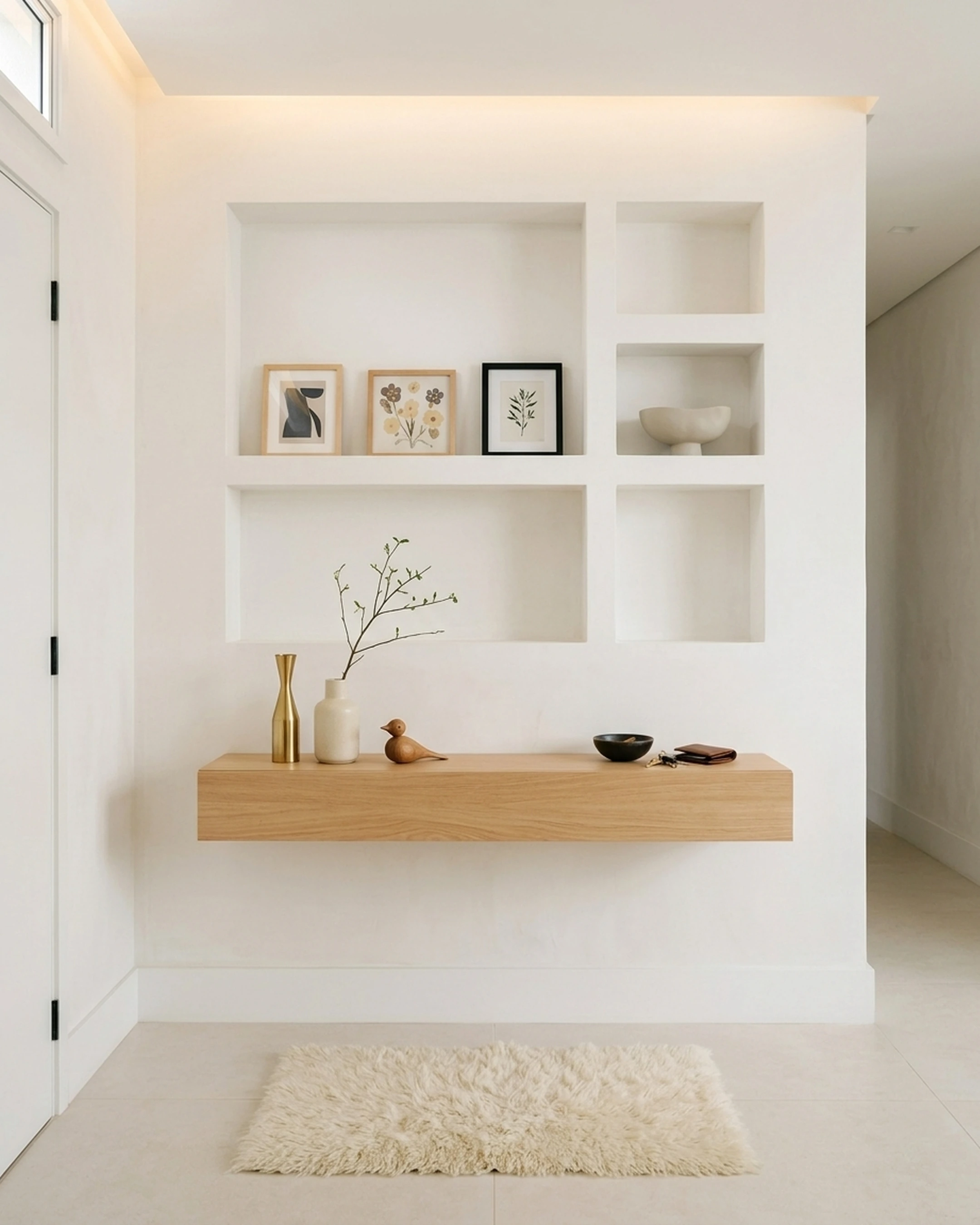
Most furniture apps solve half the job. They either show inspiration without a way to buy it, or they sell furniture without helping anyone decide what actually works together. Online shopping carts carry the consequence: the average documented cart-abandonment rate across ecommerce is 70.22%, and furniture, with its size, cost, and fit risk, is one of the categories most prone to that hesitation.
The furnishing job that goes undone usually has three shapes: a render that shows a beautiful room filled with furniture that does not exist anywhere to buy, a single-retailer catalog that forces every piece to match one house style, and a Pinterest board that never turns into a cart. First Chair is built to solve the third problem specifically, designing a complete room from a photo or a style description and attaching real, shoppable pieces to it instead of leaving that step for later.
1. First Chair
First Chair starts from a photo of a real room, or an image of a space someone loves, and a short description of the direction they want, something like "Scandi but Japandi" or "rustic but elegant." From there, it designs a full concept around the room's own layout, lighting, and budget, then attaches real pieces that can be bought right away. The output is not a moodboard to interpret later. It is a room plan with a sofa, a rug, lighting, and a side table that already exist and ship.
First Chair pulls across West Elm, CB2, Crate & Barrel, Pottery Barn, and Lulu & Georgia, plus brands shoppers have not met yet. A single concept can mix a performance-velvet sofa with a vintage-feeling rug and still be entirely buyable.
Key Features
- Learns a person's style from an uploaded room photo or inspiration image and a short style description.
- Designs around the actual room, factoring in layout, lighting, and stated budget rather than a generic template.
- Generates buyable concepts using real pieces, not renders of furniture that does not exist.
- Shows insider pricing next to standard retail price for most recommended pieces.
- Lets a human tastemaker refine the design on request, swapping a rug or trying a different sofa.
- Sources across 100+ brands, covering sofas, rugs, lighting, tables, storage, art, and accessories in one concept.
Why people choose First Chair
You don't need another catalog of furniture to scroll through. You've already got the inspiration. What you need is a clear direction and the confidence to commit. First Chair takes your actual room, your taste, and your budget, then pulls everything together into a cohesive concept with real pieces you can buy. No more trying to match a sofa from one retailer with a rug from another. No more beautiful renders you can't recreate. Just a room that finally feels pulled together, with insider pricing built in.
2. Wayfair
Wayfair suits shoppers who want to browse a large general catalog across every room and price point in one cart. Wayfair organizes products by room and style, offers on-site design experts at its physical locations, and lets shoppers take some pieces home the same day rather than waiting on shipping. Its mobile catalog spans more than 7 million products, which covers nearly any style, but also means sorting through a lot of unrelated inventory to find a cohesive set.
What It Does Well
Consider Wayfair when the plan is to compare a very large catalog across many styles and price points in one place. Wayfair groups verified product collections by room and style, which narrows a genuinely enormous catalog into browsable categories instead of one undifferentiated feed. Shoppers working from a clear style in mind can filter down relatively fast.
Key Features
- Wayfair Verified products organized by room and style.
- On-site design experts available at in-person locations.
- Same-day take-home available on select pieces at physical locations.
How it differs from First Chair: First Chair designs the room first and attaches pieces to that plan, rather than asking a shopper to sort millions of products into a cohesive set on their own.
3. IKEA
Start with IKEA when the space is small, the budget is tight, and the plan is to furnish most of a first apartment from one brand. IKEA's catalog is limited to its own house line, which keeps browsing simple but also means every piece in the room will carry the same visual language, for better or worse. The company also publishes inspiration content and designer stories alongside its product pages.
What It Does Well
IKEA suits shoppers with a small space, a firm budget, and a preference for consistency across pieces. A single-brand catalog removes a layer of decision fatigue: there is no need to compare finishes across competing retailers because everything is designed to sit within one aesthetic and one price tier.
Key Features
- Inspiring tips and ideas organized by room type.
- Designer stories tied to specific product lines.
- Product and collection showcases.
- Ideas for play, study, and work spaces.
How it differs from First Chair: First Chair pulls from more than 100 brands rather than one house label, so a room built around an IKEA-style budget sofa can still include a rug from Article or a sconce from Rejuvenation without the shopper hunting for the match themselves.
4. Houzz
Use Houzz Pro only when the job is a renovation or a professional design engagement, not furnishing one's own living room. Houzz Pro is built for construction and design professionals, with 3D renderings, estimates, proposals, invoicing, and project management bundled into seat-based subscriptions. That is a different buyer with a different job to do than someone trying to furnish a bedroom this weekend.
What It Does Well
Skip Houzz if the job is furnishing a personal space rather than running a professional design or construction practice. The platform bundles the back-office side of a design business, financial tools, client management, and proposal generation, into one connected system rather than requiring separate software for each function.
The professional-only feature set makes it a tool for running a design practice, not for buying furniture for one room.
Key Features
- 3D floor plans and estimates.
- Bid management and client selections.
- Built-in CRM for client relationships.
- Online payment collection.
- Integrations including QuickBooks, Gmail, Google Drive, and Zapier.
How it differs from First Chair: First Chair is built for someone furnishing their own space directly, not for a professional managing client projects and invoicing.
5. Chairish
Chairish is suited to rooms that need one specific vintage or one-of-a-kind piece rather than a full furniture set bought in one pass. Chairish is a curated marketplace, and listings go through curator review before they go live, with sellers keeping 80 percent of the final sale.
What It Does Well
Chairish handles payment, shipping, and returns for most sales, so logistics do not fall entirely on the buyer and seller to arrange independently.
The tradeoff is inventory depth for a full room: because each listing is a single seller's piece, Chairish's sourcing model is built around individual marketplace finds rather than assembling a full room plan, and availability depends entirely on what sellers currently have live.
Key Features
- Curated collections, including featured vintage and new-arrival sections.
- Search and browsing by furniture, art, lighting, décor, brand, style, room, and material.
- Seller listings reviewed by Chairish curators before publishing.
- Net pricing available for trade program members.
How it differs from First Chair: First Chair designs the full room first, pulling a complete set across brands like West Elm and Crate & Barrel, rather than starting from one listing and building outward.
6. Ashley Furniture & Décor
Pick Ashley Furniture & Décor when the plan includes financing a full room through in-store credit. The catalog spans living room through outdoor furniture, and the app supports order tracking, a wishlist, and financing tied to the Ashley Advantage Synchrony card.
What It Does Well
The catalog covers nearly every room category in one retailer, and in-store financing, including promotional terms through the Ashley Advantage Synchrony card, gives shoppers a way to spread out the cost of a full room at once.
The tradeoff is that the stronger financing terms are reserved for in-store purchases: special financing requires an in-store purchase with the Ashley Advantage Synchrony card at a participating location, and minimum purchase amounts or a down payment may apply.
Key Features
- Shop by room category.
- Order tracking and wishlist.
- Financing through the Ashley Advantage Synchrony card.
- Multiple delivery methods and a store locator.
How it differs from First Chair: First Chair shows the standard price next to member pricing directly in the app, rather than making affordability depend on financing terms tied to a specific purchase location.
7. Rooms To Go
Use Rooms To Go when the goal is to buy a pre-matched room set in one checkout. The retailer is organized around packaged rooms, living rooms, bedrooms, and dining rooms, rather than piece-by-piece browsing, with financing and delivery options built into checkout.
What It Does Well
Packaged sets solve the matching problem by construction: a shopper buying a dining set gets a table and chairs designed to work together without evaluating finishes separately.
The tradeoff is flexibility: swapping one chair or rug for a piece from a different brand generally is not part of the packaged-set experience, and specific pricing details are not published beyond the storefront itself.
Key Features
- Living room, bedroom, and dining room packages.
- Mattress and patio categories.
- Kids and teens furniture.
- Financing options at checkout.
How it differs from First Chair: First Chair starts from a room's own layout and light, then assembles pieces across brands, instead of locking a shopper into one retailer's pre-built set.
8. furniture.com
Use furniture.com's Dottie chat when searching for a specific piece by description instead of browsing by category. The "Dottie" AI chat lets shoppers type a request in plain language, and saved pieces can be collected into moodboards alongside standard category browsing.
What It Does Well
Natural-language search through Dottie can shortcut the filtering process for a shopper who already knows exactly what they want, something like a low mid-century credenza under a specific price, without clicking through multiple filter menus.
The tradeoff is that pricing and membership details are not published on the site, so there is no way to compare total cost structure before browsing individual products directly.
Key Features
- "Dottie" AI chat for furniture search.
- Category browsing by room, size, type, and brand.
- Saved pieces and moodboard creation.
- Standard shopping cart.
How it differs from First Chair: First Chair designs the whole room around a photo or a style description, not a single search query, and shows member pricing next to retail price for most suggested pieces.
9. Aosom
Use Aosom when furniture is one category inside a broader seasonal or outdoor shopping trip, not the main event. The storefront spans seasonal goods, outdoor furniture, home goods, office, pet supplies, toys, sports, and tools, with furniture folded into the broader home goods and outdoor sections rather than standing alone.
What It Does Well
Shoppers already buying outdoor or seasonal goods can pick up furniture in the same cart and the same checkout, without switching apps for a patio set or a storage piece.
The tradeoff is that furniture sits alongside unrelated categories rather than getting its own design guidance, and coupons apply at the account level rather than to any specific room plan.
Key Features
- Recent searches and saved account history.
- Coupons tied to a customer account.
- Address book for multiple delivery locations.
- Standard shopping cart and checkout.
How it differs from First Chair: First Chair starts from the room, not a category list, so every suggested piece is chosen to work with the others already in the space.
How Accurate Is Augmented-Reality Furniture Visualization?
Augmented-reality previews are useful for a rough size check, but independent testing has found a real gap between what an app shows and what arrives. Furniture and home décor are a fast-growing slice of this category, expected to post a 22.75% CAGR in the augmented-shopping market between 2026 and 2031, which is why more apps keep adding the feature.
The accuracy gap is documented, not theoretical. IKEA's original AR app claimed its 3D models were scaled with 98% accuracy, but that figure came from the retailer itself rather than independent verification. Pinterest's "Try in your space" feature lets shoppers place a pin's product virtually through their camera, a tool Apartment Therapy frames as a way to try in your space before committing, but like any AR tool it approximates scale rather than guaranteeing it.
What AR cannot do is tell a shopper whether a piece belongs with the rest of the room. That is a design question, not a measurement one. First Chair's room-level method is built to close that distance instead of trying to out-measure AR tools at their own job.
What to Check Before You Buy Furniture Through an App
Before checking out on any furniture shopping app, confirm four things: the delivery window, the return policy's fine print, whether reviews are for the specific SKU or the general product line, and whether the piece is actually available to ship, not just browsable.
A few habits save money and regret. Skip matched five-piece living room sets that lock every piece to one finish; buying separately almost always allows better proportions for the actual room. Skip rolled-arm sofas in a tight doorway or stairwell; track-arm or slim-arm designs can save four to six inches per side during the move-in. Favor furniture with visible legs in small rooms, since more visible floor reads as more space, and be wary of "small space" branded pieces from mass retailers, which sometimes trade durability for a narrower footprint.
Why First Chair Stands Out
Most of the apps above do one part of the job well: a deep catalog, a packaged set, a vintage find, a chat-based search. None of them start from the room itself and end with a finished, buyable plan the way First Chair does.
First Chair learns a person's taste from a photo, designs around the actual space, and shows real pieces from more than 100 brands with member pricing already visible. That is the confidence to commit, because the room on screen is the room that can actually arrive.
Furniture Shopping App FAQs
What's better than Wayfair?
No single app replaces Wayfair outright; the better choice depends on whether the job is browsing a large catalog or designing one specific room. Wayfair works well for comparing many styles in one place, but it leaves the matching and decision-making to the shopper. First Chair takes a different route by designing the room first, with real, buyable pieces attached, rather than handing over a catalog to sort through alone.
Is Wayfair or IKEA better for furniture shopping?
Neither is better outright; they serve different jobs. Wayfair aggregates many brands and styles into one large catalog, while IKEA sells only its own branded line at a consistent, budget-friendly price point. Neither assembles a complete room plan automatically, which is the specific problem First Chair's room-design method is built to solve.
What app lets you see furniture in your room before buying?
Several apps offer augmented-reality previews, including Wayfair's in-app AR tools and IKEA's camera-based placement feature, which let a shopper see an approximate scale of a product in their own space. These previews are useful for a rough size check but are not a substitute for a cohesive room design, which is a different problem that First Chair solves by designing the full room around a photo rather than one product at a time.
How do furniture shopping apps handle returns?
Return policies vary significantly by app and retailer.
Is there an app to compare furniture prices?
Yes, in a limited way: Chairish includes a price-comparison feature for similar vintage pieces sold on its marketplace, useful mainly for one-off secondhand pieces. For new furniture, First Chair shows the standard retail price next to member pricing directly inside the app, so the comparison is visible before checkout rather than requiring a separate search.
What is the best app for cheap furniture?
There is no single best app for cheap furniture, since cost depends on the category and the retailer. IKEA prices its own branded catalog at a consistent, budget-friendly level, but limits shoppers to one house line. For comparing cost without hunting for promo codes, First Chair shows member pricing next to standard retail price for most of its recommended pieces.
Can you design a whole room with a furniture shopping app?
Most furniture shopping apps do not design full rooms: they offer catalogs, packaged sets, or single-product AR previews. First Chair is built specifically to close that gap, starting from a photo or style description and attaching real, buyable pieces across sofas, rugs, lighting, and tables from more than 100 brands in one concept.
What app is best for secondhand furniture?
For secondhand furniture specifically, a dedicated vintage marketplace handles that sourcing job. First Chair is built for a different task: designing a full room using real, new pieces across more than 100 brands, so every suggested piece works with the others already in the space.
Which furniture shopping apps have the best ratings?
App-store ratings shift frequently and vary by platform, which makes them a weak signal for furniture shopping quality. A more reliable filter is matching the app to the job: First Chair for full-room design with buyable pieces, Chairish for curated vintage, Wayfair for broad catalog browsing, and IKEA for a consistent budget line.