
You've watched the house tour footage. You've paused on the foyer chandelier, the marble floors, the deep jewel-toned walls. You live in a 1,100-square-foot condo in Austin or a two-bedroom apartment in Chicago, and some part of your brain is quietly running the math on whether any of this translates.
It does. More than you'd expect.
Cardi B's Atlanta mansion, documented in detail by House Digest and Architectural Digest, spans approximately 22,000 square feet and was purchased for around $5.5 to $5.8 million. The property sits on roughly 5.8 to 6 acres and includes an 1,800-bottle wine cellar, a pool, and interconnected living areas designed for both scale and drama. None of that is the point. The point is the design logic underneath it: grand chandeliers that anchor a room, layered materials that create depth, bold color that signals intention, and open layouts that feel organized rather than empty. Those moves scale down. The budget does not have to.
This guide breaks down the specific design principles behind Cardi B's aesthetic and shows you how to apply them room by room, with real furniture, real materials, and real price points. You will learn:
- What makes her European-inspired glam style work at a structural level
- How to recreate the grand foyer effect without a grand foyer
- Which bold color choices deliver the most visual impact
- Where to spend and where to save on marble and metallic finishes
- How zone planning creates palatial scale in smaller open-plan spaces
- Which lighting decisions change a room's register faster than anything else
- How to build a curated art wall that reads as intentional rather than accumulated
- The most common mistakes people make when recreating celebrity interiors
Key Takeaways
- Cardi B's Atlanta mansion was purchased for approximately $5.5 to $5.8 million and spans around 22,000 square feet, but the underlying design principles, statement lighting, layered materials, bold color, and zone planning, apply at any scale.
- Interior painting is one of the highest-ROI home upgrades available to homeowners, with the NAR Remodeling Impact Report estimating a cost recovery of around 107%.
- Open-concept layouts are desired by over 86% of homebuyers, according to NAHB research, which means the spatial logic of celebrity homes is broadly applicable to modern residential design.
- Engineered quartz now accounts for about 32% of U.S. countertop demand, according to the Freedonia Group, because it reliably mimics marble at a fraction of the cost and maintenance burden.
- Over 60% of Millennials use social media as their primary inspiration source for furniture and decor purchases, per Furniture Today and Circana research, which is why celebrity home aesthetics have become a legitimate design reference point rather than a niche interest.
- The global home decor market is projected to reach $993 billion by 2030, driven largely by demand for aesthetic personalization and aspirational design at accessible price points, according to Grand View Research.
- Matched furniture sets are the fastest way to make a room look like a showroom floor. Layering different materials and textures within a shared palette is what creates the collected quality that makes celebrity interiors feel designed rather than assembled.
- A platform like First Chair can translate a specific celebrity aesthetic into a shoppable room plan built from real, in-stock pieces across multiple retailers, which solves the gap between inspiration and execution that stops most people from committing.
What Cardi B's Interior Design Style Actually Is
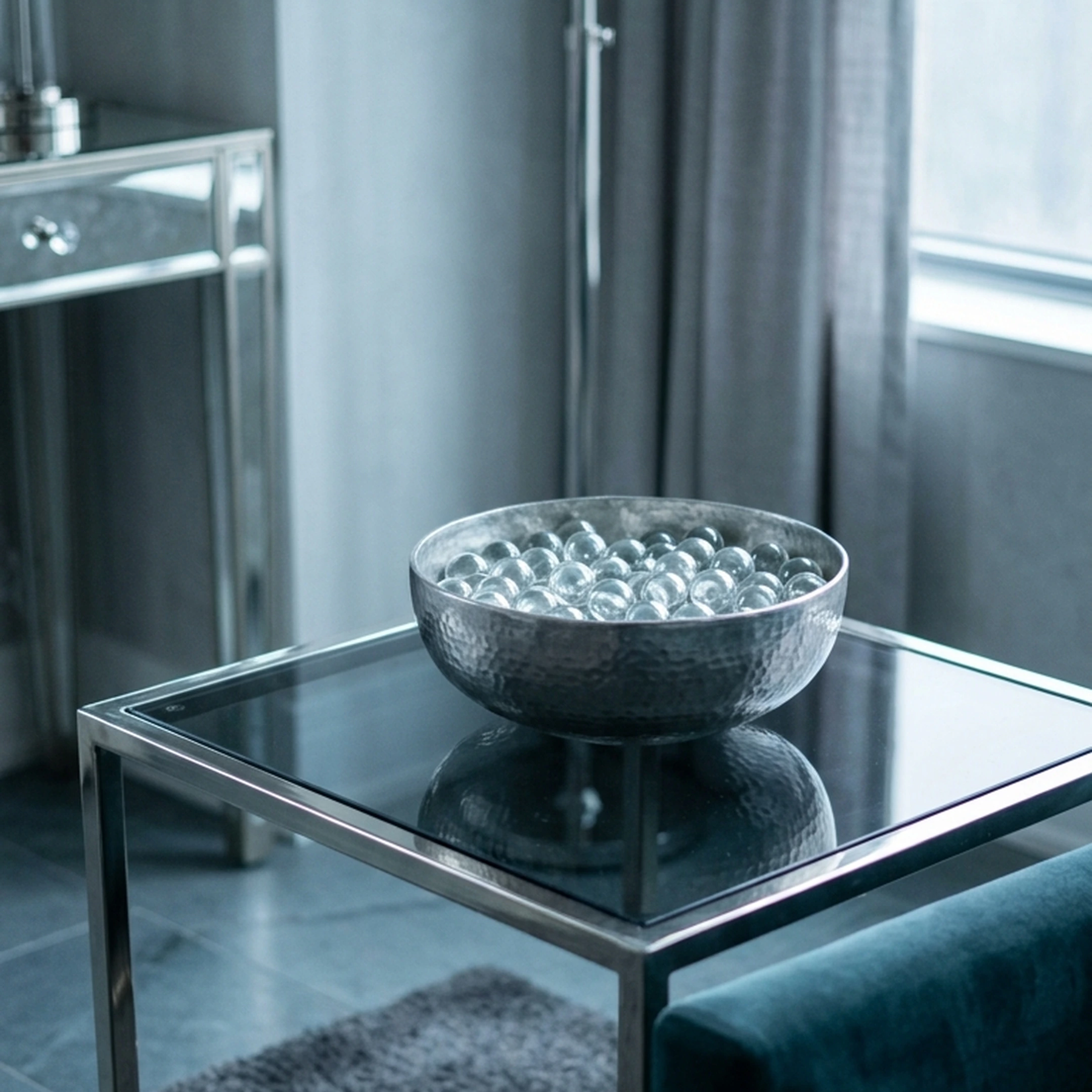
Cardi B's interior style is best described as European-inspired glam: a design approach that combines grand architectural details, ornate moldings, high ceilings, and layered luxury materials with bold American scale and personal maximalism. The effect is dramatic, intentional, and deeply personalized rather than generic luxury.
Her Atlanta home, as documented in house tour footage and covered extensively by Fancy Pants Homes, features custom chandeliers as central focal points, stone and marble floors, gold fixtures and metallic accents throughout the kitchen, ornate moldings that reference European manor architecture, and interconnected living areas designed for both scale and entertaining. Nothing in the space reads as coming from a single catalog. Stone floors sit beneath rich fabrics. Gold hardware contrasts with deep wall colors. That layered quality is what makes a room feel collected rather than assembled.
The distinction matters because layering is a technique, not a budget line. You can layer a $400 velvet chair with a $150 brass side table and a $200 marble-look tray and achieve the same visual logic that a $40,000 room uses. The principle is identical. The execution is what most people miss.
The Core Design Moves Behind the Look
These are the specific choices that create the Cardi B effect, regardless of room size or price point.
Design ElementWhat It DoesAccessible VersionGrand chandelierAnchors the room, signals intentionVisual Comfort or CB2 pendant, $300 to $900Marble surfacesAdds luxury texture and visual weightCaesarstone or Silestone quartz, marble-look porcelain tileGold and brass hardwareWarms the space, adds richnessRejuvenation or West Elm brass fixturesDeep jewel-tone wallsCreates drama and depthBenjamin Moore or Sherwin-Williams saturated paintOpen floor plan with zonesCreates flow and palatial scaleZone planning with rugs and furniture groupingsLayered textilesAdds warmth and dimensionVelvet, linen, and faux fur layered togetherCurated art wallPersonalizes the space, signals tasteMinted or Society6 prints with coordinated framingOrnate moldingsAdds architectural detail, European referencePaintable MDF molding panels, DIY installation
Why This Aesthetic Is Resonating Right Now
The timing of celebrity-inspired design as a serious reference point is not accidental. Several converging forces have made it both more visible and more achievable than at any previous moment.
Social media has fundamentally changed where design inspiration comes from. Over 60% of Millennials now use Instagram, Pinterest, and TikTok as their primary sources for furniture and decor decisions, according to Furniture Today and Circana research from 2022, overtaking traditional catalogs and showrooms entirely. Celebrity home tours, which once required a magazine feature or a television special, now circulate as YouTube videos and Instagram reels that millions of people watch in the same week they are furnishing their own apartments.
The materials landscape has also shifted dramatically in favor of the homeowner. Engineered stone now accounts for roughly 32% of U.S. countertop demand, according to the Freedonia Group, because quartz and porcelain technologies have reached a point where the visual difference between engineered and natural marble is minimal in a finished room. The same shift has happened in lighting, textiles, and hardware, where accessible premium brands have closed the gap between mass-market and true luxury in ways that were not possible a decade ago.
The broader market reflects this demand. The global home decor market was valued at approximately $697 billion in 2022 and is projected to reach $993 billion by 2030, according to Grand View Research, driven largely by rising demand for aesthetic personalization. U.S. homeowner improvement and repair spending reached $472 billion in 2022, up from $328 billion in 2019, according to the Harvard Joint Center for Housing Studies, as households invested more deliberately in interiors, kitchens, and living spaces.
The aspiration is real. The tools to execute it are more accessible than they have ever been.
How to Recreate the Grand Foyer Effect
A statement foyer is the single most impactful design move in Cardi B's home. The house tour footage shows a custom chandelier as the central focal point, with stone floors, ornate moldings, and a sense of vertical scale that immediately communicates intention. Most apartments and homes do not have a dedicated foyer. That does not mean you cannot create the same effect.
Lighting as the Primary Anchor
The chandelier is doing most of the work in any grand foyer. It draws the eye upward, establishes the room's personality, and signals that the space was designed rather than assembled. You do not need a custom fixture to achieve this. Visual Comfort and Co. produces designer-quality chandeliers at mid-range prices. CB2 carries sculptural pendants that read as statement pieces without the statement price.
The rule: pick one lighting fixture per room that you would be proud to point out to a guest. Let everything else support it. A single strong fixture surrounded by simpler elements reads as more confident than several competing pieces of equal visual weight.
Moldings and Wall Treatments
Ornate moldings are a signature of European-inspired interiors and one of the most cost-effective ways to add architectural detail to a flat wall. Paintable MDF molding panels are available at most home improvement retailers and can be installed over a weekend. Paint them the same color as the wall for a tonal, sophisticated look, or go slightly lighter for contrast. This is the kind of move that reads as expensive and is not.
For entryways specifically, consider a combination of wainscoting below and a bold paint color or wallpaper above. Graham and Brown and Cole and Son both produce high-impact statement wallpapers with metallic, bold, or graphic motifs that work well in transitional spaces where you want immediate visual impact.
Flooring That Commands Attention
Large-format stone-look porcelain tile creates the same visual effect as natural marble at a fraction of the cost and with far less maintenance. For entryways and foyers, the investment is worth concentrating here. The floor is the first thing people register and the last thing they consciously analyze. Get it right and the rest of the room benefits from the foundation.
Bold Color Palettes and Statement Walls
Bold color is central to Cardi B's aesthetic. Deep jewel tones, rich neutrals, and high-contrast combinations appear throughout her properties. The effect is dramatic without feeling chaotic because the bold choices are always grounded in a controlled foundation of neutral furniture and consistent metallic accents.
Interior painting is one of the highest-ROI home upgrades a homeowner can make, with the NAR Remodeling Impact Report estimating a cost recovery of around 107%. It is also the fastest way to shift a room's entire personality without structural changes.
Choosing the Right Bold Color
The mistake most people make with bold color is going too safe. A muted dusty blue reads as cautious. A deep navy or forest green reads as intentional. The difference is commitment, not cost.
Benjamin Moore's Newburyport Blue, Sherwin-Williams' Tricorn Black, and Benjamin Moore's Black Raspberry are all colors that appear in high-end interiors and work as statement walls or full-room treatments. Pair any of them with warm metallics and natural textures and the room immediately shifts register. The key is that the bold color should feel chosen, not defaulted to.
Statement Wall vs. Full-Room Treatment
A single statement wall works well in smaller rooms where a full-room treatment might feel overwhelming. In larger rooms, a full-room treatment in a deep color creates the enveloping, cocoon-like quality that makes celebrity interiors feel so distinct from standard residential design.
If you are unsure, start with the wall behind the sofa or the bed. It is the most visible surface in the room and the one that photographs best, which matters when you are using the space as a reference point for future decisions. Once you see how a deep color reads in your specific light conditions, the decision about whether to extend it becomes much clearer.
Marble, Gold, and Metallic Finishes on a Real Budget
Marble and gold are the material signatures of Cardi B's interior style. Her kitchens feature gold fixtures and accents throughout, and her surfaces lean heavily on stone and marble-look materials. The materials landscape has shifted dramatically in favor of the homeowner in recent years.
Engineered quartz now accounts for roughly 32% of U.S. countertop demand, according to the Freedonia Group, precisely because it delivers the visual quality of marble without the porosity, maintenance, or cost. Caesarstone and Silestone both produce marble-look quartz collections that read as genuinely luxurious in person. Dekton, Cosentino's ultra-compact surface line, works well for dramatic stone-like wall features and countertops in high-traffic kitchens.
Where to Spend and Where to Save on Surfaces
The surfaces people touch and see up close are where material quality is most legible. Countertops, backsplashes, and bathroom vanities are worth concentrating budget on. These are the places where the difference between engineered and natural stone is least visible and where the durability advantage of engineered stone is most practically valuable.
Save on flooring by using large-format porcelain tile in a marble or stone look. From a standing distance, the difference between porcelain and natural stone is minimal. The maintenance difference is significant. For a Cardi-inspired kitchen or bathroom, this combination, quality quartz counters with porcelain tile floors, delivers the visual effect at a fraction of the cost of natural stone throughout.
Metallics: Brass Over Chrome
Warm metallics read as more intentional and more current than cool chrome in most residential contexts. Rejuvenation, West Elm, and CB2 all carry brass and aged-brass hardware at accessible price points. The rule for metallics is simple: pick one finish and use it consistently across a room. Mixed metals can work, but it requires a confident hand and a clear hierarchy. For most homeowners, consistency is the safer and more effective choice.
Open Floor Plans and Zone Planning for Spacious Living
Open-concept layouts are desired by over 86% of homebuyers, according to NAHB research, and Cardi B's Atlanta home uses interconnected living areas to create a sense of palatial scale. The challenge for most homeowners is that open plans can feel empty or undefined without the right spatial strategy.
Zone planning is the solution. It is an interior layout strategy that divides open spaces into functional areas using rugs, furniture placement, and lighting rather than walls. A well-executed open plan has a conversation zone, a media zone, and potentially a dining or bar zone, each clearly defined but visually connected.
How to Define Zones Without Walls
The area rug is the most important tool in zone planning. A large rug anchors a seating group and signals where one zone ends and another begins. In a Cardi-inspired living room, that rug should be substantial, ideally 9x12 or larger, with a texture that adds warmth: a high-pile wool, a flatweave with visual interest, or a patterned design that picks up the room's color palette.
Furniture placement does the rest. A sofa with its back to the room creates a natural boundary. A console table behind the sofa reinforces it. Lighting placed within each zone completes the definition: a floor lamp in the reading corner, a pendant over the dining table, a chandelier in the main seating area.
Large Kitchen Islands and Pantry Storage
Large kitchen islands are considered essential or desirable by about 80% of buyers, and walk-in pantries by over 80%, according to NAHB consumer preference data. These are the kitchen features that appear most consistently in celebrity homes and that homeowners most want to replicate.
If a full kitchen remodel is not in the budget, a freestanding kitchen island from CB2 or West Elm can add both function and visual weight to an existing kitchen. Pair it with brass pendant lighting above and the effect is significantly more elevated than the individual pieces would suggest in isolation.
Glamorous Lighting: The Fastest Way to Elevate Any Room
Lighting is the most underestimated design element in residential interiors and the one where a single well-chosen piece can shift an entire room's register. Cardi B's homes use layered lighting throughout, combining central chandeliers with wall sconces, cove lighting, and accent pieces to create depth and drama.
The American Society of Interior Designers recommends a three-layer approach: ambient lighting for general illumination, task lighting for functional areas, and accent lighting for art and architectural features. In a glam interior, this translates to a chandelier as the ambient anchor, sconces or table lamps for warmth, and directed accent lights for art or shelving.
Smart Lighting for Dramatic Effect
Smart lighting systems from Philips Hue and Lutron Caséta allow homeowners to program lighting scenes that shift the room's mood from bright and functional to warm and atmospheric. U.S. smart home revenue exceeded $29 billion in 2023, according to the Consumer Technology Association, with lighting among the top adoption categories. This is one of the most practical ways to replicate the dramatic quality of celebrity interiors without structural changes.
For a Cardi-inspired living room, program an evening scene that dims the overhead chandelier to around 30%, activates warm sconces, and adds a soft glow to any accent lighting. The room transforms without moving a single piece of furniture.
Lighting Fixtures Worth the Investment
Some fixture categories deliver a visible return on a genuine splurge. Others perform well at mid-range prices. The distinction matters when you are allocating a limited budget.
Fixture CategoryInvestment LevelWhyEntry and foyer chandelierSplurgeFirst thing guests see; sets the room's entire registerDining pendantsSplurgeAlways in the sightline; hang directly over the tableBathroom vanity sconcesSplurgeFlank the mirror; affect both function and feelBedroom table lampsMid-rangeSupporting role; warmth matters more than dramaLiving room floor lampsMid-rangeZone definition; Lumens or CB2 perform wellCloset and utility lightingSaveFunctional only; no visual impact on the room
For all secondary fixtures, mid-range options from Lumens or CB2 perform well and allow the budget to concentrate where it matters most.
Custom Art Collections and Gallery Walls
Personalized art is one of the defining features of celebrity interiors. It signals that the space was curated by someone with a point of view, not assembled from a single retailer's catalog. A gallery wall is the most accessible version of this approach, and the key is curation over quantity.
A well-edited collection of five to seven pieces in a cohesive color palette reads as intentional. Fifteen mismatched frames reads as accumulation. The distinction is not about spending more. It is about editing more ruthlessly.
Building a Cohesive Art Collection on a Budget
Minted offers curated prints from independent artists with custom framing options that allow you to coordinate across pieces. Society6 is a strong source for affordable prints across a wide range of styles and scales. Etsy carries custom neon signs, typography art, and portrait prints that add personality and scale to a Cardi-inspired space.
The framing matters as much as the art. Consistent frame finishes, all black, all natural wood, or all gold, create cohesion across disparate pieces. If the frames match, the art can vary significantly in subject and style without the wall feeling chaotic.
Placement and Scale
The most common gallery wall mistake is hanging pieces too small and too high. Art should feel connected to the furniture below it, generally hanging so the center of the arrangement sits at eye level, around 57 to 60 inches from the floor. In a Cardi-inspired space, scale up. One large anchor piece flanked by smaller works reads as more confident than a grid of small frames at equal weight.
Tools and Platforms for Executing the Look
Translating a celebrity aesthetic into a real, buyable room requires the right combination of design guidance, product discovery, and purchasing tools. The landscape breaks into several distinct categories.
AI-Assisted Design and Shopping Platforms
This category bridges inspiration and execution by generating room concepts from uploaded images and connecting them to real, purchasable furniture.
First Chair is built specifically for this problem. You can upload a photo of Cardi B's living room, or any room that captures the aesthetic you are after, and receive a curated room concept built from real, in-stock furniture and decor you can actually purchase. Every recommendation is grounded in pieces that exist, not renders of furniture that does not. First Chair pulls across West Elm, CB2, Crate and Barrel, Pottery Barn, Lulu and Georgia, and other retailers, which matters when the right room rarely comes from a single catalog. A Cardi-inspired living room might combine a velvet sectional from one retailer, a brass chandelier from another, and a marble-look coffee table from a third. First Chair finds those combinations and shows you how they work together before you commit. Member pricing is built into most recommendations, without the promo-code hunt.
Other platforms in this category include Havenly, which offers flat-fee e-design for single rooms, and Decorist, which provides curated shopping lists with designer guidance.
Accessible Premium Furniture Retailers
These retailers occupy the space between mass-market and true luxury, offering design-forward pieces at mid-range prices.
- West Elm: Modern and glam-inspired pieces with metallic accents, velvet sofas, and marble-look tables
- CB2: Crate and Barrel's more fashion-forward line, with bold sculptural lighting and edgy glam furnishings
- Lulu and Georgia: Strong on rugs, textiles, and decorative accessories with a collected, editorial feel
- Pottery Barn: Reliable for upholstered pieces, lighting, and storage with a warmer, more traditional glam sensibility
- Anthropologie Home: Strong for decorative accessories, textiles, and one-of-a-kind accent pieces
Surfaces and Materials
For marble-look surfaces specifically, Caesarstone and Silestone are the two most widely used engineered quartz brands in residential design. Both produce veined collections that read as genuinely luxurious in person. Dekton works well for dramatic stone-like wall features and high-traffic countertops.
For marble-look flooring, large-format porcelain tile from most major tile retailers delivers the visual effect at a fraction of natural stone cost.
Lighting Specialists
- Visual Comfort and Co.: High-style lighting with designer collaborations; used in aspirational and luxury projects
- Lumens: Wide spectrum of chandeliers, pendants, and sconces at various price points
- Philips Hue and Lutron Caséta: Smart lighting systems for programmable mood and drama
Art and Wall Decor
- Minted: Curated independent artists with custom framing and color-palette coordination
- Society6: Affordable prints across a wide range of styles and scales
- Etsy: Custom neon signs, typography art, and portrait prints for personality and scale
Best Practices for Recreating Celebrity Glam at Any Budget
These practices come from recognized interior design guidance and the specific logic of Cardi B's aesthetic.
- Anchor each room with one statement piece before buying anything else. A grand chandelier, a velvet sectional, or a dramatic art piece should be the first decision in any room. Everything else supports it. Buying supporting pieces first and then trying to find an anchor leads to rooms that feel assembled rather than designed.
- Use interior paint as your highest-leverage tool. The Report estimates a cost recovery of around 107% for interior painting, making it the single most financially sound aesthetic upgrade available. A deep jewel tone on the right wall changes a room's entire register for under $200.
- Layer three types of lighting in every room. Ambient, task, and accent lighting working together create the depth and drama that makes celebrity interiors feel so distinct. A chandelier alone is not enough. Add sconces, table lamps, and directed accent lights to complete the effect.
- Spend on visible surfaces and save on hidden ones. Countertops, backsplashes, and bathroom vanities are where material quality is most legible. Floors and secondary surfaces can use engineered alternatives without visible compromise.
- Choose one metallic finish and use it consistently. Brass, aged brass, or gold throughout a room reads as intentional. Mixed metals require a confident hierarchy that most rooms do not have. Consistency is the safer and more effective default.
- Define zones in open plans before buying furniture. Decide where the conversation zone, media zone, and dining zone sit before purchasing a single piece. The rug goes first. The furniture follows the rug. Lighting completes each zone. Reversing this order leads to rooms that feel undefined regardless of how good the individual pieces are.
- Curate art rather than accumulate it. Five to seven pieces in a cohesive color palette with consistent framing reads as a collection. Fifteen pieces with mismatched frames reads as a wall covered in things. Edit before you hang.
- Plan lighting before furniture, not after. Know where the chandelier goes, where the sconces will sit, and how the room will be lit at 8pm before you commit to a sofa color. Lighting affects how every other material and color reads in the room.
Common Mistakes When Recreating Celebrity Interiors
Most attempts to recreate a celebrity aesthetic fall short not because of budget but because of avoidable execution errors.
- Buying pieces individually without a room plan. A sofa that looks perfect in isolation can kill a room's proportions. A chandelier that photographs beautifully can be the wrong scale for your ceiling height. The furniture mismatch cost statistics on the First Chair blog document how common and how costly this pattern is. Build the plan first. Buy second.
- Scaling down the wrong elements. Celebrity interiors work at scale. When homeowners try to recreate them in smaller spaces, the instinct is to scale everything down proportionally. This is the wrong approach. Scale down the number of pieces, not the size of each piece. One large sofa reads better in a small room than two small sofas. One substantial chandelier reads better than three small pendants.
- Matching instead of layering. Matched furniture sets are the fastest way to make a room look like a showroom floor. Mix a velvet sofa with a linen chair. Pair a marble coffee table with a wood side table. The contrast creates the collected quality that makes a room feel designed. For more on this, the stop overwhelming yourself with furniture options guide covers the decision framework in detail.
- Ignoring lighting until the end. Lighting is almost always the last thing homeowners address and the first thing that would have changed everything. Plan it before the furniture, not after.
- Choosing bold color without a neutral foundation. Bold colors work best against a controlled neutral foundation in large furniture and floors. A deep navy wall with a navy sofa and a navy rug creates visual fatigue. The same wall with a cream sofa and natural wood floors creates drama.
- Underestimating the impact of hardware. Cabinet hardware, door handles, and plumbing fixtures are small individually and transformative collectively. Replacing builder-grade chrome hardware with brass throughout a kitchen costs a few hundred dollars and changes the room's entire material story.
- Hanging art too small and too high. Art that is too small for the wall it occupies reads as an afterthought. Art hung too high loses its connection to the furniture below it. Scale up and bring it down. The center of any arrangement should sit at roughly eye level, around 57 to 60 inches from the floor.
- Treating the foyer as an afterthought. The foyer or entry sets the expectation for the entire home. A statement light fixture, a bold wall treatment, and one strong piece of furniture or art in the entry changes how every subsequent room reads. It is the highest-leverage space in any home for first impressions.
How First Chair Helps You Execute the Look
The gap between inspiration and execution is where most people get stuck. You know you want the warm metallics, the velvet sofa, the statement chandelier. You do not know which specific pieces work together, where to find them across multiple retailers, or how to avoid spending $4,000 on a sofa that looks wrong in your actual apartment.
First Chair is built to close that gap. Upload a photo of Cardi B's living room or any room that captures the aesthetic you are after, describe the direction you want, and receive a curated room concept built from real, in-stock pieces you can actually purchase. The platform pulls across West Elm, CB2, Crate and Barrel, Pottery Barn, Lulu and Georgia, and other retailers, finding combinations that work together before you commit to any of them individually.
For homeowners who want the glam aesthetic but need help narrowing the field, the experience acts like a trusted friend with excellent taste: validating the instinct, recommending the specific pieces, and helping you commit with confidence. You can also explore apps for designing your apartment to understand the broader landscape of tools available before deciding which approach fits your workflow.
Frequently Asked Questions
What is Cardi B's interior design style called?
Cardi B's interior style is best described as European-inspired glam or Old World luxury with a bold, maximalist sensibility. It combines grand architectural details like ornate moldings and high ceilings with layered materials including marble, gold metallics, and rich textiles. The overall effect is dramatic, intentional, and deeply personalized rather than generically luxurious.
How much did Cardi B's Atlanta house cost?
Cardi B and Offset's Atlanta mansion in Sandy Springs was purchased for approximately $5.5 to $5.8 million around late 2019 and early 2020. The property spans an estimated 22,000 square feet with 5 bedrooms, 7 full bathrooms, and 4 half bathrooms, set on approximately 5.8 to 6 acres of land, and includes an 1,800-bottle wine cellar and pool.
What are the most affordable ways to get a glam celebrity interior look?
Interior painting delivers one of the highest returns of any home upgrade, with the NAR estimating around 107% cost recovery. Combining a bold wall color with brass hardware, a statement light fixture, and layered textiles creates the core of a glam aesthetic without a major renovation budget. Engineered quartz countertops and marble-look porcelain tile extend the look to kitchens and bathrooms at accessible price points.
How do I make an open floor plan feel more like a celebrity home?
Zone planning is the key technique. Use large area rugs to anchor each functional area, position furniture to create natural boundaries between zones, and use lighting to define each space within the larger room. A conversation zone, a media zone, and a dining or entertaining zone, each clearly lit and anchored by a rug, creates the organized grandeur of celebrity open-plan interiors at any scale.
What is the single highest-impact change I can make to get closer to the Cardi B aesthetic?
Lighting. A single statement chandelier in the main living space or entry changes a room's register faster than any other individual purchase. It draws the eye upward, establishes the room's personality, and signals that the space was designed rather than assembled. Pair it with a bold wall color and consistent brass hardware and the room shifts significantly without touching the furniture.
Can I recreate this look in a rental apartment?
Yes, with some constraints. Paint requires landlord approval in most rentals, but peel-and-stick wallpaper, removable molding panels, and consistent hardware swaps (which can be reversed on move-out) deliver significant visual impact without permanent changes. Lighting fixtures can be swapped and stored. Area rugs, textiles, and art require no permission at all. The zone planning and layering principles apply regardless of whether you own or rent.
Conclusion: From Inspiration to a Room You Can Actually Live In
Cardi B's homes work because they commit to a clear design logic: statement lighting that anchors each room, layered materials that create depth, bold color that signals intention, and open layouts organized by zones rather than walls. None of those moves require a $5.8 million budget. They require understanding why each choice works and where to find the right version of it for your space.
The home decor market has shifted decisively in favor of the homeowner. Engineered materials, accessible premium retailers, and smart lighting systems have closed the gap between celebrity interiors and what is achievable at mid-range budgets. The design logic was always transferable. The materials to execute it are now genuinely accessible.
The remaining gap is execution. Knowing which specific pieces work together, where to source them across multiple retailers, and how to commit without second-guessing every decision. That is exactly what First Chair is built for. Upload your inspiration, describe your direction, and get a shoppable room plan built from pieces that actually exist. Start with your room.