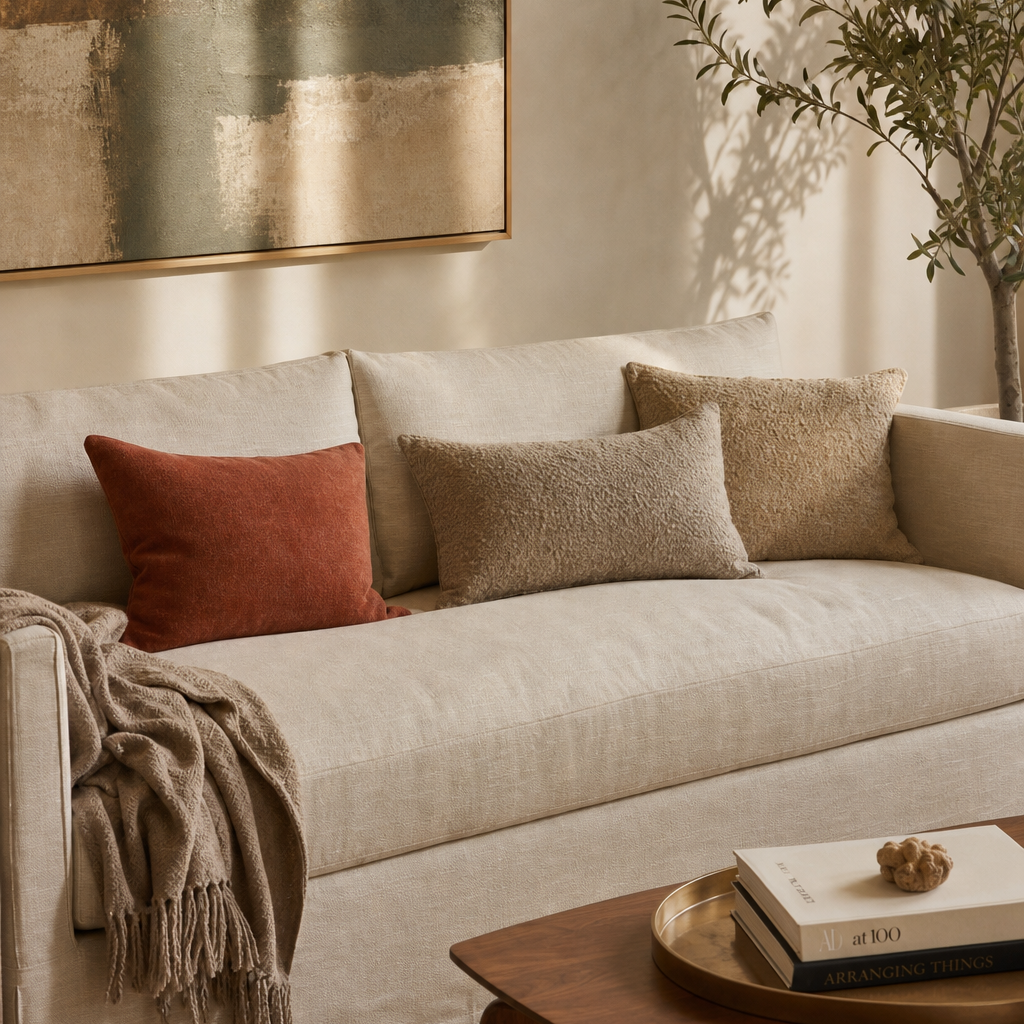

Walk through any design forum right now and a pattern emerges quickly. The interiors people keep saving are not ornate or maximalist. They are spare, considered, and quietly capable. Musk's known residences have become shorthand for a specific kind of modern living: open volumes, neutral material palettes, and systems that work without being visible. His former Bel Air estates, documented by Architectural Digest, and the now-widely-covered prefabricated home in Boca Chica, Texas, represent two ends of the same design philosophy. One is large-scale and architecturally ambitious. The other is a radical edit down to what is actually necessary. Both share the same underlying logic.
The good news for homeowners working with real budgets and real floor plans is that the principles behind these spaces are not locked behind a nine-figure net worth. Most of what makes a Musk-style interior feel the way it does comes down to layout decisions, material choices, and technology integration that mid-to-high income homeowners can realistically pursue. The aesthetic is not about expensive finishes. It is about editing aggressively, choosing systems that integrate cleanly, and selecting materials that are honest about what they are.
This guide covers each of those dimensions with grounded sourcing, practical vendor recommendations, and honest guidance on where to start and what to skip. The goal is not to replicate a billionaire's home. It is to extract the principles that actually translate and apply them to spaces where people live.
What you will learn in this guide:
- The core minimalist principles that define Musk-style interiors and how to apply them without over-stripping a room
- How to zone an open floor plan so it feels intentional rather than undefined
- How to choose a smart home platform and build around it rather than accumulating disconnected devices
- Which sustainable materials align with both the aesthetic and the environmental brief
- How to sequence energy upgrades for the best return on investment
- The furniture and decor decisions that make a minimalist room feel collected rather than bare
- The most common mistakes in high-tech minimalist projects and how to avoid them
Key Takeaways
- Musk-style interiors are defined by open floor plans, minimal ornamentation, integrated smart systems, and sustainable materials, not by expensive finishes alone.
- 68% of new single-family homes completed in 2022 featured a partially or fully open kitchen-living configuration, confirming this layout direction is mainstream demand, not a niche preference (NAHB, Characteristics of New Housing 2023).
- The global smart home market was valued at approximately $80 billion in 2022 and is forecast to reach $135-140 billion by 2026, driven by security, energy management, and entertainment applications (Statista, Global Smart Home Report 2023).
- LEED-certified buildings typically use 25-30% less energy than comparable non-certified buildings (U.S. Green Building Council, Benefits of Green Building).
- LED lighting uses at least 75% less energy than incandescent alternatives and lasts up to 25 times longer (U.S. Department of Energy, LED Basics).
- The single most damaging mistake in smart home projects is buying devices before selecting a unified platform, which leads to fragmentation and underuse.
- A minimalist room fails most often at the accessory level, not the furniture level. The edit is about removing what is unnecessary, not what is functional.
- First Chair can help identify real, shoppable furniture that fits a minimalist, tech-forward aesthetic without requiring you to sort through hundreds of options across multiple retailers.
Minimalist Interior Design Principles from Tech Billionaire Homes

Minimalist interior design is a philosophy that prioritizes simplicity, clean lines, limited color palettes, and reduced ornamentation to create calm, functional spaces where every element earns its place.
In practice, this means fewer pieces doing more work, surfaces that stay clear, and storage that disappears into the architecture. Musk's former Bel Air properties, as documented by Architectural Digest, consistently featured this approach: large open volumes, neutral material palettes, and an absence of decorative clutter. The effect reads as expensive because it is edited, not because the individual pieces are necessarily rare or custom.
The Three Principles Worth Adopting
Three principles translate most directly to real renovation projects, regardless of budget or scale.
Reduce the number of materials. Limit your palette to two or three primary materials throughout a space. Concrete, warm wood, and matte metal is a reliable combination. Mixing too many finishes is what makes a room feel assembled rather than designed. The discipline is in the restriction.
Treat storage as architecture. Built-in cabinetry, recessed shelving, and furniture with integrated storage keep surfaces clear without requiring daily discipline. The room looks minimal because there is nowhere for clutter to accumulate visibly. This is a design decision, not a lifestyle one.
Choose silhouettes over ornamentation. A sofa with a strong, clean profile reads as intentional even in a sparse room. Decorative details on furniture tend to age poorly and compete with each other in minimalist spaces. The shape is the statement.
What to Skip
Skip the matched furniture set. Rooms furnished from a single collection tend to look staged rather than lived in. A minimalist room benefits from pieces that share a material language but come from different sources. This is exactly the problem that multi-retailer design tools are built to solve: finding pieces that work together without being stamped by the same catalog.
Also skip ultra-thin, sharp-edged silhouettes if your space already feels cold. Softer profiles in warmer woods tend to age better in minimalist interiors and feel more livable day-to-day. The sharper, more severe versions of mid-century modern work in photographs. They are harder to live with.
Why Musk-Style Design Aligns with Broader Market Trends
This aesthetic is not a niche preference. It maps directly onto where mainstream residential design and technology adoption are heading, which is part of why it has become such a persistent reference point.
Layout preferences have shifted measurably. 68% of new single-family homes completed in 2022 featured a partially or fully open kitchen-living configuration, per NAHB's Characteristics of New Housing report. That number reflects genuine consumer demand, not just builder defaults.
Smart home adoption is accelerating at the platform level. Gartner's analysis of consumer IoT documents a clear shift from individual gadget purchases toward integrated platform ecosystems. Buyers increasingly expect security, lighting, climate, and energy systems to work together under a unified interface. That expectation is exactly what Musk-style homes are designed around.
Sustainability is moving from optional to expected. The U.S. Green Building Council reports over 108,000 LEED-certified residential units worldwide as of 2023, up from approximately 40,000 in 2015. Many U.S. jurisdictions have also tightened energy codes under the International Energy Conservation Code 2021, pushing builders toward better insulation, high-efficiency windows, and more efficient HVAC and lighting systems.
The convergence of these three trends means that adapting Musk-style principles is not about chasing a celebrity aesthetic. It is about building toward where residential design, technology, and regulation are already heading.
Open Floor Plans and Efficient Space Utilization Strategies
An open floor plan is a layout that reduces interior walls and partitions to create large, contiguous spaces, typically combining kitchen, dining, and living areas into a single connected zone.
This is the single most consistent architectural feature across Musk's known residences. The Boca Chica prefabricated home and the former Bel Air estates both reflect the same spatial logic: fewer walls, more volume, stronger indoor-outdoor connection.
Multi-Use Spaces and Efficient Layouts
Musk's reported interest in prefabricated micro-homes reflects a broader principle: efficient layouts force intentional design. Every square foot has to earn its place. That constraint produces better rooms than unlimited space usually does.
For homeowners working with existing layouts, this translates to three practical moves:
- Identify underused square footage (formal dining rooms, oversized hallways, unused guest rooms) and convert it to flexible-use space
- Choose furniture scaled to the actual room, not the room you wish you had
- Treat vertical space as storage rather than leaving walls bare
If you are furnishing a smaller apartment with these principles in mind, the furniture guide for small city apartments covers scale and proportion in practical detail.
Smart Home Technology Integration for Modern Living Spaces
A smart home is a residence equipped with networked devices and systems, including lighting, HVAC, security, entertainment, and appliances, that can be monitored and controlled remotely or automatically for comfort, efficiency, and security.
This is the category most directly associated with Musk's public persona and his companies. It is also the category where homeowners most frequently overspend and underdeliver. The global smart home market was valued at approximately $80 billion in 2022, with forecasts to reach $135-140 billion by 2026 (Statista, Global Smart Home Report 2023). That growth reflects falling device costs and improved interoperability, not just novelty.
Choosing a Platform First
The single most important decision in a smart home project is platform selection. Everything else follows from it. Mixing platforms creates fragmentation that Forrester identifies as the primary driver of smart home underuse among affluent consumers.
PlatformBest ForKey StrengthAmazon AlexaBroad device compatibilityLargest third-party ecosystemGoogle HomeNest device integrationStrong HVAC and energy managementApple HomeKitPrivacy-focused householdsLocal processing, strong encryptionHome AssistantAdvanced custom automationOpen-source, maximum flexibility
Pick one and build around it. The platform decision is more consequential than any individual device purchase.
Lighting and Climate as the Starting Point
Smart lighting and thermostat control deliver the most immediate, visible impact for the investment. Properly used smart thermostats deliver average heating and cooling savings of approximately 8%, per the U.S. EPA's ENERGY STAR program. LED lighting uses at least 75% less energy than incandescent alternatives and lasts up to 25 times longer, per the U.S. Department of Energy.
For a minimalist aesthetic, Lutron's Caséta and RA3 systems are worth the premium. They support motorized shades, which do more for the look and feel of a room than almost any other single upgrade, and they integrate cleanly with all major platforms. Philips Hue works well for color-tunable accent lighting in spaces where you want to shift the mood without changing fixtures.
Security and Access Control
Home security technology has reached meaningful consumer penetration. 39% of U.S. broadband households own at least one smart home security device, with video doorbells and networked cameras among the fastest-growing categories (Parks Associates, Smart Home Device Ownership 2023). For a Musk-inspired home, the goal is robust coverage with minimal visual intrusion. Arlo's wire-free cameras and August smart locks both integrate with major platforms and avoid the bulky hardware aesthetic of older security systems.
Network Infrastructure: The Step Most People Skip
Poor Wi-Fi coverage is the most common failure point in smart home projects. A mesh Wi-Fi system (Eero, Google Nest WiFi Pro, or Ubiquiti for more advanced setups) is not optional if you are running more than a handful of connected devices. Plan the network before purchasing devices, not after. The infrastructure is invisible when it works and catastrophic when it does not.
Sustainable and Eco-Friendly Building Materials in Luxury Homes
Sustainable building materials are materials that are resource-efficient, low-emission, and often recyclable or renewable, including FSC-certified wood, recycled steel, and low-carbon concrete.
Building materials account for roughly 10% of global CO2 emissions, with concrete and steel as primary contributors, per McKinsey's analysis of the construction sector. The market response has been strong growth in low-carbon cement, recycled steel, and bio-based alternatives. For homeowners, this translates to three practical material categories.
Material Choices That Align with Minimalist Aesthetics
The overlap between sustainable materials and minimalist design is significant. Many of the materials that perform well environmentally also look the way a Musk-inspired interior should look: warm, honest, and undecorated.
FSC-certified hardwood flooring provides verified sustainable sourcing and ages well in open-plan spaces. Wide-plank formats in natural or lightly oiled finishes read as considered rather than trendy. The Forest Stewardship Council certification verifies the supply chain, which matters if sustainability is a genuine priority rather than a marketing claim.
Low-VOC paints and finishes are now standard across Benjamin Moore's Natura line and Sherwin-Williams' Harmony collection. Indoor air pollutant levels can be 2-5 times higher than outdoor levels, with VOCs from paints and finishes as a notable contributor (U.S. EPA, Indoor Air Quality). In a tightly sealed, energy-efficient home, this matters more than it does in older, leakier construction.
Recycled steel and concrete in structural or decorative applications (exposed beams, polished concrete floors) align with both the sustainability brief and the industrial-minimal aesthetic associated with Musk's design sensibility. These materials are honest about what they are, which is exactly what minimalist design requires.
LEED Certification as a Framework
The U.S. Green Building Council's LEED (Leadership in Energy and Environmental Design) certification system rates buildings on energy, water, materials, indoor environmental quality, and site impacts. There were over 108,000 LEED-certified residential units worldwide as of 2023, up from approximately 40,000 in 2015. LEED-certified buildings typically use 25-30% less energy than comparable non-certified buildings.
You do not need to pursue formal certification to use LEED as a checklist. The framework identifies the highest-impact categories and helps prioritize renovation decisions across a project.
Energy Systems: Solar, Batteries, and Home Energy Management
The energy dimension of Musk-style homes is the most directly connected to his public companies. Tesla's Solar Roof and Powerwall products represent the consumer-facing version of integrated energy systems that appear in Tesla smart home concepts developed by third-party builders.
Residential solar has reached genuine scale. Over 5.9 million solar installations were operating in the U.S. by the end of 2023, with residential systems representing the largest share of new capacity added that year (Solar Energy Industries Association, Solar Market Insight 2023 Year-in-Review). Residential energy storage deployments reached 1.8 GWh in 2023, nearly doubling year-over-year as homeowners pair solar with batteries for backup and self-consumption optimization (Wood Mackenzie, U.S. Energy Storage Monitor 2024).
The Right Sequencing for Energy Upgrades
The U.S. Green Building Council and the Department of Energy both recommend the same sequencing: address the building envelope first, then add renewables. Solar panels on a poorly insulated home with inefficient HVAC are a poor investment compared to the same system on a tight, efficient building.
The practical order:
- Improve insulation and air sealing (attic, walls, crawlspace)
- Upgrade to high-efficiency windows where budget allows
- Replace HVAC with a high-efficiency heat pump system
- Install LED lighting throughout
- Add solar generation
- Add battery storage for backup and self-consumption optimization
Home energy monitors from Sense or Emporia can be installed at any stage to track device-level consumption and identify where savings are available before committing to larger upgrades.
Lighting Design and Energy-Efficient Solutions for Modern Homes
Lighting design in a minimalist, tech-forward home operates on three layers: ambient (general illumination), task (functional work lighting), and accent (architectural and decorative). The goal is to make the lighting infrastructure invisible while making its effects highly visible in the quality of the space.
Layered Lighting in Practice
Most rooms in Musk-style interiors avoid the single overhead fixture that dominates many residential spaces. Light comes from multiple lower sources: recessed fixtures on dimmers, floor lamps with warm-toned bulbs, under-cabinet lighting in kitchens, and integrated LED strips in architectural details.
The practical implementation:
- Install all fixtures on dimmer circuits from the start. Retrofitting dimmers is possible but more expensive.
- Use 2700K-3000K color temperature for living spaces. Cooler temperatures (4000K and above) read as clinical in residential settings.
- Treat motorized shades as part of the lighting system. Natural light management is as important as artificial light control.
- Use smart controls (Lutron or a platform-integrated solution) to create scenes that shift the room's character from daytime work mode to evening ambient without manual adjustment.
Biophilic Elements in High-Tech Spaces
Biophilic design is a design approach that integrates nature or nature-like elements, including daylight, plants, natural materials, and views, to improve occupant wellbeing.
In a room that is otherwise dominated by hard surfaces and technology, biophilic elements provide the contrast that makes the space feel livable rather than sterile. Large windows, indoor trees, and natural wood surfaces are the most effective tools. If you are working with an existing layout that limits natural light, warm-toned artificial lighting and natural material finishes can partially compensate. The goal is sensory contrast: something soft against something hard, something living against something precise.
Furniture and Decor Choices for Minimalist Aesthetic Spaces
The furniture brief for a Musk-inspired interior is specific: pieces with strong, clean silhouettes, warm material tones, and no decorative excess. The room should feel collected, not coordinated. Each piece should be able to stand alone and also work with everything else in the space.
What to Prioritize
The sofa is the most important decision in a living room. In a minimalist space, it carries significant visual weight. Track-arm or slope-arm profiles in performance fabric or leather tend to work better than rolled arms or tufted backs, which read as traditional rather than contemporary. Scale matters more than style: a sofa that is too large for the room will dominate it regardless of how good the piece is.
For a tech-forward homeowner, the sourcing challenge is real. The right piece for a minimalist room rarely comes from a single retailer. CB2, Article, and Lulu and Georgia each carry pieces that work within this aesthetic, but the room comes together when you pull across sources rather than furnishing from one catalog. This is the problem that First Chair's multi-retailer approach is built to solve: finding pieces that share a material language without being stamped by the same brand.
Decor and Accessories
Minimalist rooms fail most often at the accessory level. The instinct is to leave surfaces bare, which can make a space feel unfinished rather than edited. The better approach:
- Choose three to five objects with genuine visual interest and give each one space to breathe
- Use texture (a linen throw, a ceramic vessel, a woven basket) to add warmth without adding visual noise
- Treat plants as structural elements, not afterthoughts. A single large-format plant in a well-chosen planter does more for a room than a collection of small ones
The interior design approach for new apartments covers how to make these decisions before committing to purchases, which matters when you are working toward a specific aesthetic and cannot afford to iterate expensively.
Tools and Solutions for a High-Tech Minimalist Home
The tool landscape for this type of project spans several distinct categories. Each category serves a different layer of the home, and the decisions in each layer affect the others.
Smart Home Platforms and Voice Assistants
The platform layer is the foundation. Everything else connects to it.
- Amazon Alexa offers the broadest third-party device compatibility and the largest ecosystem of compatible products.
- Google Home and Google Assistant integrate most effectively with Nest thermostats and energy management tools.
- Apple HomeKit is the strongest choice for privacy-focused households with existing Apple devices, using local processing and strong encryption.
Smart Lighting and Environmental Controls
Lighting and climate control deliver the most visible impact per dollar invested.
- Philips Hue (Signify) provides networked LED lighting with tunable color and brightness, integrating with all major platforms.
- Lutron (Caséta, RA3) covers smart dimmers, motorized shades, and lighting controls aimed at high-end residential applications. The motorized shade integration is particularly strong for minimalist aesthetics.
- Nest Thermostat (Google) is a learning thermostat that optimizes heating and cooling schedules and integrates with the Google Home ecosystem.
Home Security and Access Control
Security in a Musk-inspired home should be robust and visually unobtrusive.
- Arlo offers wire-free cameras and floodlights that integrate with major platforms without the bulky hardware aesthetic of older systems.
- August and Yale smart locks provide app-based access control and automation without replacing the exterior hardware that most homeowners prefer to keep.
- Ring (Amazon) covers video doorbells and integrated security features controllable via app and voice.
Energy Systems: Solar, Batteries, and Monitoring
The energy layer is where Musk-style homes are most distinctively themselves.
- Tesla Energy (Solar Roof, Powerwall) represents the most integrated consumer option, combining building-integrated solar roofing with home battery storage.
- Sunrun and SunPower are major U.S. residential solar installers offering systems with monitoring and battery pairing.
- Sense and Emporia are home energy monitors that track device-level consumption, helping households optimize before committing to larger upgrades.
Home Automation Hubs and Integrators
The automation layer ties the other systems together into coherent routines.
- Home Assistant (open-source) is a powerful local automation platform for advanced homeowners who want custom routines and maximum integration flexibility.
- Control4 is a professional-grade system used in architect-designed modern residences, appropriate for whole-home integration projects.
- Hubitat Elevation is a local hub oriented toward privacy and robust automation rules across multiple device brands.
Sustainable Materials and Finishes
Material choices affect both the aesthetic and the environmental performance of the space.
- FSC-certified wood suppliers provide verified sustainable sourcing for flooring and millwork.
- Benjamin Moore Natura and Sherwin-Williams Harmony are low-VOC paint lines certified for reduced indoor air pollutant emissions.
- Interface produces carpet and flooring focused on carbon-neutral and recycled materials for minimal, modern interiors.
Design and Shopping Tools
The design and sourcing layer is where most homeowners lose momentum, caught between inspiration and execution.
- First Chair helps homeowners move from inspiration to real, shoppable room concepts using furniture and decor that actually exists. The platform pulls across West Elm, CB2, Crate and Barrel, Pottery Barn, and Lulu and Georgia, which matters when the right minimalist room rarely comes from a single catalog. Instead of surfacing hundreds of options, it narrows the field to pieces that work together and can be purchased directly. For a tech-forward homeowner trying to build a cohesive, considered space without spending weeks in browser tabs, First Chair's room design tools are worth starting with before committing to any major furniture purchases.
Best Practices for Recreating a High-Tech Minimalist Interior
These practices reflect consistent guidance from NAHB, USGBC, Forrester, and residential design practitioners. They apply regardless of budget scale.
- Start from layout and lifestyle, not gadgets. Design the open core (kitchen, living, work zone) before choosing specific devices. Technology should serve the layout, not define it.
- Select a primary smart home platform before purchasing any devices. Verify compatibility across lighting, HVAC, and security before adding anything to the ecosystem. Fragmentation is the most common and most expensive mistake in this category.
- Address the building envelope before adding renewables. Insulation, air sealing, and efficient windows typically offer better ROI than solar on a leaky building. The USGBC and DOE both recommend this sequencing.
- Conceal technology to preserve minimalist aesthetics. Recessed wiring, built-in storage, and low-profile fixtures keep screens and devices from visually dominating sparse interiors. The technology should be felt, not seen.
- Specify low-VOC paints, adhesives, and finishes throughout. In tightly sealed, energy-efficient homes, indoor air quality is a meaningful concern. This is especially true in new construction or major renovations where multiple finish layers are applied simultaneously.
- Plan for cybersecurity from the start. Use strong passwords, segment IoT devices onto a separate network, and maintain regular firmware updates. A connected home has a digital perimeter as well as a physical one.
- Use biophilic elements to soften high-tech spaces. Natural light, views, plants, and natural material finishes improve comfort in environments that are otherwise dominated by hard surfaces and technology. Plan for these at the design stage, not as an afterthought.
- Engage qualified professionals for complex systems. Solar, structural changes, and whole-home automation require licensed contractors and certified specialists to perform safely and reliably. Budget for professional integration, not just hardware.
Common Mistakes When Recreating High-Tech Minimalist Interiors
These mistakes are consistent enough across projects that they are worth addressing directly. Each one has a clear fix.
- Over-buying devices without a platform strategy. The consequence is a collection of products that do not integrate, leading to underuse and frustration. The fix is platform selection before any device purchase, with compatibility verified before adding anything new.
- Ignoring network infrastructure. Poor Wi-Fi coverage is the most common failure point in smart home projects. The fix is planning mesh networking before purchasing devices, not after the system is already installed and underperforming.
- Compromising comfort for visual minimalism. Seating that looks right but feels wrong, insufficient storage that leads to visible clutter, and lighting that is too sparse for actual use are the most frequent complaints. The fix is treating minimalism as an edit of the unnecessary, not a removal of the functional.
- Neglecting acoustic comfort in open plans. Large open volumes and glass surfaces create echoey, noisy spaces. The fix is planning for acoustic panels, area rugs, upholstered furniture, and soft window treatments at the design stage. These elements reduce reverberation without compromising the aesthetic.
- Under-budgeting for integration and maintenance. NAHB and residential technology integrators consistently report that homeowners budget for hardware but not for installation, programming, and ongoing updates. The fix is factoring integration costs into the project budget from the start, not treating them as optional extras.
- Neglecting code compliance for structural changes. Open-plan conversions, tiny home modules, and major remodels all carry zoning, egress, and minimum room size requirements. The fix is engaging a licensed contractor before removing any walls or adding any structures.
- Leaving accessories as an afterthought. A minimalist room that is too bare reads as unfinished rather than edited. The fix is treating three to five carefully chosen objects as structural decisions, not decorative ones. Texture, scale, and placement matter as much as the objects themselves.
- Sourcing everything from one retailer. A room furnished from a single catalog tends to look coordinated rather than collected. The fix is pulling pieces that share a material language across multiple sources, which is exactly where multi-retailer design guidance becomes useful.
Frequently Asked Questions
What are the key design principles of Elon Musk's homes?
Musk's known residences are characterized by open floor plans, minimal ornamentation, neutral material palettes, integrated smart home systems, and sustainable energy features including solar and battery storage. The aesthetic prioritizes function and spatial clarity over decorative detail. These principles are documented across his former Bel Air properties and the prefabricated home in Boca Chica, Texas.
How much does it cost to build a smart home like Elon Musk's?
A full smart home integration covering lighting, climate, security, and energy management can range from $15,000 to $150,000 or more depending on scope and system quality. Entry-level setups using consumer platforms like Amazon Alexa or Google Home can be implemented for $2,000 to $5,000 for a typical apartment or smaller home. The biggest cost variable is whether you use professional integration services or a DIY approach.
What smart home platform works best for a minimalist, tech-forward home?
Apple HomeKit is a strong choice for privacy-focused households with existing Apple devices. Google Home integrates most effectively with Nest thermostats and energy management tools. Amazon Alexa offers the broadest third-party device compatibility. For advanced users who want maximum customization, Home Assistant provides the most flexibility. The most important factor is choosing one platform and building around it rather than mixing ecosystems.
What sustainable materials work best in a minimalist interior?
FSC-certified hardwood flooring, low-VOC paints and finishes, recycled steel accents, and polished concrete are the materials most consistent with both minimalist aesthetics and sustainability goals. The USGBC's LEED framework provides a useful checklist for prioritizing material choices across a renovation project. Low-VOC finishes are especially important in tightly sealed, energy-efficient homes where indoor air quality is a meaningful concern.
Can I achieve a Musk-inspired interior on a mid-range renovation budget?
Yes. The most impactful changes (open layout zoning through furniture and rugs, smart lighting on dimmers, a neutral material palette, and a few strong furniture pieces) do not require a complete structural renovation. Starting with platform selection, a smart thermostat, and LED lighting throughout delivers measurable results at a fraction of the cost of a full smart home integration.
What is the biggest mistake homeowners make when trying to recreate a minimalist, high-tech interior?
The most consistent mistake is buying devices before selecting a unified platform, which leads to fragmentation and underuse. The second most common mistake is over-stripping the room in pursuit of minimalism, removing functional elements along with unnecessary ones. A minimalist room should feel edited, not empty.
Conclusion: From Inspiration to a Room You Can Actually Live In
The principles behind Musk-style interiors are more accessible than the properties themselves suggest. Open layouts, integrated smart systems, sustainable materials, and considered furniture choices are not billionaire-exclusive. They are design decisions that translate across budgets and floor plans when approached in the right sequence.
Start with layout. Zone the open plan before choosing devices. Select a smart home platform before purchasing any hardware. Address the building envelope before adding solar. Choose furniture that shares a material language across sources rather than a single catalog. Edit the accessories down to what genuinely earns its place.
The room you have been saving references for is closer than it looks. The gap between inspiration and execution is mostly a sourcing and sequencing problem, not a budget one.
If you are ready to move from saved images to real, shoppable pieces that work together in your actual space, First Chair can help you get there without the tab spiral.