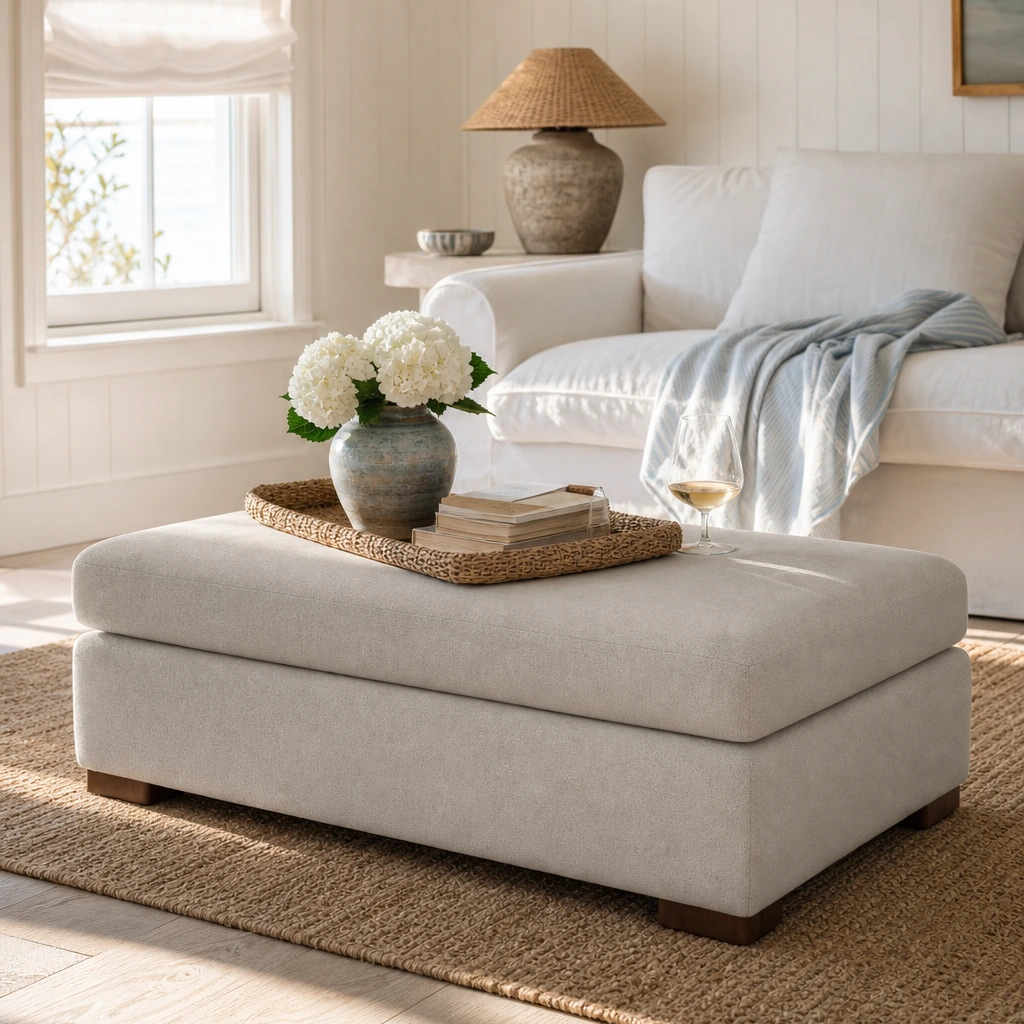

The Brooklyn one-bedroom has been yours for three months now. The IKEA Kreativ scan went fine, and you dropped a Billy bookcase and a MALM dresser into the 3D model. But staring at that virtual room full of nothing but IKEA furniture, something felt off. The space looks like every other apartment on your floor. You wanted a walnut credenza from Article, a bouclé accent chair from CB2, maybe that sculptural floor lamp from West Elm you've been saving. IKEA Kreativ can't show you any of that. It only shows IKEA.
That's the core problem with IKEA's room planning approach: the furniture catalog is locked to a single retailer. For anyone with taste that extends beyond one Swedish brand, alternatives exist that let you design with pieces you actually want to buy.
Key Takeaways
- IKEA Kreativ locks you into one catalog. If you want furniture from West Elm, CB2, Article, or Crate & Barrel, you need a multi-retailer solution. First Chair pulls across 100+ brands and 10 million real products.
- Most AI room design generates fake furniture. Tools like RoomGPT and Interior AI create beautiful renders with pieces that don't exist. First Chair shows only real, purchasable furniture.
- Floor planning and room styling serve different needs. Planner 5D and RoomSketcher excel at precise measurements and layouts. First Chair handles the harder question: what goes in the room once you know the dimensions.
- Free tiers vary wildly in usefulness. Spacely AI offers substantial credits with no watermark. Homestyler gives unlimited free 1K renders. RoomGPT offers minimal free access before requiring payment.
- Human guidance still matters. Havenly pairs you with a real designer per room. First Chair includes a design concierge who can swap pieces and refine recommendations without the traditional designer expense.
Why Consider an IKEA Kreativ Alternative

IKEA Kreativ does one thing well: it lets you scan your room with LiDAR and place IKEA products in 3D space. For someone furnishing entirely from IKEA, that's useful. But the moment you want a leather sofa from Article, a vintage-inspired rug from Lulu & Georgia, or brass lighting from Rejuvenation, you hit a wall. The catalog is closed.
This single-retailer limitation creates what industry analysts call the "walled garden" problem. You're designing inside someone else's inventory constraints rather than your own taste.
The alternatives below solve this in different ways. Some offer multi-retailer shopping with real products. Others generate AI renders for quick inspiration (though the furniture often doesn't exist). A few focus purely on floor planning. And one, First Chair, combines AI-assisted design with human curation and a catalog of 10 million shoppable pieces from brands you'd actually want in your home.
1. First Chair
Pick First Chair when you're drowning in Pinterest boards that never translate into actual rooms, or when you've opened 27 furniture tabs and can't pull the trigger on any of them.
You give First Chair a photo of a cafe in Copenhagen, a hotel lobby in Austin, or just say "Scandinavian with walnut warmth and deeper seats." It returns curated room concepts using real furniture from West Elm, CB2, Crate & Barrel, Article, Pottery Barn, Lulu & Georgia, and dozens of other retailers you'd actually shop.
What makes it work:
- Sources from 100+ brands and 10 million products, so you're never trapped in a single retailer's inventory
- Every piece includes actual purchase links and real pricing
- A design concierge refines recommendations, swaps pieces for budget or preference, and answers the questions that keep you paralyzed
- Insider pricing on most pieces delivers member savings at checkout
- Translates nuanced style language into specific, buyable furniture: "mid-century modern with warm leather and rounded arms" becomes a shopping list, not a mood board
If your problem isn't measuring a room but rather "I know what I like and I can't find it," First Chair solves that faster than any competitor on this list.
2. Planner 5D
Pass on Planner 5D if you already know your room dimensions and just need furniture recommendations. Use it when you're starting from scratch, need to draw walls and place windows, and want to experiment with layout before thinking about specific pieces.
Planner 5D has built the largest floor planning community with templates and shared projects. The AI Smart Wizard suggests furniture placement based on your floor plan, and you toggle between 2D drafting and 3D visualization.
What makes it work:
- Converts photos of floor plans into editable 3D models using AI recognition
- Offers thousands of furniture pieces in its catalog for placement
- Free tier handles basic room layout work without payment
- Strong community templates if you're furnishing a standard apartment
How it differs from First Chair: Planner 5D focuses on spatial planning and layout. The furniture in its catalog is generic 3D models, not real products you can purchase. First Chair focuses on the opposite problem: once you know the layout, what specific pieces from real retailers belong in the space.
3. Spacely AI
Avoid Spacely if you want to buy the furniture you see in renders. Consider it when you're a designer mocking up concepts for client presentations or you need high-quality visualization without paying upfront.
Spacely AI offers substantial free credits with no watermark and commercial license included, making it unusually generous for professional-quality renders. The SketchUp plugin integration matters for architects and designers already working in that ecosystem.
What makes it work:
- Delivers photorealistic results in about a minute
- Free tier includes commercial usage rights, rare in this category
- Multiple design modes: auto-furnish, reference matching, relighting, image-to-3D conversion
- SketchUp plugin for desktop workflow integration
How it differs from First Chair: Spacely generates AI-imagined furniture for visualization purposes. The sofas and chairs in its renders look real but aren't purchasable products. First Chair only shows furniture that exists and can be bought, which matters when you're ready to move from inspiration to actual purchases.
4. REimagineHome
Choose REimagineHome when you're redesigning an entire property (including landscaping and exterior views) or when you're staging real estate listings.
REimagineHome covers interiors, exteriors, and landscaping in one unified experience. The 2026 Real Products Discovery feature attempts to match AI-generated renders to actual purchasable pieces, though the matching isn't always precise.
What makes it work:
- Covers interiors, exteriors, and landscaping in one unified experience
- Virtual staging for empty rooms works well for real estate photography
- Idea exploration chat encourages experimentation
- Results feel natural rather than obviously AI-generated
How it differs from First Chair: REimagineHome generates AI renders first, then attempts to find similar real products. First Chair starts with real products and curates them into cohesive room concepts. The workflow difference matters: REimagineHome shows you what could exist, while First Chair shows you what does exist.
5. HomeByMe
Ignore HomeByMe if you need fast results or dislike drawing floor plans from scratch. Try it when you want to design with real products from European brands like Ligne Roset and Habitat rather than generic 3D models.
HomeByMe stands out through actual partnerships with manufacturers, meaning the pieces in your design are real products. The trade-off is time: building a room from scratch takes 45 minutes or more compared to IKEA Kreativ's quick LiDAR scan.
What makes it work:
- Real branded products from higher-end European manufacturers
- 360-degree views and photorealistic rendering
- Free tier covers basic 3D planning needs
- Intuitive drag-and-drop interface once you've built your floor plan
How it differs from First Chair: HomeByMe requires you to manually build your room and place each piece yourself. First Chair generates curated concepts based on your inspiration, handling the selection and coordination work. HomeByMe suits hands-on planners who enjoy the process; First Chair suits people who want the outcome without the labor.
6. RoomGPT
RoomGPT became famous for its simplicity: upload a photo, pick a style, get a rendered result in seconds. The credit-based approach means no subscription commitment.
Pass on it if you want to actually buy the furniture you see. Pick it when you need instant "what if" visualization and don't mind that the pieces are AI-generated rather than real products.
What makes it work:
- Zero learning curve, truly instant results
- Credit-based structure rather than monthly subscription
- Inexpensive per-render approach
- Good for exploring style directions before committing to planning
How it differs from First Chair: RoomGPT generates fantasy rooms with AI-imagined furniture that doesn't exist. First Chair generates room concepts with furniture you can actually purchase. RoomGPT is a mood board generator; First Chair is a shopping guide with design intelligence.
7. RoomSketcher
Use RoomSketcher when you need precise, MLS-quality floor plans for real estate listings or detailed renovation planning with exact measurements.
RoomSketcher targets professionals who need accurate floor plans and 3D renderings for client presentations. The Live 3D Walk feature creates immersive walkthroughs, and the FloorCapture feature uses iOS LiDAR similar to IKEA Kreativ's approach.
What makes it work:
- Professional-grade floor plans suitable for real estate listings
- Precise measurement and scaling for renovation planning
- 3D photos and 360-degree views for client presentations
- LiDAR room capture for faster floor plan creation
How it differs from First Chair: RoomSketcher is architectural software for layout and measurement. First Chair is design guidance for furniture selection. They solve different problems. Use RoomSketcher to plan a kitchen renovation; use First Chair to figure out what sofa, rug, and lighting belong in your living room.
8. Remodel AI
Skip Remodel AI if you need ongoing design support beyond initial experimentation. Consider it when you want to test multiple renovation directions without paying anything upfront.
Remodel AI offers substantial free full-quality renders with all design modes unlocked and no watermark. Most competitors restrict features or quality on free accounts.
What makes it work:
- All design modes available on free tier: interior, exterior, staging, floors, paint, landscape, removal, and swap
- Multiple interior styles available without payment
- No watermark on free outputs
- Fast results, approximately 30 seconds per render
How it differs from First Chair: Remodel AI generates AI renders for visualization. The furniture shown doesn't link to purchasable products. First Chair focuses on the shopping outcome: every piece shown is real and buyable. Remodel AI helps you imagine; First Chair helps you buy.
9. Homestyler
You're overwhelmed by choice or you want curated recommendations. You can try Homestyler when you enjoy hands-on 3D design work and want access to the largest free model library available.
Homestyler offers extensive free models and unlimited free 1K renders, making it the most generous full design suite for budget-conscious users. The same parent company (Manycore) also operates Coohom for professional users.
What makes it work:
- Largest free catalog of 3D furniture and decor models
- Unlimited free renders at 1K resolution
- VR tour creation for immersive presentations
- Full floor planning with professional software depth
How it differs from First Chair: Homestyler is a 3D design suite where you build and furnish rooms manually using generic models. First Chair interprets your style and generates curated concepts using real products. Homestyler requires design skills and time investment; First Chair delivers direction and reduces decision fatigue.
10. Paintit.ai
Paintit.ai delivers results in under 90 seconds, making it a fast processor in the category. The ChatGPT-like interface feels familiar and requires no learning curve. After rendering, it suggests similar products, though matching accuracy varies.
What makes it work:
- Blazing fast processing, under 90 seconds per render
- ChatGPT-style conversational interface
- Diverse interior style options: modern, Scandinavian, bohemian, and more
- Virtual staging and material change previews
How it differs from First Chair: Paintit.ai focuses on quick style transformation of photos. First Chair focuses on curated furniture selection from real retailers. Use Paintit.ai to test whether you want a Scandinavian or bohemian direction; use First Chair to find the specific Scandinavian pieces from CB2 or Article that belong in your room.
11. Coohom
Skip Coohom if you're a casual homeowner wanting quick recommendations. Pick it when you're a professional designer needing full 3D control with actual branded furniture models.
Coohom stands apart from its sister product Homestyler by offering real branded models rather than generic 3D pieces. What you place in designs is sourceable because it comes from actual manufacturer catalogs.
What makes it work:
- Real branded products that can be sourced and purchased
- Professional 3D suite with commercial use capabilities
- AI Home Design chat mode for assistance
- Includes floor plans, room design, and exterior renders
How it differs from First Chair: Coohom is professional 3D software requiring significant learning investment. First Chair generates curated concepts with minimal effort. Coohom suits designers building presentations; First Chair suits homeowners who want the right pieces without becoming a designer themselves.
12. Havenly
Avoid Havenly if you want instant results or prefer self-service. Choose it when you want an actual human designer to make decisions with you and don't mind waiting weeks for deliverables.
Havenly offers personal designer assignment per room, making it the most affordable way to work with a real human. Your designer creates a shopping list drawn from multiple home brands and can even place orders for you.
What makes it work:
- Real human designer, not just AI, assigned to your project
- Shopping list from multiple retailers, not a single catalog
- Designer can place orders, removing shopping friction
- Faster than traditional design services (weeks versus months)
How it differs from First Chair: Havenly charges per room with slower turnaround. First Chair combines AI speed with human concierge refinement for ongoing access and faster iteration. Havenly suits people who want to hand off decisions entirely; First Chair suits people who want guidance while staying in control.
The Right Choice Depends on Your Actual Problem
If your problem is floor planning and precise measurements, Planner 5D or RoomSketcher will serve you well. If your problem is quick visualization to test style directions, RoomGPT or Remodel AI offer fast experimentation.
But if your problem is the gap between inspiration and execution, between saved Pinterest boards and an actual room you can live in, First Chair addresses that directly. The catalog includes furniture from 100+ retailers that you'd actually shop: West Elm, CB2, Article, Pottery Barn, Rejuvenation, Lulu & Georgia. Every piece shown has real pricing. A design concierge refines recommendations until the room feels right.
IKEA Kreativ solves a narrow problem well. These alternatives solve broader problems, and First Chair solves the hardest one: turning taste into a finished room without the endless tabs, second-guessing, and expensive mistakes.
Frequently Asked Questions
What makes First Chair different from other AI interior design options?
First Chair generates room concepts using only real, purchasable furniture from 100+ retailers including West Elm, CB2, Article, and Crate & Barrel. Most AI design generates imaginary furniture that looks good in renders but doesn't exist. First Chair also includes a human design concierge who can swap pieces, adjust for budget, and answer questions throughout the process.
Can I use these alternatives to design rooms with furniture from various brands?
Yes, though capabilities vary significantly. First Chair sources across 100+ brands and 10 million products. HomeByMe offers European brand partnerships. Coohom includes real branded models. However, most AI render tools (RoomGPT, Spacely AI, Remodel AI) generate fictional furniture that can't be purchased regardless of how realistic it looks.
Are there free IKEA Kreativ alternatives that offer similar features?
Spacely AI offers substantial free credits with no watermark and commercial license. Homestyler provides unlimited free 1K renders and extensive free 3D models. Remodel AI gives free full-quality designs with all features unlocked. Planner 5D has a useful free tier for basic floor planning. First Chair offers a trial to test the experience before subscribing.
How do these alternatives help avoid furniture buying mistakes?
First Chair specifically addresses this by showing only real, purchasable pieces that coordinate together. The design concierge can explain why certain pieces work spatially and visually, helping you avoid the common mistake of buying furniture that looks good online but doesn't fit your room's scale, lighting, or existing pieces.
Do any of these offer designer discounts or special pricing on furniture?
First Chair provides insider pricing on most pieces, meaning member savings appear at checkout when purchasing recommended furniture. Havenly designers have access to trade pricing through their professional accounts. Most AI render tools don't offer benefits since they don't connect to actual purchase transactions.