If you bought your first home in Austin last spring and have been staring at the same bare walls and mismatched furniture ever since, this guide is for you. Not the version where someone with a $40,000 renovation budget walks you through their gut remodel. The version where you have a real apartment, a real budget, and a clear sense of what you want the room to feel like but no clear path to getting there.
The gap between inspiration and execution is the actual problem. Most people are not short on ideas. They are short on a plan that translates those ideas into specific, sequenced moves that work within real constraints: a 14 by 18 foot room, a $2,000 budget, furniture that cannot be returned, and walls that cannot be painted without landlord approval. This guide is built around that reality.
The market data backs up what most homeowners already feel. Consumer spending has shifted away from large furniture purchases toward smaller, more intentional decor updates, paint, textiles, and lighting, a trend that makes incremental room refreshes not just practical but strategically smart. Among homeowners who completed home improvement projects in 2025, 51% were Millennials, the generation most actively furnishing and refreshing living rooms right now. They are doing more themselves, spending more intentionally, and expecting better results from smaller changes.
These 35 ideas are organized by category, grounded in what actually works in real rooms, and designed to be executed without professional help. Here is what you will learn:
- Which paint moves have the highest return for the least investment
- How furniture arrangement (not furniture quantity) changes how a room feels
- Why layered lighting is the single most impactful change most living rooms never make
- How to use textiles to shift the emotional register of a room without touching the furniture
- Which sustainable material choices are now mainstream and competitively priced
- How smart home tools can improve ambience without visible gadgets or complicated setups
- How to make a small living room feel intentional rather than cramped
Key Takeaways
- Consumer spending has shifted toward smaller decor updates, paint, textiles, and lighting rather than large furniture purchases, making incremental refreshes more practical than full overhauls, according to Consumer Edge's Home and Garden Outlook 2026.
- The hybrid project approach (combining DIY work with selective contractor help) rose from 25% of homeowners in Q2 2025 to 43% in Q2 2026, meaning most people are doing parts of projects themselves rather than all or nothing.
- Eco-friendly furniture for residential use accounts for 54.4% of the global market, making sustainable choices easier to find and more competitively priced than they were even two years ago.
- Layered lighting (ambient, task, and accent) is the single highest-impact change most living rooms can make without touching a wall or replacing furniture.
- Furniture arrangement matters more than furniture quantity. Most rooms need fewer pieces doing more work, not more pieces filling space.
- A cohesive room does not require matching sets. It requires a consistent material palette and intentional contrast.
- Tools like Floorplanner and Planner 5D let you test layouts digitally before moving anything, eliminating the most common source of expensive arrangement mistakes.
- Among DIY homeowners who completed renovation projects in 2025, 86% were Gen Z and 51% were Millennials, confirming that hands-on home improvement is now the norm rather than the exception for younger homeowners.
What "Recreatable" Actually Means in 2026

A recreatable living room idea is one that can be executed by a non-designer, within a realistic budget, using furniture and materials that actually exist and can be purchased today. It does not require a contractor, a custom order, or a complete furniture replacement.
The distinction matters because most living room content is not actually designed for execution. It is designed for inspiration. The rooms look beautiful in photographs because they were styled by professionals with unlimited budgets and no constraints. The ideas in this guide are different: each one is grounded in real rooms, real proportions, and real purchase decisions.
Why the Market Supports Smaller, Smarter Updates
The residential interior design market is large and growing. Grand View Research values the global interior design market at $196.2 billion in 2026, projected to reach $298.0 billion by 2033. But the more relevant data point for homeowners is where consumer spending is actually going.
Spending on large home purchases stalled in 2025 as consumers reallocated dollars toward repairs, upkeep, and smaller decor and kitchen product purchases, a trend expected to continue into 2026. This is not a sign of disengagement. It is a sign of smarter prioritization. Paint, lighting, textiles, and strategic furniture swaps deliver more visible impact per dollar than full room overhauls.
The DIY and Hybrid Reality
Home improvement behavior has shifted meaningfully. The Home Improvement Research Institute reports that 52% of home improvement projects in 2025 were completed entirely DIY. The Farnsworth Group's mid-year 2026 data shows the hybrid method (homeowner labor combined with selective contractor help) used by 43% of homeowners in Q2 2026, up from 25% in Q2 2025.
The practical implication: most of the ideas in this guide are fully DIY. A few (electrical work, board and batten installation) benefit from a few hours of contractor help. None require a full professional engagement.
Color Palettes and Paint Trends for 2026 Living Rooms
Color is the cheapest, highest-leverage change available to a living room. A single wall, a ceiling, or even a painted piece of furniture can shift the entire emotional register of a space. Paint is also the most reversible major change, which makes it the right place to start.
Warm Neutrals Are Replacing Cool Grays
The cool gray wave that dominated the 2010s has largely run its course. In 2026, the rooms that feel current lean toward warm whites, soft taupes, clay tones, and earthy terracottas. These shades work because they read as neutral in photographs but feel genuinely warm in person, which is the actual goal.
If your living room currently has cool gray walls and feels slightly clinical, a repaint in a warm white like Benjamin Moore White Dove or a clay tone like Farrow and Ball Dead Salmon will do more for the room than almost any furniture purchase at the same price point.
Saturated Accent Walls Done Right
An accent wall works when it creates depth, not just contrast. The mistake most people make is choosing a color that fights the furniture rather than grounding it. A few rules that hold up in practice:
- Paint the wall behind the sofa, not the wall the sofa faces
- Choose a color that appears somewhere else in the room, even in a small throw pillow or a book spine
- Avoid high-gloss finishes on large walls; matte or eggshell reads more intentional
- Deep greens, warm navies, and dusty plums tend to age better than trend-driven statement colors
Low-VOC Paint as the Default Choice
Sustainable home decor is no longer a niche category. The global sustainable home decor market was valued at $331 billion in 2021 and is projected to reach $556 billion by 2031. Low-VOC paints are now widely available from Benjamin Moore, Sherwin-Williams, and Clare at comparable price points to conventional options. For a living room where you spend significant time, the air quality difference is worth the minimal cost difference.
Idea 1: Paint one wall a deep, grounded tone. Choose the wall behind your primary seating. Go darker than feels comfortable. Rooms almost always need more depth than people initially plan for.
Idea 2: Try a painted ceiling. A ceiling painted in a warm, slightly deeper version of the wall color makes a room feel more intimate without making it feel smaller. This works especially well in apartments with standard 8-foot ceilings.
Idea 3: Use paint to define zones. In open-plan living rooms, a painted section of wall or a painted floor border can define the seating area without physical dividers. This is one of the most underused techniques in smaller apartments.
Budget-Friendly Furniture Arrangement and Layout Ideas
Most living rooms are arranged wrong. Not because the furniture is bad, but because the default arrangement (sofa against the wall, TV across from it, coffee table in the middle) creates a room that functions like a waiting room rather than a place people want to stay. The fix is almost never buying new furniture. It is rethinking where the existing furniture lives.
Float the Furniture
Pulling the sofa away from the wall by even 12 to 18 inches creates a more intentional, designed feeling. It signals that the room was arranged with purpose rather than just pushed to the edges to maximize floor space. This works in rooms as small as 12 by 14 feet.
Anchor with a Rug First
The rug should be large enough that at least the front legs of every major seating piece sit on it. The most common mistake is choosing a rug that is too small, which makes the furniture look like it is floating in the room rather than belonging to it.
A general rule: if you think you need an 8 by 10, you probably need a 9 by 12.
Test Layouts Digitally Before Moving Anything
Tools like Floorplanner and Planner 5D allow you to input your room dimensions and test furniture arrangements before lifting a single piece. This is especially useful for furniture in small city apartments, where a wrong arrangement can make a room feel half its actual size.
Layout MistakeWhy It HappensThe FixSofa pushed against every wallFeels like it maximizes spaceFloat sofa 12-18 inches from wallRug too smallBuying the size that "looks right" in storeSize up one dimension; front legs on rug minimumTV as sole focal pointDefault arrangement from move-inIntroduce a secondary focal point (art, fireplace, shelving)All seating facing one directionPassive room setupAngle one chair toward sofa to create conversation zoneNo defined zones in open planUnclear where room begins and endsUse a rug, bookshelf, or paint to define the living area
Idea 4: Create a conversation zone. Arrange seating so that people face each other, not just the television. Two chairs angled toward the sofa with a small side table between them creates a room that feels social rather than passive.
Idea 5: Use a bookshelf as a room divider. In open-plan spaces, a low bookshelf (under 48 inches) placed perpendicular to the wall can define the living area without blocking light or sightlines.
Idea 6: Angle a chair. One chair placed at a slight angle to the rest of the seating arrangement immediately makes a room feel less staged. It is a small move with a disproportionate visual effect.
Idea 7: Rethink the TV wall. The television does not have to be the visual anchor of the room. Mounting it on a side wall, placing it inside a shelving unit, or using a media console that sits lower than expected can shift the room's focal point to something more interesting: a fireplace, a large piece of art, or a well-styled shelving wall.
DIY Wall Decor and Accent Features
Walls are the most underused surface in most living rooms. A room with bare walls and good furniture still feels unfinished. A room with considered wall treatment and modest furniture feels complete. The difference is not money. It is intention.
Gallery Walls That Actually Work
The gallery wall fails when it looks like a collection of things rather than a curated arrangement. The difference usually comes down to one of three things: inconsistent framing, too much variety in subject matter, or no clear visual anchor.
What works in practice:
- Choose one frame finish and commit to it (black, natural wood, or brass, not all three)
- Mix sizes but keep a consistent mat color (usually white or off-white)
- Start with the largest piece and build outward
- Leave more space between frames than feels natural; crowded gallery walls look accidental
Architectural Detail Without a Contractor
For homeowners willing to do a weekend project, board and batten on a single wall adds architectural interest that reads as custom. Materials typically cost $150 to $300 for a standard wall. The home furnishing mistakes data consistently shows that people regret not adding architectural detail more than they regret adding it.
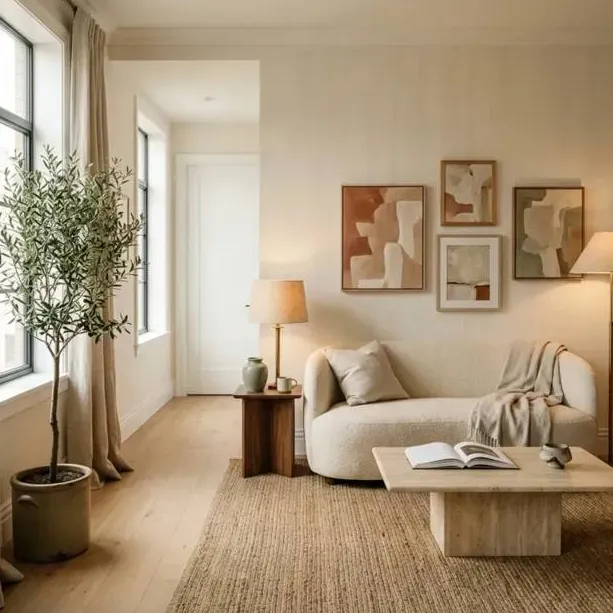
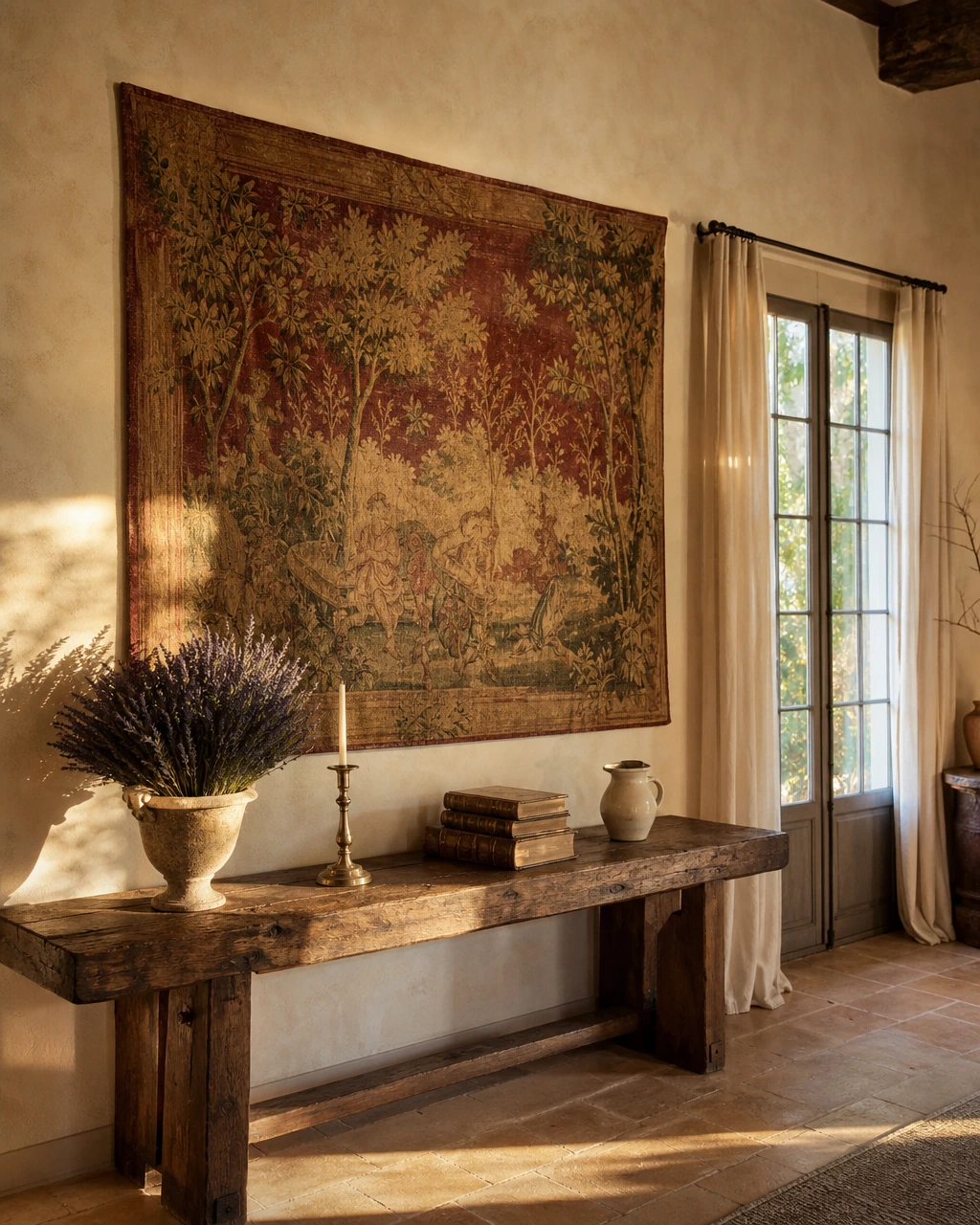
Idea 8: Lean large art instead of hanging it. A large canvas or framed print leaned against the wall on a console or directly on the floor reads as more relaxed and intentional than a hung piece. It also lets you move things around without patching holes, which matters in rentals.
Idea 9: Create a ledge wall. Picture ledges allow you to layer art, small plants, and objects at varying heights. The arrangement can be changed seasonally without any new holes in the wall.
Idea 10: Use wallpaper on one section. Peel-and-stick wallpaper has improved significantly in quality and is now a legitimate option for renters. A single papered section behind a console or bookshelf adds pattern and depth without commitment.
Idea 11: Install simple board and batten. For homeowners, board and batten on a single wall adds architectural interest that reads as custom at a fraction of what it looks like it costs.
Idea 12: Frame a mirror as art. A large mirror in a substantial frame functions as both art and a light-expanding tool. Placed opposite a window, it effectively doubles the natural light in the room.
Lighting Solutions to Transform Living Spaces
Lighting is the most impactful change most living rooms never make. The default setup (a single overhead fixture controlled by one switch) creates flat, institutional light that makes even beautiful furniture look ordinary. Fixing this does not require an electrician for most of the moves below.
The Three-Layer Lighting Framework
A well-lit living room uses three types of light working together:
- Ambient light: General illumination of the room. Usually overhead, but ideally dimmable.
- Task light: Directed light for reading, working, or focused activity. Floor lamps and table lamps.
- Accent light: Light that highlights objects, creates warmth, or adds visual interest. Sconces, picture lights, LED strips behind shelving.
Most living rooms have only ambient light. Adding task and accent layers is what makes a room feel warm and considered rather than bright and flat.
Smart Lighting for Ambience Control
Smart lighting systems have become genuinely accessible. Philips Hue remains the premium option for robust scene control and automation. For budget-conscious homeowners, Govee, Wyze, and TP-Link Kasa offer comparable color and dimming control at significantly lower price points.
The practical application: a smart bulb in a floor lamp set to a warm 2700K scene in the evening costs the same as a standard bulb swap and changes the entire feeling of the room after dark.
Idea 13: Replace the overhead fixture. The builder-grade flush mount that came with your apartment or home is almost certainly doing the room no favors. A pendant, semi-flush, or statement fixture in the $150 to $400 range from Rejuvenation, CB2, or West Elm makes an immediate difference. This is one of the highest-return swaps in any living room.
Idea 14: Add a floor lamp in every dark corner. Corners that receive no light make rooms feel smaller. A tall arc floor lamp or a simple tripod lamp in a neglected corner adds warmth and visual balance.
Idea 15: Use warm bulbs consistently. Mixing bulb temperatures (some warm, some cool) creates visual noise that reads as unfinished. Choose 2700K to 3000K throughout the living room and the space will immediately feel more cohesive.
Idea 16: Install LED strip lighting behind shelving. LED strips behind a bookshelf or media unit add depth and warmth at minimal cost. This is one of the most effective accent lighting moves in a living room and takes under an hour to install.
Idea 17: Use a table lamp on the floor. A table lamp placed directly on the floor in a corner creates a low, warm pool of light that feels intentional and slightly unexpected. It is a styling trick borrowed from hotel lobbies and it works in residential spaces.
If you want help translating a specific lighting reference (a hotel lobby you photographed, a restaurant corner that felt exactly right) into real, purchasable fixtures for your room, First Chair can take that photo and build a shoppable lighting plan around it using pieces from West Elm, Rejuvenation, CB2, and other retailers, without the tab spiral.
Sustainable and Eco-Friendly Decorating Materials
Sustainable materials are no longer a premium add-on. The eco-friendly furniture market was valued at $53.77 billion in 2025 and is projected to reach $113.94 billion by 2033, growing at a 10% annual rate. Residential use accounts for 54.4% of that market. The mainstream availability of sustainable options means you are no longer paying a significant premium for better materials.
What Sustainable Actually Means in Practice
Sustainable home decor is defined by materials and processes that reduce environmental impact: FSC-certified wood, recycled metals, organic textiles, and low-VOC finishes. For a living room, this translates to specific, practical choices rather than abstract commitments.
Consumer awareness of material sourcing has increased significantly among homeowners aged 28 to 45. The sustainable furniture demand statistics confirm that this demographic is actively seeking out certified materials, not just responding to marketing language.
Material CategorySustainable OptionWhat to Look ForRugsNatural fiber (jute, sisal, wool)No synthetic backing; natural dyesWood furnitureFSC-certified solid woodAvoid particleboard and MDF for primary piecesTextilesOrganic cotton, linenGOTS or OEKO-TEX certificationPaintLow-VOC formulasBenjamin Moore Natura, Sherwin-Williams HarmonyLightingLED fixturesEnergy Star rated; warm color temperature
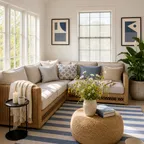
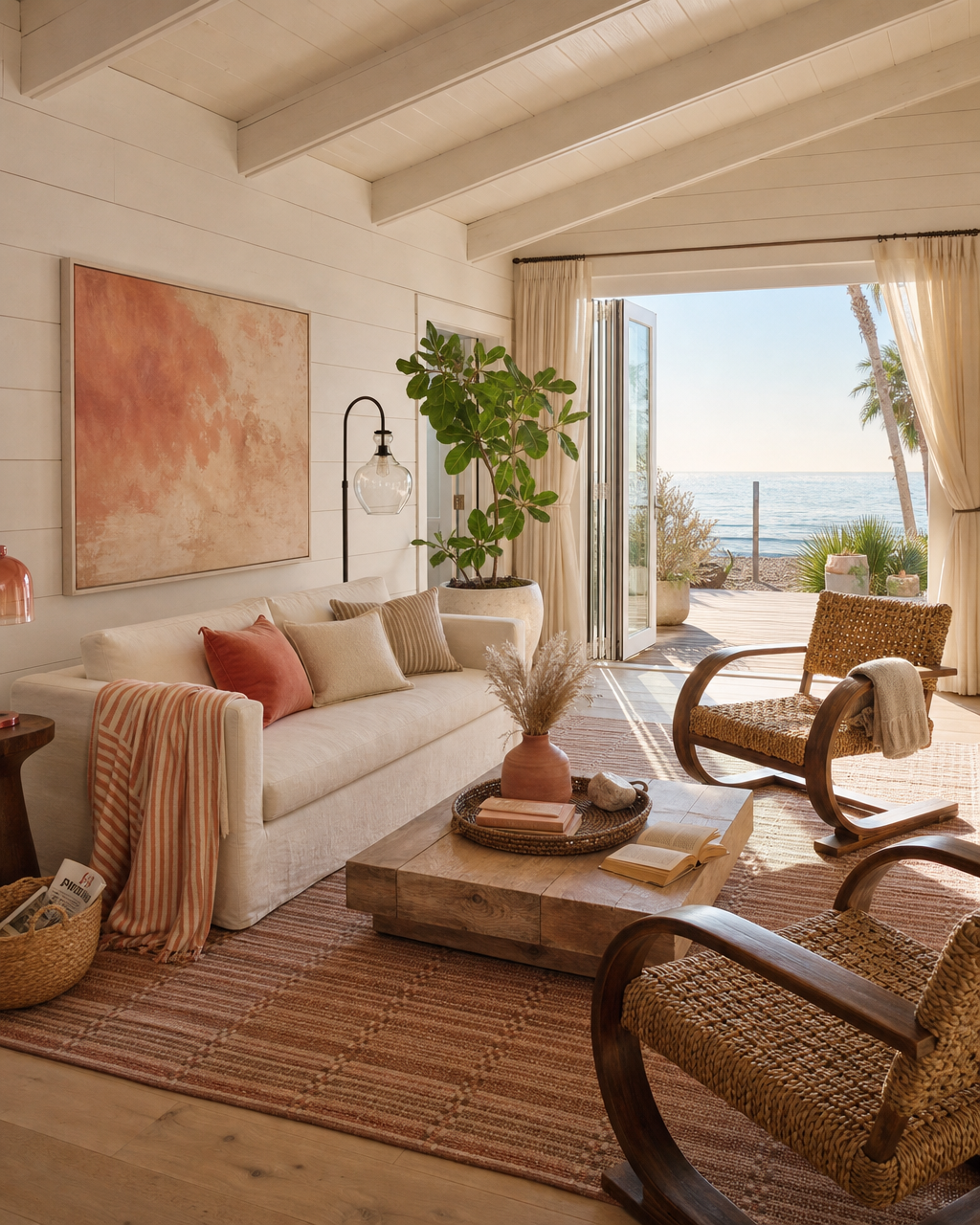
Idea 18: Choose natural fiber rugs. Jute, sisal, seagrass, and wool rugs are more durable than synthetic alternatives, age better, and are biodegradable. They also tend to look more expensive than their price suggests. Lulu and Georgia and Crate and Barrel both carry strong natural fiber options at accessible price points.
Idea 19: Prioritize solid wood over particleboard. Solid wood furniture (even painted or stained) outlasts particleboard by decades and can be refinished rather than replaced. When budget is a constraint, buying one solid wood piece secondhand from Chairish or 1stDibs is often better than buying new particleboard at the same price.
Idea 20: Use organic cotton or linen textiles. Throw pillows, blankets, and slipcovers in organic cotton or linen feel better, last longer, and are produced with fewer chemicals than synthetic alternatives. Pottery Barn and Anthropologie Home both carry certified organic textile options.
Idea 21: Shop secondhand first. The most sustainable piece of furniture is one that already exists. Chairish, Facebook Marketplace, and local estate sales regularly surface high-quality pieces at a fraction of retail cost. A solid wood credenza from the 1970s is often better built than a new one at twice the price.
Idea 22: Choose low-VOC paint and finishes. Low-VOC options are now standard across major paint brands. For a room where you spend significant time, this is a straightforward upgrade with no meaningful cost difference.
Smart Home Integration in Modern Living Room Design
Smart home technology in the living room does not have to mean visible gadgets and tangled cables. Done well, it is invisible infrastructure that makes the room more comfortable and easier to use.
Start with Lighting, Not Speakers
The most impactful smart home upgrade for a living room is lighting control, not audio. Being able to shift from bright afternoon light to warm evening ambience with a single tap or voice command changes how the room feels and how much time you spend in it.
Choosing the Right Smart Lighting System
The options vary significantly in price and capability. Here is a practical breakdown:
SystemBest ForPrice RangePhilips HueFull scene control, automations, reliabilityPremiumLutron CasetaDimmer switches, works with existing bulbsMid-rangeGovee / TP-Link KasaBudget entry point, color and dimmingBudget-friendlyNanoleafAccent and decorative lightingMid-range
Idea 23: Install a smart dimmer switch. A smart dimmer switch (Lutron Caseta is the most reliable option) replaces a standard switch and allows you to control overhead lighting from your phone or through automations. This is a one-time installation that works with any existing bulbs.
Idea 24: Create lighting scenes. Most smart lighting apps allow you to save preset scenes: morning, movie, evening, and so on. Setting these up takes 15 minutes and eliminates the daily friction of adjusting lights manually.
Idea 25: Use smart plugs for lamps. Smart plugs turn any standard lamp into a smart lamp without replacing the bulb or the fixture. They can be scheduled, voice-controlled, or tied to automations. This is the lowest-cost entry point into smart lighting.
Idea 26: Hide cables intentionally. Cable management is not glamorous but it is one of the most visible signs of a considered room. Cable raceways, cord covers painted to match the wall, and furniture with built-in cable management all make a meaningful difference in how finished a room looks.
Textile and Fabric Updates for Comfort and Style
Textiles are the fastest way to change the feeling of a living room without touching the furniture. A sofa that reads as cold and formal can become warm and inviting with the right combination of throw pillows, a blanket, and a rug.
The Layering Principle
The rooms that feel most considered are usually the ones with the most intentional layering of texture. Not pattern, necessarily, but texture: a linen sofa with a chunky knit throw, a jute rug under a wool accent rug, velvet pillows against a cotton slipcover.
The rule: vary texture more than color. A room in three shades of the same warm neutral with five different textures will feel richer than a room with five colors and one texture.
Pillow Styling That Does Not Look Staged
The most common pillow mistake is buying a matching set. Matching pillow sets make a sofa look like a showroom display rather than a place someone actually sits. Instead, choose three to four pillows that share a color family but vary in texture, scale, and pattern. One solid, one subtle texture, one with a small pattern. The combination reads as collected rather than coordinated.
Idea 27: Recover or slipcover the sofa. A slipcover in a quality linen or cotton canvas can transform a dated sofa for $200 to $400. Bemz and Comfort Works make custom slipcovers for IKEA frames that look significantly more expensive than the underlying piece.
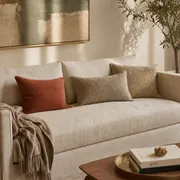
Idea 28: Add a chunky knit throw. A single oversized throw draped over the arm of a sofa adds warmth and texture in a way that reads as intentional rather than decorative. Neutral tones (oatmeal, cream, warm gray) work in almost any room.
Idea 29: Use pillow covers, not full pillows. Changing pillow covers seasonally is significantly cheaper than buying new pillows. Keeping a set of inserts and rotating covers allows the room to feel refreshed without significant cost.
Idea 30: Layer two rugs. A smaller, patterned or textured rug layered over a larger natural fiber rug adds depth and visual interest. This works especially well in rooms where the primary rug is a simple jute or sisal.
Idea 31: Add curtains that actually fit. Curtains hung too low, too short, or too narrow are one of the most common mistakes in living rooms. The rule: hang the rod as close to the ceiling as possible and let the curtains fall to the floor. Width should be two to two and a half times the window width when gathered. Linen or cotton in a warm neutral reads as elevated without being precious.
Maximizing Small Living Rooms with Strategic Decor
Small living rooms do not need small furniture. They need the right furniture in the right arrangement, with enough visual breathing room to feel intentional rather than cramped.
Scale Is More Important Than Size
A common mistake in small rooms is choosing furniture that is too small, thinking it will make the room feel larger. It usually does the opposite. Undersized furniture makes a room feel provisional and unfinished. One well-scaled sofa and two chairs that fit the room properly will feel better than three small pieces that leave awkward gaps.
For more on this, the guide to apps for designing your apartment covers the digital tools that make scale planning significantly easier before you buy anything.
Visual Weight and Transparency
In small rooms, visual weight matters as much as physical footprint. A solid wood coffee table and a glass coffee table may take up identical floor space, but the glass version creates significantly less visual density. This principle applies to shelving (open beats closed), seating (legs beat skirted bases), and lighting (wall-mounted beats floor-standing in tight corners).
Idea 32: Choose a sofa with a track arm. Track-arm sofas (where the arm is flush with the back rather than rolled or curved outward) take up less visual and physical space than traditional rolled-arm designs. In a room under 200 square feet, this can recover 6 to 8 inches of usable space on each side.
Idea 33: Use vertical space. Tall bookshelves, floor-to-ceiling curtains, and art hung higher than feels natural all draw the eye upward and make a room feel taller. In a small living room, vertical emphasis is one of the most effective tools for creating a sense of scale.
Idea 34: Choose a glass or lucite coffee table. A transparent coffee table takes up visual space without taking up physical space. In a small room, this can make the difference between a layout that feels open and one that feels blocked.
Idea 35: Edit ruthlessly. The most common problem in small living rooms is not that they are missing something. It is that they have too much. One piece removed often does more for a room than one piece added.
Tools and Solutions for Planning Your Living Room Update
The right tools eliminate the most expensive mistakes before they happen. Here is a practical breakdown of what is available and what each category is actually useful for.
Room Layout and Planning Software
These tools help you test furniture arrangements, circulation, and zoning before moving anything.
- Floorplanner: Browser-based 2D/3D design tool with free and paid tiers. Widely regarded as the most accessible option for homeowners without design backgrounds.
- Planner 5D: Online and app-based interior planning tool with 2D floor planning and 3D visualization capabilities. Strong for testing scale and proportion.
- HomeByMe: Online 3D home design service noted for ease of use, suitable for beginners designing rooms.
Smart Lighting Systems
Core for ambience, zoning, and modern feel without major renovations.
- Philips Hue: Premium smart lighting ecosystem for living rooms, with robust scene control and automation.
- Lutron Caseta: Dimmer switch system that works with existing bulbs. Most reliable option for overhead lighting control.
- Govee / TP-Link Kasa: Budget-friendly alternatives for color and dimming control in lamps and accent fixtures.
Inspiration-to-Purchase Platforms
These tools help you move from a saved photo or vague aesthetic direction to actual, purchasable pieces.
- First Chair: First Chair lets you upload a photo of any room you love (a hotel lobby, a restaurant corner, a Pinterest save) and builds a shoppable room concept around it using real, in-stock furniture from West Elm, CB2, Crate and Barrel, Pottery Barn, Lulu and Georgia, and other retailers. Unlike AI render tools that generate beautiful rooms filled with furniture that does not exist, every recommendation is purchasable. First Chair also offers insider pricing on selected pieces and helps you compare options side by side without the tab spiral. It is particularly useful during life transitions (new apartment, first home, post-move refresh) when the stakes of getting it wrong feel highest. Pricing is competitive; see the First Chair site for current access details.
- Other AI visualization tools (Decorilla, REimagine Home, Spacely) offer photo-to-render capabilities but focus primarily on visualization rather than shoppable execution.
Secondhand and Vintage Sourcing
For sustainable and budget-conscious furnishing, these platforms surface quality pieces at below-retail prices.
- Chairish: Curated vintage and secondhand furniture with strong editorial curation.
- 1stDibs: Higher-end vintage and antique pieces; useful for investment anchor pieces.
- Facebook Marketplace and local estate sales: Best for solid wood pieces and unexpected finds at significant discounts.
Best Practices for Living Room Decorating in 2026
- Start with the rug, not the sofa. The rug anchors the room and determines the scale of everything else. Getting this wrong makes every subsequent purchase harder to resolve.
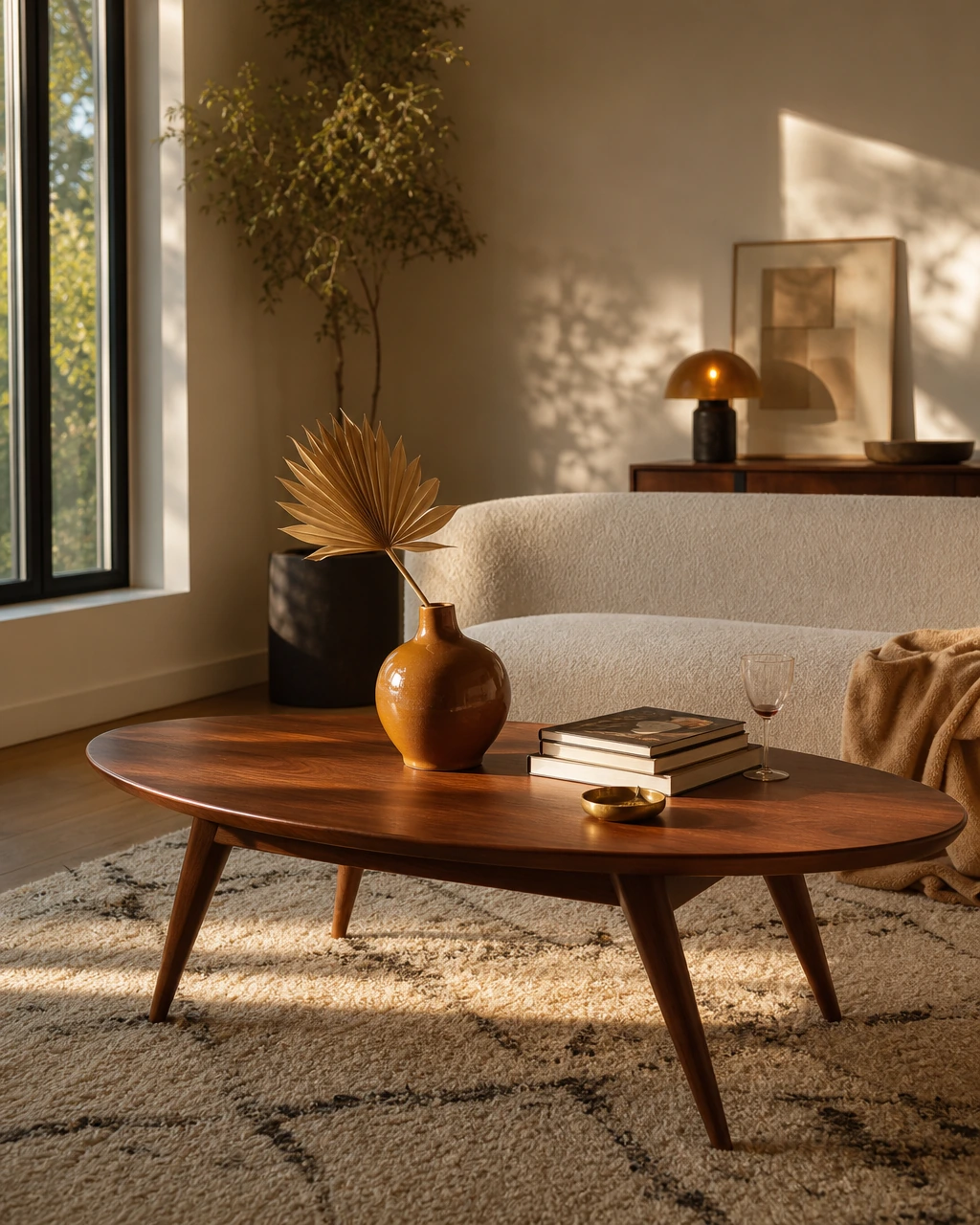
- Choose a material palette before buying individual pieces. Decide on two to three materials (warm oak, aged brass, natural linen, for example) and let that palette guide every purchase. This is what creates cohesion without matching sets.
- Buy one better piece instead of three mediocre ones. A single well-made sofa in a quality fabric will do more for a room than three budget pieces that need to be replaced in three years.
- Test paint colors in the actual room before committing. Paint looks different in store lighting, on a small chip, and on a full wall in your specific light conditions. Sample pots are worth the $5 to $10 investment.
- Layer lighting before buying more furniture. Most rooms that feel "unfinished" are actually under-lit. Add a floor lamp and a table lamp before concluding that the furniture is the problem.
- Edit before adding. Walk through the room and remove anything that is not earning its visual space. A cleared surface often reveals that the room was already working; it just had too much on it.
- Use digital tools to test arrangements before moving anything. The tools for decorating a new apartment guide covers the most useful free options for layout planning.
- Invest in window treatments. Curtains and blinds are among the most visible elements in a living room and among the most commonly neglected. Getting the scale and hang height right transforms the room's proportions.
Common Mistakes to Avoid
Buying a rug that is too small. This is the single most common living room mistake. A rug that does not extend under the front legs of the seating makes the furniture look like it is floating. Size up.
Choosing furniture that matches too precisely. A perfectly matched living room set looks staged rather than lived in. Mix wood tones, vary upholstery textures, and let pieces feel collected rather than coordinated.
Ignoring scale when buying online. A sofa that looks proportional in a product photo may be completely wrong for your room. Always check the dimensions against your floor plan before purchasing. The furniture shopping behavior statistics show that scale mismatches are among the leading drivers of furniture returns.
Defaulting to cool or bright overhead lighting. A single bright overhead fixture is the fastest way to make a living room feel institutional. Add warm, layered light sources before concluding that the room needs new furniture.
Hanging art too high. Art hung at eye level (center at approximately 57 to 60 inches from the floor) feels grounded and intentional. Art hung at ceiling height looks like an afterthought.
Overcrowding a small room with small furniture. Smaller furniture in a small room usually makes it feel more cramped, not more spacious. One well-scaled piece works better than three undersized ones.
Skipping the digital layout test. Moving heavy furniture to discover the arrangement does not work is avoidable. Free tools like Floorplanner take 20 minutes to set up and eliminate this entirely.
Buying trendy accent pieces before anchoring the room. Decorative accessories should be the last purchase, not the first. Anchor the room with a sofa, rug, and lighting before adding anything decorative.
Frequently Asked Questions
What is the highest-impact living room update for under $500?
Lighting is almost always the answer. Replacing a builder-grade overhead fixture ($150 to $300), adding one floor lamp in a dark corner ($80 to $150), and swapping all bulbs to a consistent warm temperature (2700K to 3000K) can transform how a room feels without touching the furniture. The total investment is typically $300 to $500 and the difference is immediately visible.
How do I make a small living room feel larger without removing walls?
Three moves have the most impact: float the furniture away from the walls rather than pushing everything to the perimeter; choose a rug that is large enough to anchor all the seating (most people size down too much); and use vertical emphasis (tall bookshelves, floor-to-ceiling curtains, art hung slightly higher than feels natural) to draw the eye upward. A glass or lucite coffee table also reduces visual density significantly.
What is the best way to create a cohesive living room without buying a matching set?
Choose a material palette of two to three materials and let that guide every purchase. Warm oak, aged brass, and natural linen, for example, will create cohesion across pieces from completely different retailers and eras. Matching sets create coordination but not cohesion. A consistent material palette creates cohesion while allowing for variety in silhouette, scale, and source.
How do I start decorating a living room if I have no idea where to begin?
Start with the rug. It anchors the room, determines the scale of the seating, and establishes the color and material direction for everything else. Once the rug is right, the sofa placement follows naturally, and the rest of the room builds from there. Getting the rug wrong makes every subsequent decision harder to resolve.
Are eco-friendly furniture options significantly more expensive than conventional ones?
Not anymore. The eco-friendly furniture market has grown to the point where sustainable options are now competitively priced with conventional alternatives at most major retailers. Natural fiber rugs, solid wood furniture, and organic cotton textiles are available from Crate and Barrel, Pottery Barn, and Lulu and Georgia at price points comparable to synthetic alternatives. Buying secondhand solid wood is often cheaper than buying new particleboard.
How long does it typically take to complete a living room refresh using a DIY approach?
It depends on the scope. Paint and lighting changes can be completed in a weekend. Furniture arrangement, textile updates, and wall decor can be done incrementally over two to four weeks. The Farnsworth Group's 2026 data shows average DIY hours at 38 per project in Q2 2026, but a living room refresh focused on paint, lighting, and textiles rather than structural changes typically requires significantly less time than a full renovation project.
Conclusion: From Inspiration to a Room That Actually Works
The 35 ideas in this guide share a common premise: most living rooms do not need more. They need better. Better light, better arrangement, better material choices, and a clearer sense of what the room is supposed to feel like before any money is spent.
The market data confirms that the most effective 2026 living room updates are incremental, intentional, and DIY-friendly. Consumer spending has shifted toward smaller, higher-impact changes. Sustainable materials are now mainstream and competitively priced. Smart lighting is accessible at every budget level. And digital layout tools have eliminated the guesswork from furniture arrangement.
The gap between the room you have and the room you want is almost always smaller than it feels. It usually comes down to three or four specific moves, executed in the right order, with pieces that actually work together.
If you want to skip the tab spiral and get a shoppable room plan built around your specific space, aesthetic, and budget, start with your room on First Chair. Upload a photo of a space you love, describe the direction you are going, and get real furniture recommendations from West Elm, CB2, Crate and Barrel, Pottery Barn, and Lulu and Georgia that work together as a cohesive room, not just a list of individual pieces.