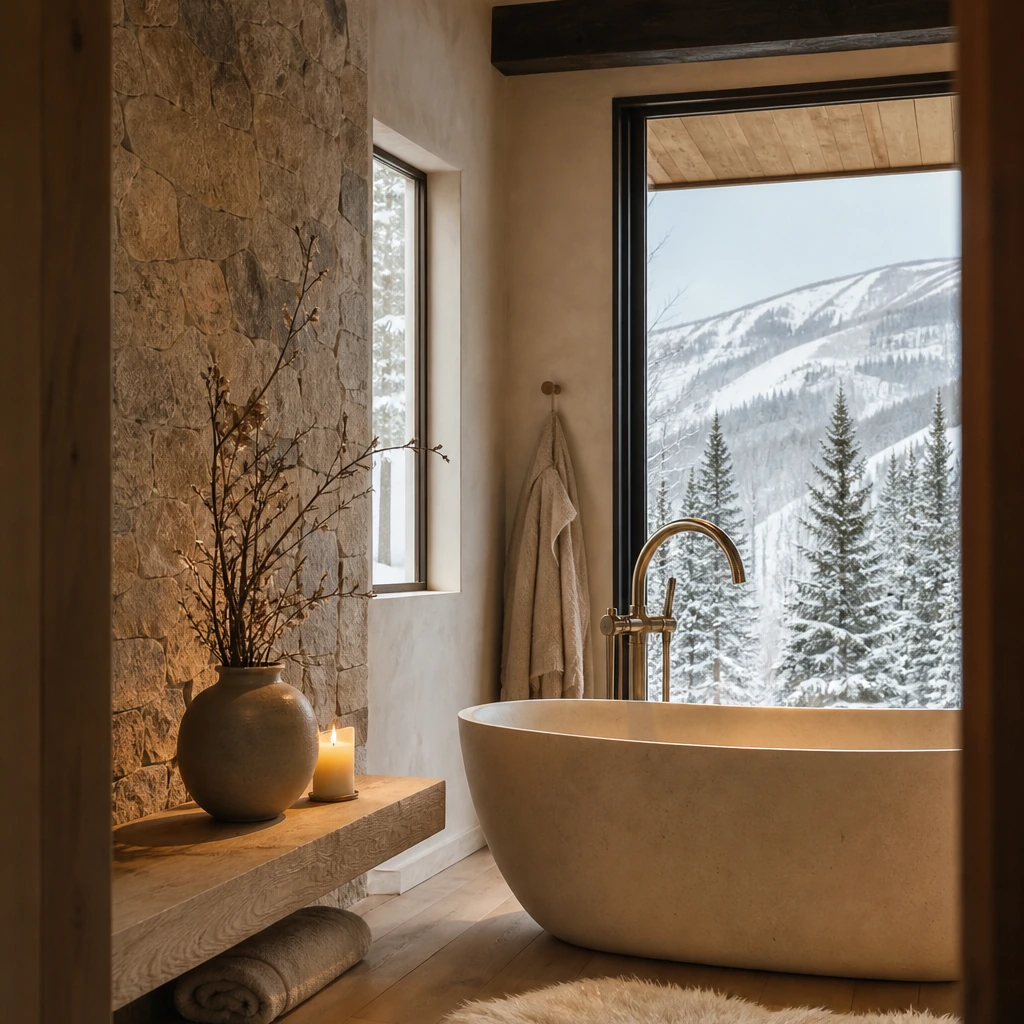

You moved into a Denver rental last fall, the one with the original 2004 tile and the builder-grade vanity light that makes everyone look slightly unwell. The bathroom works. The plumbing is fine. But every time you walk in, the space feels like it belongs to someone else. You have saved forty-three bathroom photos on Pinterest. You have not bought a single thing, because you cannot figure out which changes would actually matter and which would just be noise.
That paralysis is the real problem. Not the budget. Not the tile. The uncertainty about which moves carry visual weight and which ones are just spending money to feel like you did something.
The bathrooms that read as expensive on a limited budget are not the ones with the most updates. They are the ones where someone made a few very deliberate decisions and left everything else alone. The mirror is oversized and intentional. The hardware is consistent across every fixture. The lighting is warm instead of clinical. The towels are white and folded like a hotel. Nothing is competing for attention. That restraint is the actual design move, and it costs far less than most people assume.
This guide covers the specific strategies that deliver the most perceived value per dollar spent. You will learn:
- Why the cosmetic versus structural divide is the most important financial decision in any bathroom refresh
- Which single upgrade category delivers the highest visual return per dollar
- How to sequence updates when the budget is limited
- Where to concentrate spending and where to stay minimal
- How to make existing tile, fixtures, and finishes look better without replacing them
Key Takeaways
- The national median spend on all bathroom renovations was $13,000 in 2024. Cosmetic-only refreshes can deliver comparable visual impact for a fraction of that figure.
- A midrange bathroom remodel delivers roughly 80% ROI, while an upscale $75,000 remodel returns only about 42%. Controlled-budget updates are the smarter financial move.
- Keeping existing plumbing in place is the single biggest cost-saving decision in any bathroom project. Moving pipes is where budgets collapse.
- One "hero" investment, whether brassware, a vanity, or a statement mirror, does more for perceived quality than spreading the same budget across ten smaller items.
- Lighting upgrades consistently rank among the highest-impact cosmetic changes available without touching tile or plumbing.
- Paint, hardware, mirrors, and textiles are the four categories where modest spend creates outsized visual results.
- 29% of sellers make some bathroom improvement before listing, making it the second-most common pre-sale project after interior painting.
- Bathrooms and kitchens each represent 24% of renovation projects, tying as the most commonly renovated rooms in U.S. homes.
What "Budget Luxury" Actually Means in Bathroom Design
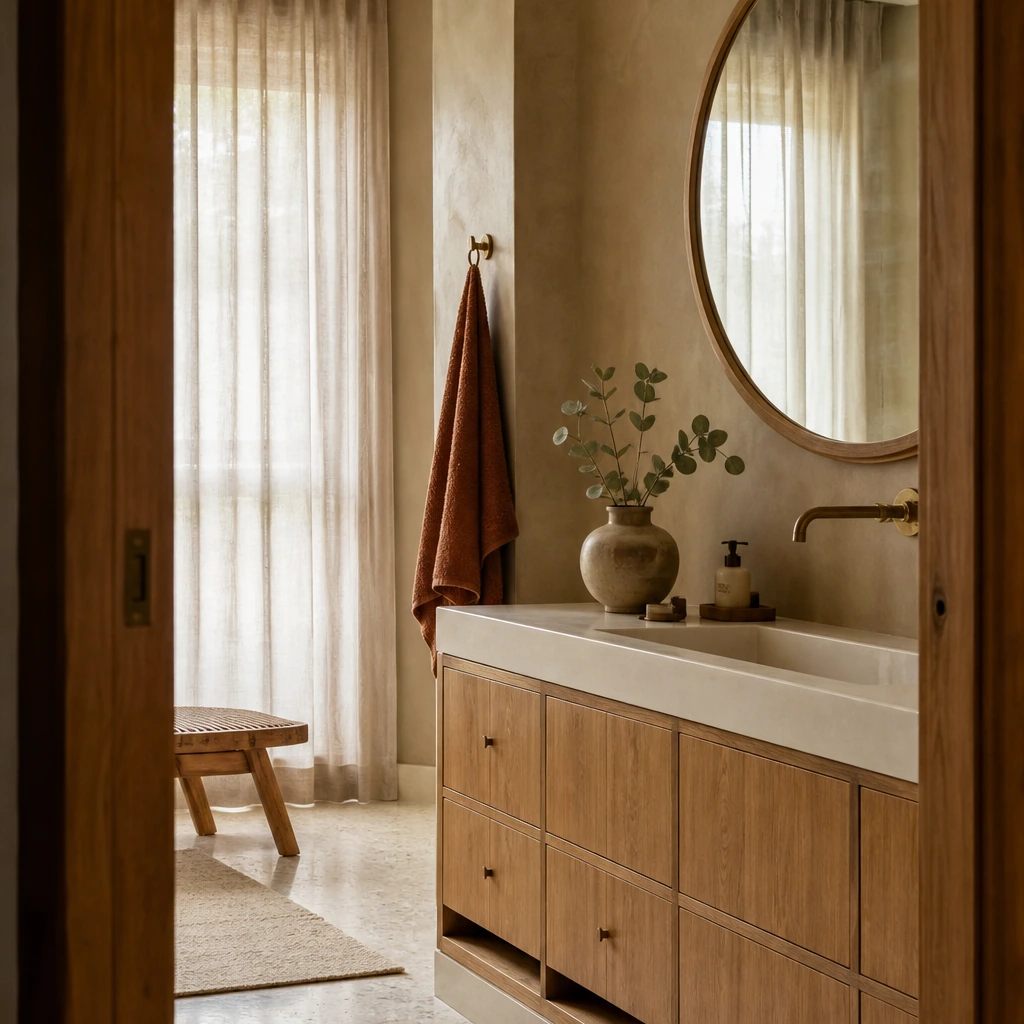
Budget luxury in bathroom design is the practice of concentrating limited spend on high-visibility, high-impact elements while keeping structural and plumbing work completely off the table. The goal is maximum perceived quality per dollar, achieved through deliberate material choices, consistent finishes, and disciplined editing rather than comprehensive renovation.
This is not about finding cheap versions of expensive things. It is about understanding which elements carry the most visual weight in a small space and investing there, while leaving everything else intentionally simple.
The distinction matters because most budget bathroom refreshes fail not from lack of spending but from misdirected spending. A new soap dispenser, a matching towel set, a printed shower curtain that clashes with the existing tile. These are not bad purchases. They are just not doing the structural visual work that makes a bathroom feel elevated.
The Cosmetic Versus Structural Divide
The most important financial decision in any bathroom refresh is staying on the cosmetic side of the line. Major remodels where at least the shower area is upgraded carry a national median spend of $22,000, while minor remodels that leave the shower in place drop to a fraction of that. The moment plumbing moves or wet areas get retiled, costs escalate in ways that are difficult to control.
Cosmetic changes are predictable and reversible. Paint, lighting, hardware, mirrors, and textiles can all be swapped without permits, contractors, or structural risk. They are also the categories where design judgment matters more than budget, which means a well-chosen $80 mirror can outperform a poorly chosen $400 one.
The Hero Piece Principle
Designers working with tight bathroom budgets consistently recommend the same approach: identify one focal element where you concentrate the majority of your spend, then simplify everything around it. The principle is to pick one focal item where you spend the main part of your budget, whether a bath, brassware, or tiles, and keep the rest restrained.
This is not about being cheap on everything else. It is about creating a clear visual hierarchy. When one element is clearly the best thing in the room, the room reads as intentional. When everything is equally mediocre, the room reads as unfinished.
Why This Approach Matters Right Now
The financial case for budget-luxury bathroom strategies has never been stronger. Total U.S. home renovation spending rose from $328 billion in 2019 to $472 billion in 2022, with projected spending of $485 billion in 2024, signaling sustained investment in the category. Bathrooms are among the top targets, and the cost gap between inspiration and execution has widened considerably.
At the top of the market, luxury bathroom renovations now start at roughly $45,000 for smaller high-end bathrooms and climb past $70,000 for larger ones, according to 2025 Houzz renovation trend data. That is the inspiration tier. The execution tier for most households is dramatically lower, which creates strong demand for cosmetic updates that borrow from luxury design without the structural spend.
The ROI data reinforces this logic. A midrange 5x7 bathroom remodel costing about $26,138 nationally adds roughly $20,910 in resale value, an 80% return. An upscale $75,000 remodel adds only about $31,500 in resale value, roughly 42%. The financial case for targeted cosmetic upgrades over comprehensive renovation is clear.
For renters and younger homeowners specifically, the math is even more compelling. Industry guidance based on the 2024 Cost vs. Value report puts national bathroom remodel ROI in a 45% to 74% range depending on scope. Cosmetic refreshes that stay well below the median renovation cost can deliver meaningful quality improvements without the financial exposure of a full project.
Paint Colors and Finishes That Elevate Bathroom Spaces
Paint is the highest-leverage tool in a budget bathroom refresh. It costs less than almost any other intervention and changes more about how a space feels than almost any other single decision. The mistake most people make is treating bathroom paint as a neutral background choice rather than an active design decision.
Colors That Read as Expensive
Colors that tend to read as expensive in bathrooms share a few characteristics. They are complex rather than flat. A warm white with a slight yellow or pink undertone feels more considered than a stark, blue-toned white. Deep, saturated colors like forest green, navy, or charcoal read as intentional and spa-like in small bathrooms, where the enclosed scale actually works in favor of a bold choice.
The finish matters as much as the color. Satin and eggshell finishes reflect light softly and hide imperfections better than flat paint, while being easier to clean than matte. Semi-gloss on trim and cabinetry creates a subtle contrast that adds visual structure without requiring any additional work.
Benjamin Moore and Sherwin-Williams both produce bathroom-appropriate lines with moisture-resistant formulas. Their color selections skew toward the complex, nuanced neutrals that designers use in editorial work, which is part of why they appear so consistently in coverage of elevated interiors.
Painting Beyond the Walls
One of the most underused budget moves is painting the vanity. A dated oak or laminate vanity painted in deep navy, warm black, or sage green with new hardware on top looks nothing like its original self. The transformation is significant enough that most guests will assume it was replaced entirely.
Ceiling paint is another overlooked lever. Painting the ceiling the same color as the walls, or one shade darker, creates a cocooning effect that makes small bathrooms feel intentional rather than cramped. It is a technique borrowed from high-end hotel design and costs nothing extra beyond the paint itself.
Finish selection by surface type:
Strategic Lighting Upgrades for Luxury Bathroom Ambiance
Lighting is where most bathrooms fail visually, and where a modest investment delivers the most immediate return. The standard builder-grade vanity bar with globe bulbs is functional but flat. It casts even, unflattering light that makes the entire space feel clinical rather than considered.
Layered Lighting Without Rewiring
Luxury bathrooms use layered lighting: task lighting at the vanity, ambient light from overhead, and sometimes accent lighting near a mirror or in a niche. Replicating this in a budget refresh does not require rewiring. It requires swapping the existing fixture for something better and adding a dimmer switch.
A dimmer switch is one of the most cost-effective upgrades in any bathroom. Lutron makes widely available dimmer switches that work with most LED fixtures and can be installed in under an hour. The ability to lower the light level in the evening changes how the room feels entirely, shifting it from utilitarian to relaxing.
For the vanity fixture itself, the shape and finish matter more than the price. A simple, well-proportioned bar in brushed brass or matte black reads as intentional. A cheap chrome bar with mismatched globe bulbs reads as an afterthought, regardless of how much was spent on everything else.
Bulb Temperature and Color Rendering
The bulb inside the fixture matters as much as the fixture itself. Warm white bulbs in the 2700K to 3000K range produce the soft, flattering light associated with hotel bathrooms. Cool white bulbs above 4000K produce the harsh, clinical light associated with office buildings. Switching bulbs costs almost nothing and changes the entire mood of the space.
Color rendering index (CRI) is worth paying attention to when selecting LED bulbs for bathrooms. A CRI of 90 or above renders skin tones and materials more accurately, which makes the room feel more refined. Most budget LED bulbs sit around CRI 80. The difference in cost between CRI 80 and CRI 90 bulbs is usually under $5 per bulb.
Affordable Hardware and Fixture Swaps for Modern Appeal
Hardware is the jewelry of a bathroom. It is small, it is everywhere, and it sets the tone for whether the space feels cohesive or assembled from whatever was on sale. Replacing all the hardware in a bathroom, towel bars, toilet paper holder, robe hook, cabinet pulls, and faucet, with pieces in a consistent finish is one of the fastest ways to make a space look designed rather than default.
Choosing a Finish and Committing to It
The most common hardware mistake in budget bathrooms is mixing finishes. Chrome faucet, brushed nickel towel bar, oil-rubbed bronze cabinet pulls. Each piece might be fine on its own, but together they read as unplanned. Choosing one finish and applying it consistently across every metal surface in the room creates the kind of cohesion that reads as expensive.
Brushed brass and matte black are both strong choices for bathrooms that want to feel current without being trendy. Brushed nickel is a safe, timeless option that works in almost any color scheme. Polished chrome is classic but requires more maintenance to look clean.
Moen and Delta Faucet both offer mid-priced collections in on-trend finishes that closely mirror the look of higher-end designer fixtures. Kohler's stock lines are similarly positioned. The key is buying all pieces from the same collection or at minimum the same finish family, so the metal reads as intentional throughout the room.
Approximate cost for a full hardware swap in a standard small bathroom:
Even at the mid-range tier, a complete hardware refresh costs less than $500 and changes the visual character of the room more than most structural updates costing ten times as much.
Mirror Placement and Frame Upgrades for Visual Impact
Mirrors do more work in a small bathroom than almost any other single element. They reflect light, create the illusion of depth, and serve as a focal point that anchors the vanity wall. The builder-grade frameless rectangle that comes standard in most bathrooms is not doing any of that work.
Sizing Up for Visual Impact
The most consistent advice from designers working in small bathrooms is to go larger with the mirror than feels comfortable. A mirror that extends close to the ceiling and spans most of the vanity width makes the room feel taller and wider. A small mirror floating above a wide vanity makes the room feel cramped and unresolved.
Arched mirrors, round mirrors, and mirrors with warm metal frames in brass, bronze, or black all read as more intentional than a plain rectangle. CB2 and West Elm both carry design-forward mirror options at accessible price points that can serve as the focal point of an otherwise simple bathroom. For a more custom look, a local glass shop can cut a large mirror to size, which can then be framed with simple wood molding painted to match the wall or vanity.
Placement and Lighting Interaction
Where the mirror sits relative to the light source matters. A mirror positioned directly above the vanity light, rather than several inches above it, creates a cleaner, more intentional relationship between the two elements. If the light source is on either side of the mirror rather than above it, the mirror should be tall enough to span the full height between the two fixtures.
Leaning a large mirror against the wall in a bathroom with enough floor space reads as styled rather than installed. It is a technique borrowed from editorial bathroom photography and costs nothing beyond the mirror itself.
Budget-Friendly Tile and Backsplash Alternatives
Full tile replacement is where bathroom budgets go to die. Retiling a shower or floor involves demolition, waterproofing, materials, and labor, and it is almost never necessary for a cosmetic refresh. Several approaches deliver a significant visual upgrade without touching existing tile.
Working With What You Have
The first question to ask about existing tile is not whether it is the right tile, but whether it is clean and in good condition. Grout that has been re-grouted or cleaned with a grout pen looks dramatically different from grout that has been ignored for a decade. Tile that has been cleaned and sealed looks newer than tile that has not. These are $20 to $50 interventions that change the baseline significantly.
If the existing tile is a color or pattern that feels dated, painting it is a legitimate option. Tile paint kits are available at most hardware stores and work best on wall tile rather than floor tile. The result is not permanent, but it is a significant visual change for under $100.
Small Backsplash Additions
Adding a small tiled backsplash behind the vanity, rather than retiling the entire bathroom, is a technique designers specifically recommend for budget-limited spaces. A 12-inch-high backsplash in a contrasting tile behind the sink creates a focal point and adds visual interest without the cost of a full tile job.
Peel-and-stick tile options have improved significantly in quality and are a reasonable option for renters or anyone who wants a reversible change. Large-format tiles, available at Floor and Decor and similar retailers, can mimic the look of stone slab at a fraction of the cost when used selectively rather than throughout the entire room.
DIY Bathroom Styling and Accessory Arrangements
Styling is the part of bathroom design that most people underestimate. The difference between a bathroom that looks like a hotel and one that looks like a rental is often not the fixtures or the tile. It is the way the towels are folded, the way the shelves are arranged, and the deliberate absence of visual clutter.
The Editing Principle
The most important styling move in a small bathroom is removing things. Countertop clutter, mismatched bottles, expired products, and decorative items that do not earn their space all contribute to a room that feels busy and unresolved. A bathroom with three well-chosen objects on the counter reads as more expensive than one with fifteen objects, regardless of what those objects cost.
The same principle applies when furnishing a small city apartment: fewer pieces doing more work always beats more pieces doing less.
Towels, Textiles, and Soft Goods
White towels are the single most reliable textile upgrade in a bathroom. They read as hotel-quality regardless of their actual cost, they make the room feel cleaner, and they work with any color scheme. A set of white Turkish cotton towels from H&M Home or Zara Home costs under $40 and changes the feel of the room immediately.
A waffle-weave shower curtain in white or a warm neutral reads as more considered than a printed curtain and works as a neutral backdrop that lets other elements in the room stand out. Choosing one or two textile statements rather than layering multiple patterns that compete with each other is the move that separates a styled bathroom from a busy one.
Storage Solutions That Double as Decorative Elements
Storage in a small bathroom is a design problem as much as a practical one. Visible clutter reads as chaos. Hidden clutter reads as calm. The goal is to make storage feel intentional rather than improvised.
Open Shelving Done Right
Open shelving works in bathrooms when the items on the shelves are curated rather than accumulated. A floating shelf with three items, a small plant, a candle, and a stack of folded washcloths, reads as styled. The same shelf with twelve items reads as a medicine cabinet overflow.
Bamboo ladder shelves are a reliable budget option that reads as more considered than wire shelving or plastic organizers. The natural material adds warmth and texture to a room that often skews cold and hard.
Vanity Storage and Organization
Under-sink organization is invisible but affects how the rest of the bathroom feels. When the cabinet under the sink is organized, the countertop stays cleaner because there is a place for everything. Woven baskets, clear acrylic organizers, and simple drawer dividers are all under-$30 investments that pay off in daily usability.
For bathrooms without a vanity cabinet, a small freestanding unit or a wall-mounted cabinet adds both storage and visual structure. Painting a freestanding unit to match the wall color makes it feel built-in rather than added on.
Tools and Platforms That Support Budget Bathroom Refreshes
The right tools make the difference between a refresh that comes together and one that stalls in the research phase. Below are the primary categories, with representative options in each.
Paint and Wall Finishes
- Benjamin Moore: Mid- to high-quality interior paints with moisture-resistant lines; widely used by designers for complex neutrals and deep accent colors.
- Sherwin-Williams: Bathroom-appropriate paints including mildew-resistant finishes; frequently referenced in design media for curated color collections tailored to small spaces.
- Behr (Home Depot): Accessible pricing with durable satin and semi-gloss finishes recommended for high-moisture environments.
Lighting and Controls
- Progress Lighting: Mid-priced decorative bathroom lighting with styles that echo higher-end designer fixtures at lower cost.
- Lutron: Dimmers and smart switches that add layered, dimmable lighting for spa-like ambiance without rewiring fixtures.
- Lithonia Lighting: Value-oriented vanity bars and LED solutions widely available through big-box retailers.
Hardware and Faucets
- Moen: Major manufacturer of faucets, shower heads, and accessories; mid-priced collections that mirror luxury looks in more affordable finishes.
- Delta Faucet: Broad product lines across price points, including on-trend black, brass, and brushed finishes suitable for DIY-friendly updates.
- Kohler: Strong in both premium and midmarket; stock faucets, towel bars, and accessories are common upgrade elements in budget-conscious renovations.
Mirrors and Decorative Focal Points
- CB2 and West Elm: Design-forward mirror options including arched, metal-framed, and oversized formats that serve as focal points in otherwise simple bathrooms.
- Umbra: Decorative yet relatively affordable mirrors and wall decor.
- Local glass shops: Custom-cut mirror solutions that can be framed DIY for a bespoke look at moderate cost.
Tile Alternatives and Surface Overlays
- Smart Tiles: Peel-and-stick backsplashes and wall tiles that imitate ceramic or stone at much lower cost with DIY installation.
- Floor and Decor: Budget-friendly porcelain and ceramic tiles; also carries large-format tiles that designers use to mimic slab stone more affordably.
- Tub refinishing services: Regional contractors and kits that allow homeowners to resurface old tile or tubs without full tear-out.
Design and Project Planning
- First Chair: For homeowners who want to move from bathroom inspiration to specific, shoppable recommendations without the endless-tabs problem, First Chair translates uploaded inspiration photos and style descriptions into curated room concepts built from real, in-stock pieces across multiple retailers including West Elm, CB2, Crate and Barrel, Pottery Barn, and Lulu and Georgia. The platform is particularly useful when the challenge is not finding options but knowing which combination of mirror, hardware finish, and textile will actually work together in a specific space. Insider pricing on selected pieces is included for members.
Best Practices for Making a Small Bathroom Look Expensive
These practices reflect how designers actually approach budget-constrained spaces, grounded in the economic realities of what cosmetic versus structural work costs.
- Keep the layout and plumbing exactly where they are. Major remodels involving showers and layout changes are where budgets escalate sharply. The median for major bathroom remodels reached $22,000 in 2024. Staying on the cosmetic side of the line keeps the project manageable and predictable.
- Choose one hero investment and simplify everything else. Concentrate the majority of the budget on one standout element, whether brassware, a vanity, or a statement mirror. Keep everything around it quiet. The room reads as intentional when there is a clear visual hierarchy.
- Treat paint as a design decision, not a background task. Paint the vanity. Paint the ceiling the same color as the walls. Choose a color with complexity rather than a flat, safe neutral. These are the moves that change how the room feels, not just how it looks.
- Standardize every metal finish in the room. Faucet, towel bar, toilet paper holder, robe hook, cabinet pulls. One finish, consistently applied. This single decision does more for perceived cohesion than almost any other change.
- Go larger with the mirror than feels comfortable. A mirror that spans most of the vanity width and extends close to the ceiling makes the room feel taller and wider. A small mirror floating above a wide vanity makes the room feel cramped.
- Switch to warm-white, high-CRI bulbs before buying a new fixture. Bulb temperature and color rendering index change how the room feels more than the fixture shape does. Start there. It costs under $20 and takes five minutes.
- Edit the countertop down to three objects. Clutter is the fastest way to make an expensive bathroom look cheap. Restraint is the fastest way to make a budget bathroom look expensive.
- Use white towels as a baseline textile. They read as hotel-quality at any price point, work with any color scheme, and make the room feel cleaner. Replace them before buying any other textile.
Common Mistakes That Undermine Budget Bathroom Refreshes
Spreading the Budget Too Thin
Buying ten small things instead of one or two meaningful things is the most common budget bathroom mistake. The result is a room full of items that are each fine on their own but collectively create visual noise rather than visual clarity. Pick fewer things and do them well.
Mixing Metal Finishes
Chrome faucet, brushed nickel towel bar, oil-rubbed bronze pulls. Each piece might be fine individually, but mixed finishes read as unplanned. Committing to one finish across every metal surface in the room is free and has an immediate effect on perceived cohesion.
Choosing the Wrong Bulb Temperature
Installing a new vanity fixture and leaving the existing cool-white bulbs in place negates most of the upgrade. The fixture shape matters less than the light it produces. Warm-white bulbs in the 2700K to 3000K range are non-negotiable for a bathroom that reads as considered rather than clinical.
Undersizing the Mirror
A mirror that is too small for the vanity wall is one of the most common visual mistakes in small bathrooms. It makes the room feel cramped and unresolved. When in doubt, go larger. The visual payoff is significant and the cost difference between a small mirror and a large one is often minimal.
Retiling When Cleaning Would Suffice
Full tile replacement is rarely necessary for a cosmetic refresh. Dirty, discolored grout cleaned with a grout pen or re-grouted entirely looks dramatically different from neglected grout. This is a $20 to $50 fix that often eliminates the perceived need for a $3,000 tile job.
Ignoring the Ceiling
Leaving the ceiling white while painting the walls a rich color is a common missed opportunity. Painting the ceiling the same color as the walls, or one shade darker, creates a cocooning effect that makes small bathrooms feel intentional rather than unfinished.
Buying Textiles That Compete With Each Other
A printed shower curtain, a patterned bath rug, and a decorative towel in a third color scheme creates visual chaos in a small space. Choose one textile statement and keep everything else neutral. The room will feel more considered with less effort.
Skipping the Dimmer Switch
A single overhead light at full brightness is the fastest way to make a bathroom feel like a utility space rather than a retreat. A dimmer switch costs under $30, installs in under an hour, and changes how the room feels at every hour of the day.
Putting It Together: A Prioritized Refresh Sequence
When the budget is limited, the order of changes matters. Some updates create the foundation that makes everything else look better. Others are finishing touches that only work once the foundation is right.
The table below shows a recommended sequencing for a budget bathroom refresh, from highest to lowest visual impact per dollar spent:
Total range for a complete cosmetic refresh using this sequence: $450 to $1,400. That is a fraction of the $13,000 national median for all bathroom renovations in 2024, and it addresses every element that carries meaningful visual weight in a small space.
How to Execute Without Getting Stuck
The hardest part of a budget bathroom refresh is not knowing what to buy. It is knowing which combination of things will actually work together in your specific space. A mirror that looks perfect in a Pinterest photo may be the wrong scale for your vanity. A paint color that reads as warm in a large, well-lit bathroom may read as dark in a small one with a single window.
This is the gap between inspiration and execution that most people get stuck in. If you have been circling the same twenty Pinterest saves for three months without buying anything, the problem is not inspiration. It is the absence of someone telling you which specific combination of pieces will actually work in your room.
First Chair closes that gap. Upload your inspiration images, describe the aesthetic direction you want, and the platform translates that into specific, shoppable recommendations built from real, in-stock pieces. Every item shown exists and is chosen to work with the other pieces in the room. For anyone who has been overwhelmed by too many options, it is the difference between endless research and a clear next move.
Frequently Asked Questions
What is the cheapest way to make a bathroom look more expensive?
Paint is the single cheapest, highest-impact change available. Painting the walls a complex, saturated color and painting the vanity in a contrasting deep tone costs $50 to $150 in materials and changes the entire character of the room. Switching to warm-white, high-CRI light bulbs is the second cheapest change and costs under $20.
How much does a cosmetic bathroom refresh typically cost?
A complete cosmetic refresh covering paint, lighting, hardware, mirror, and textiles typically runs between $450 and $1,400 depending on the size of the bathroom and the finish tier chosen for hardware. This compares to a national median of $13,000 for all bathroom renovations and $22,000 for major remodels involving shower work.
Is it worth replacing bathroom hardware before selling a home?
The data supports it. A complete hardware swap in a consistent finish costs under $500 and creates the kind of visual cohesion that reads as intentional to buyers. Given that 29% of sellers make some bathroom improvement before listing, and that midrange bathroom updates deliver strong ROI relative to upscale projects, targeted cosmetic changes are among the most cost-effective pre-sale investments available.
What mirror size works best in a small bathroom?
Larger than feels comfortable is the consistent designer recommendation. A mirror that spans most of the vanity width and extends close to the ceiling makes the room feel taller and wider. For a standard 36-inch vanity, a mirror that is 32 to 36 inches wide and 36 to 48 inches tall is a reasonable starting point. Round and arched mirrors work well when the goal is a focal point rather than maximum coverage.
Should I hire a contractor for a budget bathroom refresh?
For the updates covered in this guide, paint, lighting fixture swaps, hardware replacement, and mirror installation, most homeowners can complete the work themselves with basic tools and a weekend. The exception is electrical work beyond a dimmer switch swap, which should involve a licensed electrician. Keeping the project DIY-friendly is part of what makes the budget work.
Does painting a bathroom vanity actually look good?
Yes, when done correctly. The key steps are thorough cleaning, light sanding, a bonding primer, and two coats of semi-gloss or satin paint in a color with enough depth to read as intentional. Navy, warm black, sage green, and deep forest tones all work well. The result is significant enough that most people assume the vanity was replaced rather than painted.
Conclusion
The gap between a bathroom that looks expensive and one that does not is almost never about budget. It is about knowing which moves carry visual weight and making those moves deliberately while leaving everything else alone.
Paint the vanity. Swap every piece of hardware to one consistent finish. Replace the vanity light with something that has a shape and a finish instead of just a function. Go larger with the mirror. Switch to warm-white bulbs. Put white towels in the room and take ten things off the counter. These are not complicated decisions. They are just the right ones, made in the right order.
The research confirms what designers have always known: midrange, cosmetic-focused bathroom updates deliver better financial returns than comprehensive renovations, and the visual difference between a $500 refresh and a $15,000 remodel is smaller than most people assume when the $500 is spent on the right things.
If you are ready to move from inspiration to a specific, shoppable plan for your space, First Chair can take your saved photos and aesthetic direction and turn them into real recommendations built from pieces that actually exist. No more tabs. No more second-guessing. Just a room that finally looks the way you meant it to.