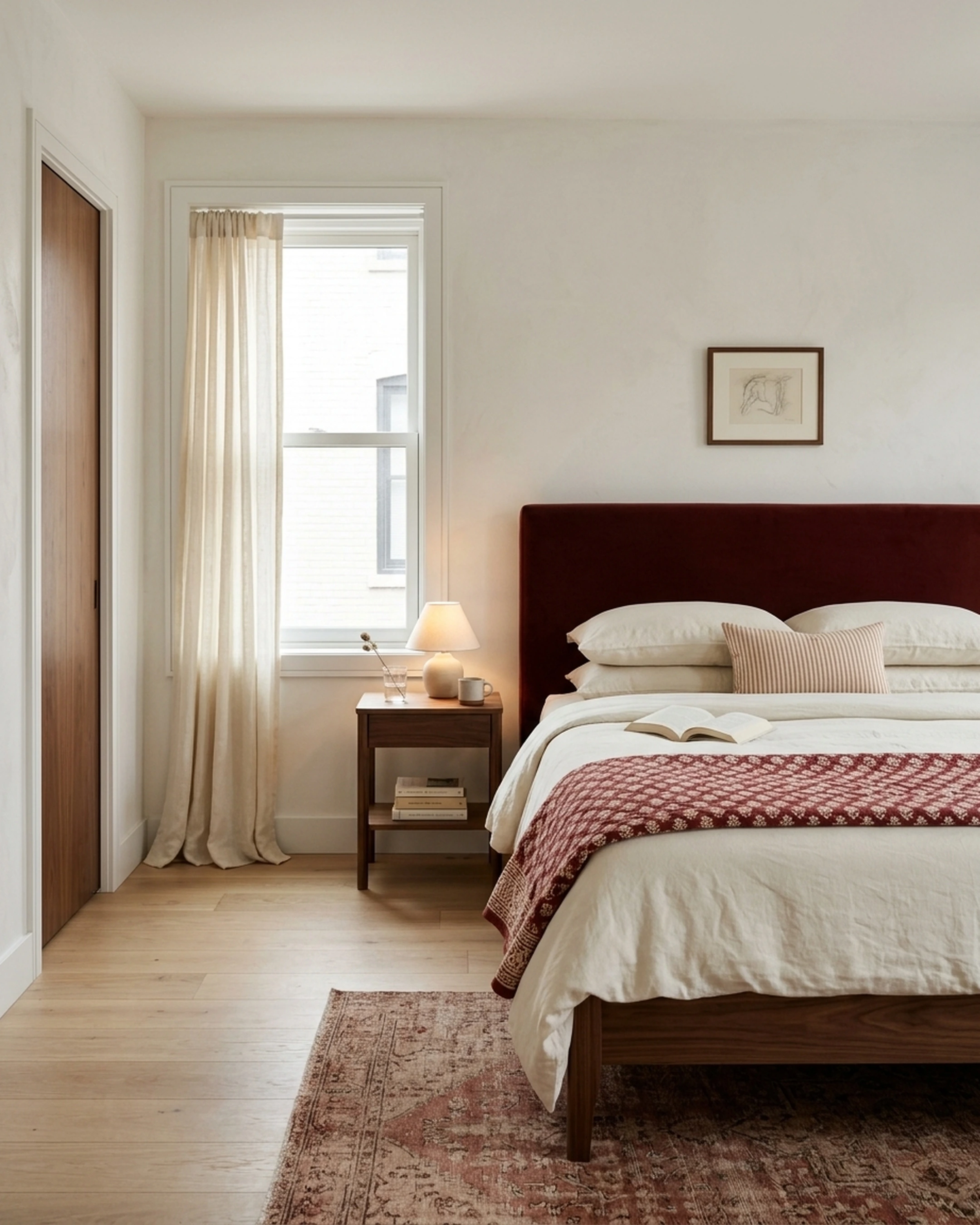

Picture this: you are in your Austin townhouse on a Sunday morning, watching an Architectural Digest home tour on your laptop, pausing every thirty seconds to screenshot something. The warm plaster walls. The oversized rug that grounds the entire living room. The floor lamp casting that specific quality of light that makes the whole space feel inhabited rather than staged. You want exactly that. Then you close the laptop, look at your actual room, and feel the gap between those two realities like a physical thing.
That gap is not about budget. It is not about taste. It is almost entirely about execution.
The design elements that make celebrity homes feel elevated are not proprietary. They are decisions: a controlled color palette, layered lighting, a few architectural details that add depth, and the discipline to stop buying pieces that do not belong. Those decisions are replicable. The materials can be swapped. The proportions can be adapted. The principles stay the same whether you are working with a 2,000-square-foot home in Chicago or a one-bedroom apartment in Brooklyn.
This guide breaks down the specific design moves that define famous residences, explains why they work, and shows you how to execute them in a real space with a real budget. Here is what you will learn:
- Which architectural styles appear most in celebrity homes and how to borrow their core principles
- How to use the high-low design framework to create a curated look without a luxury budget
- Which color palettes from famous residences translate best to everyday homes
- The furniture and decor decisions that consistently deliver outsized visual impact
- How layered lighting works and why it is the most accessible upgrade available
- What outdoor living upgrades deliver the strongest return at accessible price points
- Which smart home features create the "invisible tech" feel of celebrity interiors
- The DIY projects that professional designers recommend most for adding architectural depth
Key Takeaways
- U.S. homeowners spent $486 billion on home improvement and repair in 2023, up from $328 billion in 2019, reflecting a sustained shift toward investing in the home environment.
- The design elements that make celebrity homes feel expensive, including layered lighting, architectural detailing, and controlled color palettes, are replicable at moderate price points using the high-low framework.
- Switching to LED lighting can reduce lighting energy use by at least 75% compared to incandescent bulbs, making layered lighting upgrades both aesthetic and practical.
- Over 70% of architects noted increased client interest in outdoor living spaces in 2023 and 2024, a trend visible across celebrity homes of every architectural style.
- The global smart home market is projected at approximately $141 billion in 2024, with smart lighting and climate control now accessible enough to replicate the "invisible tech" feel of high-end interiors.
- Indoor VOC concentrations can be two to five times higher than outdoor levels; low-VOC paints deliver the clean aesthetic of celebrity interiors with genuine health benefits.
- Decluttering before decorating is the single most underrated design move. A clean, organized space makes every piece perform better, regardless of price point.
- The high-low approach, combining one or two investment pieces with more affordable finds, consistently produces more curated results than buying everything at the same moderate price tier.
What Makes a Celebrity Home Feel Expensive: The Core Concept
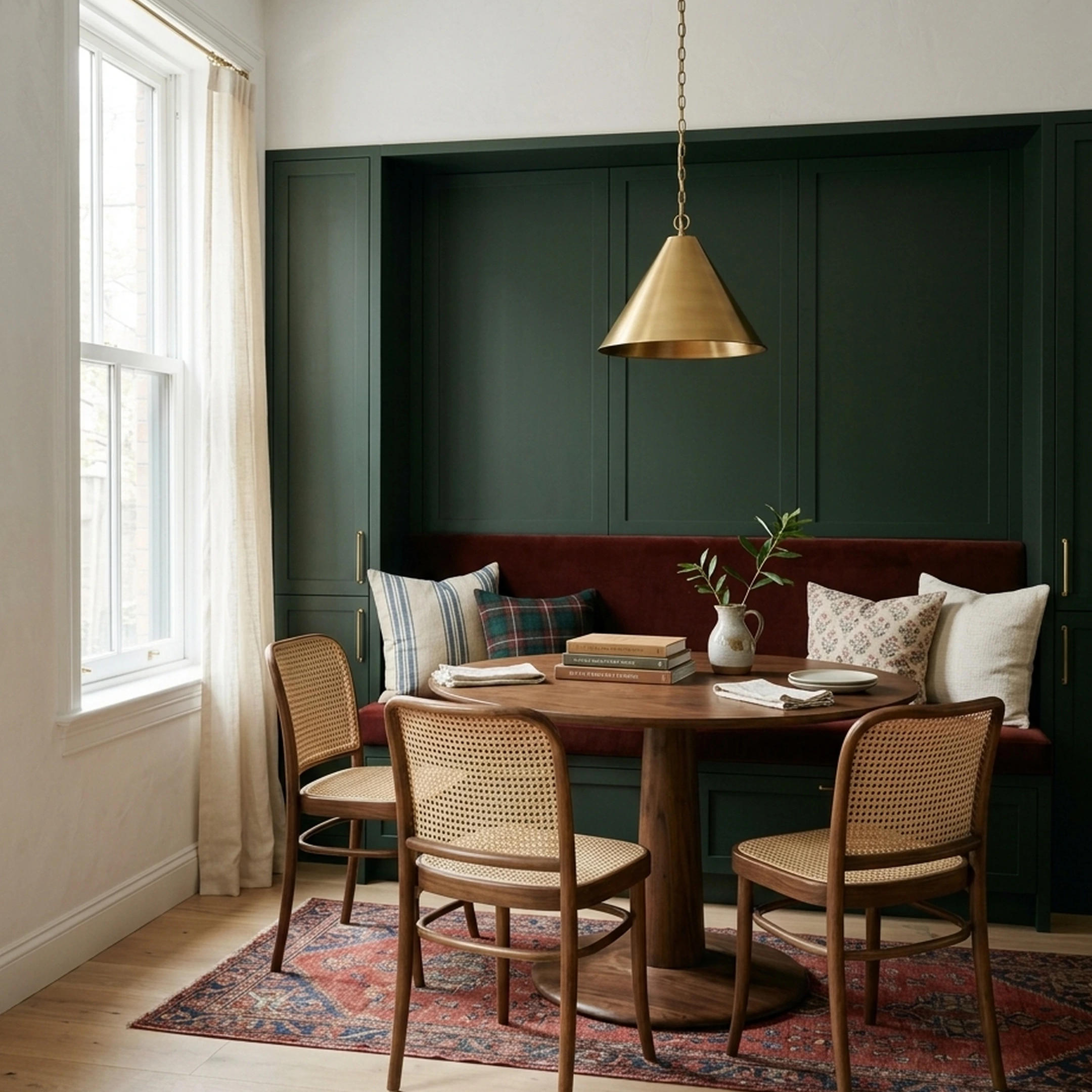
A celebrity home aesthetic is a highly curated, often custom-designed look characterized by statement architecture, controlled color palettes, bespoke or carefully selected furniture, and visible material quality. The defining feature is not cost. It is the absence of visual noise and the presence of deliberate decision-making at every scale.
Most of what reads as "expensive" in a high-profile residence comes down to four repeatable principles: a dominant material or texture that runs through the space, lighting that creates depth rather than flat illumination, furniture chosen for silhouette and scale rather than matching sets, and architectural details that give walls and ceilings something to say. None of these require a renovation budget. All of them require intention.
The distinction between a celebrity home and an average residential space is usually not the quality of the individual pieces. It is the coherence of the whole. Professional designers make decisions about how pieces relate to each other. Most homeowners make decisions about pieces in isolation, which is why rooms end up feeling assembled rather than designed.
Why This Matters Now: The Market Context Behind the Trend
Home investment has shifted fundamentally over the past several years, and the numbers reflect it. Spending on home improvement and repair in the U.S. reached $486 billion in 2023, up from $328 billion in 2019. That is not a pandemic blip. It reflects a durable change in how people think about their homes.
The interior design services industry has grown alongside that investment. The U.S. market reached $18.6 billion in revenue in 2023, with approximately 130,000 businesses operating in the space, according to IBISWorld data. The global interior design services market is projected to reach around $168 billion by 2030, at a compound annual growth rate of 5 to 6% from 2023, based on analysis from Grand View Research.
Celebrity home coverage has accelerated the diffusion of luxury design principles into mainstream residential spaces. Architectural Digest's "Open Door" video series and similar editorial formats expose millions of viewers to specific design moves, from custom paneled walls to indoor-outdoor flow, that were previously visible only to design professionals and their clients. The result is a more design-literate consumer base that knows what it wants but often lacks the execution framework to get there.
The outdoor living trend is particularly pronounced. The Trends Survey found that over 70% of architects noted increased client interest in outdoor living spaces in 2023 and 2024, reflecting the influence of celebrity homes where patios, gardens, and outdoor kitchens function as extensions of interior living spaces.
U.S. consumer spending on furniture and home furnishings reached approximately $130 billion in 2023, according to Bureau of Economic Analysis personal consumption expenditure data. That scale of spending, combined with a more visually educated consumer, creates the conditions for the celebrity-inspired design approach to work: people are already spending. The question is whether they are spending on the right things.
Celebrity Home Architectural Styles and What Makes Them Work
Architectural style in a celebrity home is not arbitrary. It reflects a set of principles that professional designers apply consistently: strong geometry, material contrast, and spaces that feel considered rather than assembled. The most recognizable styles in high-profile homes fall into a few categories, each with a clear replication strategy.
Warm Modernism: The Most Replicated Celebrity Aesthetic
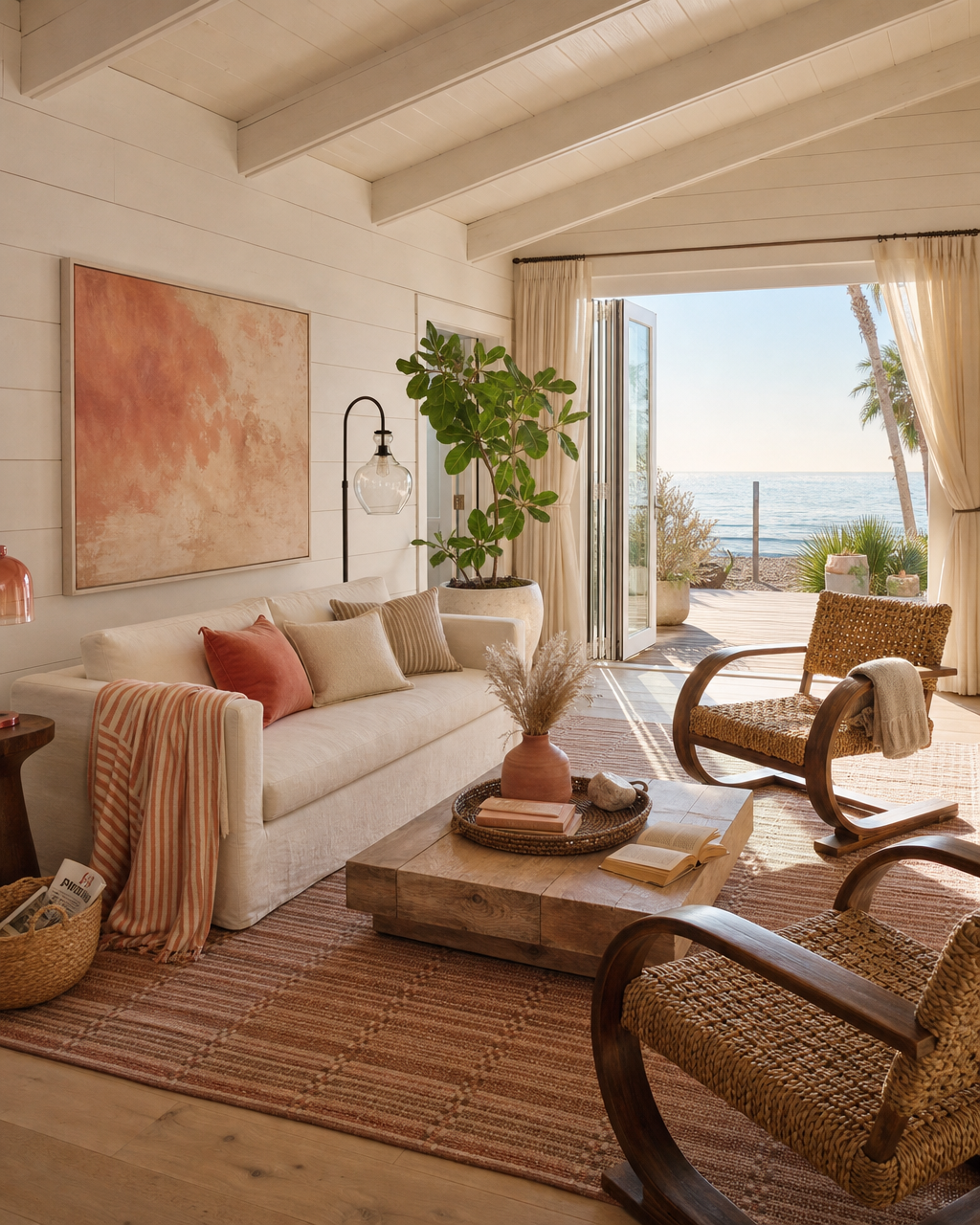
Warm modernism combines clean architectural lines with natural materials, soft neutrals, and layered texture. Wide-plank oak floors, plaster walls in warm white, and furniture with rounded silhouettes define this look. It appears in the majority of Architectural Digest celebrity home tours because it works: the aesthetic feels calm without feeling cold, and it photographs well in any light.
The replication strategy is straightforward. Start with a warm white or greige on the walls. Swap any cool-toned metals for aged brass or matte bronze. Add one piece with genuine texture, a boucle chair, a linen sofa, or a jute rug. The room will immediately read as more intentional. The key is restraint: warm modernism works because of what it leaves out as much as what it includes.
Midcentury Modern: Iconic Silhouettes That Age Well
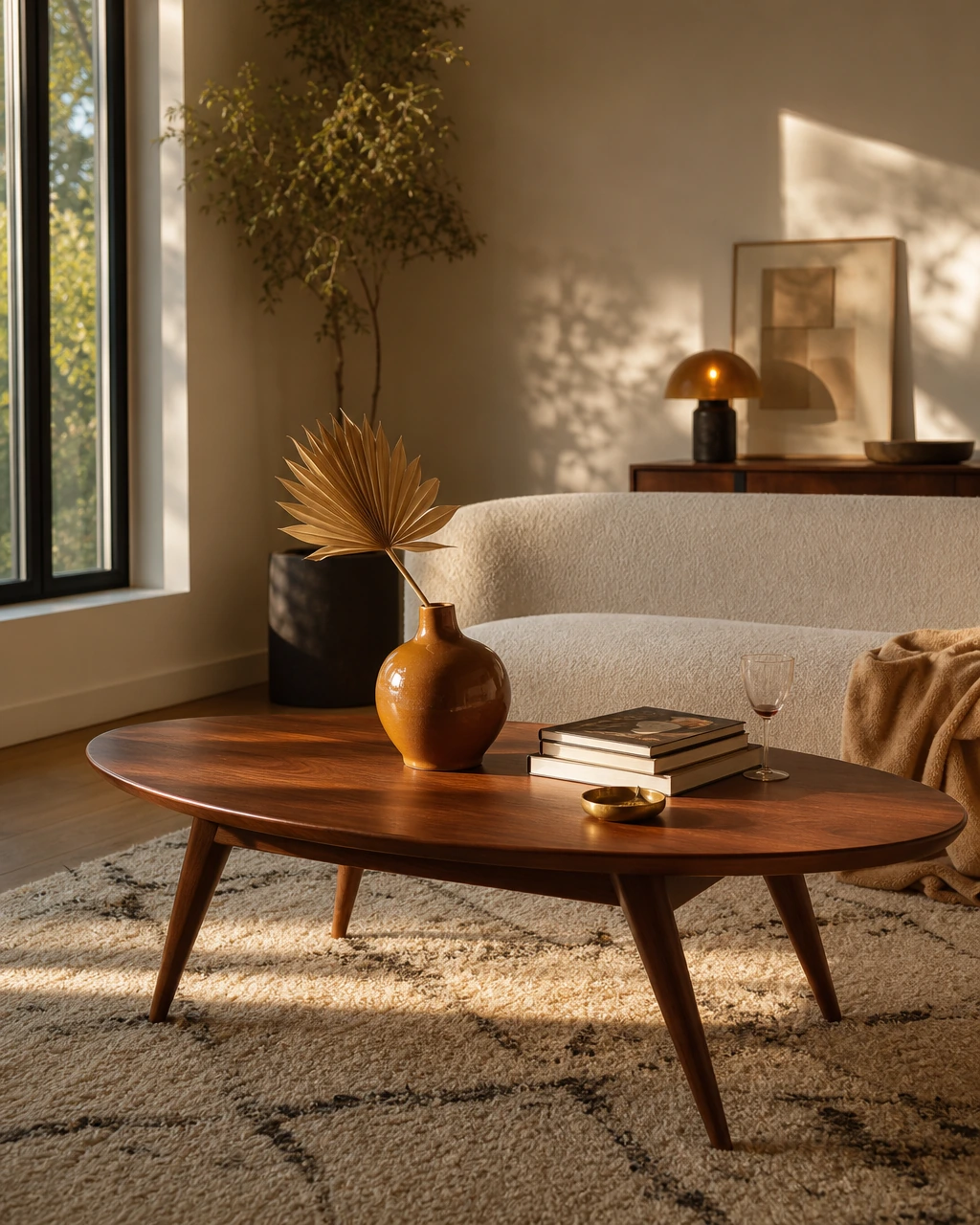
Midcentury modern remains one of the most referenced styles in celebrity homes because the furniture silhouettes are genuinely timeless. The critical distinction is choosing the warmer, softer versions of the style rather than the sharp, ultra-thin iterations that can feel dated or cold in a residential setting.
Look for pieces with tapered legs, walnut or teak finishes, and upholstery in warm earth tones. A single midcentury lounge chair from a brand like Design Within Reach, placed next to a floor lamp with a warm bulb, does more for a room than a full matching set from a mass-market catalog. The silhouette carries the aesthetic. Everything else supports it.
Mediterranean and Spanish Colonial: Texture-Forward and Livable
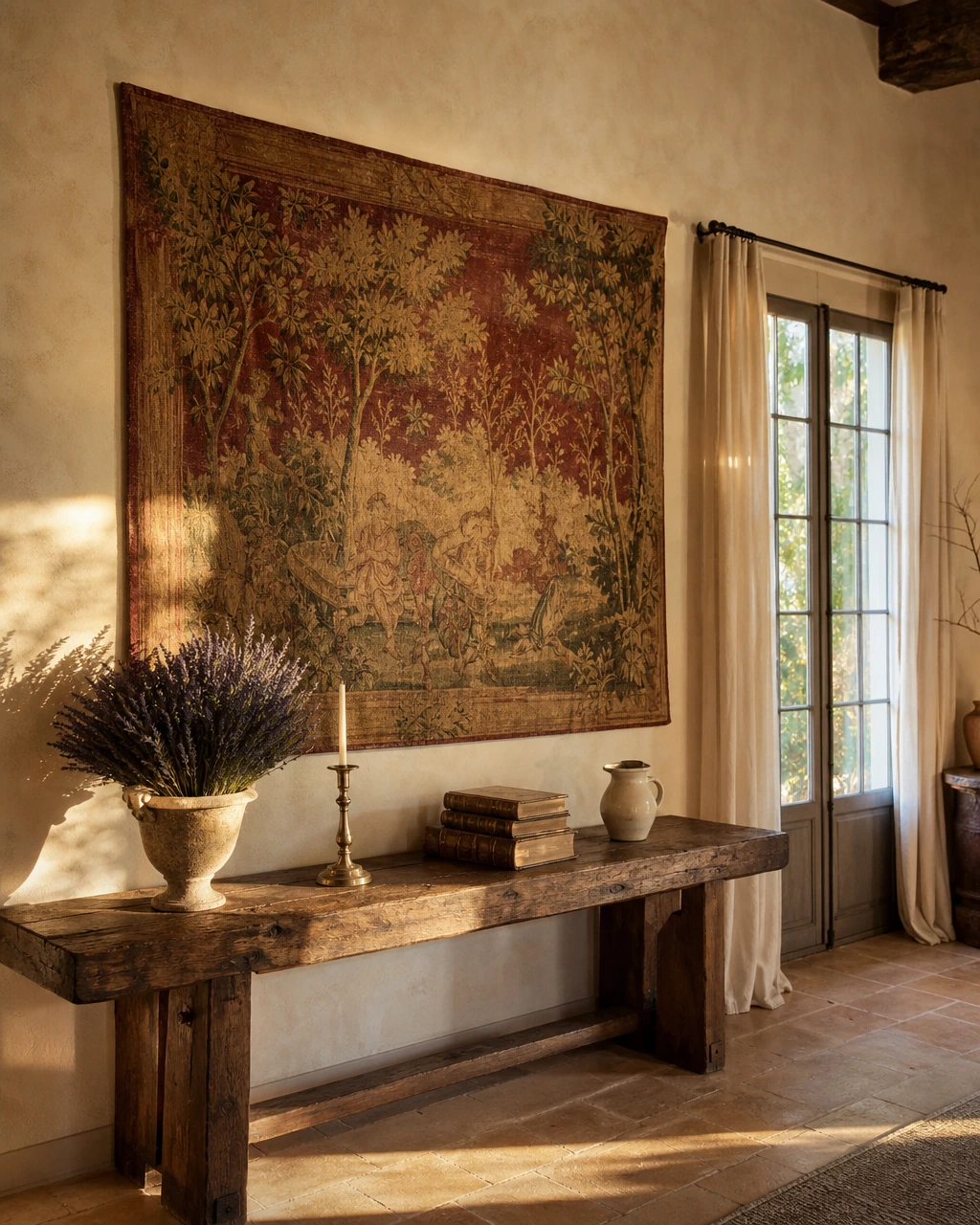
Homes in Los Angeles and Miami frequently draw on Mediterranean and Spanish Colonial architecture: arched doorways, terracotta tile, whitewashed walls, and heavy wood beams. The appeal is warmth and a sense of permanence, qualities that feel increasingly valuable in an era of disposable furniture.
You do not need to renovate to borrow from this vocabulary. Terracotta pots, woven textiles, and warm-toned ceramics carry the aesthetic into any space. If the budget allows for one architectural intervention, adding a simple arched opening between rooms or installing terracotta floor tile in an entryway delivers an outsized visual return relative to its cost.
The Principle That Runs Across All Three Styles
Each of these styles succeeds for the same underlying reason: a dominant material or texture runs through the space and creates visual coherence. In warm modernism, it is natural wood and plaster. In midcentury, it is walnut and warm upholstery. In Mediterranean, it is terracotta and whitewash. Identifying your dominant material and committing to it is the single most effective step toward a more considered room.
Budget-Friendly Ways to Recreate Luxury Interior Design
Luxury interior design on a budget is not about finding cheap versions of expensive things. It is about understanding which elements carry the most visual weight and spending selectively on those. The high-low design framework is the practical tool for making those decisions.
The High-Low Design Framework
High-low design means combining a few investment pieces with more affordable finds. Designers consistently recommend this approach over buying everything at the same price tier, because a room with one genuinely excellent piece surrounded by considered, affordable choices looks more curated than a room where everything costs the same moderate amount.
The practical version looks like this: one investment sofa in a durable, high-quality fabric from CB2, Interior Define, or RH; a rug from a mid-tier source like Lulu and Georgia or Crate and Barrel; lighting from Rejuvenation or Anthropologie Home, where design quality is high relative to price; and accessories sourced from Chairish, vintage markets, or IKEA with selective editing.
The table below shows where to spend and where to save across the main furniture categories.
CategoryWorth InvestingWhere to SaveSofaYes. Quality fabric and frame show immediately.Skip the matching loveseat.RugYes. Size and material define the room.Pattern can come from a mid-tier source.LightingYes. Fixture quality reads from across the room.Bulbs and dimmers are inexpensive upgrades.Coffee tableSometimes. Depends on material and scale.Can be vintage or DIY.Accent chairsNo. One good chair, not two mediocre ones.Source from Chairish or 1stDibs vintage.AccessoriesNo. Edit ruthlessly.Fewer, better pieces from any source.
Architectural Details That Cost Less Than You Think
MDF paneling, crown moulding, and wall frames are among the most cost-effective ways to add architectural depth to a room. A grid of simple wall frames painted the same color as the wall creates the kind of paneled detail visible in high-end interiors without touching the structure. Peel-and-stick wallpaper has improved significantly in quality and is now a legitimate option for renters who want a statement wall without a permanent commitment.
For a closer look at how to stop overwhelming yourself with furniture decisions, the principle is the same: fewer pieces, more considered.
Declutter Before You Decorate
This is the most underrated design move and the one most people skip. A clean, organized space makes every piece perform better. Clutter undermines even high-end furniture. Before adding anything, remove what does not belong. The room will immediately feel more expensive, and you will be able to see what it actually needs rather than layering new purchases over existing visual noise.
Color Palettes and Paint Schemes from Famous Residences
Color is the highest-leverage, lowest-cost design decision available to a homeowner. A single paint color applied consistently across walls, trim, and ceiling in a room creates the kind of enveloping, considered atmosphere that defines celebrity home interiors.
The Controlled Palette Principle
Celebrity homes almost universally use controlled palettes: a dominant neutral, one or two supporting tones, and a single accent. The mistake most homeowners make is introducing too many colors across too many surfaces, which fragments the room visually and makes it feel assembled rather than designed.
The most replicable approach is to choose a warm neutral for the walls, keep trim in the same family rather than stark white, and introduce color through textiles and accessories that can be changed without repainting. This approach is also the most forgiving: if the accent color stops working, you change a pillow, not a wall.
Specific Palettes Worth Borrowing
These palettes appear consistently across high-profile residential interiors and translate well to a range of home styles.
Warm white with aged brass and natural wood. This is the foundational palette of warm modernism. It reads as calm, expensive, and timeless. The key is using a white with a yellow or pink undertone rather than a cool or blue-toned white, which will read as clinical rather than warm.
Deep clay or terracotta with cream and black. This palette appears in Mediterranean-influenced homes and in the work of designers like Brigette Romanek and Jeremiah Brent. It is warmer and more personal than the standard neutral palette and works particularly well in living rooms and dining rooms where you want the space to feel inhabited.
Soft sage with warm wood and linen. Associated with Scandinavian and Japanese-influenced interiors, this palette creates a sense of calm without sterility. Sage walls with warm oak furniture and linen upholstery is one of the most consistently successful combinations in residential design, and it photographs well in natural light.
Paint Quality Matters More Than Color
The finish and quality of the paint affects how a color reads on the wall. A flat or matte finish absorbs light and creates depth. A satin finish reflects light and can make a color look cheaper than it is. For walls in living spaces, a flat or eggshell finish in a high-quality paint from Benjamin Moore, Farrow and Ball, or Sherwin-Williams will outperform a budget paint in any finish.
There is also a health case for paint quality. Indoor VOC concentrations can be two to five times higher than outdoor levels. Low-VOC paints reduce this exposure and are now available across all price tiers, including from the brands above. The clean aesthetic of celebrity interiors and the health benefits of low-VOC finishes point in the same direction.
Furniture and Decor Pieces That Define Celebrity Aesthetics
The furniture in a celebrity home is rarely the most expensive option available. It is the most considered. Pieces are chosen for scale, silhouette, and material, and they work together because someone made deliberate decisions about how they relate to each other.
The Statement Piece Strategy
A statement piece is a single dominant item that anchors a room's design and carries most of its visual impact. In celebrity homes, this is often a sofa with an unusual silhouette, an oversized piece of art, a chandelier that commands the room, or a rug large enough to ground all the furniture on it.
The strategy is to identify one statement piece per room and build around it. Everything else should support that piece, not compete with it. This is why matching furniture sets almost always look worse than a curated mix: the matching set distributes visual weight evenly and creates no focal point.
Pieces That Consistently Deliver Outsized Impact
The following pieces appear across celebrity and high-end residential interiors because they reliably elevate a room regardless of the surrounding budget.
An oversized rug. Most homeowners buy rugs that are too small. A rug should be large enough that all the main furniture sits on it, or at least has its front legs on it. An undersized rug makes a room feel smaller and less considered. This is one of the most common and most correctable design mistakes.
A floor lamp with a warm bulb. A single well-chosen floor lamp in a corner does more for a room's atmosphere than overhead lighting alone. Warm-toned bulbs in the 2700K to 3000K range create the kind of light that makes a space feel inhabited rather than institutional.
Genuine texture in upholstery. Velvet, boucle, and linen all read in person as more expensive than flat weaves or synthetic fabrics. One piece of furniture in a genuine texture, even at a moderate price point, elevates the room.
Art at the right scale. Art that is too small for the wall it occupies is one of the most common mistakes in residential interiors. A single large piece, or a carefully composed gallery wall, reads as intentional. A small piece floating on a large wall reads as an afterthought.
For guidance on furniture that fits small city apartments, the same principles of scale and proportion apply: the right size matters more than the right price.
Lighting Design Techniques Used in High-End Homes
Layered lighting is the single design technique most consistently present in celebrity and high-end homes and most consistently absent from average residential spaces. It is also one of the most accessible upgrades available, requiring no structural work and minimal investment.
What Layered Lighting Actually Means
Layered lighting is the practice of using three types of light in combination: ambient (general overhead light), task (functional light for specific activities), and accent (decorative light that creates depth and warmth). Most homes rely almost entirely on ambient lighting, which creates a flat, institutional feel regardless of how good the furniture is.
The fix is straightforward. Add a floor lamp or table lamp to every main seating area. Install dimmers on overhead fixtures. Use warm-toned bulbs throughout. These three changes, which require no structural work, will transform how a room feels after dark.
The Energy Case for LED Lighting
Switching to LED lighting is both an aesthetic and a practical decision. LED lighting can reduce lighting energy use by at least 75% compared to incandescent bulbs, according to the U.S. Department of Energy. LED bulbs are also available in a full range of color temperatures, making it easy to achieve the warm, layered look of high-end interiors without the energy cost of older bulb types.
Smart Lighting as an Accessible Luxury
Smart lighting systems like Philips Hue allow homeowners to control color temperature and brightness from a phone or voice command, approximating the kind of integrated lighting control found in celebrity homes. The U.S. smart home market reached an estimated $31.4 billion in 2024, and smart lighting is among the most accessible entry points into that ecosystem.
The practical application is simple: install smart bulbs in the fixtures you use most, set warm presets for evening use, and use a dimmer scene for entertaining. The result feels significantly more considered than a single overhead light on a standard switch, and the cost is a fraction of a full lighting renovation.
Outdoor Living Spaces: Patios, Gardens, and Landscaping Ideas
Outdoor living is one of the most visible trends in celebrity homes and one of the most accessible for homeowners across a range of budgets. The defining characteristic of celebrity outdoor spaces is the visual and physical connection between interior and exterior: consistent flooring materials, cohesive furniture, and textiles that echo the interior palette.
The Indoor-Outdoor Connection
For homeowners who cannot change their doors or flooring, the connection can be created through consistent color and material choices. Using the same or complementary textiles indoors and outdoors, and choosing outdoor furniture with silhouettes that echo the interior, creates a sense of intentional flow without structural changes.
The Trends Survey found that over 70% of architects noted increased client interest in outdoor living spaces in 2023 and 2024. Multifunctional spaces and open floor plans that extend to the outdoors remain among the top residential trends in the same survey.
High-Impact Outdoor Upgrades at Accessible Price Points
The following upgrades consistently deliver strong visual returns relative to their cost.
- An outdoor rug. This single addition defines a seating area and makes an outdoor space feel as considered as an interior room.
- String lights or a single pendant. Outdoor lighting transforms a patio from a daytime space to an evening destination.
- A firepit or fire table. The outdoor equivalent of a statement piece. It creates a focal point and extends the usability of the space into cooler months.
- Biophilic planting. Large planters with architectural plants, olive trees, fiddle-leaf figs, ornamental grasses, create the resort-like quality visible in celebrity outdoor spaces without significant landscaping investment.
Smart Home Technology Integration in Modern Celebrity Homes
Smart home technology has moved from a luxury differentiator to a mainstream feature in aspirational residential design. In celebrity homes, technology is almost always invisible: speakers are built in, lighting controls are flush with the wall, and the thermostat is a single clean panel. The effect is a space that feels effortlessly controlled without visible technology clutter.
The Visible Markers of Smart Home Integration
For homeowners, the most impactful visible change is replacing standard light switches with clean, modern dimmers or smart panels. This single change, which costs relatively little, immediately elevates the feel of a room. Paired with smart bulbs and a voice-controlled speaker, it creates the kind of integrated experience that reads as intentional rather than assembled.
About 37% of U.S. households used at least one smart home device in 2023, according to Statista. The adoption curve suggests that smart lighting and climate control are now standard expectations in aspirational residential spaces.
Accessible Entry Points for Smart Home Features
The following features deliver the most visible aesthetic and functional impact at accessible price points.
FeaturePlatformAesthetic BenefitSmart lightingPhilips Hue, Google NestWarm, dimmable scenes; no visible clutterSmart thermostatGoogle Nest, EcobeeClean wall panel; energy efficiencyIntegrated soundSonos, Amazon EchoMusic without visible speaker clutterSmart locksAugust, SchlageClean entry; no keypad clutter
DIY Home Renovation Projects Inspired by Designer Homes
DIY renovation is where the celebrity-inspired design principles above become practical and personal. The most effective DIY projects are the ones that add architectural detail, improve lighting, or create a stronger focal point, because these are the moves that professional designers make first.
Paneled Walls: The Highest-Impact DIY Project
Wall paneling is the single DIY project most consistently recommended by professional designers as a way to add architectural depth to a room. MDF moulding kits are available at Home Depot and Lowe's at low cost, and the installation requires only basic tools. The result, painted the same color as the wall, creates the kind of detail visible in high-end interiors.
Proportion matters. Panels should be sized relative to the wall height. A standard 9-foot ceiling works well with panels that are roughly 24 to 30 inches wide and extend from chair-rail height to the ceiling, or from baseboard to ceiling for a more dramatic effect.
Gallery Walls Done Right
A gallery wall is one of the most common DIY projects and one of the most commonly executed poorly. The celebrity home version is tightly edited: a limited number of pieces, a consistent framing style, and a clear compositional logic. Treat it as a place to display the best three to five things, framed consistently, with enough space between pieces that each one reads clearly. The mistake is treating a gallery wall as a place to display everything.
Lighting Upgrades That Require No Electrician
Replacing a standard ceiling fixture with a statement pendant or chandelier is a straightforward DIY project that requires no new wiring. Adding a dimmer switch to an existing circuit is similarly accessible. These two changes, combined with the addition of floor and table lamps, create the layered lighting effect that defines high-end interiors.
For a broader look at interior design apps for homeowners that can help you plan these projects before committing, the visualization step is worth taking before any purchase.
Tools and Solutions for Executing Celebrity-Inspired Design
The following categories cover the main tools and services homeowners use to translate celebrity design inspiration into practical, budget-manageable projects.
Design Inspiration and Media Platforms
These platforms are where you study celebrity homes and extract replicable ideas.
- Architectural Digest publishes extensive celebrity home tours with design breakdowns, including the "Open Door" video series.
- House Beautiful offers photo tours of celebrity houses with commentary on layout and style choices.
- Pinterest aggregates celebrity home images and design ideas across boards organized by style and room type.
Online Interior Design and E-Design Services
These services provide professional guidance at lower cost than full-service in-person design.
- Havenly offers flat-fee remote interior design focused on accessible brands.
- Decorist and similar e-design platforms provide room plans and shopping lists at various price points.
- First Chair takes a different approach: upload a photo of a room or inspiration image, describe your aesthetic direction ("warm modern but not cold," "Mediterranean but livable"), and receive curated room concepts built from real, in-stock furniture and decor from brands like West Elm, CB2, Crate and Barrel, Pottery Barn, and Lulu and Georgia. Every piece shown is something you can actually buy. The platform pulls across multiple retailers rather than pushing inventory from a single catalog, and offers insider pricing on selected pieces without the promo-code search. It is built specifically for the moment when you know the feeling you want but cannot figure out how to get there with real furniture in a real room.
Home Design and Visualization Tools
These tools support planning layouts, architectural details, and color schemes before committing to purchases.
- SketchUp is widely used by architects and designers for residential layouts and 3D modeling.
- Roomstyler is a consumer-friendly tool for testing furniture arrangements and palettes.
- Planner 5D allows homeowners to simulate paneled walls, furniture arrangements, and floor plans before purchase.
Smart Home Platforms
These platforms add high-end style through integrated lighting, sound, and climate control.
- Philips Hue enables color and brightness control for layered lighting schemes.
- Google Nest covers smart thermostats, cameras, and speakers integrated into a clean aesthetic.
- Sonos provides integrated sound without visible speaker clutter, one of the most recognizable markers of a well-designed celebrity home.
Furniture and Decor Retailers
These retailers provide access to textures, forms, and silhouettes seen in celebrity homes at accessible price points.
- CB2 and West Elm offer mid-tier modern furniture with focus on wood, metal, and fabric textures.
- Lulu and Georgia and Crate and Barrel are strong sources for rugs and textiles.
- Chairish and 1stDibs provide access to vintage and pre-owned pieces that add the collected quality visible in high-end interiors.
DIY and Renovation Material Suppliers
These suppliers are where homeowners source architectural details and finishes.
- Home Depot and Lowe's carry MDF paneling, moulding kits, peel-and-stick wallpaper, paint, and lighting at various price points.
- Local millwork shops offer custom trim, paneling, and built-ins at lower cost than full architectural rework.
- Anthropologie Home and Rejuvenation are strong sources for lighting fixtures where design quality is high relative to price.
Best Practices for Recreating Celebrity Home Design
These practices reflect the consistent recommendations of professional designers working in the celebrity-inspired residential space.
- Start with decluttering, not decorating. A clean, organized space is foundational. Clutter undermines even high-end pieces. Remove what does not belong before adding anything new.
- Commit to a dominant material. Choose one material or texture to run through the space, warm wood, plaster, linen, terracotta, and let everything else support it. This is the single most effective step toward visual coherence.
- Buy the rug first, then the furniture. The rug defines the scale and color palette of the room. Choosing it first prevents the most common sizing mistake and ensures the furniture works within a defined visual field.
- Layer lighting before buying new furniture. Add a floor lamp, install a dimmer, and switch to warm-toned bulbs before spending on new pieces. The room will look significantly better, and you will be able to see what it actually needs.
- Use the high-low framework deliberately. Identify the one or two pieces in each room that carry the most visual weight, usually the sofa and the lighting, and invest there. Save everywhere else.
- Choose paint finish as carefully as paint color. A flat or eggshell finish in a high-quality paint will outperform a budget paint in any finish. The finish affects how the color reads on the wall and how the room feels in different light conditions.
- Edit accessories ruthlessly. Celebrity homes feel considered because they contain fewer things, not more. Remove accessories until the room feels slightly sparse, then add back only what earns its place.
- Plan outdoor spaces with the same intentionality as interior rooms. An outdoor rug, a defined seating area, and one statement element like a firepit or architectural planting transforms a patio from an afterthought into an extension of the home.
Common Mistakes to Avoid
These are the pitfalls that most consistently undermine celebrity-inspired design at the residential level.
Buying a rug that is too small. An undersized rug makes a room feel smaller and less considered. The fix: measure the seating area and buy the largest rug that fits within it, with all main furniture legs on or touching the rug.
Using cool-toned whites on walls. Cool whites read as clinical in most residential settings. The fix: choose a white with a yellow or pink undertone, and test it in the actual room light before committing to a full wall.
Relying on overhead lighting alone. A single overhead fixture creates flat, institutional light regardless of how good the furniture is. The fix: add a floor lamp and a table lamp to every main seating area, and install a dimmer on the overhead fixture.
Buying matching furniture sets. Matching sets distribute visual weight evenly and create no focal point. The fix: choose a statement piece and build around it with pieces from different sources that share a material or color family.
Hanging art too small for the wall. Small art on a large wall reads as an afterthought. The fix: size up significantly, or compose a gallery wall with enough pieces to fill the visual field.
Skipping the visualization step before purchasing. Buying furniture without planning the room first leads to scale and proportion mistakes that are expensive to correct. The fix: use a design tool or platform to visualize the room before committing to purchases. For guidance on the apps for designing an apartment that make this step easier, the options have improved significantly.
Introducing too many colors across too many surfaces. A fragmented color palette makes a room feel assembled rather than designed. The fix: choose a dominant neutral, limit supporting tones to one or two, and introduce accent color through textiles only.
Treating outdoor spaces as an afterthought. Outdoor spaces that lack definition, lighting, and a focal point feel unfinished. The fix: apply the same intentionality to outdoor spaces as to interior rooms, starting with an outdoor rug and a single statement element.
How First Chair Helps You Execute These Ideas
The gap between a celebrity home tour and a finished room in your actual apartment is almost always an execution problem, not a taste problem. You know the feeling you want. The challenge is translating it into specific pieces that work together in your specific space.
First Chair is built for exactly this moment. Upload a photo of a room you love, describe the aesthetic direction you are working toward, and receive curated room concepts built from real, in-stock furniture and decor from multiple retailers. Every piece shown is something you can actually buy, at insider pricing, without the promo-code search.
For a broader look at the tools for decorating a new apartment and the alternatives to hiring an interior designer, the execution options have expanded significantly.
Frequently Asked Questions
What design elements from celebrity homes are most affordable to recreate?
Layered lighting, controlled color palettes, and architectural wall details like MDF paneling are the most affordable celebrity home elements to recreate. None require structural changes, and all three can be executed for a few hundred dollars or less. Paint and lighting upgrades consistently deliver the highest visual return relative to their cost.
How do I choose a color palette that looks like a celebrity home?
Start with a warm neutral for the walls, a greige, soft clay, or warm white with a yellow or pink undertone. Keep trim in the same color family rather than stark white. Introduce color through textiles and accessories only. Limiting the palette to three tones, one dominant, one supporting, one accent, creates the controlled, considered look visible in high-profile residential interiors.
What is the high-low design approach and does it actually work?
High-low design means combining a few investment pieces with more affordable finds. It works because a room with one genuinely excellent piece surrounded by considered, affordable choices looks more curated than a room where everything costs the same moderate amount. The key is identifying which pieces carry the most visual weight, usually the sofa, the rug, and the lighting, and investing there while saving on accessories and secondary furniture.
How can I make my outdoor space look like a celebrity home without a major renovation?
Start with an outdoor rug to define the seating area, add string lights or a pendant for evening atmosphere, and introduce one statement element like a firepit or large architectural planter. These three changes, which require no structural work, transform an outdoor space from an afterthought into an extension of the home. Using textiles and furniture silhouettes that echo the interior palette creates the indoor-outdoor flow visible in celebrity residences.
Is smart home technology worth adding for the aesthetic benefit alone?
Smart lighting is worth adding for both aesthetic and functional reasons. The ability to set warm, dimmable scenes for evening use creates the layered lighting effect that defines high-end interiors, and the energy savings from LED-based smart bulbs offset the cost over time. Replacing standard light switches with clean smart panels or dimmers is the single most visible smart home upgrade and requires no new wiring.
What is the most common furniture mistake homeowners make when trying to recreate a designer look?
Buying a rug that is too small is the most common and most correctable mistake. An undersized rug makes a room feel smaller and less considered, regardless of the quality of the surrounding furniture. The fix is to size up significantly: all main furniture should sit on the rug, or at minimum have its front legs on it. The second most common mistake is buying a matching furniture set, which distributes visual weight evenly and creates no focal point.
Conclusion: From Inspiration to a Room That Actually Works
The celebrity homes you pause on during a late-night design scroll are not out of reach. They are built on principles, controlled palettes, layered lighting, considered furniture choices, and architectural details that add depth, that translate directly to any space at any budget. The gap between inspiration and execution is real, but it is a decision-making gap, not a budget gap.
Start with the highest-leverage moves: declutter, choose a warm neutral, add a floor lamp, and buy the right-sized rug. Build from there. One strong piece, one considered layer at a time.
When you are ready to move from inspiration to a room you can actually buy, First Chair turns the photos you have been saving into curated room concepts built with real, in-stock furniture from the brands you already know.