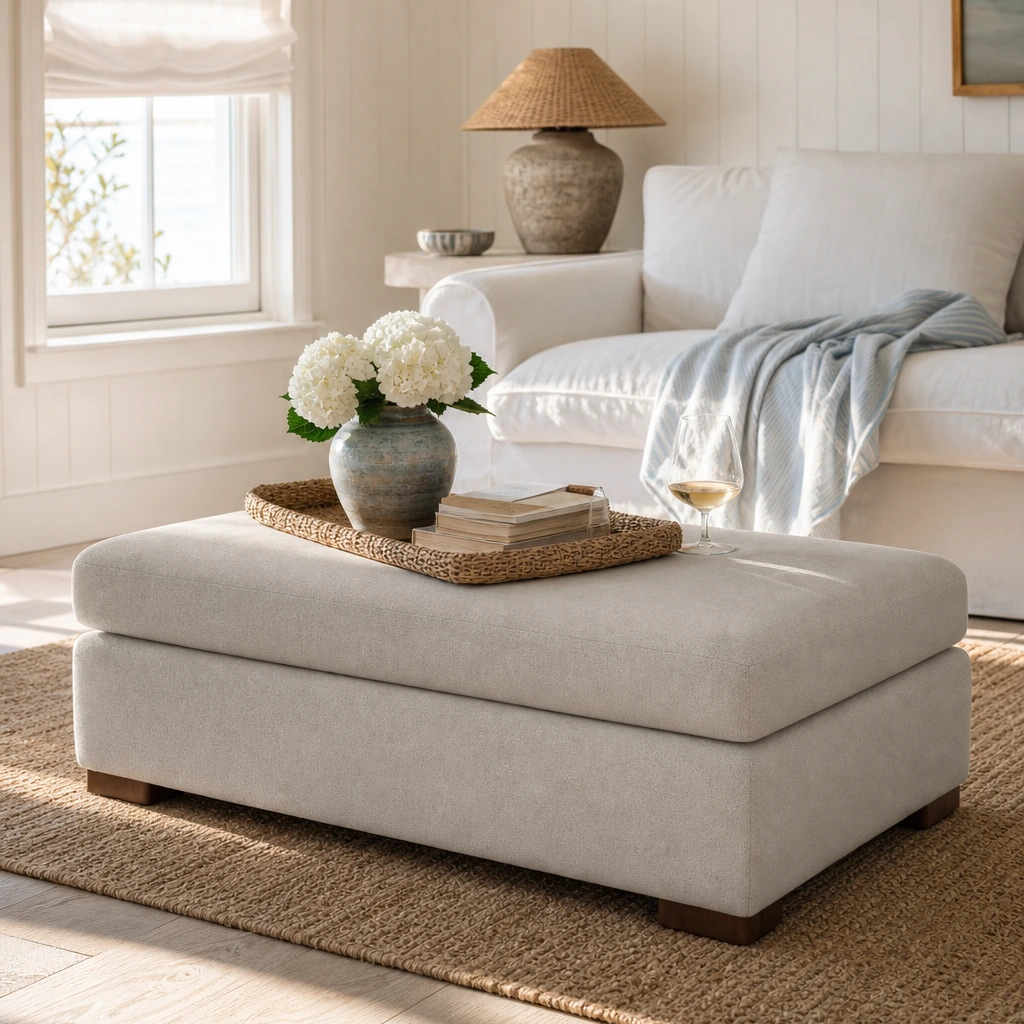
You signed the lease on that Brooklyn one-bedroom three months ago. The afternoon light hits the living room perfectly. You've saved 47 rooms on Pinterest that capture exactly what you want: warm walnut tones, a deep-seat sofa in something textured, maybe bouclé, and lighting that doesn't scream "first apartment." The vision is crystal clear. The room itself still has your old IKEA coffee table from 2019 and a blank wall where art should be.
So you try the AI tools everyone's talking about. RoomGPT gives you something gorgeous in 30 seconds. Collov stages your empty room beautifully. But then you try to find that exact sofa, those specific sconces, that perfect side table. They don't exist. The furniture in the render was invented by an algorithm.
You're back to square one, scrolling through endless furniture tabs looking for something close enough.
This is the fundamental split between these three tools, and it matters more than any feature comparison.
Key Takeaways
- RoomGPT and Collov generate beautiful renders with AI-imagined furniture that cannot be purchased
- First Chair shows only real pieces from retailers like West Elm, CB2, Article, and Crate & Barrel
- Collov is purpose-built for real estate agents staging listings at volume, not homeowners furnishing spaces
- RoomGPT works for quick style exploration before you're ready to commit
- First Chair is designed for the moment when you actually want to buy furniture and finish the room
- The AI interior design market is projected to reach $4.55 billion by 2030
- The biggest difference isn't image quality; it's whether the furniture is real. RoomGPT and Collov focus on visualization, while First Chair delivers concepts built around products you can actually purchase.
- The right tool depends on your goal. Use RoomGPT if you want quick style inspiration, Collov if you're virtually staging properties for sale, and First Chair if you're ready to furnish and complete a real room.
The Render Problem Nobody Talks About

Here's what happens with most AI room design tools. You upload a photo of your living room. You pick a style. The tool generates something beautiful. You love the mid-century credenza in the corner, the sculptural floor lamp, the rug that ties everything together.
You go to buy them. They don't exist.
RoomGPT has over 4 million users generating these renders. Collov serves real estate professionals with similar technology. The output looks incredible. But the furniture shown is algorithmically generated, not sourced from actual retailers. The same frustration appears repeatedly: users waste hours trying to find pieces that look "close enough" to what the AI imagined.
This isn't a flaw in the technology. It's a fundamental design choice. These tools were built to visualize, not to shop.
RoomGPT: When Speed Matters Most
RoomGPT does one thing well: it shows you your room in a completely different style almost instantly. Upload a photo, pick "Scandinavian" or "mid-century modern," and you'll have a new render in 15 to 30 seconds. The workflow is dead simple. There's basically no learning curve.
What You Get with RoomGPT:
- Instant Style Visualization: Generate a new render in under 30 seconds. Upload your room photo, select from multiple style presets (Scandinavian, mid-century modern, coastal, minimalist), and see an instant transformation. Good for testing different aesthetic directions quickly.
- Simple Workflow: No learning curve required. The interface is straightforward with minimal options. You upload, you pick a style, you get a render. Nothing complicated between you and the visualization.
- Multiple Style Options: Test several design directions in minutes. Want to see your living room both coastal and minimalist? Generate both versions and compare. Useful when you're uncertain about which aesthetic to pursue.
- Limited Free Access: Start with a few renders before committing. Try the tool with your actual space to see if the output matches your needs.
Considerations
The constraints show up quickly. Renders sometimes move windows or warp built-ins, making them unreliable for actual planning. There's no way to lock elements or make precise edits.
And that sofa you love in the render? You'll never find it because it was invented by an algorithm.
For casual exploration, this is genuinely useful. If you're not sure whether you want your living room to feel more coastal or more minimalist, RoomGPT lets you test both directions in under a minute. But if you're trying to furnish a room, you'll spend those savings on the hours of product hunting that follow.
Collov: Built for Real Estate Professionals
Collov serves a different audience entirely: real estate professionals who need to stage empty listings fast.
What You Get with Collov:
- Professional Staging Speed: Transform empty listings in 10 seconds. Purpose-built for agents photographing multiple properties who need quick turnarounds. The speed optimization is designed for volume staging workflows.
- MLS-Ready Output: Professional quality designed to meet listing standards. The renders are polished enough for marketing materials and property listings. Commercial licensing included across all tiers.
- Volume Processing: Handle multiple properties efficiently. The subscription structure and batch processing features are built for agents staging numerous listings per month, not one-off projects.
- Advanced Photo Features: Furniture removal, photo enhancement, and virtual tours. These features support professional real estate photography workflows beyond basic staging.
Why Homeowners Should Look Elsewhere
If you're an agent with 10 properties to photograph this week, Collov's workflow makes practical sense. For homeowners furnishing their own space, though, Collov solves the wrong problem.
It stages rooms beautifully with furniture that can't be bought. The enterprise features (API access and human-assisted staging for complex shots) don't help if what you actually need is a credenza that ships to your apartment.
Professional photographers and agents rely on Collov. It's built for them. If you're furnishing your own home, you're not the target user.
First Chair: From Inspiration to Purchase
First Chair works differently because it solves a different problem.
What You Get with First Chair:
- Real, Shoppable Furniture: Every piece shown is currently available and purchasable from actual retailers. Not AI-generated approximations. Not fantasy furniture you'll spend hours trying to replicate. Actual products from West Elm, CB2, Crate & Barrel, Pottery Barn, Article, and Lulu & Georgia that you can click and buy today.
- Curated Multi-Retailer Concepts: Pieces from multiple retailers mixed and matched the way a designer would approach it. Not limited to a single catalog. The combinations are tested to work together in style, scale, and aesthetic cohesion.
- Design Expertise Applied: Human curation tailored to your specific room dimensions, budget parameters, and aesthetic preferences. The concepts account for your actual space, not generic room templates. Each recommendation considers how pieces will work in your environment.
- Member Pricing Access: Insider rates on most pieces without requiring designer trade accounts. The savings can offset design fees entirely when furnishing a complete room.
Why This Matters for Completion
The turnaround is 24-48 hours instead of 10 seconds because real curation takes time. The output isn't a render of imaginary furniture. It's a shopping list of pieces designed to work in your specific room, at your actual budget, in styles you actually want.
This matters because the hard part of furnishing a room was never generating a pretty picture. The hard part is the 40+ hours of research, the 27 open tabs, the second-guessing, and the fear of buying something expensive that doesn't fit.
First Chair compresses that entire process into cohesive concepts with pieces that actually work together.
The Real Tradeoff: Speed vs. Shopping
RoomGPT and Collov optimize for speed. First Chair optimizes for completion.
- With RoomGPT: You can generate 10 different style directions in 10 minutes. None of them are shoppable. You'll leave inspired and then spend the next three weeks trying to approximate the look with real furniture.
- With Collov: You can stage an empty room beautifully in seconds. Perfect if you're selling the place. Less useful if you're moving in and need to actually live there.
- With First Chair: You'll wait for the concept to generate. When it arrives, every piece can be purchased. The Rejuvenation sconces, the Article sofa, the CB2 coffee table. You can buy all of it, today, and know it works together.
For someone furnishing an apartment or pulling together a living room after a move, the question isn't which tool generates the prettiest image. The question is which one actually gets the room finished.
The Shopping Experience, Compared
RoomGPT and Collov have no shopping experience because they're not shopping tools. They generate images. What happens after is your problem.
First Chair is built around what happens after. You upload inspiration, describe your aesthetic (Scandinavian with walnut warmth and deeper seats, or mid-century with warm leather and rounded arms), and get back a curated concept with real products. The pieces come from multiple retailers, mixed and matched the way a designer would approach it, not limited to a single catalog.
The difference shows up in total value. If you're furnishing a complete living room, the time saved on research plus access to member rates can make the design service essentially cost-neutral. You're not paying for a render. You're paying to skip the chaos and end up with a room that actually feels finished.
Why First Chair
Most AI room tools generate fantasy furniture. First Chair shows you real pieces from West Elm, CB2, Article, Crate & Barrel, and Lulu & Georgia that you can buy today. The difference matters when you're actually trying to furnish a room.
First Chair won't generate a render in 10 seconds. What it will do is turn your saved inspiration into a cohesive concept with pieces that work together. One curated concept instead of 47 tabs. A room that finally feels finished.
You already have the taste. First Chair handles the execution.
Frequently Ask Questions
Can I use RoomGPT or Collov to find furniture to buy?
Not directly. Both tools generate AI-imagined furniture that doesn't exist as purchasable products. You can use their renders as inspiration, but you'll need to manually search for similar pieces from actual retailers. First Chair is designed specifically to show real, shoppable furniture from the start.
Is Collov worth it for homeowners?
Collov is built for real estate professionals staging properties at volume. The speed and workflow make sense for agents photographing multiple listings. For homeowners furnishing their own space, the virtual staging doesn't connect to any purchasing workflow, so you'd still need to find all the furniture separately.
Which tool is fastest?
RoomGPT generates renders in 15-30 seconds. Collov delivers in about 10 seconds. First Chair takes 24-48 hours because human curation is part of the process. But speed to render isn't the same as speed to a finished room. If your goal is actually furnishing the space, the hours spent hunting for real versions of AI-generated furniture often outweigh any time saved on the initial render.
Can I upload Pinterest inspiration to these tools?
All three accept uploaded photos, including Pinterest saves. The difference is what happens next. RoomGPT and Collov will reimagine the space with AI-generated furniture. First Chair interprets your inspiration and returns concepts with real pieces you can purchase from actual retailers.
How does First Chair compare for actually finishing a room?
First Chair is purpose-built for completion. While RoomGPT and Collov create visualizations, First Chair delivers shoppable concepts with real furniture from multiple retailers. Every piece shown can be purchased today. The curation accounts for your specific room, budget, and aesthetic preferences, making it the right tool when you're ready to move from inspiration to execution.
Can First Chair work with furniture I already own?
Yes. First Chair can build concepts around existing pieces you want to keep, whether that's a sofa, dining table, bed, or statement chair. Instead of starting from scratch, the recommendations are curated to complement your current furniture while creating a cohesive overall design.
Do I need to know my design style before using First Chair?
No. You don't need to know whether your style is "Japandi" or "mid-century modern." You can upload inspiration photos, describe how you want the space to feel, or mention colors and materials you like. First Chair translates those preferences into a curated room concept using real, purchasable furniture from multiple retailers.