If you've spent a Tuesday night in your Chicago apartment scrolling through photos of Kylie Jenner's Hidden Hills compound, mentally measuring your IKEA sectional against her bouclé sofa and wondering how a room can feel that calm and that expensive at the same time, you're closer to the answer than you think. The aesthetic her designer Martyn Lawrence Bullard built isn't rooted in budget. It's rooted in a clear visual logic: neutral shell, layered textures, bold art, and a handful of sculptural pieces doing serious work.
That logic is reproducible. Not as a knockoff, but as a genuine design strategy that works in a 900-square-foot apartment just as well as it works in a Hidden Hills compound. The difference between a room that looks considered and one that looks assembled is rarely about how much was spent. It's about where the money went, how the materials relate to each other, and whether the room has a clear point of view.
This guide breaks down exactly how to translate that point of view into a real, livable room. Not a fantasy render. Not a mood board that leads nowhere. A room you can actually build, piece by piece, from retailers that carry the furniture in stock right now.
Here is what you will learn:
- Why the neutral base is the foundation of the entire aesthetic and how to choose the right one for your space
- How the high/low design strategy works and where to spend versus where to save
- Which textures and materials create the Kylie effect at accessible price points
- How statement lighting changes the entire atmosphere of a room for under $300
- Where to source large-scale art without paying gallery prices
- How to zone an open-plan space without tearing down walls
- What smart lighting actually adds to the experience and how to set it up affordably
Key Takeaways
- Kylie Jenner's Hidden Hills home, designed by Martyn Lawrence Bullard, is built on a neutral base of creams, whites, and soft grays. This palette is the starting point for the entire aesthetic and the most budget-friendly place to begin.
- The high/low design approach, investing in one or two hero pieces and keeping everything else affordable, is how professional stylists recreate luxury looks on moderate budgets.
- Texture does more work than color in this aesthetic. Velvet, bouclé, marble, and faux fur create visual richness without requiring expensive furniture.
- New lighting fixtures earn a Joy Score of 9.6 out of 10 among homeowners, making statement lighting one of the highest-return upgrades available.
- Interior painting recoups 80 to 100% of its cost at resale for mid-range homes, making a neutral repaint the single most cost-effective first move.
- 67% of homeowners already prefer neutral wall colors for main living areas, which means the Kylie palette aligns with what most people instinctively want.
- Large-scale art is the single most impactful element in Kylie's rooms and one of the most affordable to source through print platforms and thrift stores.
- Average U.S. household spending on furnishings rose from $1,705 in 2019 to $2,028 in 2022, reflecting a broader shift toward intentional home investment.
What Makes the Kylie Jenner Aesthetic Actually Work

The Kylie Jenner interior aesthetic is a contemporary-luxe design approach built on a neutral architectural shell, layered tactile materials, large-scale art as the primary focal point, and sculptural furniture pieces that function as visual statements rather than background elements.
This is not maximalism. It is not the kind of celebrity home that requires a full gut renovation to approximate. The design logic Martyn Lawrence Bullard applied to her Hidden Hills compound is actually quite disciplined: keep the backdrop quiet, let a few strong pieces carry the room, and use texture to create depth where color is deliberately restrained.
The documentation of Kylie's Hidden Hills home shows this clearly. The walls are cream. The furniture silhouettes are clean. The Basquiat painting on the living room wall reads as a bold statement precisely because nothing around it is competing for attention. That compositional restraint is the thing most people miss when they try to recreate a room like this. They add more when the move is to edit down.
Understanding this logic changes how you approach every purchasing decision. You stop asking "does this look expensive?" and start asking "does this belong in this room?" Those are very different questions, and the second one is much easier to answer.
Why This Design Approach Is Worth Studying Right Now
The timing matters. Home decor spending has shifted meaningfully since 2019. Average U.S. household spending on furnishings rose nearly 19% between 2019 and 2022, from $1,705 to $2,028 annually, reflecting a broader cultural shift toward intentional home investment rather than default purchasing.
At the same time, the way people discover and act on design inspiration has changed. A 2021 survey found that 56% of global consumers say celebrities and influencers affect their purchasing decisions, including in home furnishings categories. Pinterest's 2023 Predicts report identified curated, personality-driven interiors as a dominant trend, with searches for eclectic interior design up 850% year-over-year. People are not looking for matching sets from a single catalog. They are looking for rooms that feel collected and considered.
The global home decor market reflects this. Valued at $663.1 billion in 2023, the market is being shaped by social media discovery and the growing consumer appetite for spaces that feel personal rather than generic. The high/low design strategy, which sits at the center of this guide, is the practical response to that appetite.
Smart home technology is also changing what "luxury" means in a residential context. 69% of U.S. households owned at least one smart-home device by 2023, with smart lighting among the most common categories. The ability to control color temperature and brightness across multiple fixtures, once a feature of high-end custom installations, is now accessible for a few hundred dollars. That matters for recreating the atmospheric quality of interiors like Kylie's, where lighting is doing significant emotional work.
The Neutral Base: Starting With the Right Shell
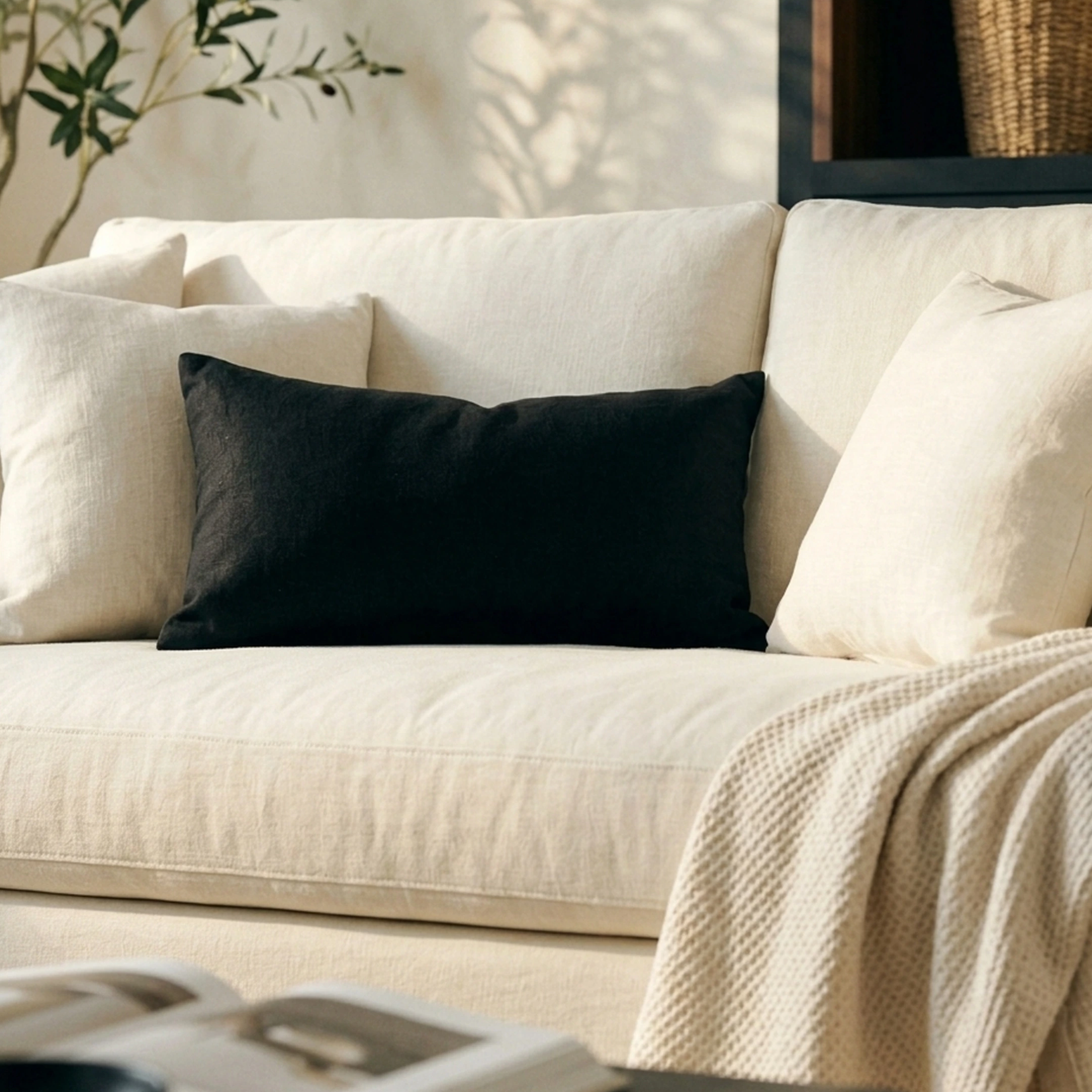
A neutral base is a design strategy where walls and large furniture pieces are kept in creams, whites, beiges, or soft grays so that art, color accents, and textures can do the visual heavy lifting without competing with each other.
This is the most budget-friendly place to start and the most impactful. Paint is the highest-return investment in any room. Interior painting consistently recoups 80 to 100% of its cost at resale for mid-range homes, and a gallon of quality paint costs under $80. The entire visual foundation of the Kylie aesthetic can be established for a few hundred dollars and a weekend.
Choosing the Right Neutral for Your Space
Not all neutrals work the same way. The wrong white reads as clinical. The wrong beige reads as dated. The goal is warmth without heaviness, and that distinction matters more in person than it does on a paint chip.
A few directions worth considering:
- Warm whites: Sherwin-Williams Alabaster and Benjamin Moore White Dove both read as white in photos but feel warm and soft in person. These are the closest approximations to the tones used in Kylie's spaces.
- Soft greiges: A blend of gray and beige that performs well in almost any light condition. Sherwin-Williams Accessible Beige is a reliable starting point for rooms with mixed light exposure.
- Creamy off-whites: Closer to what Martyn Lawrence Bullard used in the Hidden Hills compound. These feel expensive and calm, particularly in rooms with strong natural light.
Avoid cool grays if your space gets limited natural light. They tend to feel flat and slightly institutional without the warmth that makes this aesthetic work.
Trim, Ceilings, and the Wrapped Effect
One of the easiest ways to make a room feel more considered is to paint trim and ceiling the same color as the walls, or very close to it. This creates an enveloping effect that reads as intentional rather than builder-grade. It is a technique used extensively in high-end residential design and costs nothing extra. If you have crown molding or baseboards that currently stand out in bright white against a colored wall, painting them to match the wall color will immediately make the room feel more cohesive.
High/Low Design: How to Invest Like a Stylist
High/low design is a styling strategy where one or two higher-investment anchor pieces are combined with affordable supporting items to achieve a luxurious overall effect on a moderate budget. It is the approach professional stylists use, and it is exactly how Kylie's rooms translate to real-world budgets.
The mistake most people make is spreading their budget evenly across everything. The result is a room where nothing stands out and nothing feels considered. A better approach is to identify the one or two pieces that will define the room's character, spend there, and keep everything else simple.
Choosing Your Hero Piece
The hero piece is the single standout item that anchors the room and defines its mood. In Kylie's spaces, this role is played by a sculptural sofa, a large art piece, or an unusual coffee table. The hero piece is what people notice first when they walk into the room, and it is what gives the room its point of view.
For a living room, the sofa is usually the right place to invest. A well-made sofa in a strong silhouette, something with a low profile, clean lines, and quality upholstery, will make everything around it look better. West Elm, CB2, and Article all carry sofas in this range at prices that do not require a second mortgage. For a bedroom, the bed frame and headboard carry the same weight. A statement headboard in velvet or bouclé from Lulu and Georgia or Pottery Barn reads as significantly more expensive than it is.
Where to Save Without Sacrificing the Look
Once the hero piece is in place, the rest of the room can be built affordably. These are the categories where budget choices rarely show:
CategoryBudget-Friendly SourcesWhat to Look ForThrow pillowsCB2, Target, IKEAVelvet, linen, or textured coversSide tablesWayfair, Chairish, thrift storesInteresting silhouette, not matching the sofaCurtainsIKEA, TargetFloor-to-ceiling length, neutral linenDecorative objectsThrift stores, estate salesSculptural, singular, not in setsPlants and plantersLocal nurseries, IKEALarge-scale, simple matte potsThrow blanketsAnthropologie Home, TargetBouclé or chunky knit textures
The goal is a room that looks collected, not coordinated. Matching sets are the fastest way to make a space feel mass-market rather than considered. If the sofa and the side table and the rug all clearly came from the same catalog, the room loses the layered, personal quality that makes Kylie's spaces feel the way they do.
If you are working through this process and feeling stuck between options, First Chair is built specifically for this moment. You can upload a photo of Kylie's living room or any interior that captures the feeling you are after, and the platform translates it into a curated room concept built from real, in-stock furniture across West Elm, CB2, Crate and Barrel, Pottery Barn, and Lulu and Georgia. The high/low logic is built into how the recommendations work: anchor pieces identified, supporting items kept affordable, and everything sourced to work together in your actual space.
Texture and Material Choices That Create the Kylie Effect
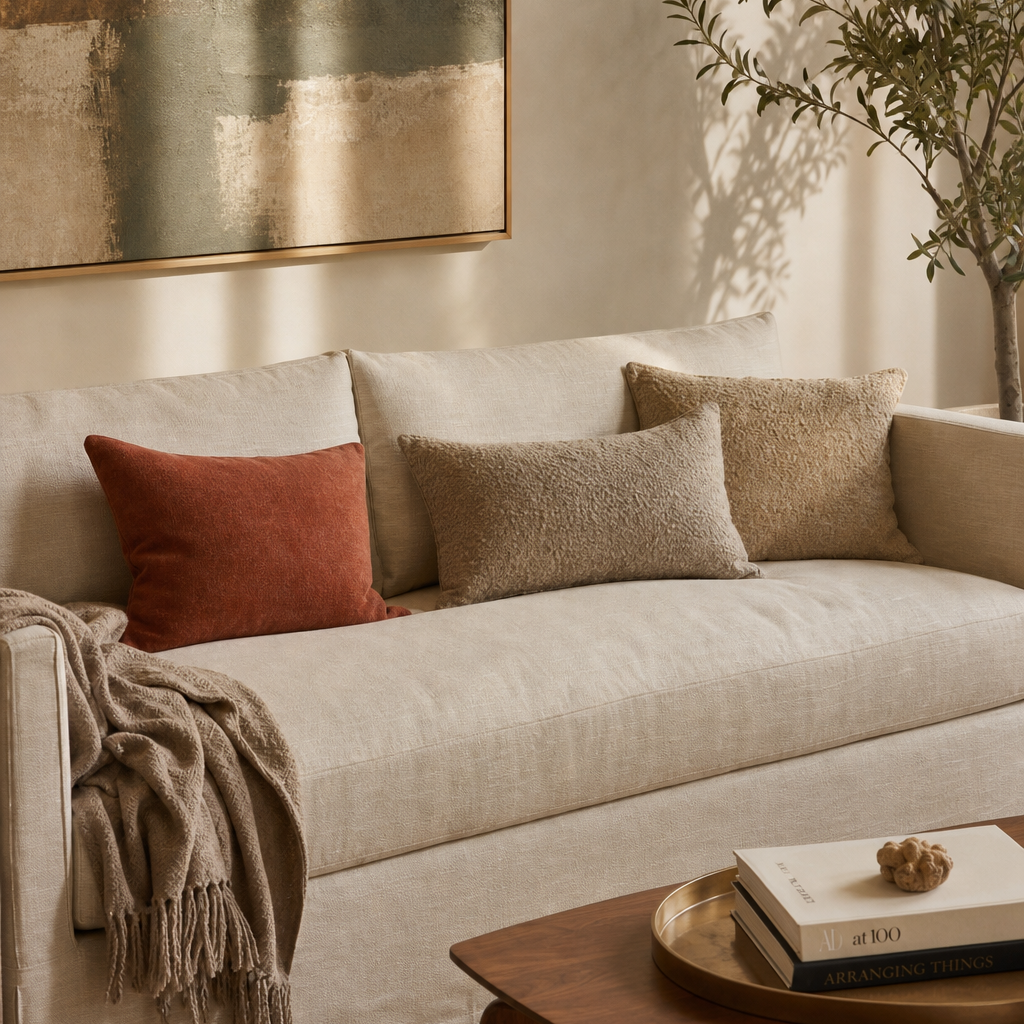
Kylie Jenner's interiors are described by design sources as being built around tactile richness, with velvet, faux fur, bouclé, polished marble, chrome, and acrylic combined across a single space. This layering of materials is what creates visual depth in a room that might otherwise feel flat.
Texture is one of the most affordable ways to elevate a space. A velvet pillow costs $30. A bouclé throw costs $60. A faux marble tray from CB2 costs $45. None of these require significant investment, but together they shift the entire register of a room.
The Core Texture Palette
These are the materials that appear most consistently in Kylie's interiors and translate most directly to accessible price points:
- Bouclé: The looped, textured fabric that has become the defining material of contemporary-luxe interiors. Works on sofas, chairs, and throw pillows. CB2 and West Elm both carry bouclé upholstery options at mid-market prices.
- Velvet: Rich, directional, and immediately reads as elevated. Best used on accent chairs, headboards, and cushions rather than large sofas where it can feel visually heavy.
- Marble and faux marble: Polished marble surfaces on coffee tables, trays, and side tables add a cool, high-end contrast to warm textiles. Faux marble options from Wayfair and CB2 are visually convincing at a fraction of the cost.
- Warm metals: Brass and gold-toned hardware, frames, and light fixtures add warmth and a sense of finish. Replacing chrome hardware with brushed brass is a $50 upgrade that changes the feeling of a kitchen or bathroom.
- High-pile rugs: A large, plush rug grounds a seating area and adds the kind of tactile quality that photographs well and feels even better underfoot.
Mixing Textures Without Overdoing It
The rule is contrast, not accumulation. A room with too many textures competing at the same scale feels chaotic rather than layered. The approach that works in Kylie's spaces is to anchor with one or two dominant textures, usually a large rug and an upholstered sofa, and then introduce smaller contrasting materials through accessories and accents.
If the sofa is bouclé, the coffee table should be smooth marble or glass. If the rug is high-pile, the curtains should be flat linen. The contrast is what makes each material register. When everything is the same texture, nothing stands out.
Statement Lighting: The Upgrade That Changes Everything
Statement lighting refers to light fixtures, including chandeliers, pendants, and sculptural lamps, that function as visual focal points in a room beyond their practical role. It is one of the most consistently underestimated upgrades in residential design and one of the highest-return ones.
New lighting fixtures earn a Joy Score of 9.6 out of 10 among homeowners, making it one of the top-rated improvements for perceived home quality. A statement pendant or chandelier can be sourced for under $300 from Home Depot, Wayfair, or Rejuvenation and still read as a considered design choice.
Layered Lighting: The Approach Luxury Interiors Use
Celebrity homes and high-end interiors do not rely on a single overhead light source. They layer three types of lighting to create depth and mood:
- Ambient lighting: The base layer. Usually a ceiling fixture or recessed lights that provide general illumination.
- Task lighting: Functional light for specific activities. Floor lamps beside reading chairs, under-cabinet lighting in kitchens.
- Accent lighting: Directional light that highlights art, architectural features, or specific objects. Picture lights, adjustable spotlights, and LED strip lighting behind furniture all fall here.
The combination of these three layers is what makes a room feel warm and dimensional rather than flat. If your current room relies entirely on a single overhead fixture, adding one floor lamp and one accent light will change the atmosphere more than almost any furniture purchase.
Smart Lighting for Mood Control
Philips Hue, a smart lighting system by Signify, allows you to adjust color temperature and brightness across multiple fixtures from a single app. Smart lighting is now in 18% of U.S. households, and the cost of entry has dropped considerably. For a Kylie-adjacent aesthetic, the goal is warm, low lighting in the evenings with a color temperature around 2700K. This is the range that makes neutral walls glow and textures read as rich rather than flat.
Art and Wall Decor: The Element That Does the Most Work
Large-scale art is the single most impactful element in Kylie Jenner's interiors. The Basquiat in her living room is not just decoration. It is the emotional anchor of the room. Everything else, the neutral walls, the restrained furniture, the layered textures, exists to support it.
You do not need a Basquiat. You need the same compositional logic: one large, bold piece that commands the wall and gives the room a point of view.
How to Source Art That Works
The most common mistake is buying art that is too small. A piece that should be 48 inches wide gets replaced with something 24 inches wide because it is cheaper, and the room never quite comes together. Scale matters more than price.
These sources consistently deliver large-format art at accessible price points:
- Desenio, Society6, and Minted: Online platforms offering art prints in large formats. A 40x50 inch print in a simple frame from IKEA can look genuinely striking on the right wall.
- Thrift stores and estate sales: The best source for unique, non-mass-produced pieces. Framing a thrifted painting in a simple black or natural wood frame immediately elevates it.
- Local galleries: Many cities have galleries showing emerging artists at price points well below the secondary market. The work tends to feel more personal and less generic than print platforms.
Framing and Hanging
Simple frames do more work than ornate ones in a contemporary-luxe aesthetic. Black metal, natural wood, and thin brass frames all work. If you are not confident in your ability to make a gallery wall feel intentional rather than random, start with one large piece and let it breathe. A single 48-inch piece on a neutral wall will always read as more considered than six small pieces grouped together.
Open Floor Plans and Space Optimization for the Kylie Look
Kylie's homes are characterized by generous, connected spaces where living, dining, and kitchen areas flow into each other and where the boundary between inside and outside is deliberately blurred. Most apartments and mid-size homes do not have this architecture, but the visual logic can be replicated through furniture placement and zoning.
Open-plan living is a design concept where living, dining, and kitchen areas are integrated into a single continuous space, with zones defined by rugs, furniture groupings, and lighting rather than walls.
Zoning Without Walls
The tools for creating defined zones in an open space are:
- Rugs: The most powerful zoning tool. A large rug under a seating group creates a room within a room. The rug should be large enough that all four legs of the sofa sit on it, or at minimum the front two legs.
- Furniture orientation: Turning a sofa slightly away from the wall and toward the center of a space creates a more intimate, intentional grouping.
- Lighting: A pendant light over a dining table and a floor lamp beside a reading chair create distinct zones even in a single open room.
- Consistent flooring: Keeping flooring consistent across connected spaces makes them feel larger and more cohesive.
Making Small Spaces Feel Larger
For apartments and smaller homes, the Kylie aesthetic actually translates well because it is built on restraint. Fewer, better pieces in a neutral palette with strong lighting will make a small space feel more considered than a room packed with furniture. The furniture guide for small city apartments covers this in more detail, but the core principle is consistent: track-arm sofas, leggy furniture, and mirrors buy back visual space in a way that overstuffed, floor-hugging pieces do not.
Smart Home Integration: The Hidden Layer of Luxury Interiors
Luxury homes integrate technology in a way that is invisible until you need it. Lighting that adjusts automatically, speakers that disappear into the architecture, thermostats that learn your schedule. For a Kylie-inspired aesthetic, the relevant technology is mostly about lighting and atmosphere rather than security or automation.
The Starter Smart-Home Stack
You do not need a full home automation system to get the benefits. These three upgrades cover most of the atmospheric impact:
- Smart bulbs: Philips Hue or LIFX bulbs replace standard bulbs in existing fixtures and allow color temperature and brightness control from your phone. Start with the living room and bedroom.
- Smart plugs: TP-Link Kasa smart plugs let you control floor lamps and accent lights on a schedule or via voice command. No rewiring required.
- Smart speaker: An Amazon Echo or Google Nest Hub acts as the control center for the whole system and doubles as a discreet music source.
The total cost for this stack is typically under $300, and the impact on the evening atmosphere of a room is significant.
Tools and Platforms for Executing the Look
Getting the aesthetic right requires more than knowing what to buy. It requires knowing how pieces relate to each other in your actual space, which is where most people get stuck. These are the categories of tools that help bridge the gap between inspiration and execution.
AI-Assisted Design and Inspiration-to-Room Platforms
These platforms help translate visual inspiration into specific, buyable room concepts.
- First Chair: Designed specifically for the gap between inspiration and execution. You can upload a photo of Kylie's living room or any interior that captures the feeling you are after, and First Chair translates it into a curated room concept built from real, in-stock furniture across multiple retailers including West Elm, CB2, Crate and Barrel, Pottery Barn, and Lulu and Georgia. The platform is built around the high/low logic this guide describes: it narrows the field to pieces that work together stylistically, fits them to your space and budget, and offers insider pricing on selected pieces. For anyone stuck in decision fatigue around furniture shopping, this is the tool that gets you out of it.
- Spacejoy: An online interior design service offering affordable packages and 3D renderings, with content covering celebrity home decor ideas at accessible price points.
- Havenly: An online interior design service providing mood boards and product sourcing at tiered price points.
Mid-Market Furniture and Decor Retailers
These retailers consistently deliver the silhouettes and materials that define the Kylie aesthetic at accessible prices.
- West Elm and CB2: The most reliable sources for clean-lined, contemporary-luxe furniture. Both carry bouclé upholstery, marble-look surfaces, and warm metal accents at mid-market prices.
- Article: Strong for sofas and lounge chairs with the low-profile, sculptural silhouettes that anchor this aesthetic.
- Lulu and Georgia: Particularly strong for rugs, lighting, and decorative accessories that feel design-forward without designer pricing.
Art and Wall Decor Sources
Art sourcing is where most people underinvest in scale and overinvest in quantity.
- Desenio, Society6, and Minted: Online platforms for large-format art prints at accessible prices. The key is ordering larger than feels comfortable and framing simply.
- Chairish and 1stDibs: The best sources for vintage and sculptural pieces that add the collected, non-mass-market quality that defines Kylie's rooms.
- Local thrift stores and estate sales: Consistently the best source for unique pieces that feel personal rather than purchased.
Smart Lighting Systems
Atmospheric lighting is the layer that separates a well-furnished room from a room that actually feels like something.
- Philips Hue by Signify: The most comprehensive smart lighting ecosystem, allowing color temperature and brightness control across multiple fixtures from a single app.
- LIFX and TP-Link Kasa: More affordable entry points for smart bulbs and plugs that retrofit into existing fixtures without rewiring.
Paint and Finishing Materials
The neutral base is where the aesthetic begins, and paint brand matters for getting the tone right.
- Sherwin-Williams and Benjamin Moore: The most reliable sources for the warm whites and soft neutrals that define this aesthetic. Sherwin-Williams Alabaster and Benjamin Moore White Dove are the most frequently cited starting points.
- Behr: A more affordable option available at Home Depot, with a strong neutral range that performs well in most light conditions.
Best Practices for Recreating the Kylie Aesthetic
These recommendations are grounded in the design logic of Kylie's actual interiors and the practical guidance of professional designers.
- Start with the walls, not the furniture. A neutral repaint is the single highest-return move available. It costs under $300 to do yourself and changes the entire context of every piece of furniture in the room. Do this before buying anything else.
- Identify your hero piece before buying anything supporting. The hero piece defines the room's mood and scale. Everything else should be chosen in relation to it, not independently. Buying supporting pieces before the hero piece is chosen is how rooms end up feeling mismatched.
- Buy one large art piece instead of several small ones. Scale is the variable most people get wrong. A single 48-inch piece on a neutral wall reads as more intentional than six small pieces grouped together. Start with one strong piece and let it breathe.
- Layer three light sources in every room. Ambient, task, and accent lighting together create the depth and warmth that makes a room feel dimensional. If your room currently relies on a single overhead fixture, adding a floor lamp and one accent light will change the atmosphere more than almost any furniture purchase.
- Choose textures by contrast, not accumulation. If the sofa is bouclé, the coffee table should be smooth. If the rug is high-pile, the curtains should be flat linen. Contrast is what makes each material register. When everything is the same texture, nothing stands out.
- Replace chrome hardware with brushed brass throughout. Cabinet pulls, faucet fixtures, and light switch plates in brushed brass add warmth and a sense of finish for under $100 total. It is one of the most impactful upgrades relative to its cost.
- Paint trim and ceiling the same color as the walls. This creates the enveloping, intentional quality of high-end residential design and costs nothing extra. If your trim currently stands out in bright white against a colored wall, painting it to match will immediately make the room feel more cohesive.
- Use rugs to define zones, not just add texture. A rug should be large enough that all four legs of the sofa sit on it. An undersized rug is one of the most common mistakes in furnished rooms and one of the easiest to fix.
Common Mistakes That Undermine the Look
Buying Art That Is Too Small
The consequence is a room that never quite comes together, no matter how good the furniture is. Art that is too small for its wall reads as an afterthought rather than an anchor. The fix is to measure the wall, identify a size that feels slightly too large, and buy that size.
Spreading the Budget Evenly Across Everything
When budget is distributed equally across all pieces, nothing stands out and nothing feels considered. The fix is to identify the one or two pieces that will define the room and spend there, keeping everything else simple and affordable.
Buying a Matching Furniture Set
Matching sets read as mass-market rather than collected. The fix is to source pieces from different retailers and different eras. A sofa from West Elm, a side table from Chairish, and a lamp from a thrift store will always feel more considered than three pieces from the same catalog page.
Relying on a Single Overhead Light Source
A single overhead light makes a room feel flat and institutional regardless of how good the furniture is. The fix is to add a floor lamp and at least one accent light source. This alone will change the evening atmosphere of the room significantly.
Choosing the Wrong Neutral
Cool grays in rooms with limited natural light tend to feel clinical rather than calm. The fix is to test paint samples in your actual space at different times of day before committing. Warm whites and soft greiges perform more reliably across varied light conditions.
Buying Curtains That Are Too Short
Curtains that hang above the floor make ceilings feel lower and rooms feel smaller. The fix is to hang curtain rods as close to the ceiling as possible and use curtains that reach the floor. This is a $0 fix if you already have curtains: simply raise the rod.
Overloading the Room With Decorative Objects
Too many small objects create visual noise rather than curated richness. The fix is to edit aggressively. Three well-chosen objects on a shelf read as intentional. Twelve objects on the same shelf read as clutter. The Kylie aesthetic is built on restraint, not accumulation.
Ignoring Scale When Mixing Furniture
A coffee table that is too small for the sofa, or a rug that does not extend under the seating group, makes a room feel unresolved. The fix is to measure before purchasing and to err on the side of larger rather than smaller for anchor pieces like rugs and coffee tables.
Tools and Resources for Executing This Guide
For anyone working through a life transition, a new apartment, a first home, or a room that has been almost finished for two years, the tools for decorating a new apartment article covers the broader toolkit in more detail. The interior design apps for homeowners guide is also worth reviewing for a broader comparison of what is available.
For understanding how the home decor market is moving and where consumer spending is going, the home decor market statistics article provides useful context. And if you want to understand the cost of getting furniture decisions wrong, the furniture mismatch cost statistics piece is worth reading before making any significant purchases.
Frequently Asked Questions
How do I recreate Kylie Jenner's interior design style on a budget?
Start with a neutral wall color in warm white or cream, then invest in one or two hero pieces like a bouclé sofa or a large art print. Layer in affordable textures through throw pillows, rugs, and curtains from mid-market retailers like CB2, West Elm, and Target. The high/low approach, spending selectively on anchor pieces and keeping accents affordable, is how professional stylists recreate luxury looks without luxury budgets.
What color palette does Kylie Jenner use in her home?
Kylie's Hidden Hills home, designed by Martyn Lawrence Bullard, is built on a predominantly neutral base of creams, whites, and soft grays. Bold color is introduced through large-scale art and occasional accent furniture rather than walls or large upholstery pieces. This approach makes the space feel calm and expansive while still having a strong visual identity.
What furniture brands work best for a Kylie Jenner-inspired living room?
West Elm, CB2, and Article are the most reliable mid-market sources for the clean-lined, contemporary-luxe silhouettes that define Kylie's aesthetic. For vintage and sculptural pieces, Chairish and 1stDibs offer access to unique items that add the collected, non-mass-market quality her rooms have. Lulu and Georgia is strong for rugs, lighting, and decorative accessories.
Is smart home technology worth adding for a luxury home aesthetic?
For atmospheric impact, yes. Smart lighting systems like Philips Hue allow you to replicate the warm, layered lighting of high-end interiors for a few hundred dollars. The ability to shift color temperature and brightness across multiple fixtures is what makes a room feel different in the evening than it does during the day, which is a defining quality of luxury residential design.
How do I find affordable large-scale art for a celebrity-inspired interior?
Print platforms like Desenio, Society6, and Minted offer large-format art prints at accessible prices. Thrift stores and estate sales are the best source for unique, non-generic pieces that feel collected rather than purchased. The key is scale: a single large piece on a neutral wall will always read as more intentional than several small pieces grouped together.
What is the single most impactful upgrade for recreating a luxury interior look?
Lighting is consistently the highest-return upgrade in residential design. Replacing a standard overhead fixture with a statement pendant or chandelier, combined with adding floor lamps and accent lighting, shifts the entire atmosphere of a room. New lighting fixtures earn a Joy Score of 9.6 out of 10 among homeowners, making it one of the top-rated improvements for perceived home quality.
How do I make a small apartment feel like a luxury space?
The Kylie aesthetic actually translates well to smaller spaces because it is built on restraint rather than volume. Fewer, better pieces in a neutral palette with strong lighting will make a small space feel more considered than a room packed with furniture. Track-arm sofas, leggy furniture, and mirrors all buy back visual space. A large rug that extends under the entire seating group makes the room feel larger, not smaller.
Conclusion: From Inspiration to a Room You Can Actually Live In
The Kylie Jenner aesthetic is not a budget problem. It is a strategy problem. The rooms that Martyn Lawrence Bullard designed for her Hidden Hills compound are built on principles that translate directly to a Chicago apartment or a first home in Austin: a quiet neutral shell, one or two pieces that carry the room, textures that create depth without clutter, and lighting that makes the whole thing feel warm and dimensional in the evening.
The path from inspiration to execution is clearer than most people think. Start with the walls. Identify your hero piece. Source art at scale. Layer your lighting. Edit aggressively.
If you want help translating a specific room or visual reference into a curated set of real, buyable pieces that work together in your actual space, First Chair is built for exactly that. Upload the photo, describe the feeling you are after, and get a room concept built from furniture that actually exists, at prices that reflect what you actually have to spend.
The room you have been imagining is closer than you think.