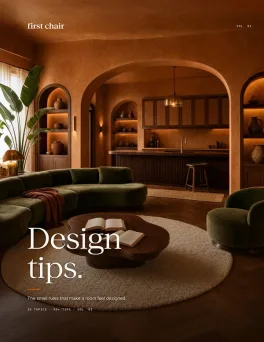

You just moved into a new home in Philly with your husband and kids. Some rooms are already packed with the furniture you brought from your old place. Others have the opposite problem: an awkward corner, a long blank wall, or a stretch of floor that clearly needs something, but you can’t quite tell what.
The sofa still works. The dining table came with you. The kids’ rooms are filling up fast. But now the pieces that made sense in your old home have to work in a completely different layout, and every unfinished space seems to create a new decision. Does that corner need a chair or a cabinet? Is the living room missing a rug, or is the sofa just the wrong scale? Should you buy something new, move what you already own, or leave the space alone?
AI interior design tools promise to help, but most are better at generating pretty rooms than solving real ones. This guide breaks down which tools can actually help you work with the furniture you own, figure out what’s missing, and turn awkward spaces into rooms that feel finished.
Key Takeaways
- Most AI design tools generate fantasy rooms. The renders look beautiful, but the furniture isn't real or purchasable.
- Photo-based redesign and 3D floor planning are different jobs. Pick the tool that matches what you actually need.
- Shoppable furniture is the 2026 differentiator. Tools that connect designs to real, buyable pieces solve the actual problem.
- First Chair fills the execution gap. It generates curated room concepts using real furniture from West Elm, CB2, Crate & Barrel, and other retailers you'd actually shop.
Beyond Renders: Why Real, Shoppable Design Matters for Your New Home

The AI interior design market exploded between 2023 and 2026. Over a dozen tools now promise to transform your space with a single photo upload. The technology works. The problem is what happens after.
You get a stunning render of your living room in "Japandi minimalist" style. The sofa looks perfect. The coffee table grounds the space beautifully. The pendant light ties everything together. Then you try to buy any of it, and you realize none of these pieces exist. They're AI-generated furniture, as fictional as the rest of the image.
This is the core challenge: visualization without execution. You can see the room you want, but you can't live in it.
The tools worth your time in 2026 fall into three categories:
- Photo-based redesign: Upload a room photo, get it transformed in seconds. Fast visualization, limited execution.
- 3D floor planning: Draw layouts, place furniture, test arrangements. More control, steeper learning curve.
- Design-to-purchase: Curated concepts using real, buyable furniture. Slower to set up, but you can actually buy the room.
Most people decorating a new home need the third category. They don't need another render. They need a room they can order.
1. First Chair
Choose First Chair when you're tired of saving rooms you can't buy. First Chair interprets your aesthetic direction, whether that's "Scandinavian with walnut warmth" or "mid-century modern but softer," and generates cohesive room concepts using furniture that actually exists.
Every piece shown comes from real retailers: West Elm, CB2, Crate & Barrel, Pottery Barn, Lulu & Georgia, Article, and brands you haven't discovered yet. First Chair pulls across multiple catalogs to find the right piece for your room, not just whatever's in one store's inventory.
What Sets It Apart
- Real furniture only. No AI-generated pieces. Everything shown is in stock and purchasable.
- Multi-retailer sourcing. First Chair isn't locked to IKEA or Wayfair. It curates across brands.
- Nuanced style matching. Describe your aesthetic in layered language, and First Chair interprets it.
- Insider pricing. Member savings show up at checkout on most pieces.
Why It Made the List
First Chair solves the problem most AI tools create. Instead of generating another beautiful render you can't act on, it builds a room you can actually buy. The experience feels like working with a tasteful friend who knows where to find everything, not scrolling through an algorithm.
If you've been overwhelmed by furniture options and stuck between inspiration and execution, First Chair closes that gap.
Ideal For: Design-minded people who want curated, purchasable room concepts without endless tabs
2. REimagineHome
Using REimagineHome, you can upload your empty living room, pick a style, and see it furnished in seconds. The renders are consistently among the most realistic in independent testing, and the interface stays out of your way.
REimagineHome recently added a Real Products Discovery feature that attempts to match generated designs to buyable furniture. It's a step toward execution, though the matches aren't always precise.
Key Features
- Photo redesign for furnished and empty rooms
- Virtual staging for real estate listings
- Exterior and landscaping visualization
- Covers patios, gardens, and outdoor spaces
Why It Made the List
REimagineHome delivers fast, realistic renders across whole-property coverage. The tool handles both interiors and exteriors. If you need to see how a backyard redesign might look alongside your interior plans, this handles both.
How It Differs From First Chair: REimagineHome excels at fast visualization but generates AI furniture rather than sourcing real pieces. Use it for quick style exploration. Switch to First Chair when you're ready to buy.
Ideal For: Fast visualization across interiors, exteriors, and landscaping
3. Planner 5D
Pick Planner 5D when you need to test whether the sectional actually fits. This is a full 3D floor planning suite where you draw rooms from scratch, place furniture, and see the layout in three dimensions before committing to anything.
The AI Smart Wizard suggests furniture placement based on your room shape and preferences. The 2026 update added an AI Design Generator for style concepts, though the furniture remains catalog-based rather than shoppable.
Key Features
- 2D floor plan drawing that converts to 3D walkthrough
- AI-assisted furniture placement suggestions
- Community library with shared designs
- Works on desktop and mobile
Why It Made the List
Planner 5D has the largest user base of any floor planning tool. That community means extensive shared templates and designs you can adapt. The tool offers genuinely usable functionality that isn't just a teaser.
How It Differs From First Chair: Planner 5D helps you figure out spatial arrangement. First Chair handles the harder question: which specific pieces to buy. Use Planner 5D to confirm your 86-inch sofa won't block the window, then use First Chair to find the right 86-inch sofa.
Ideal For: Spatial planning before buying furniture
4. Interior AI
Skip Interior AI unless the render itself is the deliverable. This is the quality benchmark, with material rendering that captures wood grain, marble veining, and fabric textures at a level competitors struggle to match.
The tool offers 40+ style options. Built by indie maker Levelsio, Interior AI has steadily improved its model, with Flux integration in 2026 pushing output quality higher.
Key Features
- 40+ style options, broadest in the category
- Virtual staging capability
- Hyper Realism mode available
- 3D VR walkthroughs
Why It Made the List
Interior AI consistently produces high-quality individual renders. If you're presenting concepts to clients or need portfolio-quality images, this delivers.
How It Differs From First Chair: Interior AI creates beautiful images. First Chair creates buyable rooms. If you need a render for a client presentation, use Interior AI. If you need to actually furnish the space, First Chair connects concepts to real pieces.
Ideal For: Designers and professionals needing photorealistic output
5. Spacely AI
Start with Spacely AI if you want to explore before paying anything. The free tier offers substantial functionality with no watermarks and commercial usage rights, making it the most generous entry point in the category.
Spacely is the only AI design tool with a SketchUp plugin, which integrates it into existing designer workflows. For homeowners, the auto-furnish feature fills empty rooms with styled furniture in about a minute.
Key Features
- Generous free tier with commercial license
- SketchUp plugin for designer integration
- Reference image matching to replicate inspiration
- Relighting and editing tools
Why It Made the List
The free tier genuinely lets you test the tool without commitment or limitations.
How It Differs From First Chair: Spacely generates styled renders quickly. First Chair generates buyable room concepts. Spacely is great for exploration; First Chair is built for execution.
Ideal For: Designers testing concepts without subscription commitment
6. Homestyler
Consider Homestyler if you enjoy the process of designing. This is a full 3D design suite where you build rooms, place furniture piece by piece, and render the results. The library of extensive free 3D models means you're not stuck with limited options.
Homestyler is part of the Manycore family (alongside Coohom) and benefits from that company's manufacturing connections. The furniture models are detailed and realistic.
Key Features
- Unlimited 1K renders on the free plan
- Extensive free 3D furniture model library
- Full floor plan and room design capability
- VR tour generation
Why It Made the List
The genuinely unlimited free tier sets Homestyler apart from competitors that lock features behind paywalls. If you have the time and interest to build your room piece by piece in 3D, this gives you professional-grade tools without the cost.
How It Differs From First Chair: Homestyler requires you to select every piece yourself from a catalog. First Chair curates for you, recommending pieces that work together based on your aesthetic. Different jobs for different people.
Ideal For: DIY homeowners who want hands-on 3D design
7. RoomGPT
Try RoomGPT for the 30-second gut check. Upload, pick a style, done. No account setup, no tutorials, no figuring out interfaces. This is the simplest tool in the category by design.
The credit model means you only pay for what you use. At scale, renders cost well under a dollar each. For someone who needs a quick visualization once or twice, this beats paying for a subscription you'll forget to cancel.
Key Features
- Upload-and-go interface, minimal learning curve
- Credit-based model, no recurring subscription
- Fast generation (under 15 seconds)
- Basic style selection
Why It Made the List
RoomGPT was one of the earliest dedicated AI room redesign tools. The simplicity is the point. If you want to see your bedroom in "modern farmhouse" before deciding whether to pursue that direction, RoomGPT shows you in seconds.
How It Differs From First Chair: RoomGPT shows you styled rooms quickly. First Chair builds rooms you can buy. RoomGPT is for exploration; First Chair is for execution.
Ideal For: Quick style exploration without learning curves
8. Collov AI
Choose Collov AI if you're staging listings, not decorating a home. The tool is optimized for real estate photography: upload an empty room, get a staged version in seconds. The plan lets you generate unlimited variations of each uploaded photo.
Collov includes real branded product placement in some renders, though the primary focus is listing presentation rather than furniture shopping.
Key Features
- One-click virtual staging
- Unlimited versions per photo available
- API access for team automation
- Real branded product placement
Why It Made the List
Collov serves a specific audience well. Real estate agents need fast, attractive staging. Homeowners furnishing their own space need something different.
How It Differs From First Chair: Collov stages empty rooms for photos. First Chair helps you fill rooms with furniture you can buy. If you're selling a house, use Collov. If you're moving into one, use First Chair.
Ideal For: Agents staging empty listings
9. Coohom
Select Coohom if you're a professional designer building client presentations. This is a full cloud-based design suite with 2D plans, 3D modeling, rendering, and a catalog of real branded furniture products.
Coohom's strength is the connection between design and sourcing. The furniture catalog includes actual manufacturer products, not AI-generated pieces, which makes it useful for designers who need to specify real pieces for clients.
Key Features
- Full 2D/3D design suite in the browser
- Real branded furniture catalog
- AI Home Design chat mode
- Product-linked presentations for retail teams
Why It Made the List
Coohom combines floor-plan drafting, room modeling, product placement, and rendering in one professional workflow. It's built for designers, not casual users.
How It Differs From First Chair
Coohom is professional software requiring design expertise. First Chair works for anyone with taste who wants help executing it. Different audiences, different complexity levels.
Ideal For: Professional designers building presentations
10. HomeDesigns AI
Pick HomeDesigns AI when you're still figuring out your aesthetic. With 160+ styles, it has the broadest style library in the category, covering everything from coastal grandmother to brutalist warm. The 2026 Furniture Finder feature attempts to connect generated designs to shoppable pieces.
HomeDesigns covers interiors, exteriors, gardens, and patios. Generation takes under 30 seconds.
Key Features
- 160+ styles, most in the category
- Furniture Finder matches renders to real products
- Interior and exterior coverage
- Daily free credits
Why It Made the List
The style breadth is useful for narrowing your direction. If you're not sure whether you want Japandi or Scandinavian or something between, seeing 160 variations helps clarify. The Furniture Finder is a step toward execution, though the matching isn't always precise.
How It Differs From First Chair: HomeDesigns AI generates renders first, then tries to find matching furniture. First Chair starts with real, buyable furniture and builds concepts around it. Different approaches to the same problem.
Ideal For: Exploring many aesthetic directions quickly
11. Foyr Neo
Choose Foyr Neo if you want professional 3D design capabilities without installing desktop software. Everything runs in your browser: 2D plans, 3D modeling, drag-and-drop furnishing, 4K renders, and 360-degree walkthroughs.
The AI-assisted image generation helps with style concepts, while the larger model library lets you furnish rooms with detailed 3D pieces.
Key Features
- Full design-to-render pipeline in browser
- 4K rendering capability
- 360-degree walkthrough generation
- Team collaboration features
Why It Made the List
Foyr Neo bridges the gap between consumer apps and professional CAD software. It delivers a complete professional design-to-render pipeline that doesn't require installation.
How It Differs From First Chair: Foyr Neo is professional design software. First Chair handles the curation and shopping so you don't need design software. Use Foyr Neo if you want to design the room yourself. Use First Chair if you want guidance.
Ideal For: Designers who want professional tools without installing software
12. DecorMatters
Choose DecorMatters if you want to design from your phone and see furniture in your space through AR. Point your camera at the room, and the app overlays furniture at scale. The social community adds inspiration and feedback.
DecorMatters works differently from desktop tools. It's lighter, more casual, and built for mobile-first users who prefer swiping through options to building floor plans.
Key Features
- AR furniture placement through phone camera
- Social community for design inspiration
- Moodboard creation tools
- Product catalog browsing
Why It Made the List
DecorMatters fills a different need than desktop-focused competitors. If you're more likely to browse furniture on your commute than at a desk, the mobile-native experience makes sense. The AR try-on helps with scale visualization in ways photos can't.
How It Differs From First Chair
DecorMatters is mobile-first inspiration and AR try-on. First Chair is curated room concepts with buyable furniture. Different use cases, different strengths.
Ideal For: Exploring designs on phone with AR furniture try-on
13. Havenly
Skip the AI and hire a person. Havenly assigns you a real designer who builds your room plan, provides a shopping list from multiple brands, and can even place orders for you.
This isn't AI interior design. It's traditional design service at a lower entry point than hiring someone locally. The designer provides accountability and expertise that AI tools can't replicate.
What's Included
- Personal designer assigned to your project
- Final concept with shopping list
- 3D rendering of your actual room in some packages
- Order placement assistance
Why It Made the List
Sometimes the right tool is a person. Havenly makes human design expertise accessible with actual accountability. For complex projects or people who want hand-holding, the service is worth considering.
How It Differs From First Chair: Havenly is human-led service. First Chair provides AI-assisted curation with real furniture at a different approach. Havenly makes sense for complex projects; First Chair handles everyday furnishing decisions.
Ideal For: People who want human guidance
14. Decorilla
Choose Decorilla for the big project: a whole-home renovation, a living room that needs to anchor your entire aesthetic, or a space where getting it wrong would be expensive. You get two designer concepts to compare, a finalized plan, 3D renderings, and a shopping list with trade discounts.
Decorilla represents the high end of online design services. The offering reflects the expertise and personalization.
What's Included
- Two designer concepts to compare
- Finalized design plan with 3D renderings
- Tailored shopping list with trade discounts
- Professional oversight throughout
Why It Made the List
For high-stakes rooms, professional expertise matters. Decorilla's vetted designers bring experience that AI can't replicate. If you're spending serious money on furniture, the design service is insurance against expensive mistakes.
How It Differs From First Chair: Decorilla is premium human service for high-end projects. First Chair is accessible curation for everyday decisions. Different use cases.
Ideal For: High-end projects that need professional oversight
Why First Chair Is the Right Choice for Most People
When you're actually furnishing a new home, the problem isn't generating pretty pictures. It's figuring out which specific sofa, which coffee table, which rug to buy, and making sure they work together.
Most AI design tools stop at the render. They show you a gorgeous room, then leave you to figure out how to recreate it with real furniture. That's where First Chair starts.
First Chair interprets your aesthetic, pulls from retailers like West Elm, CB2, Crate & Barrel, Pottery Barn, and Lulu & Georgia, and generates curated room concepts using pieces you can actually buy. No fictional furniture. No hunting for "something like that sofa." Just a room you can order.
The difference matters when you're moving into a Brooklyn one-bedroom with 247 pins saved and no idea which ones translate to real life. First Chair turns the room in your head into a room you can live in, with insider pricing on most pieces and the confidence that everything works together.
Frequently Asked Questions
How do AI interior design tools differ from hiring an interior designer?
AI tools generate visualizations and suggestions based on photos or preferences. Human designers provide personalized expertise, accountability, and judgment calls that AI can't replicate. AI tools like First Chair cost significantly less. The tradeoff is personalization: a human designer adapts to your specific situation in ways AI systems are still learning.
Can I actually buy the furniture shown in AI interior design renders?
Most AI tools generate fictional furniture. The render looks beautiful, but the pieces don't exist. First Chair and a few competitors focus on real, purchasable pieces. Before using any tool, check whether it connects to actual products or generates fantasy rooms. Shoppable furniture is the key differentiator in 2026.
Are free AI interior design apps good enough for decorating a whole home?
Free tiers vary dramatically. Some tools offer substantial credits with commercial license. Others provide unlimited renders. Some give you roughly one free render. For decorating a whole home, free tiers work for exploration but rarely for execution. You'll likely need a different approach, like First Chair's curated concepts with real furniture, to actually complete the job.
What kind of input do AI design tools need to generate useful results?
Photo-based tools need a clear room photo with decent lighting. Floor planning tools need room dimensions. Concept-based tools like First Chair work from inspiration images or aesthetic descriptions. The more specific your input, the better the output. "Scandinavian with walnut warmth and deeper seats" generates better results than "modern."
How does First Chair ensure recommendations are actually buyable?
First Chair builds concepts using only real, in-stock furniture from multiple retailers. Unlike tools that generate AI furniture then try to find matches, First Chair starts with real pieces and builds the design around them. Every piece shown is purchasable, with insider pricing available on most through First Chair's member network.